
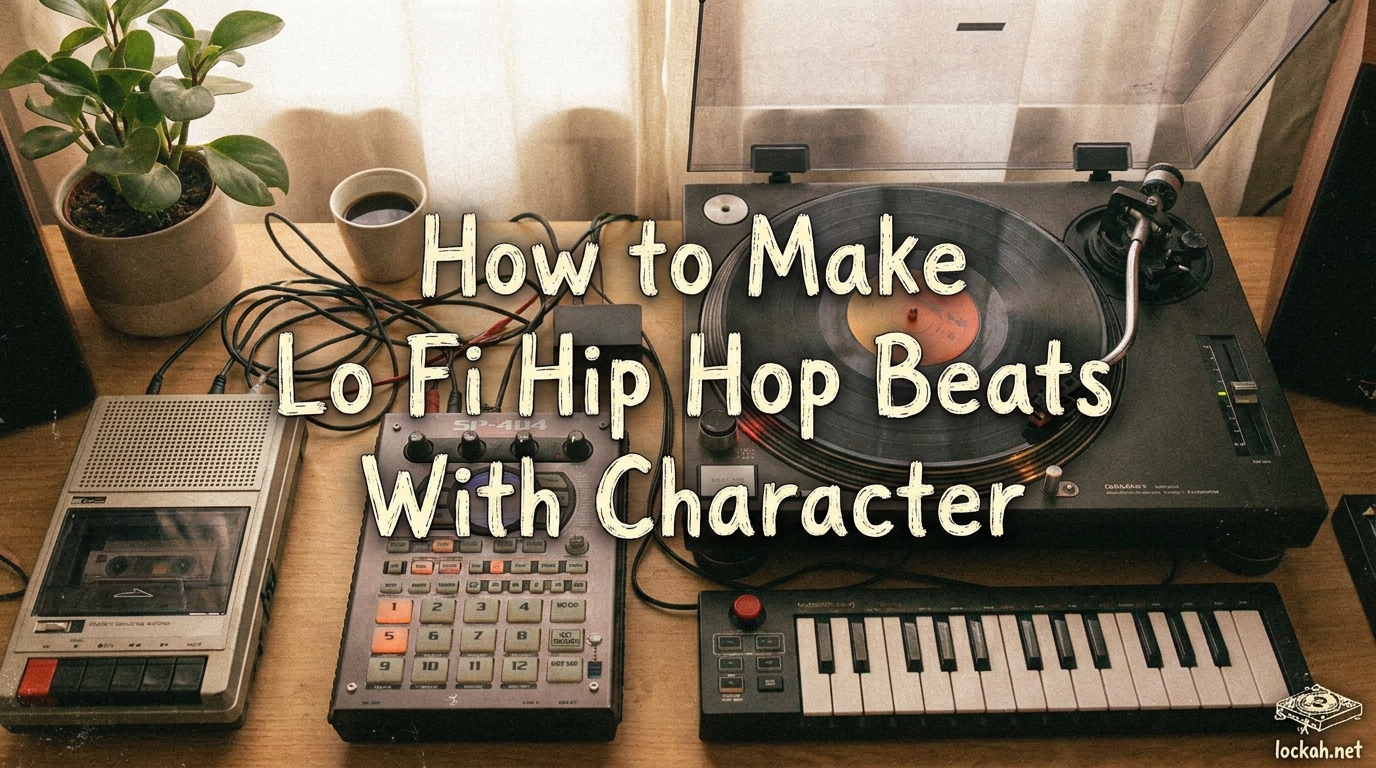
Learning how to make lo fi hip hop beats with character is one of the most rewarding skills you can develop as a producer. You do not need expensive gear or years of experience. What you need is an understanding of what makes lo-fi special and the confidence to add your own personality to every beat.
I have spent the last three years producing lo-fi tracks and studying what separates forgettable beats from the ones that get added to study playlists and shared across platforms. The difference is never about having the best plugins or the most expensive samples. It is about understanding the philosophy behind the sound and making intentional choices that give your music personality.
In this guide, you will learn a complete workflow for making authentic lo-fi hip hop beats from start to finish. We will cover everything from setting the right tempo to adding those subtle imperfections that give your tracks soul. By the end, you will have a clear roadmap for creating beats that sound like you, not like a generic template.
Table of Contents
What Is Lo-Fi Hip Hop and Why Does It Matter?
Lo-fi hip hop is a genre built on imperfection. The term “low fidelity” originally described recordings made with substandard equipment, but producers have turned those limitations into an aesthetic. Today, lo-fi hip hop production intentionally embraces degraded sound quality to create warm, nostalgic beats that feel intimate and human.
The genre emerged from hip hop’s sampling tradition, where producers would dig through old records to find obscure jazz, soul, and funk passages. As recording technology improved, some producers deliberately added “flaws” back into their music. Tape hiss, vinyl crackle, pitch wobble, and muffled frequencies became features, not bugs.
What makes lo-fi special is its emotional effect on listeners. The warm, dusty sound triggers nostalgia and comfort. The repetitive, predictable patterns create a safe space for focus and relaxation. That is why lo-fi study music has become so popular. The beats provide just enough stimulation to keep your brain engaged without demanding attention.
Understanding this philosophy matters because it shapes every decision you make. When you produce lo-fi, you are not trying to fix imperfections. You are curating them. You are choosing which limitations to embrace and which ones to avoid. That is where character comes from.
Lo-Fi vs Other Hip Hop Genres
Lo-fi sits at the intersection of multiple traditions. It shares boom bap drum patterns with classic New York hip hop. It borrows harmonic complexity from jazz. It uses the same sampling techniques as crate-digging producers from the 90s. But it combines these elements in a specific way.
Unlike trap, which relies on heavy bass and aggressive drums, lo-fi favors subtlety. Unlike traditional hip hop, which often prioritizes vocals, lo-fi is typically instrumental. Unlike electronic music that celebrates clean, precise production, lo-fi intentionally muddies the waters.
The best way to understand the difference is to compare BPM ranges. Trap typically runs at 130-150 BPM. Traditional hip hop varies widely but often sits around 85-95 BPM. Lo-fi deliberately slows things down to 60-90 BPM, creating that relaxed, almost sleepy feeling.
How to Make Lo Fi Hip Hop Beats With Character: The Complete Process
This section breaks down the exact workflow I use to create lo-fi beats that have personality. Follow these steps in order for your first few tracks. Once you understand the process, feel free to experiment with the order.
Step 1: Set Your Tempo (60-90 BPM)
The tempo you choose sets the emotional tone for your entire beat. Most lo-fi hip hop sits between 60 and 90 BPM, with 70-85 being the sweet spot for that classic relaxed feel.
Lower BPMs (60-70) create a more ambient, sleepy atmosphere. These work well for meditation or deep focus sessions. Mid-range BPMs (70-80) are the most versatile and popular. They are relaxed enough for studying but have enough energy to keep things interesting. Higher BPMs (80-90) feel slightly more upbeat while still maintaining that lo-fi character.
I usually start at 75 or 82 BPM. Those numbers just feel right to me, but your preference might differ. The key is to set your tempo before you start programming drums or writing melodies. Everything else in your track will reference this speed.
Step 2: Find and Prepare Your Sample
Sampling is the heart of lo-fi hip hop. While you can create beats entirely from synthesized sounds, most producers start with a sample that provides the harmonic and textural foundation.
The best samples for lo-fi often come from jazz, soul, and funk records from the 60s and 70s. Look for tracks with warm instrumentation, simple arrangements, and emotional chord progressions. Rhodes piano, muted trumpet, soft strings, and nylon guitar all work beautifully.
When you find a sample you like, chop it into smaller pieces. You might take a 4-bar loop as your main section. You might extract a single chord hit to create a new progression. You might isolate a vocal snippet for texture. The art of sampling is about transformation, not just copying.
Remember to consider the legal side of sampling. If you are releasing music commercially, you need to clear samples or use royalty-free sources. Many producers create original compositions that mimic the feel of samples, giving them full ownership while maintaining that sampled aesthetic.
Step 3: Create Your Chord Progression
If you are not using a sample with built-in chords, you will need to create your own progression. Lo-fi favors jazz-influenced harmony with extended chords that add color and warmth.
Seventh chords (major 7ths, minor 7ths, dominant 7ths) are the foundation. Add ninths for extra sophistication. Try progressions like ii-V-I, I-vi-IV-V, or more modal movements borrowed from jazz standards. The key is to avoid simple triads. Those extra notes create the lush, nostalgic feeling that defines the genre.
Common lo-fi instruments for chords include Rhodes piano, electric piano, jazz guitar, and analog synth pads. The Rhodes sound is particularly iconic. Its bell-like tone with subtle overtones cuts through a mix while maintaining warmth.
Do not overcomplicate your progressions. Three or four chords can carry an entire beat. The magic comes from voice leading, timing, and the subtle variations you add throughout the arrangement.
Step 4: Program Your Drum Pattern
Drums in lo-fi hip hop follow the boom bap tradition but with a looser, more relaxed feel. The classic pattern places kick drums on beats 1 and 3, snares on 2 and 4, with hi-hats filling in the subdivisions.
But here is where character comes in. Do not quantize your drums perfectly to the grid. Move some hits slightly early or late. This “swing” or “groove” is what separates robotic beats from human ones. Even a few milliseconds of variation makes a difference.
Velocity variation matters too. In real drumming, no two hits have exactly the same force. Program your drums with varying velocities to simulate this. Keep the backbeat snares strong but let the ghost notes and hi-hats dance around dynamically.
For sounds, look for dusty drum samples that have been processed to sound vintage. Think muffled kicks, crunchy snares, and closed hi-hats with character. Layering multiple samples can help you create unique sounds. A tight kick layered with a looser, more resonant one gives you punch and character simultaneously.
Step 5: Add a Warm Bassline
The bassline in lo-fi hip hop serves two purposes. It provides the low-end foundation that everything else sits on top of. And it creates a melodic counterpoint to your chords and samples.
Warm, round bass tones work best. Think electric bass, synth bass with subtle saturation, or even upright bass samples. Avoid overly bright or aggressive bass sounds. They will fight with the relaxed vibe you are creating.
Your bassline should follow the root notes of your chord progression, but do not just play roots. Walk between chords. Add passing tones. Create little melodic hooks that listeners will remember. The bassline is often what separates good lo-fi from great lo-fi.
Sidechain compression is a common technique in lo-fi production. When the kick drum hits, the bass dips slightly in volume, creating that pumping effect. It adds groove and helps the low end breathe. Do not overdo it, though. Subtle sidechain sounds natural. Heavy sidechain becomes a distinct effect.
Step 6: Write Melodic Elements
With your foundation in place, it is time to add melodic interest. This could be a counter-melody played on a different instrument, a simplified version of your sample’s melody, or something entirely new.
Simple often wins in lo-fi. A three or four note melody that repeats with subtle variations can be incredibly effective. Think about the melodies in your favorite lo-fi tracks. They are rarely complex. They are memorable.
Common instruments for melodies include bells, kalimbas, music boxes, flutes, and soft synth leads. These sounds cut through the mix without being harsh. They add sparkle in the upper frequencies that balances the warm lows and mids.
Space your melodic elements across the stereo field. Pan some sounds left, others right. This creates width and dimension. Just keep the low end centered for mono compatibility.
Step 7: Apply Lo-Fi Effects and Processing
This is where the magic happens. Effects transform clean recordings into lo-fi masterpieces. The key is layering multiple subtle processes rather than relying on one heavy effect.
Vinyl emulation plugins add crackle, pop, and rumble. Use them to create the illusion of an old record. Tape saturation adds warmth, gentle compression, and subtle pitch wobble. It simulates the sound of audio recorded to cassette or reel-to-reel tape.
Bitcrushing reduces the bit depth and sample rate, creating digital artifacts that can sound vintage in the right context. Low-pass filtering rolls off high frequencies, simulating the sound of old speakers or distant audio. Use it subtly on individual elements or more aggressively on the entire mix.
Pitch variation creates movement and imperfection. Slight LFO modulation on pitch can simulate tape wow and flutter. Manual pitch bends on individual notes add human expression. Even detuning oscillators slightly creates thickness and character.
My approach is to add effects gradually. Start clean and add one process at a time. Listen to how each affects the whole. The goal is character, not destruction. You want your beats to sound intentional, not broken.
Adding Character: How to Make Your Beats Stand Out
This is the section most tutorials miss. Technical skills will get you competent beats. Character gets you memorable ones. Here is how to infuse your personality into every track.
Embrace Intentional Imperfections
Lo-fi is not about mistakes. It is about curated imperfection. The crackle you hear is intentional. The slightly detuned piano was a choice. The off-grid drum hit serves the groove.
Try recording one element slightly too hot, then backing off the gain to leave just a hint of distortion. Manually play a part instead of programming it, even if your timing is not perfect. Add a field recording of your environment underneath the music.
I once recorded my refrigerator humming and layered it under a beat at -30dB. You can not consciously hear it, but it adds a subtle texture that makes the track feel lived-in.
Develop Your Sound Palette
Every producer has sounds they gravitate toward. Pay attention to yours. Do you always reach for Rhodes piano? Do you prefer crunchy drums over clean ones? Do you like adding tape hiss to everything?
These preferences become your signature. Leaning into them is not limiting. It is branding. Listeners will start recognizing your work before they see your name.
That said, continue expanding. Add one new element to each project. A new plugin, a new sample source, a new chord progression type. Growth happens at the edges of your comfort zone.
Break Rules on Purpose
All the guidelines in this article are starting points, not laws. The most interesting lo-fi producers break conventions intentionally.
Try programming drums at 120 BPM then slowing the entire project to 70. The glitchy artifacts create unique textures. Use a major key progression when everyone expects minor. Add a completely out-of-place sound that should not work but somehow does.
The key word is “intentional.” Breaking rules randomly creates chaos. Breaking them with purpose creates art.
Tell a Story With Arrangement
Character also comes from how your beat evolves over time. A static loop for three minutes is boring. A journey that introduces, develops, and resolves musical ideas keeps listeners engaged.
Think about your favorite lo-fi tracks. They probably have intros that set the mood, sections that build and release tension, and outros that fade into memory. Study those arrangements. Apply those techniques to your own work.
Try removing elements rather than just adding them. A breakdown where the drums drop out creates contrast. A filtered section that opens up feels like a sunrise. Silence is as powerful as sound.
Common Mistakes to Avoid
After producing dozens of beats and teaching others, I have seen the same mistakes repeatedly. Here is what to watch out for.
Over-Quantizing Your Drums
Perfect timing sounds robotic. Humans do not play with perfect timing. Your DAW’s quantization feature is useful for cleaning up performances, but do not quantize to 100%. Leave some swing. Move hits off the grid intentionally.
If your drums feel stiff, select all your drum hits and apply 50-60% swing. Or manually nudge hits a few milliseconds early or late. Small changes create big differences in feel.
Using Too Many Effects
It is tempting to throw every lo-fi plugin at your track. Vinyl crackle, tape saturation, bitcrushing, filtering, pitch modulation. The result is often muddy and unfocused.
Choose two or three key effects that serve your track. If you have a great sample that already sounds dusty, you might only need subtle tape saturation. If you are working with clean digital sounds, you might need more processing.
Always A/B test. Solo your effect chain and toggle it on and off. Does it improve the sound or just change it? Improvement is the goal.
Making Beats Too Repetitive
Repetition is part of lo-fi’s charm, but endless looping kills interest. Add subtle variations every few bars. Change a hi-hat pattern. Introduce a new melodic element. Filter the entire track for a section.
Think in terms of 4-bar or 8-bar phrases. Something should change at each boundary. Even a tiny variation keeps the brain engaged.
Creating Muddy Mixes
Lo-fi warmth can quickly become lo-fi mud if you are not careful. Multiple elements competing in the same frequency range creates a cluttered, unclear mix.
Use EQ to carve out space. If your sample has prominent midrange, roll off some lows so it does not fight the bass. High-pass filter elements that do not need low end. Create a mental picture of the frequency spectrum and assign each sound its own territory.
Reference tracks help. Compare your mix to professional lo-fi releases. Does yours have similar clarity and balance? If not, what is different?
Best Free Tools for Lo-Fi Production
You do not need to spend money to make great lo-fi beats. Here are my favorite free resources.
For DAWs, Cakewalk by BandLab offers professional features for Windows users completely free. GarageBand comes free on Mac and iOS and has everything you need for lo-fi. Tracktion Waveform Free is another solid option across platforms.
Native Instruments Komplete Start gives you over 2000 sounds and several synths at no cost. Spitfire Audio LABS series has beautiful, character-rich instruments including soft piano, strings, and ambient textures.
For effects, Valhalla Supermassive is free and creates beautiful reverbs and delays. TAL-Reverb-4 emulates vintage plate reverbs perfect for lo-fi. Vinyl by iZotope adds authentic vinyl crackle and warp.
Sample sources like FreeSound.org, NASA’s sound library, and various Creative Commons music archives provide legal material to chop and transform. Just check the specific license for each sample.
The best tool is the one you know well. Choose a DAW and learn it deeply before buying more plugins. A skilled producer with stock sounds creates better music than a beginner with expensive gear.
FAQ: Your Lo-Fi Production Questions Answered
How to make LoFi hip hop beats?
Start by setting your tempo between 60-90 BPM. Find a sample or create a chord progression using jazzy 7th and 9th chords. Program boom bap drums with swing and velocity variation. Add a warm bassline and melodic elements. Apply lo-fi effects like vinyl crackle, tape saturation, and low-pass filtering. Arrange with subtle variations every 4-8 bars.
What is the best BPM for LoFi hip hop?
The best BPM for lo-fi hip hop is 70-90 BPM, with 75-85 being the sweet spot. Lower BPMs around 60-70 create a more ambient, sleepy atmosphere. Mid-range BPMs of 70-80 are most versatile for studying and relaxing. Higher BPMs up to 90 feel more upbeat while maintaining lo-fi character.
What is the best beat maker for LoFi?
The best beat makers for lo-fi include FL Studio for its workflow and plugins, Ableton Live for sampling and arrangement, and Logic Pro for Mac users with excellent stock sounds. Free options like Cakewalk by BandLab and GarageBand work perfectly well. The DAW matters less than your understanding of lo-fi production techniques.
Is LoFi good for ADHD?
Yes, lo-fi hip hop can be beneficial for people with ADHD. The repetitive, predictable patterns provide just enough stimulation to help maintain focus without being distracting. The relaxed tempo and warm sound create a calming environment that can help with concentration during studying, working, or reading. Many listeners report improved focus and reduced anxiety when listening to lo-fi beats.
How do I get the dusty lo-fi sound?
Create the dusty lo-fi sound by combining multiple techniques: use vinyl emulation plugins for crackle and pop, apply tape saturation for warmth and subtle compression, add bitcrushing for digital artifacts, roll off high frequencies with low-pass filters, and detune elements slightly. Layer ambient noise like tape hiss or field recordings underneath. The key is subtlety rather than heavy processing.
Can I make lo-fi beats without samples?
Absolutely. While sampling is traditional in lo-fi, you can create authentic beats using original compositions. Use jazzy chord progressions with 7ths and 9ths, Rhodes piano and electric piano sounds, boom bap drum patterns, and the same lo-fi effects processing. Many producers create sample-free tracks that capture the lo-fi aesthetic through instrumentation and processing alone.
How to Make Lo Fi Hip Hop Beats With Character: Final Thoughts
You now have everything you need to create lo-fi hip hop beats that sound like you, not like a generic tutorial. Remember that the technical steps are just the foundation. Character comes from the choices you make within that framework.
Start with your tempo. Find or create your harmonic foundation. Program drums that groove. Add warmth through bass and effects. Then go further. Add the imperfections, the unexpected sounds, the personal touches that make a beat yours.
The producers you admire did not get there by following rules perfectly. They got there by understanding the rules and then bending them in pursuit of something unique. Your lo-fi journey starts with imitation but succeeds through innovation.
Make your first beat today. Do not worry about it being perfect. Worry about it being finished. Every track you complete teaches you more than a hundred tracks you abandon. The character you are looking for comes from showing up consistently and making music that matters to you.