
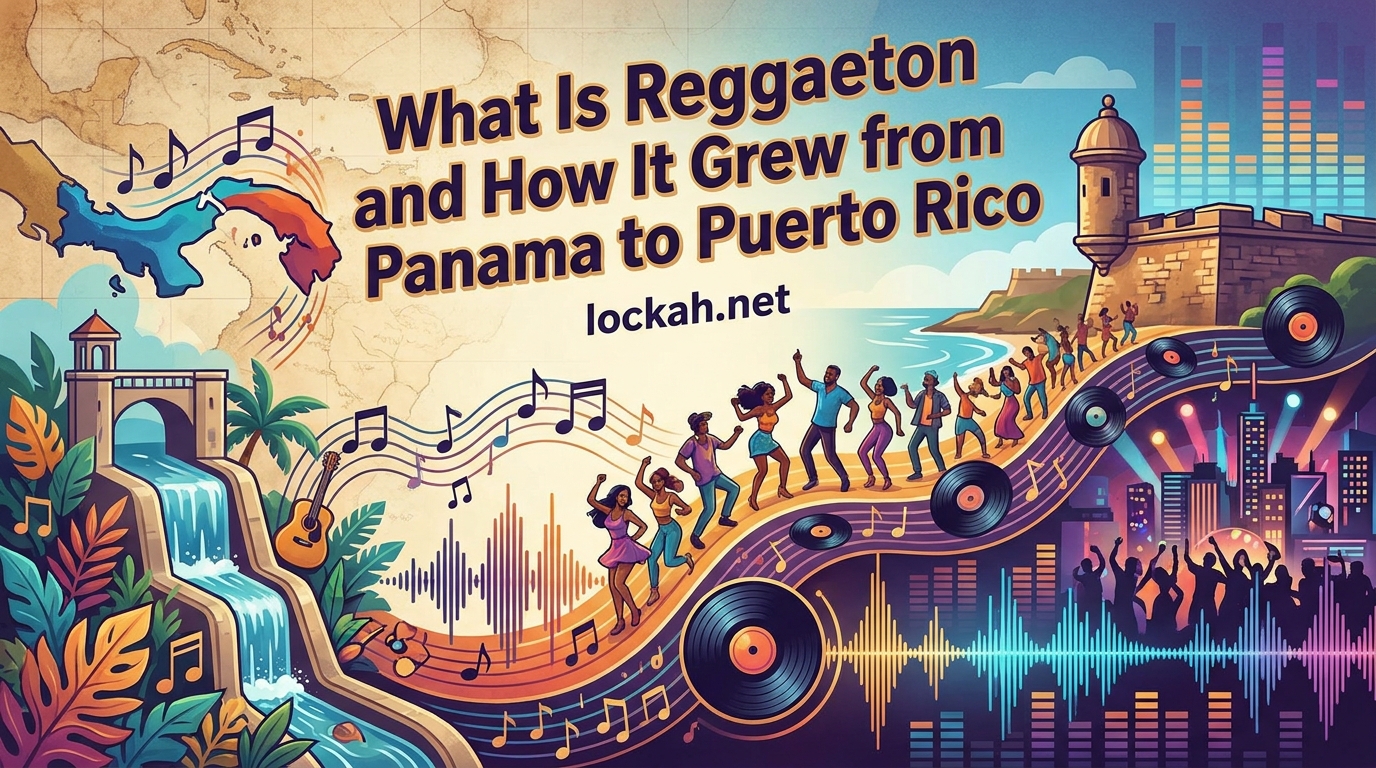
Reggaeton is a genre of popular music that originated in Panama during the late 1980s, combining Jamaican dancehall and reggae influences with Spanish-language rap and hip-hop elements. The genre traveled from Panama to Puerto Rico in the early 1990s, where it evolved into the global phenomenon we recognize today. Understanding what is reggaeton and how it grew from Panama to Puerto Rico reveals a fascinating story of cultural fusion, underground resistance, and musical innovation that spans three decades and multiple Caribbean nations.
In this guide, I will walk you through the complete history of reggaeton. You will learn about the Panamanian pioneers who created reggae en espanol, how the sound migrated to Puerto Rico and transformed into the underground movement, and why the genre dominates global music charts in 2026.
Whether you are a longtime fan or just discovering the genre through artists like Bad Bunny and Karol G, this article will give you the full picture of where reggaeton came from and how it became the voice of Latin urban culture worldwide.
What Is Reggaeton? A Clear Definition (2026)
Reggaeton is a musical genre that blends Jamaican dancehall rhythms with Spanish-language vocals, incorporating elements of hip-hop, reggae, and Latin American musical traditions. The genre is characterized by its distinctive beat pattern known as the dembow, repetitive hooks, and lyrics that often address urban life, partying, romance, and social realities.
Unlike traditional reggae, which maintains a slower, roots-oriented sound, reggaeton features faster tempos and digital production techniques. The vocals typically alternate between rapping and melodic singing, creating a hybrid style that appeals to both hip-hop and Latin pop audiences.
The Dembow Rhythm: Reggaeton’s Signature Sound
The dembow rhythm is the heartbeat of reggaeton. This beat pattern originated from the 1990 Jamaican dancehall track “Dem Bow” by Shabba Ranks, produced by Bobby Digital. The rhythm features a distinctive drum pattern that emphasizes the off-beat, creating an infectious, danceable groove that drives every reggaeton track.
When Panamanian artists began experimenting with Spanish lyrics over dancehall beats, they kept the dembow as the foundation. This rhythm remains unchanged in modern reggaeton production, serving as the thread that connects the genre from its origins to contemporary hits dominating streaming platforms in 2026.
Reggae en Espanol: The Precursor to Reggaeton
Before the term “reggaeton” existed, Panamanian artists called their music “reggae en espanol” or Spanish reggae. These pioneers translated the themes and sounds of Jamaican reggae into Spanish, addressing Panamanian realities and experiences. The term “reggaeton” itself did not emerge until the mid-1990s in Puerto Rico, when DJs and producers began refining the sound into something distinct.
The linguistic shift from English-based dancehall to Spanish vocals was crucial. It made the music accessible to Latin American audiences while maintaining the energy and rhythm that made Caribbean sounds so compelling. This foundation in Panama would eventually travel across the Caribbean Sea to transform Puerto Rican music culture.
Panama Origins: Where Reggaeton Was Born?
Reggaeton was born in Panama during the late 1980s, specifically in the working-class neighborhoods of Panama City and the former Canal Zone. The country has deep historical ties to Jamaica, with thousands of Jamaican workers having immigrated to build the Panama Canal in the early 20th century. This Jamaican diaspora brought their music, culture, and sound systems to Panama, creating fertile ground for reggae and dancehall to take root.
By the 1980s, sound system culture dominated Panamanian parties. Mobile DJs would set up massive speaker systems in neighborhoods, playing the latest Jamaican dancehall records to crowds eager for the energetic beats. Young Panamanians grew up listening to Shabba Ranks, Yellowman, and other dancehall legends, internalizing the rhythms that would later define reggaeton.
El General: The Father of Reggae en Espanol
Edgardo Franco, known artistically as El General, stands as the most important figure in reggaeton’s creation. Starting in the late 1980s, El General began recording Spanish-language versions of Jamaican dancehall rhythms. His 1988 debut track “Tu Pun Pun” and subsequent hits like “Rica y Apretadita” and “Te Ves Buena” established the template for the entire genre.
El General’s success proved that Spanish lyrics over dancehall beats could attract massive audiences. He sold millions of records across Latin America, introducing the sound that would eventually become reggaeton to listeners from Mexico to Argentina. Without El General’s pioneering work, the genre as we know it would not exist.
Other Panamanian Pioneers
While El General receives much of the recognition, other Panamanian artists were equally crucial to the genre’s development. Renato, another early pioneer, recorded hits like “La Chica de los Ojos Bonitos” and helped establish the romantic side of reggae en espanol. Nando Boom contributed “Ellos Benia,” one of the most influential early tracks.
These artists created a movement that extended beyond individual hits. They established recording studios, distribution networks, and a fan base that proved Spanish-language dancehall music had commercial viability. Their collective work laid the foundation for what would eventually evolve into reggaeton.
The Origin Debate: Did Panama Invent Reggaeton?
Yes, Panama invented the musical foundation that became reggaeton. The genre’s core elements – Spanish lyrics over Jamaican dancehall beats – first appeared in Panama during the late 1980s. However, Puerto Rico played an equally essential role in shaping reggaeton into its modern form.
Puerto Rican artists took the Panamanian template and added hip-hop influences, digital production techniques, and distinctive lyrical flows. The term “reggaeton” itself was coined in Puerto Rico, and the genre’s explosion into global popularity came through Puerto Rican artists and the island’s powerful music industry infrastructure.
The truth is that reggaeton represents a collaborative creation between both nations. Panama provided the foundation; Puerto Rico built the house. Both countries deserve recognition for their contributions to one of the world’s most influential musical genres.
How Reggaeton Grew from Panama to Puerto Rico?
Reggaeton traveled from Panama to Puerto Rico through a combination of migration, cassette tape trading, and the natural cultural exchange that occurs between Caribbean nations with shared musical tastes. By the early 1990s, Panamanian reggae en espanol recordings had reached Puerto Rico, where young artists began experimenting with the sound in local clubs and parties.
The migration coincided with significant social and economic changes in Puerto Rico. The island was experiencing high unemployment and social tensions, particularly in urban housing projects known as “caserios.” Young people in these communities gravitated toward the raw, energetic sound of reggae en espanol because it spoke to their realities in ways that mainstream salsa and pop did not.
The Noise: Where Puerto Rican Reggaeton Was Born
In 1991, DJ Negro (Ivan Joy) launched a weekly club night called “The Noise” at a San Juan nightclub. This event became the birthplace of Puerto Rican reggaeton. Every week, aspiring rappers and singers would gather to perform over dancehall beats, competing for the crowd’s attention and developing their skills in a supportive but competitive environment.
The Noise functioned as both a party and a training ground. Artists like Daddy Yankee, Ivy Queen, and Baby Rasta y Gringo got their start performing at these events. The club’s informal atmosphere allowed for experimentation, and the direct feedback from crowds helped shape what would become the reggaeton sound.
The Underground Era: Building the Movement
Throughout the 1990s, reggaeton existed as an “underground” movement in Puerto Rico. The term “underground” referred both to the music’s unofficial status and to its distribution method. Without major label support, artists sold their music directly from car trunks, at local markets, and through informal networks.
This underground period was crucial for the genre’s development. Free from commercial pressures, artists experimented freely with flows, production techniques, and lyrical content. They refined the dembow rhythm, developed the distinctive rapping style known as “soneo,” and established the thematic concerns – partying, romance, street life, and social commentary – that would define reggaeton lyrics.
Mano Dura: Persecution and Resistance
The Puerto Rican government did not welcome the underground movement. During the mid-1990s, Governor Pedro Rossello implemented “Operation Mano Dura” (Iron Fist), a tough-on-crime initiative that targeted urban youth culture. Police regularly raided clubs playing reggaeton, confiscated cassette tapes, and arrested artists and promoters.
This persecution only strengthened the movement. Artists began viewing themselves as cultural rebels, and fans felt a deeper connection to music that authorities tried to suppress. The repression gave reggaeton an edge of authenticity and resistance that attracted young people across Puerto Rico and eventually throughout Latin America.
Key Artists and Pioneers Who Shaped the Genre?
The story of reggaeton is inseparable from the artists who created, refined, and popularized the sound. From the Panamanian originators to the Puerto Rican superstars who brought the genre global, these musicians defined what reggaeton could be and where it could go.
El General: The Panama Pioneer
Edgardo Franco, performing as El General, remains the most significant figure in reggaeton’s creation. His work in the late 1980s and early 1990s established the commercial viability of Spanish-language dancehall music. Hits like “Muevelo” and “Tu Pun Pun” sold millions and proved that Latin audiences craved the energetic rhythms that would eventually define reggaeton.
Daddy Yankee: The King of Reggaeton
Ramon Ayala, known as Daddy Yankee, started his career performing at The Noise club nights in the early 1990s. Over three decades, he has become the most commercially successful reggaeton artist in history. His 2004 single “Gasolina” launched reggaeton into global mainstream consciousness, reaching audiences far beyond Latin America.
Daddy Yankee’s influence extends beyond his music. He pioneered the business model for reggaeton stardom, establishing his own label (El Cartel Records), developing merchandise lines, and consistently evolving his sound to stay relevant across decades. His retirement in 2023 marked the end of an era for the genre.
Ivy Queen: The Queen of Reggaeton
Martha Ivelisse Pesante, performing as Ivy Queen, earned her title as the “Queen of Reggaeton” through three decades of groundbreaking work. She was one of the few women performing at The Noise club nights, and she fought through industry sexism to become one of the genre’s most respected voices. Her 2005 hit “La Vida Es Asi” remains a classic.
Ivy Queen’s importance extends beyond her music. She carved space for women in a male-dominated genre, addressing themes of female empowerment and independence that male artists rarely touched. Her success opened doors for contemporary female stars like Karol G, Natti Natasha, and Becky G.
Tego Calderon: The Voice of the Streets
Tego Calderon brought a distinct Afro-Caribbean identity to reggaeton that influenced the genre’s evolution. His lyrics emphasized black pride, social consciousness, and authentic street narratives. Albums like “El Abayarde” (2002) and “The Underdog” (2006) demonstrated that reggaeton could achieve artistic depth while maintaining dancefloor appeal.
Tego’s influence is audible in the work of contemporary artists like Bad Bunny, who cite him as a primary inspiration. He proved that reggaeton could address serious social themes without losing its entertainment value.
Vico C: The Philosopher of Rap
While often categorized as a Spanish-language rapper rather than strictly reggaeton, Vico C’s influence on the genre is undeniable. His sophisticated lyrics, complex rhyme schemes, and commitment to addressing social issues raised the artistic bar for all Spanish-language urban music. His 1990s hits like “La Recta Final” and “Emboscada” influenced an entire generation of reggaeton lyricists.
Women Pioneers Beyond Ivy Queen
While Ivy Queen receives much of the recognition, other women were present in reggaeton’s early days. Lisa M performed at The Noise events and released underground tracks in the mid-1990s. La Conexión and other female artists contributed to the genre’s development despite facing significant barriers in a male-dominated scene.
Today, women have claimed their place in reggaeton more powerfully than ever. Artists like Karol G, Rosalia, Natti Natasha, and Becky G regularly top charts, and the genre has become more inclusive than its underground origins might have predicted.
Musical Characteristics: The Sound of Reggaeton
Reggaeton has distinct musical characteristics that separate it from other Latin and Caribbean genres. Understanding these elements helps explain why the sound caught on so powerfully and why it remains immediately recognizable decades after its creation.
The Dembow Rhythm Pattern
The dembow beat is reggaeton’s non-negotiable foundation. This rhythm pattern places emphasis on the off-beats, creating a syncopated groove that compels movement. The pattern follows a simple but addictive structure: boom-ch-boom-chick, with variations introduced through hi-hats, snare rolls, and percussion elements.
Modern reggaeton producers have evolved the dembow considerably from its 1990s origins. Today’s productions incorporate elements of trap, EDM, and pop, layering synthesizers and vocal processing over the traditional rhythm. However, the core dembow pattern remains unchanged, maintaining the genre’s connection to its dancehall roots.
Vocal Delivery: Rapping and Singing
Reggaeton vocals typically alternate between rapped verses and melodic choruses. The rapping style, known as “soneo” or “singing-rapping,” differs from American hip-hop in its rhythmic placement and melodic sensibility. Reggaeton rappers often stay closer to the beat, weaving their vocals around the dembow pattern rather than floating over it.
The choruses, or “hooks,” tend toward melodic simplicity and repetition. This makes them instantly memorable and highly effective in club settings. Many classic reggaeton hooks consist of just a few words repeated over the dembow, creating an almost hypnotic effect that drives dancing.
Lyrical Themes and Evolution
Early reggaeton lyrics focused on partying, dancing, romance, and street life. The underground era emphasized raw depictions of urban reality, including violence and poverty, while the commercial era shifted toward more accessible themes of love, attraction, and celebration.
Contemporary reggaeton has expanded lyrically. Artists like Bad Bunny address mental health, political issues, and social justice alongside traditional party themes. This evolution has helped the genre maintain relevance with audiences who demand more substance from their music.
Perreo: The Dance That Defines Reggaeton
Perreo is the dance style inseparable from reggaeton culture. Characterized by close partner dancing with emphasis on hip movements and grinding, perreo emerged from the same Caribbean clubs where reggaeton developed. The dance takes its name from the Spanish word for dog (“perro”) because of its grounded, rhythmic hip movements.
The dance style became controversial almost immediately. Critics viewed it as overly sexual, and it was frequently banned at school events and family gatherings. However, for reggaeton fans, perreo represented freedom, sensuality, and cultural identity rather than anything negative.
The Cultural Significance of Perreo
Perreo carries deep cultural meaning within reggaeton culture. The dance democratizes the dancefloor – you do not need formal training or expensive equipment to participate. Anyone can move to the dembow beat, and the dance’s intimate nature builds connection between partners.
For Latin American youth, perreo represented a break from traditional dance forms like salsa or merengue that required formal steps and training. It was accessible, modern, and belonged to their generation rather than their parents’. This generational ownership helped drive reggaeton’s popularity among young people.
Evolution and Mainstream Acceptance
Perreo has evolved significantly since the 1990s. While the core movement remains, dancers have developed increasingly complex footwork, spins, and acrobatic elements. International dance competitions now feature perreo categories, and professional dancers post tutorials to millions of followers on social media.
The dance has gained mainstream acceptance as reggaeton itself has become global pop culture. What was once considered scandalous is now standard at weddings, clubs, and parties worldwide. This acceptance reflects broader shifts in attitudes toward Latin culture and dance.
From Underground to Global Phenomenon
Reggaeton’s journey from underground Puerto Rican movement to global dominance took approximately two decades. The genre’s breakthrough came in the early 2000s, accelerated by specific moments that introduced the sound to mainstream audiences worldwide.
The Golden Age: 2002-2010
The early 2000s represent reggaeton’s golden age. During this period, the genre dominated Latin American radio and began penetrating mainstream U.S. markets. Daddy Yankee’s “Gasolina” (2004) became the breakthrough moment – the song reached audiences far beyond Spanish-speaking communities and established reggaeton as commercially viable in the United States.
This era saw the rise of stars like Don Omar, Wisin y Yandel, Tego Calderon, and Zion y Lennox. Albums moved millions of units, and reggaeton concerts sold out arenas across the Americas. The genre became the dominant sound of Latin urban culture, influencing fashion, language, and lifestyle far beyond music.
Global Expansion
Following the golden age, reggaeton expanded globally. The sound reached Colombia, where Medellin became a secondary hub for the genre, producing stars like J Balvin and Maluma. Artists across Latin America – from Mexico to Argentina to Chile – began incorporating reggaeton elements into their music.
The genre also influenced mainstream pop artists. Justin Bieber, Drake, and other major stars began collaborating with reggaeton artists and incorporating dembow rhythms into their own tracks. This crossover validated reggaeton as a global force rather than a regional Latin genre.
The Bad Bunny Era and Contemporary Dominance
Bad Bunny’s emergence in the late 2010s initiated a new phase of reggaeton history. The Puerto Rican artist brought artistic ambition, genre experimentation, and global perspective to the music. His albums have broken streaming records, and his cultural influence extends far beyond music into fashion, wrestling, and social advocacy.
In 2026, reggaeton dominates global music charts more completely than ever. Streaming data shows reggaeton tracks consistently ranking among the most-played songs worldwide. The genre has become the default sound of global pop, influencing artists across languages and cultures.
Frequently Asked Questions About Reggaeton
How did reggaeton get to Puerto Rico?
Reggaeton traveled from Panama to Puerto Rico during the early 1990s through cassette tape trading and cultural exchange between Caribbean nations. Panamanian reggae en espanol recordings reached Puerto Rican clubs and neighborhoods, where young artists began experimenting with the sound. The Noise club in San Juan, launched by DJ Negro in 1991, became the gathering place where Puerto Rican reggaeton developed its distinct identity.
Did Panama invent reggaeton?
Yes, Panama invented the foundational elements of reggaeton in the late 1980s. Panamanian artists like El General and Renato created reggae en espanol by singing Spanish lyrics over Jamaican dancehall beats. However, Puerto Rico played an equally crucial role in evolving these elements into modern reggaeton during the 1990s underground era.
Is reggaeton from Puerto Rico or Panama?
Reggaeton has roots in both countries. Panama originated the core concept of Spanish lyrics over dancehall beats in the late 1980s. Puerto Rico refined the sound, added hip-hop influences, and created the modern reggaeton format during the 1990s. Both nations deserve recognition for their essential contributions to the genre’s development.
What is reggaeton?
Reggaeton is a musical genre that combines Jamaican dancehall rhythms with Spanish-language vocals, incorporating hip-hop and reggae elements. The genre is defined by the dembow rhythm pattern and typically features lyrics about urban life, partying, and romance. It originated in Panama during the late 1980s and evolved into a global phenomenon through Puerto Rico’s 1990s underground scene.
Who was the first reggaeton artist?
El General (Edgardo Franco) from Panama is widely recognized as the first reggaeton artist. Beginning in the late 1980s, he recorded Spanish-language songs over Jamaican dancehall beats, creating the template for the entire genre. His hits like Tu Pun Pun and Muevelo established the commercial viability of Spanish-language dancehall music.
What is the dembow rhythm?
The dembow is the signature beat pattern of reggaeton, originating from Shabba Ranks’ 1990 Jamaican dancehall track Dem Bow. It features a distinctive off-beat drum pattern (boom-ch-boom-chick) that creates an infectious, danceable groove. Every reggaeton track uses this rhythm as its foundation, making it the genre’s defining musical characteristic.
Conclusion: The Unstoppable Rise of Reggaeton
Reggaeton’s story is one of the most remarkable journeys in modern music history. What began as an experiment in Panama – Spanish lyrics over Jamaican dancehall beats – grew through Puerto Rican innovation into a global cultural force that shapes music, fashion, and language worldwide.
Understanding what is reggaeton and how it grew from Panama to Puerto Rico helps explain why the genre resonates so powerfully. It represents the authentic voice of Latin urban experience, forged through struggle and resistance, refined through decades of artistic innovation, and validated by global audiences who recognize its energy and authenticity.
From El General’s pioneering recordings in Panama to Daddy Yankee’s global conquest to Bad Bunny’s contemporary dominance, reggaeton has proven its staying power. The genre shows no signs of slowing in 2026 or beyond. As you listen to the next reggaeton hit on the radio or dance to the dembow at a party, remember the journey – from Panamanian sound systems to Puerto Rican underground clubs to global stadiums – that brought this unstoppable sound to your ears.