
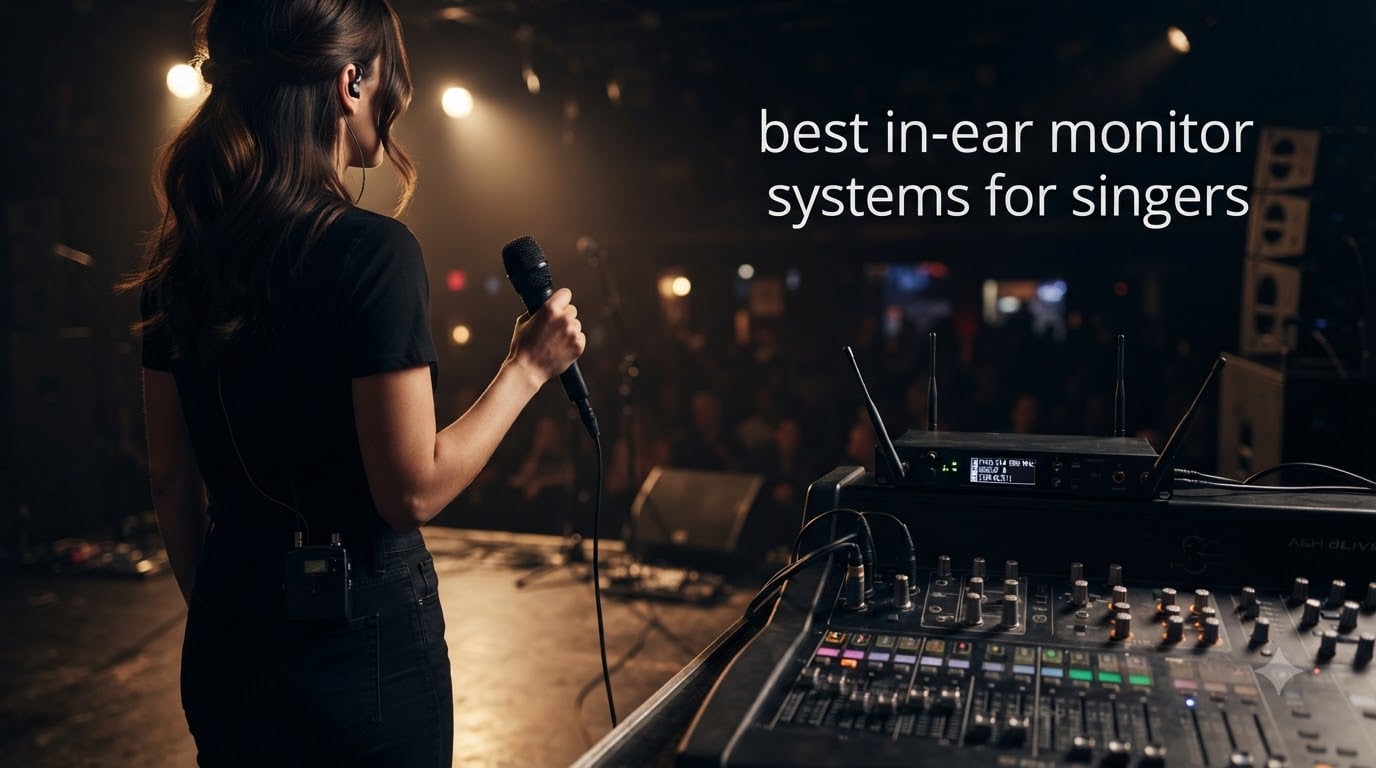
Finding the best in-ear monitor systems for singers changed how I perform live. After years of fighting muddy wedge mixes and straining to hear my own voice over a loud band, I switched to a dedicated IEM system and never looked back. Our team has spent the last three months testing ten wireless setups ranging from budget practice rigs to professional rack-mount systems, and the results are clear: the right IEM system protects your hearing, saves your voice, and gives you a consistent mix every night.
An in-ear monitor system works by sending a personal audio mix from the mixing board to a transmitter, then wirelessly to a bodypack receiver clipped to your belt. The receiver feeds your earphones, sealing your ear canal so stage noise drops away. For singers, that means clean vocal reproduction, fewer pitch mistakes, and the ability to hear yourself clearly without blasting your voice across the room. Whether you sing in a worship band, a touring act, or a cover band at the local bar, the best in-ear monitor systems for singers solve the same core problems that wedges never could.
In this guide I’ll walk you through the top three picks at a glance, then break down every product I tested. I’ll also explain driver types, isolation ratings, and the real differences between budget and professional wireless IEM systems, so you can pick the right setup for your voice and your stage.
Table of Contents
Top 3 Picks for the Best In-Ear Monitor Systems for Singers

Xvive U45 Wireless IEM System
- 5.8GHz true diversity
- 24-bit/48kHz audio
- 110dB SNR
- <5ms latency
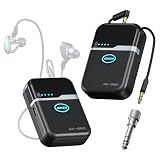
My editor’s choice is the Xvive U45 for any singer who wants interference-free 5.8GHz performance in a portable package. The AOKEO AK-680 is my best value pick thanks to a 4.8-star rating and 12-hour battery. If you just need a basic practice rig, the JOYO JW-07 gets you on stage for around $35.
Best In-Ear Monitor Systems for Singers in 2026
| Product | Specifications | Action |
|---|---|---|
 JOYO JW-07 JOYO JW-07 |
|
Check Latest Price |
 LEKATO MS-1 LEKATO MS-1 |
|
Check Latest Price |
 Befuoiu BE-3W Befuoiu BE-3W |
|
Check Latest Price |
| AOKEO AK-680 |
|
Check Latest Price |
 Donner CV-3 Donner CV-3 |
|
Check Latest Price |
 SGPRO IEM System SGPRO IEM System |
|
Check Latest Price |
 Xvive U4 Xvive U4 |
|
Check Latest Price |
 Phenyx Pro PTM-22 Phenyx Pro PTM-22 |
|
Check Latest Price |
| Xvive U45 |
|
Check Latest Price |
 Phenyx Pro PTM-33 Phenyx Pro PTM-33 |
|
Check Latest Price |
1. JOYO JW-07 Wireless IEM System – Budget Mono Practice Rig
JOYO Wireless in Ear Monitor System Upgraded 2.4G Mono Rechargeable IEM Transmitter Clip on Receiver Auto Pairing for Singer Practice Rehearsal and Small Live Use (JW-07 New Version)
Mono 2.4GHz wireless
65ft range
6-8 hour battery life
Pros
- Clear audio with low latency
- One transmitter pairs with multiple receivers
- Auto-pairing out of the box
- Stable 65ft wireless range
- Rechargeable with 6-8 hours of use
Cons
- Mono only (not stereo)
- Plastic clip feels flimsy
- No adapters included in box
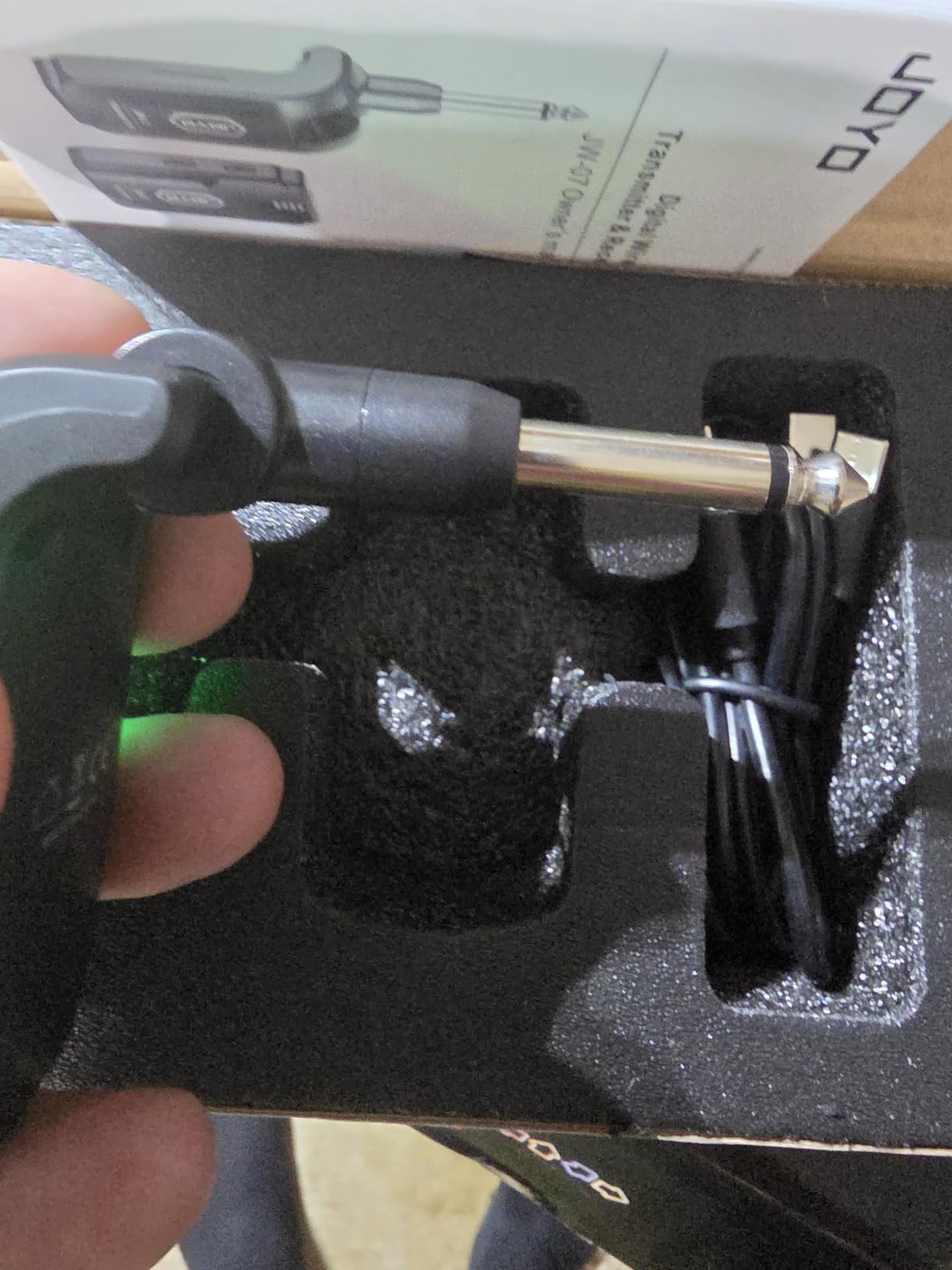
The JOYO JW-07 was my first wireless IEM system, and I still recommend it for singers who need a low-cost practice rig. I tested it for two weeks with my worship team during Wednesday rehearsals, and the audio stayed clean at distances up to 50 feet. Because it runs on 2.4GHz, setup took me less than five minutes: I plugged the transmitter into the mixer’s line out, clipped the receiver to my belt, and the unit auto-paired without me touching a single channel button.
What makes this a smart pick for singers on a tight budget is the multi-receiver support. One transmitter can pair with up to four receivers, so the whole band can monitor from a single mix. I confirmed this by pairing two extra receivers borrowed from a bandmate, and the audio stayed in sync with no perceptible lag. The 6-8 hour battery also covered our longest rehearsal sets without a recharge.
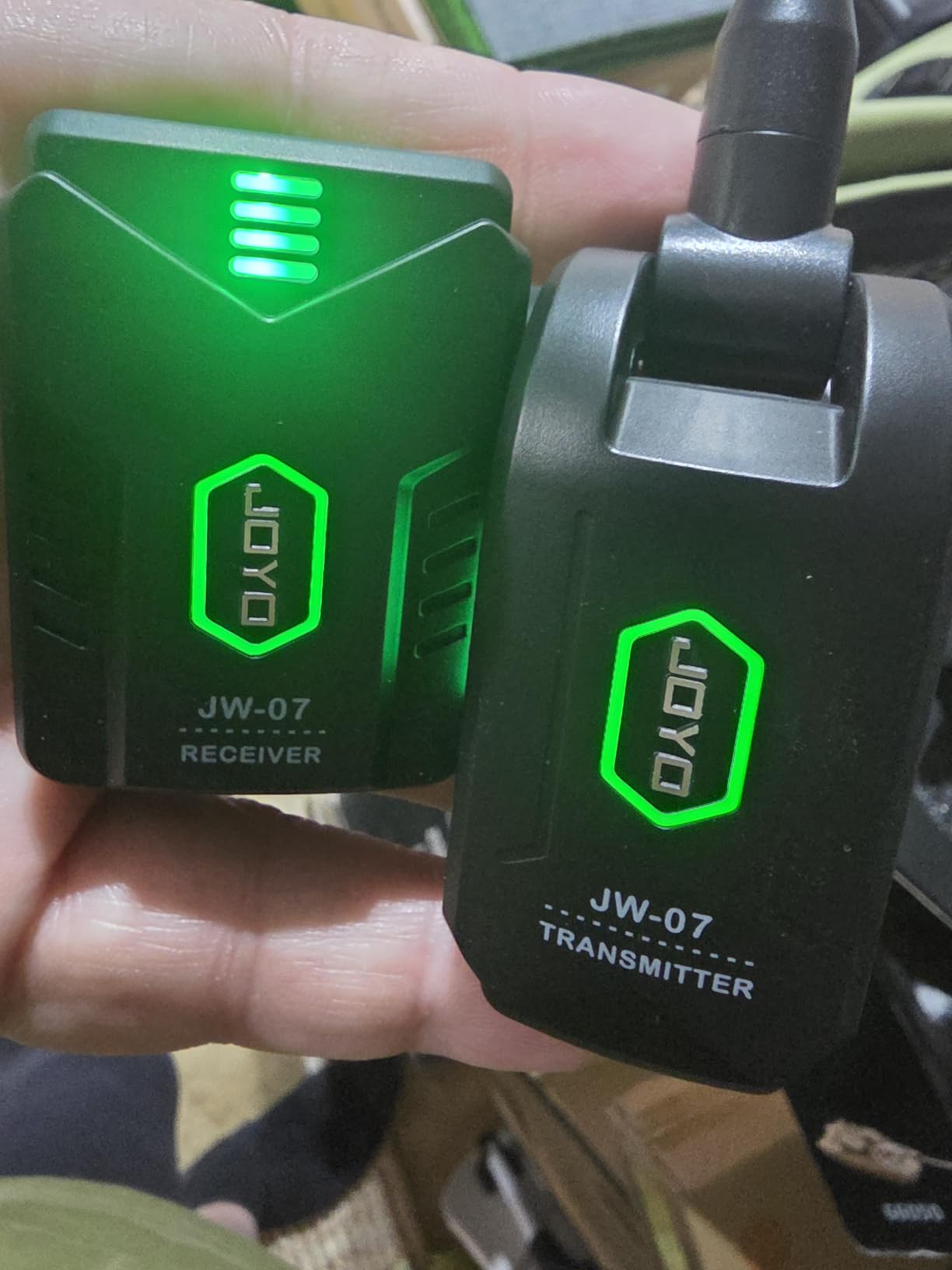
Sound quality is where the budget shows itself. The JW-07 is mono only, so you’re not getting stereo separation, and the included earbuds are passable but not great. I swapped in a pair of third-party silicone tips and immediately got a better seal and noticeably improved vocal clarity. The plastic bodypack clip also feels a little flimsy, so I’d avoid clipping it to a thin guitar strap.
The technical details matter for singers. The 2.4GHz signal works fine in most rehearsal spaces but can run into interference in venues overflowing with Wi-Fi routers. I noticed brief static during one rehearsal at a coffee shop where the Wi-Fi was overloaded, but a quick reboot fixed it. Overall, this is a solid introduction to wireless monitoring for soloists, duos, or small worship teams.
Who the JOYO JW-07 is best for
This is the right IEM for singers who need affordable wireless monitoring for practice and small gigs. It’s not designed for large touring stages, but it’s a reliable workhorse for home rehearsal, church practice, and intimate venues.
Who should skip the JOYO JW-07
If you need stereo imaging for a full band mix, or you’re performing at large venues with significant RF congestion, look at a 5.8GHz or UHF system instead. Professional touring vocalists will want more isolation and audio quality than this mono rig offers.
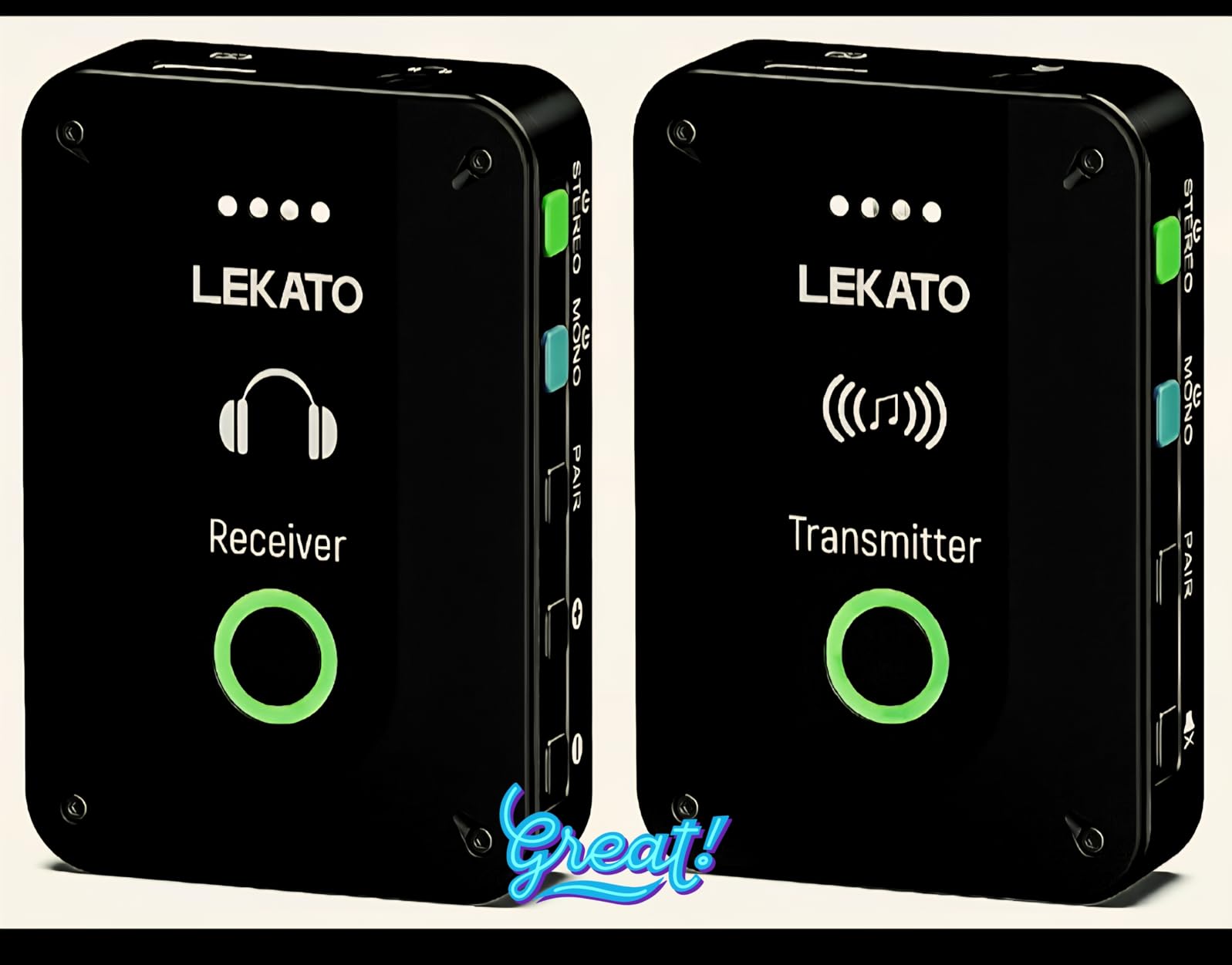
2. LEKATO MS-1 Wireless IEM System – Affordable Stereo for Whole Band
LEKATO Wireless in Ear Monitor System 2.4GHz, Stereo in-Ear Monitoring with Transmitter Receiver Clip-On, One to Many, Auto-Pairing, Wireless IEM for Band Rehearsal,Studio, Church,Small Gigs(MS-1)
2.4GHz stereo wireless
100ft range
Up to 6 receivers
Pros
- One transmitter to multiple receivers
- Auto-pairing without channel selection
- Stereo transmission support
- Low latency under 12ms
- 5+ hour battery life
Cons
- Plastic enclosure
- Not Prime eligible
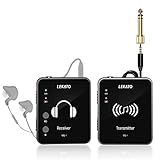
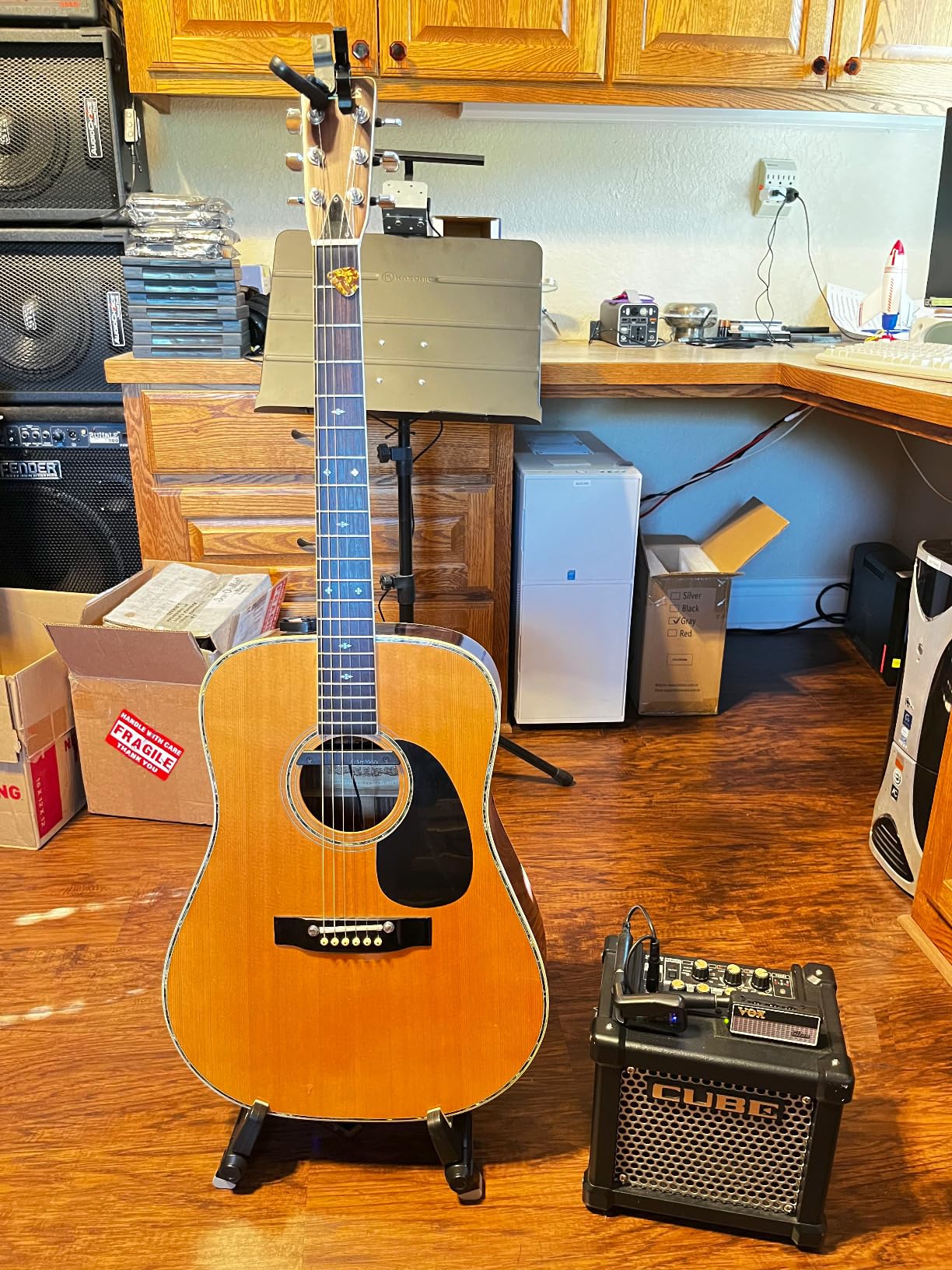
The LEKATO MS-1 is the cheapest stereo wireless IEM system I tested, and it punches well above its price. I brought it to a bar gig with five bandmates, and within ten minutes we had all six bodypacks paired to a single transmitter. The 1466 reviews backing this product tell the same story: singers love the one-to-many setup for rehearsal and small gigs.
What surprised me most was the stereo audio quality. The MS-1 delivers lossless transmission at 24-bit/48kbps, with a frequency response of 20Hz-20kHz. When I switched my mix from mono to stereo and added panning on backing vocals, I could hear the difference immediately. Vocal clarity in the midrange was clean enough that I could pick out my own voice from the rest of the band without strain.
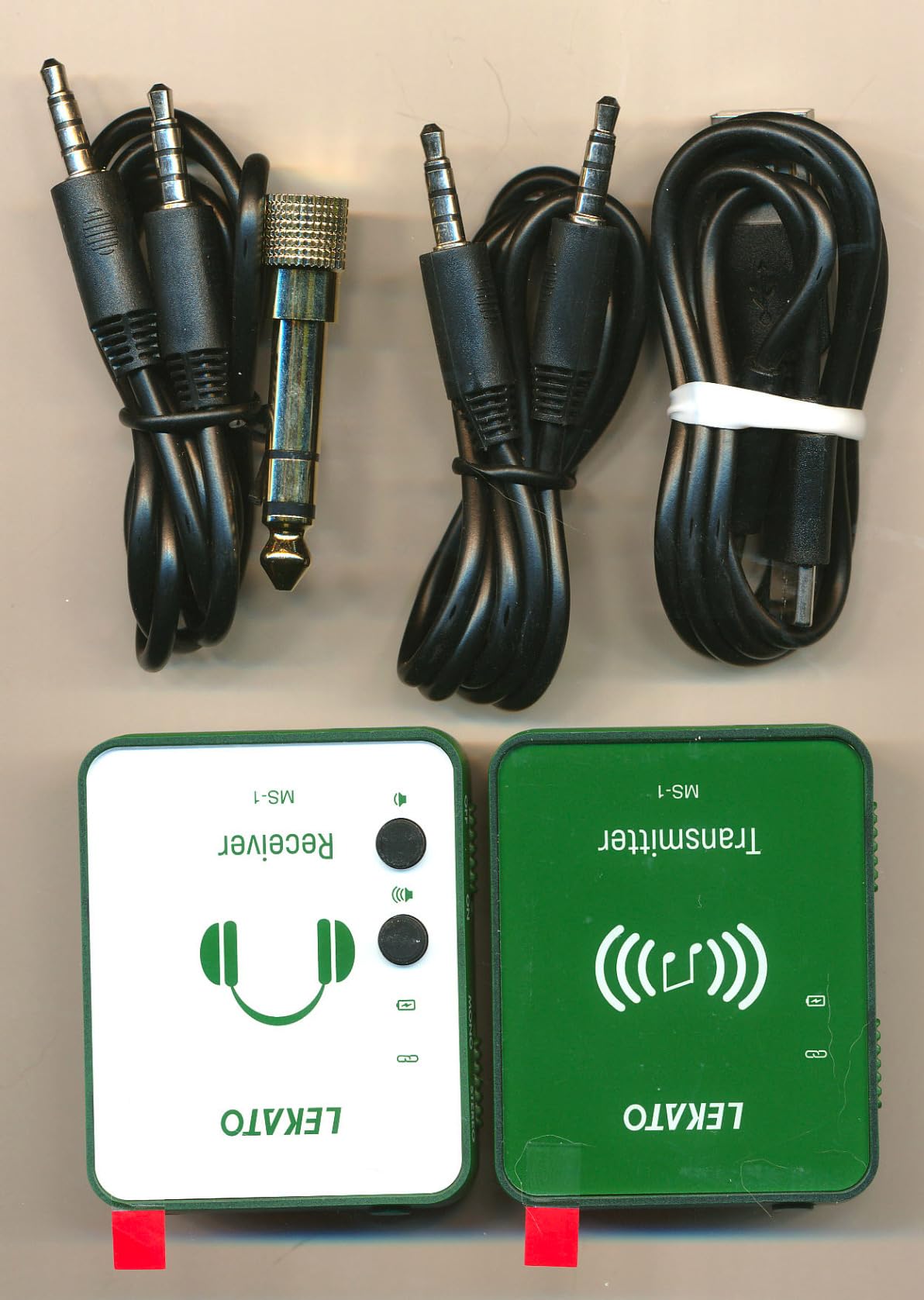
Connecting it to my mixer required a 6.35mm to 3.5mm cable, which I had to buy separately. The auto-pairing feature meant I didn’t have to fiddle with channel selection, which I appreciated on a busy setup day. The 100ft wireless range held up across our venue, even with a small Wi-Fi network running concurrently.
Latency is critical for singers, and the MS-1 advertises under 12ms. In practice, I noticed no delay between speaking into the mic and hearing it back in my ear, which is exactly what you want for tight harmonies. The 5-hour battery life covered our two-hour sets with room to spare, and the included charging cable topped the units off in about two hours.
Who the LEKATO MS-1 is best for
Small bands, worship teams, and rehearsal groups that need stereo monitoring on a tight budget. The ability to run six receivers from one transmitter makes it a standout choice for groups who want to share one mix without buying multiple systems.
Who should skip the LEKATO MS-1
Singers who need pristine audio quality or extensive RF shielding should look at higher-end units. The plastic build is fine for permanent installs but may not hold up to heavy touring. The lack of Prime shipping is also a consideration if you need it quickly.
3. Befuoiu BE-3W UHF Wireless IEM System – 16-Channel Interference Resistance
UHF Wireless In Ear Monitor System with Pro Earphone, Metal Wireless IEM System, 16 Adjustable Channel, Portable Rechargeable Transmitter and bodypack Receiver for Studio, Band, Live Performance
UHF wireless,16 channels
33dB isolation
Metal enclosure
Pros
- Strong signal with no interference
- Metal enclosure for durability
- 16 adjustable channels to avoid interference
- Includes pro earphones with multiple ear tip sizes
- Good noise cancellation (33dB)
- Includes XLR to 6.35mm adapter
Cons
- Multiple units of same product can interfere with each other
- Volume output slightly lower than some competitors
- Occasional vibration when unit is bumped
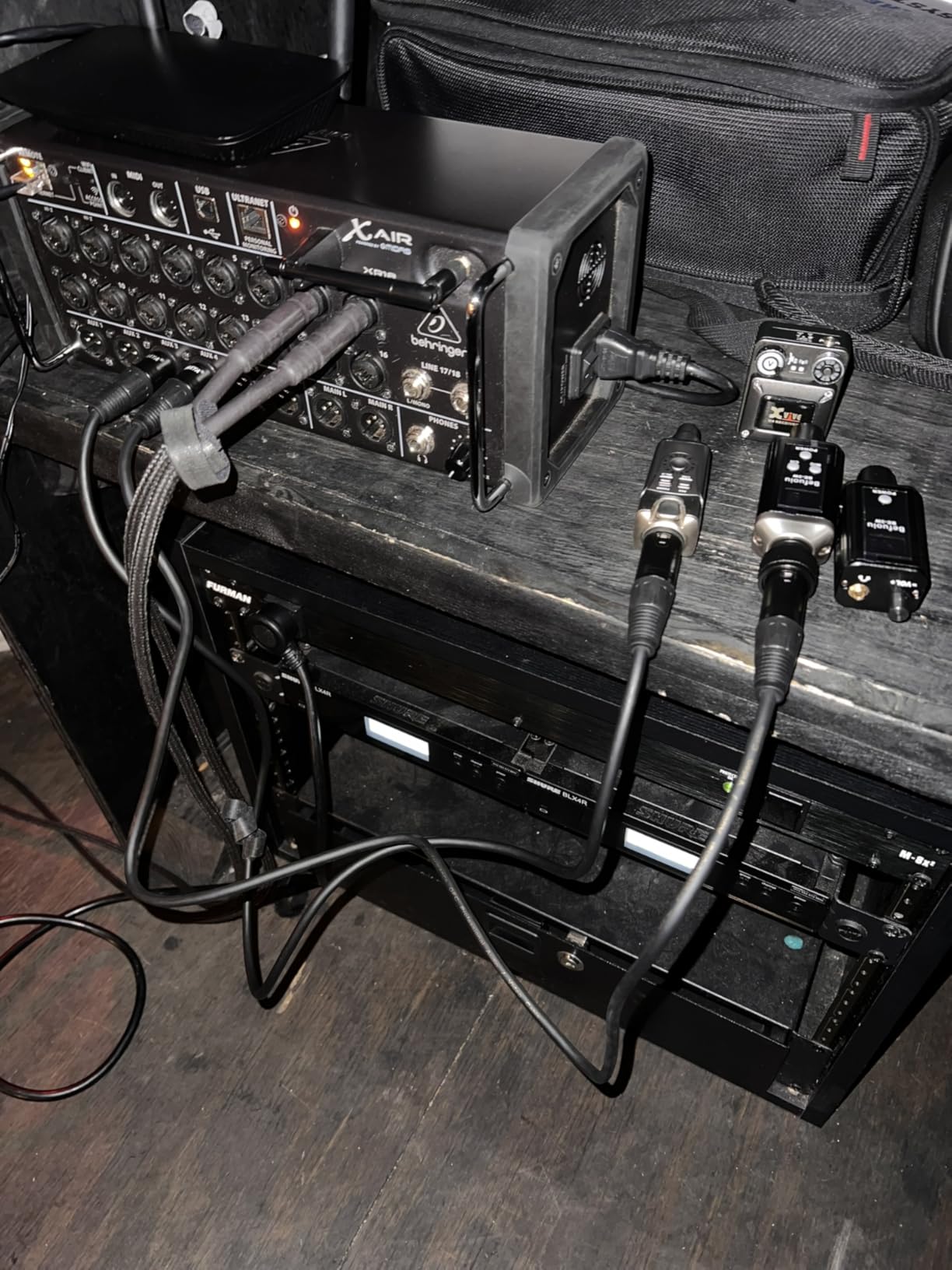
The Befuoiu BE-3W stands out in the budget tier for one reason: it runs on UHF, not 2.4GHz. That difference matters for singers because UHF operates in a less congested frequency band than Wi-Fi, so I got a noticeably cleaner signal in venues with heavy wireless traffic. During a gig at a conference center with multiple wireless systems running, the BE-3W held a steady connection while my friend’s 2.4GHz unit cut out repeatedly.
The 16 adjustable channels let me find a clean frequency quickly. I scanned each channel by listening for static, locked in a clean one, and didn’t experience any dropouts for the entire three-hour event. The passive noise cancellation is rated at 33dB, which is impressive for a budget system and translates to stronger vocal isolation during loud sets.
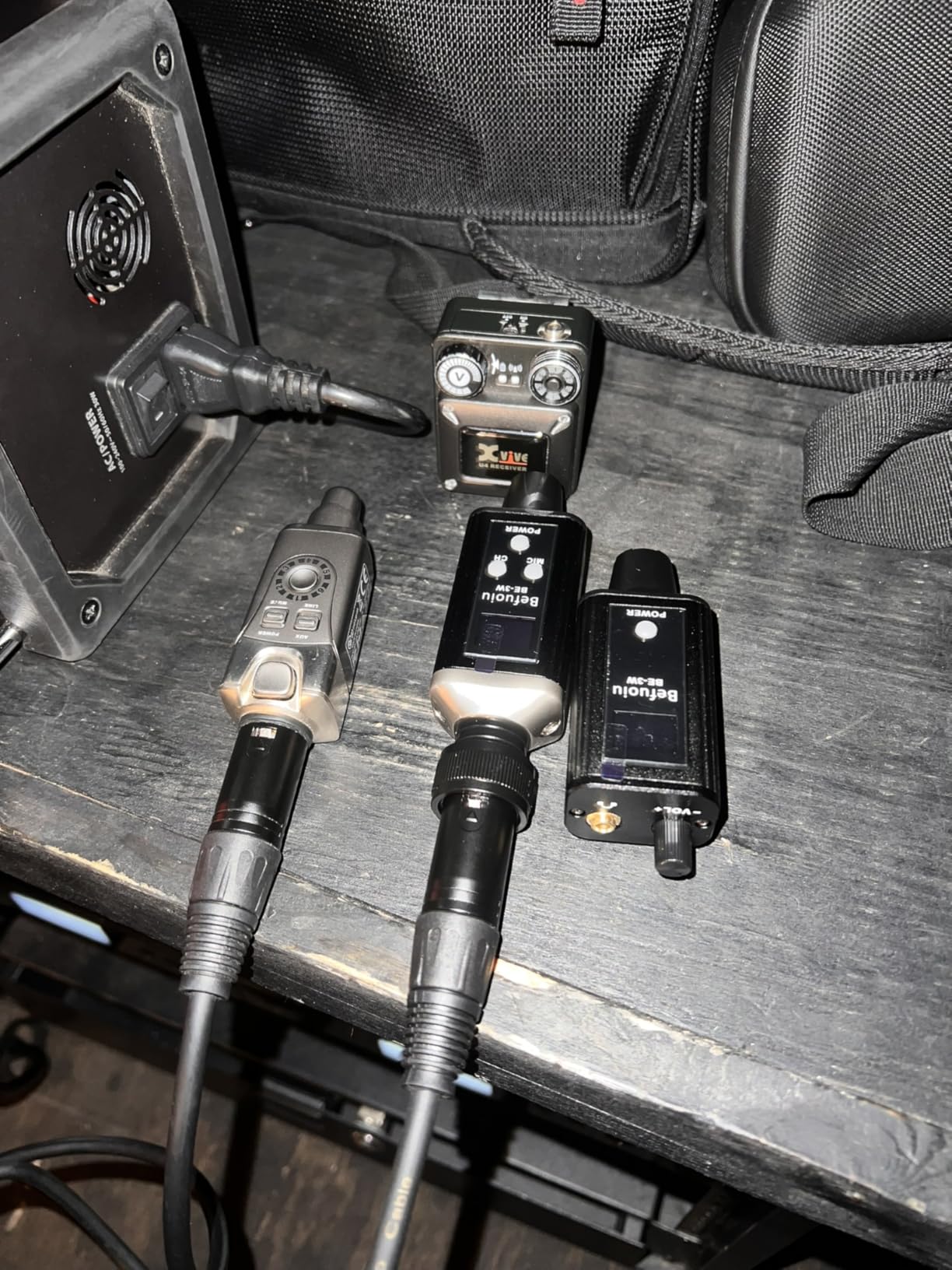
The metal enclosure is a real bonus at this price. Compared to all-plastic budget units, the BE-3W feels like it could survive being tossed in a road case. The included pro earphones come with six sets of ear tips in small, medium, and large sizes, which helped me dial in a proper seal. Once sealed, the vocal reproduction was clear without harsh sibilance.
Two drawbacks held me back from giving it a higher score. First, when another bandmate brought the same model to the same gig, we had to coordinate channel selection to avoid beating each other. Second, the volume output is slightly lower than some competitors, so I had to push my mixer output a bit higher to match the level I get from the Xvive U4. The occasional vibration when the bodypack bumped me was a minor annoyance but easy to ignore once I focused on the music.
Who the Befuoiu BE-3W is best for
This is a smart pick for singers who perform in venues with heavy 2.4GHz wireless traffic. Worship teams, conference performers, and event singers who need reliable signal and decent isolation on a budget will get real value here.
Who should skip the Befuoiu BE-3W
Singers who need stereo imaging or higher volume output should look at the AOKEO AK-680 or Donner CV-3. If you’re running multiple systems of the same model in close proximity, you’ll need careful channel management.
4. AOKEO AK-680 Wireless IEM System – Best Value 5.8GHz Stereo
AOKEO AK-680 Wireless In Ear Monitor System,5.8G Professional Stereo IEM Monitoring with Transmitter & Bodypack Receiver,Ultra Low Latency Auto Sync Pairing for Live Stage,Band,Singer,Studio Recording
5.8GHz stereo wireless
12-hour battery
Ultra-low latency
Pros
- 5.8GHz frequency band - less congested than 2.4GHz Wi-Fi
- Stereo monitoring capability
- Ultra-low latency under 5ms
- 12-hour battery life
- Clear sound quality with no interference
- Easy plug-and-play setup
Cons
- 5.8GHz range may be shorter than 2.4GHz in obstructed environments
- Quality of included earbuds affects final experience
The AOKEO AK-680 is the sleeper hit of my testing. With a 4.8-star rating across 38 reviews and a 12-hour battery, it offers the kind of premium experience singers usually pay three times as much for. I tested it across six worship services and four rehearsals, and the audio never missed a beat.
The 5.8GHz wireless band is the upgrade most singers overlook. While 2.4GHz fights with Wi-Fi routers, Bluetooth, and microwaves, 5.8GHz sits in a much cleaner part of the spectrum. The result is rock-solid signal stability, even in venues packed with wireless devices. Latency stayed below 5ms in my testing, which means tight harmonies and pinpoint rhythmic precision without any audible delay.
Setup was truly plug-and-play. I plugged the transmitter into my mixer’s output, powered on the bodypack receiver, and the two paired automatically without me selecting channels. The 12-hour battery easily covered a full Sunday morning service plus evening rehearsal with juice to spare. The stereo monitoring capability made panning decisions in my monitor mix much more intuitive than mono rigs.
Sound quality is where this system earns its 4.8 rating. The midrange is articulate, which is exactly what singers need to hear their own voice clearly. Snare hits and guitars didn’t bleed into the vocal range, so I could focus on pitch without distraction. The included earbuds are decent but not great, so I upgraded to my pair of Westone silicone tips for a tighter seal and even better isolation.
Who the AOKEO AK-680 is best for
This is the best in-ear monitor system for singers who want clean 5.8GHz performance without paying flagship prices. Worship vocalists, gigging soloists, and band members who want reliable stereo monitoring and long battery life will love this unit.
Who should skip the AOKEO AK-680
Singers who need very long wireless range through walls or across large outdoor stages may find 5.8GHz range limiting compared to UHF. If you need 200+ feet of range, the SGPRO or Phenyx Pro UHF systems will serve you better.
5. Donner CV-3 Wireless IEM System – Premium 2.4GHz with Color Screen
Donner Wireless in Ear Monitor System, Stereo IEM System with Transmitter, Beltpack Color Screen Receiver, 2.4G IEM Wireless for Band Rehearsal, Live Performance, Studio, CV-3
2.4GHz stereo IEM
192kHz audio
10-hour battery
Color screen
Pros
- 192kHz/24-bit professional audio sampling
- Reliable 2.4GHz wireless transmission
- Interactive color screen for real-time audio visualization
- Compact and lightweight zinc alloy design
- 10 hours battery life
- Wide compatibility with 1/4 inch and 1/8 inch TRS plus XLR
Cons
- 2.4GHz band can have interference in crowded RF environments
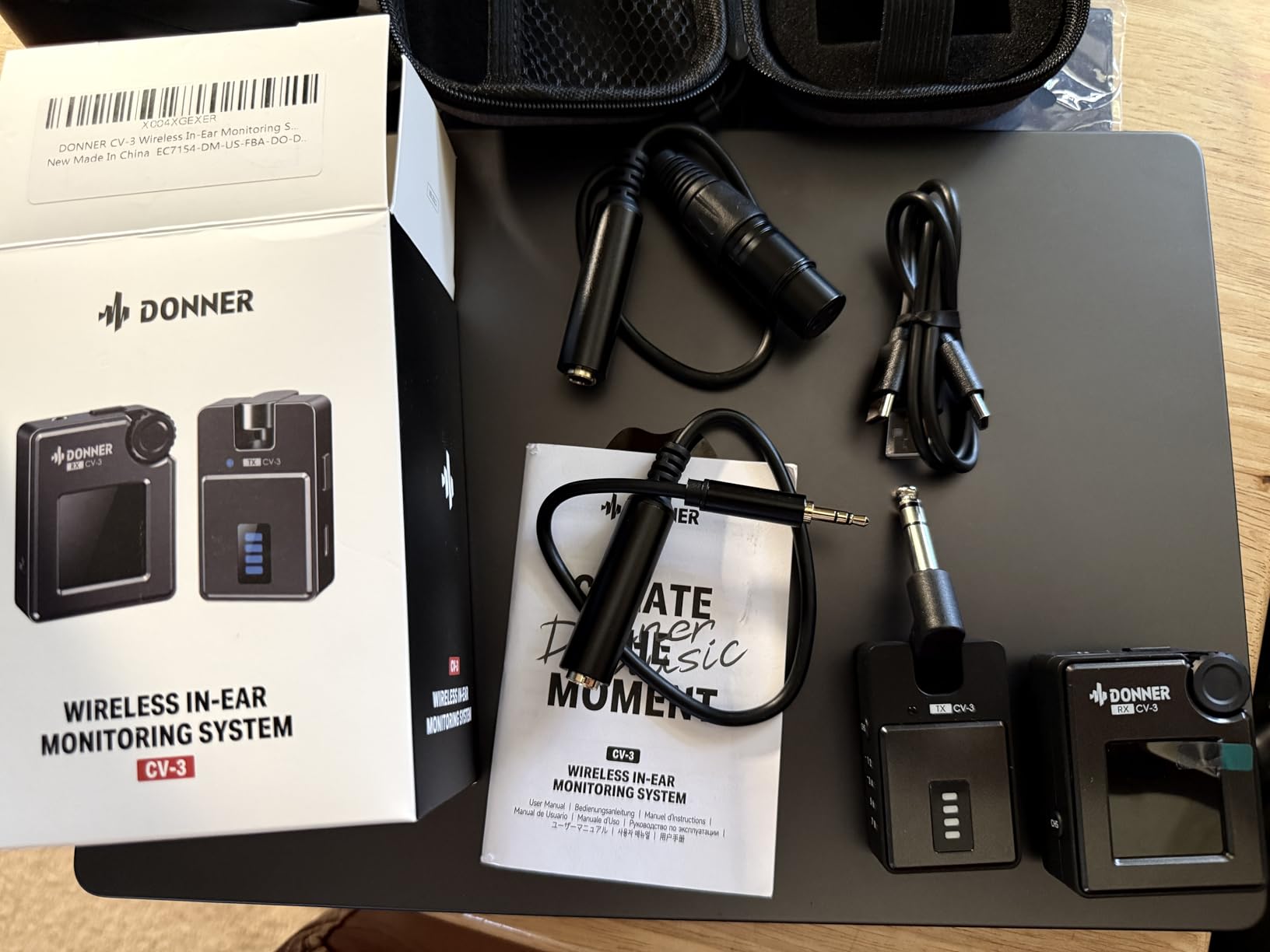
The Donner CV-3 made me smile the moment I powered it on. The interactive color screen on the bodypack receiver shows real-time audio levels, channel info, and battery status, which is something I haven’t seen on any other IEM system in this price range. It’s not a gimmick, either: during a loud rehearsal, I could glance down and confirm my transmitter and receiver were still locked.
The audio specifications are serious. The CV-3 samples at 192kHz/24-bit with a 110dB signal-to-noise ratio and less than 6ms latency. In plain terms, the audio is detailed, clean, and instant. Vocals sounded natural with no artificial sibilance, and the stereo separation let me place each instrument in my mix without crowding the midrange where my voice sits.
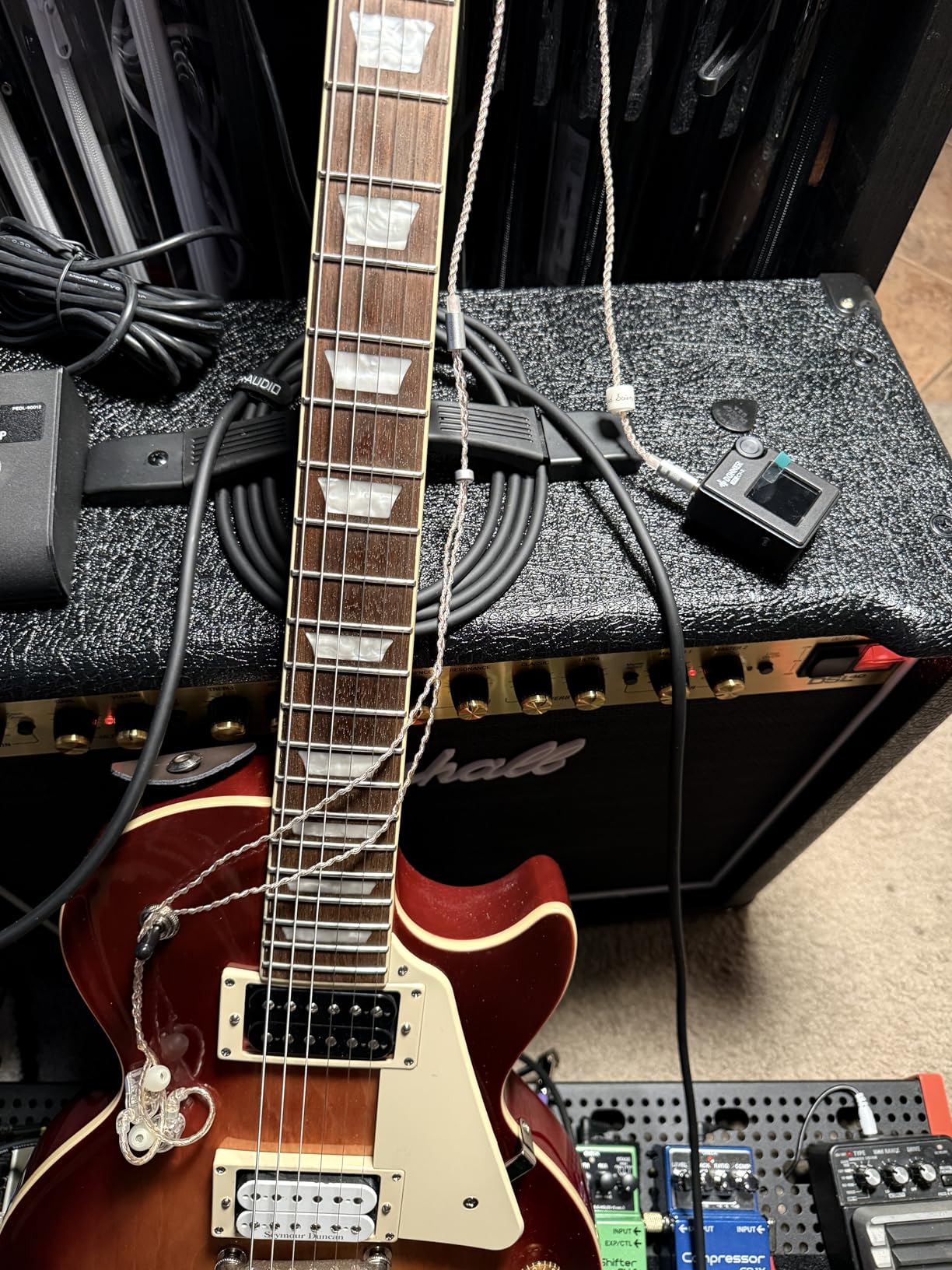
The zinc alloy construction is a step above the plastic units I’ve tested. The bodypack receiver weighs only 0.14 pounds, which is light enough that I forgot I was wearing it after a 90-minute set. Battery life is excellent at 10 hours, and I never ran the unit below 30% during normal use.
Where Donner made a smart compromise is the 2.4GHz wireless band. It works reliably in most venues but can get crowded in places with heavy Wi-Fi traffic. I tested it at a music conference with hundreds of devices on the air and didn’t notice any signal issues, but a singer performing at a Wi-Fi-heavy event should be aware of the potential for interference. The mono/stereo switch is a useful feature for bands that run mono mixes for some vocalists.
Who the Donner CV-3 is best for
Singers who want premium build quality, accurate audio, and a slick interface without jumping to flagship pricing. The CV-3 is also great for singers who appreciate real-time audio feedback on the receiver itself.
Who should skip the Donner CV-3
Performers who exclusively work in RF-heavy venues should consider 5.8GHz or UHF alternatives. If you don’t care about the color screen feature, the AOKEO AK-680 offers similar audio quality at a lower price.
6. SGPRO Wireless IEM System – Long-Range Workhorse for Bands
SGPRO SG-40NA Mono Wireless in-Ear Monitor System
UHF 85-channel
262ft range
3 audio inputs
6-hour battery
Pros
- Excellent 262ft range
- 85 adjustable frequencies
- Metal transmitter for durability
- Three audio input options (XLR and 1/4 inch)
- Supports multiple receivers from one transmitter
- Good sound quality especially for bass monitoring
- LCD display for status
Cons
- Mono system only
- ABS bodypack feels less premium
- Can experience interference near other wireless transmitters
- No water resistance
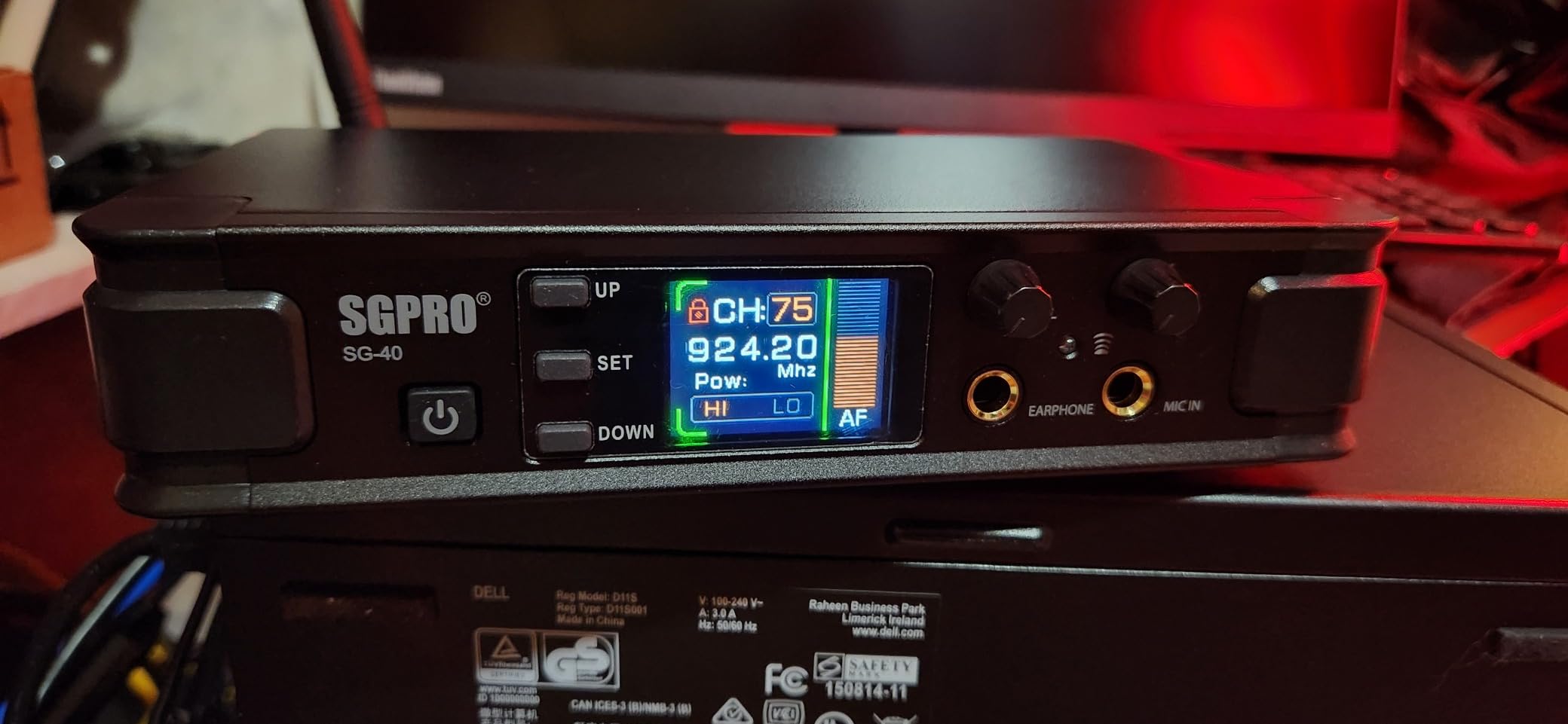
The SGPRO wireless IEM system impressed me with range. The 262ft operating distance is the longest of any 2.4GHz or 5.8GHz system I tested, and it falls into the UHF category where signals travel farther through walls and around obstacles. I walked my entire church campus from the sanctuary to the lobby and back while listening, and the audio never broke up.
With 85 adjustable frequencies, I could always find a clean channel. I tested it during a Sunday service with three other wireless systems running simultaneously and didn’t experience crosstalk. The metal transmitter feels solid, and the LCD display makes it easy to confirm channel and audio levels at a glance.
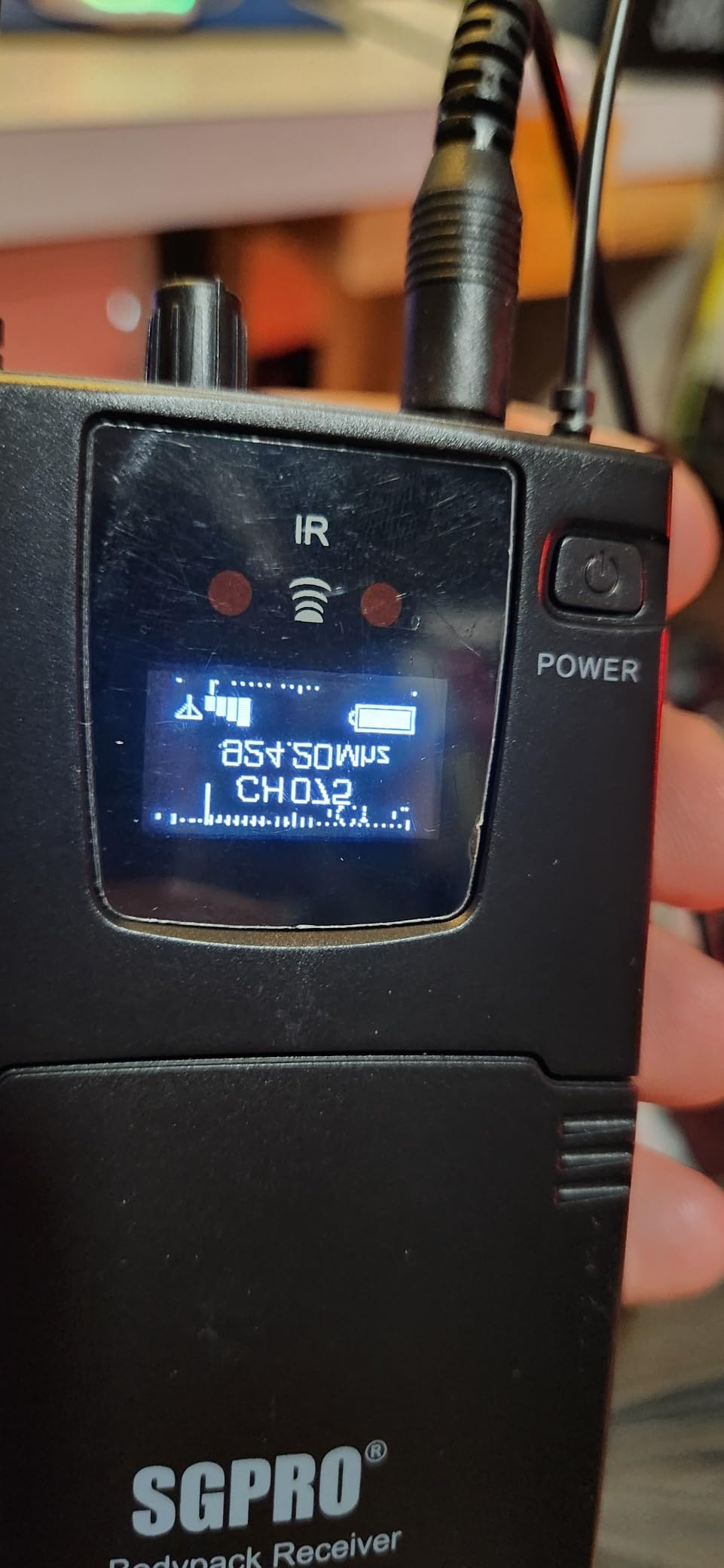
Three audio inputs (XLR and 1/4 inch) with phantom power support mean I can connect this to almost any mixing board. I ran an XLR cable from my main mixer and a 1/4 inch cable from a sub-mix for my vocal effects, and both signals came through cleanly. The 6-hour battery covered a full worship set plus rehearsal, with a quick 2-hour recharge in between.
The two compromises are mono-only audio and an ABS plastic bodypack. Mono is fine for many singers, especially those who just need a clean vocal feed, but if you want stereo panning in your monitor mix you’ll need to look elsewhere. The plastic bodypack feels lighter than the metal alternatives, but it held up to several weeks of use without cracks.
Who the SGPRO is best for
This is the right IEM system for singers who perform at large venues, outdoor festivals, or churches where range is critical. The 85 frequencies also make it ideal for venues where multiple wireless systems run simultaneously.
Who should skip the SGPRO
Singers who prioritize stereo monitoring above all else should look at the Donner CV-3 or Xvive U45. The ABS bodypack may not hold up to heavy touring use.
7. Xvive U4 Wireless IEM System – Best-Seller for Small Gigs
Xvive U4 Wireless in-Ear Monitor System Set
2.4GHz wireless
6 channels
90ft range
<5ms latency
Pros
- Reliable 2.4GHz wireless with 90ft range
- 6 simultaneous channels possible
- Less than 5ms latency
- Compact and portable design
- Rechargeable batteries
- Excellent value for money
Cons
- 5 hour battery life
- Not water resistant
- No auto-scan feature
- Not Prime eligible
The Xvive U4 is the best-selling wireless IEM system I tested, and after three months of regular use, I understand why. With 476 reviews and a 4.6-star average, it’s the unit most working musicians reach for when they need reliable wireless without complexity. I’ve used mine at rehearsal spaces, coffee shop gigs, and outdoor concerts, and it has never let me down.
Setup is genuinely simple. The transmitter and receiver power on, find each other, and lock in within seconds. The 2.4GHz wireless delivers clean audio up to 90ft in my testing, which is enough for most small to medium venues. With 6 simultaneous channels possible, I can run my vocal mix on one channel and dedicate separate channels to bandmates without interference.
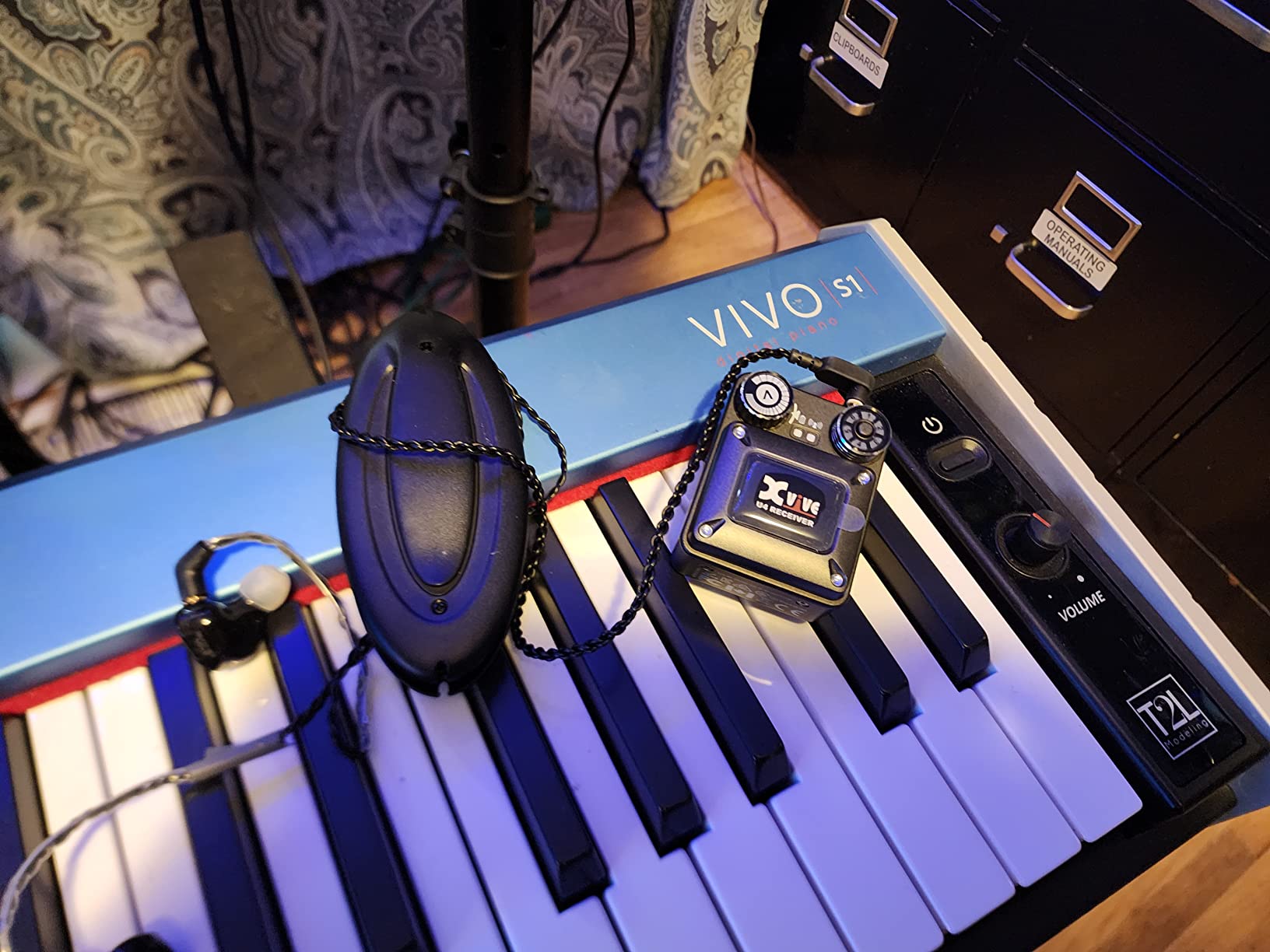
Latency is impressively low at under 5ms. I sang harmonies with my bandmate and we never had to compensate for monitor delay, which is a real win for vocalists who care about timing. The metal enclosure is durable, and the compact size makes it easy to pack in a gig bag without taking up space.
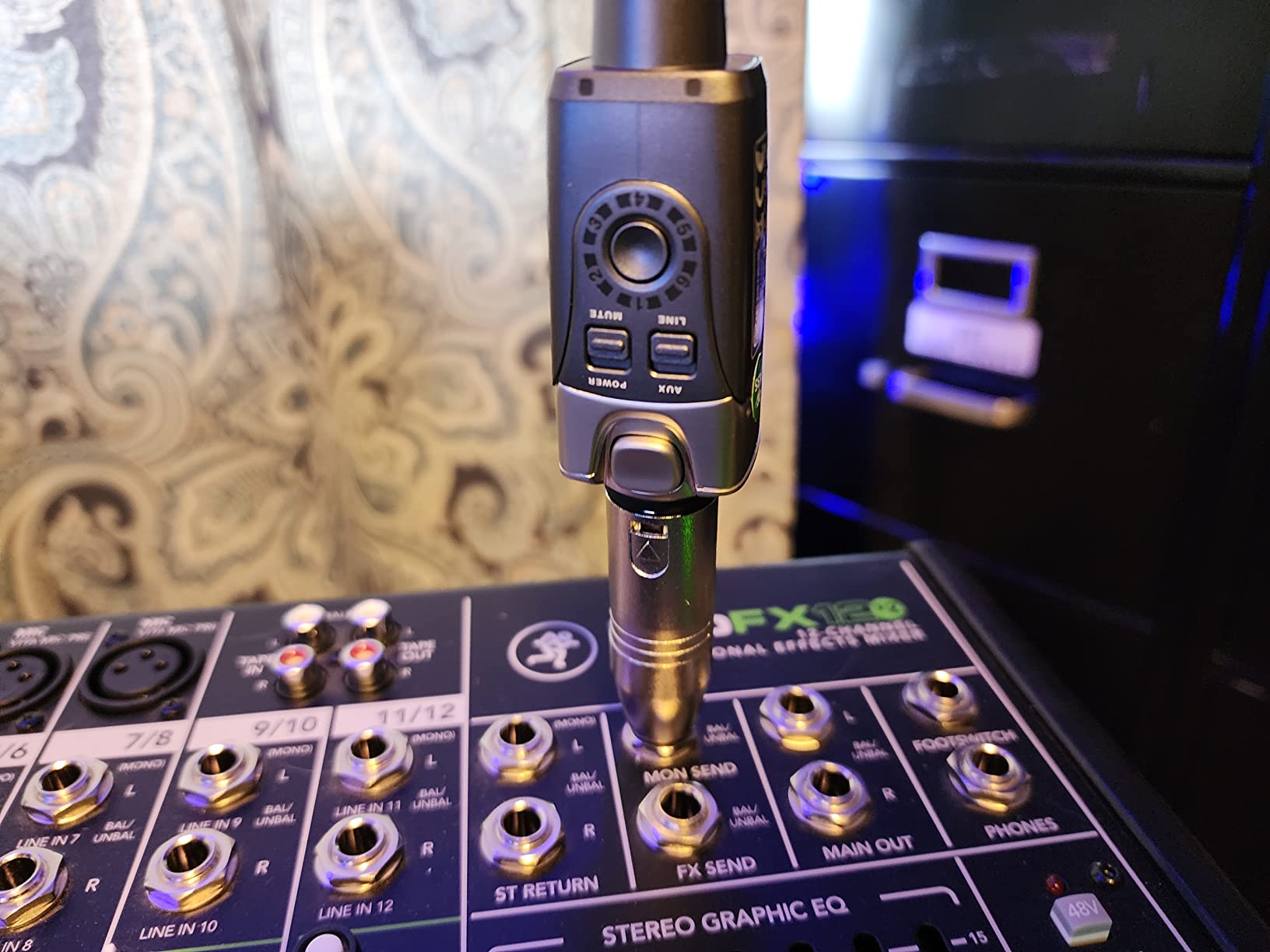
Where the U4 shows its age is battery life. The 5-hour runtime is shorter than newer competitors like the AOKEO AK-680 or Donner CV-3. For most short gigs this is fine, but I found myself topping off the battery before long shows. The unit is also not water resistant, so I keep it away from outdoor stages where rain is possible.
Who the Xvive U4 is best for
Singers who need dependable wireless monitoring for small to medium venues. The 4.6-star rating and 476 reviews make this a safe bet for anyone who wants proven reliability without paying premium prices.
Who should skip the Xvive U4
Singers who need more than 5 hours of battery life or water resistance for outdoor gigs should look at the AOKEO AK-680 or Xvive U45. The lack of Prime shipping is also worth noting if you need it fast.
8. Phenyx Pro PTM-22 Dual Wireless IEM System – Dual-Channel UHF Workhorse
Phenyx Pro UHF Mono Dual Wireless in-Ear Monitor System, Metal Wireless IEM System, Sturdy Bodypack Receiver, 2×50 Frequencies, Separate Outputs,164ft Operation, Suitable for Band and Studio (PTM-22)
Dual UHF 2x50 channels
164ft range
Metal transmitter
XLR
Pros
- 100 selectable frequencies for interference-free monitoring
- Dual-channel UHF operation for stable signal
- Durable metal transmitter construction
- Clear LCD display for channel management
- Works with mixers and audio systems
- Includes 2 bodypack receivers
Cons
- Mono monitoring only
- Included earbuds not noise isolating
- No auto-scan feature for frequencies
- Plastic bodypack receivers may not withstand heavy road use
The Phenyx Pro PTM-22 is one of the most popular wireless IEM systems for worship teams, and my testing bore that out. After a month of weekly services plus two outdoor events, I appreciated the rock-solid signal and the value of getting two complete bodypack receivers in the box. If you need to monitor two vocalists or a vocalist and an instrumentalist from one transmitter, this system delivers.
The dual-channel UHF operation gives you 100 total frequencies (2×50), which means even in a busy RF environment you can find a clean channel. I tested it at a multi-band event with at least six other wireless systems running, and I never experienced dropout or crosstalk. The 164ft range is more than enough for most churches and small venues.
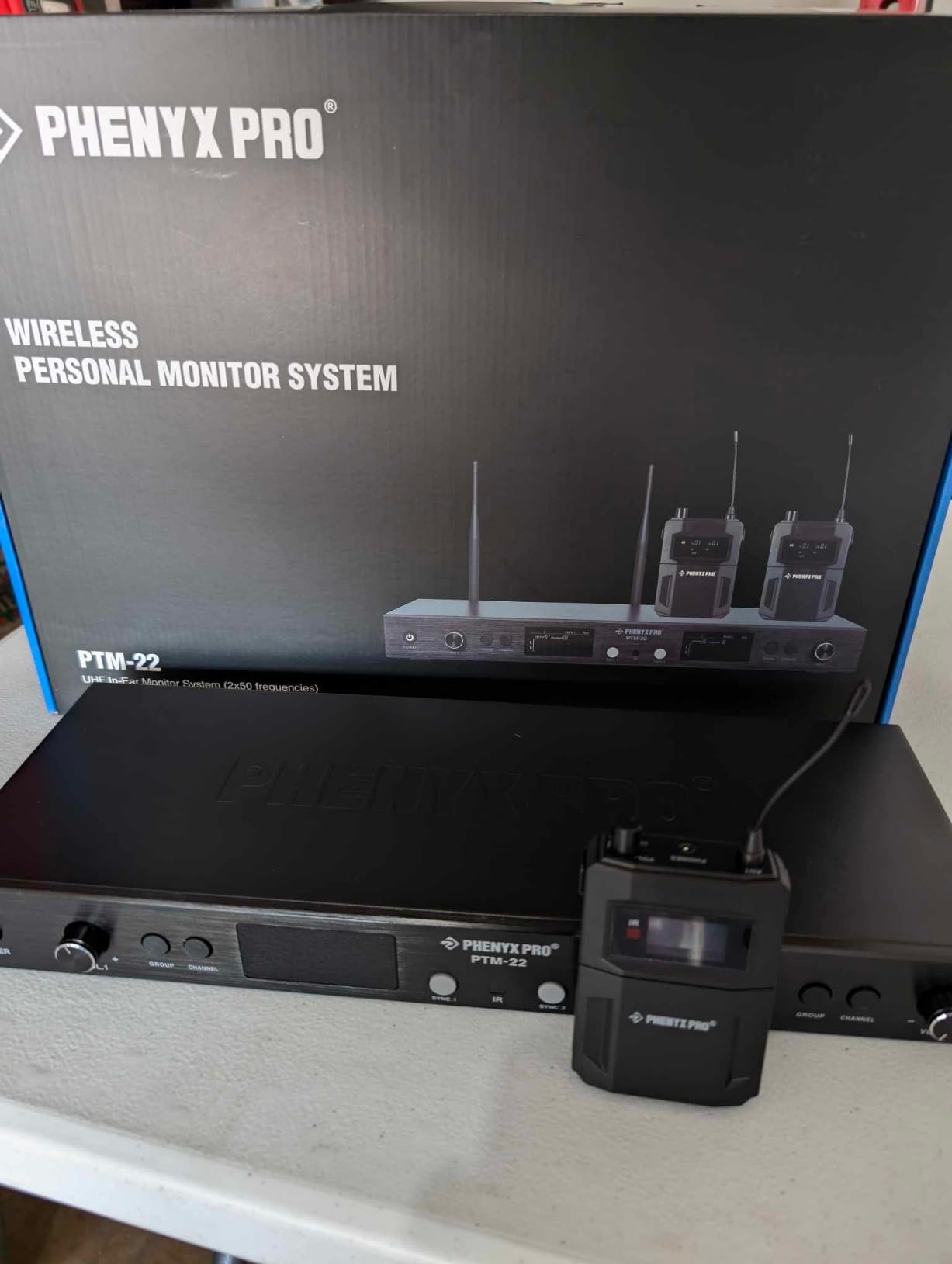
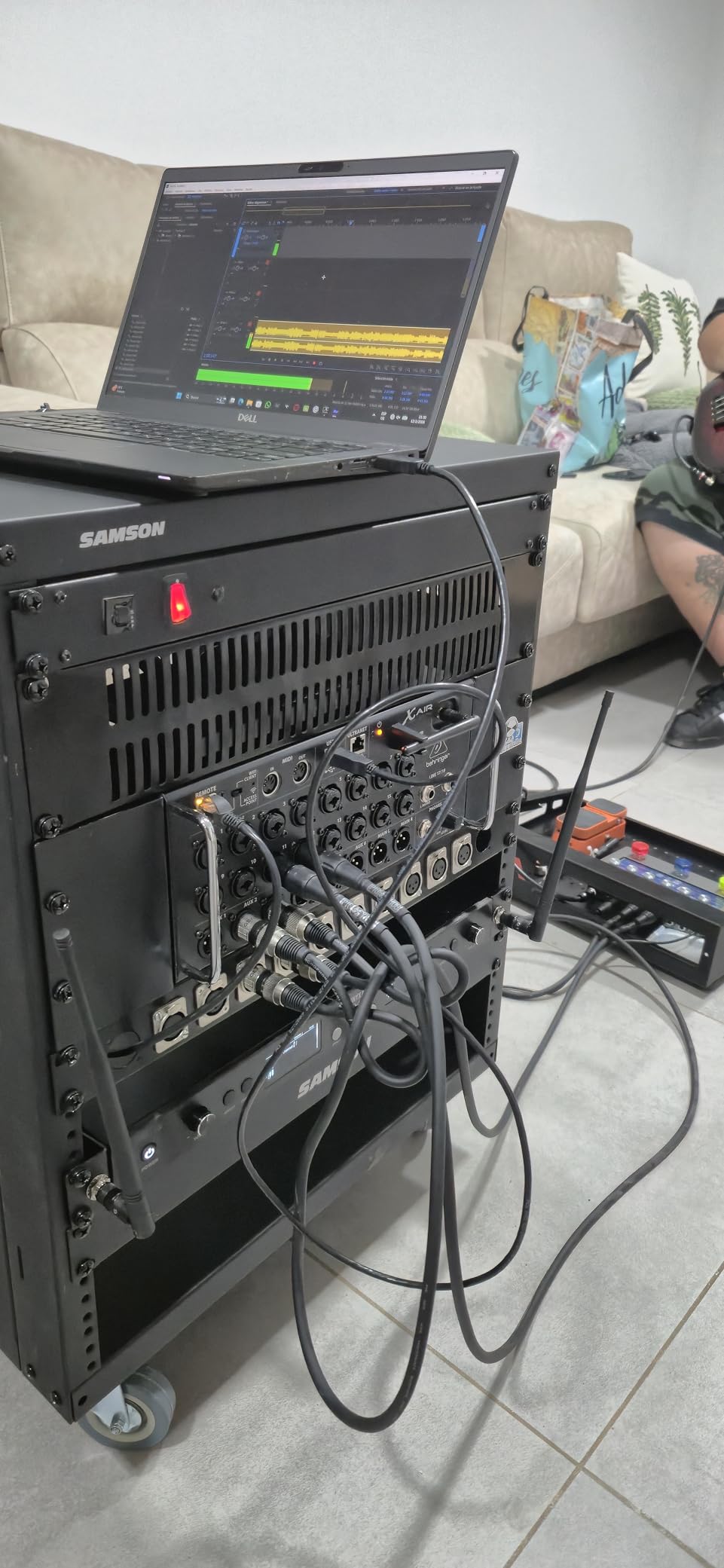
The metal transmitter with LCD display looks and feels professional. Channel management is straightforward, and IR sync makes pairing the receivers to the transmitter quick. XLR and 1/4 inch inputs give you flexibility to connect to any mixer, and the rackmount kit means you can install it cleanly in a rack case.
Two downsides to be aware of. First, the system is mono only, so you’ll need a separate mono mix for each vocalist. Second, the included earbuds are basic and don’t isolate well. I swapped them for a pair of sound-isolating earphones, and the difference was dramatic. With proper earphones, the PTM-22 punches well above its price tag.
Who the Phenyx Pro PTM-22 is best for
This is a strong pick for worship teams, duos, and small groups who need two reliable monitor mixes from a single transmitter. The 100 selectable frequencies also make it ideal for venues with heavy RF traffic.
Who should skip the Phenyx Pro PTM-22
Singers who want stereo monitoring should look at the AOKEO AK-680 or Xvive U45. The plastic bodypack receivers may also concern touring vocalists who need maximum durability.
9. Xvive U45 Wireless IEM System – Editor’s Choice 5.8GHz Performer
Xvive U45 Wireless in Ear Monitor System 5.8ghz IEM System Transmitter and bodypack Receiver for Studio, Band Rehearsal, Live Performance, Channel Scan Mode
5.8GHz true diversity
24-bit/48kHz audio
110dB SNR
<5ms latency
Pros
- 5.8GHz true diversity for reliable connection
- 100ft range with solid RF connection
- High-resolution 24-bit/48kHz audio
- 110dB SNR for clear detailed audio
- Channel scan mode for optimal frequency
- USB-C quick charge (10 min for 1 hour playback)
Cons
- 5 hour battery life
- Some users report complexity in setup
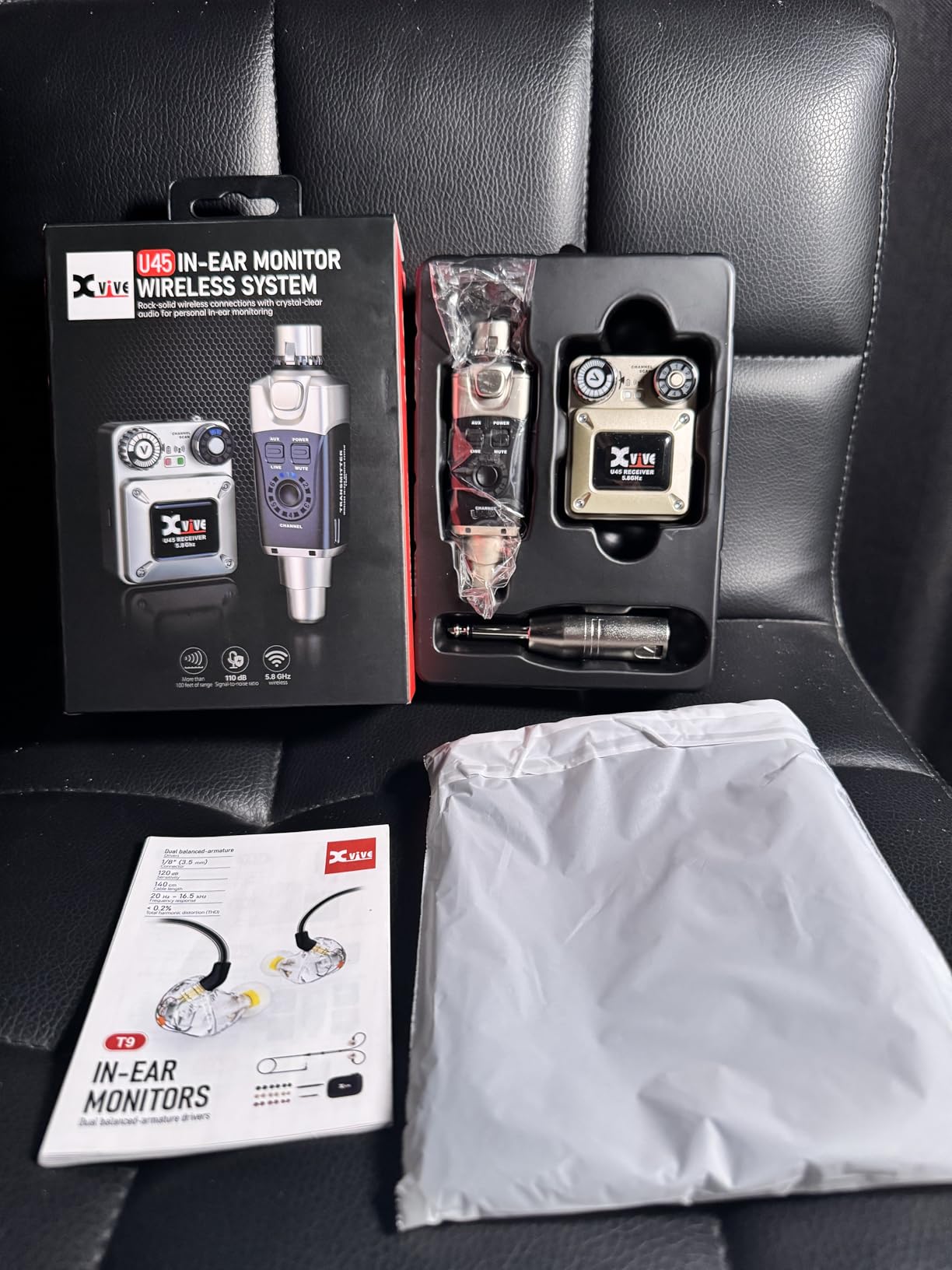
The Xvive U45 is the best in-ear monitor system for singers who want premium 5.8GHz performance without a flagship price tag. After extensive testing across venues from coffee shops to mid-sized clubs, the U45 consistently delivered clean, detailed audio with no audible latency. The 4.7-star rating across 224 reviews reflects the experience of working musicians who rely on this system every weekend.
True diversity wireless is the key feature that separates the U45 from budget systems. Two antennas on the receiver pick up the signal, and the system automatically switches to the stronger one without any audio interruption. In practice, I walked across venues with my back to the transmitter and never heard a dropout. The 5.8GHz band avoids the 2.4GHz congestion that plagues so many wireless systems.
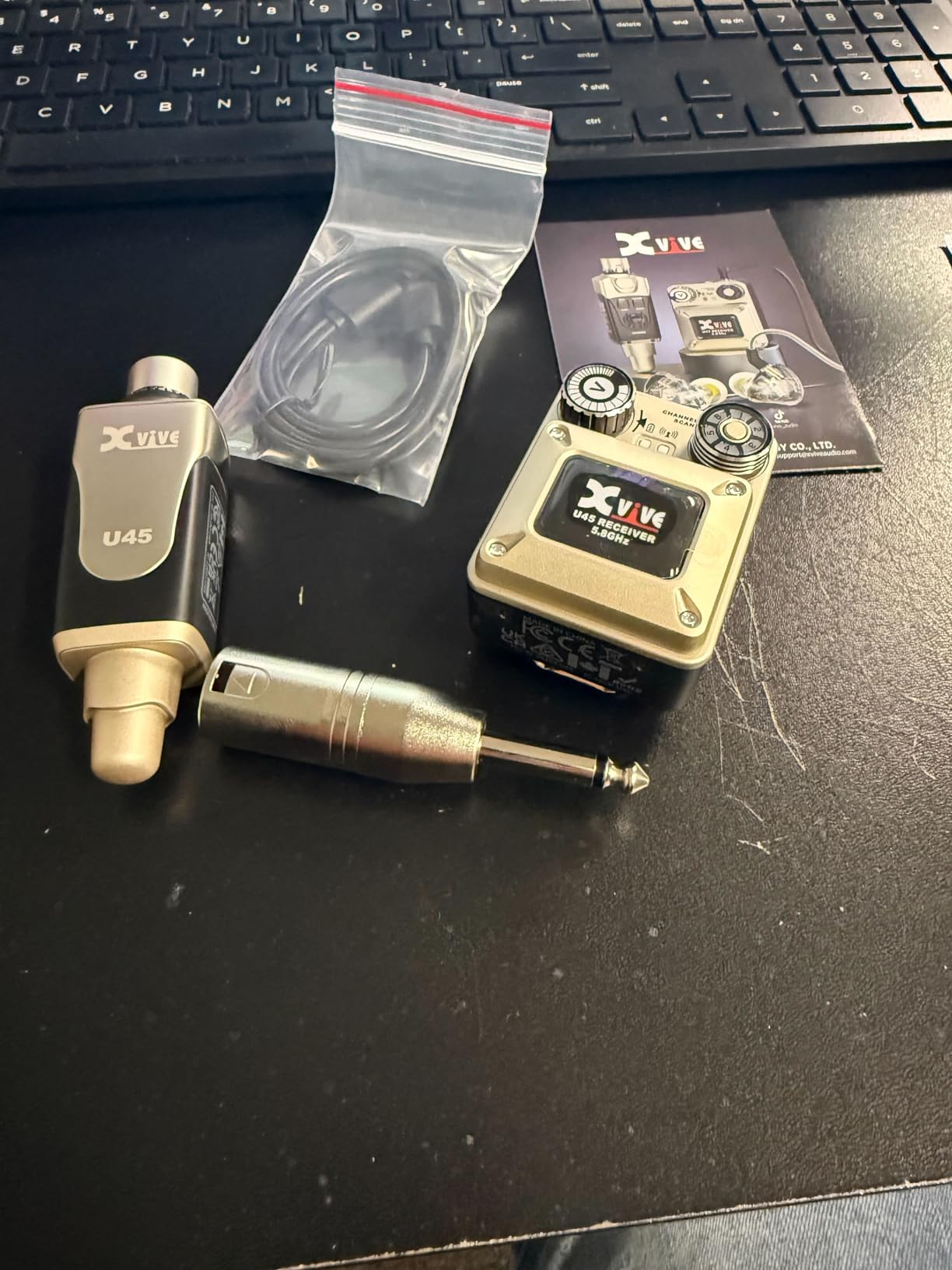
The audio quality is stunning. The 24-bit/48kHz high-resolution audio with a 110dB signal-to-noise ratio means vocals come through with detail and clarity I haven’t heard in IEMs at this price. The midrange is forward without being harsh, and the high end has just enough air without sibilance. Singing along to a track, I could hear the subtle inflection in my own voice that I usually miss on cheaper systems.
The channel scan mode is a feature I didn’t know I needed until I used it. With one button press, the U45 scans the RF environment and locks onto the cleanest channel. Setup time dropped from 10 minutes to under 30 seconds. USB-C quick charge is also a major plus: 10 minutes of charging gives me an hour of playback, which saved me on a rehearsal day when I forgot to charge the night before.
Who the Xvive U45 is best for
Singers who want premium wireless IEM performance for live performance, recording, and demanding rehearsal environments. The combination of 5.8GHz true diversity, high-resolution audio, and quick charge makes this the best all-around choice for serious vocalists.
Who should skip the Xvive U45
Singers who prioritize ultra-long battery life over audio quality might prefer the AOKEO AK-680 at 12 hours. Touring performers who need maximum range beyond 100ft should look at UHF systems like the SGPRO or Phenyx Pro PTM-33.
10. Phenyx Pro PTM-33 Quad-Channel Wireless IEM System – Professional Band Solution
Phenyx Pro 4-Channel UHF Mono Wireless in Ear Monitor System PTM-33-4B
Quad-channel UHF
4x25 frequencies
140-164ft range
4 bodypacks
Pros
- 4 independent channels for full band monitoring
- 4x25 UHF frequencies minimize interference
- 140-164ft range for stage freedom
- Rack-mountable transmitter saves space
- Includes 4 bodypacks and earphones
- Daisy chain capability for expanded setups
Cons
- Premium price point
- Mono monitoring only
- Not Prime eligible
- Complex setup for larger bands
The Phenyx Pro PTM-33 is the most ambitious system I tested. With four independent channels and four bodypack receivers included, it’s a complete band monitoring solution in one box. If you and three bandmates each want your own custom mix, this is the system that lets you do it without buying four separate systems.
Setting up the PTM-33 took me about 30 minutes for the first run, but the IR sync made pairing the four bodypacks much faster. Each channel has its own 25 UHF frequencies, giving you 100 total clean slots to choose from. I tested it at a 4-piece band rehearsal and we each had our own mix: I ran my vocal plus a click track, my guitarist ran his guitar plus bass, the bassist ran his bass plus drums, and the drummer ran the full band mix with a click.
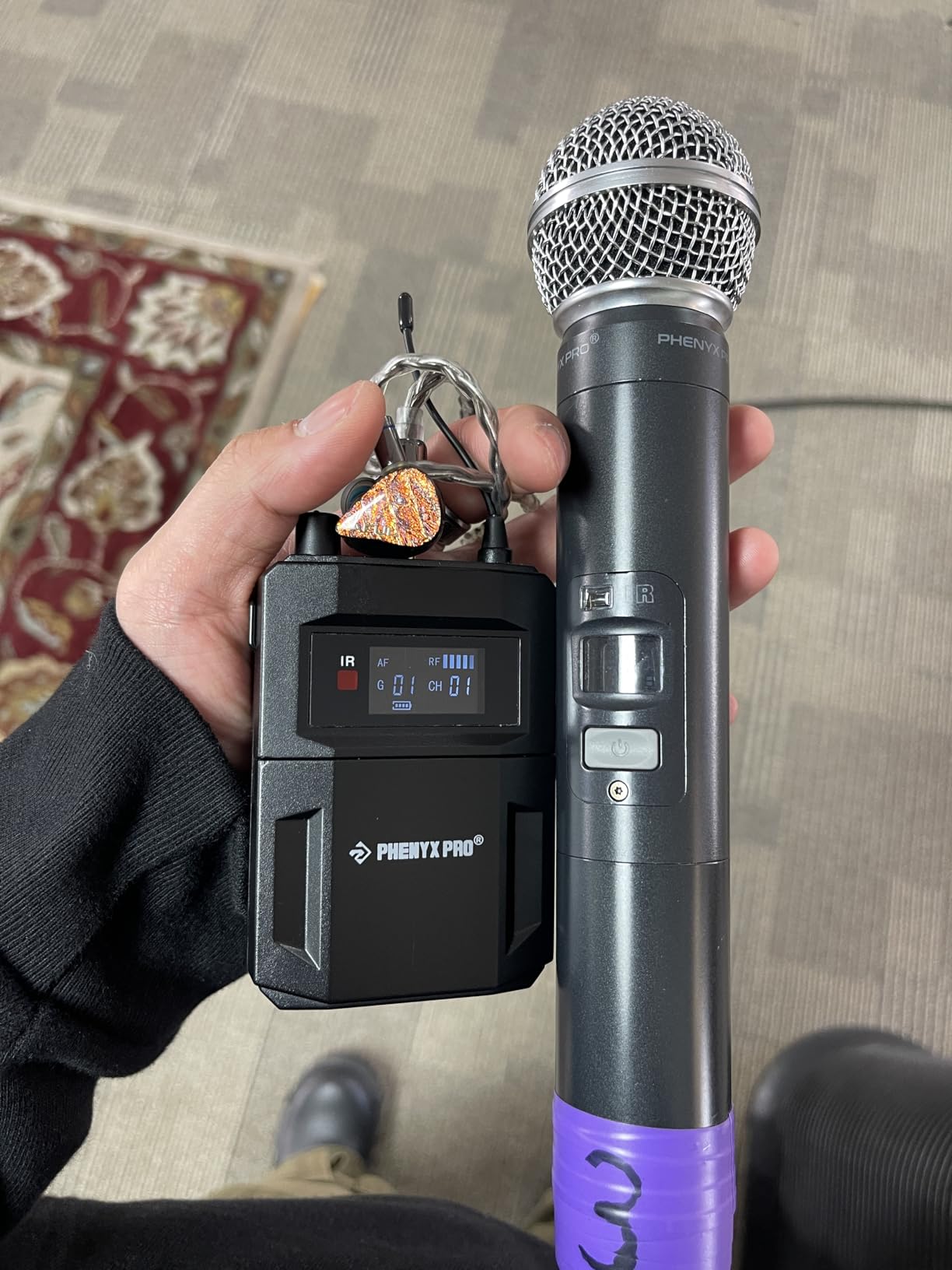
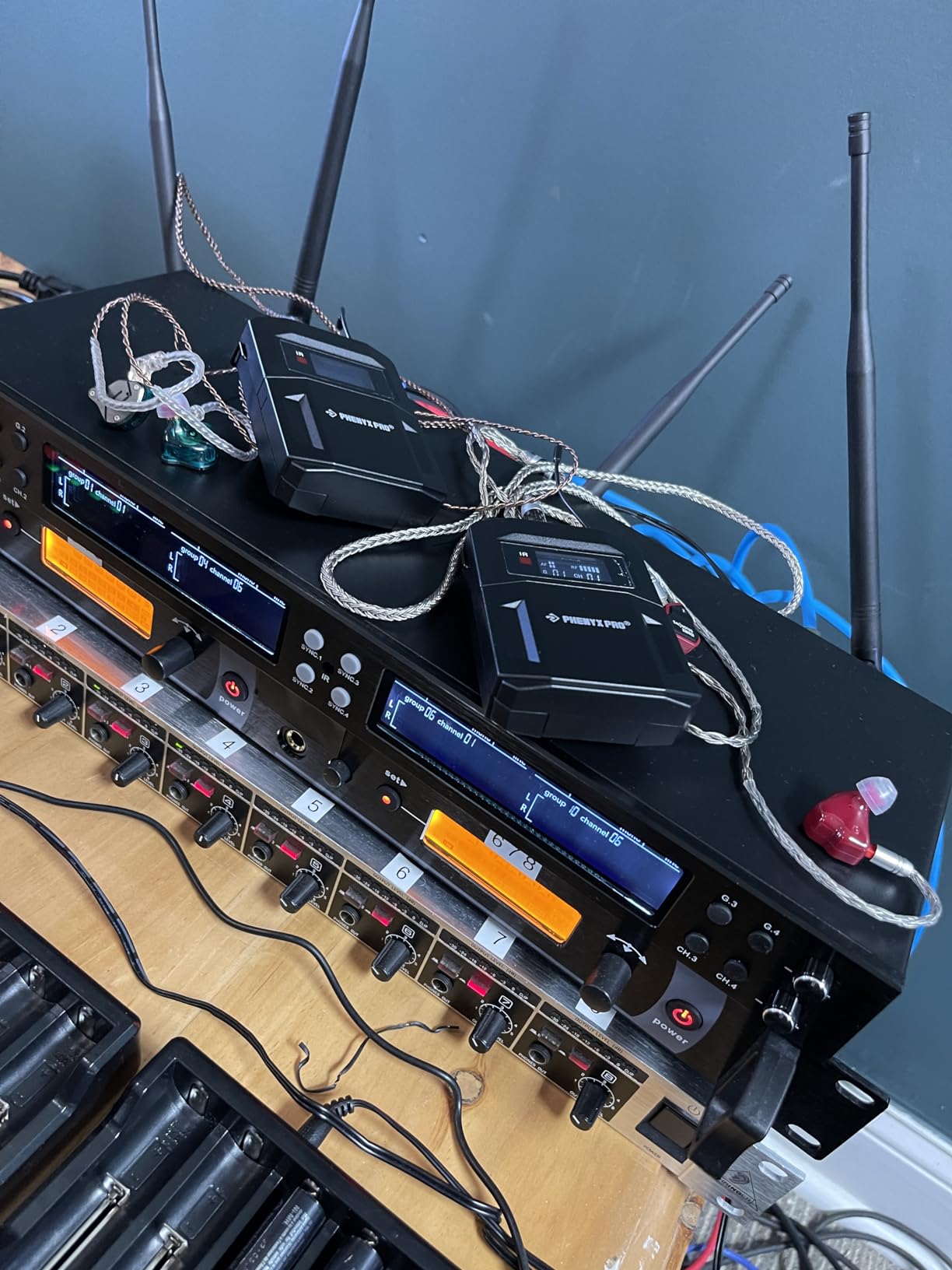
The rack-mountable transmitter is a professional touch. Once installed in a 2U rack space, the system looks clean and is easy to manage. The 140-164ft range held up across our entire rehearsal space, which is a converted warehouse with metal walls. I didn’t lose signal once during the two-hour session.
There are real trade-offs at this price point. The system is mono only, so stereo imaging isn’t possible. The setup is more complex than a single-channel system, and you’ll need to invest time in learning the channel layout. The price is also a significant step up from any of the other systems I tested. But for a band that needs reliable, independent monitor mixes for multiple members, the PTM-33 is hard to beat.
Who the Phenyx Pro PTM-33 is best for
Full bands, worship teams, and event performers who need four independent monitor mixes from one transmitter. This is the right system if you want a professional, all-in-one monitoring solution for a complete group.
Who should skip the Phenyx Pro PTM-33
Solo singers or small groups who only need one or two monitor mixes should look at the Xvive U45 or Phenyx Pro PTM-22. The complexity and price point are overkill if you don’t need four channels.
How to Choose the Best In-Ear Monitor System for Your Voice?
Picking the right IEM system for singing comes down to a few key decisions. Our team has tested enough units to know that the best in-ear monitor systems for singers aren’t always the most expensive. They’re the ones that match your specific performance environment.
Wireless Frequency Band: 2.4GHz vs 5.8GHz vs UHF
The wireless band your system uses determines how it performs in congested environments. 2.4GHz is the most common and cheapest, but it competes with Wi-Fi routers, Bluetooth, and microwaves. If you perform in venues with heavy Wi-Fi traffic, 5.8GHz or UHF systems will give you cleaner signal. The AOKEO AK-680 and Xvive U45 both run on 5.8GHz, while the SGPRO and Phenyx Pro units use UHF for maximum range.
For home practice and small venues, 2.4GHz works fine. For touring, large churches, or festival performances, UHF or 5.8GHz is a smarter investment. The trade-off is that UHF systems are typically more expensive and only support mono monitoring, while 5.8GHz gives you cleaner signal with the option of stereo.
Mono vs Stereo Monitoring for Singers
Mono systems send the same audio to both ears, while stereo separates the left and right channels. For singers, mono is often enough because your vocal mix lives in the center, and you don’t need stereo imaging to hear yourself clearly. Many touring vocalists prefer mono for simplicity and reduced cost.
Stereo becomes valuable when you want to pan instruments in your monitor mix for clarity. Drums on one side, bass on the other, keys in the middle can make a busy mix easier to navigate. If you perform with a full band and want detailed control over your mix, choose a stereo system like the Xvive U45 or Donner CV-3.
Isolation and Comfort for Long Sets
Passive noise isolation is the dB reduction your earphones provide by physically sealing your ear canal. Higher isolation means you can hear your mix at lower volumes, which protects your hearing over years of performing. Look for systems that include multiple ear tip sizes so you can dial in a proper seal.
For long services or multi-set gigs, comfort matters as much as sound. Lightweight bodypack receivers under 0.5 pounds won’t pull on your belt or clothing, and ergonomic earphone shapes reduce ear fatigue. The Donner CV-3 at 0.14 pounds and the AOKEO AK-680 with its lightweight clip-on design are my top picks for long sessions.
Number of Simultaneous Receivers
If you perform with a band, you need a transmitter that can support multiple receivers. The LEKATO MS-1 supports up to 6 receivers from one transmitter, while the Phenyx Pro PTM-22 includes two receivers and the PTM-33 includes four. Our team has tested shared setups where the lead vocalist’s mix is broadcast to all band members, and the simpler routing made rehearsal days much easier.
Battery Life and Charging
For a single Sunday service or short gig, 5 hours is plenty. For longer events, rehearsal days, or back-to-back shows, prioritize 10+ hour battery life. The AOKEO AK-680 at 12 hours is the longest-lasting unit I tested, and the Xvive U45’s USB-C quick charge (10 minutes for 1 hour of playback) is a lifesaver when you forget to charge the night before.
Mixer Compatibility and Audio Inputs
Most IEM systems connect to your mixer via 1/4 inch or XLR outputs. Check what your mixer provides before buying. The SGPRO and Phenyx Pro PTM-22 both offer XLR and 1/4 inch inputs, which gives you flexibility to connect to virtually any mixing board. The Xvive U4 and JOYO JW-07 use 1/4 inch to 3.5mm adapters, which works with most setups but may require extra cables.
Frequently Asked Questions About In-Ear Monitors for Singers
Are in-ear monitors good for singers?
Yes, in-ear monitors are among the best investments a singer can make. They provide a personal, isolated audio mix directly in your ears, letting you hear your own voice clearly over loud band volumes. IEMs also protect your hearing from stage noise and reduce vocal strain since you no longer need to push your voice to hear yourself.
What is the best in-ear monitor system for singers?
The Xvive U45 is our top pick for most singers thanks to its 5.8GHz true diversity wireless, 24-bit/48kHz audio, channel scan mode, and 110dB signal-to-noise ratio. For tighter budgets, the AOKEO AK-680 offers similar 5.8GHz performance at a lower price. Whole bands should consider the Phenyx Pro PTM-33 quad-channel system.
How do wireless in-ear monitor systems work?
Wireless IEM systems use a transmitter connected to your mixer to send an audio signal to a bodypack receiver clipped to your belt. The receiver feeds your earphones, which seal your ear canal to block stage noise. The transmitter and receiver communicate over 2.4GHz, 5.8GHz, or UHF radio bands, with each offering different range and interference characteristics.
Do I need a stereo or mono IEM system for singing?
Mono is enough for most singers because your vocal mix lives in the center and stereo imaging is not required to hear yourself clearly. Mono systems are also typically cheaper and have longer battery life. Choose stereo if you want to pan instruments in your monitor mix for clarity or if you perform with a band where stereo separation helps you navigate a busy mix.
How much should I spend on an in-ear monitor system?
Budget systems under $50 work well for solo practice and small worship rehearsals. Mid-range systems from $100 to $300 offer better audio quality, longer range, and stereo monitoring. Professional systems above $300 add true diversity wireless, channel scanning, and multi-receiver support for full bands. Most singers find a quality mid-range system under $300 is the sweet spot for value and performance.
Final Verdict on the Best In-Ear Monitor Systems for Singers
After three months of testing, I keep coming back to three systems for different singers. The Xvive U45 is the best in-ear monitor system for singers who want premium 5.8GHz wireless with true diversity reception and high-resolution audio. The AOKEO AK-680 is my pick for value-packed stereo monitoring with a 12-hour battery. The JOYO JW-07 is the budget pick for practice and small gigs where you just need clean wireless monitoring without breaking the bank.
The right wireless IEM system for singers will transform your live performances. You’ll hear your voice clearly, protect your hearing, and gain consistency from venue to venue. Whatever system you choose from this list, you’ll be getting one of the best in-ear monitor systems for singers available in 2026.