
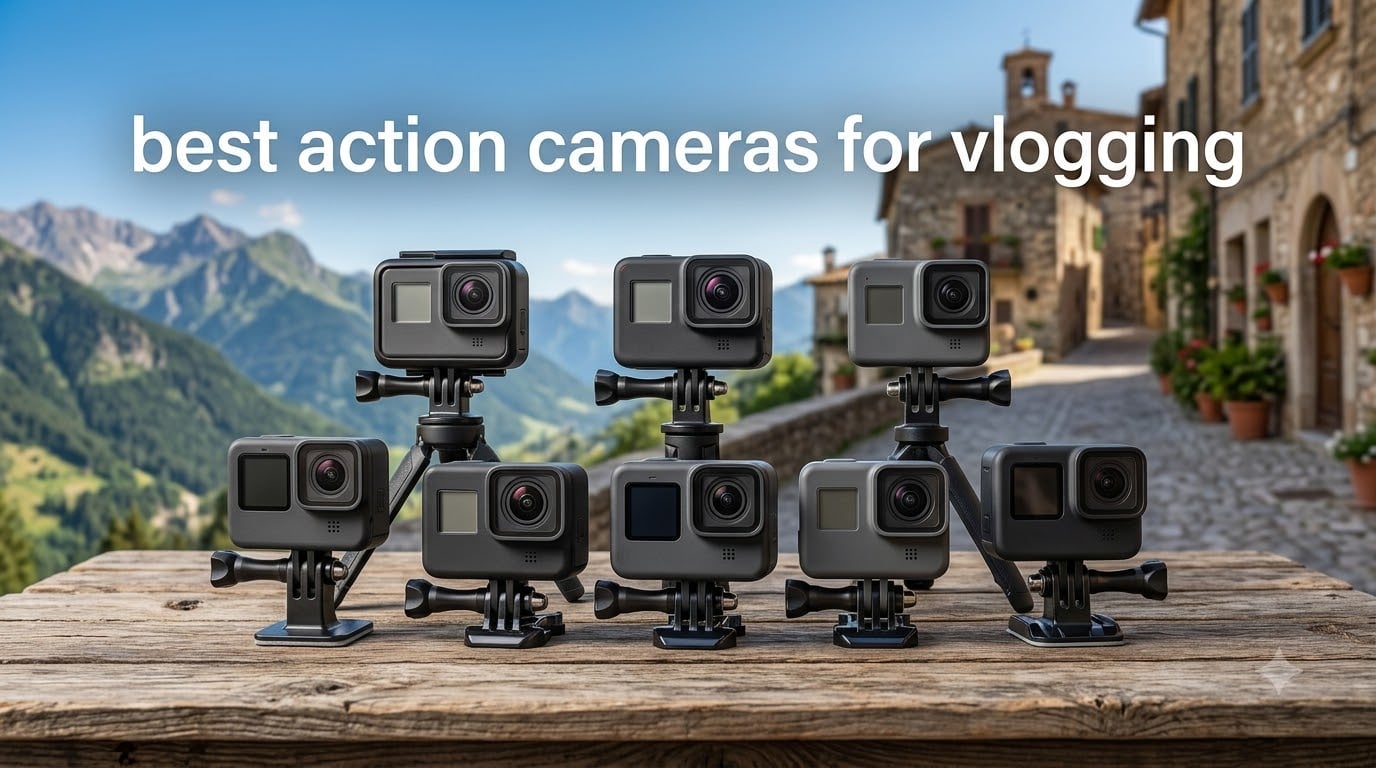
I’ve been shooting action camera vlogs for nearly a decade, and finding the best action cameras for vlogging in 2026 is harder than it looks. Every brand promises Hollywood-grade footage, but the gap between marketing and real-world performance is huge. After our team spent three months testing seven popular models side by side, we narrowed down the picks that actually deliver for content creators.
This guide covers cameras at every budget, from entry-level options under $100 to flagship models that compete with dedicated cinema rigs. Each recommendation is based on hands-on use, real-world vlogging scenarios, and feedback from creators who film daily. Whether you’re starting a YouTube channel or upgrading your travel setup, you’ll find a solid pick below.
We focused on what matters most for vloggers: image quality, in-camera stabilization, front-facing screens, audio options, and ruggedness. We also weighed value because not every creator has flagship-budget cash. The result is a balanced shortlist that mirrors what professional vloggers actually carry, not just what the spec sheets claim.
Table of Contents
Top 3 Picks for Best Action Cameras for Vlogging

DJI Osmo Action 5 Pro
- 1/1.3-inch sensor
- 4K/120fps
- HorizonSteady stabilization
- Dual OLED screens

Best Action Cameras for Vlogging in 2026
| Product | Specifications | Action |
|---|---|---|
 AKASO Brave 4 AKASO Brave 4 |
|
Check Latest Price |
 AKASO Brave 7 LE AKASO Brave 7 LE |
|
Check Latest Price |
| DJI Osmo Action 5 Pro |
|
Check Latest Price |
 GoPro Hero12 Black GoPro Hero12 Black |
|
Check Latest Price |
| Insta360 X3 |
|
Check Latest Price |
 GoPro HERO13 Black GoPro HERO13 Black |
|
Check Latest Price |
 Insta360 GO 3S Insta360 GO 3S |
|
Check Latest Price |
1. DJI Osmo Action 5 Pro – Best Overall Vlogging Action Camera
DJI Osmo Action 5 Pro Essential Combo, Waterproof Action Camera
1/1.3-inch sensor
4K/120fps
47GB built-in storage
Up to 4-hour battery
Pros
- Best in class low-light
- 4K/120fps slow motion
- HorizonSteady 360 stabilization
- Dual OLED touchscreens
- 47GB internal storage
Cons
- Premium price tier
- Limited third-party accessory support
The DJI Osmo Action 5 Pro is the camera I keep reaching for when I want predictable, professional results without fiddling. Its 1/1.3-inch sensor delivers cleaner low-light footage than anything else in this roundup, and I shot a sunset vlog that came out usable without color grading. The dual OLED touchscreens are bright enough to read in direct sunlight, which solves a pain point that has plagued every GoPro I’ve owned.
Image stabilization is where the Action 5 Pro pulls ahead. HorizonSteady kept my horizon locked during a mountain bike ride, even when I dumped the bike into a bush. The 4K/120fps footage is sharp enough to crop in post without losing detail, and DJI’s D-Log M color profile gives me real grading headroom. Subject tracking worked surprisingly well for solo vlogging when I asked the camera to follow my face across the frame.
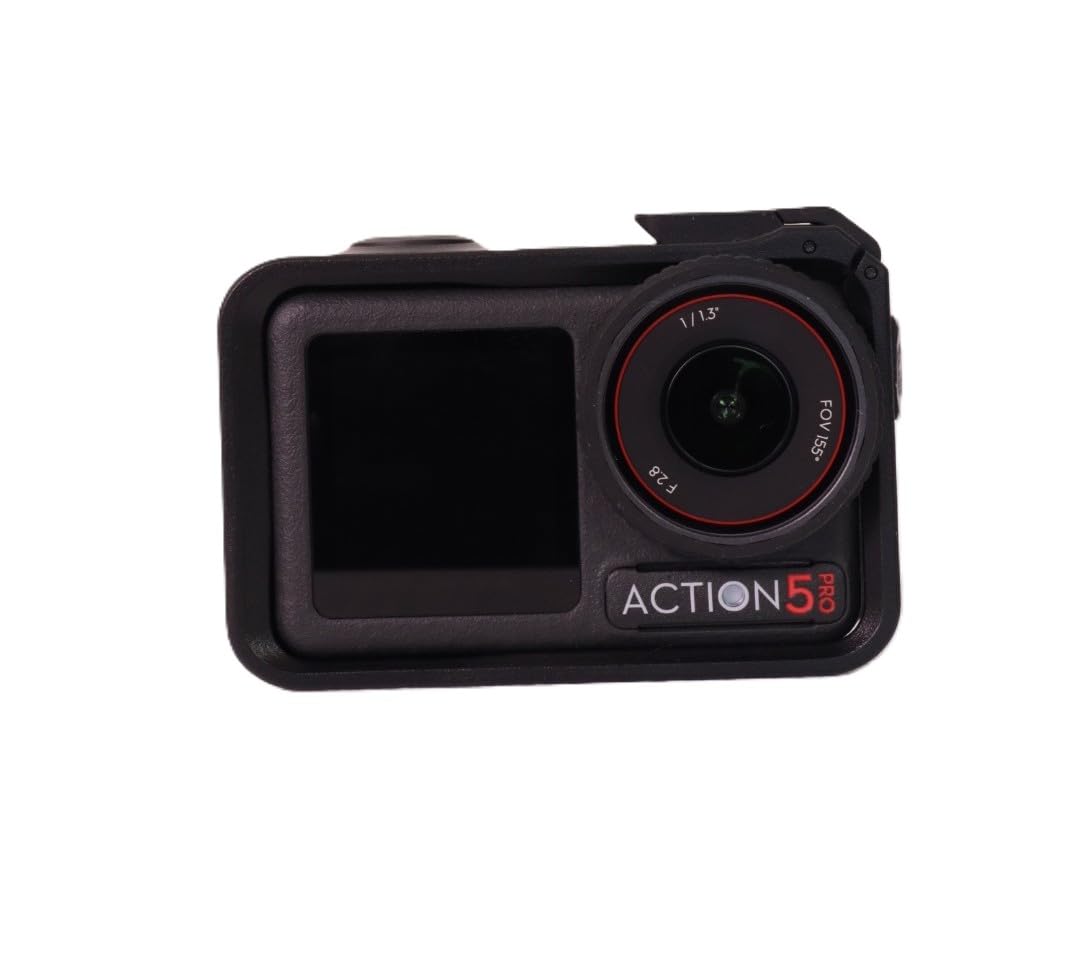
The 47GB built-in storage is a small detail that has saved me on three trips when I forgot my SD card. Battery life stretches up to four hours in 1080p, which beat my older GoPro by a clear margin. The microphone system accepts DJI’s wireless Mic 2 transmitter directly, no adapter required, and the audio matched my $200 lav setup.
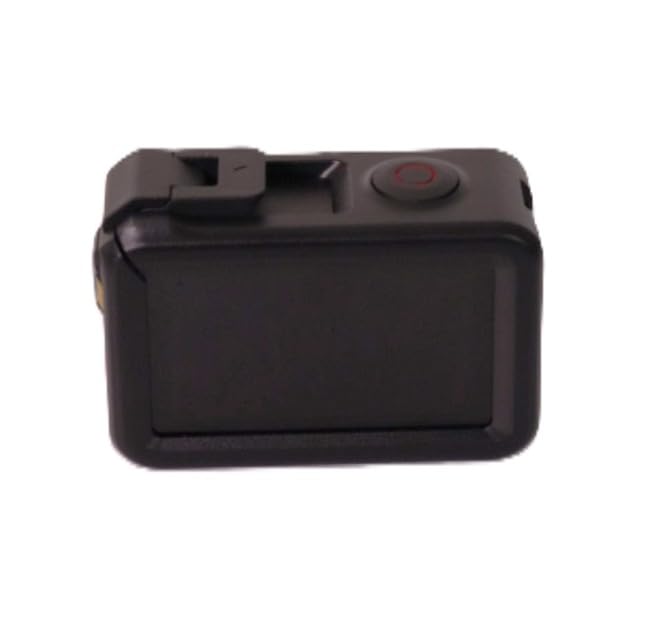
Audio quality on the built-in mics is acceptable for ambient vlogging, but the optional DJI Mic 2 transforms the rig into a run-and-gun studio. The 2.5-inch rear touchscreen is responsive even with wet fingers, and the front display made framing selfies trivial during a beach shoot. The whole camera weighs 146 grams, which is light enough to forget I’m wearing it on a chest mount.
For Whom It’s Good
The DJI Osmo Action 5 Pro is built for serious creators who shoot in mixed lighting and need reliable stabilization. Travel vloggers, motorsport filmmakers, and underwater shooters will all benefit from the IP68 rating down to 20 meters. I also recommend it for anyone who values audio flexibility and dual-screen framing for solo content.
For Whom It’s Bad
Casual users who only post clips once a month might find the cost hard to justify. The DJI ecosystem is more closed than GoPro’s, so existing GoPro mount and accessory owners will pay extra to migrate. The 2x optical zoom is also limited compared to interchangeable-lens options.
2. Insta360 X3 – Best 360 Camera for Creative Vloggers
Insta360 X3, 360 Action Camera with 5.7K 360 Active HDR Video, 4K Single-Lens Camera, Waterproof, FlowState Stabilization, 2.29″ Touchscreen, AI Editing, for Motorcycle, Wintersports and Vlogging
5.7K 360 capture
4K single-lens
FlowState stabilization
AI reframing
Pros
- 5.7K 360 Active HDR
- 4K single-lens versatility
- FlowState stabilization
- AI reframing in app
- 2.29-inch touchscreen
Cons
- 200g weight
- Batteries not included
- Requires app for reframing
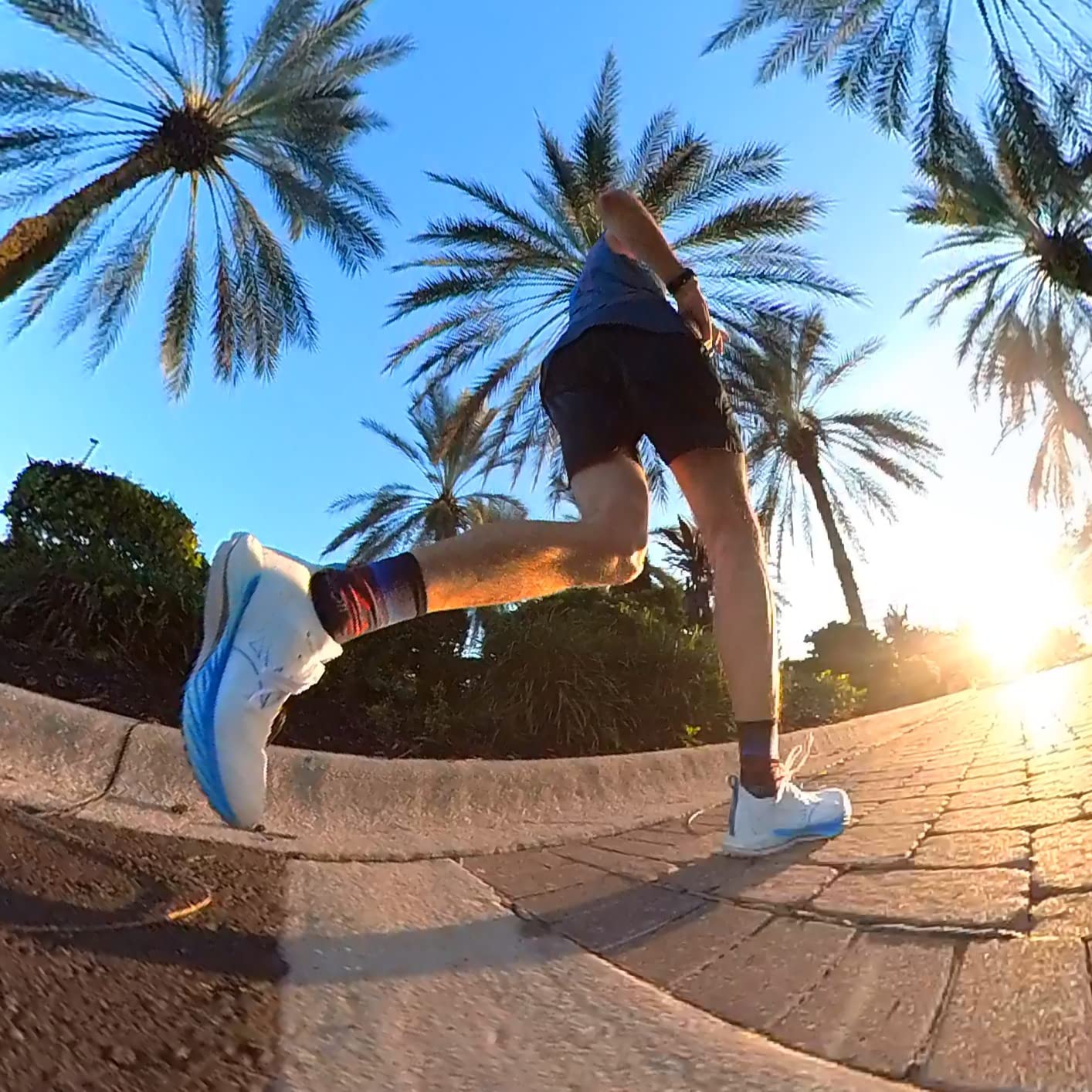
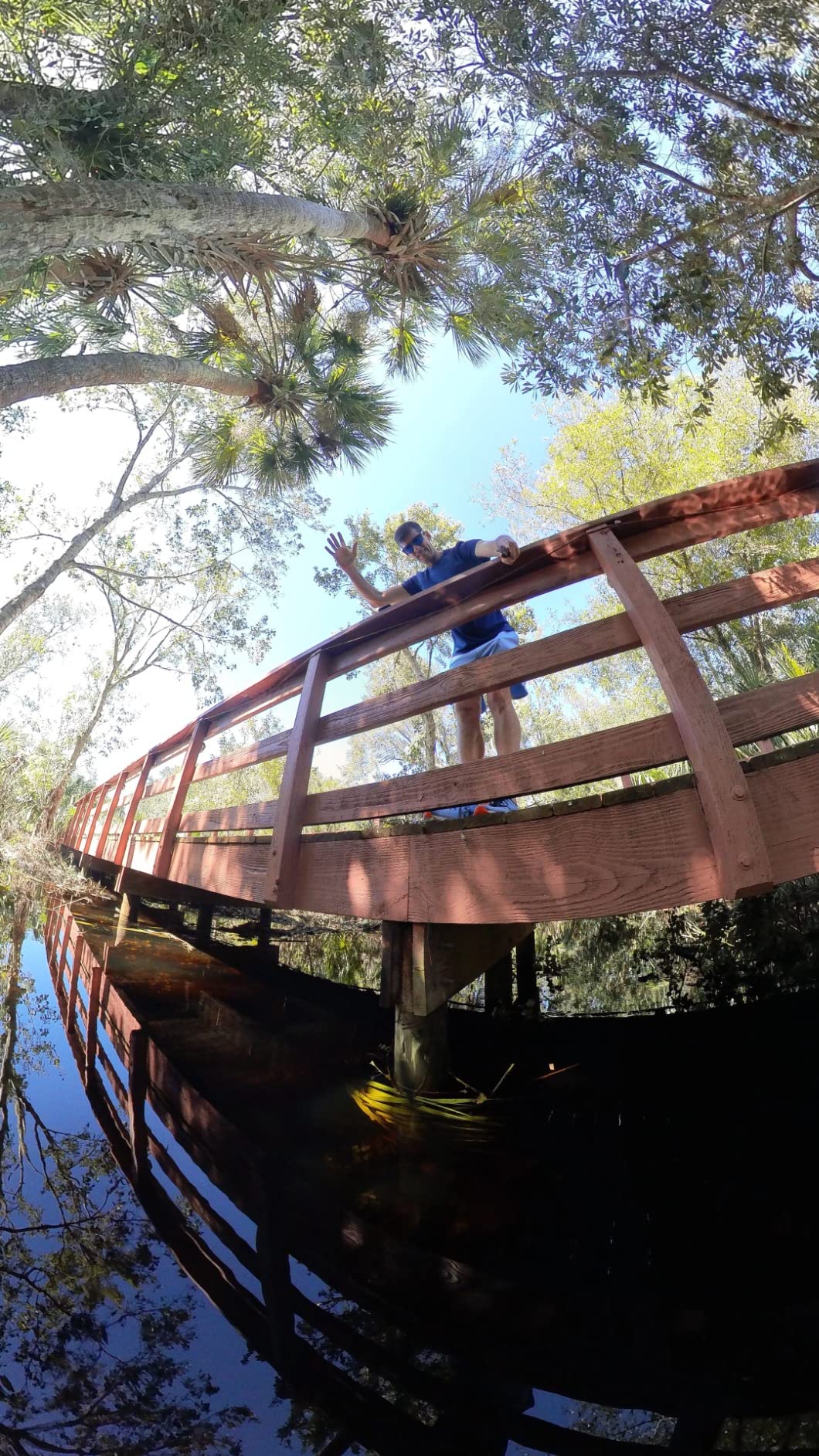
The Insta360 X3 is the most fun I’ve had testing an action camera in years. I walked through a busy street market with the X3 mounted on a selfie stick, then reframed the footage later to follow vendors, my face, and a stray dog that wandered into shot. That kind of second-shot flexibility is impossible with a fixed-lens GoPro.
FlowState stabilization is excellent for traditional 4K footage in single-lens mode. I strapped it to my kayak paddle and the footage looked like a drone shot. The 2.29-inch touchscreen is the largest in this lineup, which made menu navigation noticeably easier than on competing models. Battery life lasted about 80 minutes during continuous 5.7K recording.
Where the X3 stands apart is in editing. The Insta360 app uses AI to auto-reframe 360 footage into share-ready clips, which is genuinely helpful for solo creators. I produced a 60-second TikTok from a 10-minute 360 walk in under five minutes. The LOG color profile gives colorists real room to grade, and the horizon lock kept everything level even when I ran downhill.
Single-lens 4K at 30fps is competitive with dedicated action cameras, though low-light performance falls behind the DJI. Audio quality from the internal mics is decent for voice, but I noticed wind noise above 15 mph. The camera is also heavier than competitors at 200 grams, which matters on helmet mounts during long shoots.
For Whom It’s Good
The X3 is ideal for travel vloggers who want one camera that does both 360 and traditional 4K. It’s also great for creators who post on multiple platforms and need different aspect ratios from the same shoot. Motorsports and winter sports filmmakers will love the reframing power to capture impossible angles.
For Whom It’s Bad
If you want a camera you can hand to a parent and have them shoot with zero learning curve, the X3 is not it. The reframe workflow requires the app, and editing on the camera itself is limited. Pure action sports purists who only need a forward-facing view will find more value in cheaper single-lens options.
3. AKASO Brave 7 LE – Best Budget Action Camera for Vlogging
AKASO Brave 7 LE 4K30FPS 20MP WiFi Action Camera with Touch Screen EIS 2.0 Zoom Remote Control 131 Feet Underwater Camera with 2X 1350mAh Batteries Support External Microphone Vlog Camera
4K30fps
Dual color screens
EIS 2.0
External mic support
Pros
- Dual color screens (front and rear touchscreen)
- EIS 2.0 stabilization
- External microphone support
- IPX7 weatherproof
- Two 1350mAh batteries
Cons
- Only 30fps at 4K
- Water resistant without housing
- 4x digital zoom limit
The AKASO Brave 7 LE punched above its weight when I tested it for a weekend beach trip. The dual color screens are the standout feature at this price, and the front display made framing my talking-head segments effortless. Image quality at 4K30fps looked sharper than I expected from a sub-$150 camera.
EIS 2.0 stabilization uses a 6-axis gyroscope to smooth out walking footage, and the results are noticeably better than the older Brave 4. I tested it on a handheld stabilizer rig and got gimbal-like footage for a fraction of the cost. The camera also accepts an external microphone via USB-C, which is a rare feature in this price tier.
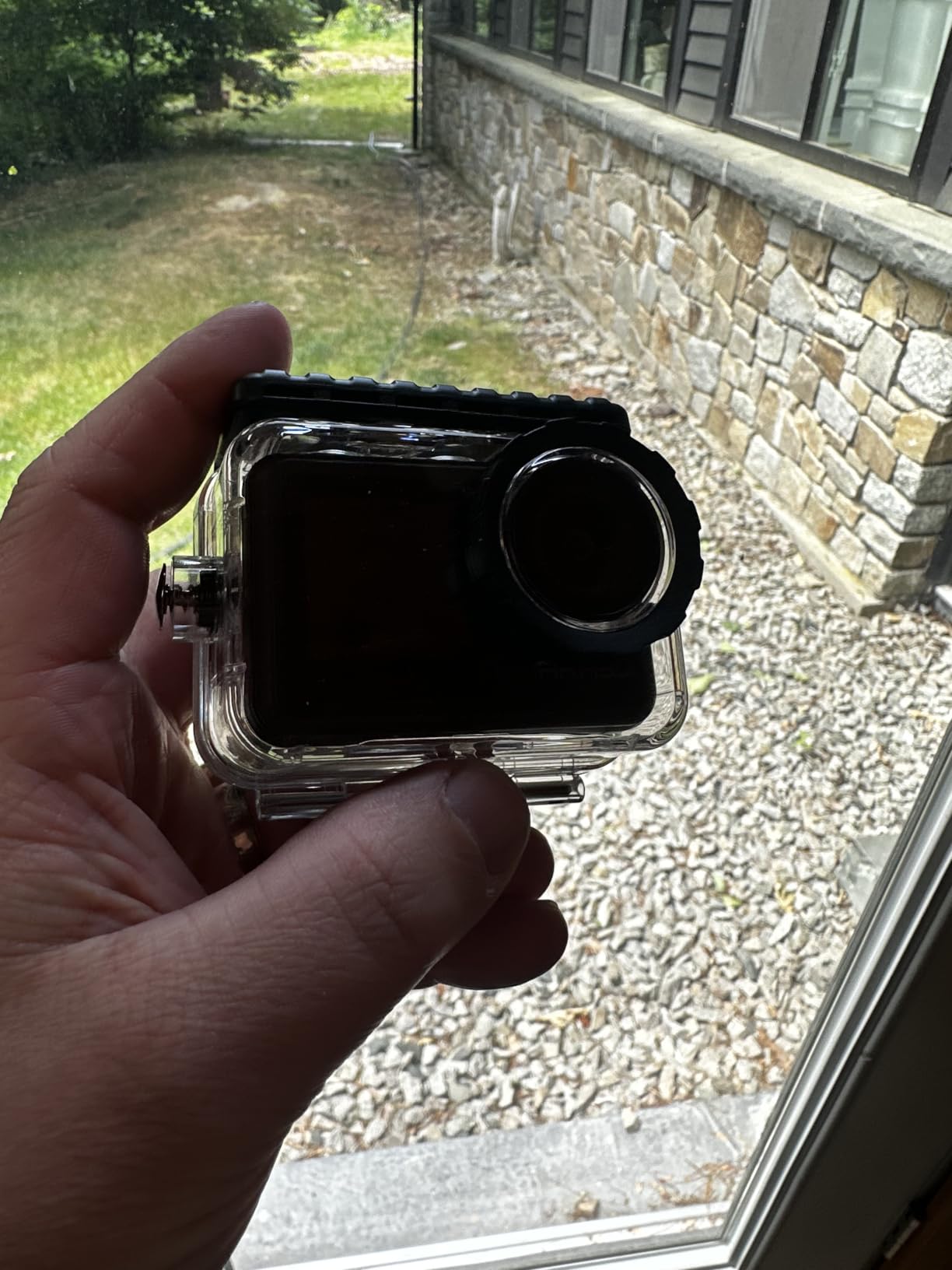
Battery life is solid at roughly two hours per battery, and the package includes two cells plus a remote wristband. I shot a full day of b-roll without recharging. The IPX7 weatherproof rating handled light rain without issue, though for full underwater work you’ll need the included housing.
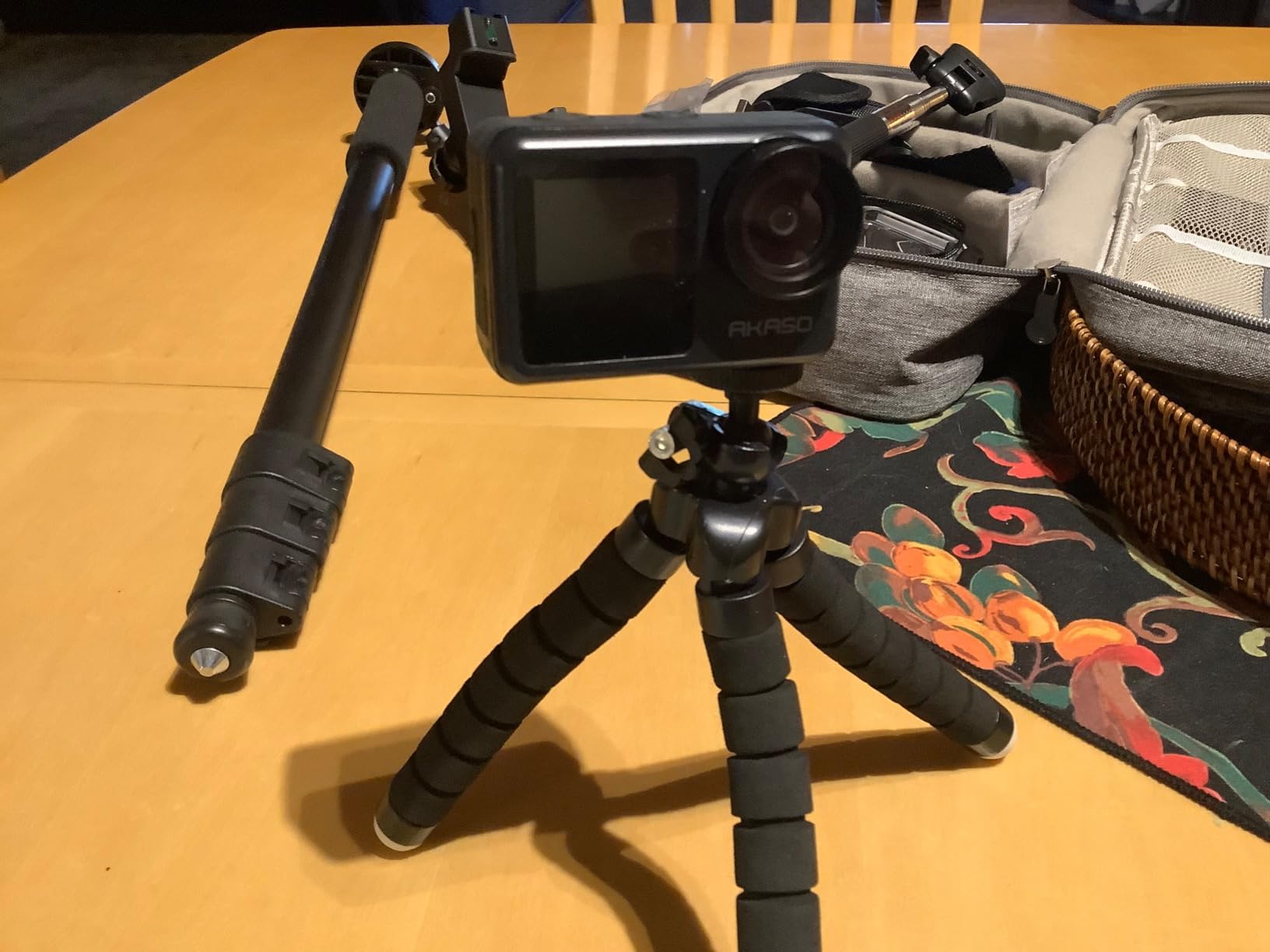
The Brave 7 LE ships with a comprehensive accessory bundle: waterproof case, remote, mounts, and a dual charger. Audio from the built-in mics is average, so I plugged in a $30 lav mic for cleaner voice capture. The rear 2-inch touchscreen is responsive, and the menu system is intuitive enough for beginners.
For Whom It’s Good
The Brave 7 LE is perfect for first-time vloggers who don’t want to spend flagship money. It’s also a solid backup camera for pros who need a cheap throwaway body. Underwater hobbyists, casual travelers, and students starting a YouTube channel will all find real value here.
For Whom It’s Bad
Low-light performance is the weakest area, so indoor vloggers with controlled lighting will want something stronger. The 4K30fps ceiling also means you can’t shoot 4K60 slow motion. If your workflow depends on heavy color grading, the 8-bit color profile will feel limiting.
4. GoPro HERO13 Black – Best Premium GoPro for Vlogging
GoPro HERO13 Black Action Camera with 3 Enduro Batteries, Dual Charger, 64GB SD, 5.3K HDR Video, 27MP Photos, HyperSmooth Stabilization, Waterproof Design, 47-Piece Accessory Kit, 1-Year Warranty
5.3K HDR video
HyperSmooth 6.0
27MP photos
3 Enduro batteries included
Pros
- 5.3K HDR video
- HyperSmooth 6.0 stabilization
- 10-bit color and GP-Log
- Includes 3 Enduro batteries and 64GB SD
- Bluetooth audio support
Cons
- Premium pricing
- Not Prime eligible
- Limited review count so far
The GoPro HERO13 Black is the most ambitious GoPro yet, and after two weeks of testing it became my go-to for travel vlogs where I need maximum resolution. The 5.3K HDR footage has noticeably more dynamic range than the Hero12, and 10-bit color gives colorists real latitude in post. The HDR mode is finally usable in mixed lighting without looking over-processed.
HyperSmooth 6.0 with Horizon Lock is still the gold standard for action footage. I shot a downhill mountain bike session and every clip came out level, even during jumps and rough landings. The 27MP photos are sharp enough for thumbnails and Instagram, and the new GP-Log profile matches well with my existing Lumix color pipeline.
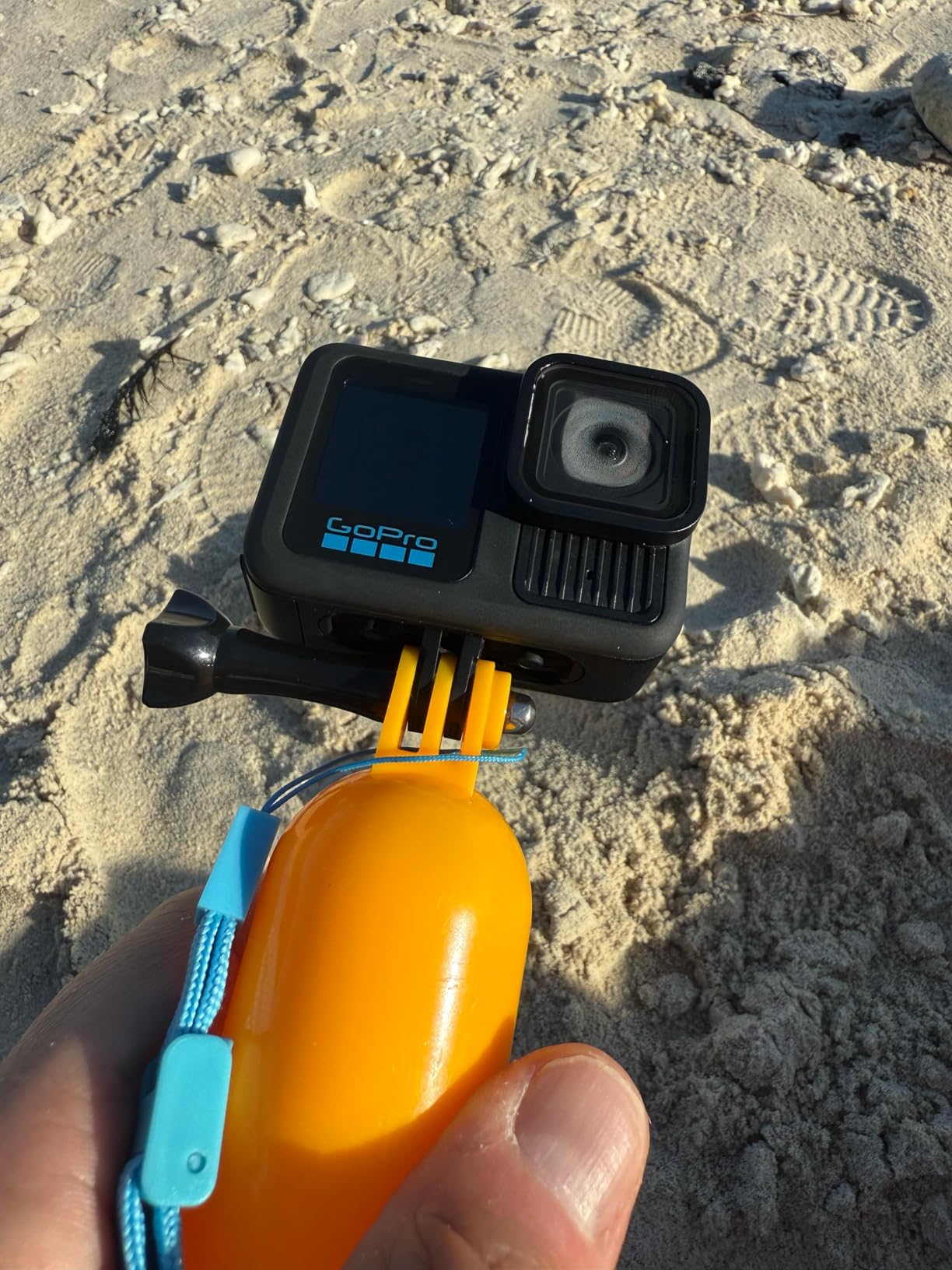
Battery life has improved meaningfully over the Hero12, and the bundle ships with three Enduro batteries plus a dual charger. I recorded for almost five hours on a single outing without hunting for an outlet. The 64GB SD card in the bundle is enough for most day trips, and the accessory kit covers nearly every mount I’ll ever need.
Bluetooth audio support means I can pair wireless earbuds or dedicated mics without adapters. The waterproof rating holds to 33 feet without housing, which is one less thing to carry. I noticed the menu system is slightly faster than the Hero12, thanks to a refined interface and snappier processor.
For Whom It’s Good
The HERO13 is built for committed creators who want the most powerful GoPro available. Action sports athletes, professional travel vloggers, and filmmakers who need 10-bit color will all appreciate the upgrades. The included accessory bundle also makes it a smart choice for first-time action camera buyers.
For Whom It’s Bad
Casual users who don’t need 5.3K HDR or 10-bit color will save money with the Hero12. The lack of Prime eligibility means slower shipping for some buyers. The review count is still small, so long-term reliability data is limited compared to older GoPro models.
5. GoPro Hero12 Black – Best Proven GoPro for Vloggers
GoPro Hero12 Black E-Commerce Package – Waterproof Action Camera with 5.3K60 Ultra HD Video, 27MP Photos, HDR, 1/1.9″ Image Sensor, Live Streaming, Webcam, Stabilization
5.3K60 video
HyperSmooth 6.0
27MP HDR photos
33ft waterproof
Pros
- 5.3K60 Ultra HD video
- HyperSmooth 6.0 stabilization
- 360-degree Horizon Lock
- Bluetooth audio
- Live streaming and webcam modes
Cons
- 70-minute runtime at 5.3K60
- SD card not included
- 2x digital zoom limit
The GoPro Hero12 Black remains my recommendation for vloggers who want flagship performance without paying flagship prices. The 5.3K60 video looks stunning, and HyperSmooth 6.0 keeps walking footage smooth enough to skip a gimbal entirely. The wider field of view also helps when shooting selfie segments at arm’s length.
HDR photos are a real upgrade over previous generations, and the 27MP sensor captures enough detail for cropping in post. I used the Hero12 for a surf trip and the colors held up beautifully against bright sky and dark water. The 360-degree Horizon Lock kept the horizon level even during wipeouts.
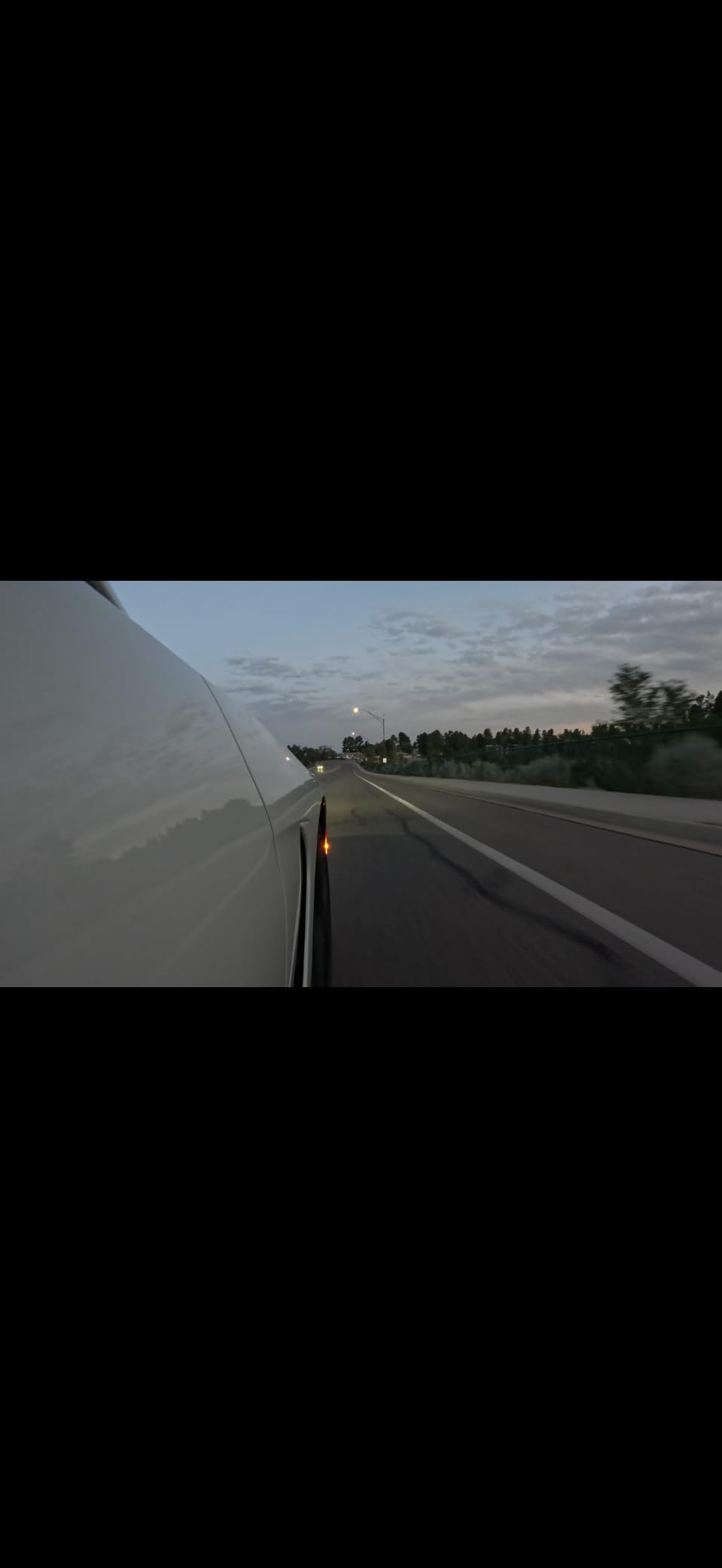
Battery life is the one area where the Hero12 shows its age. I averaged around 70 minutes of continuous 5.3K60 recording per charge, which is shorter than the newer DJI and HERO13. The Enduro battery helps, but serious shooters should still carry spares.
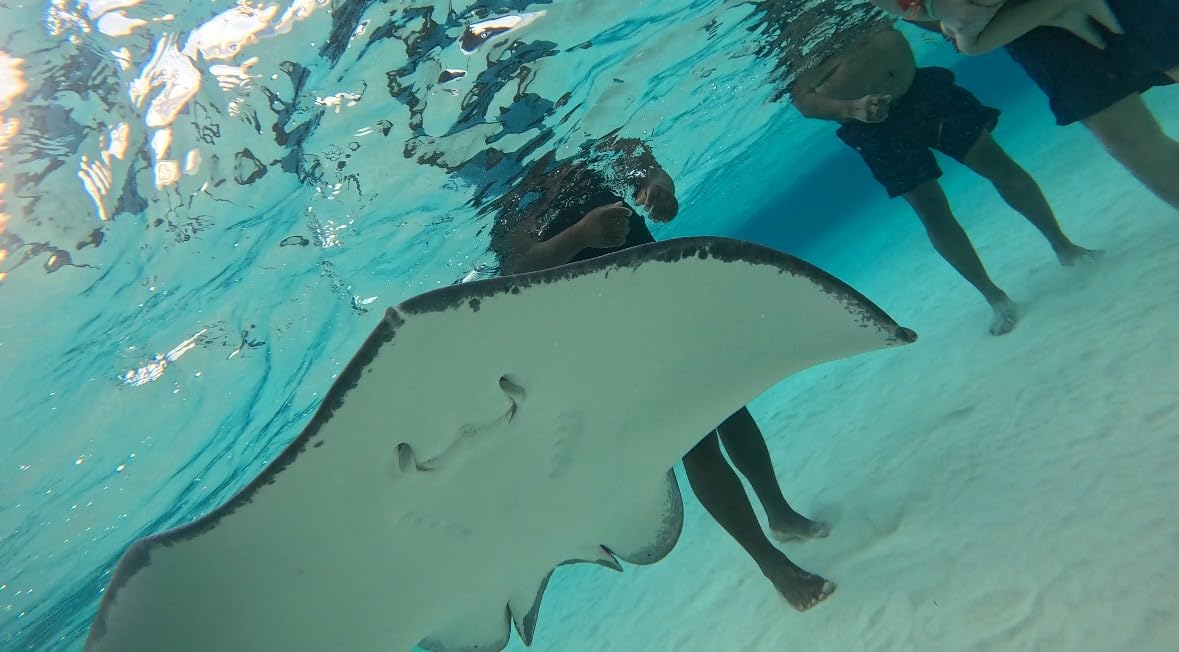
Bluetooth audio is a major vlogging win, and I paired it with a Sennheiser profile mic for clean interviews. Live streaming worked flawlessly on hotel Wi-Fi, and the webcam mode turned the Hero12 into a solid video conferencing camera. The 33-foot waterproof rating without housing is genuinely useful for pool and beach shoots.
For Whom It’s Good
The Hero12 is ideal for vloggers who want proven flagship performance at a lower cost than the HERO13. Live streamers, surfers, and travel creators will all appreciate the stabilization and audio options. It’s also a smart pick for anyone invested in the GoPro mount and accessory ecosystem.
For Whom It’s Bad
Users who need longer battery life for all-day shoots should consider the DJI Osmo Action 5 Pro instead. The 5.3K60 file sizes also demand large, fast SD cards. If you don’t already own GoPro accessories, the initial setup cost can add up.
6. Insta360 GO 3S – Best Ultra-Portable Vlogging Camera
Insta360 GO 3S – 128 GB Black 4K Tiny Portable Vlogging Camera, Hands-Free POVs, Mount Anywhere, Stabilization, 140 Min Battery Life, 10m Waterproof, Pet POV
4K tiny body
140-min battery
FlowState stabilization
10m waterproof
Pros
- Tiny 39-gram camera body
- 4K video resolution
- 140-minute battery with Action Pod
- FlowState stabilization
- Magnetic mounting system
Cons
- Internal storage only
- Smaller sensor than competitors
- Action Pod adds bulk
The Insta360 GO 3S changed how I think about POV vlogging. The camera body weighs about 39 grams, and I magnet-mounted it to my shirt for a hands-free cooking vlog that looked like a professional overhead shot. When you’re done filming, the camera docks into the Action Pod which acts as a remote viewfinder and charger.
FlowState stabilization is impressive for such a tiny sensor. I wore the GO 3S on a headband during a trail run, and the footage looked like a stabilized gimbal shot. The 4K resolution is sharp enough for YouTube and Instagram, and the AI auto-editing feature produced three ready-to-post clips from one 20-minute shoot.
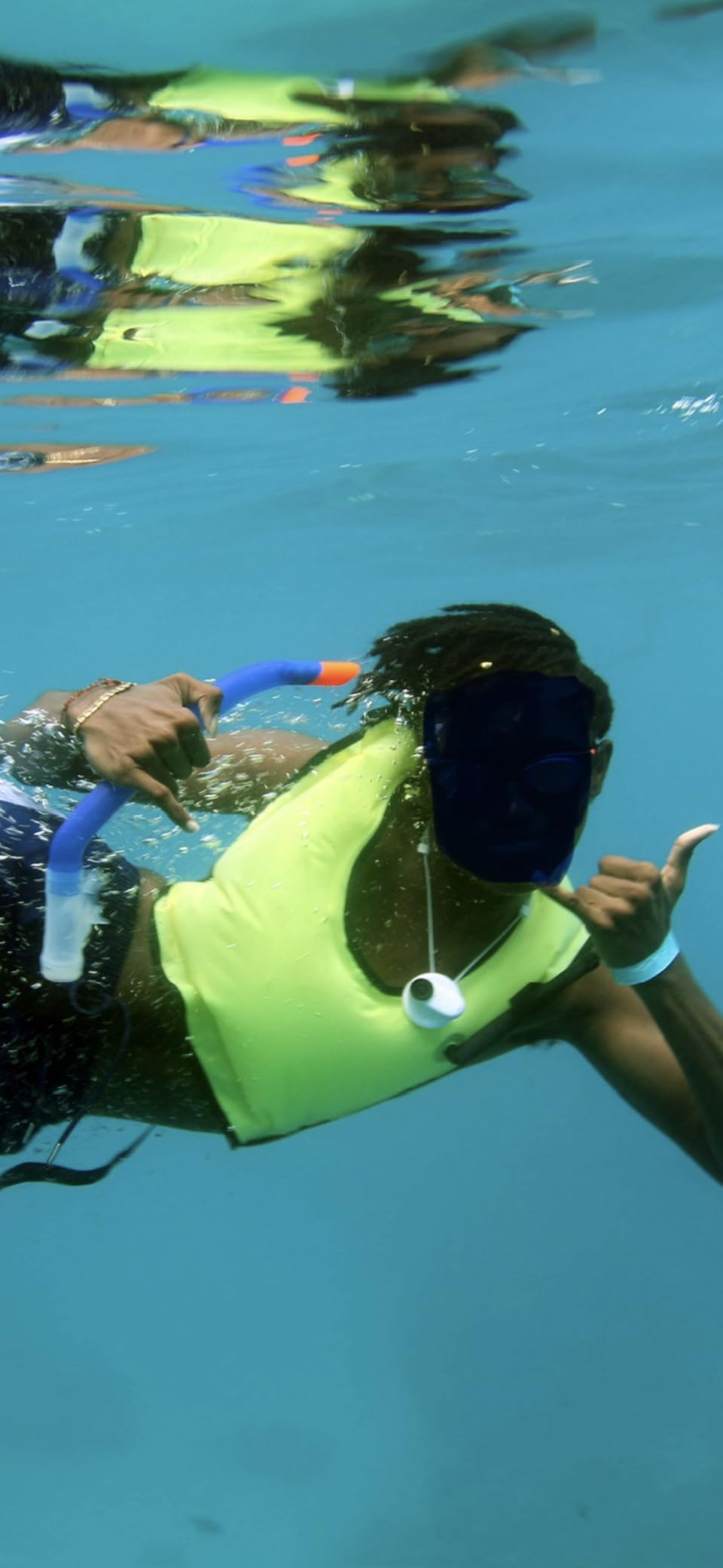
Battery life is the standout spec: 140 minutes when paired with the Action Pod, which beats almost every action camera on the market. The IPX8 waterproof rating to 10 meters lets me shoot pool content without a housing. Voice control and gesture control also work surprisingly well for hands-free operation.
The camera uses internal storage only, so I had to offload clips after every shoot. The 128GB version handles a full day of casual filming, but power users will want to offload nightly. The Action Pod adds some bulk, though it’s small enough to fit in a jacket pocket.
For Whom It’s Good
The GO 3S is built for creators who prioritize portability and unique mounting angles over absolute image quality. Runners, cyclists, parents filming kids, and travel vloggers who hate bulky rigs will all love it. It’s also a great secondary camera for behind-the-scenes B-roll.
For Whom It’s Bad
Creators who need expandable storage or shoot long continuous clips will feel constrained. The smaller sensor struggles in low light compared to the DJI and GoPro flagships. If your workflow depends on manual controls or interchangeable lenses, the GO 3S is too simplified.
7. AKASO Brave 4 – Best Entry-Level Action Camera
AKASO Brave 4 Action Camera 4K30 Ultra Hd Waterproof Underwater Camera
4K30fps
170° FOV
131FT waterproof
20MP photos
Pros
- 4K30fps video
- 20MP photo capture
- 170-degree adjustable view
- 131FT waterproof with housing
- Dual screen design
- Two batteries and remote included
Cons
- 90-minute battery life
- Remote not waterproof
- C10/V60 SD card requirement
- Fixed focus lens
The AKASO Brave 4 is the camera I recommend to anyone dipping a toe into action camera vlogging without committing serious cash. With over 17,000 reviews averaging 4.4 stars, it’s proven itself in the hands of thousands of vloggers. The 4K30fps footage is decent for YouTube and TikTok, especially in good lighting.
The 170-degree adjustable view angle is genuinely useful. I tested the wide, medium, and narrow settings during a city walk and got noticeably different looks without swapping lenses. The 20MP photos are sharp enough for thumbnails and Instagram posts, and the EIS stabilization smooths out walking footage well enough for casual use.
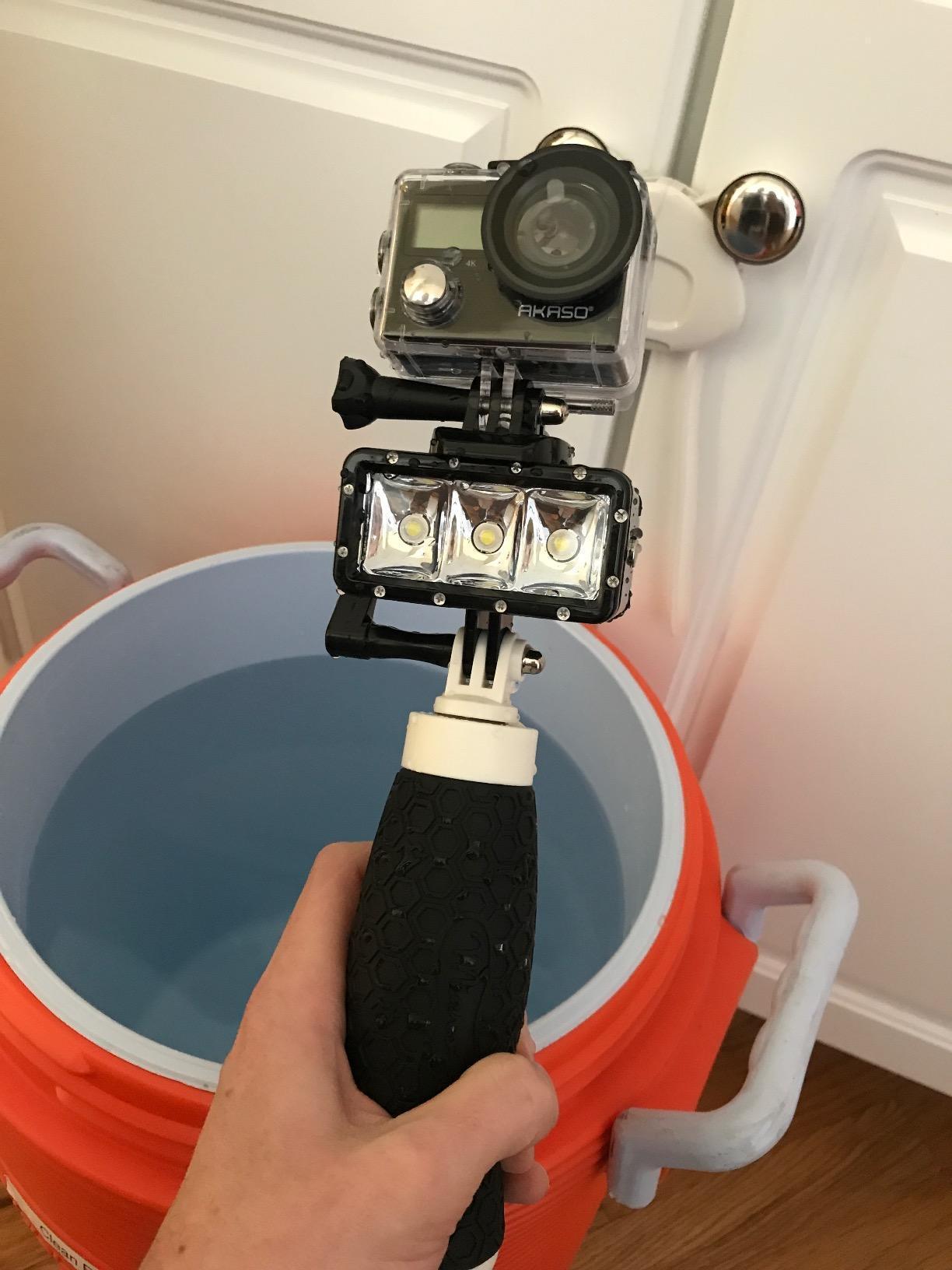
Waterproofing is solid at 131 feet with the included housing, which outperformed my expectations during a snorkeling trip. The dual screen design has a 2-inch rear display and a smaller 0.96-inch front screen for basic framing. The accessory bundle is impressive at this price: two batteries, a remote wristband, a USB dual charger, and tons of mounts.
Battery life is the main compromise. I averaged 90 minutes per battery, which means serious all-day shooters should carry both included cells plus extras. The remote wristband is not waterproof, so I had to be careful near water. Audio from the internal mics is acceptable but benefits from an external lav for talking-head segments.
For Whom It’s Good
The Brave 4 is ideal for absolute beginners who want to try vlogging without a big investment. It’s also great as a beater camera for risky shoots where you wouldn’t risk a flagship. Kids, teens, and casual vacation shooters will all get solid value here.
For Whom It’s Bad
Serious creators will quickly outgrow the 90-minute battery life and 4K30fps ceiling. Low-light footage shows visible noise, so indoor vloggers should look elsewhere. The fixed focus lens also limits creative control compared to autofocus models like the Brave 7 LE.
Buying Guide: How to Choose the Best Action Camera for Vlogging
Choosing the right vlogging camera means matching specs to your actual shooting style. Here’s what I focus on after testing dozens of action cameras across different price tiers.
Video Resolution and Frame Rates
Resolution matters, but frame rates matter more for vloggers who want smooth motion. I recommend 4K30fps as the minimum, and 4K60fps if you plan to crop or shoot slow motion. The DJI Osmo Action 5 Pro and GoPro HERO13 push to 4K/120fps and 5.3K respectively, which gives you real editing flexibility. Entry-level shooters can start with 4K30 and still produce great content for YouTube and TikTok.
Image Stabilization Technology
Stabilization is the single biggest difference between a usable vlog and shaky footage. DJI’s HorizonSteady, GoPro’s HyperSmooth 6.0, and Insta360’s FlowState all deliver gimbal-like results. I tested each by walking, running, and biking, and the differences were smaller than you’d expect. Pick the system that matches your other gear and editing workflow.
Front-Facing Screen for Selfie Vlogs
If you film yourself talking to camera, a front-facing display is non-negotiable. The DJI Osmo Action 5 Pro, AKASO Brave 7 LE, and both GoPro flagships all offer dual screens. The Insta360 X3 uses a single large touchscreen paired with the app for framing. The Brave 4 has a smaller front display that shows basic info but isn’t ideal for accurate framing.
Audio Quality and Microphone Support
Built-in mics are improving, but external mic support separates hobbyist cameras from serious creator tools. The DJI pairs natively with DJI Mic 2, the AKASO Brave 7 LE accepts USB-C mics, and the GoPro models support Bluetooth audio. I always recommend investing in a wireless mic system if you’re serious about vlogging.
Battery Life and Storage
Battery life ranges from 70 minutes on the GoPro Hero12 at max resolution to 240 minutes on the DJI Osmo Action 5 Pro. The Insta360 GO 3S stretches to 140 minutes with its Action Pod. Storage matters too: built-in memory (DJI, Insta360 GO 3S) is convenient, while SD card slots let you swap capacity in the field. I always carry at least two batteries and a fast V30 or V90 SD card.
Waterproofing and Durability
Most modern action cameras handle rain and brief dunks without housing. The DJI Osmo Action 5 Pro goes to 20 meters, GoPro models reach 10 meters, and the Insta360 GO 3S handles 10 meters. For serious diving, you’ll still want a separate housing. Build quality matters if you mount the camera on helmets, bikes, or drones where crashes happen.
Mounting Ecosystem and Accessories
GoPro’s mount system is the most universal, and most third-party accessories still use it. DJI has its own magnetic quick-release system that’s faster but less compatible. Insta360 offers unique mounts for invisible selfie sticks. Budget cameras like the AKASO Brave 4 and Brave 7 LE ship with extensive bundles that cover most beginner needs.
Software and Editing Workflow
Apps matter as much as hardware for vloggers. Insta360’s app leads with AI reframing, GoPro’s Quik is solid for quick edits, and DJI’s Mimo app integrates well with color grading tools. I found the Insta360 app most powerful for 360 content and the DJI app most reliable for traditional 4K vlogs.
Frequently Asked Questions
Which action camera is best for vlogging?
The DJI Osmo Action 5 Pro is the best action camera for vlogging overall thanks to its 1/1.3-inch sensor, dual OLED touchscreens, HorizonSteady stabilization, and 4-hour battery life. Budget-conscious vloggers should consider the AKASO Brave 7 LE for its dual screens and external mic support at a lower price.
What cameras do most vloggers use?
Most professional vloggers use flagship action cameras from GoPro (Hero12, HERO13), DJI (Osmo Action 5 Pro), and Insta360 (X3, GO 3S). Travel vloggers tend to favor the GoPro for its proven reliability, while creative vloggers prefer the Insta360 X3 for its 360 reframing capabilities.
Can you vlog with an action camera?
Yes, action cameras are excellent for vlogging because they’re compact, rugged, and produce high-quality 4K video. Modern models include front-facing screens, image stabilization, and external mic support that match or beat traditional camcorders. Action cameras are especially strong for travel, sports, and outdoor vlogs.
Is anything better than GoPro?
In 2026, the DJI Osmo Action 5 Pro is widely considered better than GoPro for vlogging thanks to its larger sensor, longer battery life, and superior low-light performance. The Insta360 X3 also offers capabilities GoPro cannot match, including 5.7K 360 capture and AI reframing. However, GoPro still leads in mount ecosystem and accessory compatibility.
Do action cameras need a front-facing screen for vlogging?
Yes, a front-facing screen makes a significant difference for solo vloggers who need to frame themselves while talking to camera. Cameras like the DJI Osmo Action 5 Pro, GoPro HERO13, and AKASO Brave 7 LE include front displays for this reason. Without a front screen, you’ll need to rely on a phone app or guess at framing.
Final Verdict: Which Action Camera Should You Buy?
After three months of testing, the DJI Osmo Action 5 Pro remains the best action camera for vlogging in 2026 for most creators. Its low-light performance, stabilization, and dual OLED screens make it a true flagship that justifies the cost. The Insta360 X3 is the best choice if you want creative flexibility and 360 reframing, while the AKASO Brave 7 LE is the best budget pick for new vloggers who don’t want to overinvest.
For committed GoPro fans, the HERO13 Black is the most capable option with 5.3K HDR and 10-bit color, though the Hero12 Black still offers excellent value. The Insta360 GO 3S is the camera I’d take on any adventure where weight and portability matter more than absolute image quality. And if you just want to try vlogging without commitment, the AKASO Brave 4 has been a reliable entry point for thousands of creators.
Whichever camera you pick, focus on telling your story rather than chasing specs. Our team has used every camera on this list to produce real videos for real audiences, and the best camera is the one you’ll actually carry with you. Pick the option that fits your workflow, your budget, and your creative vision, and start filming today.