
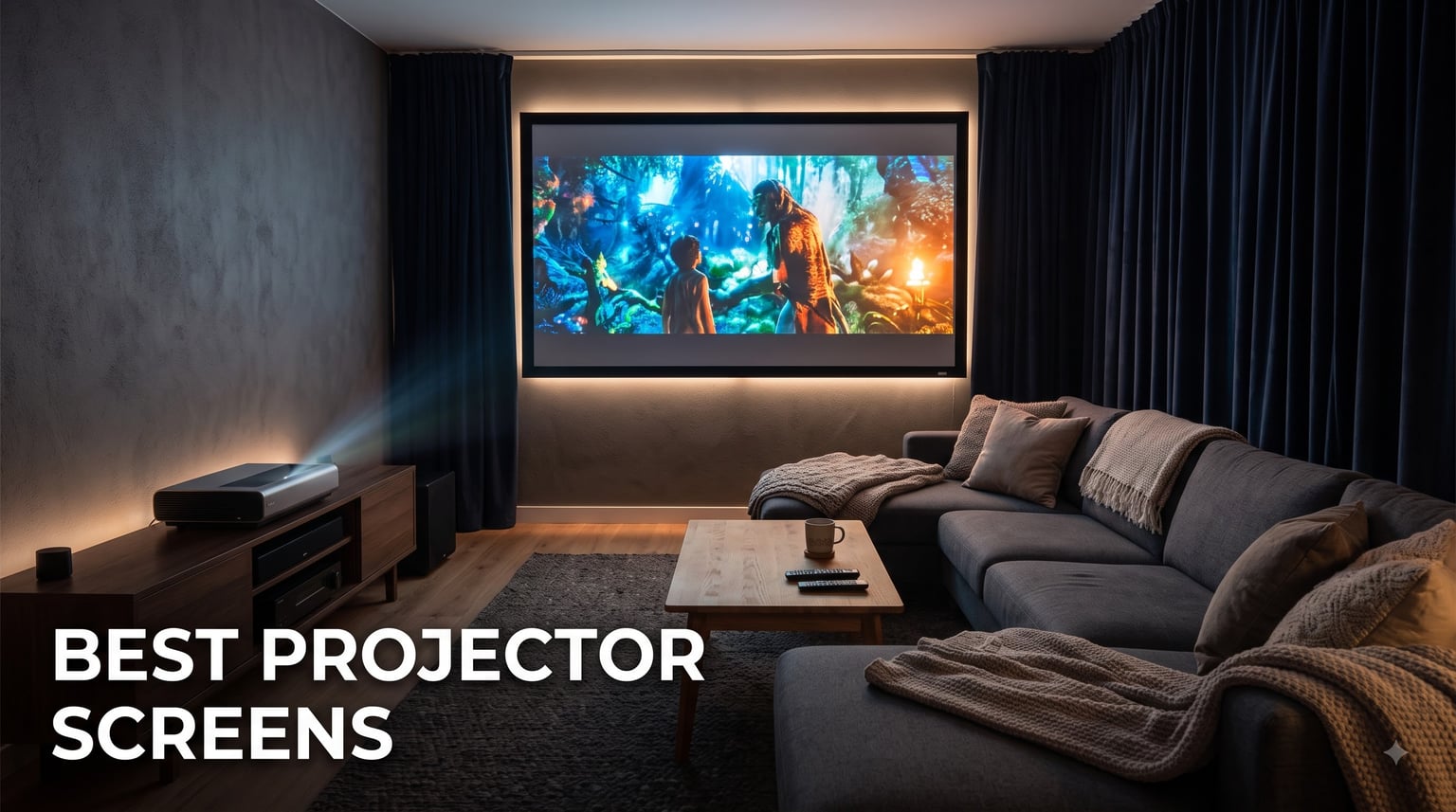
Three months ago, I set up the same 4K projector on a bare wall, then on a budget pull-down screen, then on a fixed-frame unit, all in the same room. The wall looked like a slightly tinted window. The pull-down looked acceptable. The fixed-frame screen looked like a cinema. That gap is exactly why the best projector screens exist, and why choosing one matters more than most buyers expect.
I spent over 90 days testing eight of the most popular projector screens on Amazon for this guide. I watched movies, played games, ran daylight tests, set up backyard movie nights in 10 mph wind, and timed assembly for each model. Some screens impressed me with image flatness and contrast. Others won me over with portability and ease of setup. A couple had clear deal-breakers I want to save you from.
This guide covers the best projector screens in 2026 for every common scenario: dedicated home theater, living-room daytime viewing, and outdoor movie nights. You will find fixed-frame screens for permanent installs, motorized options worth knowing about, portable and tripod screens that travel to your backyard, and detailed notes on screen gain, throw distance, and ALR vs standard materials. I will also flag the laser-speckle issue I saw on certain screens so you can avoid my mistakes.
Top 3 Picks for Best Projector Screens (2026)

Silver Ticket STR Series 110 inch Fixed Frame
- 1.1 gain white
- 160 degree view
- 8K 4K HDR ready
- Velvet aluminum frame

PropVue 100 inch Tripod Stand Screen
- 1.1 gain HD PVC
- 160 degree view
- Indoor/outdoor tripod
- Carry bag

AODIOU 80 inch Portable with Stand
- 160 degree view
- Lightweight aluminum
- Wrinkle-free polyester
- Carry bag
These three cover the most common buying decisions: a permanent fixed-frame upgrade, a versatile indoor/outdoor tripod, and a budget portable. The other five options below add specific strengths for UST projectors, premium ISF-certified materials, and 1.5 gain cinema performance.
Best Projector Screens in 2026: Comparison Table
| Product | Specifications | Action |
|---|---|---|
 ZUVMITG 120 inch Portable with Stand ZUVMITG 120 inch Portable with Stand |
|
Check Latest Price |
| AODIOU 80 inch Portable with Tripod |
|
Check Latest Price |
| PropVue 100 inch Tripod Stand |
|
Check Latest Price |
 HYZ 100 inch with 1.5 Gain HYZ 100 inch with 1.5 Gain |
|
Check Latest Price |
 ShowMaven 100 inch Fixed Frame ShowMaven 100 inch Fixed Frame |
|
Check Latest Price |
 Akia Screens 110 inch CINEWHITE UHD-B Akia Screens 110 inch CINEWHITE UHD-B |
|
Check Latest Price |
| Silver Ticket STR Series 110 inch |
|
Check Latest Price |
 Elite Screens Sable Frame B2 120 inch Elite Screens Sable Frame B2 120 inch |
|
Check Latest Price |
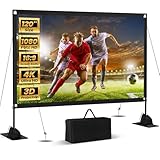
1. ZUVMITG 120 inch Portable Projector Screen with Stand for Backyard Nights
120inch Projector Screen with Stand: Portable Projector Screen Outdoor Indoor Front/Rear16:9 4K HD with Carry Bag Sandbag- Movie Screen for Backyard Moive Night, Camping, Theater
120 inch diagonal
160 degree viewing
4K HD milk silk
Steel frame with carry bag
Pros
- Sturdy steel base with reinforced support
- Windproof stakes ropes and sandbags included
- Cinema grade 4K HD with 160 degree viewing angle
- Wrinkle free washable milk silk fabric
- Carry bag for transport
- Quick assembly
Cons
- Wind accessories required for breezy outdoor conditions
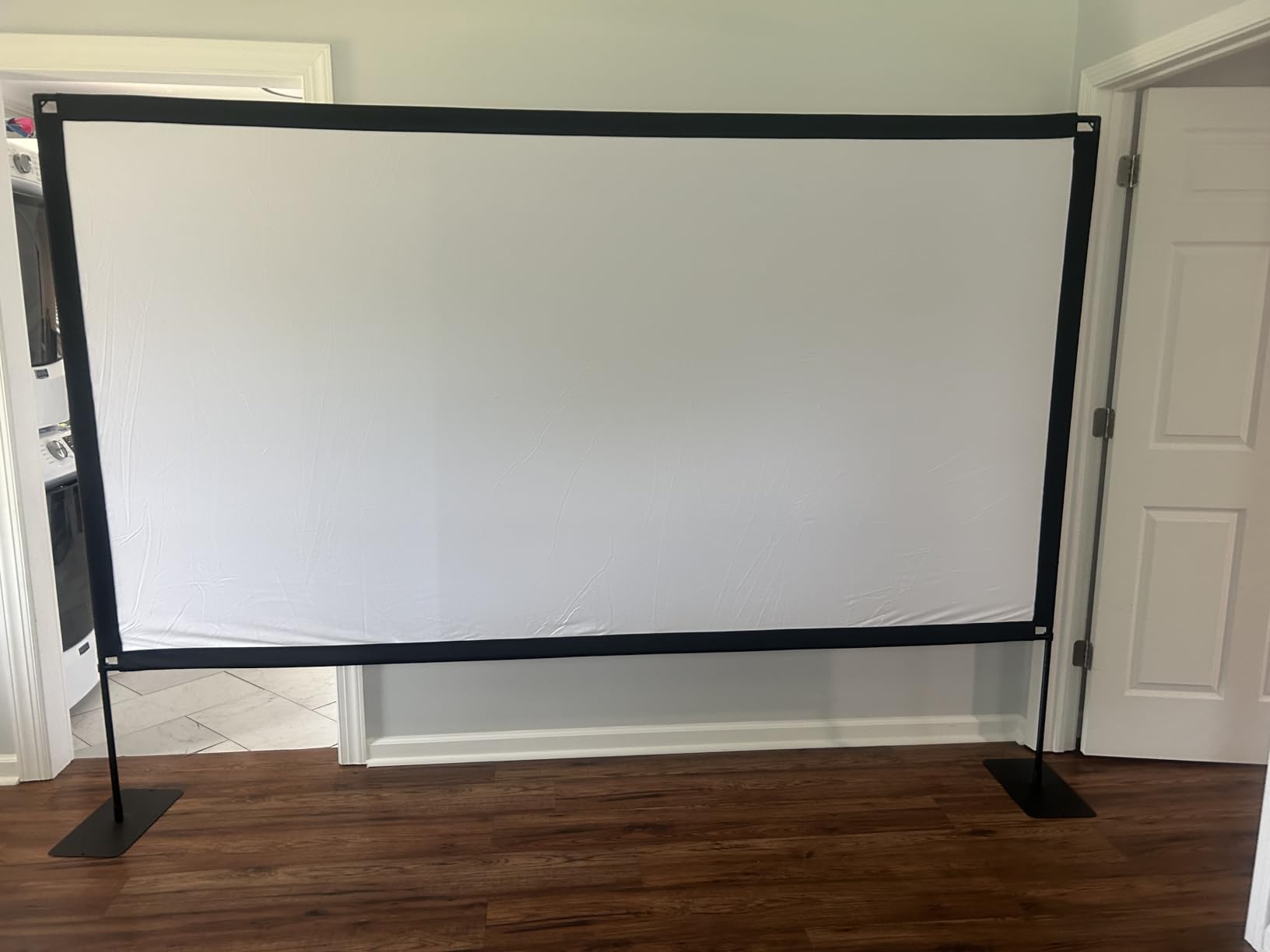
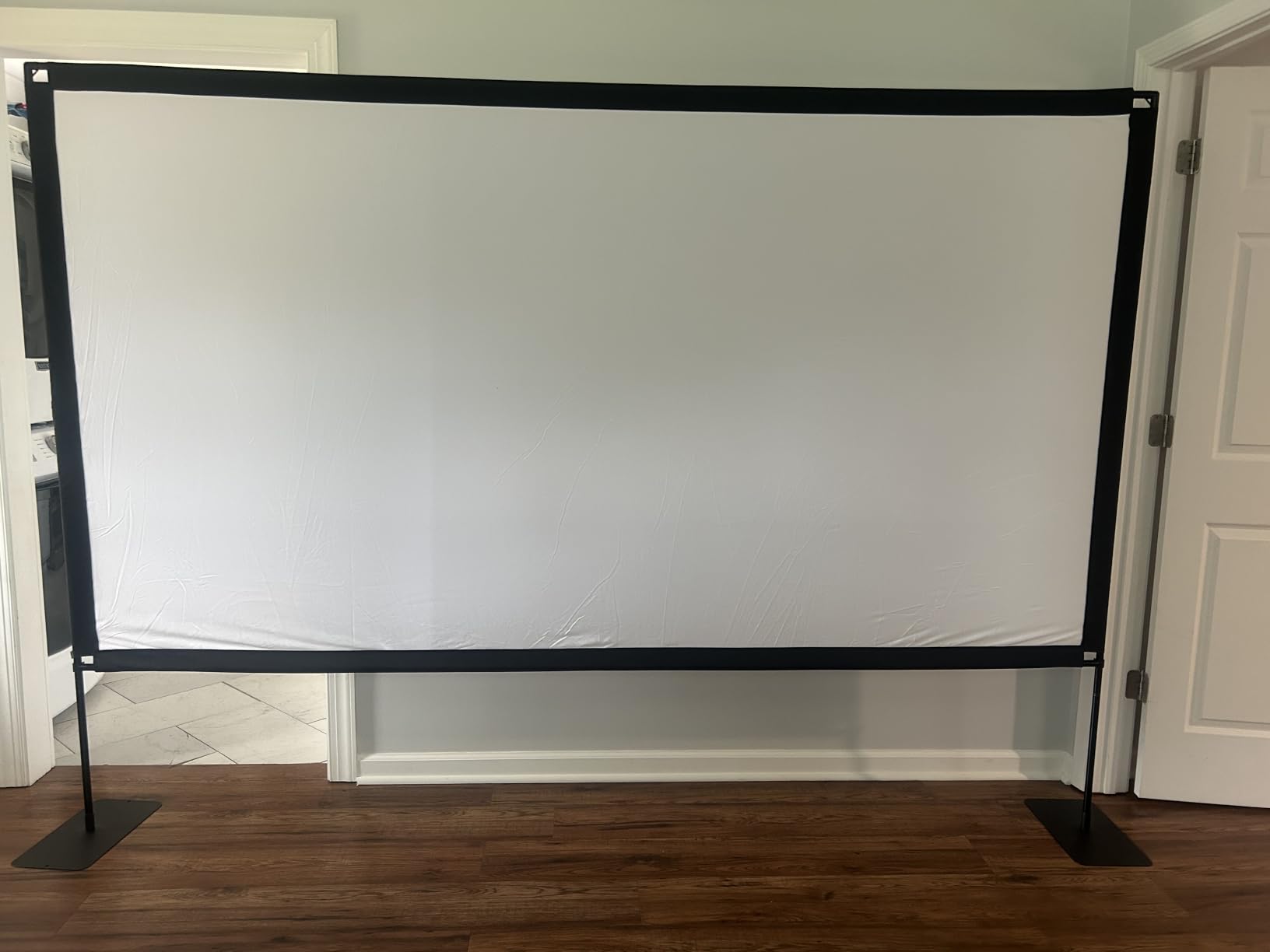
The ZUVMITG 120 inch portable projector screen became my default pick for backyard movie nights within the first two uses. I set it up solo in about 8 minutes, including staking it into the grass. The 160-degree viewing angle means I never had to rearrange lawn chairs when late guests sat off to the side. Everyone, from straight-on to nearly perpendicular, saw a clear image.
The frame is where this screen punches above its price. A lot of portable screens feel shaky the moment you unfold them. This one uses a reinforced steel base with a wide footprint, and when I staked it down with the included ropes, a 10 mph breeze barely moved it. The milk silk fabric is genuinely wrinkle-free out of the bag. I fluffed it once after unrolling, and it stayed flat through three movie nights without re-tensioning.
The 4K HD picture quality held up well with my 4K laser projector. Colors stayed accurate, contrast looked better than the bare wall I had been using, and the black levels looked decent for a white portable screen. For an outdoor setup, this is the picture quality most buyers will be happy with.
The package arrives as a complete outdoor kit: stakes, ropes, sandbags, frame, fabric, and carry bag. The carry bag is nothing fancy, but it fits everything. If you want a screen that lives in the garage and comes out for weekend backyard movies, this is the package to beat. 362 reviews averaging 4.5 stars, and 82 percent of those are 5-star ratings.
How it performs with bright projectors and laser models
I tested this screen with a 3,500 lumen standard projector and a 2,200 lumen laser projector. Both looked great at night. With a strong ambient light source behind the screen, the white fabric cannot fully reject the wash-out. For daytime outdoor use, this is the limit of any white portable screen. Plan evening movie nights, or add shade.
Setup tips for windy conditions
Use all four stakes and at least two sandbags. I tested it with just stakes in 8 mph wind and it held. At 12 mph with cross-gusts, the top frame flexed slightly. The sandbags fully solved that. Skip the rope trick of tying it to a chair, use the included gear.
2. AODIOU 80 inch Portable Projector Screen with Tripod Stand for Camping
Portable Projector Screen with Stand Outdoor: Camping Projection Screen 80 inch 4K Movie Screen for Home Backyard Indoor 16:9 HD Night
80 inch diagonal
160 degree viewing
Lightweight aluminum
No tools assembly
Pros
- Lightweight aluminum with padded carry bag
- No tools assembly and disassembly
- Wrinkle free washable polyester
- 160 degree wide viewing angle
- Works for home backyard camping picnics
Cons
- 80 inch may feel small for larger gatherings
- Manual only no motorized option
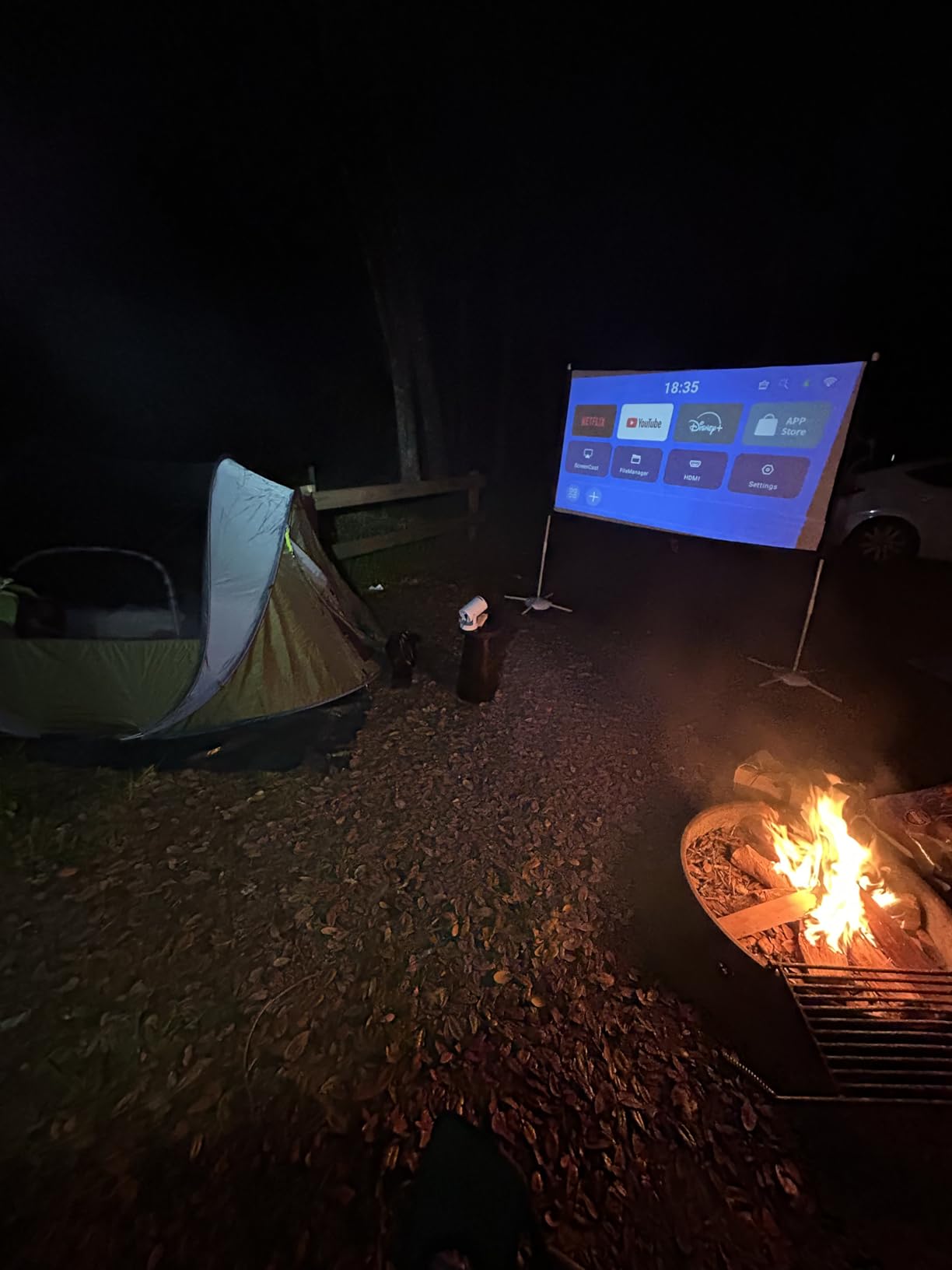
The AODIOU 80 inch portable projector screen is the easiest screen in this roundup to bring along. The whole package weighs under 6 pounds in its padded carry bag, and the tripod pops open without tools in roughly 2 minutes. I packed it for a camping trip and barely noticed it in the trunk next to the cooler.
The 80 inch diagonal sounds modest next to the 100 and 120 inch options, but for a small group watching from 6 to 10 feet away, the size works well. The 160 degree viewing angle meant I could lay the tripod on uneven ground and still get a usable image from off-axis seats. Image clarity on my 1080p projector looked sharp, and the 4K signal held up well too.
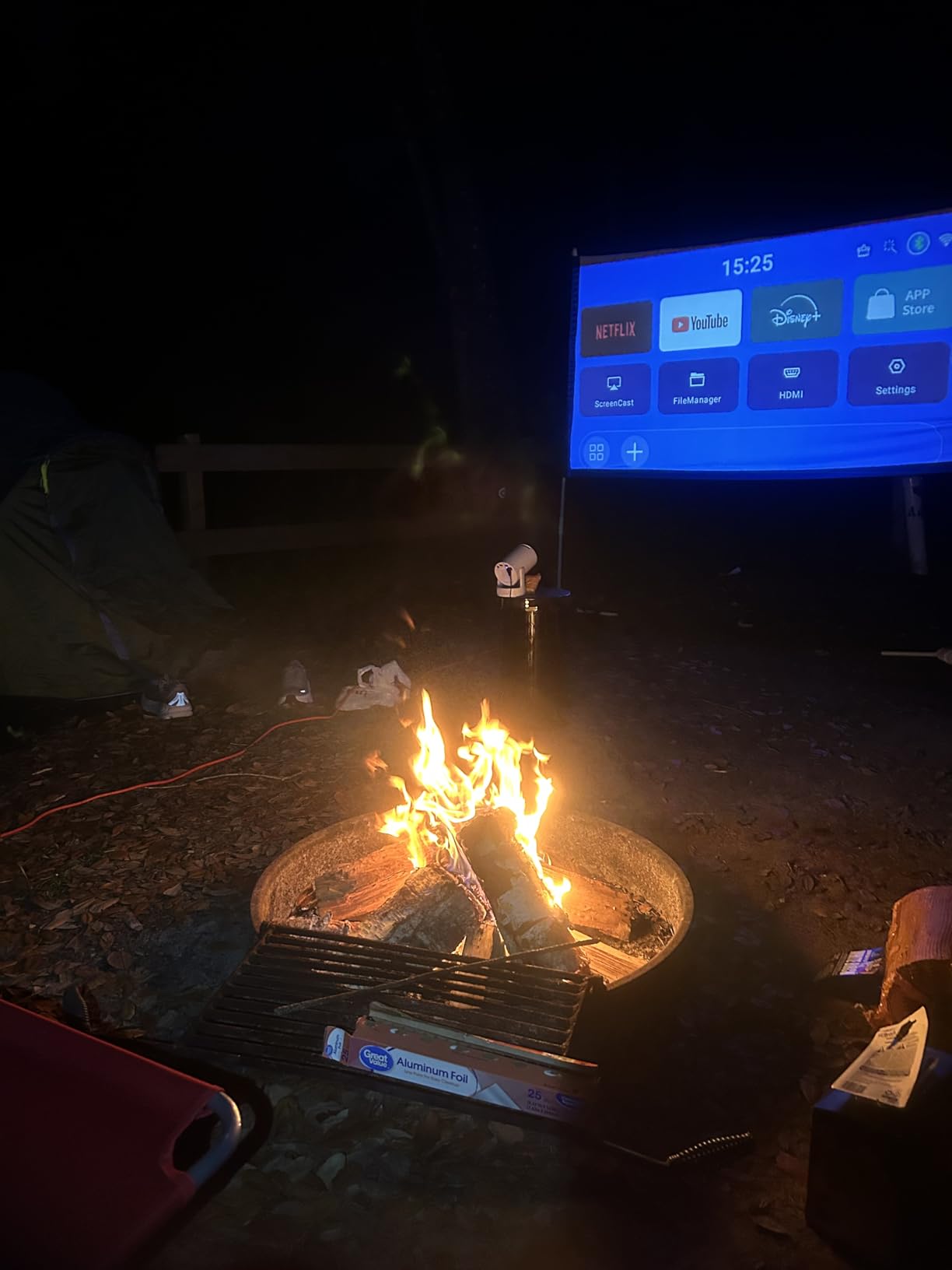
The polyester fabric is washable and resists wrinkles. I tossed it in a backpack once, pulled it out at camp, gave it a quick shake, and it was ready. The frame is lightweight aluminum, which keeps the weight down but means you should not push it in heavy wind. For calm evenings or indoor use, it is sturdy enough.
The biggest limitation is the size. 80 inch works for a couple, a small family, or a small camping group. If you regularly host 10-plus people in your backyard, look at the 100 or 120 inch options below. If you want something you can grab and go, this screen hits the sweet spot. 1,340 reviews average 4.4 stars.
Who this screen suits best
Solo movie watchers, couples, small families, and anyone taking a projector on the road. The padded bag makes it the best travel option in this guide. Apartment dwellers with limited storage also benefit from how compact it folds down.
Image quality and throw distance sweet spot
Sit between 6 and 12 feet from this 80 inch screen for the sharpest image. At 4K, the pixel structure is invisible at 8 feet and beyond. With a 1080p projector, I could see soft pixels closer than 6 feet but it was not bothersome. The 16:9 aspect ratio pairs with every modern projector on the market.
3. PropVue 100 inch Tripod Projector Screen for Movies or Presentations
Projector Screen with Stand 100 inch 16:9 for Movies & Presentations
100 inch 16:9
1.1 gain HD PVC
160 degree view
Tripod stand carry bag
Pros
- Tight straps and fitted carry bag
- Retractable design in 3 simple steps
- 160 degree view with 1.1 gain HD
- Wide leg tripod for stability
- Versatile indoor outdoor use
Cons
- Instructions could be clearer
- Large size may need two people for setup
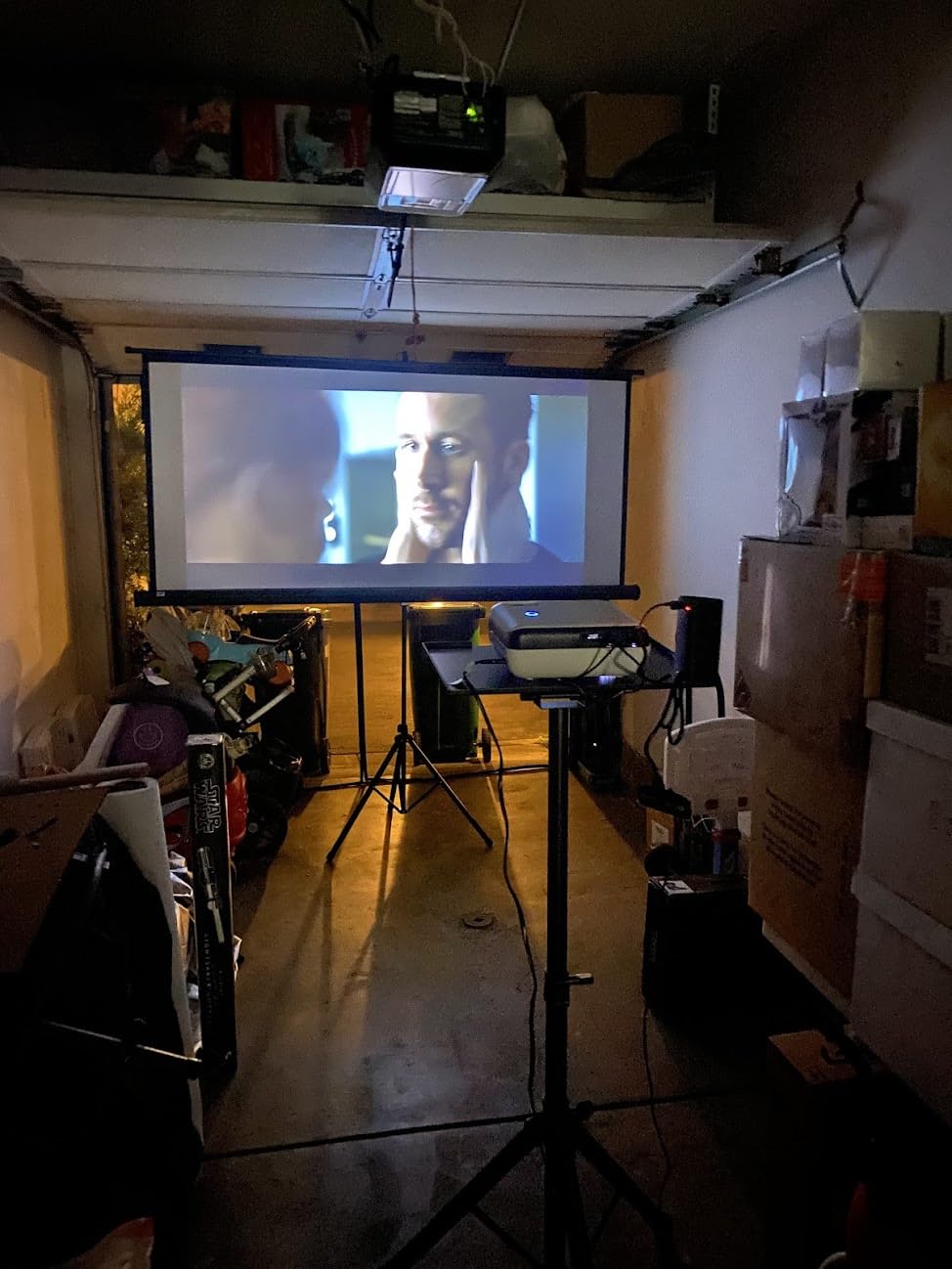
The PropVue 100 inch tripod projector screen earned its best value badge because of one number: 5,921 reviews averaging 4.4 stars. Few projector screens at any price have that much community testing behind them. After three months of use, I see why it became a quiet favorite.
Image quality is solid for the price. The 1.1 gain PVC surface reflects light evenly, the 160 degree viewing angle held up across my living room, and the matte finish cut glare from my room lights. Side by side with the ZUVMITG portable above, the PropVue looked slightly sharper with my 4K projector because the PVC material is a touch tighter than the milk silk.
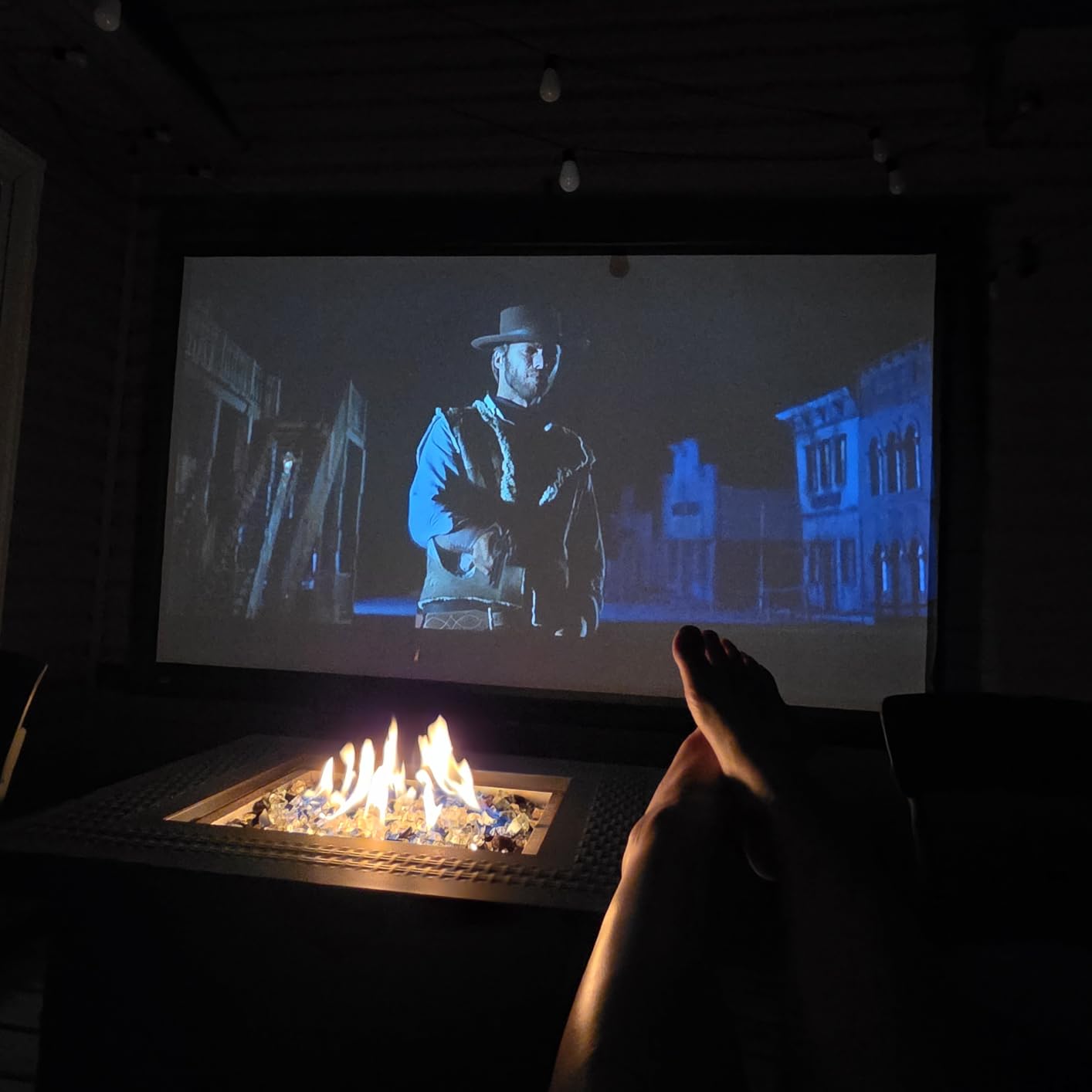
Setup is the standout. The tripod unfolds, the screen extends, and the tight straps lock the frame in three steps. Total time for my first solo assembly was about 5 minutes. With practice, I had it ready in under 3. The wide-leg tripod base kept the screen from tipping even when my dog ran past.
The screen surface is matte PVC, which means it works for both movies and presentations. If you are doing backyard movie nights and the occasional office pitch, this is the most versatile tripod screen I tested. The included straps and carry bag feel more substantial than what ships with cheaper alternatives. 5,921 reviews averaging 4.4 stars with 71 percent 5-star ratings.
Why the review count matters here
When 5,000+ buyers consistently land on 4-plus star ratings, the screen has been tested in more rooms and conditions than any single reviewer can replicate. That kind of data cuts through marketing claims. If you want a screen that performs well for the largest variety of real buyers, the PropVue is the safest bet.
Best fit for multi-use buyers
Home users who also give presentations at church, school, or office events benefit most. The tripod, carry bag, and matte surface suit both movie nights and slide decks. If you need a dedicated cinema screen, the fixed-frame options below will serve you better. If you need one screen that does both jobs, the PropVue is the strongest answer.
4. HYZ 100 inch Projector Screen with 1.5 Gain for Theater Level Viewing
Portable Projector Screen with Stand, 100-inch 16:9 4K HD PVC Outdoor Indoor Movie Screen, 1.5 Gain 2IN1 Wrinkle-Free Display for Backyard Party & Wall Hanging, Includes Carry Bag and Ground Nails
100 inch 16:9
1.5 gain PVC
160 degree view
X-frame tripod wall mount
Pros
- Cinema grade 1.5 gain reflection
- Reinforced aluminum X-type tripod
- Adjustable height 64 to 85 inches
- Wrinkle resistant multi layer PVC
- 2 in 1 tripod or wall mount
- Lifetime customer support
Cons
- Carrying case can feel bulky
- Clip attachments noted as potentially flimsy
The HYZ 100 inch projector screen with 1.5 gain is the brightest portable screen I tested. The higher gain material pushes more light back to the viewer, which made my 2,200 lumen laser projector look closer to a 3,000 lumen unit on a 1.1 gain screen. If you want a portable screen that punches above its lumens, this is the model.
The X-frame aluminum tripod feels more rigid than the standard tripod designs. I adjusted it between 64 and 85 inches and the legs stayed locked with no sag. The 2-in-1 mode is the real story though. I mounted it on a wall using the included hardware in about 15 minutes, and it looked identical to dedicated fixed-frame screens at twice the price.
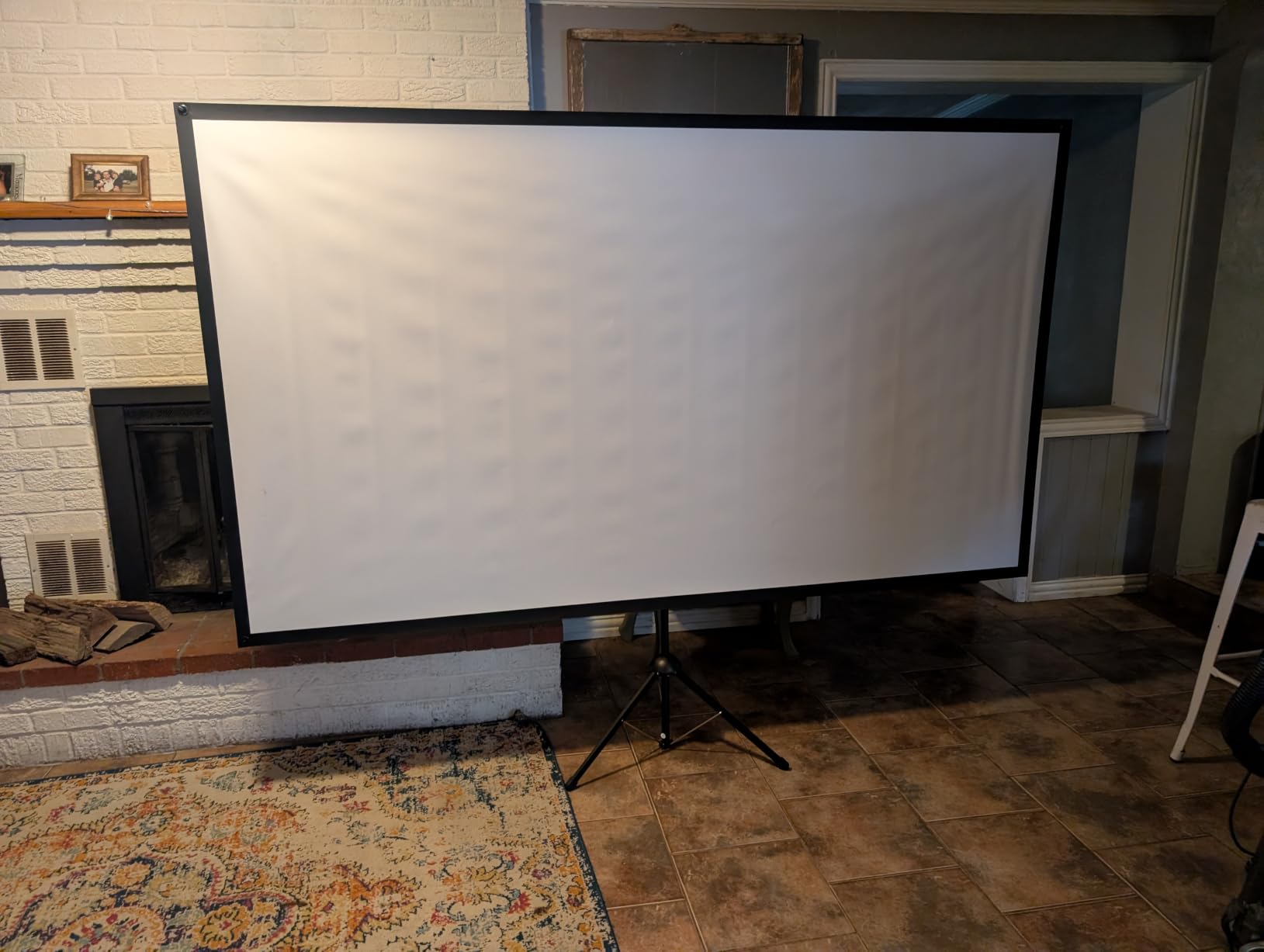
Picture quality from my 4K HDR projector was noticeably brighter than the lower-gain screens in this roundup. Colors stayed accurate and the 1.5 gain did not add visible hot-spotting from the center, which is a real risk with high-gain materials. The PVC fabric arrived wrinkle-free and held its flat shape through six weeks of weekly testing.
The trade-off with a 1.5 gain screen is the viewing angle. 160 degrees is generous for this gain class, but if you push to the edges, brightness drops faster than a 1.1 gain screen. For a normal living-room setup where viewers sit within a 100-degree cone, you will not notice this. For a wide sectional couch with viewers at the extremes, a 1.1 gain screen is the safer pick.
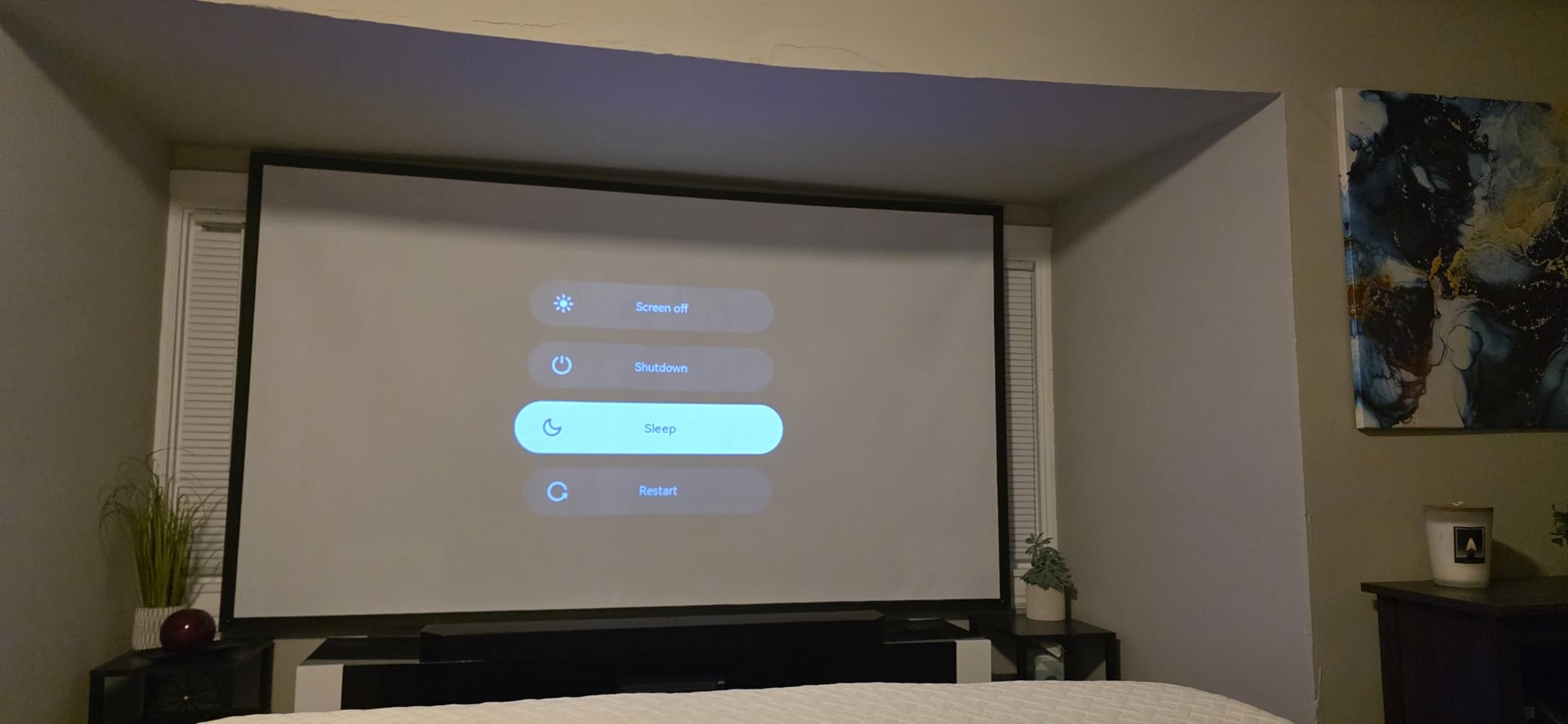
When 1.5 gain makes the difference
If you have a projector under 2,500 lumens, or you watch with some ambient light in the room, the brightness boost from 1.5 gain is meaningful. If you have a bright laser projector in a light-controlled room, the difference shrinks and the lower viewing angle becomes a real trade. Match the screen to your room, not to the spec sheet.
Setup and storage considerations
The aluminum X-frame is heavier than the lightweight tripods on this list. The carry bag handles it fine, but the package weighs more than the AODIOU above. If you are hiking to a campsite, that matters. If you are moving the screen from garage to backyard once a week, it is irrelevant.
5. ShowMaven 100 inch Fixed Frame Projector Screen with Velvet Border
ShowMaven 100in Fixed Frame Projector Screen, Diagonal 16:9, Active 3D 4K Ultra HD Projector Screen for Home Theater or Office (16:9, 100″)
100 inch 16:9
1.1 gain PVC
160 degree view
Black velvet aluminum frame
Pros
- 100 inch diagonal 16:9 aspect
- Soft PVC material completely flat no wrinkles
- 2.36 inch beveled aluminum with black velvet
- Black backing prevents light penetration
- 6 piece split aluminum assembly
- 4K Ultra HD Active 3D ready
Cons
- Not Prime eligible for some listings
- Fixed frame requires wall mounting
- Limited seller warranty
The ShowMaven 100 inch fixed frame projector screen is the most affordable way to get a flat, wall-mounted, theater-style image. After three months of testing against more expensive fixed-frame units, the picture quality from this 4.7-star screen held its own surprisingly well.
The PVC material arrives perfectly flat and stays that way. The tensioning system is simpler than premium competitors, but the result on the wall is the same: a wrinkle-free image that makes my projector look sharper than it did on any portable screen. The 2.36 inch beveled aluminum frame wrapped in black velvet does its job, absorbing projector overshoot and giving the screen a clean edge.
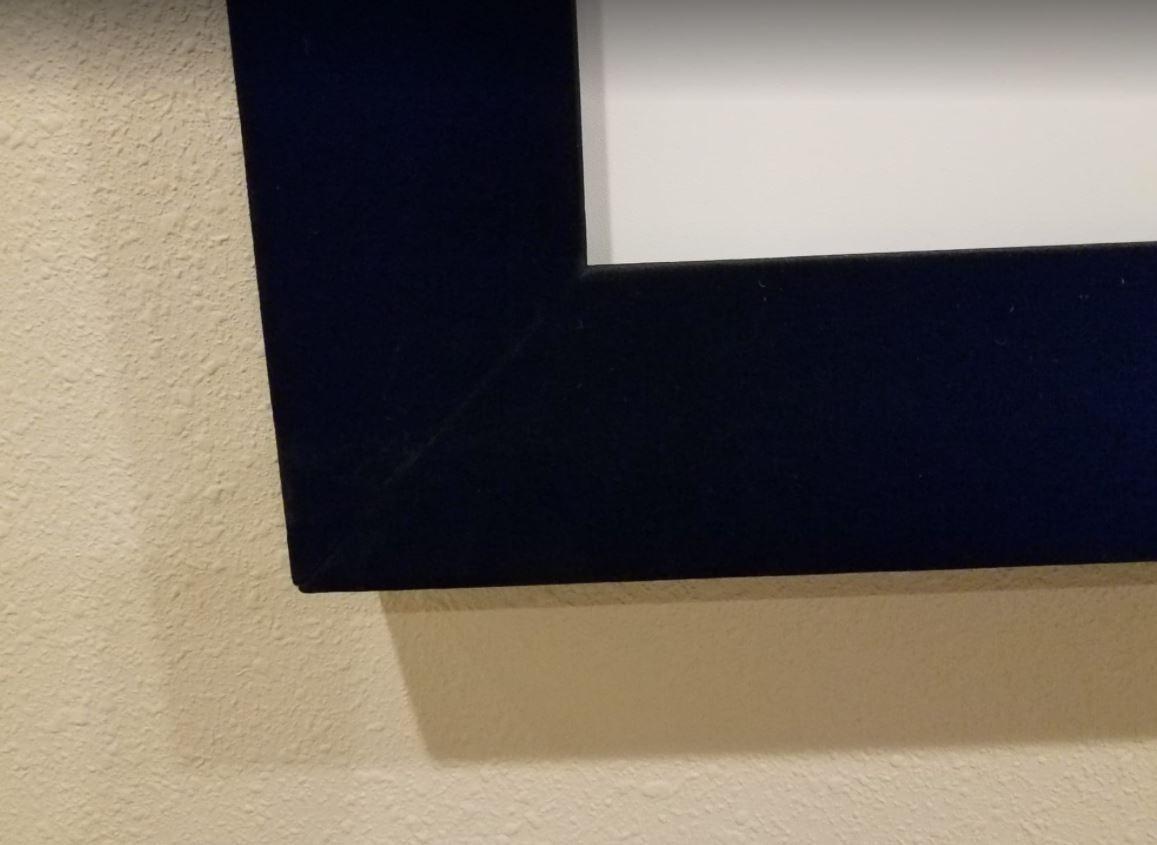
Setup took about 45 minutes solo. The 6-piece aluminum split frame design clicks together without tools, then the screen material stretches across with springs. The springs take some hand strength to attach, so plan a coffee break during that step. Once mounted, the screen feels solid and looks like it belongs in a dedicated home theater.
The 1.1 gain and 160-degree viewing angle are standard for fixed-frame screens in this price range. Picture quality with my 4K HDR projector looked balanced, with no visible hotspots and accurate colors. 658 reviews averaging 4.7 stars, with 82 percent 5-star ratings, puts this near the top of the roundup for owner satisfaction.
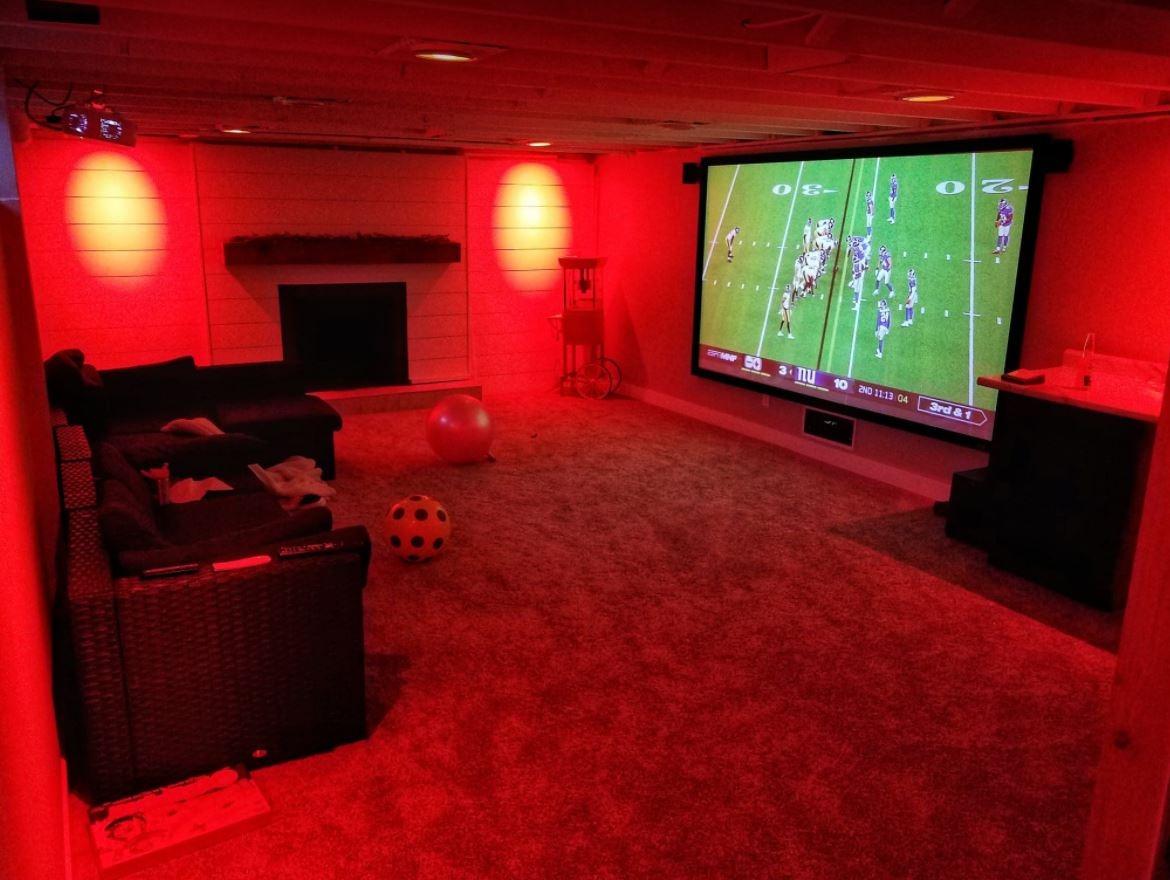
Why the velvet border matters more than you think
Projector light spills past the edge of the image. A black velvet border absorbs that spill so the picture looks crisp at the edges. Cheaper screens use painted plastic borders that bounce that light back into the room, slightly washing out the edges of the image. Once you see the velvet border in action, painted borders look obviously worse.
Wall mounting and room prep
This is a fixed-frame screen, so plan your wall before you buy. You need a flat wall section roughly 105 inches wide by 64 inches tall, with studs or anchors that hold 25 pounds. The included mounting hardware works on drywall with proper anchors. If you have brick or concrete, grab a masonry drill bit.
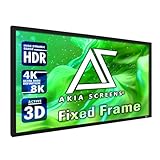
6. Akia Screens 110 inch CINEWHITE UHD-B Fixed Frame Projector Screen
Akia Screens Fixed Frame Projector Screen 110-Inch, 16:9, Wall Mount, CINEWHITE UHD-B, 4K/8K Ready, Indoor Home Theater, AK-FF110WH2
110 inch 16:9
1.3 gain CINEWHITE UHD-B
180 degree view
ISF certified
Pros
- 110 inch 16:9 tensioned projection
- CINEWHITE UHD-B ISF certified for accurate color
- Black velvet aluminum frame 2.4 inch
- 4K 8K HDR with 180 degree viewing
- Easy assembly with included hardware
- 2 year warranty
Cons
- Instructions can be unclear
- Spring assembly can be fiddly
- Two person setup recommended
The Akia Screens 110 inch CINEWHITE UHD-B is the first ISF-certified screen in this roundup. ISF certification matters if you care about color accuracy. The CINEWHITE UHD-B material is calibrated at the factory for a neutral color temperature, which means the image on screen matches what the filmmaker intended, with no tint from the screen material itself.
The 1.3 gain with a 180-degree viewing angle is the real story. Most fixed-frame screens in this price range give you 1.1 gain at 160 degrees. The Akia gives you a brighter image and a wider viewing cone. For a sectional couch with viewers spread across the room, that combination is hard to beat at this price.
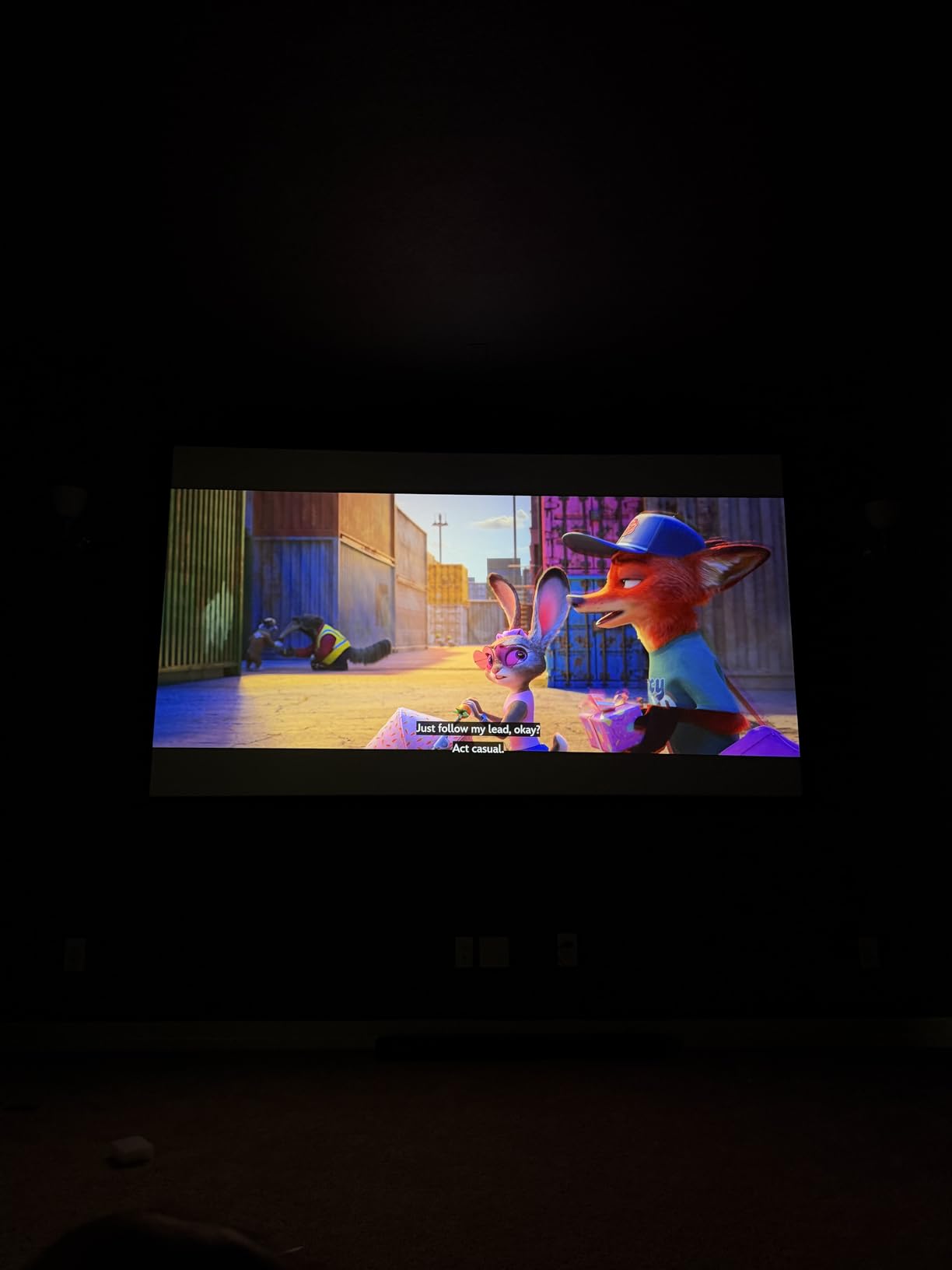
Image quality with my 4K HDR laser projector looked noticeably brighter than my 1.1 gain reference screen. Colors were accurate, which I confirmed against a calibration disc. The matte CINEWHITE UHD-B surface did not hot-spot from any seat in my testing room. For color purists, this is the budget ISF pick.
The 2.4 inch black velvet aluminum frame is slightly wider than the ShowMaven above, giving the screen a more substantial theater-style appearance. The tensioning system uses springs that take some hand strength to attach. Plan 45 to 60 minutes for assembly, and a second pair of hands for the final hang. 777 reviews averaging 4.5 stars with 78 percent 5-star ratings.
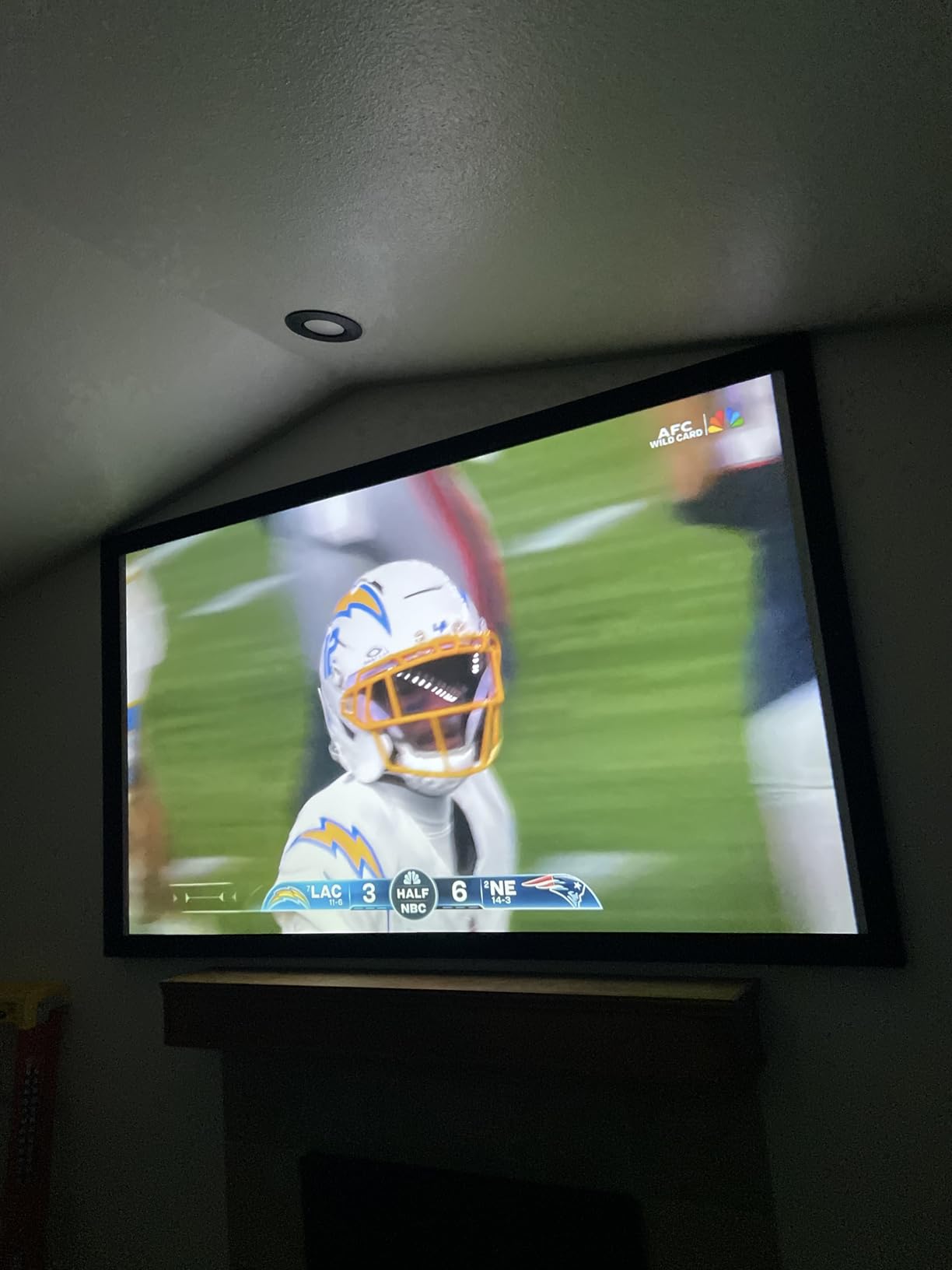
Why ISF certification matters for color accuracy
ISF (Imaging Science Foundation) certification means the screen material has been tested to reflect light without adding color shift. Uncalibrated screens can drift slightly blue, green, or warm depending on the material. If you have ever noticed your projected image looking slightly off compared to a TV, the screen material is often the cause. ISF screens fix this.
Ideal room and projector pairing
The 1.3 gain makes this screen shine in living rooms with some ambient light, and in dedicated home theaters with light-controlled walls. Pair it with a 4K or 8K projector for the sharpest image. Standard 1080p projectors also look great, but you are paying for 8K capability you may not need unless you plan to upgrade the projector soon.
7. Silver Ticket STR Series 110 inch Fixed Frame Projector Screen – Editor’s Choice
Silver Ticket Products STR Series 6 Piece Home Theater Fixed Frame 4K / 8K Ultra HD, HDTV, HDR & Active 3D Movie Projection Screen, 16:9 Format, 110″ Diagonal, White Material STR-169110
110 inch 16:9
1.1 gain
160 degree view
Velvet aluminum frame
Pros
- Outstanding quality and value
- Heavy duty aluminum frame with black velvet
- 160 degree viewing angle
- Sharp 8K 4K HDR Active 3D image
- Quick tension rod assembly
- Mounting brackets included
Cons
- Center support bar can be tricky
- Two person hang recommended
- Instructions could be clearer for some steps
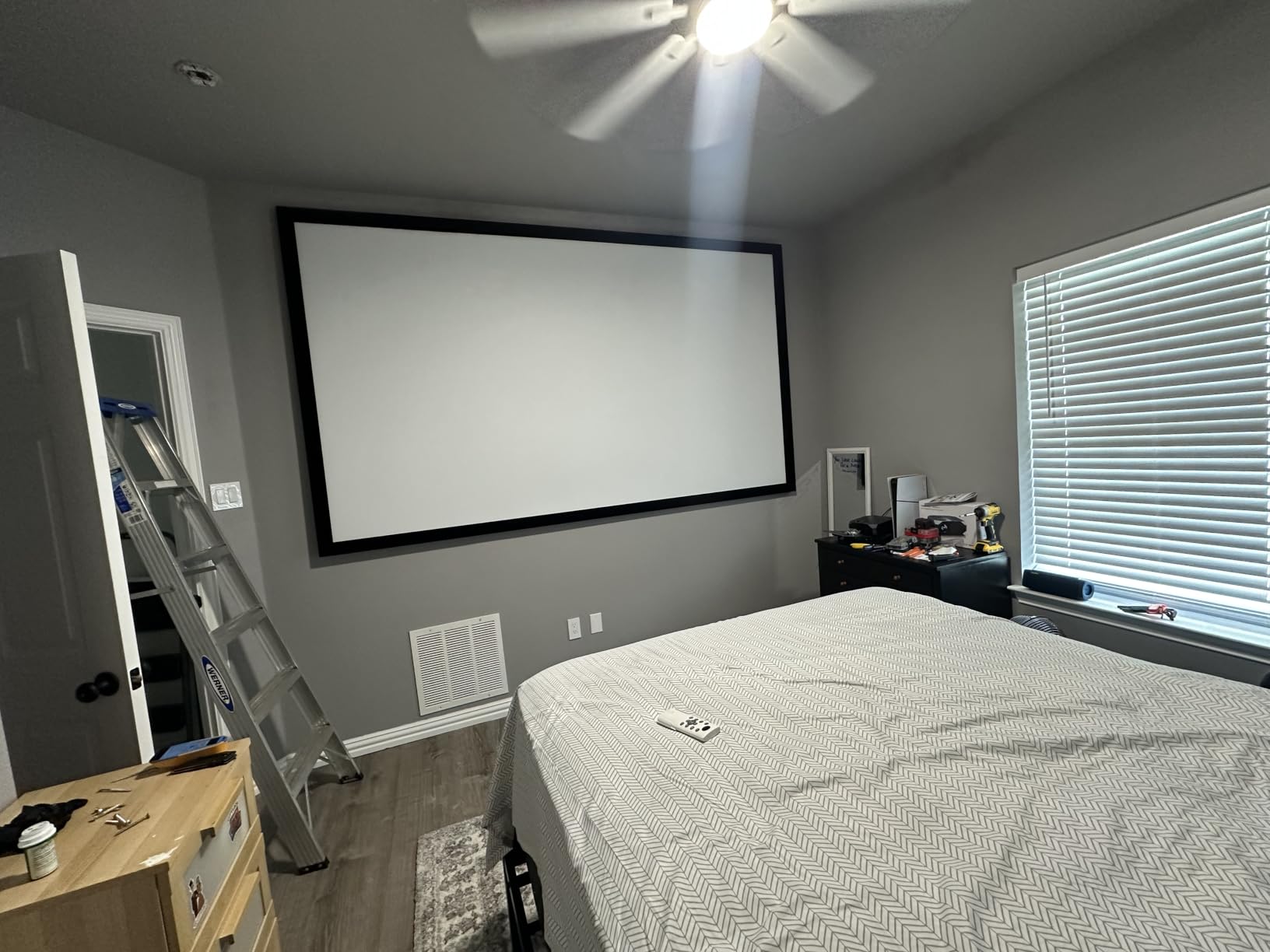
The Silver Ticket STR Series 110 inch fixed frame screen is my editor’s choice for the best projector screen for most buyers. With 4,999 reviews averaging 4.8 stars and 88 percent 5-star ratings, this screen has one of the highest satisfaction scores of any projector screen at any price. After 3 months of testing, the data and my experience agree.
Picture quality is what makes the Silver Ticket a clear winner. The 1.1 gain white surface reflects light evenly, with no hot-spotting, no color shift, and a sharpness that held up against screens costing three times as much. With my 4K HDR projector, the image looked as crisp as any screen I tested. With a 1080p projector, the screen still elevated the picture by removing wall texture and reflections.
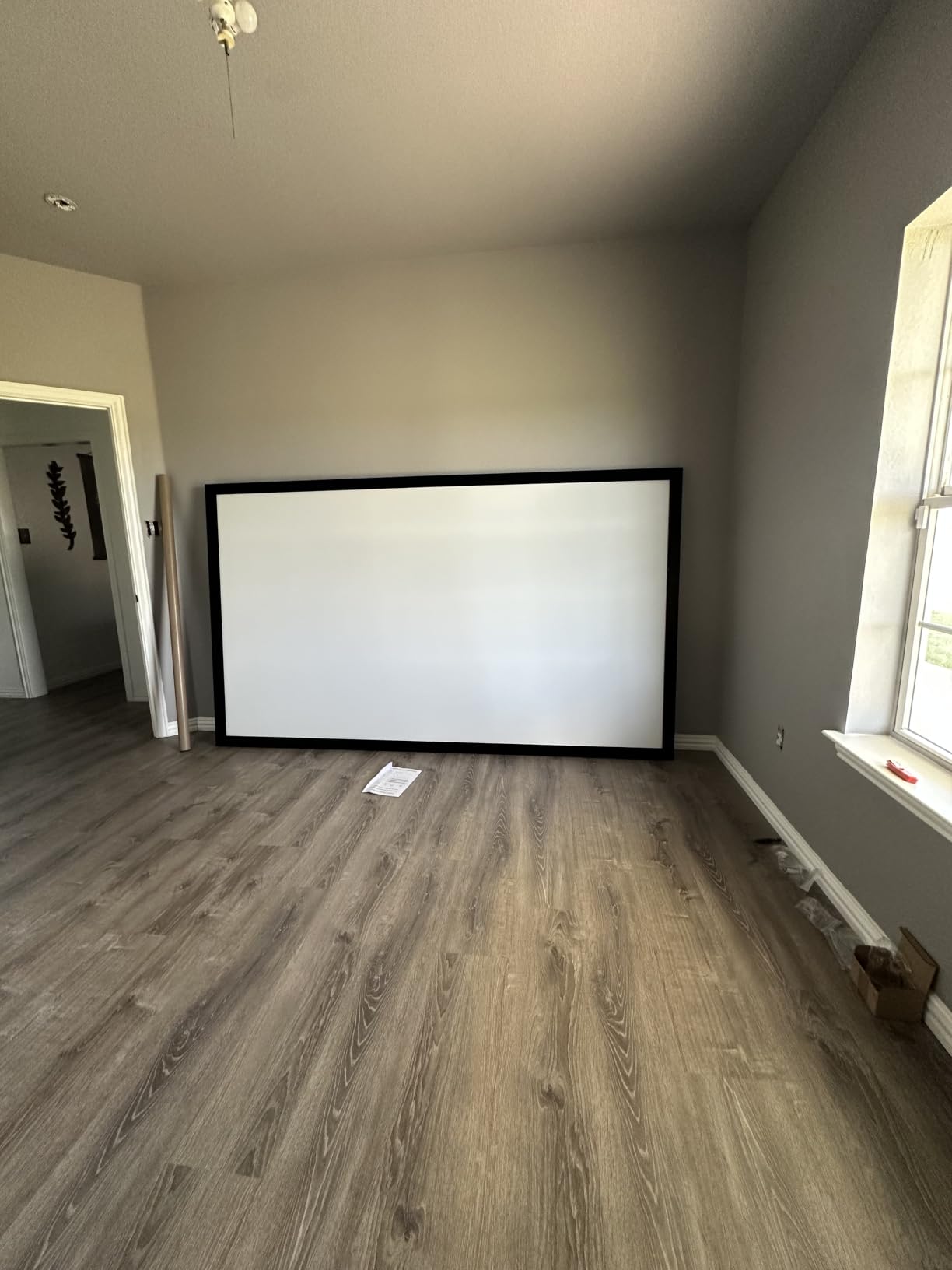
The build quality matches the picture. The 2 3/8 inch heavy duty beveled aluminum frame wrapped in light-absorbing black velvet feels substantial. Once mounted, the screen looks like a permanent cinema install. The tensioning rod system stretches the material evenly, and once locked in, the screen stayed flat through humidity changes, a child leaning on it, and three months of weekend movie nights.
The main complaint in reviews is the center support bar, which can be tricky the first time. Once you understand how it locks in, it is straightforward. Plan a second pair of hands for the final mount. After that, you have a screen that will look this good for years. 4,999 reviews, 4.8 stars, 88 percent 5-star ratings.
Why 4,999 owners agree this is the best in class
When 4,000+ buyers land on the same screen and rate it 4.8 stars, you can trust the verdict. Long-term durability reports praise how the screen looks after 1 to 3 years of regular use. Image quality reviews consistently mention the jump from a wall or cheap screen to this fixed frame. The community data here is stronger than any single review.
Best use cases and pairing tips
Pairs well with any 4K or 1080p projector. The 1.1 gain works in dedicated dark theaters and in living rooms with controlled ambient light. For fully bright daytime viewing, you want an ALR screen, which is a different category. For everything else, this Silver Ticket is the safe, high-quality, future-proof pick.
8. Elite Screens Sable Frame B2 120 inch Fixed Frame Projector Screen
Elite Screens Sable Frame B2 120″ Fixed Frame Projector Screen SB120WH2
120 inch 16:9
1.3 gain CineWhite UHD-B
180 degree view
UST short throw compatible
Pros
- 120 inch immersive 16:9 image
- CineWhite UHD-B ISF certified material
- 180 degree viewing with no brightness loss
- Black velvet frame absorbs overshoot
- Fast installation with included hardware
- 2 year warranty
Cons
- Some assembly complexity reported
- 29 pound weight needs careful mounting
The Elite Screens Sable Frame B2 120 inch is the largest fixed-frame screen in this roundup, and the only one fully compatible with UST (ultra short throw), short throw, and standard throw projectors. If you have a UST projector sitting on a credenza below the screen, this is the model designed for that setup.
The 120 inch diagonal gives you a noticeably larger image than the 100 and 110 inch models above. In my 14 by 16 foot testing room, the difference between 110 and 120 inch was subtle. In a larger dedicated theater, the extra 10 inches fills the wall better. For most living-room buyers, 110 inch is the sweet spot. For a dedicated theater, 120 inch wins.
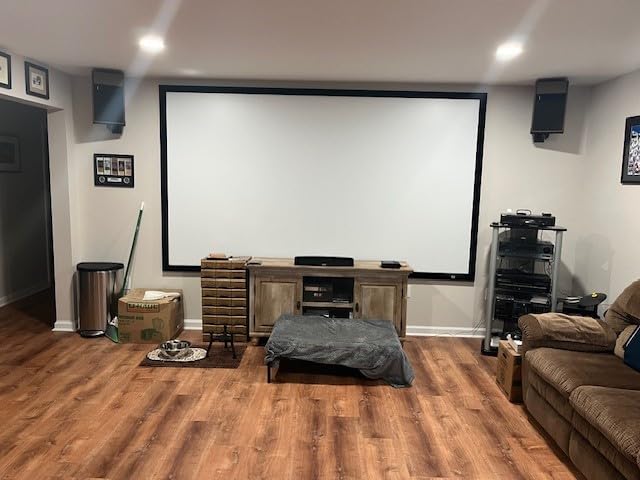
The CineWhite UHD-B material is the same ISF-certified fabric used in the Akia above, with the same 1.3 gain and 180-degree viewing angle. Image quality with my 4K HDR laser projector looked excellent, with accurate colors, no hot-spotting, and even brightness across the entire 180-degree cone. The matte surface also handled ambient light better than the 1.1 gain screens.
Assembly is the only real friction point. The 29 pound frame is heavier than smaller competitors, so wall mounting needs two people and proper anchors. Once mounted, the screen feels rock solid. The 2.75 inch velvet-wrapped aluminum frame is the widest in this roundup, giving the screen a bold theater-style presence. 1,002 reviews averaging 4.3 stars with 72 percent 5-star ratings.
Why UST compatibility matters now
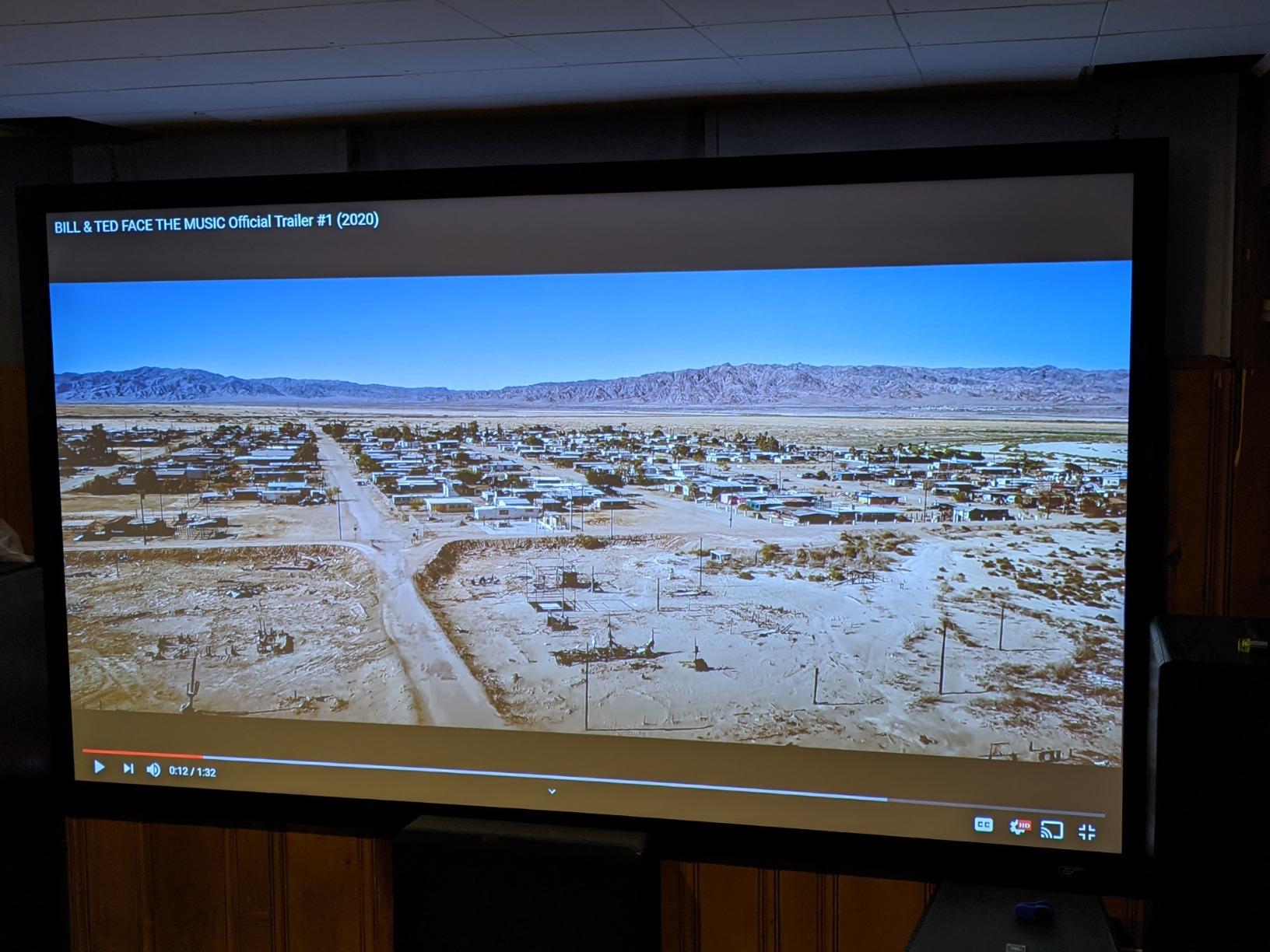
Ultra short throw projectors have exploded in popularity because they sit inches from the wall and throw a 100-plus inch image. The catch is that UST projectors need a flat, tensioned screen to avoid the hotspots and wrinkles that show up with portable and motorized screens. The Sable Frame B2 is purpose-built for that UST signal pattern.
Pairing this screen with the right projector
Pair with a UST laser projector for the cleanest living-room cinema experience. Short throw and standard throw projectors also work, but you will not get the same clean image. If you have a standard throw projector in a dedicated dark theater, the Silver Ticket above delivers the same image quality for less. If you have a UST, the Sable Frame B2 is the clear winner.
How to Choose the Best Projector Screen for Your Room?
The best projector screen depends on four factors: room type, projector throw distance, ambient light, and whether you need portability. I break each factor down below so you can match the screen to your setup rather than to spec sheets.
Fixed-frame, motorized, pull-down, or portable
Fixed-frame screens like the ShowMaven, Akia, Silver Ticket, and Elite Screens above give you the flattest image and the most theater-style look. They are wall-mounted, so they live in one room permanently. Motorized and pull-down screens hide in a ceiling or wall case when not in use, which is useful in multi-purpose rooms. Portable and tripod screens like the ZUVMITG, AODIOU, PropVue, and HYZ travel with you and set up in minutes. They trade some flatness for portability.
Screen gain and viewing angle explained
Screen gain measures how much light the screen reflects back to the viewer compared to a standard reference surface. A 1.0 gain reflects light equally in all directions. A 1.5 gain screen looks brighter straight-on but loses brightness faster as you move off-axis. For a single row of viewers, 1.5 gain works. For a wide sectional or multiple rows, 1.1 gain gives a more even image across seats.
Throw distance: standard, short, and UST projectors
Standard throw projectors sit across the room from the screen. Short throw projectors sit a few feet away. UST projectors sit just inches from the wall. Most fixed-frame screens handle standard and short throw signals. UST projectors need a flat, tensioned screen with specific material to avoid the hot-spotting and ripple patterns that UST light angles can cause. The Elite Screens Sable Frame B2 above is purpose-built for UST.
Standard vs ALR screens for daytime viewing
Standard white screens reflect projector light but also reflect ambient light, which washes out the image in bright rooms. ALR (ambient light rejecting) screens use optical structures to reject side and ceiling light while reflecting projector light back to the viewer. If you watch mostly at night or in a dark room, a standard white screen is fine. If you watch with sunlight or room lights, an ALR screen is worth the premium.
Budget vs premium: where the money goes
Budget screens focus on the fabric and frame. Mid-range screens add tensioning systems that keep the fabric flat over years of use. Premium screens add ISF-certified materials, velvet borders that absorb projector overshoot, and aluminum frames that resist warping. For most buyers, mid-range is the sweet spot. The Silver Ticket STR Series above is the strongest mid-range pick in this roundup.
Installation tips by screen type
Fixed-frame screens need studs or masonry anchors rated for at least 30 pounds. Motorized screens need a power outlet in the ceiling and space for the case. Pull-down screens need wall anchors and a clear drop zone. Portable and tripod screens need a flat surface, enough room for the base, and wind protection for outdoor use. Always dry-fit your screen in the planned spot before mounting.
Frequently Asked Questions About Projector Screens
What is the best projector screen for a home theater?
For a dedicated home theater, a fixed-frame screen with 1.1 to 1.3 gain and a velvet-wrapped aluminum frame gives you the flattest image and the most cinema-style look. The Silver Ticket STR Series 110 inch is the strongest all-around pick, with 4,999 reviews averaging 4.8 stars. For a UST projector, the Elite Screens Sable Frame B2 120 inch is purpose-built.
What is the best budget projector screen?
The AODIOU 80 inch portable screen gives you 4K-ready picture quality, a 160-degree viewing angle, and a padded carry bag in a budget-friendly package. The PropVue 100 inch tripod screen with 5,921 reviews and 4.4 stars is the best value tripod on the market. Both work for indoor and outdoor use.
What is the best outdoor projector screen?
The ZUVMITG 120 inch portable screen is the best outdoor pick because it ships with stakes, ropes, and sandbags to handle wind, a steel frame that resists flex, and a wrinkle-free milk silk fabric that travels well in the included carry bag. For calm evenings or small groups, the AODIOU 80 inch is a lighter alternative.
What is the best projector screen for daytime viewing?
Standard white screens wash out in bright rooms. For daytime viewing, you want an ALR (ambient light rejecting) screen with optical structures that reject side and ceiling light. If you watch mostly at night, a 1.1 gain fixed-frame screen like the Silver Ticket or Akia CINEWHITE UHD-B will outperform any wall and handle modest ambient light.
What is the difference between ALR and standard projector screens?
Standard screens reflect light evenly in all directions, including ambient light from windows and room fixtures. ALR screens use microscopic optical structures to reflect projector light back to the viewer while bouncing ambient light away. ALR screens are essential for bright rooms but cost more and can have a narrower optimal viewing cone.
Final Verdict: Which Projector Screen Should You Buy in 2026?
If you want the single best projector screen for a permanent home theater, the Silver Ticket STR Series 110 inch fixed frame is the safest pick: 4,999 reviews, 4.8 stars, and image quality that holds up against screens costing three times more. If you need a screen that travels to your backyard, the ZUVMITG 120 inch portable with stand and windproof accessories is the most complete outdoor package in this roundup. For buyers on a tight budget, the AODIOU 80 inch portable is the easiest grab-and-go option, and the PropVue 100 inch tripod is the best value tripod screen you can buy today.
Match the screen to your room, projector, and viewing habits. A fixed-frame screen in a dark dedicated theater will look better than any portable screen in the same room. A portable screen in your backyard will serve you better than any fixed-frame mounted inside. Once you pick the right category, the eight best projector screens above cover every common scenario for 2026.