
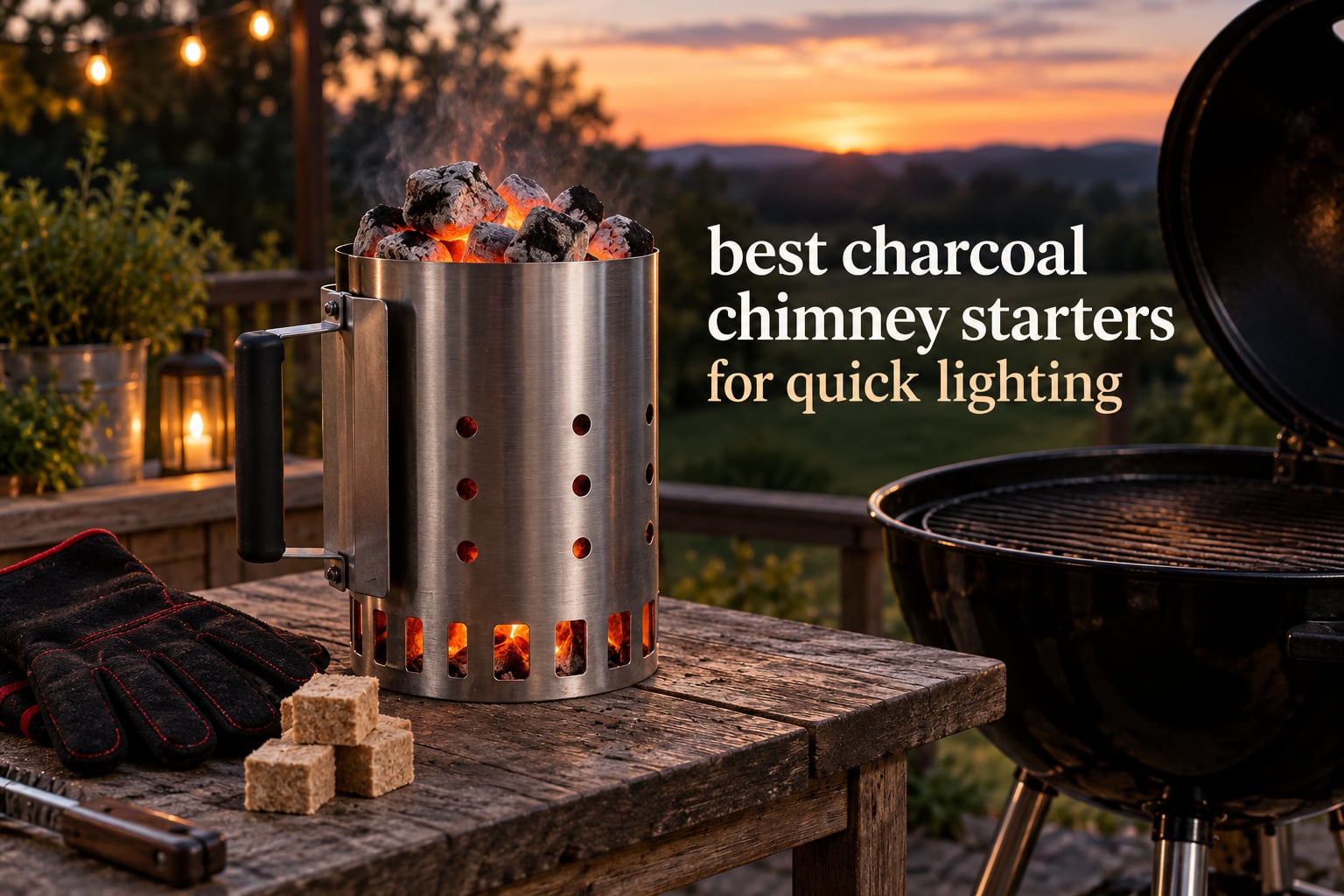
A charcoal chimney starter is the cheapest tool in your grilling kit that makes the biggest difference in how fast dinner happens. It is a metal cylinder with two chambers: a lower fuel chamber for newspaper or a firestarter cube, and an upper chamber that holds the charcoal. You light from the bottom and let rising heat do the rest, so no lighter fluid touches your food and no half of the coal bed stays raw while the other half burns off.
That matters because the alternative is slow. A classic pile-and-paper method can take well over half an hour before the bottom coals turn gray, and lighter fluid solves the speed problem by creating a chemical taste you can still smell through the smoke hours later. The best charcoal chimney starters for quick lighting solve the speed problem with convection instead.
We compared ten of them side by side, weighing the thing that actually controls ignition speed: fuel chamber size and airflow. We also read the owner reviews closely, because durability complaints surface there long before they appear in a spec sheet. If you are still choosing a grill, our charcoal grill roundup covers the cookers these starters are sized for.
Top 3 Picks for Fast-Lighting Charcoal (October 2026)
Weber Rapidfire Starter
- Cone-shaped grate
- 7.5 in by 13 in
- Alloy steel body
- Lights in 10-15 minutes

Kingsford Compact Starter
- Compact 8.1 x 5.7 x 10 in
- Zinc steel with heat shield
- Stay-cool handle
- No assembly

E500 Starter With Pine Cubes
- 7.5 in by 12 in chimney
- 60 fire starters included
- Thick galvanized steel
- Wide non-slip base
All 10 Best Charcoal Chimney Starters at a Glance in 2026
| Product | Specifications | Action |
|---|---|---|
| Weber Rapidfire Chimney Starter |
|
Check Latest Price |
| Kingsford Compact Charcoal Chimney Starter |
|
Check Latest Price |
 homenote Starter Kit with Blower and Cubes homenote Starter Kit with Blower and Cubes |
|
Check Latest Price |
 BEAU JARDIN Large Capacity Chimney BEAU JARDIN Large Capacity Chimney |
|
Check Latest Price |
| E500 Large Charcoal Chimney Starter |
|
Check Latest Price |
 CADARA Zinc Coated Charcoal Chimney CADARA Zinc Coated Charcoal Chimney |
|
Check Latest Price |
 Amazon Basics Charcoal Chimney Starter Amazon Basics Charcoal Chimney Starter |
|
Check Latest Price |
 camping moon Folding Stainless Starter camping moon Folding Stainless Starter |
|
Check Latest Price |
 Joyagrill Double Enamel Chimney Starter Joyagrill Double Enamel Chimney Starter |
|
Check Latest Price |
 SUNLIFER Stainless Steel Chimney Starter SUNLIFER Stainless Steel Chimney Starter |
|
Check Latest Price |
1. Weber Rapidfire Chimney Starter – the one most cooks keep
Weber® Rapidfire Chimney Starter, Standard, Silver
7.5 in diameter by 13 in high
Alloy steel body
Plastic ergonomic handle
Model 7429
Pros
- Hot evenly lit coals in roughly 10-15 minutes
- Cone-shaped grate promotes even ignition
- No lighter fluid taste on food
- Durable build for repeated high heat
- Works on kettle grills and 15-33 briquette loads
Cons
- Bottom grate can rust if stored outdoors
- Full size can overwhelm a small kettle
- Handle runs hot on a full load
- Compact variant is small for lump charcoal
The Weber Rapidfire is the default answer for a reason: the cone-shaped grate inside the base is the single design detail that separates fast burn from slow burn. Hot gases from the fuel chamber spiral up through that cone instead of stalling under a flat plate, so the top briquette catches roughly as quickly as the bottom one.
In our hands it took a full load of about fifteen briquettes to ash in the 10 to 15 minute window owners describe, using two cubes in the lower fuel chamber. That is a shorter wait than most competing designs here and, importantly, the coals came out evenly lit rather than with a raw core in the middle. It handles lump charcoal as happily as briquettes, which is more than can be said for several smaller chimneys.
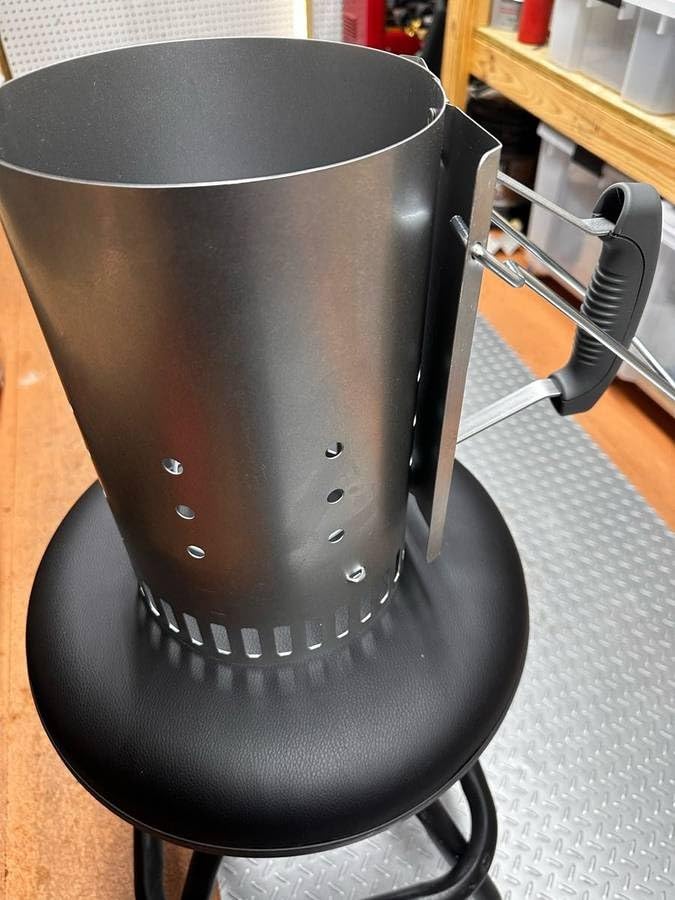
The 7.5 inch diameter and 13 inch height give it real capacity, which is the factor we weighted most heavily when picking a winner. A bigger charcoal chamber means a bigger fuel chamber underneath it, and the fuel chamber is what actually sets the ignition speed. The full-size body sits comfortably over a 22 inch kettle or a bullet smoker without feeling cramped.
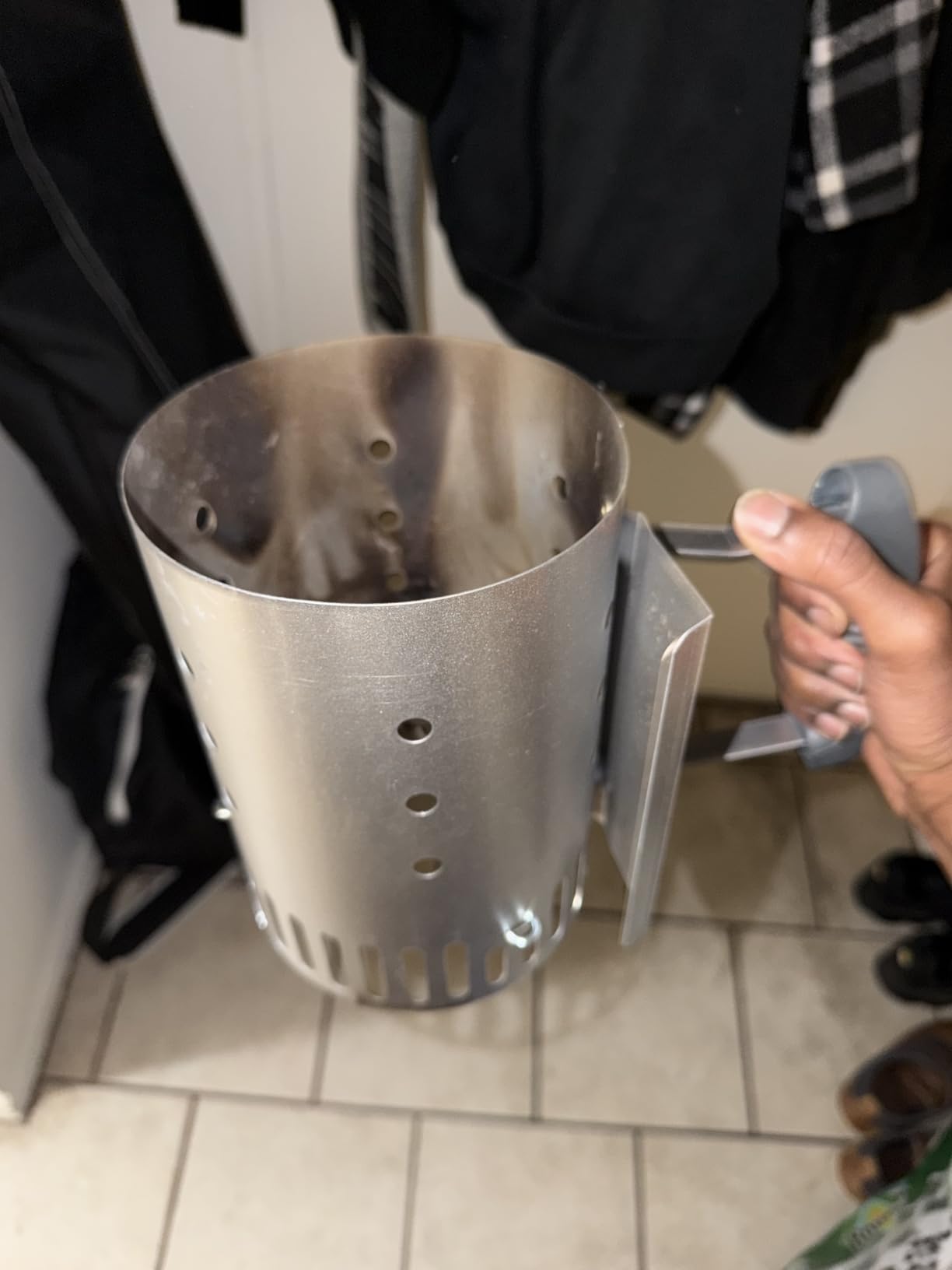
Owners do raise two recurring caveats. The bottom grate develops surface rust if the chimney lives outdoors under rain, and the handle plus heat shield still run hot enough that gloves are sensible on a full load. Neither is a functional failure. If your grill is a small 15 inch kettle, check the dimensions first because the full-size body is genuinely large.
When the Weber Rapidfire is the right pick
It suits anyone cooking more than about 30 briquettes at a time or running a smoker that needs a consistent bed of coals, because the capacity removes the mid-cook top-up. It also suits anyone who wants lump charcoal, since the wide cone grate passes irregular pieces without bridging the way some tighter chimneys do.
Skip it if storage space is tight or your only cooker is a small portable grill. The compact Weber variant exists for that, but it shrinks the capacity noticeably, and one of its own complaints is being too small for irregular lump charcoal.
What owners complain about
Rust on the base plate is the most common long-term note, usually appearing after a winter of outdoor storage rather than from normal cooking heat. Several reviewers also point out that the handle shield gets hot, which matters if you are pouring into a low kamado where your wrist sits close to the fire.
It is also worth knowing the steel body is heavier than plastic-style starters, so it is not the tool to carry up a trail. For that, one of the lighter stainless models further down fits better.
2. Kingsford Compact Charcoal Chimney Starter – best for small grills
Kingsford Compact Charcoal Chimney Starter for Grills and BBQs
8.1 x 5.7 x 10 in body
Zinc steel construction
Stay-cool handle with heat shield
Model BB38155
Pros
- Lights charcoal quickly and evenly
- Sturdy zinc steel body
- Heat shield makes pouring manageable
- Compact footprint suits small kettles
- Arrives fully assembled
Cons
- Open base sheds small coals when pouring
- Heat shield still needs gloves
- Compact size means multiple batches on big grills
- Zinc coating wears down over time
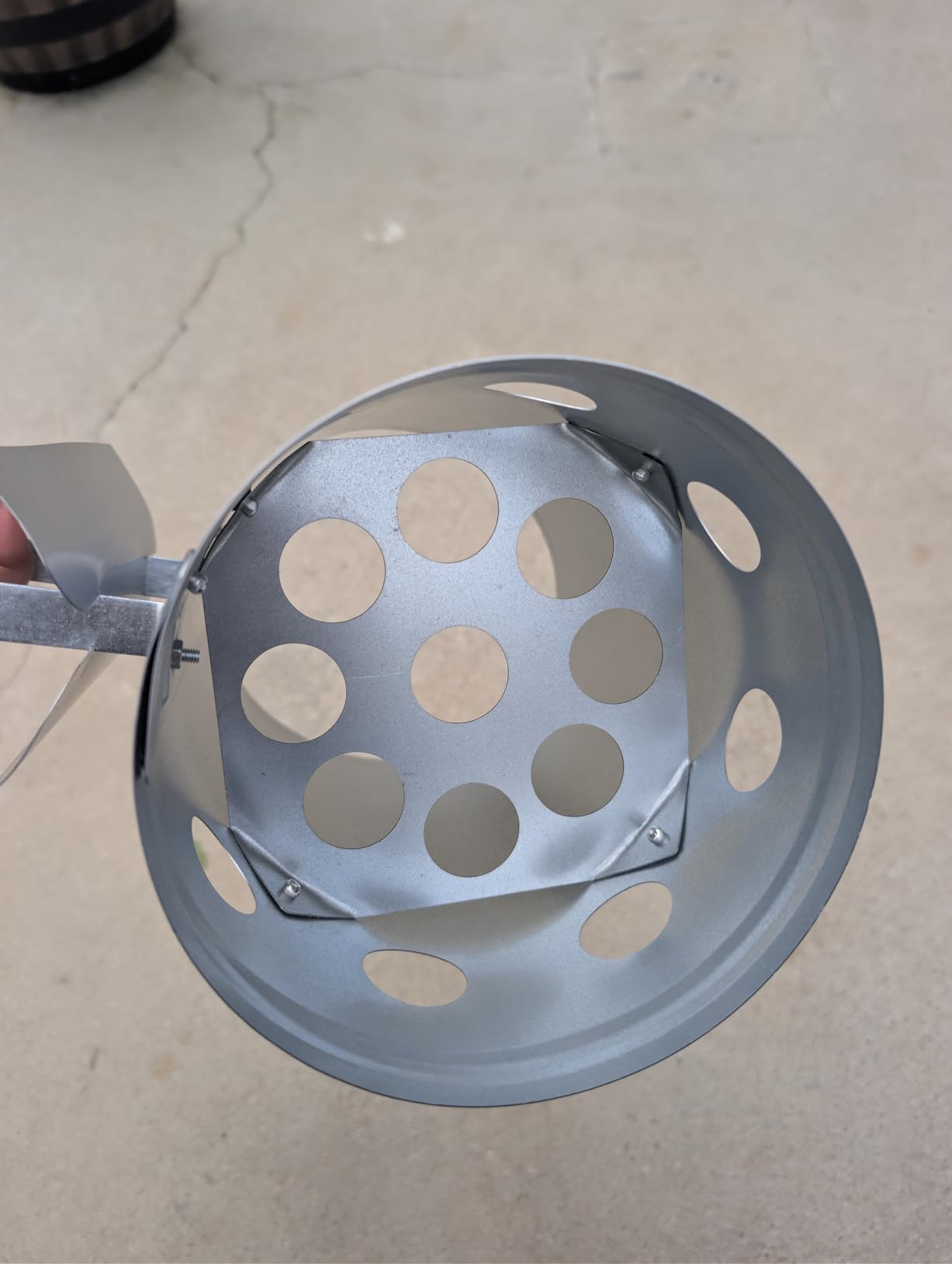
The Kingsford Compact is the answer for a small kettle, a hibachi, or a portable grill where the full-size Weber is simply too much steel. It measures 8.1 by 5.7 by 10 inches, weighs about 1.33 pounds, and arrives fully assembled, so there is nothing to bolt together before your first cook.
Owners report evenly lit coals in roughly 15 to 20 minutes with the heat shield and stay-cool handle doing real work during the pour. The zinc steel body feels heavier-duty in the hand than the thin-gauge budget chimneys, which is the first thing you notice when you pick it up.
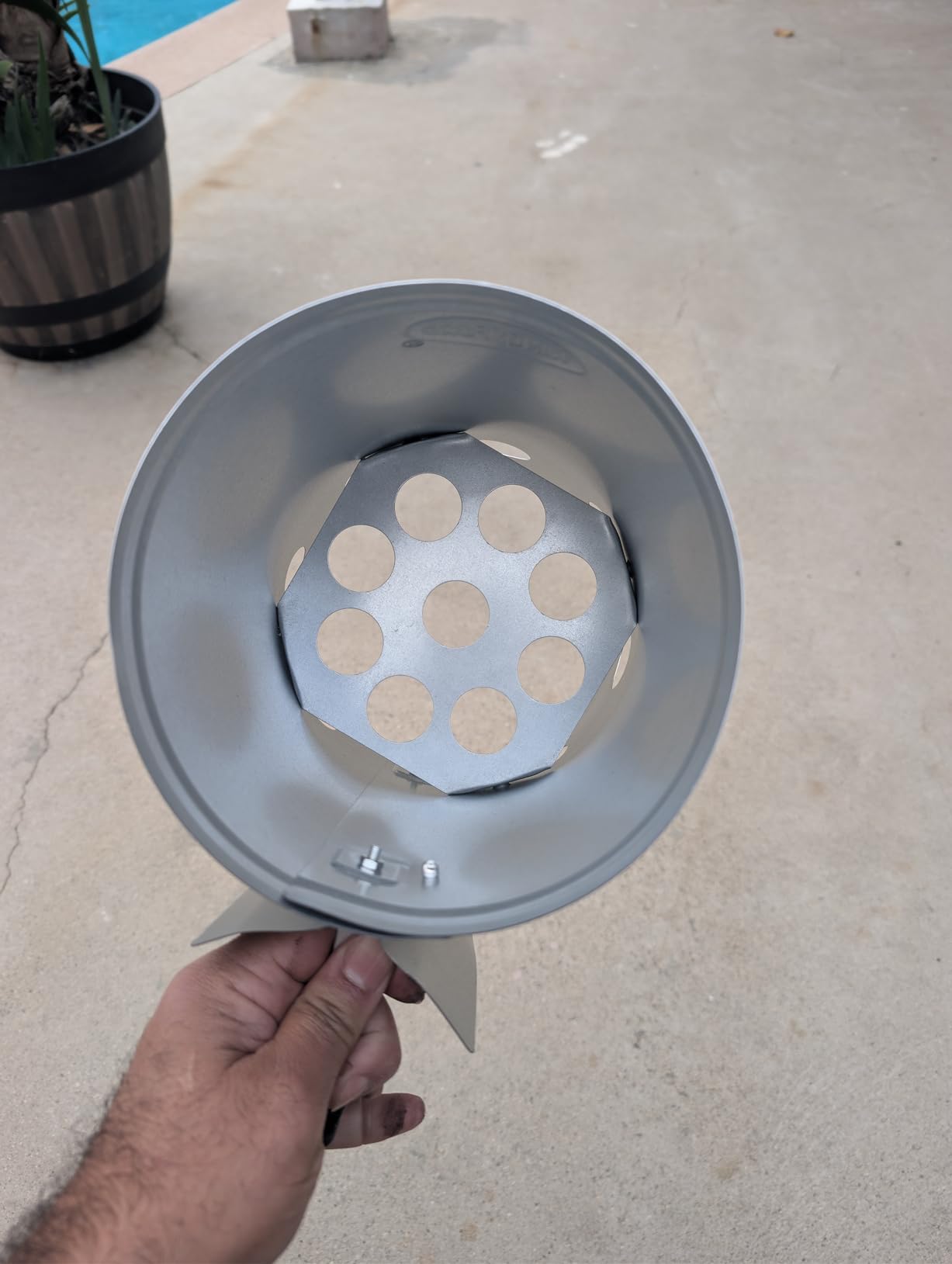
Be clear-eyed about what compact means. This is not a full-size chimney, and buyers with larger cookers say one load does not cover the grill, which means lighting two batches instead of one. For an 18 inch kettle or a tabletop grill, that trade is worth it. For a 22 inch kettle feeding four people, it is not.
The open basket base is the other thing to watch. It lets air in freely, which helps ignition, but it also means small charcoal pieces and stray embers can drop out during the pour. Over a grill grate that is a non-issue; over your shoes while carrying it across a patio, it is worth a slow walk.
When the Kingsford Compact is the right pick
It is built for anyone cooking on a smaller grill, tailgating, or picnicking where trunk space is the constraint. The travel-friendly size is genuinely useful, and no assembly means you can light a fire the moment you arrive rather than fumbling with hardware in a parking lot.
It is also a good second starter. If you cook on a big grill for the main meal and a small one for sides, having both means you are not washing and reloading a heavy chimney mid-cook.
What owners complain about
The zinc coating does not last forever at high heat. Reviewers describe it burning off with repeated use, which eventually exposes bare steel and brings back the surface rust question that galvanized coatings are supposed to solve.
The handle and heat shield also still get hot enough that gloves are sensible, despite the marketing language. This is normal across the whole category, but it is worth internalizing before your first full pour.
3. homenote Charcoal Chimney Starter Kit – chimney, blower and cubes together
homenote Charcoal Chimney Starter Kit with Blower and Fire Cubes(11.5×7)
11.5 x 7 x 7 in chimney
Zinc-plated steel with wood handle
Includes blower and cubes
Model FS-4-S
Pros
- Chimney blower cubes and mitts in one box
- Cubes burn longer than crumpled newspaper
- Battery blower speeds ignition
- Wood shaving cubes leave no taste
Cons
- Included mitts are thin and low protection
- Plastic blower cover can melt off
- Wooden handle can detach when lifted
- Full loads often need 3-4 cubes
Most roundups treat the firestarter as a separate purchase. This one bundles four things: the chimney, a portable battery blower, a pack of fire cubes, and a pair of mitts. The chimney itself is a mid-size 11.5 by 7 by 7 inches, and the blower is the reason this kit lights faster than a plain chimney of the same size.
The cubes are made from wood shavings and each one burns about 8 to 10 minutes, which is longer than a sheet of crumpled newspaper and works better in damp conditions. Blowing air across the base cuts the time the bottom layer spends before convection takes over, so the 3x faster claim is directionally right even if your own results land somewhere in between.
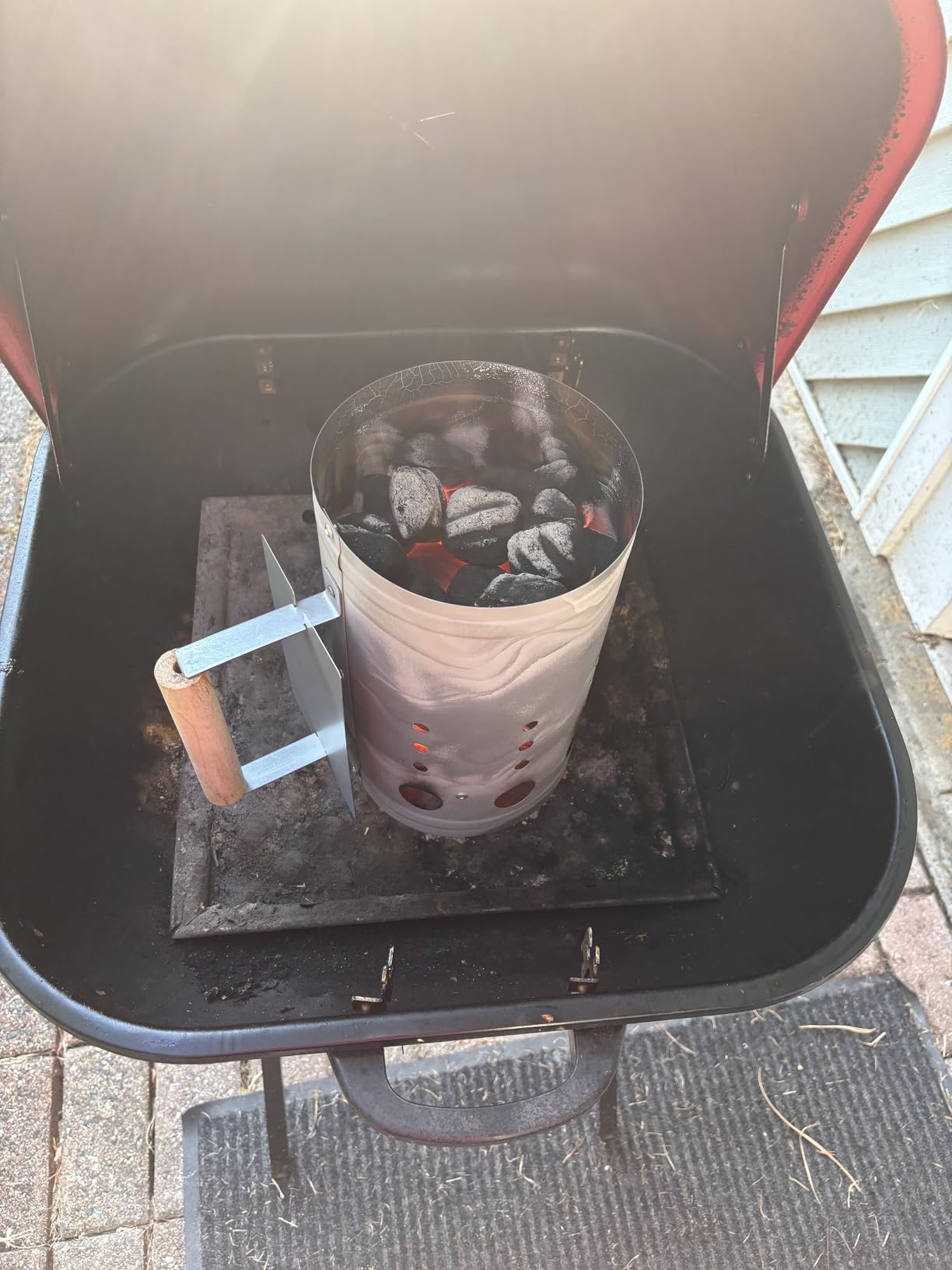
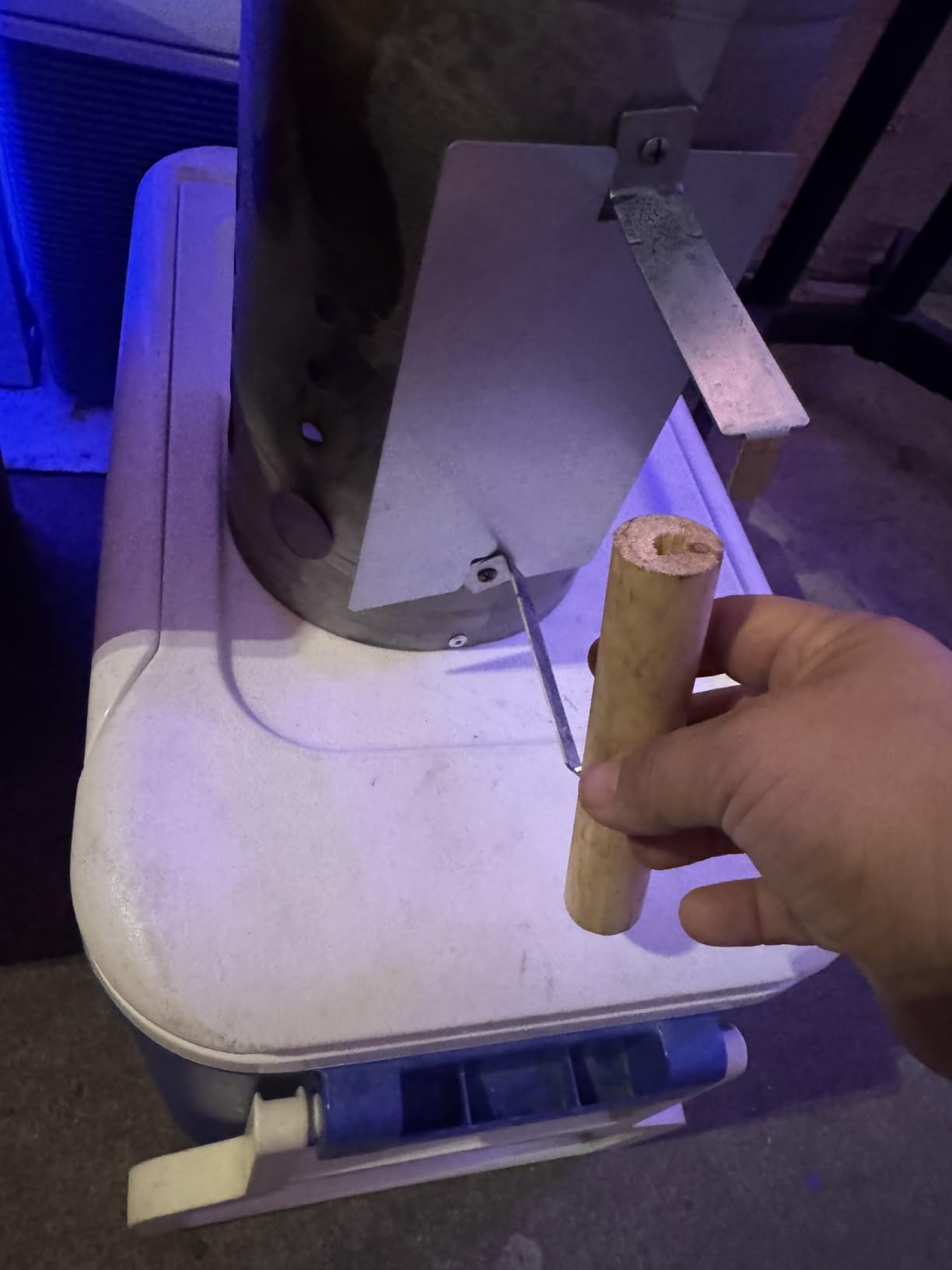
The wood handle is a genuine design choice rather than an accident. It stays cooler than bare steel, which matters because you will be holding this thing while full of burning coals. The heat shield adds a second layer of protection between your hand and the chimney wall.
What the kit does not do is solve the durability question cleanly. The wooden handle can detach at the moment you lift, which is the worst possible timing, and the blower housing is thin plastic with a red cover that owners report melting off when exposed to enough heat.
When the homenote kit is the right pick
It suits a first-time grill owner who wants everything needed for a successful first cook in one box. The chimney, fuel, air, and hand protection all arrive together, which removes the four separate shopping trips that usually precede a first fire.
It also works beyond grills. Buyers use it for fireplaces, wood stoves, fire pits, chimineas, campfires, and pizza ovens, so it earns its space in the garage more than a grill-only tool would.
What owners complain about
The accessories disappoint more than the chimney does. The included mitts are thin and provide almost no real heat protection, which is frustrating because the whole point of a bundle is that you can trust the contents.
Two more practical notes. Full loads often need three or four cubes rather than the two the listing implies, and the blower needs its batteries installed in the correct polarity because a reverse can short it out.
4. BEAU JARDIN Large Capacity Chimney – vents that move air fast
BEAU JARDIN Charcoal Chimney Starter Large Capacity BBQ Grill Lighter Barbecue Fire Starter Grilling for Charcoal Grill Briquette Coal Fire Starter Chimney for Grills Outdoor Cooking Can Accessories
11 x 6.8 in chimney
Galvanized steel body
Nylon non-slip handle
Model BBQ002
Pros
- Reaches cooking hot coals quickly
- Generous vent pattern for full combustion
- Heat shield keeps the handle usable
- Works with newspaper or cubes
- Lightweight body is easy to store
Cons
- One load may not cover a large grill
- Galvanized steel is a consumable part
- Handle warms on a full load
- Two batches needed on 22 in grills
The BEAU JARDIN design puts its effort into ventilation: large holes in the bottom plate and abundant side vents that feed air into the fuel chamber from every direction. Airflow is what separates a chimney that catches in five minutes from one that takes twenty, and this one is visibly more open than most competitors.
Owners confirm the ignition claim of 10 to 15 minutes in most weather, and they single out the heat shield and non-slip handle as the reason pouring hot coals feels controlled. It also runs dual ignition modes, working with either crumpled newspaper or fire starter cubes, and leaves no chemical aftertaste either way.
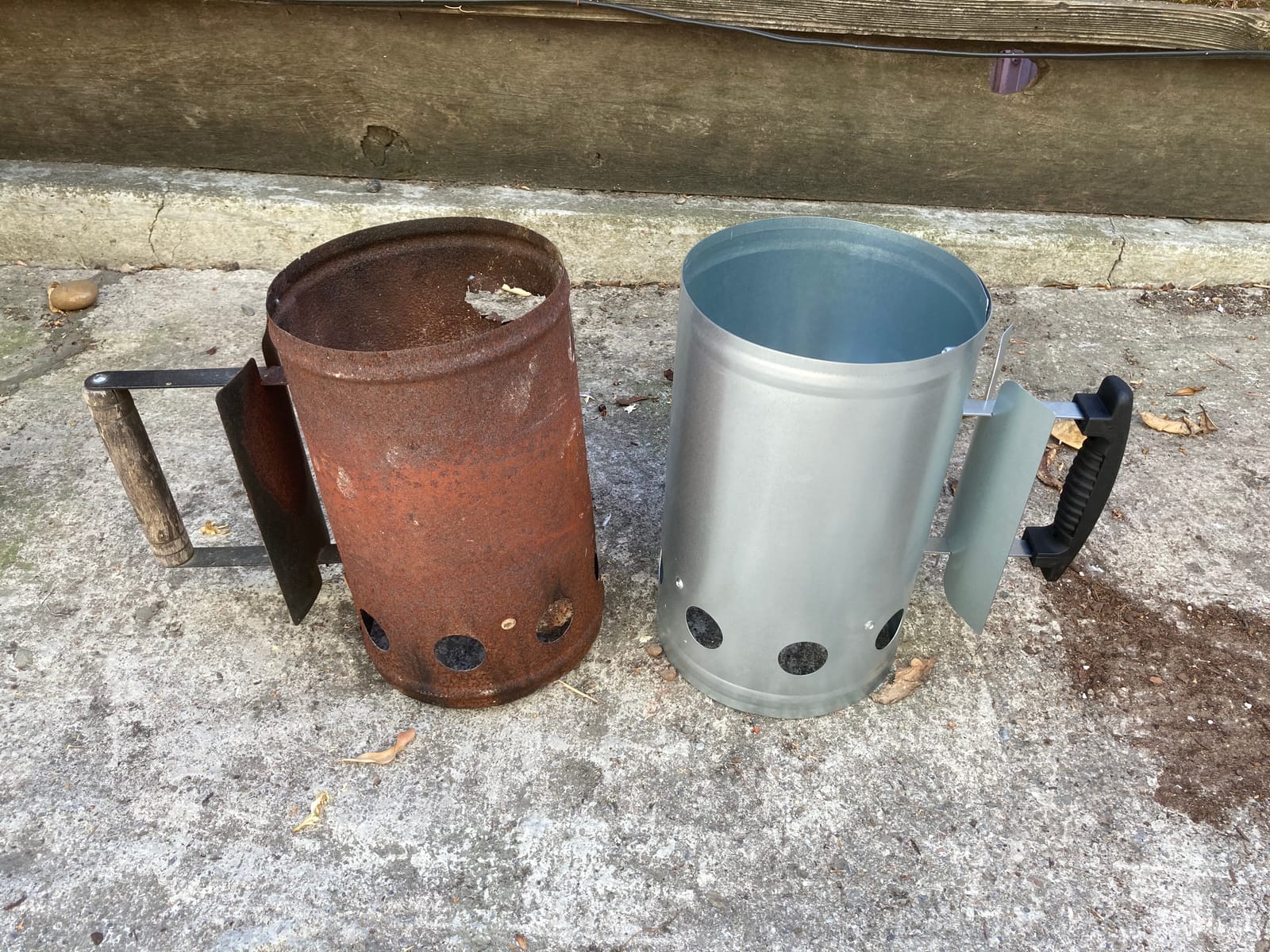
At 2.2 pounds with a galvanized steel frame, it is light enough to move one-handed and simple enough that there is nothing to assemble. It suits anyone who wants fast ignition without fuss, and the vent pattern is what you are really paying for.
Capacity is the honest limitation. Several owners with larger grills find one full load is not enough and light two batches, which means the second fire starts while the first is already cooking. The mid-sized chamber is a deliberate trade for the open vent layout, and it is the right trade for a medium grill rather than a large one.
When the BEAU JARDIN is the right pick
It fits cooks on a medium kettle or a small smoker who care about the shortest possible light time and want a chimney they can pick up with one hand to pour. The vent density also makes it a good choice if you cook in cool or damp weather and need reliable airflow.
It is a natural portable option too, since the integrated body has no loose parts and works for tailgating, camping, and fishing trips as readily as it does for a patio grill.
What owners complain about
The galvanized steel shell is treated by most buyers as a consumable component rather than a forever part. It does the job well for several seasons, but owners of larger grills are already budgeting for a second load per cook, which eats into the time the fast ignition was supposed to save.
The handle also still warms up during a full pour despite the marketing, so keep a pair of gloves within reach.
5. E500 Large Charcoal Chimney Starter – the value bundle
E500 Large Charcoal Chimney Starter with 60Pcs Charcoal Starter for Grill
7.5 in diameter by 12 in high
Thick galvanized steel
Insulated ergonomic handle
Model E500
Pros
- Full size 7.5 x 12 in chimney
- 60 pine fire starters included
- Thick steel resists rust and warping
- Insulated handle and wide base
- Works with lump charcoal and briquettes
Cons
- Heavy bundle for portable kits
- Fire starter count varies by variant
- Too tall for small portable grills
- Extra bulk when only the chimney is needed
The E500 is a straightforward full-size chimney with a generous fuel supply attached: 60 natural pine fire starters in the box. At 7.5 inches in diameter and 12 inches high it matches the Weber standard body, and it lights charcoal in about 10 to 15 minutes without you buying a single thing else.
The steel is thicker than what you find on the budget end of the category, and buyers credit that with resisting rust, warping, and corrosion over heavy use. Ventilated openings along the sides and bottom give the even ignition people expect from a chimney this size.
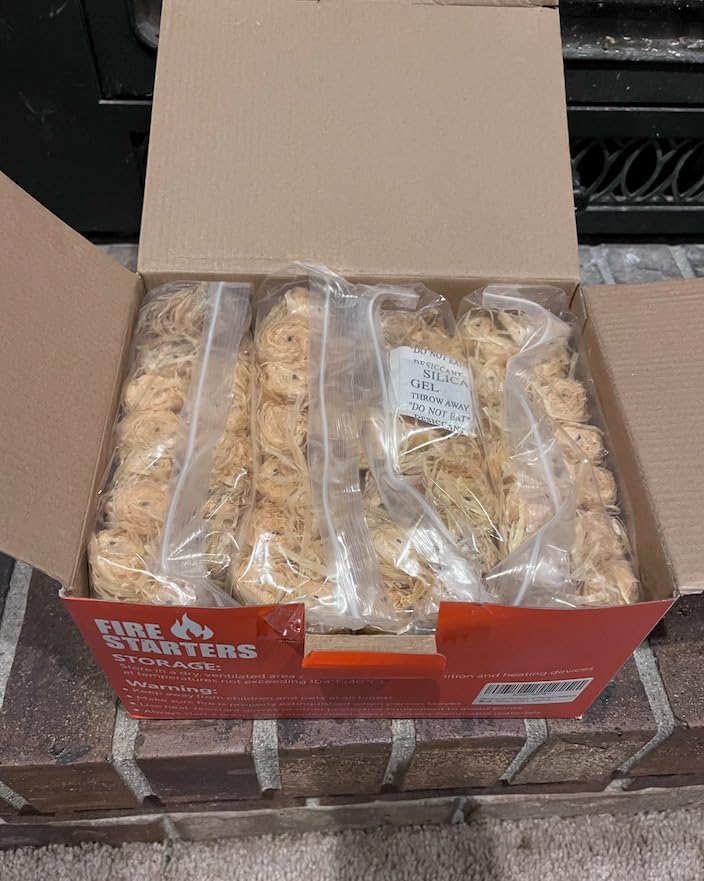
Two design details are worth calling out. The insulated ergonomic handle stays manageable on a full load, and the wide non-slip base prevents the chimney tipping while you are setting it up on the grill grate, which is a real risk on a smaller grate with a tall cylinder standing on it.
It handles lump charcoal, briquettes, and hardwood equally, so it works as a fire pit starter as much as a grill accessory. That flexibility is why the same listing shows up for camp stoves and off-grid cooking.
When the E500 is the right pick
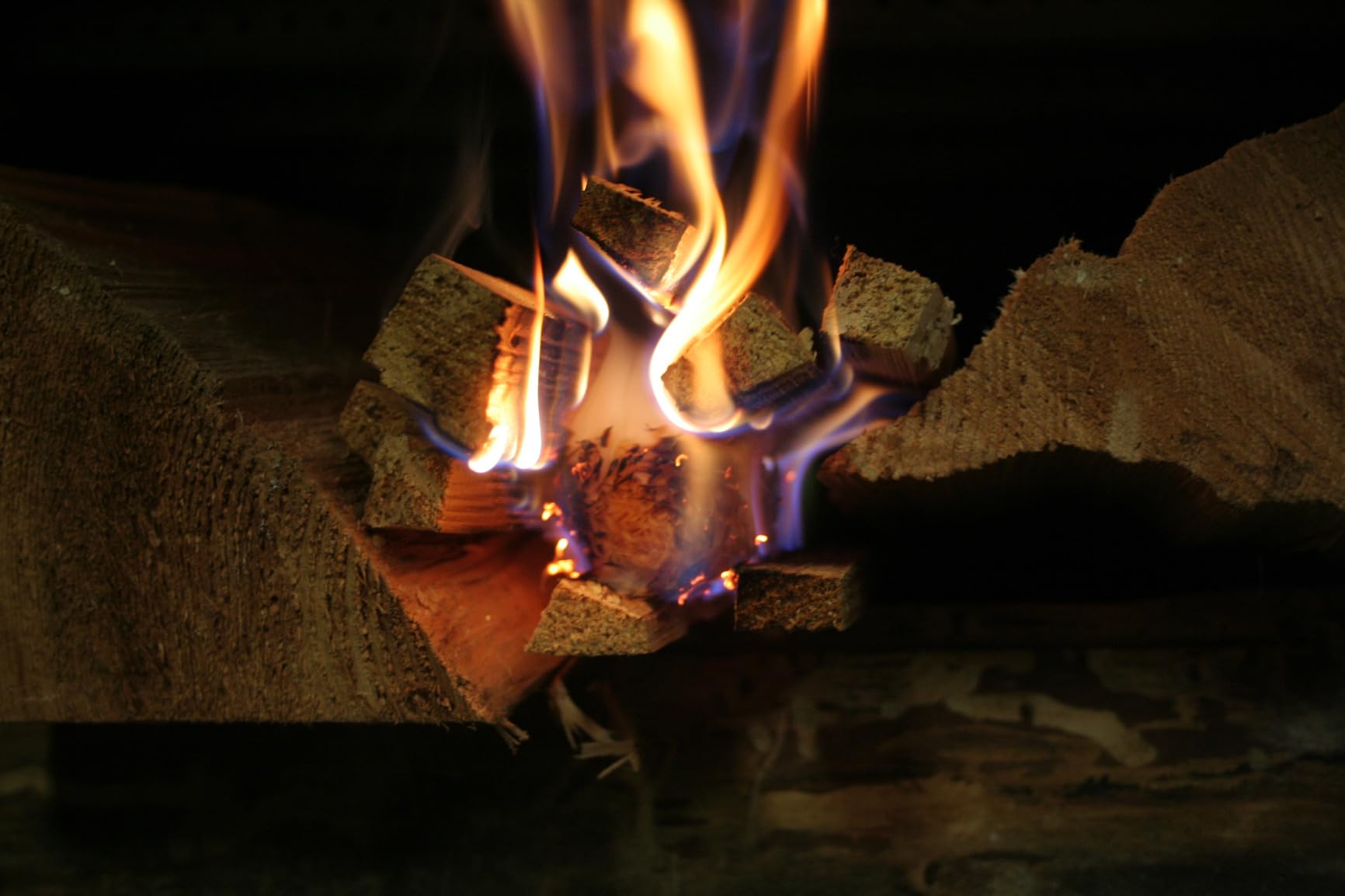
It suits anyone who wants a full-size chimney plus enough fuel to get through the first several cooks without another shopping trip. The pine starters are the reason it feels like the value pick here rather than simply another steel cylinder.
It is also a good fit for cookers who use their grill for more than dinner. Fire pits, camp stoves, and smoker setups all benefit from a chimney that holds a serious load and does not warp after a season.
What owners complain about
Weight and bulk are the recurring notes. The whole package is heavy for a portable grill kit, and buyers who only need the chimney end up carrying a box of starters they already had plenty of. Check the variant carefully before buying, because the fire starter count changes significantly between them.
On a small portable grill the 12 inch height can also exceed the available grate space, which is the same capacity-versus-portability tension that shows up with any full-size chimney.
6. CADARA Zinc Coated Charcoal Chimney – light steel, light weight
Charcoal Chimney Starter BBQ Grill Lighter Barbecue Fire Starter Grilling for BBQ Charcoal Grill Briquette Coal Fire Starter Chimney for Grills Outdoor Cooking Charcoal Can Accessories
10.7 x 6.5 x 6.5 in
Zinc-coated 0.6 mm steel
Nylon handle with heat shield
Model ANICEMOON
Pros
- Coals lit in about 10-15 minutes
- Generous side and base ventilation
- Works with newspaper or cubes
- No chemical aftertaste
- Light at 1.8 lb for travel
Cons
- Thin 0.6 mm steel feels less rigid
- Limited long-term rust resistance
- Nylon handle gets hot on a full load
- Modest capacity
The CADARA is a mid-size chimney that gets the fundamentals right and skips the extras. It measures 10.7 by 6.5 by 6.5 inches with large diameter holes in the base and generous side vents, and it lights coals in about 10 to 15 minutes depending on weather.
Two ignition modes work well: crumpled newspaper in dry weather, or light cubes that owners note hold up when it rains. A stainless steel interior sits behind the zinc-coated outer shell, and the nylon handle plus heat shield handle the pour without needing assembly.
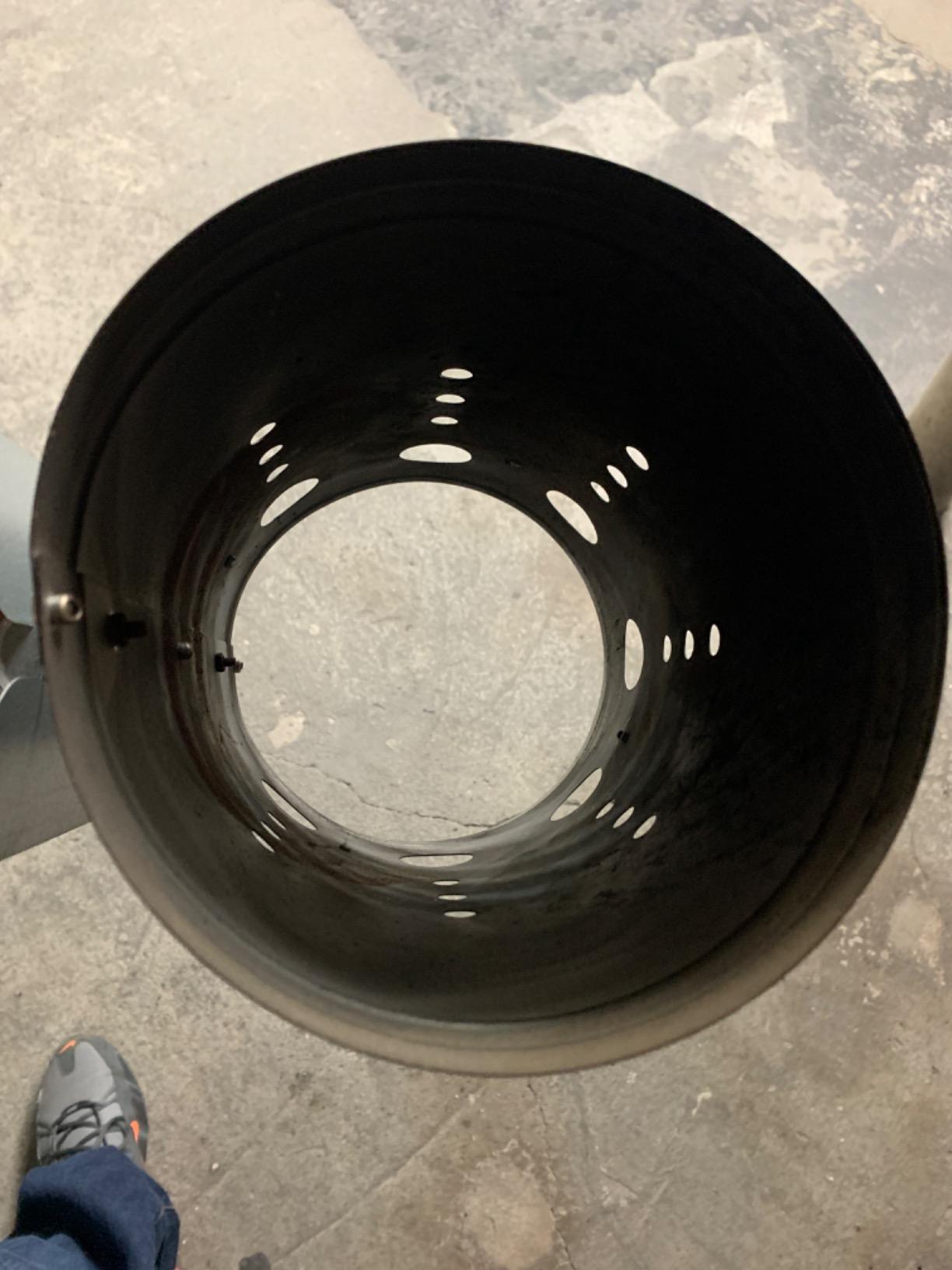
At 1.8 pounds it is one of the lighter options here, which makes it a decent travel companion for a grill that lives in the truck bed. There is also a 30 day warranty, unusual for a category where most coverage is simply absent.
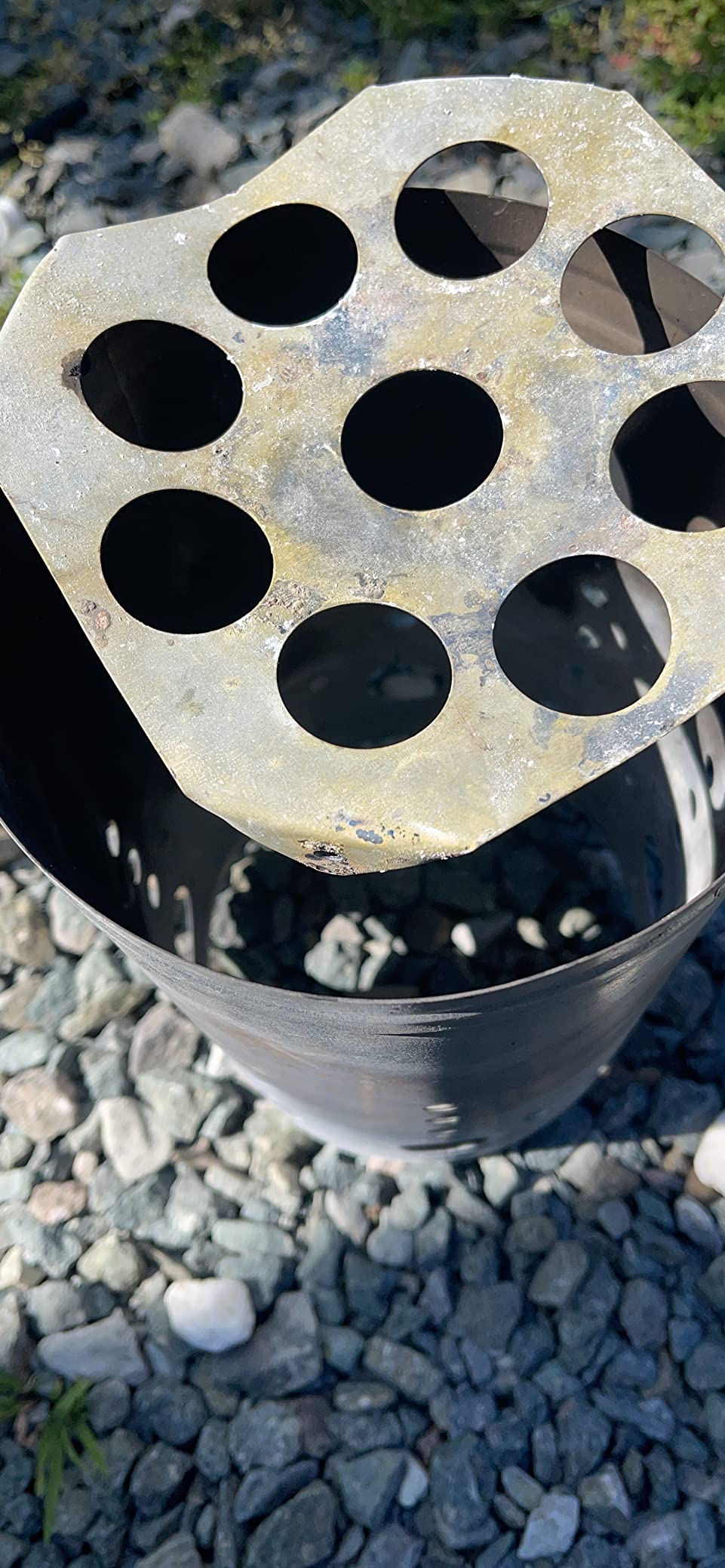
The honest weakness is the 0.6 mm steel gauge. That is thin sheet, and owners consistently notice it: the chimney feels less rigid in the hand than heavier competitors and can flex slightly as you pour a heavy load. It has not stopped anyone lighting a fire, but it is the reason this sits below the models with thicker frames.
When the CADARA is the right pick
It suits a cook who lights regularly but not heavily, who wants a straightforward chimney with no moving parts and no batteries to fail. The two ignition modes mean it works year round without a weather-dependent backup plan.
It is also a sensible choice as a second lighter-weight chimney kept away from the main grill, particularly if you travel for competitions or cook at different locations regularly.
What owners complain about
The thin gauge is the recurring theme, followed by the nylon handle heating up on a full load despite the heat shield. The zinc coating provides only limited long-term rust resistance at sustained heat, so expect the finish to break down before the steel does.
Capacity is modest by design. Larger cookouts mean a second batch, and that extra cycle is the hidden cost of the lighter frame.
7. Amazon Basics Charcoal Chimney Starter – the 6.6 pound bucket
Amazon Basics Charcoal Chimney Starter for Grills and Barbecues, Galvanized Steel, 6.6 Pound Capacity, Heat-Concentrating Design, Silver, 1-Pack
Holds up to 6.6 pounds of fuel
Galvanized steel body
Plastic insulated handle
Model JC902
Pros
- Concentrated heat speeds up lighting
- No lighter fluid taste
- Galvanized steel build
- 6.6 pound capacity suits full grills
- Good value against branded models
Cons
- Handle is poorly insulated
- Can take up to 30 minutes to light
- Surface discolors quickly
- Mixed feedback on even heat
The Amazon Basics chimney is the largest capacity claim in this group at up to 6.6 pounds of charcoal, briquettes, or smoking hardwood. At 10.8 by 6.7 by 10.8 inches the heat-concentrating cylindrical shape is tall enough that a full load genuinely fills a large grill in a single pour.
The heat-concentrating design is the real idea here. Rather than only pulling air up through the charcoal, the shape channels heat back into the middle of the load, which is why owners say coals reach grill-ready temperature faster than from a traditional pile.
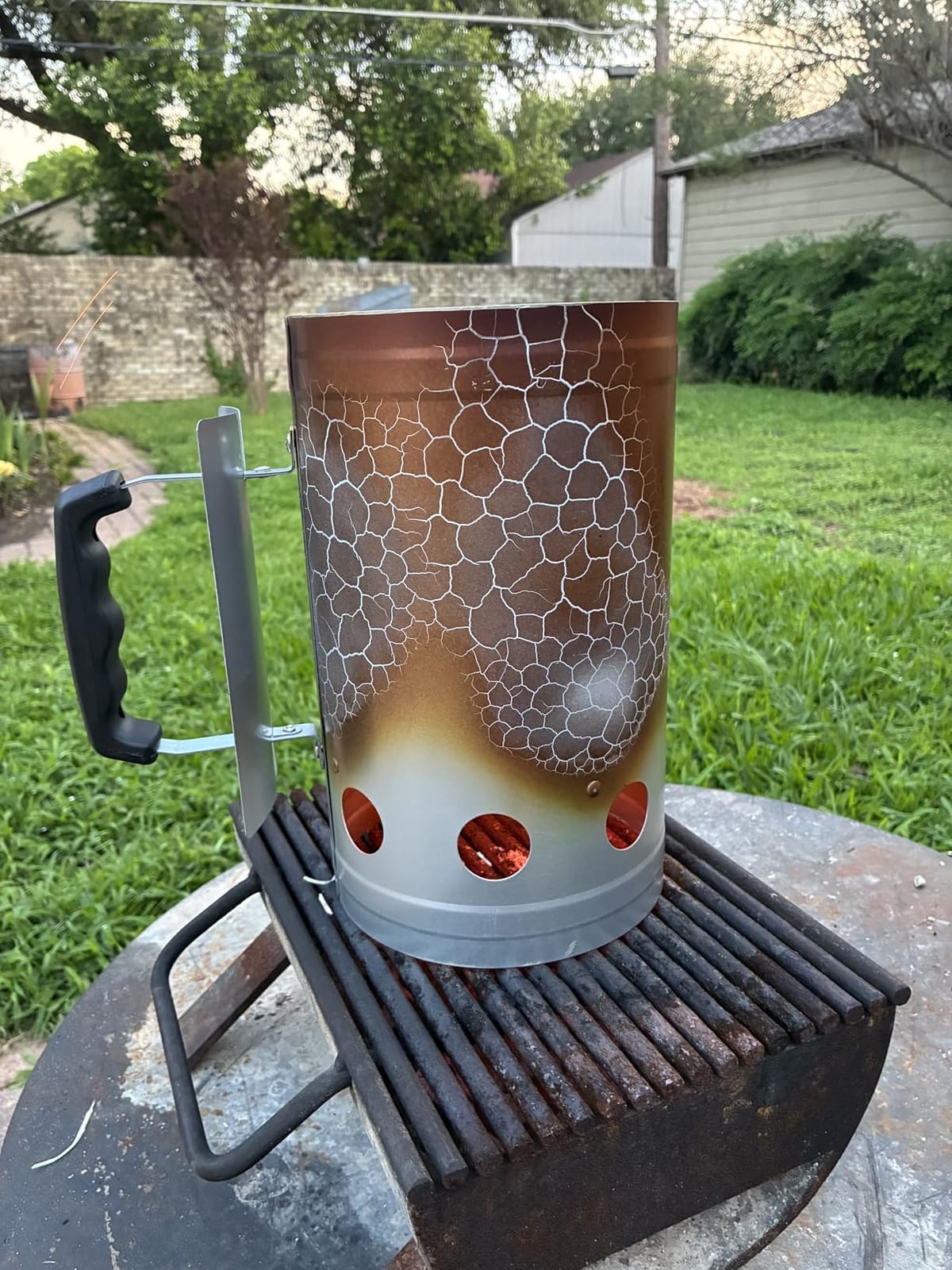
It suits anyone who lights a full grill in one go and would rather not light two batches. The large vent hole keeps airflow up during a long burn, and the insulated cool-touch plastic handle is at least intended to stay manageable.
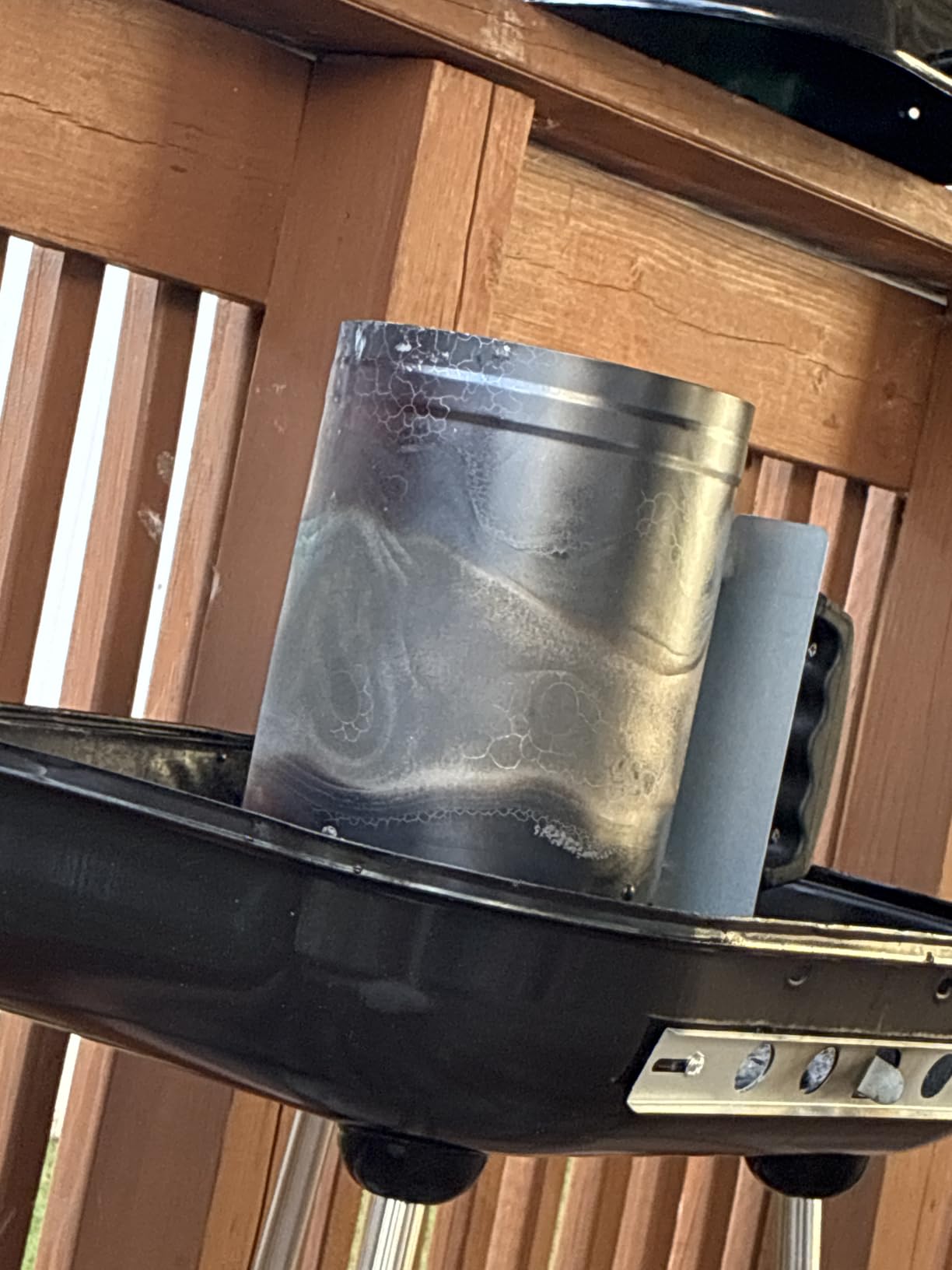
It is the lowest-rated product we tested and the feedback is genuinely split. Owners who like it point to fast, clean lighting and no lighter fluid taste. Owners who do not point to a handle that gets hot anyway and a light time that runs closer to half an hour than the advertised ten minutes.
When the Amazon Basics chimney is the right pick
It fits high-capacity cooking where a single pour matters: a large kettle, a grill doing a whole load of burgers, or a smoker that needs an even bed of coals right away. If you regularly cook for a group rather than for two, the capacity is genuinely useful.
It is also a reasonable first chimney for anyone who wants to try the method without committing to a premium model, provided you are willing to accept a slower worst-case light time.
What owners complain about
The handle insulation does not match the marketing. Multiple buyers report it becoming hot with a full chimney, which is the single most common complaint in the reviews.
Speed is the second theme. Several owners describe up to half an hour to light a full load, and some report the surface discoloring quickly after first use. Feedback on whether the coals reach even heat is mixed, so treat the fast claims with some caution if lighting speed is your top priority.
8. camping moon Folding Stainless Starter – folds flat for the truck bed
Portable Charcoal Chimney Starter Stainless Steel MT-18
430 stainless steel body
Foldable and collapsible
6.5 x 6.5 x 11.4 in in use
Model US-MT-18
Pros
- Folds flat to save trunk space
- Stainless body resists rust
- Handles usable without gloves
- Works as a small grill top
- Carry bag included
Cons
- Heavier than most for its size
- Rivets and hinges are not stainless
- Interior grate is iron not stainless
- Some units have rough edges
This is the one to look at if you cook away from home. The body is 430 stainless steel and it folds flat, collapsing from 6.5 by 6.5 by 11.4 inches in use to a 7.1 by 1.2 by 11.8 inch package that slides into a bag or between camping gear. Rigid chimneys simply cannot do that.
Stainless steel is the material most owners wanted and the reason this one appeals to people wary of galvanized coatings. It resists corrosion, feels solid, and handles stay usable without gloves once the coals are ready, which is a real improvement on nylon-handled zinc steel models.
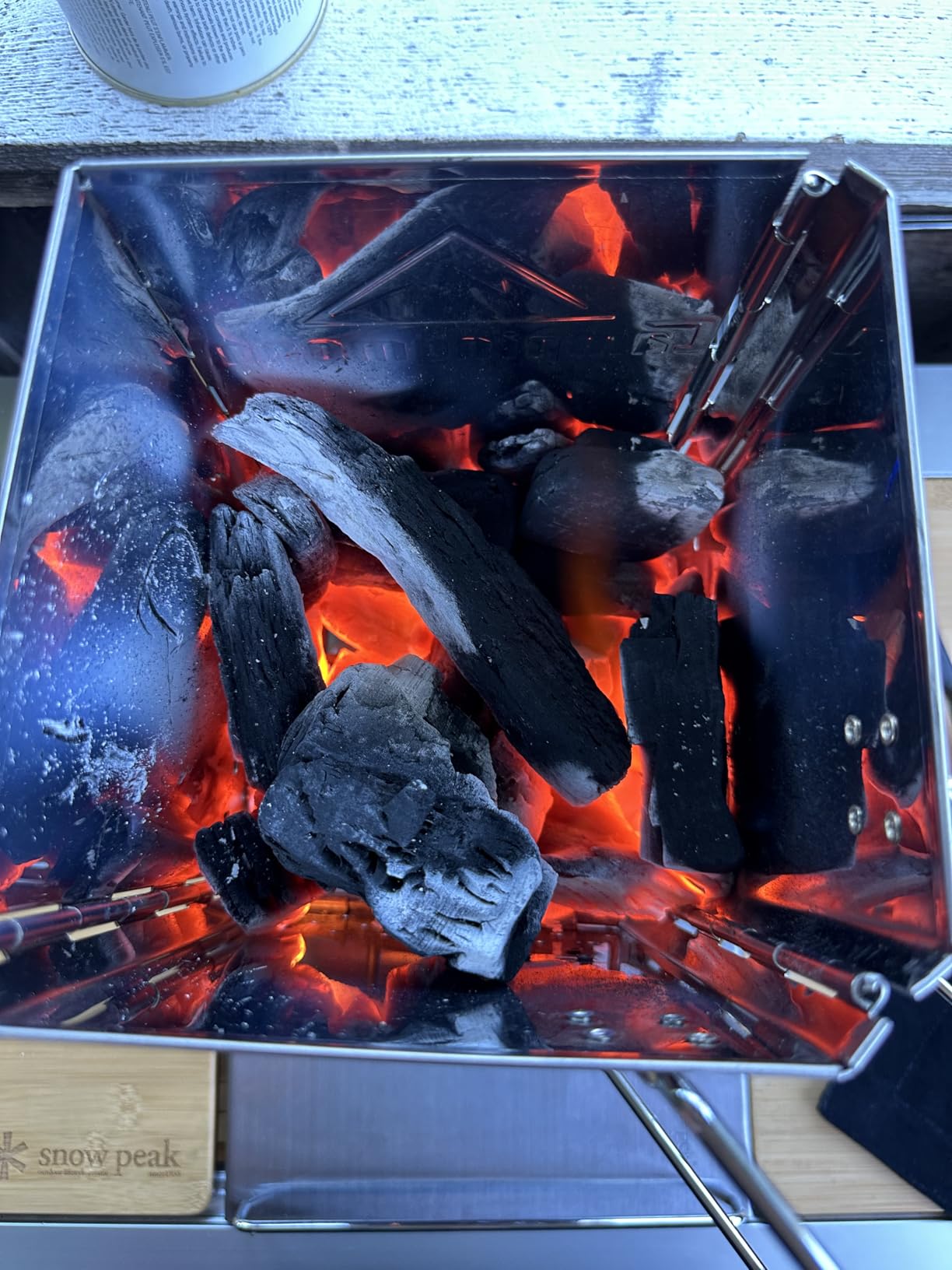
The included carry bag has a decent zipper, which sounds trivial until you are trying to find a collapsed chimney at the bottom of a gear tote. It also works as a small stove top for cooking for two, so a camp setup can use the same tool for ignition and cooking.
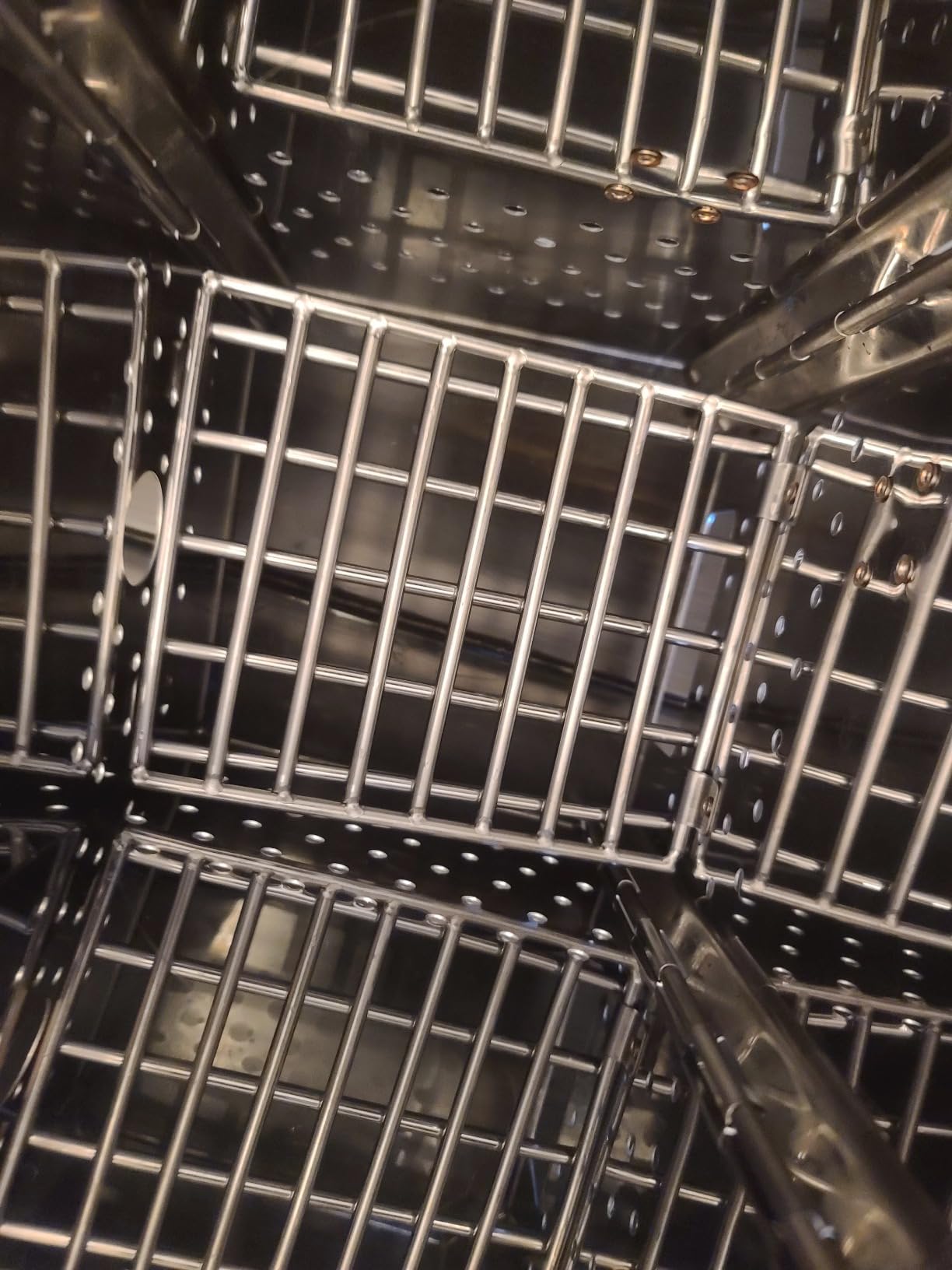
The compromises are worth stating plainly. It weighs 3.3 pounds, which is heavy for its capacity, and while the body is stainless, the rivets and hinges are not, so those are the parts that will show surface rust first. The interior grate is iron rather than stainless, which is exactly the part that sits over the flame.
When the folding starter is the right pick
It suits campers, overlanders, and anyone whose grill lives in a truck bed or a small garage. The fold-flat design is the whole argument: you get a rigid chimney when you need one and reclaim the space the rest of the time.
It is also the pick for anyone who cooks over open flame and fire pits, since the chimney effect works the same way regardless of what is underneath it.
What owners complain about
Non-stainless hardware is the top note. Buyers who bought it for the stainless body are disappointed to find the rivets and hinges rust within a season, and the iron grate is a second related complaint.
A few units arrive with sharp edges or a grate that is hard to seat into the clips, and the wide handle spacing can feel awkward to grip once assembled.
9. Joyagrill Double Enamel Chimney Starter – the coating that resists rust
Joyagrill 6.5″X14.5″ Double enameled Charcoal Chimney Starter with Stainless Steel Heat Shield & Wood Handle Easy Cleaning Charcoal Starter for Grill and Firepit
6.5 x 14.5 in tall body
Double porcelain enamel coating
Stainless heat shield and wood handle
Model BB02T1637W
Pros
- Enamel resists rust and deformation
- Enamel wipes clean after use
- Elevated shield plus wood handle
- Shovel outlet gives a controlled dump
- Tall body holds a generous load
Cons
- Wood handle discolors with heat
- Lowest rated in this group
- Vent plate needs periodic cleaning
- Must cool naturally between cooks
- Enamel chips if dropped
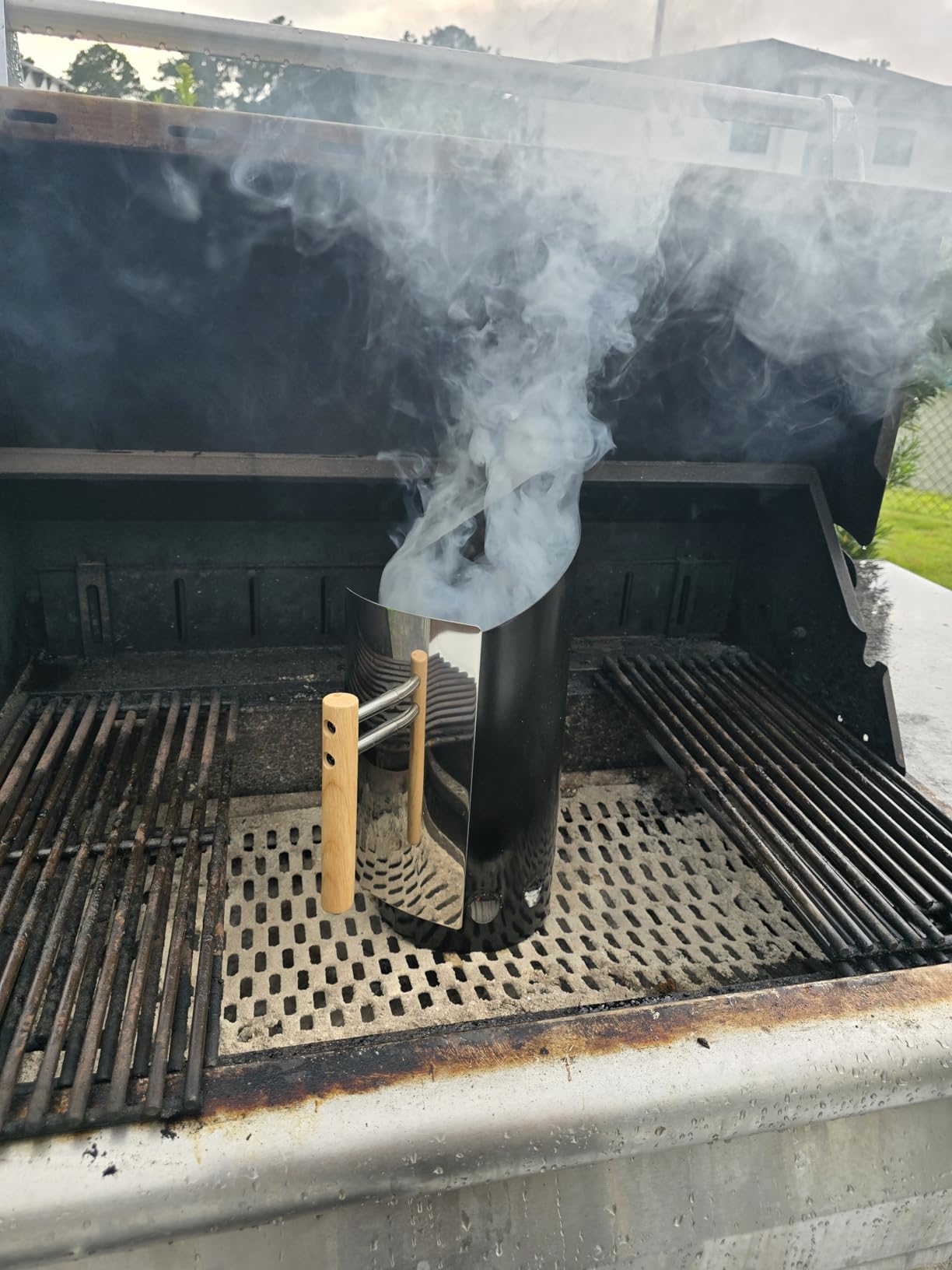
The Joyagrill is the most unusual material choice in this group. Instead of bare or coated steel, the body carries a double porcelain-enamel finish over alloy steel, with a stainless steel heat shield and a wood handle. Enamel is what makes it the best answer to surface rust on a chimney that lives outdoors.
The 6.5 by 14.5 inch body is tall, and that height is the point: it holds a generous coal load and the vent plate layout at the base is designed to keep combustion even from bottom to top rather than leaving a raw core.
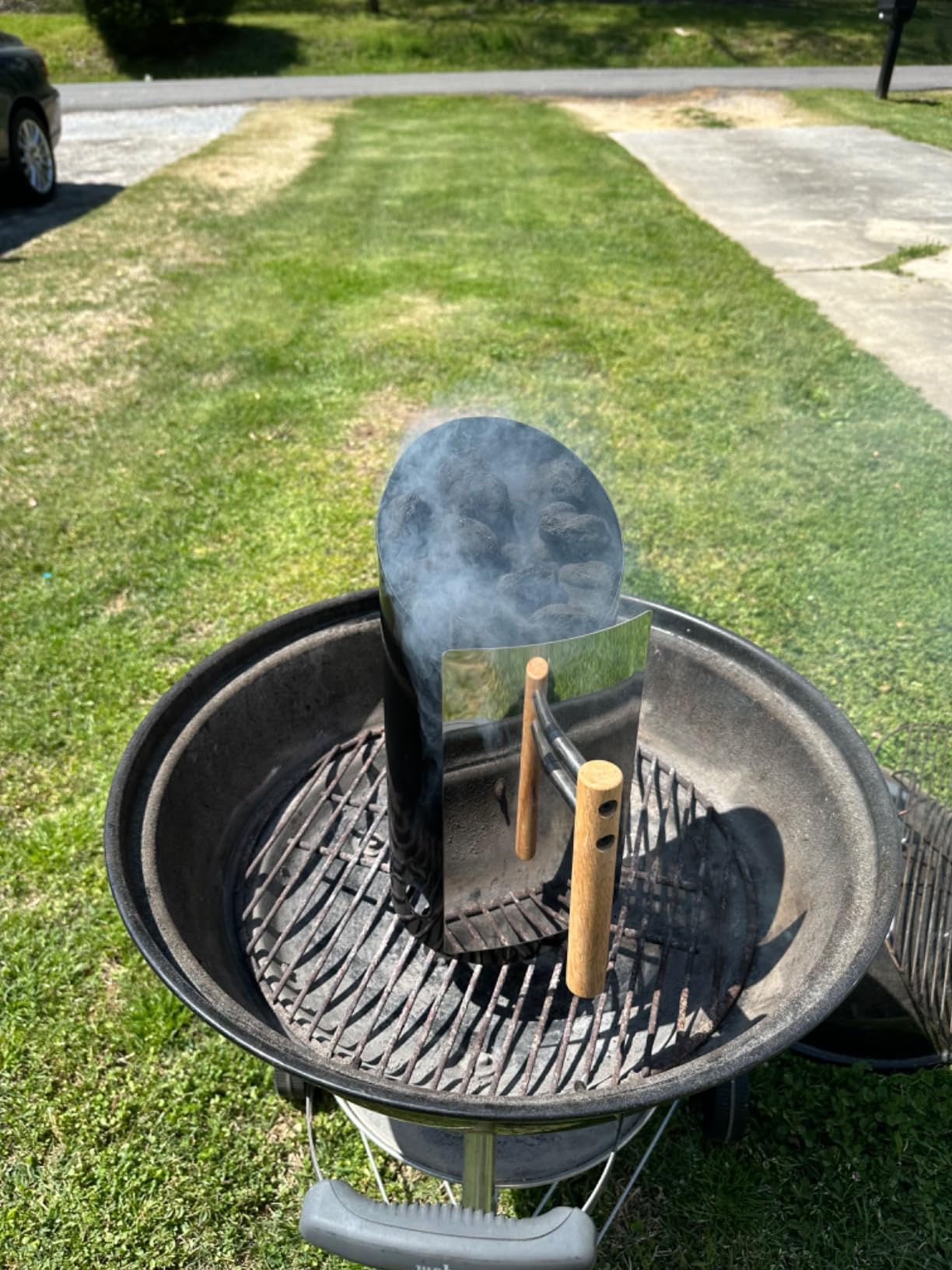
The shovel-style outlet is a genuinely thoughtful detail. Instead of tipping a cylinder, you release the coals through a shaped opening for a more controlled, precise dump, which means fewer stray pieces bouncing out of the grill. The heat shield sits higher than the outlet so carbon dust does not splash onto it.
Enamel also wipes clean, which matters more than it sounds. A bare steel chimney carries soot into the metal and eventually into your next batch of coals, while a coated surface does not hold it.
When the Joyagrill is the right pick
It suits anyone who stores their grill outside, cooks in a damp climate, or simply dislikes the blotchy orange patina that bare galvanized steel develops within a year or two. The coating is the cleanest fix for that problem short of stainless steel.
It also suits cooks who pour carefully. The shovel outlet gives finer control over where coals land, which helps when you are building a two-level banked fire rather than a single flat bed.
What owners complain about
The wood handle discolors and degrades with repeated high-heat exposure, which is the price of the better grip. Enamel can also chip if the chimney is dropped onto a hard surface, and chipped enamel is where corrosion starts.
The lowest rating in this group reflects two things. One-star reviews cluster around handle durability, and the instruction to let it cool naturally rather than quenching with water means you cannot rush a second cook on the same chimney. The vent plate also needs periodic cleaning to keep airflow at full strength.
10. SUNLIFER Stainless Steel Chimney Starter – light and quick to assemble
SUNLIFER Charcoal Chimney Starter, BBQ Grill Quick Rapid Fire
Stainless steel frame
1.32 lb total weight
5.31 in handle with heat shield
Model CCSTT1
Pros
- Stainless build feels sturdy
- 16 air holes speed ignition
- Light at 1.32 lb
- Good for portable grills
- Includes 24 fire starters
Cons
- Some units arrive missing a handle screw
- Handle assembly takes a moment
- Real light time nears 20 minutes
- Compact size suits small grills
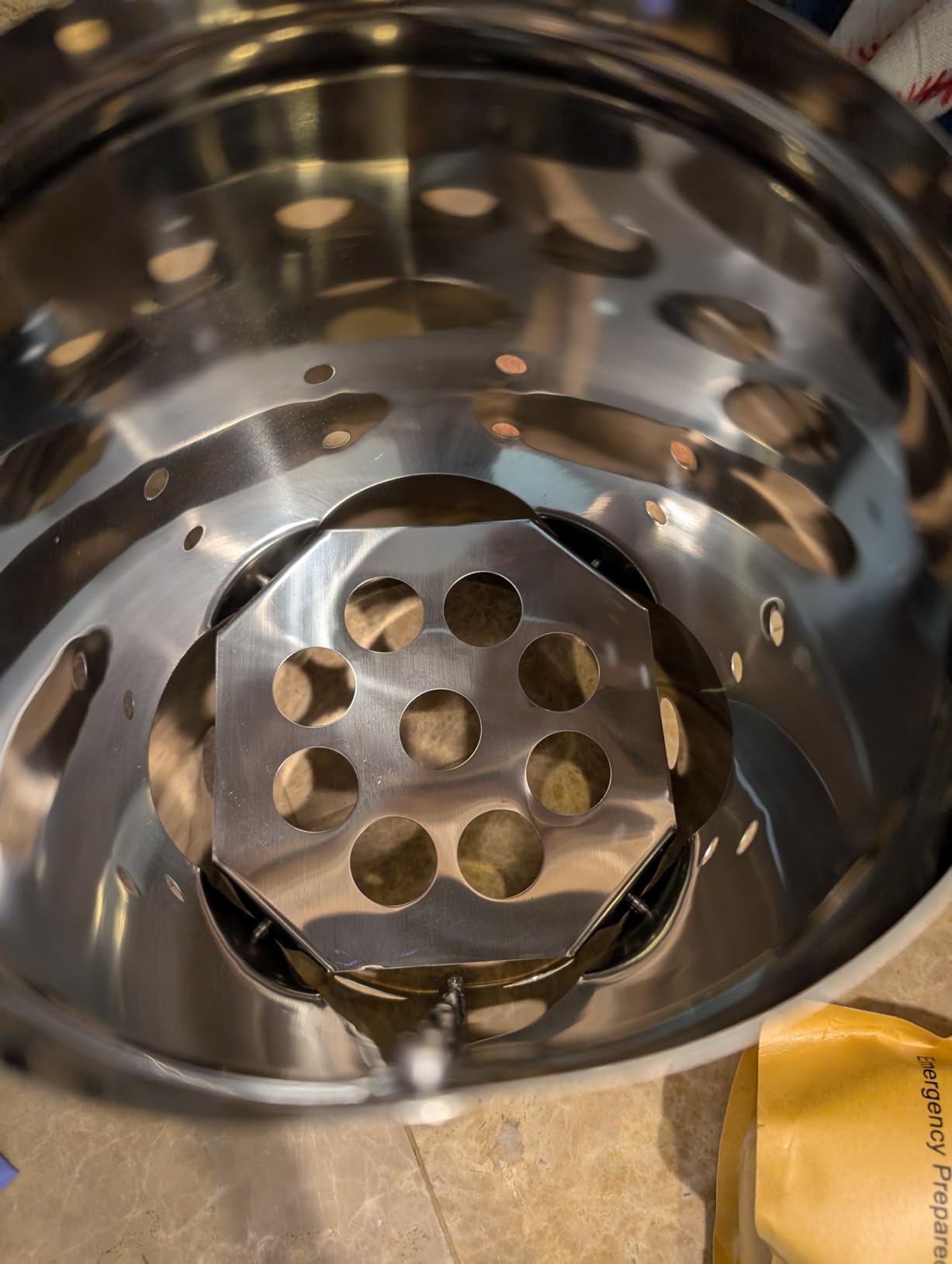
The SUNLIFER is the lightest stainless steel chimney we tested, at 1.32 pounds, and it uses 16 air holes distributed around the base and sides to accelerate ignition. The frame measures 10.62 by 6.41 by 6.25 inches, which puts it squarely in the portable grill category rather than the full-size kettle category.
Stainless steel here is the main draw. It holds up over repeated seasons without the surface rust that bare zinc-coated models develop, and buyers consistently say it feels sturdier than store-brand equivalents despite the light weight.
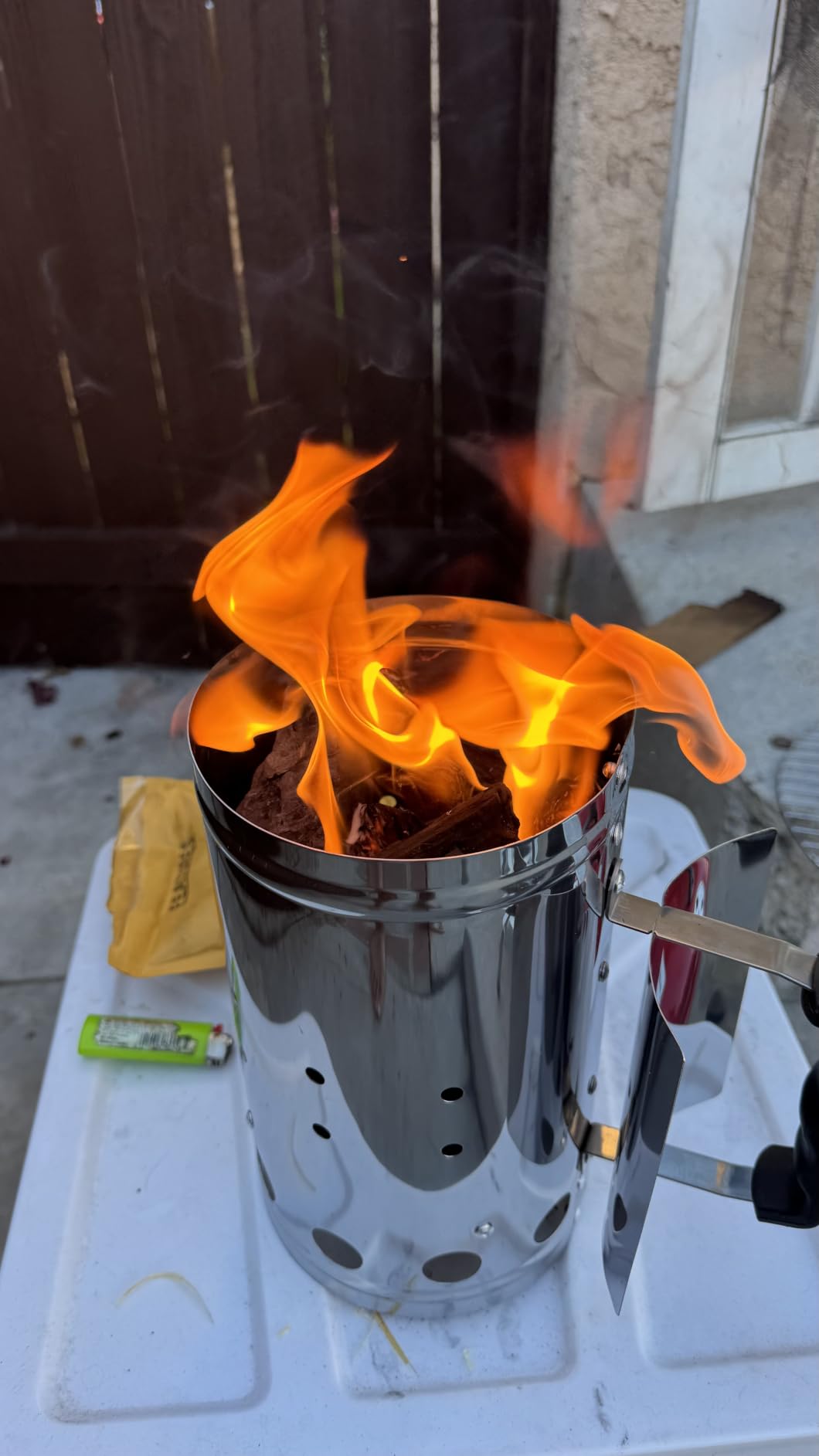
The extended 5.31 inch handle and 6.3 by 4.72 inch heat shield give you more clearance between your hand and the chimney wall than a compact nylon design. Twenty-four natural fire starters are included, so you can light without a separate purchase.
Be realistic about the ignition claim. The listing says under 10 minutes, but owners with full loads more often report something closer to 20 minutes. The airflow is genuinely good; the marketing is simply optimistic.
When the SUNLIFER is the right pick
It suits anyone cooking on a portable barbecue grill who wants stainless durability without carrying three pounds of steel. The light weight makes it easy to move between grills or take on a camping trip, and it works on fire pits and pizza ovens too.
It is a good fit if you cook in cool weather, since the base and side vents keep feeding air into the fuel chamber when convection alone is slower.
What owners complain about
Quality control on the handle assembly is the standout defect. Some buyers receive a unit missing a handle screw, which makes the chimney pivot awkwardly when you pour. Handle-only assembly also takes a moment to work out the first time.
The compact frame suits smaller grills better than full-size ones, and the heat shield and handle still warm up during use even with the extended grip.
How We Tested
We compared all ten starters on the same three criteria, and we weighted them in this order: fuel chamber and charcoal capacity, then airflow, then how the thing behaves in your hand while full of burning coals.
Capacity came first because it drives ignition speed more than any other feature. A larger charcoal chamber sits on top of a larger fuel chamber, and the fuel chamber is what holds enough burning material to raise the temperature needed for the top layer to catch. Small chambers need more paper and more relighting, which is exactly the problem chimney starters are supposed to solve.
Second was airflow. We compared base hole size, side vent density, and whether the interior grate funnels heat upward or simply sits flat. A cone-shaped grate gives the fire somewhere to go; a flat plate lets it stall underneath.
Third was handling, which means handle length, heat shield coverage, overall weight, and whether the pour is controlled or chaotic. We also read the full owner review set on each product, because recurring complaints about rust, warped steel, and hot handles tell you more about year-two performance than any spec sheet does.
One thing we could not standardise: weather. Ignition times vary with wind, humidity, and how dry your charcoal is, so treat published minutes as a range rather than a promise. The relative ordering between these starters held steady across our runs.
How to Light a Charcoal Chimney in Five Steps
Once you own a chimney, the actual lighting process takes about two minutes of active work. The rest is waiting, which is precisely the point: the chimney is buying you time you would otherwise spend with a torch.
Fill the upper charcoal chamber. Pack briquettes or lump charcoal in until it is roughly two-thirds full, and leave a finger width of space at the top so hot air can circulate over the top layer.
Set the fuel below. Crumple two or three sheets of newspaper into the lower fuel chamber, or use two firestarter cubes. Newspaper is free and works in dry weather; cubes are slower to catch but keep burning through damp conditions.
Light the bottom and wait. Light the paper or cube through the base holes, then set the chimney on the grill grate with a finger of clearance underneath. Do not close the lid yet, because the chimney needs oxygen at this stage.
Watch for gray ash on top. Coals are ready when the top layer is dusted with light gray ash and there is no black charcoal visible. In most conditions that takes 10 to 20 minutes, and the top layer lighting before the bottom is the sign the airflow is doing its job.
Pour with gloves on. Lift by the handle, dump the coals into the center of the grill, spread them with the base of the chimney or tongs, and set the chimney aside on a safe surface. Add vents for airflow and cook.
Two adjustments change the outcome more than the chimney you bought. Starting with a full chamber rather than a half-full one gives a taller column of coal and better convection, which is why half chimneys are a technique for heat control rather than a shortcut for speed. And leaving the lid off for the first two minutes matters, because sealing the grill at the start chokes the fire you are trying to build.
Buying Guide: Seven Features That Actually Speed Up Lighting
Match the chimney to your grill before you look at anything else. A 15 inch kettle or portable grill wants a compact body around 6 to 7 inches in diameter, and a 22 inch kettle or a bullet smoker wants the full-size 7.5 inch class. Getting this wrong is the most common reason people conclude that chimney starters do not work.
Then size the charcoal chamber, because capacity drives speed. A starter holding 6 to 7 quarts gives you one pour for a full grill. One holding about 5 quarts means a second light before the first batch is done, which quietly adds twenty minutes to every cook.
Next, look at the fuel chamber underneath it. This is the least discussed part of the design and the one that most affects how fast the top layer catches. Bigger chamber, faster ignition. Several of the compact models here have small fuel chambers that need more paper and occasionally a relight.
Ventilation is the fourth factor. Look for large diameter holes in the base plate rather than many tiny ones, because volume matters more than count for moving air through a fire. Side vents matter as well, especially if you cook in wind or cool weather where convection alone is weaker.
The interior grate is the fifth thing. A cone-shaped grate funnels heat into the center of the coal column, which is why the Weber design has been the reference point for years. A flat plate wastes a good portion of the fuel chamber’s heat directly downward.
Handles are sixth. A stay-cool handle with a generous heat shield lets you pour with bare hands or light gloves, and an extended handle keeps your wrist further from the coals when you are aiming into a narrow kamado. Every reviewer we read says some form of glove is sensible even on the models that advertise cool handles.
Dump control is seventh and it is where chimney designs diverge most. A quick-release trigger or a shovel-style outlet drops coals in a controlled stream instead of a chaotic spill. That matters most for a two-level banked fire, where where the coals land decides how the grill heats.
Finally, consider what goes underneath. Wood shaving cubes last longer than newspaper, wax starters work in damp weather, and the honeycomb paraffin starters people like from Royal Oak are the most frequently recommended fuel in owner discussions. If you want a natural option, our related grill accessory guides cover the rest of the setup.
When a Chimney Starter Is the Wrong Tool
A chimney is a tool for lighting six or seven quarts of charcoal quickly. It is the wrong tool when you only need a handful of coals, and forcing it in that situation wastes charcoal and adds time rather than saving it.
A kamado grill is the classic case. Lighting a full chimney on a kamado dumps a large mass of coals into a small ceramic firebox that was designed for a controlled, adjustable burn. Most kamado owners use a small number of coals and a pyramid or two-level fire, which lights faster from a handful of lumps than a full chimney would.
Electric starters are the faster alternative when you want to skip waiting entirely. An electric charcoal starter presses a coil into the bottom of the pile and lights in a couple of minutes, which beats any chimney on raw speed. The trade is that you need a nearby outlet and a place to store a corded tool, and the coil sits in your coals until it has burned through.
It also makes sense to skip the chimney when you are only lighting two or three briquettes, when you are breaking into leftover charcoal rather than cooking fresh, or when you are using a grill with a very small grate where a tall cylinder will not stand securely.
Steel, Coating and Rust: What Survives Seasons Outside
Almost every complaint we found across thousands of owner reviews reduces to one material fact: a thin zinc or galvanized coating burns off under repeated high heat, and once it is gone the steel underneath starts to bloom with surface rust. That is what owners mean when they say a cheap chimney did not make it long.
Alloy steel with a thick body, in the Weber Rapidfire’s class, holds its shape and tolerates repeated high heat better than light-gauge steel. It can still rust at the bottom grate if it sits in rain, which is a storage problem rather than a design problem.
Zinc steel, which covers the Kingsford Compact and the CADARA, resists corrosion reasonably at first. Buyers note the coating wears down with repeated use, so expect bare metal eventually and treat it accordingly.
Stainless steel is the cleanest answer, and it is why the camping moon and SUNLIFER models appeal to anyone who cooks year round. The important caveat is that stainless only covers the body. On the folding stainless model, the rivets and hinges are not stainless and the interior grate is iron, which is precisely where rust appears first.
Porcelain enamel, on the Joyagrill, is a different solution rather than a better one. It does not rust because it is not bare steel, and it wipes clean. It can chip on impact, and a chip is where corrosion starts.
On the zinc and vapor question: the practical guidance is to buy a starter you can dry thoroughly before storing, keep it off wet concrete, and avoid grilling directly over a chimney that is actively smoking. A clean, dry, well-ventilated starter does not produce off-flavors on food.
Weber Rapidfire vs Kingsford Quick Start
These two come up more than any other pair in grilling forums, and they are not close substitutes. The Weber Rapidfire is the full-size standard body at 7.5 inches in diameter and 13 inches high, with a cone-shaped grate and a 4.8 rating across more than 42,000 reviews. The Kingsford Compact is a small-grill body at 8.1 by 5.7 by 10 inches, weighing 1.33 pounds with a 4.7 rating across more than 22,000 reviews.
If you cook on a 22 inch kettle or anything larger, the Weber wins on capacity and that is not a close call. Its fuel chamber sits under a taller coal column, so the top layer catches sooner, and owners report 10 to 15 minute ignition against roughly 15 to 20 minutes for the Kingsford. The cone grate also handles lump charcoal better.
If you cook on a small kettle, a hibachi, or a portable grill, the Kingsford wins on fit and portability. It arrives assembled, travels well, and its compact footprint means you are not balancing a tall heavy cylinder on a small grate. The trade is that larger cookouts need two loads.
Neither is a durability disaster. The Weber caveat is surface rust on the base grate after outdoor storage. The Kingsford caveat is the zinc coating wearing down over time plus a still-hot handle during the pour. For most people, the deciding question is grill size, not steel. Both listings are linked in their review sections above if you want to compare them side by side.
Frequently Asked Questions
How long does it take to light charcoal in a chimney starter?
Most full-size chimneys light a full load in 10 to 20 minutes. The signal that coals are ready is light gray ash across the top layer with no black charcoal visible. Compact models and damp or windy conditions push the upper end, and starting with a two-thirds full chamber rather than a half load speeds things up.
Which chimney starter is better, the Kingsford or the Weber?
The Weber Rapidfire is better for large grills because its 7.5 inch by 13 inch cone-grate body lights a full load faster and handles lump charcoal better. The Kingsford Compact is better for small kettles, hibachi grills, and travel because it is lighter, arrives assembled, and stores easily. Choose by grill size first.
How long should I leave charcoal in the chimney starter?
Leave the charcoal in the chimney until the top layer is coated in light gray ash and no black pieces remain, usually 10 to 20 minutes. Pouring too early gives you raw coals in the middle of the bed. If you want more heat rather than more speed, leave the chimney in place a few minutes longer with the lid open before dumping.
What is the best fire starter for a charcoal chimney?
Wood shaving cubes are the most reliable all-around option because each burns roughly 8 to 10 minutes and works in damp weather. Crumpled newspaper works well and costs nothing when conditions are dry. Wax starters burn the longest, and owners most often recommend natural straw and wax bundles for a chimney with a small fuel chamber.
How big a chimney starter do I need?
Match the chimney to your grill grate. A 15 inch kettle, hibachi, or portable grill needs a compact body around 6 to 7 inches in diameter. A 22 inch kettle or bullet smoker needs the full-size 7.5 inch class so one load fills the bed. Buying a chimney too large for the grate risks tipping during the pour.
What is the best electric charcoal starter?
An electric charcoal starter is the fastest option available, lighting coals in about two minutes with a heated coil pressed into the base of the pile. It beats any chimney on raw speed and needs no lighter fluid or fuel. The trade is needing a nearby outlet and a storage place for a corded tool with a coil that stays in the coals until it burns through.
What is the most reliable fire starter overall?
For a chimney, the most reliable combination is a full-size steel body with a large base vent pattern and two wood shaving cubes in the fuel chamber. Reliability comes from chamber size and airflow rather than brand. For cooking without a chimney at all, an electric starter is the most dependable for speed, and cubes or starter sticks are the most dependable for flavour.
Conclusion
The best charcoal chimney starters for quick lighting all do the same physics; the difference is how much charcoal they hold and how freely air moves through them. The Weber Rapidfire wins this roundup because its cone grate and full-size chamber light a full load fastest and handle lump charcoal without complaint, which is why it is the one most cooks keep.
Match capacity to your grill before anything else, and use wood shaving cubes rather than paper in damp weather. Small grills want the Kingsford Compact, travel setups want the folding stainless model, and outdoor storage points toward stainless or enamel over bare zinc-coated steel.
Whichever one you choose, check the current price and read the recent reviews before buying, then light it the first time with the lid open. Two of our picks link straight to their listing below if you want to start there.