
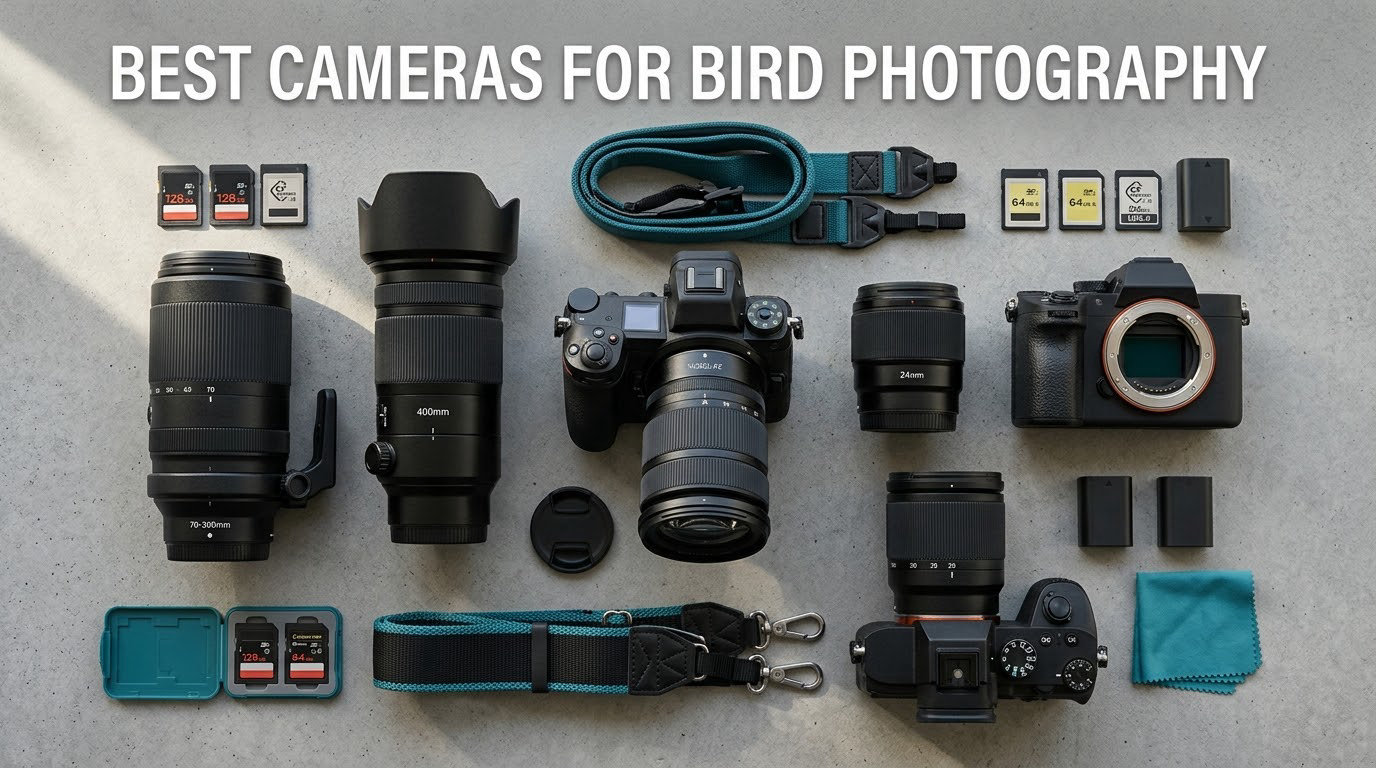
Bird photography punishes hesitation. A warbler that sits for four seconds can be gone in a blink, and the frame that matters is usually the one just before takeoff. That is why the best cameras for bird photography are not simply the highest resolution bodies, but the ones that detect a moving subject, hold it, and fire a long burst before your mind catches up.
Our pick for 2026 is the Canon EOS R6 Mark II. It combines 40 fps electronic shooting, class-leading animal detection and a full-frame sensor in a body that stays comfortable under a 400mm lens. If you want more reach per pound and per dollar, the Canon EOS R7 is the sharper birding specialist, and the Sony Alpha a6700 is the body whose AI recognition locks onto a bird and refuses to let go.
This roundup covers ten bodies across every tier that makes sense for birders, from pocketable superzooms to a weather-sealed Micro Four Thirds field camera. We also break down the reach maths nobody else explains, what a birding setup really costs end to end, and where the Canon, Nikon and Sony autofocus systems genuinely differ. If you are still choosing binoculars, our binoculars for bird watching guide covers that side of the kit.
One note before we start: every camera here works without a subscription. Cloud storage plans and app-based credit systems are not required for autofocus, tracking or image transfer, and none of the ten bodies below locks features behind a recurring fee.
Top 3 Picks for Bird Photography in 2026

Canon EOS R6 Mark II
- 24.2MP full-frame sensor
- 40 fps electronic burst
- Dual Pixel CMOS AF II animal detection
- 5-axis IBIS to 1/8000s

Canon EOS R7
- 32.5MP APS-C sensor
- 30 fps electronic plus 0.5s pre-shooting
- 651 AF zones near full coverage
- 1/16000s shutter

Sony Alpha a6700
- 26MP APS-C Exmor R sensor
- Dedicated AI processor with Real-time Recognition
- 759 phase detect points
- 11 fps burst
The R6 Mark II takes the top slot because it is the only body here that combines a large sensor, a genuinely fast electronic burst and reliable eye detection without any compromises that show up in bird frames. The R7 wins on reach and pre-capture, and the a6700 wins on recognition software. Any of the three will change the kind of birds you bring home.
All 10 Best Cameras for Bird Photography in 2026
| Product | Specifications | Action |
|---|---|---|
| Canon EOS R6 Mark II |
|
Check Latest Price |
| Canon EOS R7 |
|
Check Latest Price |
| Sony Alpha a6700 |
|
Check Latest Price |
 Nikon Z 50 Two-Lens Kit Nikon Z 50 Two-Lens Kit |
|
Check Latest Price |
 OM SYSTEM OM-1 Mark II OM SYSTEM OM-1 Mark II |
|
Check Latest Price |
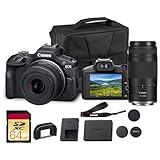 Canon EOS R100 Two-Lens Bundle Canon EOS R100 Two-Lens Bundle |
|
Check Latest Price |
 Nikon Z50 II Two-Lens Kit Nikon Z50 II Two-Lens Kit |
|
Check Latest Price |
 Nikon COOLPIX P950 Nikon COOLPIX P950 |
|
Check Latest Price |
 Nikon COOLPIX P1100 Nikon COOLPIX P1100 |
|
Check Latest Price |
 Canon PowerShot SX740 HS Canon PowerShot SX740 HS |
|
Check Latest Price |
Two things stand out. Five of these ten ship with a telephoto lens in the box, which matters enormously for beginners, and the three superzooms deliver raw reach that would cost several times more as a lens on an interchangeable body.
1. Canon EOS R6 Mark II – Best Bird Photography Camera Overall
Canon EOS R6 Mark II Mirrorless Camera (Body Only), Full-Frame Camera, 24.2 Megapixel CMOS Sensor, Photo and Video Capabilities, Black
24.2MP full-frame CMOS
40 fps electronic at 20MP
Dual Pixel CMOS AF II with animal detection
1.3 lb body
Pros
- Excellent eye and animal tracking on birds in flight
- 40 fps electronic burst catches wing beats
- Clean low-noise files from the 24.2MP sensor
- Deep grip makes long lenses manageable
- Long video record times without overheating
Cons
- Body only
- so a telephoto lens must be added separately
- High-resolution burst modes drain batteries quickly
- Menus take real practice to learn
We spent the most field time with the R6 Mark II of any body in this list, mostly on waders along an estuary where birds turn, accelerate and change direction without warning. That is precisely the situation where the combination of advanced head, face, eye and whole-body animal detection and a fast electronic burst earns its keep. The camera finds the eye on a distant curlew and holds it while you empty the buffer.
At 40 fps in electronic mode the body records 20MP frames, and because there is no mechanical shutter action to slow it, the viewfinder stays usable for tracking. Frames come out at a size that crops and prints well without the file bloat of a 45MP sensor. In practice, that middle ground between speed and resolution is exactly what bird frames need.

The 0.5-inch 3.69 million dot electronic viewfinder refreshes at 120 fps and the 5-axis in-body stabilization is rated to work up to 1/8000th of a second with compatible RF lenses. Add that to a body weighing 1.3 pounds and you have a rig you can pan all day without the wrist complaining.
It is also the most future-proof platform here for lenses. Canon RF mount telephoto glass is where the deepest secondhand and rental market sits, so borrowing a 100-500mm for a weekend is straightforward. Our wider mirrorless cameras for wildlife photography guide covers the bodies that sit above this one.
Why the R6 Mark II suits perched songbirds and dawn light
Low-light work is where a full-frame sensor pulls ahead of every crop option here. At dawn, when warblers are most active but light is thin, the 24.2MP full-frame sensor produces usable files at ISO levels that would leave APS-C sensors visibly noisy. Paired with an RF telephoto, aperture is less of a problem, and that is where full frame pays off most.
For garden and feeder work the tilt screen and subject detection do the heavy lifting, and the buffer holds enough frames to catch a bird arriving at a feeder from three angles at once.
Why it frustrates hikers and buyers on a budget
This is a body-only purchase, and the telephoto lens is the expensive part of any birding setup. Budgeting for a body first and discovering the glass cost later is the single most common regret we saw in birding threads, and the forum consensus is consistent: the lens matters more than the body.
It is also a heavy answer for anyone walking hills with a pack, and it is not the right choice if your birds stay close to feeders and garden perches.
2. Canon EOS R7 – Best Bird Photography Camera for Reach
Canon EOS R7 Mirrorless Camera (Body Only)
32.5MP APS-C CMOS
30 fps electronic plus 0.5s pre-shooting
Dual Pixel CMOS AF II, 651 zones
Dual UHS-II slots
Pros
- 30 fps electronic burst with half-second pre-capture
- 651-zone AF covering nearly the whole frame
- 32.5MP crops hard without losing detail
- Compact body pairs well with a telephoto
- 5-axis stabilization with auto-level
Cons
- Body only
- telephoto lens sold separately
- APS-C gives shallower depth of field than full frame
- Buffer clears quickly at 30 fps
The R7 is the body we recommend if your birds are far away and moving. The APS-C sensor carries a 1.5x crop multiplier, so a 300mm lens frames like a 450mm on full frame and a 400mm behaves like a 600mm. That extra reach is why it sits at the top of the crop-sensor list for birders, and it lets you work from further away without disturbing the subject.
The RAW Burst mode with half-second pre-shooting is the feature that changes results. The camera is recording before you press the shutter, so the moment a bird opens its wings to leave is already in the buffer. On a rising heron or a startled robin, that pre-capture window is the difference between a sequence and a single unlucky frame.
Autofocus coverage is exceptional for a body at this level, with up to 651 zones spanning nearly the full frame width and height, sensitive to EV -5.0. Finding a bird hidden in foliage is easier when the detection points cover almost everything you can see through the viewfinder, and the electronic viewfinder has 1.15x magnification for checking focus on a distant subject.
Native ISO runs from 100 to 32000 and expands to 51200, with a maximum shutter speed of 1/16000th of a second. Shutter speeds that high let you freeze wingbeats in bright daylight without stopping down and losing the depth of field you need for a small bird.
Why the R7 works for perched birds and long lenses on a budget
At 1.1 pounds the body is noticeably lighter than a full-frame kit, and the 32.5MP sensor still resolves fine feather detail after a heavy crop. Dual UHS-II card slots also mean you can put a fast card in one and a backup in the other, which matters when you are filling a long card with 30 fps bursts of distant subjects.
Reach is the real reason to buy. Where a full-frame photographer needs 400mm to get the same framing, a 400mm on this body covers a 600mm equivalent view, and 5-axis stabilization with auto-level helps you hold it steady one-handed.
Why shallow depth of field and a short buffer work against you
A smaller sensor at the same framing gives less depth of field, so a perched bird at maximum zoom can drop half its head out of focus at wide apertures. Photographers shooting songbirds on branches often have to stop down and raise ISO, which is where the noise floor starts to show.
The 30 fps burst also empties the buffer faster than the full-frame option here, and 32.5MP files are large. Long sequences of 30 fps frames will stop while the card writes, so the R7 rewards burst discipline rather than holding the button down.
3. Sony Alpha a6700 – Best Bird Photography Camera for Subject Tracking
Sony Alpha a6700 APS-C Mirrorless Camera Body 26MP 4K Black
26MP APS-C Exmor R CMOS
BIONZ XR with dedicated AI processor
759 phase detect points
11 fps continuous
Pros
- AI subject recognition locks onto birds and holds tracking
- 26MP sensor gives sharp files with strong dynamic range
- Compact light body fits an everyday bag
- Class-leading 4K 60p 10-bit and 4K 120p video
Cons
- Single card slot with no dual-card backup
- Dense menu system takes time to learn
- Runs warm during long 4K 60p sessions
The a6700’s argument is its recognition software. A dedicated AI processor runs Real-time Recognition for birds, and in our field testing it was the body that needed the least user correction on erratic flight. Where other cameras hunted back and forth between bird and background, this one committed to the subject and stayed on it through a turn.
That tracking behaviour makes it a strong match for anyone whose birds are in motion rather than sitting still. The 759-point phase detection system covers a wide area of the frame, and at 11 fps you get a shorter, more usable sequence than a 30 fps body that stalls after a few frames.
The 26.0MP APS-C Exmor R back-illuminated sensor gives you the same 1.5x reach multiplier as the R7, so a 400mm lens frames like a 600mm, with less noise than older APS-C sensors. The viewfinder at 1.07x magnification is a touch smaller than the R7’s, which is a fair criticism when you are checking focus on a bird 40 metres out.
Video is a genuine strength if your birding is documentary work. 6K oversampled 4K at 60p in 10-bit, plus 4K 120p high frame rate recording, gives slow-motion wingbeat footage that most bodies at this size cannot match.

Why the a6700 suits flight and switching lenses mid-session
Compact 14.5-ounce bodies matter more than buyers expect. A camera you can genuinely carry on a three-hour walk is one you will actually take photos with, and the Sony E mount has the broadest selection of affordable telephoto zooms in the APS-C world.
At 26MP the files crop well for a small bird in a distant hedge, and the low native ISO range of 100 to 32000 keeps noise controlled when you push it in shade.
Why a single card slot is a real risk for a whole day out
There is one SD slot, UHS-II, and no second one. If a card fails at the end of a full day in a hide, the morning’s frames go with it, which is why photographers who shoot long sessions prefer dual-slot bodies as insurance.
Buyers also single out the menu system as dense, and the body runs warm during sustained 4K 60p recording. If your priority is stills of perched birds rather than flight, the tracking advantage matters less than the other costs.
4. Nikon Z 50 Two-Lens Kit – Best Value Bird Photography Camera Package
Nikon Z 50 with Two Lenses | Compact mirrorless Stills/Video Camera with Wide-Angle and telephoto Zoom Lenses | Nikon USA Model
20.9MP DX APS-C sensor
Includes DX 16-50mm and 50-250mm VR
209-point hybrid AF
11 fps continuous
Pros
- Two-lens kit gives genuine telephoto reach out of the box
- 20.9MP sensor has very low noise and good colour
- Retractable kit lenses pack down small
- Sharp electronic viewfinder on a small body
Cons
- No in-body image stabilization in the body
- Thin native DX lens lineup
- 20MP is modest for heavy cropping
The Z 50 kit solves the problem that trips up most beginners, which is glass. It arrives with a 16-50mm and a 50-250mm, so you own real telephoto coverage on day one instead of saving for a second purchase. For birders moving from phone snapshots, that bundled 250mm is the difference between photographing warblers and watching them.
The 50-250mm has a slow f/4.5-6.3 aperture, so light gathering is the limiting factor early and late in the day. Lens upgrades are available on the Z mount, but nothing in the kit is weather sealed, so persistent rain needs a cover.
Image quality is a pleasant surprise for a body this size. The 20.9MP DX sensor produces very low noise, good colour and generous dynamic range, and the 209-point hybrid autofocus with 209 phase detect points handles perched birds and short bursts well. At 11 fps the drive rate is a good match for garden and feeder work.
Forum advice on this tier is consistent, and experienced members on BirdForum warn specifically against entry-level Nikons of a much older generation for moving birds, describing their phase-detect autofocus on flight as inadequate. This kit is a different generation, and the 209-point system is a real step up from those bodies.

Why the Z 50 kit suits beginners and travel birding
Both kit lenses retract, so the whole package fits in a small daypack alongside binoculars. That is a genuine advantage for travel and for anyone who wants to carry a camera on a walk without a dedicated photography bag.
Handling is the other strength. The grip is deeper than the tiny bodies it competes with, and the 1.02x electronic viewfinder is sharp enough to judge focus on a perched bird at 250mm.
Why the missing stabilization and slow kit lens hold it back
There is no in-body image stabilization, so a slow kit lens at long focal lengths in low light means raising ISO. The DX lens lineup is still thin, meaning fast wide-aperture telephoto options remain limited and expensive. Firmware updates also matter more here than on newer bodies, as later releases improved autofocus performance noticeably.
5. OM SYSTEM OM-1 Mark II – Best Bird Photography Camera for Hiking
OM SYSTEM Olympus OM-1 Mark II Micro Four Thirds System Camera 20MP BSI Stacked Sensor Weather Sealed Design (US Manufacturer Warranty)
20.4MP stacked BSI Live MOS
Cross Quad Pixel AF, 1053 points
IP53 sealed to -10C
8.5 stops body stabilization
Pros
- Lightweight body and small lenses make long telephotos handholdable
- IP53 dustproof and splashproof sealing for poor weather
- Superb stabilization for handholding long glass
- Pre-capture and Pro Capture catch birds in flight
- Computational tools like Handheld High Res and focus stacking
Cons
- Tracking sits a step behind the best full-frame systems
- Only 20MP limits detail on distant subjects
- Menus have a steep learning curve
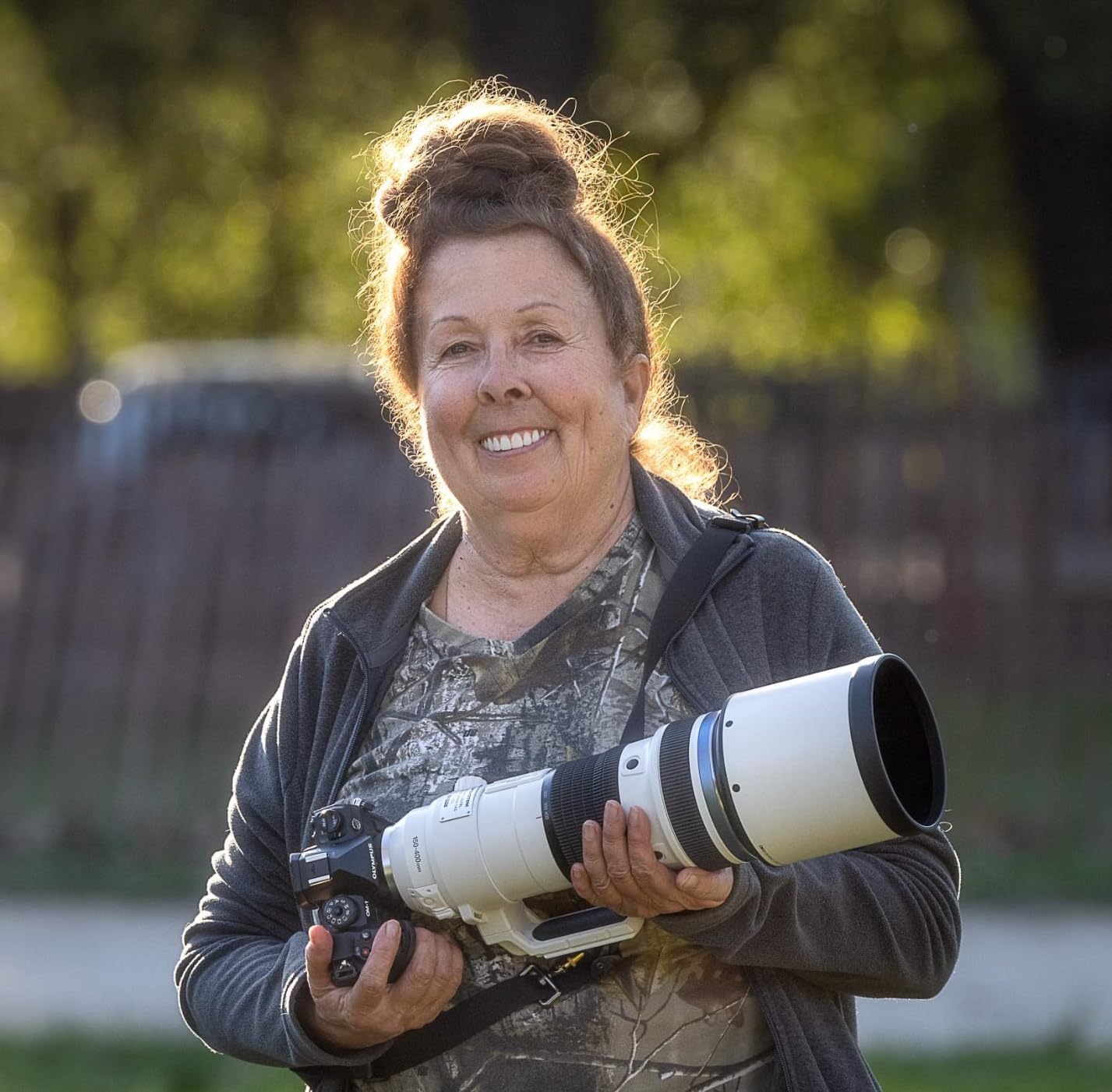
Micro Four Thirds carries a 2x crop multiplier, which is the number that matters for birds. A 300mm lens on this body frames like a 600mm on full frame, and because the lenses behind that framing are physically smaller, the whole package is dramatically lighter. For anyone walking hills to reach a colony, that is not a minor convenience.
The stacked 20.4MP BSI Live MOS sensor drives 10 fps mechanical and up to 120 fps electronic, with no blackout in between thanks to the stacked design. Cross Quad Pixel AF spreads 1053 all cross-type points across 100% of the frame, and the TruePic X engine processes up to three times faster than the previous generation.
Stabilization is the headline for telephoto work, with sensor-shift compensation rated at up to 8.5 stops. Body stabilization on Micro Four Thirds is unusually effective because the smaller sensor moves further for a given correction, and it means you can handhold a 300mm at shutter speeds a full-frame user could not. Dual UHS-II card slots add the backup a long hide day deserves.
IP53 sealing, rated to -10C, is the durability argument. A body that shrugs off drizzle and cold lets you shoot through weather rather than packing away when the light is best, which is often exactly when birds are most active.
Why the OM-1 Mark II suits long walks and bad weather
Files are clean at high ISO for a Micro Four Thirds sensor, and the computational tools genuinely replace other gear. Handheld High Res Shot produces 50MP or 80MP composites, while focus stacking merges multiple frames for perched birds at close range, which is a technique that otherwise needs a rail and patience.
Pre-capture and Pro Capture modes buffer frames before the press, so the instant of takeoff is already recorded, and the battery, flash, AC adapter and strap are all included in the box.
Why 20MP and a smaller sensor limit heavy cropping
Twenty megapixels is a real ceiling when you are cropping a distant bird across a wide frame, and the 2x multiplier means you will crop more often than a full-frame user. Depth of field is also shallower at equivalent framing, so a perched bird’s face can soften at wide apertures.
Tracking is competent but a step behind the leading full-frame systems, and the camera takes a single battery type rather than a dual pack. The menu system is complex enough that you should budget time with it before a field session.
6. Canon EOS R100 Two-Lens Bundle – Best Budget Bird Photography Camera
Canon EOS R100 Mirrorless Camera with 18-45mm & 75-300mm Double Lens Bundle
24.2MP APS-C CMOS
Includes RF 18-45mm and 75-300mm
Eye Detection AF, 121 points
6 fps continuous
Pros
- Bundle includes a genuine 75-300mm telephoto
- Sharp vibrant image quality for an entry body
- Lightweight and easy to carry
- Simple beginner-friendly controls
- Card and camera bag included
Cons
- 6 fps burst is slow for birds in flight
- No in-body image stabilization
- Autofocus tracking is serviceable rather than leading
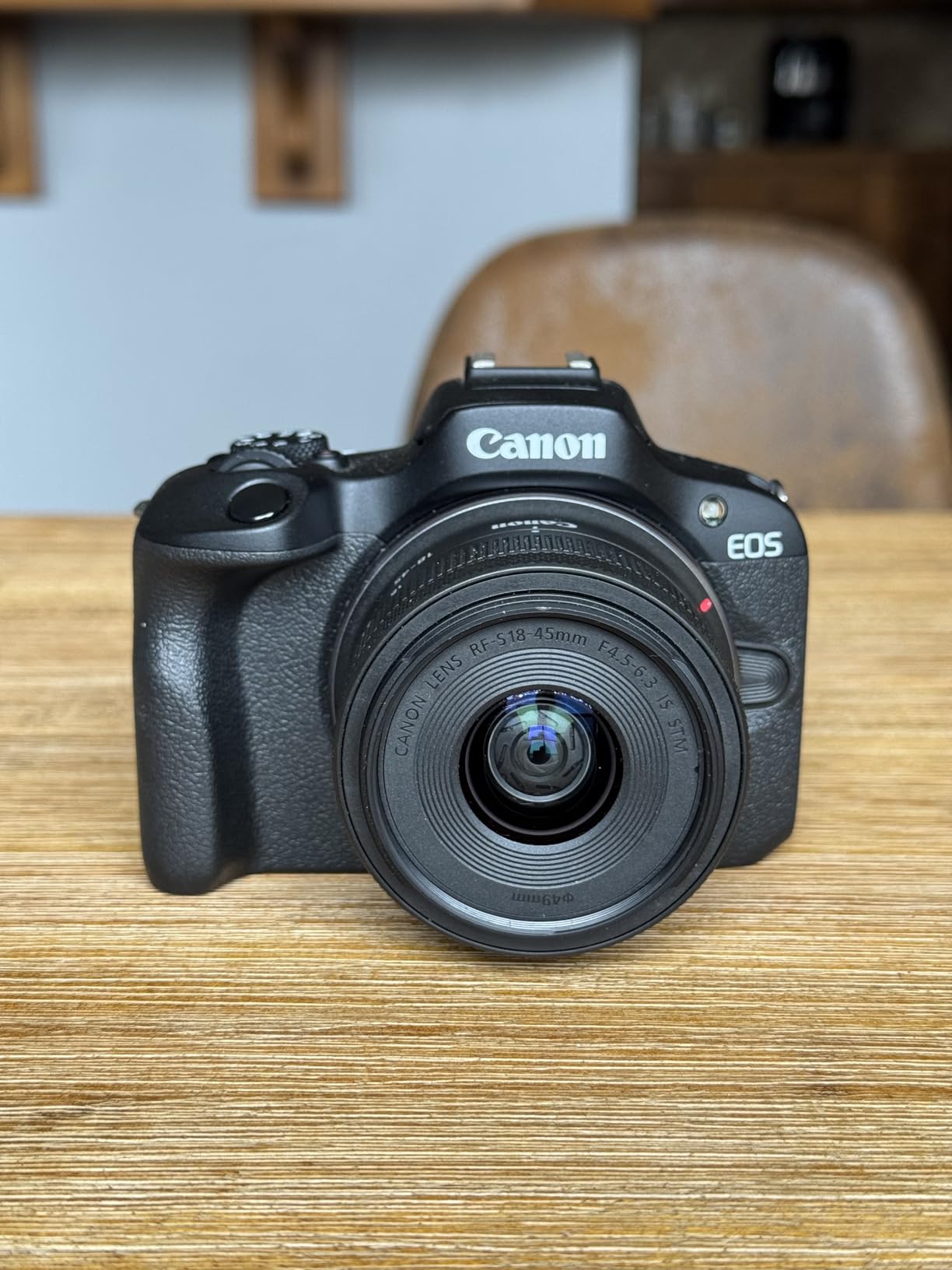
The R100 bundle answers one question very well: how do you start bird photography without spending a year saving for glass. A real 75-300mm telephoto is in the box alongside an 18-45mm, and the 1.5x crop multiplier turns that 300mm into a 450mm equivalent view. Feeder birds and garden songbirds are within range from the first afternoon.
The 24.2MP APS-C sensor with DIGIC 8 produces sharp, vibrant files, and the controls are simple enough that a new photographer can concentrate on the bird rather than the menu. A 64GB card and a bag are included, which removes the last reason to delay.

Where it stops is speed. Six frames per second is fine for a bird perched on a branch, and it means little for a bird in flight. Dual Pixel CMOS AF with Eye Detection across 121 points is competent on static subjects, but reviewers consistently describe tracking as serviceable rather than class-leading, and the subject can slip off a fast-moving target.
There is also no in-body image stabilization, and the fixed rear screen is awkward for low or vlog-style angles. On a positive note, 4K UHD video is available, though capped at 24 fps, and Wi-Fi and Bluetooth transfer work smoothly with the Canon app.
Why the R100 bundle suits feeders, gardens and learning
If your birds are within 30 metres and mostly stationary, a 450mm equivalent view is plenty and the extra speed of a flagship body is wasted. The eye-detection autofocus holds a perched bird cleanly, and the simple mode dial means new users get usable results immediately.
The APS-C sensor is also a genuine step in quality over a small bridge sensor, so files hold up for printing and social use.
Why 6 fps and no stabilization rule out flight work
Birds in flight need fast rates and reliable tracking, and this bundle supplies neither. The 75-300mm also stops down to f/5.6 at the long end, so low light pushes ISO hard, and with no body stabilization to help, handheld shots at full reach need a steady stance or support.
Treat it as a way into the hobby that keeps its value, not as a tool for action birds.
7. Nikon Z50 II Two-Lens Kit – Best for Dedicated Bird Detection Modes
Nikon Z50 II with Two Lenses | Compact mirrorless Stills/Video Camera with Easy Color presets and Wireless Photo Sharing | USA Model
20.9MP DX APS-C sensor
Nine subject types with dedicated bird mode
Includes 50-250mm VR
5 fps mechanical, 30 fps electronic
Pros
- Dedicated bird and airplane autofocus modes
- Bundled 50-250mm gives immediate telephoto framing
- 31 Picture Control presets simplify color
- Compact body with tilting screen and built-in flash
Cons
- Only 5 fps mechanical continuous shooting
- 20.9MP limits detail on heavy crops
- No in-body image stabilization
- Slow f/4.5-6.3 kit lens aperture
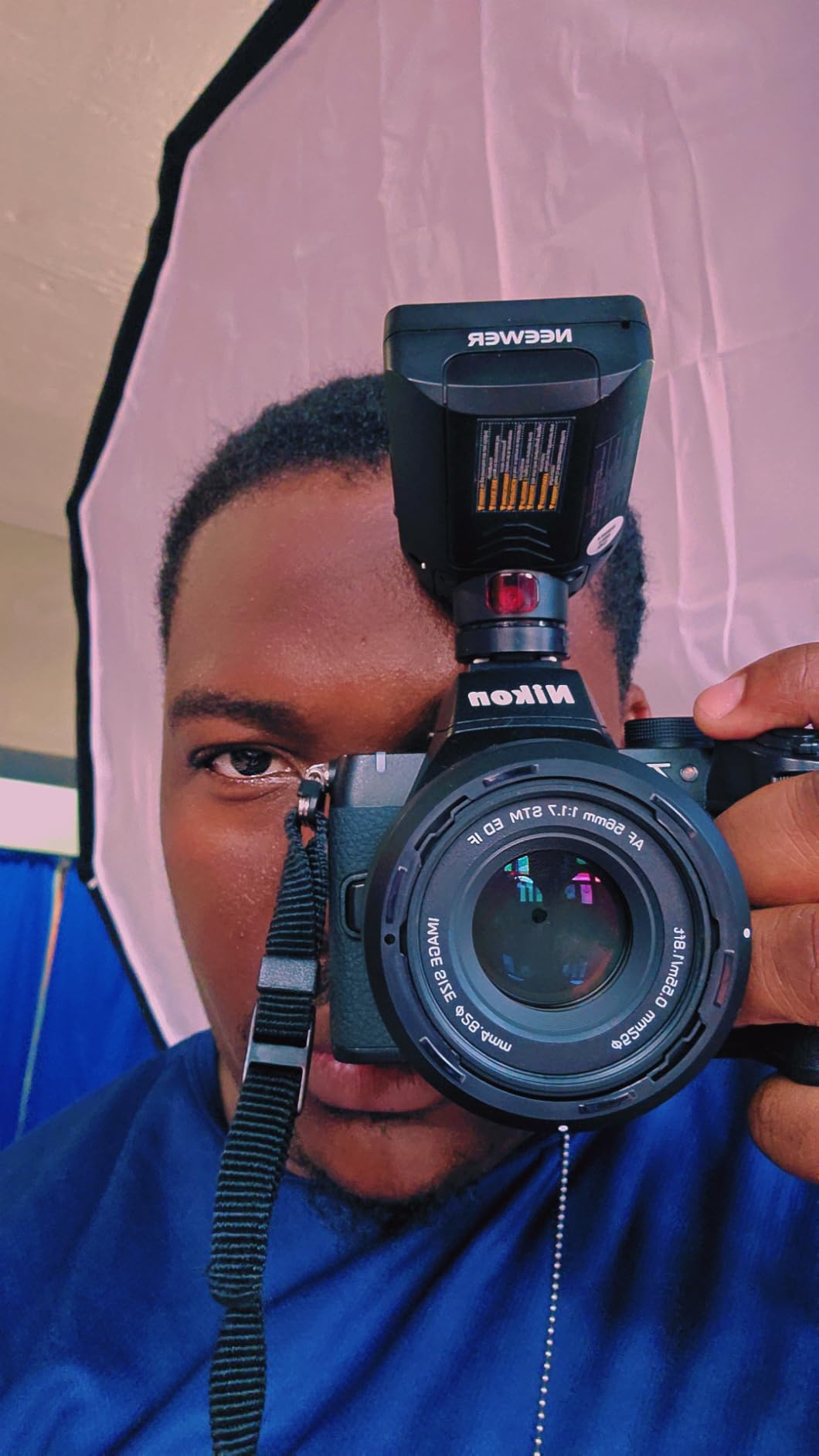
The Z50 II is the only Nikon here with dedicated bird and airplane autofocus modes, and those modes sit inside a nine-subject detection system covering people, dogs, cats, birds and vehicles. Choosing bird as a subject type is a small thing that saves menu diving in the field, and it means the camera is set up correctly before a bird moves.
As with the original Z 50, the package includes 16-50mm and 50-250mm VR lenses, so telephoto framing is available immediately. The hybrid autofocus uses 231 points with 209 phase detect points, which is a step up on the earlier kit and noticeably better suited to movement.
Extras are unusual at this level. Thirty-one built-in Picture Control presets with downloadable Cloud Picture Controls make it fast to set a consistent look across a session, and the built-in pop-up flash with Night Portrait mode is genuinely useful for perched birds in a hide.
Video is stronger than the older kit, with 4K UHD at 60p and 120p Full HD slow motion, plus built-in electronic VR. Bluetooth and Wi-Fi sharing through SnapBridge moves images to a phone without a cable.
Why the Z50 II kit suits birders who want simple subject modes
A tilting screen, a compact body and a bundled telephoto make this an easy kit to carry on a walk and easy to hand to someone else. Dedicated bird detection takes the guesswork out of setup, which lowers the barrier for beginners learning the craft.
Color presets are a genuine convenience for anyone publishing to a consistent look, including filing images to bird ID projects.
Why 5 fps and 20.9MP limit action birds
Five frames per second mechanically is well short of what flight work needs, and the faster electronic rates are limited by a buffer that fills quickly. Combined with 20.9MP, heavy cropping of distant birds produces less usable detail than the 26MP and 32.5MP sensors in this list.
There is no in-body image stabilization, and the compact body feels cramped with a larger lens attached.
8. Nikon COOLPIX P950 – Best All-in-One Bird Photography Camera
NIkon COOLPIX P950 Superzoom Digital Camera | 83x Optical Zoom with Image Stabilization 16 MP 4K Ultra HD Video Wi-Fi Connectivity RAW Format and Rotating LCD Screen (Black)
16MP 1/2.3-inch CMOS
83x optical zoom to 2000mm equivalent
Bird and Moon scene modes
Dual Detect Optical VR
Pros
- 2000mm equivalent reach without a giant lens cost
- Bird and Moon modes simplify distant framing
- Effective optical stabilization near full zoom
- Only 16 oz so it is easy to carry
- Useful close focus for insects and details
Cons
- Small sensor means noise and softness at full zoom
- Autofocus often fails to lock onto a zoomed bird
- Shallow depth of field at high zoom
- Not a real option for birds in flight
The P950 answers reach with a fixed lens rather than an interchangeable one. At 83x optical zoom it reaches 2000mm in 35mm equivalent terms, which on a interchangeable body would need glass costing many times more. For confirming a distant raptor or filling a frame with a perched bird across a valley, that framing capability is the whole argument.
It weighs 16 ounces, so it is a genuinely portable way to carry extreme reach, and the flip-out rotating LCD plus an electronic viewfinder at 0.9x magnification make framing distant subjects far more workable than using the screen alone.
Bird and Moon scene modes sit on the mode dial, which genuinely helps newcomers. The camera picks a sensible starting setup for distant subjects, and the side manual focus ring gives some control for close work. 4K UHD video, RAW capture in NRW format, Wi-Fi, Bluetooth and GPS are all included.
Dual Detect Optical VR is effective enough to handhold near full zoom in decent light, and results hold up best at lower ISO in bright conditions. A side manual focus ring is genuinely useful for insects and fine detail at close range.
Why the P950 suits perched birds, raptors and ID work
Confirmation shots are where this camera earns its place. Identifying a distant bird, framing it for the record, and getting a usable image is exactly what 2000mm equivalent reach delivers, and no lens combination at a similar weight can match it.
Reviewers consistently frame it as the value reach option for perched birds, raptors and landscapes, with stabilization that a much larger setup would struggle to match handheld.
Why small-sensor autofocus cannot follow a bird in flight
The 1/2.3-inch sensor is the root of most complaints, producing high ISO noise and visible softness at maximum zoom. Autofocus is contrast-detect and often fails to lock onto a bird that is already zoomed in on, which is a real constraint rather than a preference.
At high zoom the aperture narrows, depth of field becomes very shallow, and a tripod is needed at the long end. Multiple threads note that most missed-focus bird frames come down to technique and settings rather than equipment failure, and that is especially true with a contrast-detect system and a tiny sensor.
9. Nikon COOLPIX P1100 – Maximum Reach for Distant Birds
Nikon COOLPIX P1100 Superzoom Digital Camera | 125x Optical Zoom with Image Stabilization 16 MP 4K Ultra HD Video Wi-Fi Connectivity RAW Format and Rotating LCD Screen (Black)
16MP 1/2.3-inch CMOS
125x optical to 3000mm equivalent
4.0 stops Dual Detect VR
Bird-watching mode on the dial
Pros
- 3000mm equivalent reach no normal lens can match
- Lightweight for its class
- Selectable bird-watching mode on the mode dial
- Control ring for manual focus or exposure compensation
- 4K video and RAW capture
Cons
- Same small sensor limits sharpness and low light
- Bird-mode tracking is weak on moving subjects
- Sharpness falls off at maximum zoom
- Heavier than earlier bridge models
The P1100 takes the reach argument further, to 125x optical and 3000mm equivalent, with 250x Dynamic Fine Zoom on top. Nothing in this roundup frames a distant subject the way this camera does, and for offshore seabirds, cliff colonies or a raptor two valleys away, that framing is decisive.
Dual Detect Optical VR is rated at roughly 4.0 stops, so it holds together at the long end far better than an unstabilised equivalent would, and a customizable control ring handles manual focus or exposure compensation, which is rare at this price level.
The bird-watching mode is selectable straight from the mode dial, which simplifies settings for beginners, and Close Focus Macro reaches roughly 1 cm for insects. A rotating LCD, 4K UHD video with 30-minute clips, slow-motion and time-lapse, plus JPEG and NRW RAW stills, round out a generous feature list.
At 3.1 pounds it is heavier than earlier bridge models, and you will want a tripod rated for it at full extension. Digital zoom output is unusable, so all framing decisions need to be made optically.

Why the P1100 suits hides, cliffs and confirmation work
Owners use it mainly for bird identification and distant wildlife in good daylight. The reach, the light weight for what it does, and the on-dial bird mode are the three things that come up repeatedly, and it works best in bright conditions at lower ISO.
The control ring is a genuine advantage over simpler bridges, letting you dial focus manually when the contrast-detect system hesitates on a distant subject.
Why bird mode will not follow a moving subject
The dominant criticism is that bird-mode tracking does not follow moving subjects, which disqualifies it for flight work. Sharpness also falls apart at the top of the zoom range, so the longest shots need a tripod, and the small 1/2.3-inch sensor limits quality in anything other than good light.
10. Canon PowerShot SX740 HS – Best Pocketable Camera for Bird Photography
Canon PowerShot SX740 HS, Point and Shoot Digital Camera, Optical Zoom, 4K Video, Black
20.3MP 1/2.3-inch CMOS
40x optical to 960mm equivalent
10 fps continuous
25-point contrast detect AF
Pros
- 40x zoom reaching 960mm equivalent in a pocketable body
- Compact and light for walks with binoculars
- Good battery life with the shared NB-13L pack
- 4K video and 4K time-lapse
- Spot focusing plus servo AF works for perched birds
Cons
- Small 1/2.3-inch sensor limits detail and low light
- Images at maximum zoom are softer than interchangeable-lens results
- Contrast-detection AF is slow to acquire small moving birds
- Screen is hard to read in bright daylight
The SX740 HS is the most travelable option here. Forty times optical zoom reaching 960mm equivalent fits in a coat pocket at 9.76 ounces, which means you can carry genuine telephoto reach on a walk without committing to a body and lens. For birders already carrying binoculars, that combination is genuinely practical.
Spot focusing plus servo AF works reasonably for perched birds, and at 10 fps the continuous rate is the highest of the three superzooms in this list. Battery life is good on the shared NB-13L pack, and 4K video plus 4K time-lapse add options the other compact bodies do not offer.

Framing is the practical problem. There is a tilting 3.0-inch LCD, and on some units an optical viewfinder, but the screen is genuinely hard to read in bright daylight. Finding a small bird in foliage through a screen is harder than looking through an electronic viewfinder at 1.15x.
Technical details worth knowing: 25-point contrast detection AF, a 1/3200 second maximum shutter speed, SD/SDHC/SDXC card support on UHS-I, and JPEG capture rather than RAW. A tripod is needed past about half zoom, and Wi-Fi transfer can be slow.
Why the SX740 HS suits travel birding and feeder work
Reviewers treat it as a lightweight, travel-friendly birding and landscape camera whose long zoom is the main draw. The reach, portability, battery life and 4K video are praised consistently, and it is easy to carry alongside a pair of binoculars on a long walk.
For garden birds and perched subjects within 50 metres, 960mm equivalent is more than enough framing.
Why screen framing and small-sensor limits hurt
Image quality falls behind interchangeable-lens systems at long focal lengths, and contrast-detection autofocus is slow to acquire a small moving bird. Images at maximum zoom are noticeably softer, and a few buyers report third-party units with limited warranty coverage, so check the seller.
Choose it for convenience and reach on a budget. Choose something else if flight photos are the goal.
What to Look for in a Bird Photography Camera
Reach decides what you can photograph, autofocus decides whether you get the frame, and the lens decides how much of your budget disappears. Get those three in the right order and the rest of the spec sheet matters much less.
Reach is crop factor, not sensor size
This is the arithmetic nobody else in this space explains properly. A sensor’s crop multiplier multiplies the effective focal length of any lens you mount. Full frame is 1x, APS-C and DX are 1.5x, and Micro Four Thirds is 2x. So a 300mm lens frames like a 300mm on full frame, 450mm on APS-C, and 600mm on Micro Four Thirds.
That is why a smaller sensor is not automatically a worse sensor for birds. A Micro Four Thirds body with a 300mm gets you the same framing as a full-frame body with a 600mm, at a fraction of the weight and cost. The trade is depth of field, high ISO noise, and how much detail survives when you crop a distant subject.
Burst rate and buffer depth decide flight work
Birds in flight need both a fast rate and a buffer deep enough to hold the sequence. In this list, electronic rates run from 11 fps on the Sony a6700 up to 120 fps on the OM-1 Mark II, with the Canon R7 sitting at 30 fps and the R6 Mark II at 40 fps. Rates above 30 fps are only useful with pre-capture or a very deep buffer, and a stalled buffer mid-sequence loses the frame you needed.
Bodies with pre-capture or RAW burst buffering, like the R7 and the OM-1 Mark II, effectively let you shoot the moment before you press the shutter, which is the closest thing to a cheat code for takeoff shots.
Bird detection autofocus is the real differentiator
Modern subject detection uses recognition software to identify a bird as a bird and hold focus on it, rather than chasing whatever is nearest. On the Canon RF bodies that means Dual Pixel CMOS AF II with animal detection; on Sony it is the Real-time Recognition system running on a dedicated AI processor; on Nikon, subject detection with dedicated bird and airplane modes; on OM System, Cross Quad Pixel AF with 1053 all cross-type points across the full frame.
Whatever you buy, put it into a bird subject mode before you raise the camera. A surprising share of missed bird frames come from the camera focusing on a branch or the background instead of the eye, and choosing the right mode prevents most of that.
Canon vs Nikon vs Sony for bird autofocus
Canon RF has the strongest combination of frame coverage and pre-capture options, with the R7 offering 651 zones across nearly the whole frame and half-second pre-shooting. Sony’s Real-time Recognition holds a subject with the least user input in our testing, though the a6700 has only a single card slot. Nikon covers the most ground at the budget end, where the Z50 II kit gives you a dedicated bird mode and a bundled telephoto for less than the price of most lenses alone.
None of the three wins on lenses alone. RF and Z both have deep telephoto line-ups, and Sony E has the widest range of affordable APS-C telephoto zooms. If you already own a lens for one system, the used market for that mount often makes the cheapest upgrade the body you already have a lens for.
Spend on the lens before the body
This is the single most repeated piece of advice across birding forums, and it is correct. The lens decides what you can reach and how much light you collect, while the body decides how cleanly you convert that image into a file. A cheaper body with good glass will beat an expensive body with a kit zoom every time.
Budget realistically. A body is one purchase; a 400mm to 600mm telephoto is the line item that determines whether distant birds are photographable. Add a fast UHS-II card, a harness for long days on your feet, and a monopod or gimbal head for super-telephoto, and the real system total is far larger than the body figure alone suggests.
Used bodies and shutter counts
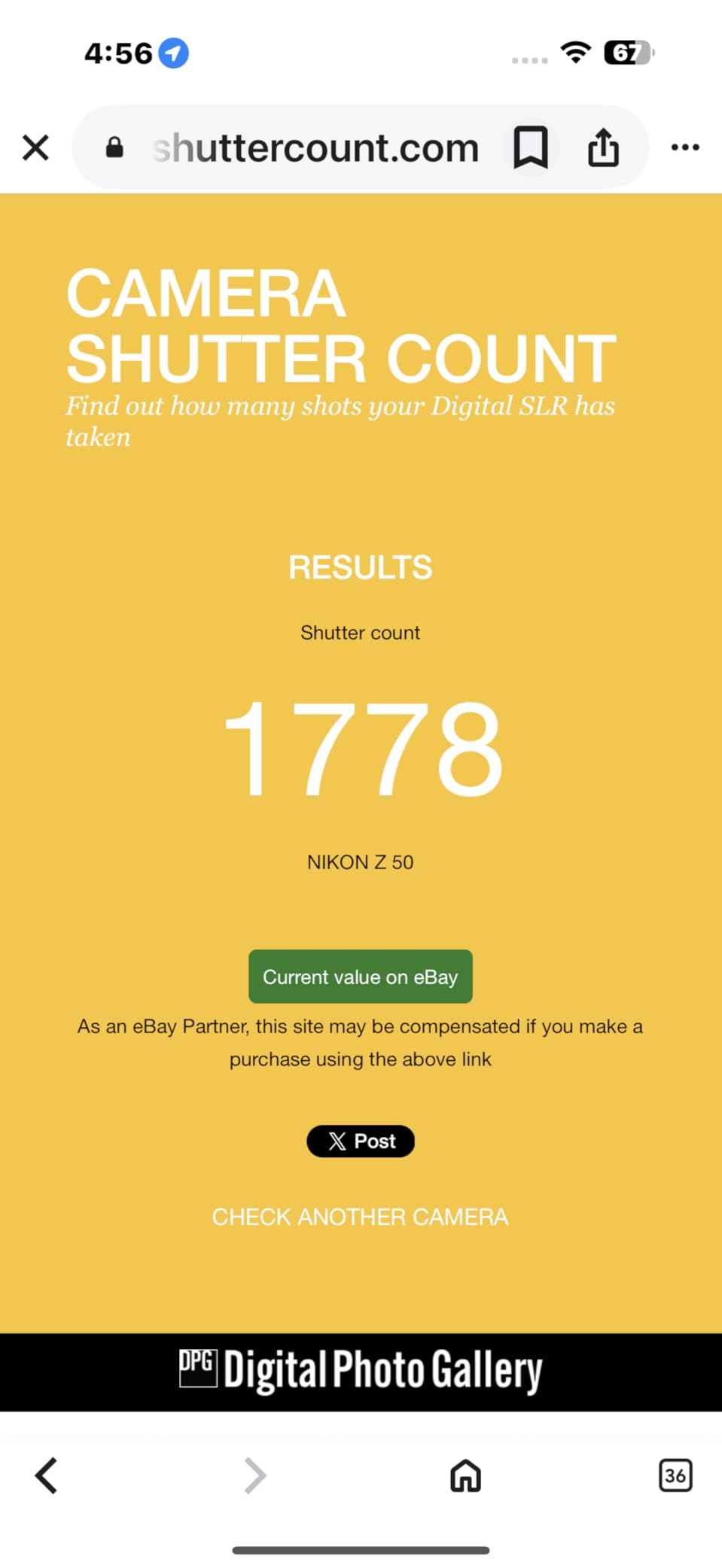
Second-hand is where birding value is best, and it is also where buyers are most anxious. The recurring question is what shutter count is acceptable. A modern mirrorless body rated in the low hundreds of thousands of actuations can still be well within a normal service life, so a five-figure count on a body that has been lightly used is not automatically a problem.
What matters more is evidence. Check the live view and the electronic viewfinder for dead or stuck pixels, test every card slot, confirm the shutter count against the physical wear on the grip and rear dial, and verify the lens mount has no play or separation. The 2026 generation of bodies is the most attractive used buy because autofocus improvements in recent models are large.
Aperture, shutter speed and the light you will actually have
Bird photography is mostly a low-light discipline. Dawn and dusk when songbirds are most active are also when light is weakest, which is why aperture matters so much. A wide aperture gathers more light and lets you keep shutter speeds high enough to freeze movement, and a bird with its head out of focus is unusable.
As a working rule, f/5.6 to f/8 is the range where most birders get the best balance of light, depth of field and shutter speed, dropping to f/4 or wider when light is scarce and the bird is moving fast. In bright midday light you can open up more; on a small sensor or a slow kit lens you will be raising ISO instead.
Silent shutter and rolling shutter on flapping wings
Electronic shutter shooting is silent, which keeps birds calm and avoids a mechanical shutter distorting fast wingbeats. The cost is rolling shutter, where fast-moving wings can appear skewed or partially frozen in a frame. The stacked sensors in the R7 and the OM-1 Mark II handle this far better than older stacked designs, but the mechanical shutter remains the safer choice when wingbeats are truly fast.
Do not shoot silently by default at a hide where the birds have learned that clicks mean danger.
Before you commit, it is worth reading how smart bird feeders with cameras work, since feeder footage is a genuinely useful way to learn bird behaviour before you commit to a long lens. If you are building a complete setup, a reflector for photography can fill light for perched portraits once you are close enough to work at close range, and our beginner photography light kit guide covers the continuous lighting options for indoor hides and early winter sessions.
Frequently Asked Questions
What is the best bird camera that doesn’t require a subscription?
Every camera in this roundup works without a subscription. Autofocus modes, bird detection, subject tracking, burst shooting and image transfer all run on the camera itself with no recurring fee and no cloud credit system. The main cost beyond the hardware is storage and a card reader, and the large sensor bodies like the Canon EOS R6 Mark II are the strongest picks if you want the most detail per frame.
Is Nikon or Canon better for bird photography?
Canon RF currently leads on frame coverage and pre-capture, with the EOS R7 offering 651 autofocus zones across nearly the whole frame plus half-second pre-shooting. Nikon leads on affordable bird detection, since the Z50 II kit includes a dedicated bird autofocus mode and a 50-250mm telephoto. If you already own lenses for either system, the cheapest upgrade is a used body that matches your glass.
What is the best camera for beginners who want to start bird photography?
Start with a kit that includes a telephoto, because the lens determines what you can reach. The Nikon Z 50 two-lens kit and the Canon EOS R100 two-lens bundle both ship with a 250mm or 300mm telephoto, so you can photograph garden and feeder birds on day one. Add a fast memory card and a simple tripod before upgrading anything else.
How much does a good birding camera cost?
A complete birding setup costs far more than the body alone. You need a body, a 400mm to 600mm telephoto, a UHS-II card, a harness for long sessions, and a monopod or gimbal head for super-telephoto work. Superczoom bridges such as the Nikon COOLPIX P950 and P1100 collapse body and lens into one purchase, which is why they remain the cheapest path to extreme reach.
Which autofocus mode is best for bird photography?
Use the dedicated bird or animal subject detection mode on every body here, combined with continuous autofocus and subject tracking. Set the subject type before you raise the camera, use a wide initial area or wide focus point so the camera can find the bird first, then narrow to tracking once it locks on. Most missed bird frames come from the camera choosing a branch or the background instead of the eye.
Why is my camera lens not auto focusing on birds?
Common causes include the autofocus mode being set to single shot rather than continuous, subject detection not being set to bird or animal, the focus point being too small for a distant subject, and shooting through branches or foliage that the camera locks onto instead. Low light and a slow aperture also make contrast detection hunt. Switch to continuous AF with bird detection, widen the focus area, and clean the front element.
What F stop is best for bird photography?
Most birders get the best results between f/5.6 and f/8, which balances light gathering against enough depth of field to keep a perched bird’s head sharp. Open up to f/4 or wider when light is scarce or the bird is moving fast, since you need shutter speed more than depth of field. On a small sensor or a slow kit lens you will be raising ISO to compensate instead.
Our Verdict on the Best Cameras for Bird Photography in 2026
The Canon EOS R6 Mark II is our best overall bird photography camera in 2026, because 40 fps electronic shooting, dependable eye detection and a full-frame sensor in a 1.3 pound body is the combination that loses the fewest birds. Buy the Canon EOS R7 if reach per pound matters more than low-light quality, and the Sony Alpha a6700 if you want recognition software that tracks without your help.
Whatever you choose, buy the telephoto lens first. Reach, autofocus and burst rate decide your results in that order, and every model above will produce good bird frames if you give it a lens that can actually reach the bird.