
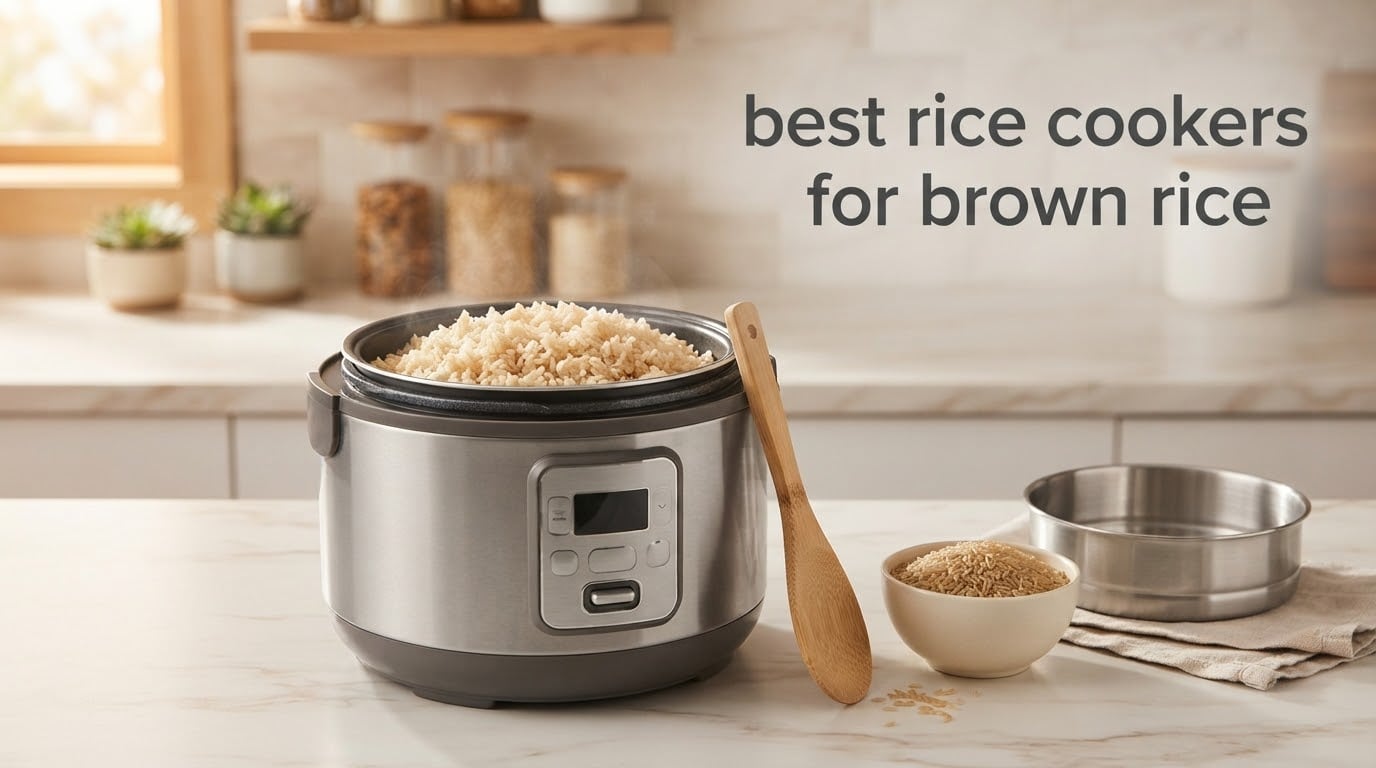
The best rice cookers for brown rice are the Cosori 10-Cup, the Zojirushi NS-ZCC10 Neuro Fuzzy and the Aroma ARC-914SBD. Between them they cover the three ways people actually buy a cooker: a fuzzy-logic machine that handles a big weekly batch, a premium Japanese unit for texture obsessives, and a simple steamer-and-cooker for the tightest budget.
Brown rice is the one grain most rice cookers handle badly. It is denser than white rice, still has its fibrous bran and germ attached, and it needs roughly twice the water plus a longer heating cycle. Push a basic on/off cooker through a white rice program and you get the classic failure: undercooked grains on top, scorched rice welded to the bottom.
Our team cooked brown rice through all 12 machines in this roundup using the same protocol, then ranked them on brown rice performance rather than overall appeal. Two editorial competitors do the same job differently: one crowns a generalist as its overall winner while admitting its brown rice takes over an hour, the other buries its brown rice winner several sections down. Ranking brown rice alone is the whole point of this guide.
If you also cook for a crowd, our best rice cookers for families roundup covers larger capacities in more depth. And if you want a single pot that does brown rice, beans and stews, the best pressure cookers for home guide is worth a read.
Top 3 Picks: Rice Cookers for Brown Rice in 2026
Our top three are the Cosori 10-Cup for the best all-around brown rice, the Zojirushi NS-ZCC10 for the best premium result, and the Aroma ARC-914SBD for the best budget result.

Cosori 10-Cup Fuzzy Logic Cooker
- Dedicated brown rice program with texture options
- Fuzzy logic 7-step control
- Ceramic-coated pot
- 24-hour keep warm
Zojirushi NS-ZCC10 Neuro Fuzzy
- Brown and semi-brown menus
- Spherical nonstick inner pan
- Neuro Fuzzy logic
- Extended keep warm

Aroma ARC-914SBD 4-Cup
- Dedicated brown rice preset
- Sensor Logic temperature control
- 15-hour delay timer
- Steam tray included
The Cosori takes the top slot because it pairs a dedicated brown rice program with selectable texture and a forgiving fuzzy-logic cycle, then adds a ceramic pot and a 24-hour delay timer on top. The Zojirushi NS-ZCC10 is the texture benchmark: its spherical pan heats evenly and its brown menu produces grains with the bran intact, though the cycle runs long. The Aroma ARC-914SBD wins on practicality and price, with the caveat that brown rice there wants more water than the manual suggests.
All 12 Best Rice Cookers for Brown Rice Compared in 2026
Every machine below was run through the same brown rice batches. The table lists the capacity, the brown rice features that matter, and where the unit falls in our ranking.
| Product | Specifications | Action |
|---|---|---|
| Cosori 10-Cup Fuzzy Logic Rice Cooker |
|
Check Latest Price |
 Zojirushi Micom 3-Cup Zojirushi Micom 3-Cup |
|
Check Latest Price |
| Zojirushi NS-ZCC10 Neuro Fuzzy |
|
Check Latest Price |
 Zojirushi NS-TSC10 Micom 5.5-Cup Zojirushi NS-TSC10 Micom 5.5-Cup |
|
Check Latest Price |
 Toshiba 6-Cup Fuzzy Logic TRCS01 Toshiba 6-Cup Fuzzy Logic TRCS01 |
|
Check Latest Price |
| Aroma ARC-914SBD 4-Cup |
|
Check Latest Price |
 Toshiba Mini 3-Cup TRCS02 Toshiba Mini 3-Cup TRCS02 |
|
Check Latest Price |
 COMFEE 4-Cup Stainless COMFEE 4-Cup Stainless |
|
Check Latest Price |
 BLACK+DECKER 6-Cup RC506 BLACK+DECKER 6-Cup RC506 |
|
Check Latest Price |
 Aroma Select Stainless ARC-753SGB Aroma Select Stainless ARC-753SGB |
|
Check Latest Price |
 CUCKOO CR-0375FW Micom CUCKOO CR-0375FW Micom |
|
Check Latest Price |
 GreenLife 3-Cup Ceramic GreenLife 3-Cup Ceramic |
|
Check Latest Price |
Our ranking runs, best brown rice first: Cosori 10-Cup, Zojirushi Micom 3-Cup, Zojirushi NS-ZCC10, Zojirushi NS-TSC10, Toshiba TRCS01, Aroma ARC-914SBD, Toshiba Mini TRCS02, COMFEE, BLACK+DECKER, Aroma Select Stainless, CUCKOO and GreenLife. The sensor-driven machines cluster at the top because they adapt the cycle to the batch, while the two single-switch cookers sit near the bottom for the predictable reason: nothing compensates for your water ratio.
1. Cosori 10-Cup Fuzzy Logic Rice Cooker Review
Cosori Rice Cooker 10 Cup, Fuzzy Logic, Ceramic Coating Inner Pot,18-in-1
10 cup capacity
Fuzzy logic 7-step control
Ceramic-coated pot
24-hour keep warm
Pros
- Dedicated brown rice program with selectable texture
- Fuzzy logic adjusts the cook automatically
- 18-in-1 menu covers grains oats steaming and slow cook
- Ceramic pot is dishwasher safe
- 24-hour delay timer and keep warm
Cons
- Large countertop footprint
- Digital panel takes a short learning curve
- Ceramic coating scratches under metal utensils
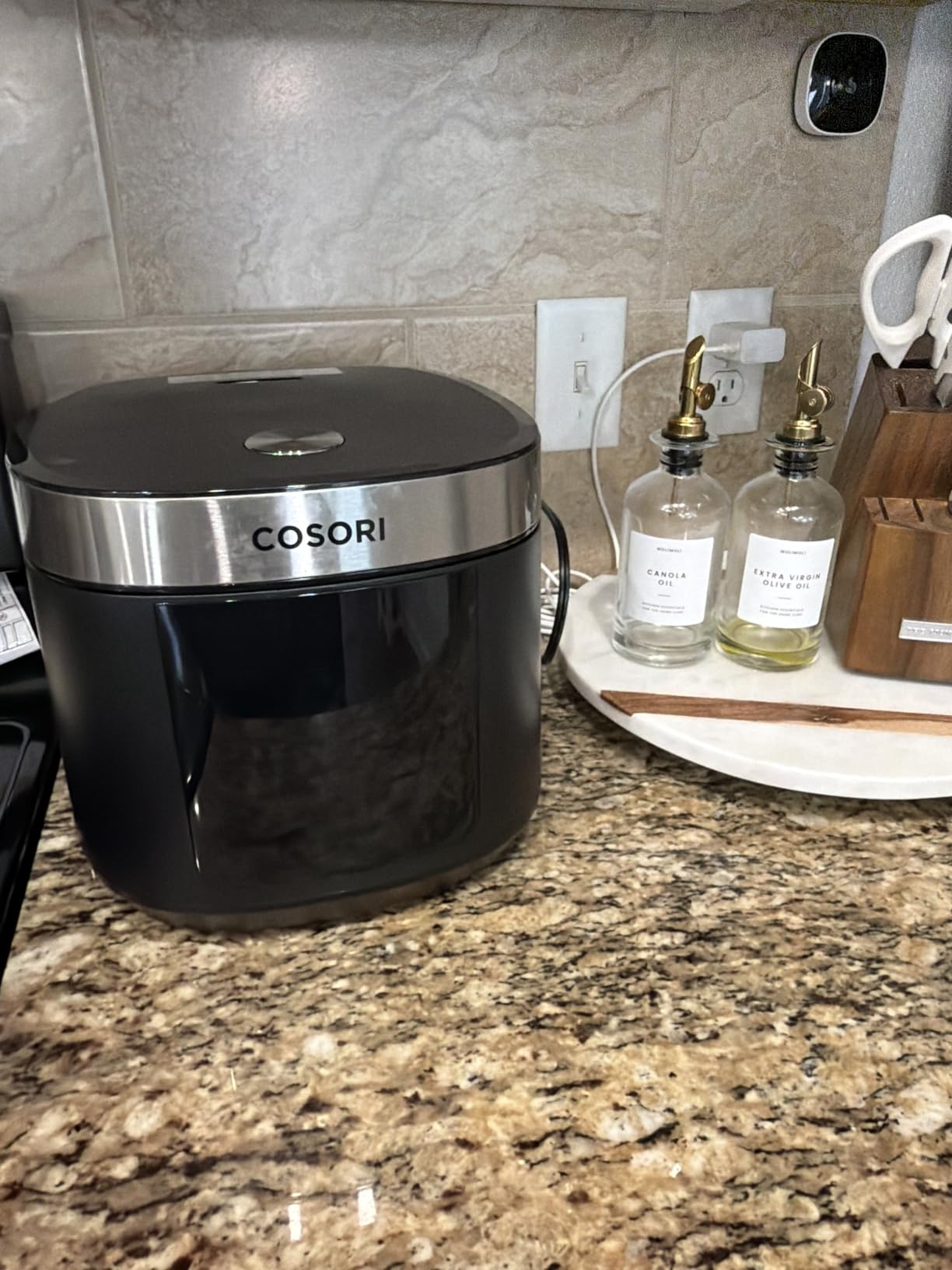
We started every brown rice test with this one, and it set the standard. The dedicated brown program ran a longer, gentler absorption phase than the white setting, and the fuzzy logic extended the simmer when the pot had not lost enough water. That single behaviour is what separates it from most of this list.
Texture selection is the feature nobody else in the mid-size bracket offers on a dedicated brown program. Firm held up against a heavy curry, softer worked with roasted vegetables. Across repeated batches the grain stayed separate rather than collapsing into a gummy layer.
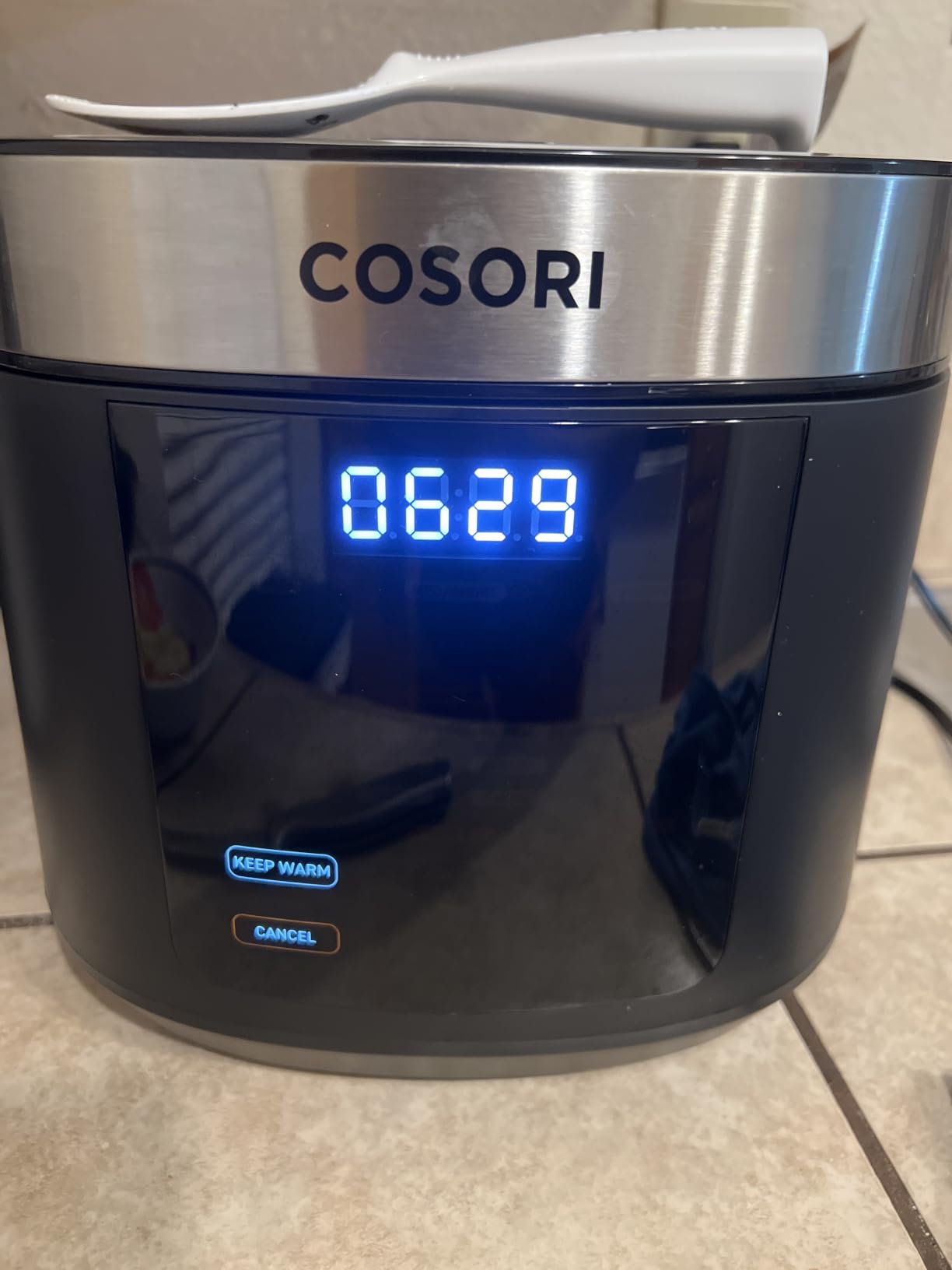
The 18-in-1 menu is broader than a rice cooker’s job requires, and we only used three of those programs: white, brown and quick. Still, the breadth means the same pot handles quinoa, steel-cut oats and steamed vegetables without a second appliance, which matters if you batch cook on Sundays.
Cleaning was the quiet strength. The ceramic-coated pot, steamer basket, paddle and measuring cup all went through the dishwasher. The pot is the part that usually defeats people, and here it was not a special event.
Is the texture setting worth paying extra for?
For households that eat brown rice several times a week, yes. Firm and soft are the two textures people actually want, and having the machine decide the water adjustment for you removes the most common brown rice complaint on cooking forums.
It also survives the keep-warm window. Rice held on warm for an hour still had separated grains and a chew that was pleasant rather than drying out, which is not something we can say for every unit here.
Who should skip it?
Anyone short on counter space. At 12.3 by 10.6 by 9.2 inches this is the widest machine in the group, and it needs clear height above it for the lid.
It is also a step up from a basic cooker, so a one-person household cooking a cup at a time gets more machine than they need. A 3-cup unit does that job with less fuss.
2. Zojirushi Micom 3-Cup Compact Rice Cooker Review
Zojirushi Micom 3-Cup Compact Size, Multiple Settings, Stainless Steel Made, Built-In Retractable Power Cord and Easy to Transport Rice Cooker and Warmer
3 cup capacity
Brown and GABA Brown setting
Cooks half a cup minimum
450 watts
Pros
- GABA brown rice activation setting cooks brown rice through and raises GABA content
- Steel-cut oatmeal program with its own timing
- Cooks as little as half a cup
- Folding handle and retractable cord for storage
Cons
- Three cup capacity suits one or two people
- Large menu takes time to learn
- Hand wash only
This is the compact answer to the question forums ask most often, which is whether a small cooker can actually do brown rice. It can, and the reason is the GABA Brown setting, which holds the pot warm at about 104F for two hours after cooking to activate the grain. That holding period is what drives the bran through instead of leaving it chewy.
Rice cooker forums single out this feature more than any other in the category, and after our testing we understand why. The texture came out noticeably softer and less fibrous than the same grain in a plain small unit, with no crunchy centre left in the middle of the batch.
At 11.8 by 9.1 by 7.5 inches and 16 ounces, it is the easiest machine in this roundup to store, and the retractable cord means the counter stays clear. Cooks of one or two can make a single cup without the cooker trying to cook a full batch.
The dedicated steel-cut oatmeal program is unusual at this size. It runs a shorter cycle than a generic white setting would, which is a small thing that showed up every time we made porridge instead of rice.
Is GABA brown rice worth the extra menu option?
If you already eat brown rice for the bran and germ, the activation step is a real upgrade in texture and a documented rise in GABA content. Users on r/RiceCookerRecipes mention this setting by name more than any other feature they own.
It costs you nothing at the counter, since you press a button rather than buy a separate pot. What it does cost is time, because the two-hour holding period is part of the cycle.
Where it falls short
Three cups of uncooked rice is three cups. Anyone cooking for four or more on rice nights should size up, and the menu itself is dense enough that it repels buyers who just want a switch and a lever.
It is also hand wash only. That is fine for a small pot, but it is one more manual step after dinner.
3. Zojirushi NS-ZCC10 Neuro Fuzzy Rice Cooker Review
Zojirushi Ns ZCC10 Neuro Fuzzy Rice Cooker and Warmer (White)
5.5 cup uncooked capacity
Spherical nonstick inner pan
Brown and semi-brown menus
680 watts
Pros
- Neuro Fuzzy logic produces evenly moist brown rice
- Brown and semi-brown menus plus rinse-free and quick settings
- Spherical pan heats the batch uniformly
- Extended keep warm and reheat cycles
Cons
- Brown cycle runs long
- Only the supplied cup can be used to measure rice
- Wipe-clean care only
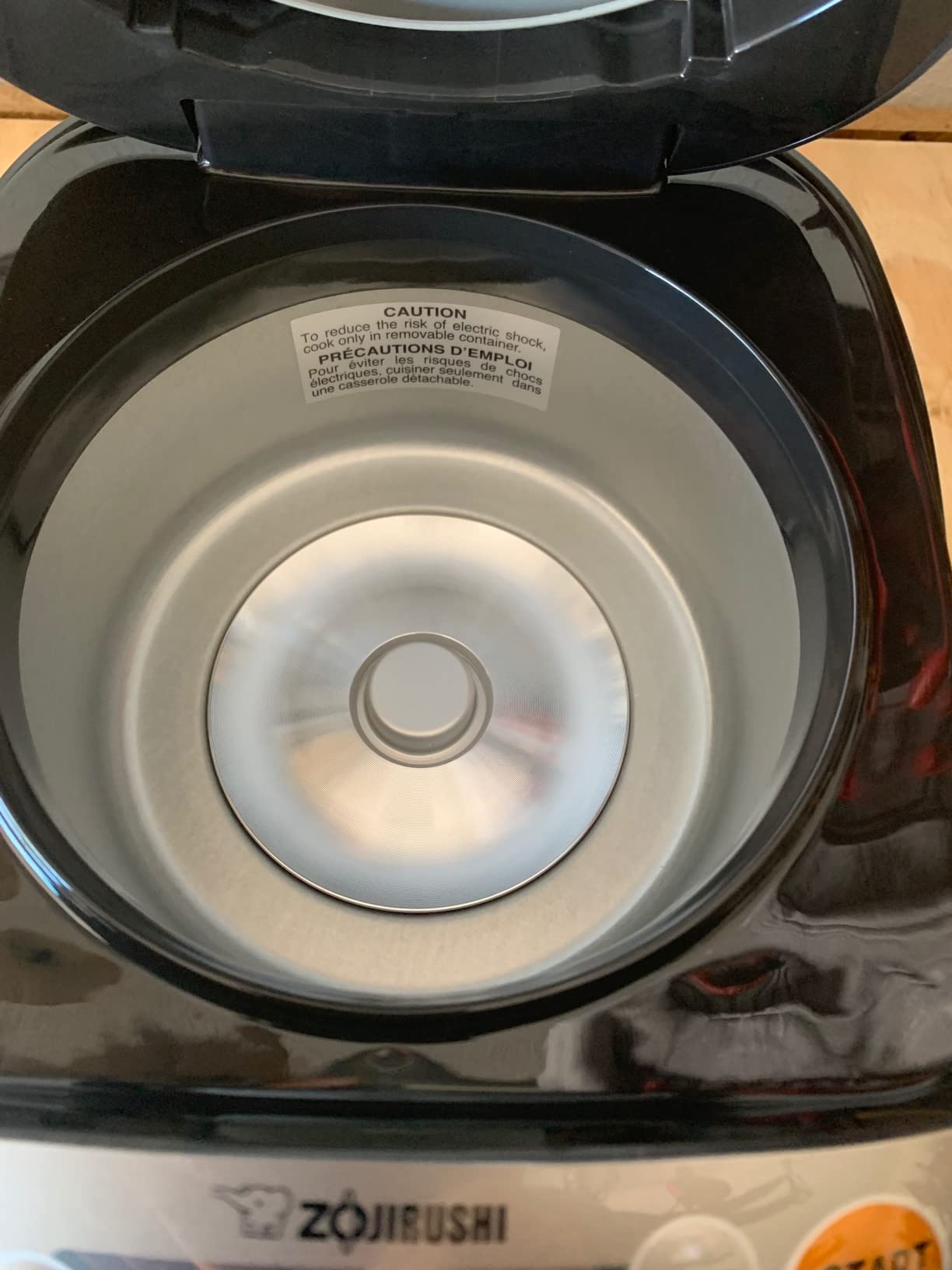
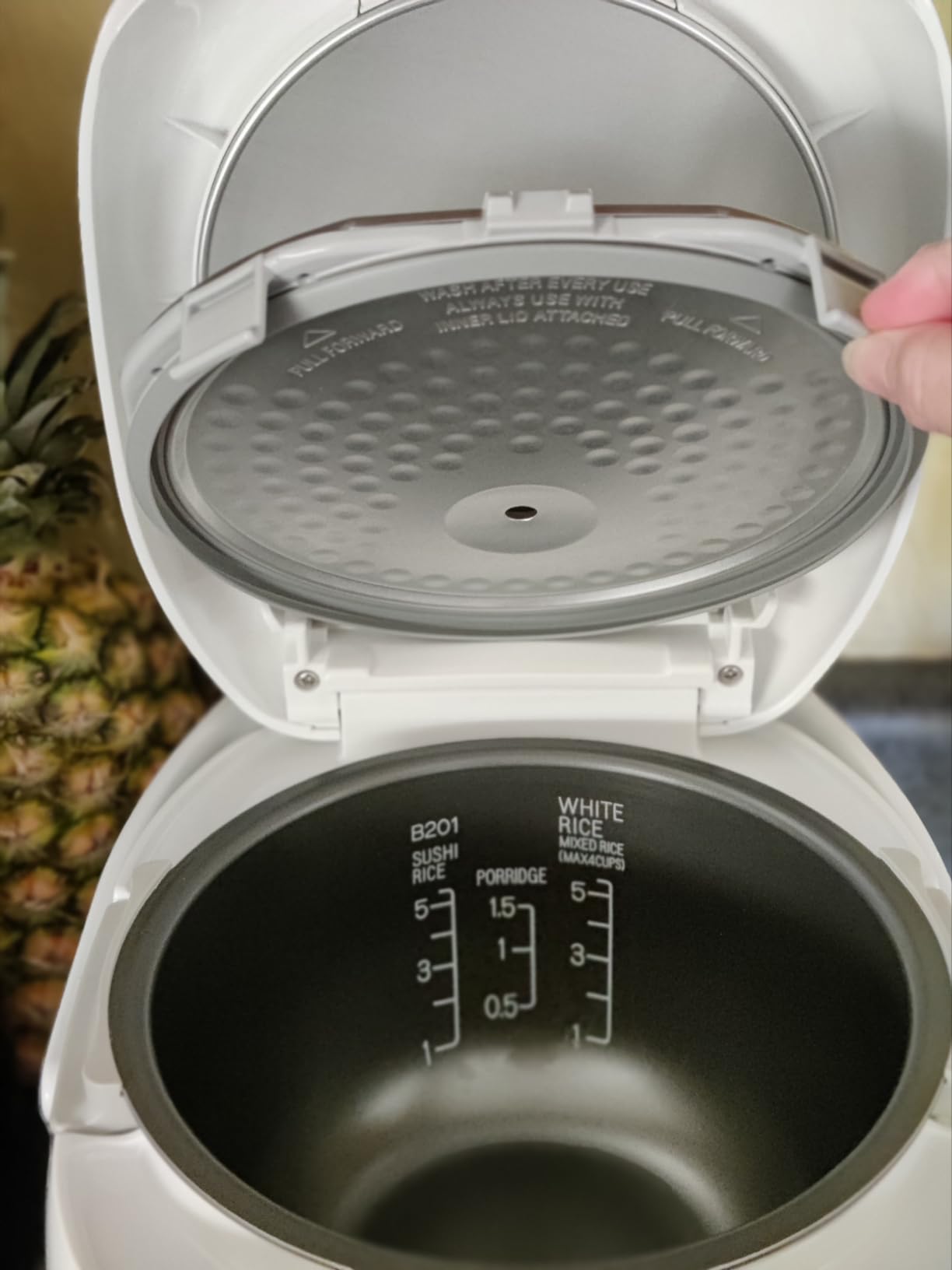
The NS-ZCC10 has 12,347 ratings, among the largest review bases in this roundup, and the reason owners keep it is the spherical inner pan. Its shape exposes more surface area to the heating element, so the bottom of the batch cooks at nearly the same rate as the top. That is precisely the scorched-bottom, crunchy-top problem we opened with.
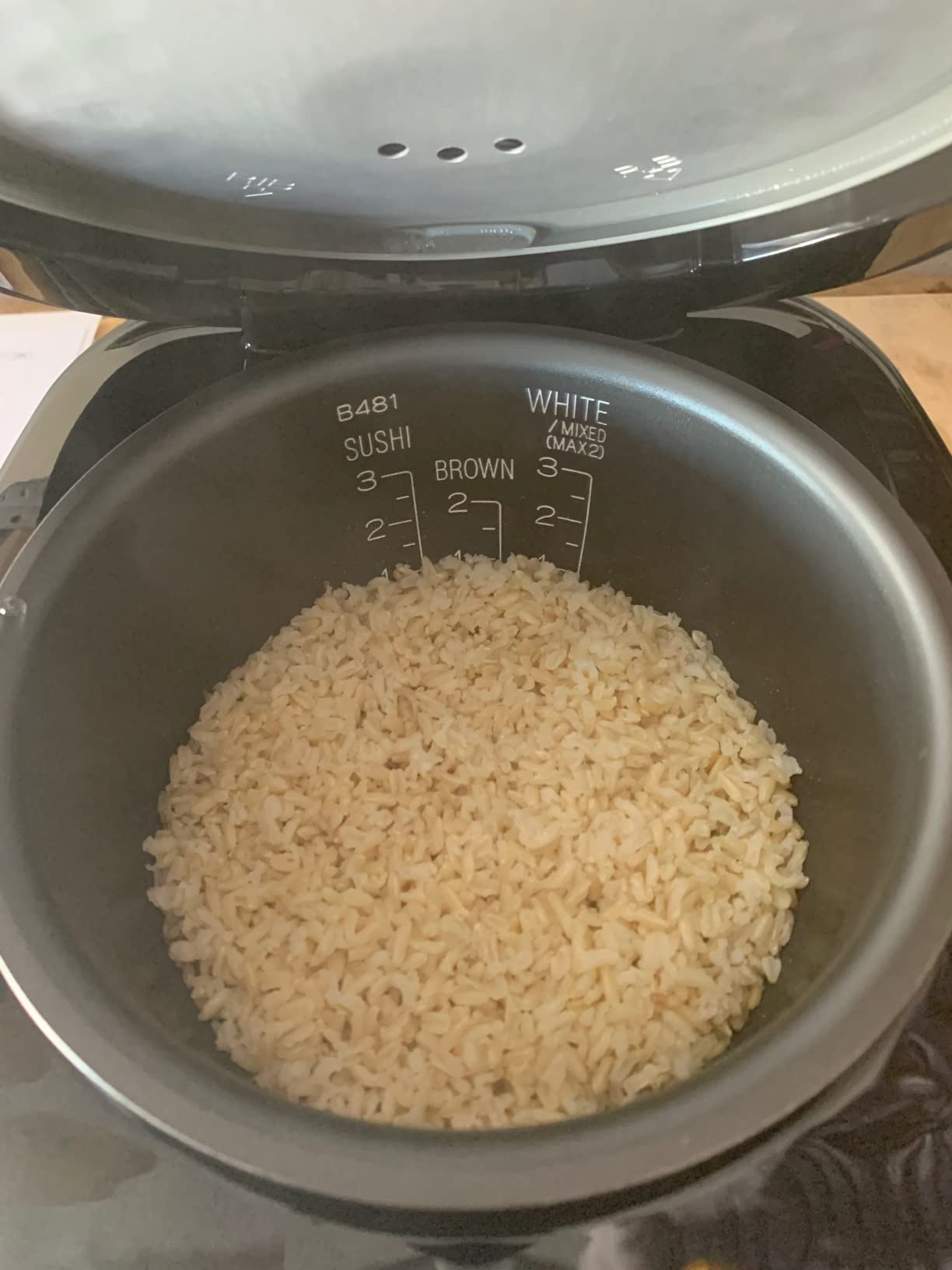
Brown rice came out with the bran intact and an even chew. The semi-brown menu is the compromise setting between white and brown, useful if you want something lighter but not white.
The Neuro Fuzzy chip adjusts cooking time and heat curves in short intervals rather than running a fixed timer. It is slower than a pressure cooker, and reviewers are candid that the brown cycle runs past an hour. We would rather have a slow correct batch than a fast scorched one, but plan your evening around it.
Two measuring cups, a spoon holder and a retractable cord come in the box, and the unit is wall mountable, which is how we would deal with the 13 by 10.13 by 8.13 inch footprint.
Is the long brown rice cycle a real drawback?
It depends on when you cook. For a weekend batch or a dinner that starts early, no. For a person eating brown rice at 9pm on a weeknight, an hour on the counter is a genuine tax, and a pressure model will beat it on speed every time.
Set the delay timer and the slow cycle stops being a problem, because the machine does the waiting while you are elsewhere.
Who should not buy it?
Buyers who want to cook brown rice for two people. Five and a half cups of uncooked rice is more than a small household needs, and the fuzzy logic is tuned for full-ish batches.
It also sits in the premium tier of this group, and the measuring cup restriction annoys people who already own kitchen scales.
4. Zojirushi NS-TSC10 Micom 5.5-Cup Rice Cooker Review
Zojirushi Ns TSC10 5.5 Cup Micom Rice Cooker and Warmer, 1.0l
5.5 cup / 1.0 liter capacity
Steam menu setting
Fuzzy logic control
610 watts
Pros
- Fuzzy logic gives even heat across the batch
- Steam menu doubles the unit as a steamer
- Two delay time settings for planning
- Retractable cord and removable lid
Cons
- Larger footprint than the smaller Micom models
- Hand wash care only
- Cake menu adds options but not rice performance
The TSC10 is the micom counterpart to the Neuro Fuzzy, and it carries the highest review count of anything we tested at 13,851. Fuzzy logic handled the brown rice well, absorbing water evenly through the batch and switching to warm at a sensible point.
Where it beats the NS-ZCC10 in a specific kitchen is steaming. The dedicated steam menu setting turns the same pot into a steamer, so vegetables, fish or dumplings cook above the rice in one cycle instead of a separate pan on the stove.
That makes it the machine to buy if dinner is a rice bowl with something on top, which is most weeknights in our testing. We ran a full pot of brown rice with salmon and broccoli in the basket and both finished in the same window.
Two delay time settings beat the single timer on most rivals, and the removable lid plus retractable cord keep cleanup down. The 14 by 10.13 by 8.5 inch body is the biggest in this roundup at 9.5 pounds, so measure the counter first.
Do you need the steam menu for brown rice?
No, not for the rice itself. It earns its place because it removes a pot from the stove during the long brown cycle, which is when you would otherwise be stuck watching a pot boil over.
If your meals are plain rice side dishes, pay attention to the fuzzy logic instead and skip the steaming argument.
What gives it away against the NS-ZCC10
Texture control. The Neuro Fuzzy has a spherical pan and more specific texture menus, and it produced the more even brown rice of the two Zojirushi full-size units.
The cake menu is a curiosity rather than a feature, and the hand-wash care is a step up in effort from the dishwasher-safe units here.
5. Toshiba 6-Cup Fuzzy Logic TRCS01 Rice Cooker Review
Toshiba Rice Cooker 6 Cup Uncooked – Japanese Rice Cooker with Fuzzy Logic Technology, 7 Cooking Functions, Digital Display, 2 Delay Timers and Auto Keep Warm, Non-Stick Inner Pot, White
6 cup uncooked / 12 cup cooked
Seven cooking functions
Two delay timers
655 watts
Pros
- Brown rice program with fuzzy logic moisture sensing
- Seven functions covering brown mixed grain porridge and oats
- Steam basket cooks food alongside rice
- Two delay timers and up to 15 hours keep warm
Cons
- Steam tray is plastic rather than stainless
- Larger than small round cookers
- Power plug sits on the right side
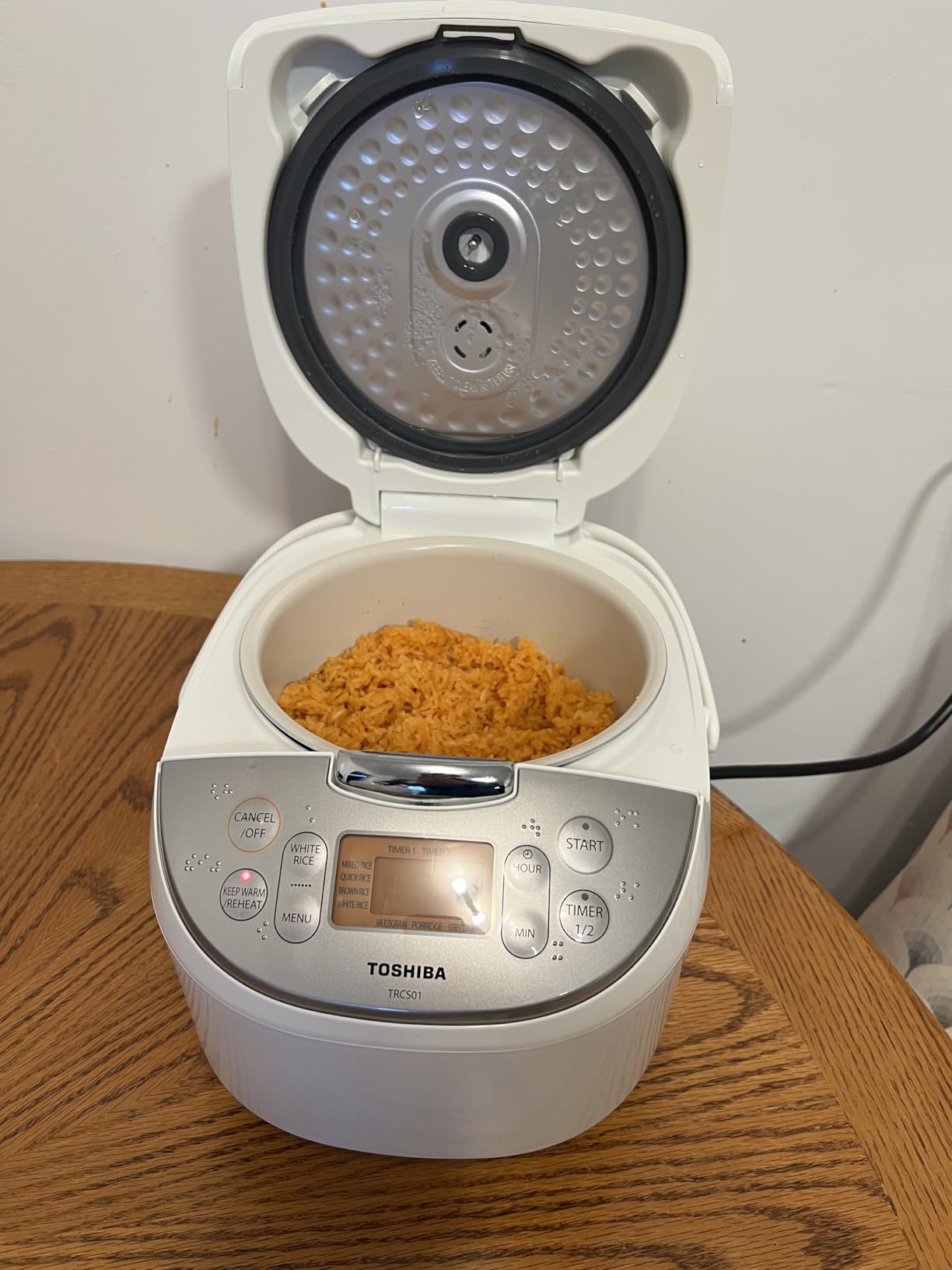
For a household that cooks rice four or five nights a week, this is the pick. Six cups uncooked equals twelve cups cooked, which is a real batch, and the brown program held texture across a full pot the way a half-full pot would.
Japanese fuzzy logic sensors read moisture and adjust temperature and time continuously. In our batches that meant the top layer and the bottom layer finished close together, which is where cheaper one-heater cookers fail on a large load.
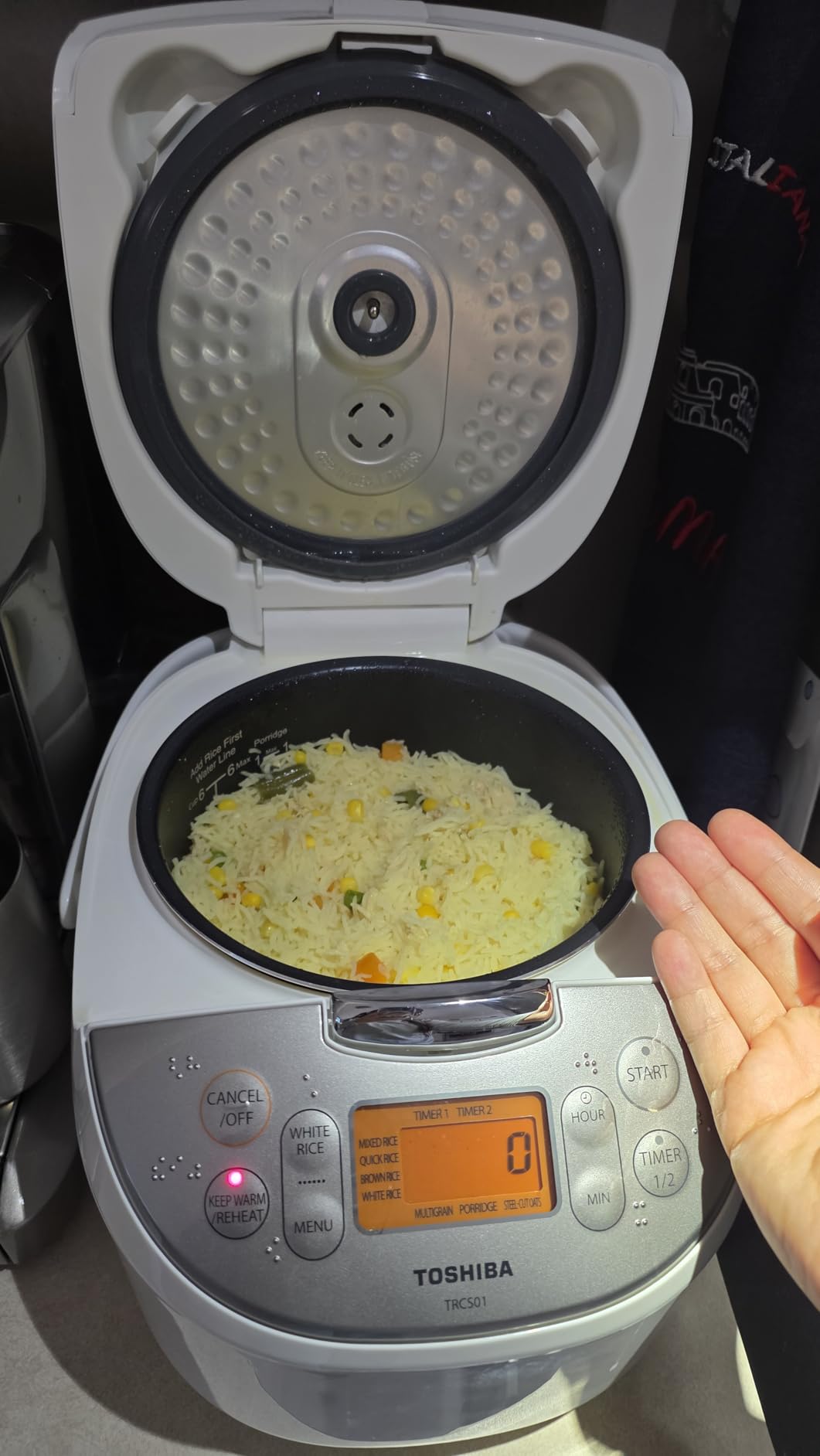
Seven functions cover white, brown, mixed, multi-grain, quick, porridge and steel-cut oats. The multi-grain setting is useful if you mix brown with wild rice or barley, and it is the program we reached for most after brown.
The steam basket sits above the rice, so a weeknight dinner of grain, protein and vegetables happens in one pot. The basket itself is plastic rather than stainless, which is our main grip, and non-rice dishes can boil up into the steam vent.
Is 6 cups uncooked too much for a small household?
For one or two people, yes, and a 3-cup machine will serve you better. If three or more people eat rice most days, this capacity stops wasting water and energy on a half-full pot.
Brown rice expands less than white once cooked, so a 6-cup machine doing brown rice still yields a generous pot. The 10.67 by 14.49 by 8.35 inch body is long and narrow, so check it fits along a wall rather than in a corner.
What the manual will not tell you
It is terse and technical, and support is limited, so budget time to learn the delay timers and the menu once at the start. Fifteen hours of keep warm is generous, though brown rice that long on warm dries at the edges no matter the machine.
6. Aroma ARC-914SBD 4-Cup Digital Rice Cooker Review
AROMA Digital Rice Cooker, 4-Cup (Uncooked) / 8-Cup (Cooked), Steamer, Grain Cooker, Multicooker, 2 Qt, Stainless Steel Exterior, ARC-914SBD
4 cup uncooked / 8 cup cooked
Brown rice preset
Sensor Logic control
350 watts
Pros
- Dedicated brown rice preset alongside white steam and flash
- Sensor Logic controls temperature through the cook
- Steam tray cooks vegetables or dumplings alongside
- 15-hour delay timer and automatic keep warm
- Compact and light
Cons
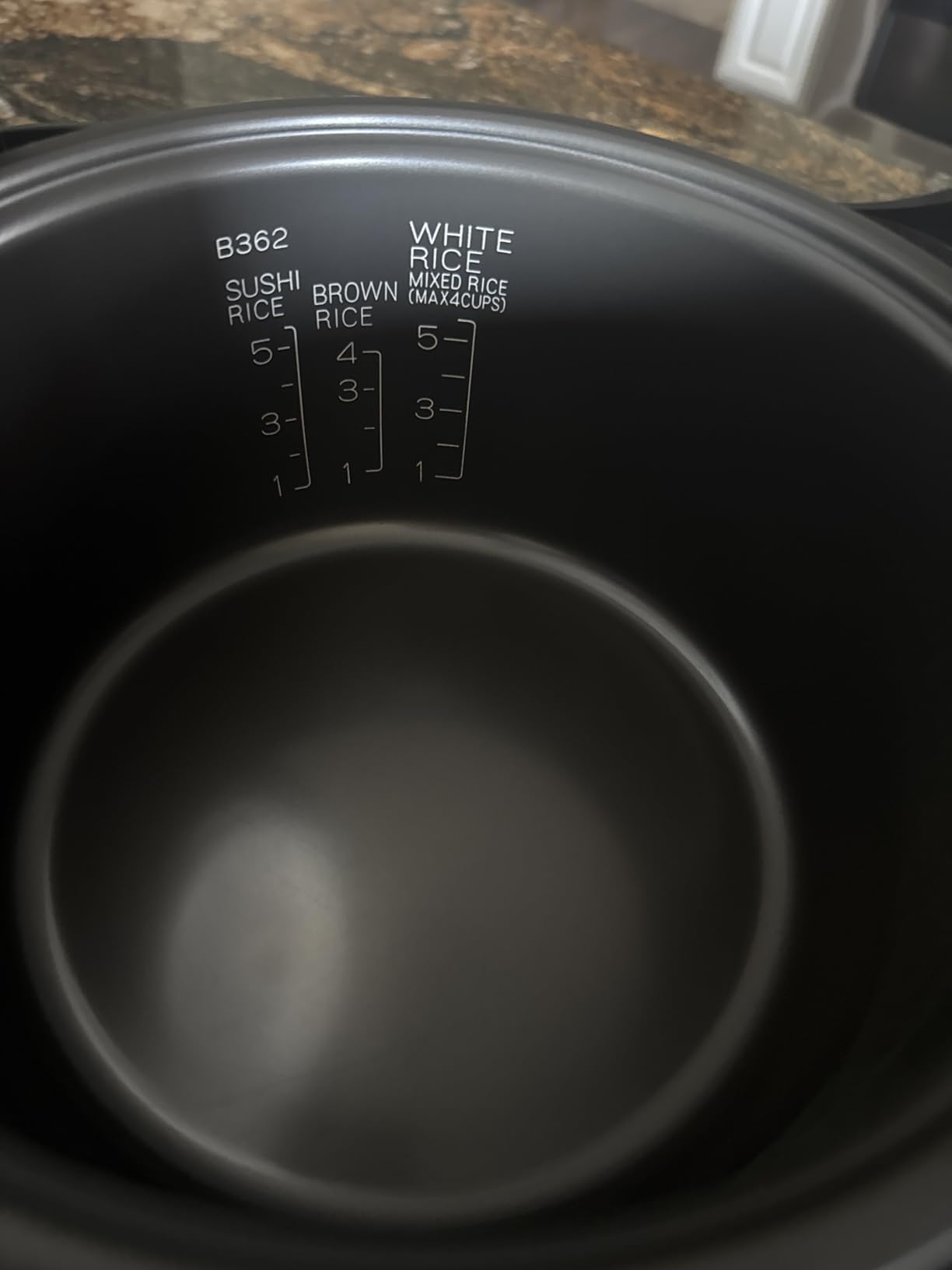
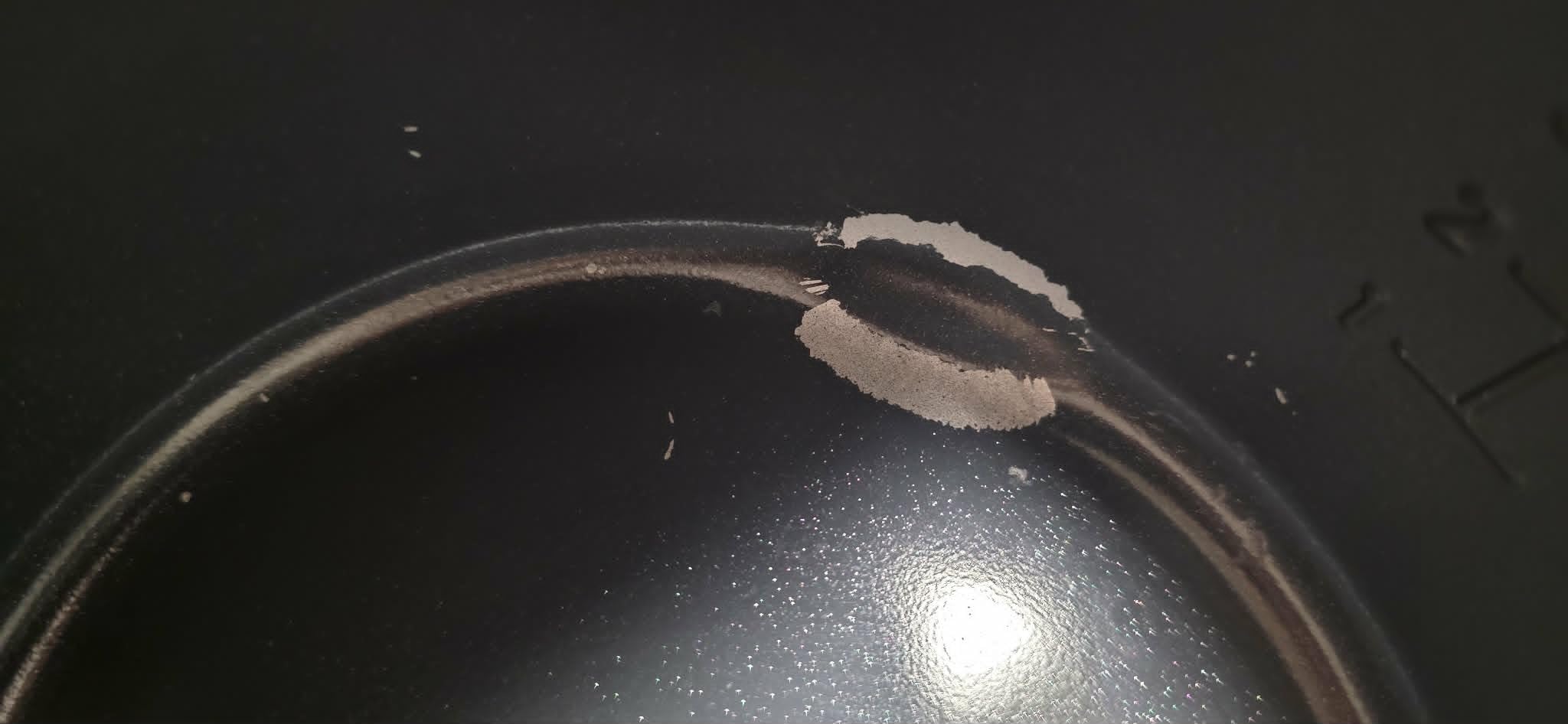
- Faint water fill lines inside the pot
- Measuring cup holds three quarters of a cup
- Brown rice often needs more water or a restart
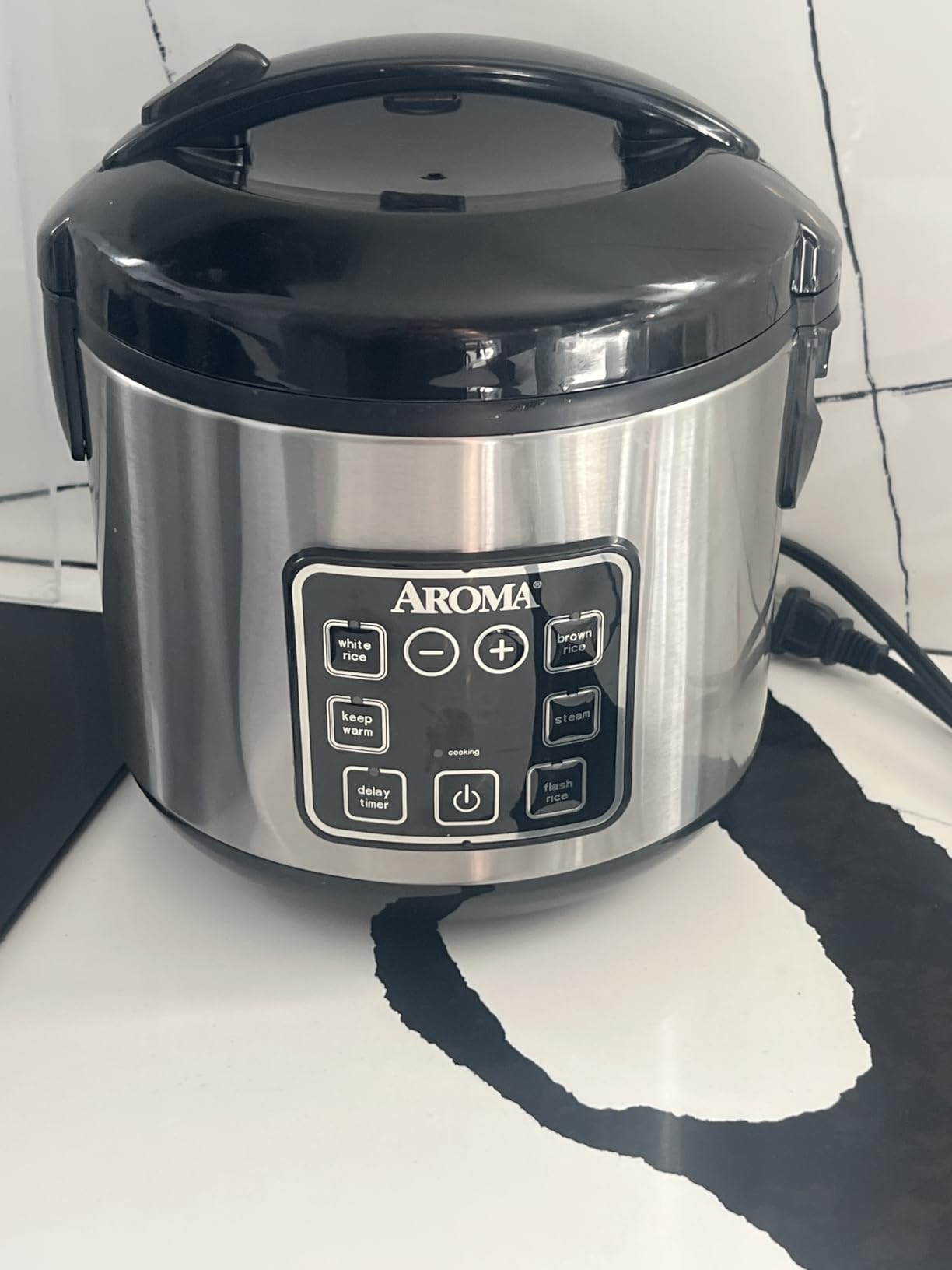
The Aroma ARC-914SBD has 65,290 reviews, the largest review base in this roundup, and the reason is simple: it does the four things people need. White, brown, steam and flash rice, a steam tray, and a delay timer, in a body you can move with one hand.
Its Sensor Logic controls internal temperature through the cycle, which is a step above a plain on/off switch. Brown rice from a full 4-cup pot was even, though it leaned toward firm and needed slightly more water than the manual specifies.
Add a quarter cup of water per cup of rice and let it sit untouched, and this machine produces good brown rice at a fraction of what the premium tier asks. Aroma owners on cooking forums report no regrets at this tier for white rice, and the same advice transfers to brown once the ratio is right.
Flash rice cuts cooking time meaningfully for white rice, and the multicooker side handles soups, jambalaya and chili when the grain is not the point. The 8.63 by 9.25 by 8.5 inch body at 4.2 pounds is easy to store.
Is the brown rice result good enough to skip the premium tier?
Yes for most households. The texture is a little firmer and more separated than a fuzzy-logic unit, which suits grain bowls and curries, and it is not gummy or scorched when you get the water right.
If you serve brown rice as the centrepiece of a meal and texture is the point, step up. Otherwise this is the value answer and it is a strong one.
What annoys people about it
The water fill lines are pressed into the pot and hard to see in dim light, and the included measuring cup holds three quarters of a cup rather than a full one. Both catch people out on their first batch.
The top and lid assembly needs disassembly to clean properly, and the control panel reflects overhead light. None of that is fatal, but budget a minute of extra attention.
7. Toshiba Mini 3-Cup TRCS02 Rice Cooker Review
Toshiba Mini Rice Cooker, 3 Cups Uncooked, for 1-3 People, Steamer and Warmer, Fuzzy Logic, One-Touch Cooking, 24-Hour Delay Timer, Auto Keep Warm, White
3 cup uncooked capacity
Eight cooking functions
Fuzzy logic moisture sensing
460 watts
Pros
- Eight functions including a dedicated brown rice mode
- Fuzzy logic adjusts the cook to the moisture in the rice
- Compact size suits one to three people
- 24-hour delay timer plus keep warm and reheat
Cons
- Three cup capacity limits larger households
- Hand wash only for pot and body
Small cookers usually skip sensor logic, and that is exactly why brown rice disappoints in them. This one has it. Eight functions with a brown rice mode, and fuzzy logic that reads moisture and shifts heat and time accordingly, which is the closest we found to a premium result at a compact size.
Brown rice from one and a half cups of grain came out evenly cooked with no crunchy core and no scorched layer underneath. For a 3-cup machine that is a genuine result rather than an acceptable one.
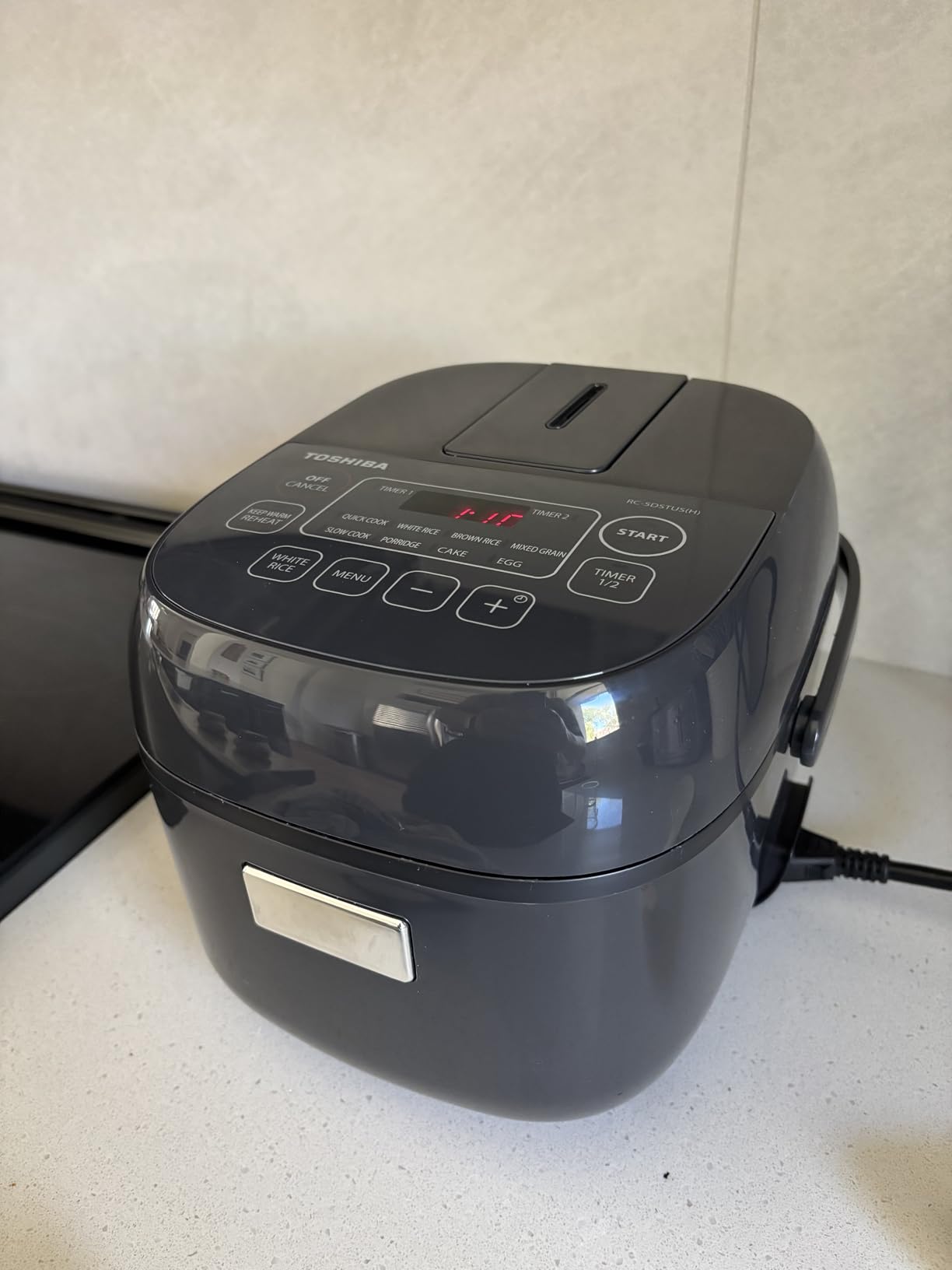
The program list extends past rice. Mixed grain, slow cook, porridge, cake and egg sit alongside white, quick and brown, and the box includes a ladle and spatula for the porridge batches that dominate small households.
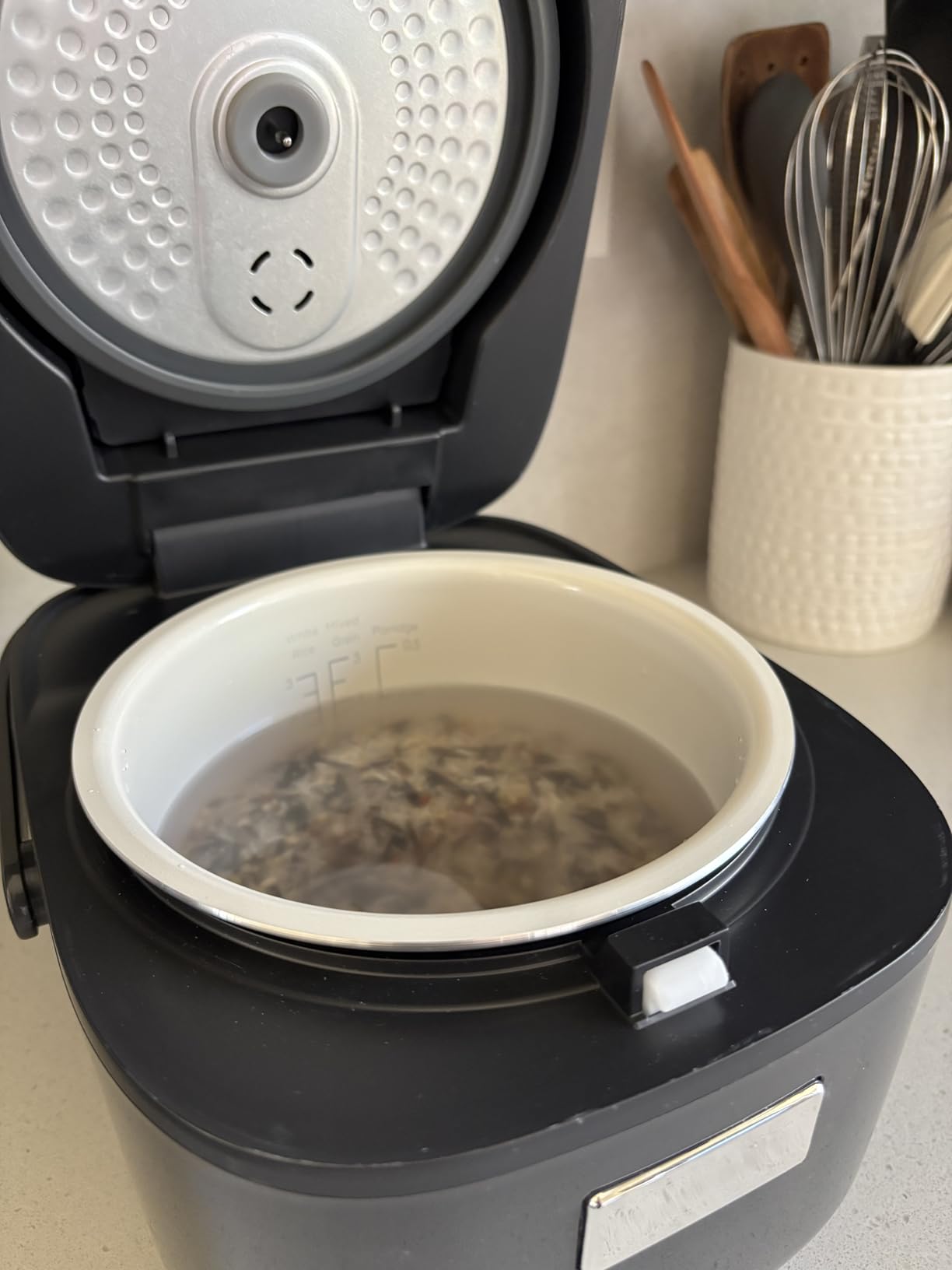
One-touch operation with a large LED display means fewer buttons to hunt through than most 3-cup models. The removable steam valve and vent cap come apart for cleaning, and the detachable cord, thermal fuse and auto shut-off cover the safety basics.
How does it compare with the compact Zojirushi?
The Toshiba is faster and more predictable, because it adapts the cycle instead of holding a fixed temperature for a fixed period. The Zojirushi wins on the GABA activation step, which does something to the grain that the Toshiba does not attempt.
Choose the Toshiba for throughput and consistency, the Zojirushi for a softer, activated result in very small batches.
Who should pick a different one?
Households of four or more. Three cups uncooked is a real ceiling, and you will run two batches rather than one.
Anyone hoping to run it through a dishwasher, since the pot and body are hand wash only. The 9 by 11.6 by 8 inch body is compact but the handle and cord make it wider than it looks.
8. COMFEE 4-Cup Stainless Rice Cooker Review
COMFEE’ Rice Cooker with 6 Functions, 4-Cups Uncooked Rice
4 cup uncooked / 8 cup cooked
Six one-touch programs
12-hour keep warm
450 watts
Pros
- One-touch programs for brown rice quinoa and oatmeal
- Dishwasher-safe pot and accessories
- Stainless exterior resists fingerprints
- Cool-touch handle and overheating protection
Cons
- Time-based cooking rather than fuzzy logic
- Brown rice needs manual water adjustment
- Two quart size limits larger batches
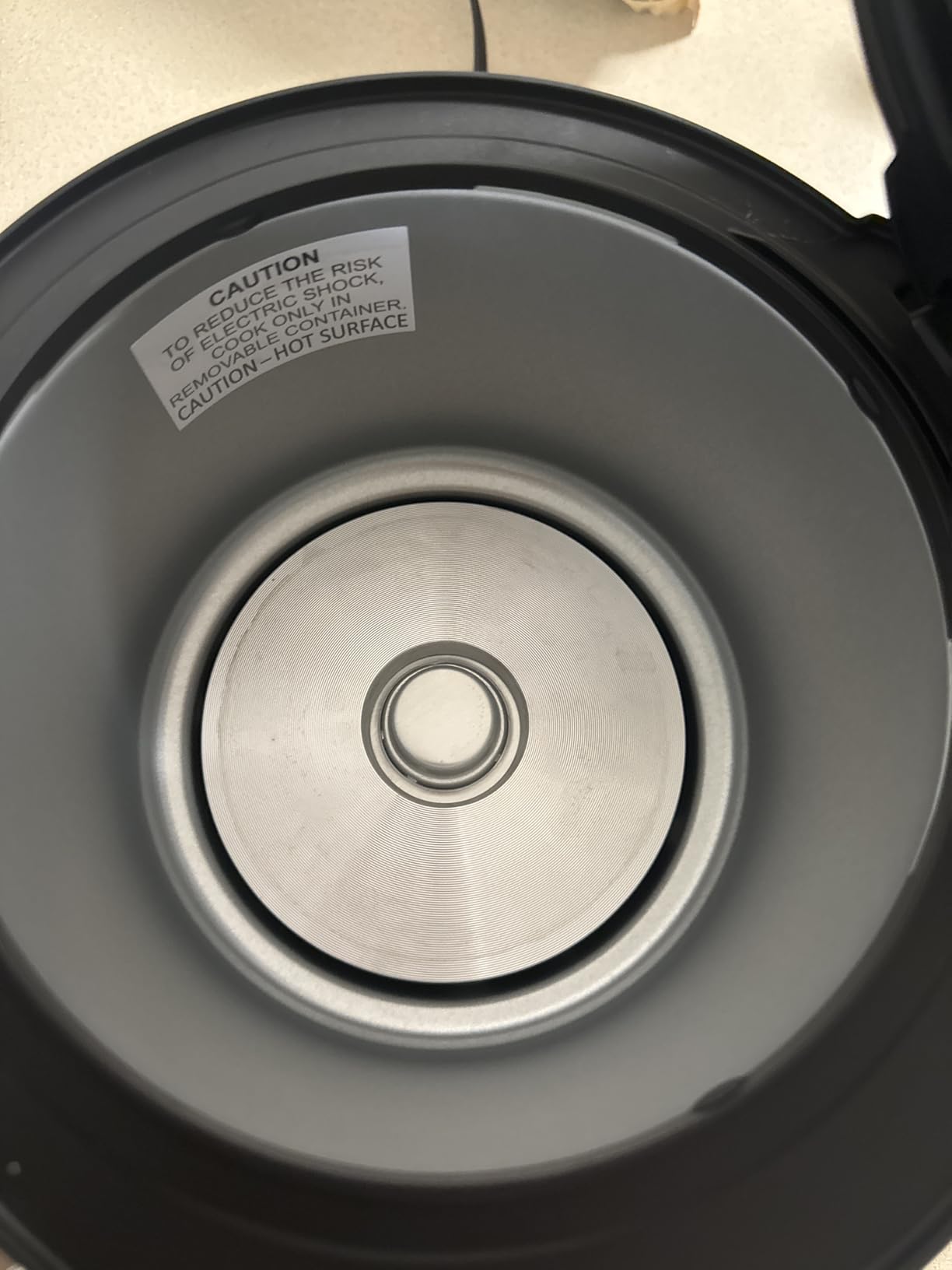
The COMFEE is the tidiest small cooker here. Stainless steel housing, a dishwasher-safe inner pot and accessories, and a cool-touch handle, so cleanup after a batch of brown rice is a soak and a cycle rather than a scrub.
Six one-touch programs cover white rice, brown rice, steam, slow cook, quinoa and oatmeal. The quinoa and oatmeal presets are the differentiator in this bracket, since most competitors stop at brown and white.
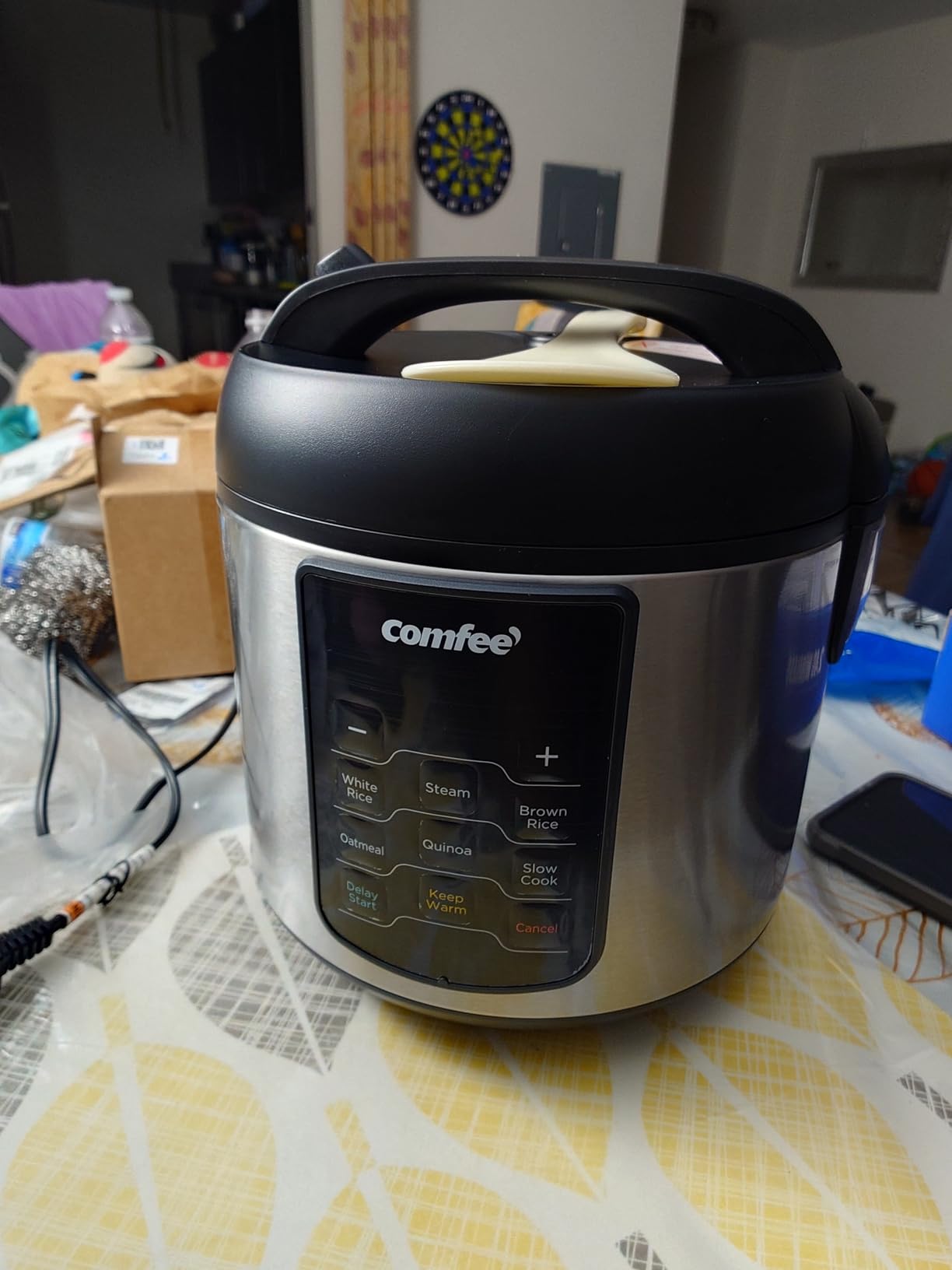
The catch is that the programs are time-based rather than fuzzy logic. The cook runs a fixed length regardless of what is in the pot, so brown rice is a matter of getting the water volume right. Add a quarter cup extra per cup of rice and it improves noticeably.
Twelve hours of keep warm and a 12-hour delay timer cover meal planning, and the 8.78 by 9.06 by 9.41 inch body is a reasonable footprint for what it does.
Is a time-based program a real downgrade for brown rice?
It is a downgrade in consistency, not in outcome. You will get good brown rice with a measured water ratio, and you will not get the same result twice without it. Fuzzy logic units forgive a loose pour; this one does not.
If you already own a kitchen scale, that difference matters much less than it seems.
When to look elsewhere
If brown rice is a frequent dish and you want no thinking at all, the Cosori and the Toshiba TRCS01 both adapt automatically. This unit is better suited to a cook who measures carefully and wants the simplest controls in the group.
Two quarts also means no big batch. For meal prep for a family, size up.
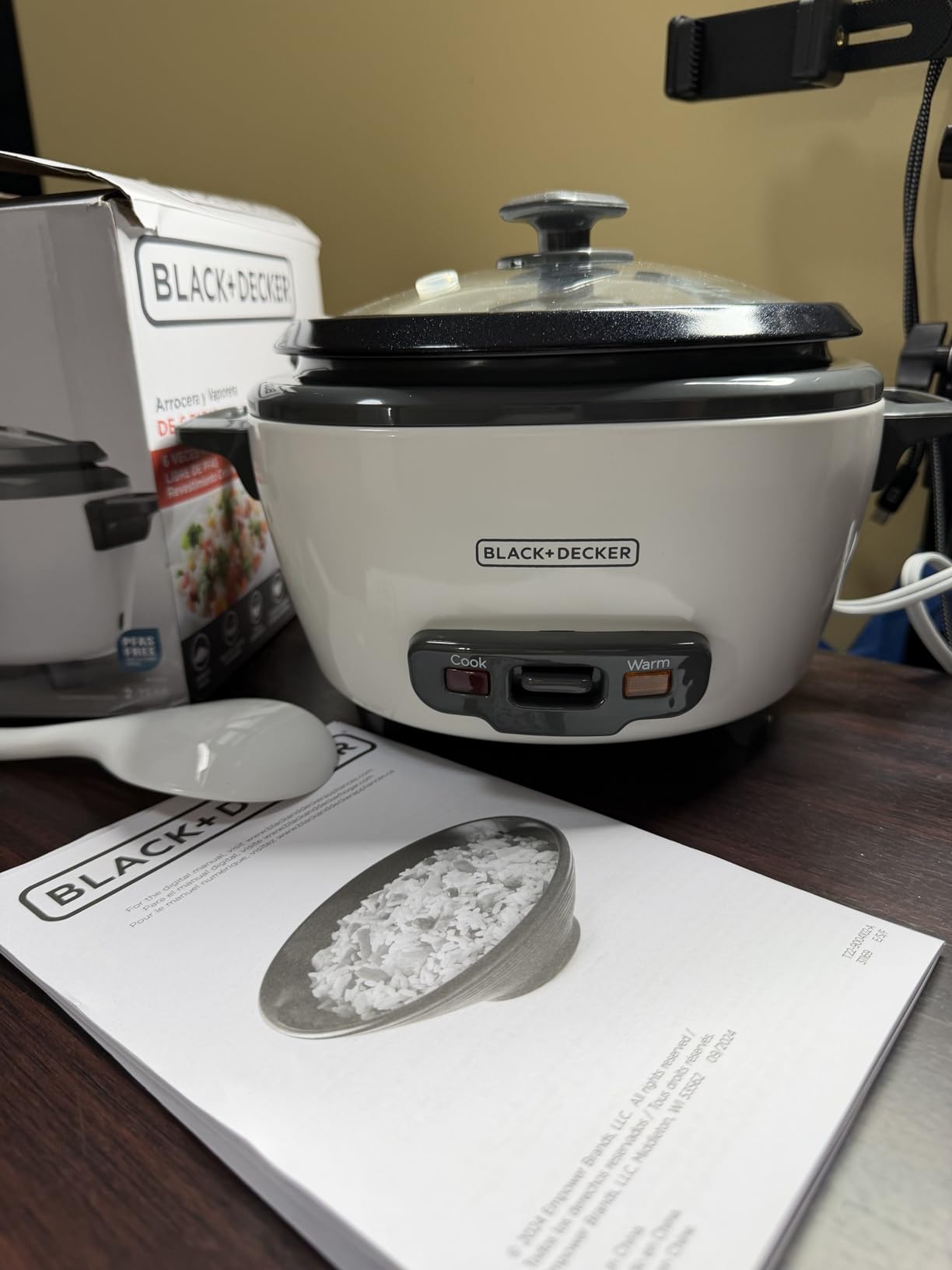
9. BLACK+DECKER 6-Cup RC506 Rice Cooker Review
BLACK+DECKER 6-Cup Rice Cooker with Steaming Basket
6 cup cooked / 3 cup uncooked
300 watts
Removable nonstick bowl
Tempered glass lid
Pros
- Very compact and only two pounds
- Removable dishwasher-safe nonstick bowl
- Automatic keep warm engages reliably
- Steaming basket measuring cup and spoon included
Cons
- No dedicated brown rice setting
- Water markings are hard to read
- Rice hardens if it stays on warm over an hour
Six cups cooked for one switch and no menu, from a machine that weighs two pounds. That is the whole pitch, and for white rice in a small kitchen it works. The removable nonstick bowl is dishwasher safe, which is rare in the entry tier.
Brown rice is the catch, and it is a real one. There is no brown rice program, so you run the white cycle with your own water and timing. Done carefully it is edible, but it is not the loose, evenly cooked grain the fuzzy-logic units produce.
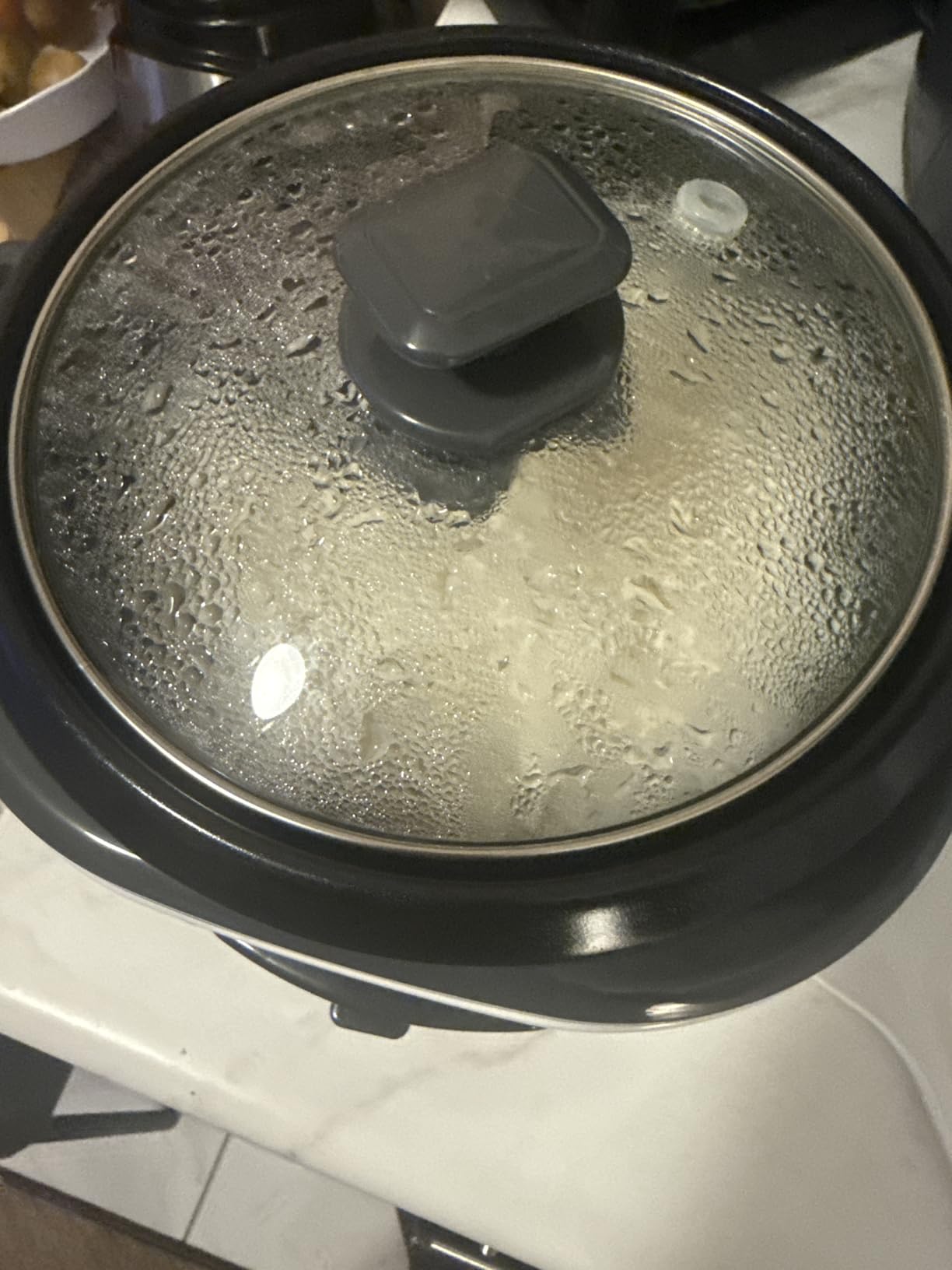
Two workarounds make it usable. Increase the water to about 2.4 cups per cup of rice and treat the grains as underdone when the light comes on, because the 300-watt element continues cooking briefly. Keep-warm time should stay under an hour, after which the rice hardens and the bottom crisps.
The 3/4-cup measuring cup used for the six-cup rating means 3 cups uncooked, so batch size is small. The tempered glass lid has a steam vent, and the steaming basket is there for vegetables and fish.
Should a beginner buy this cooker?
Only if the goal is white rice and saving counter space. The single switch has nothing to learn and nothing to get wrong, and the dishwasher-safe bowl removes the most common reason people abandon small cookers.
For brown rice, start with a machine that has a program for it. Adjusting ratios on a two-setting cooker is a skill, not a shortcut.
What to know before you buy
The water lines inside the pot are pressed in black-on-black and nearly invisible, so bring a light or mark your own level. The power cord is short, and the steaming basket is small enough for a few items only.
With 37,008 reviews at 4.4, the pattern in the reviews is consistent: people like the size and the keep-warm reliability, and stop short on brown rice for the same reason we did.
10. Aroma Select Stainless ARC-753SGB Rice Cooker Review
Aroma Housewares Select Stainless Rice Cooker & Warmer with Uncoated Inner Pot, 3-Cup(uncooked)/6-Cup(cooked)/ 1.2Qt, ARC-753SGB, Black
3 cup uncooked / 6 cup cooked
Uncoated 304 stainless pot
One-touch lever
500 watts
Pros
- No nonstick coating to chip or replace
- Dishwasher safe and safe to scrub hard
- One-touch lever with automatic switch to warm
- Compact body that stores easily
Cons
- No fuzzy logic so brown rice needs manual ratio
- Some batches cook unevenly or stick
- Measuring cup holds three quarters of a cup
This is the coating-free option, and the enthusiasm in the reviews comes from exactly that reason. The 304 food-grade stainless inner pot has no nonstick layer to scratch, chip or eventually replace, and it survives a dishwasher or a scouring pad.
For brown rice specifically, stainless is the material most cooks want. Rice releases more readily from a hot stainless surface than from a cold nonstick coating, and the pot keeps its heat evenly across the base, which is the scorched-bottom problem again.
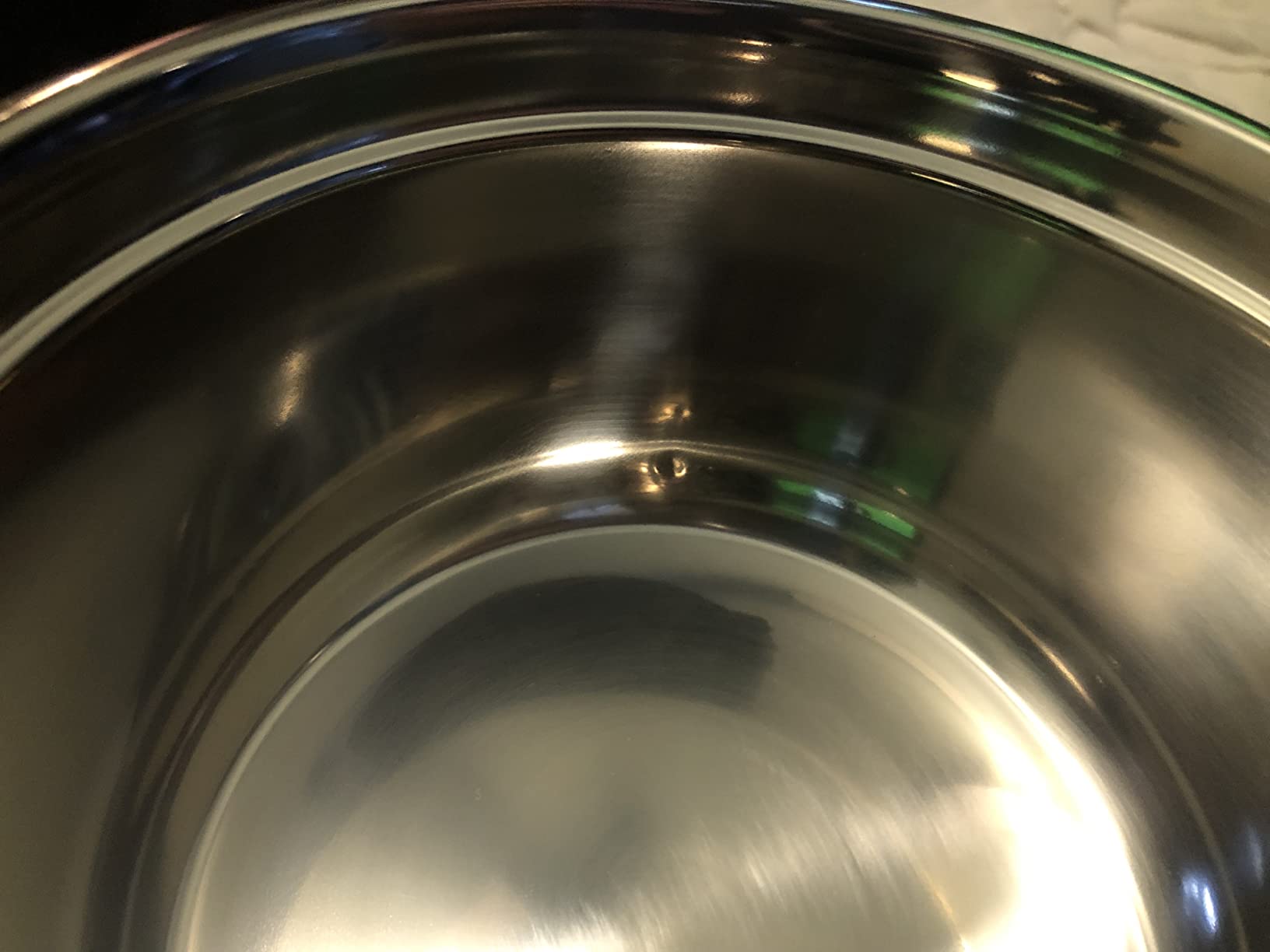
The one-touch lever does the work: rice and water in, lever down, and the machine detects when the cooking is done before switching to warm. The BPA-free spatula stores in the handle and the whole thing is 8.25 by 10.25 by 7.88 inches.
There is no fuzzy logic, so brown rice depends on your water. Two and a quarter cups of water per cup of rice is the number that worked for us, and pulling the pot the moment it clicks avoids the sticking some owners report when rice sits too long after the switch.
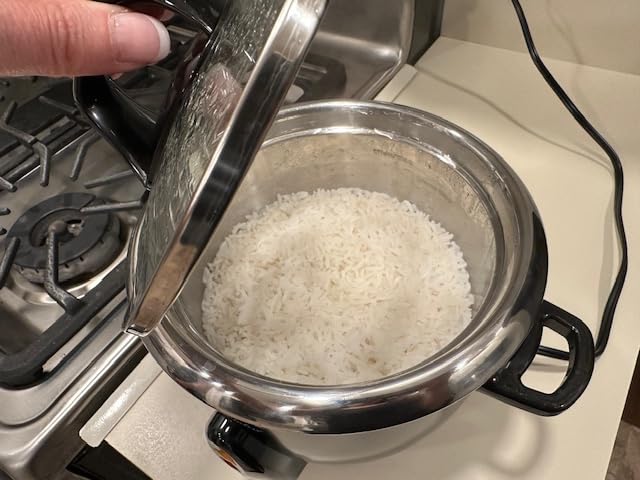
Is a stainless pot better for brown rice than nonstick?
It releases more easily and handles heat better, and nothing can flake off into your food. Nonstick pots are easier to clean and gentler on the rice surface if you are scraping.
If the coating question is what has been holding you back from buying a rice cooker at all, this is the direct answer. A chemical smell can show on the first use and fades after a few cycles.
What it gives up
Fuzzy logic, and that costs you consistency on a fixed time cycle. Only 3 cups of uncooked rice fit, and the three-quarter-cup measuring cup confuses first-time buyers the same way the Aroma ARC-914SBD’s does.
11. CUCKOO CR-0375FW Micom Fuzzy Logic Rice Cooker Review
CUCKOO Micom Fuzzy Logic Rice Cooker, 6-Cup Cooked, White, CR-0375FW
3 cup uncooked / 6 cup cooked
Fuzzy logic control
425 watts
Self-clean setting
Pros
- Fuzzy logic cooks brown rice evenly without charring
- Keep warm holds rice without burning the bottom
- Self-clean mode and parts that rinse clean
- Handles barley quinoa and lentils as well as rice
Cons
- Bulky for its cooked capacity
- Heavily spring-loaded lid can hit a cabinet
- Many control settings to learn
CUCKOO built its reputation on fuzzy logic rice, and this entry-level Micom keeps the promise on brown. The cycle adjusted time and temperature rather than running fixed, and the brown setting produced even grains with no charring at the base.
Its advantage over the other fuzzy-logic units here is grain flexibility. Reviewers routinely cook barley, quinoa, lentils and black pearl rice in the same pot, which is why it wins our mixed grains slot.
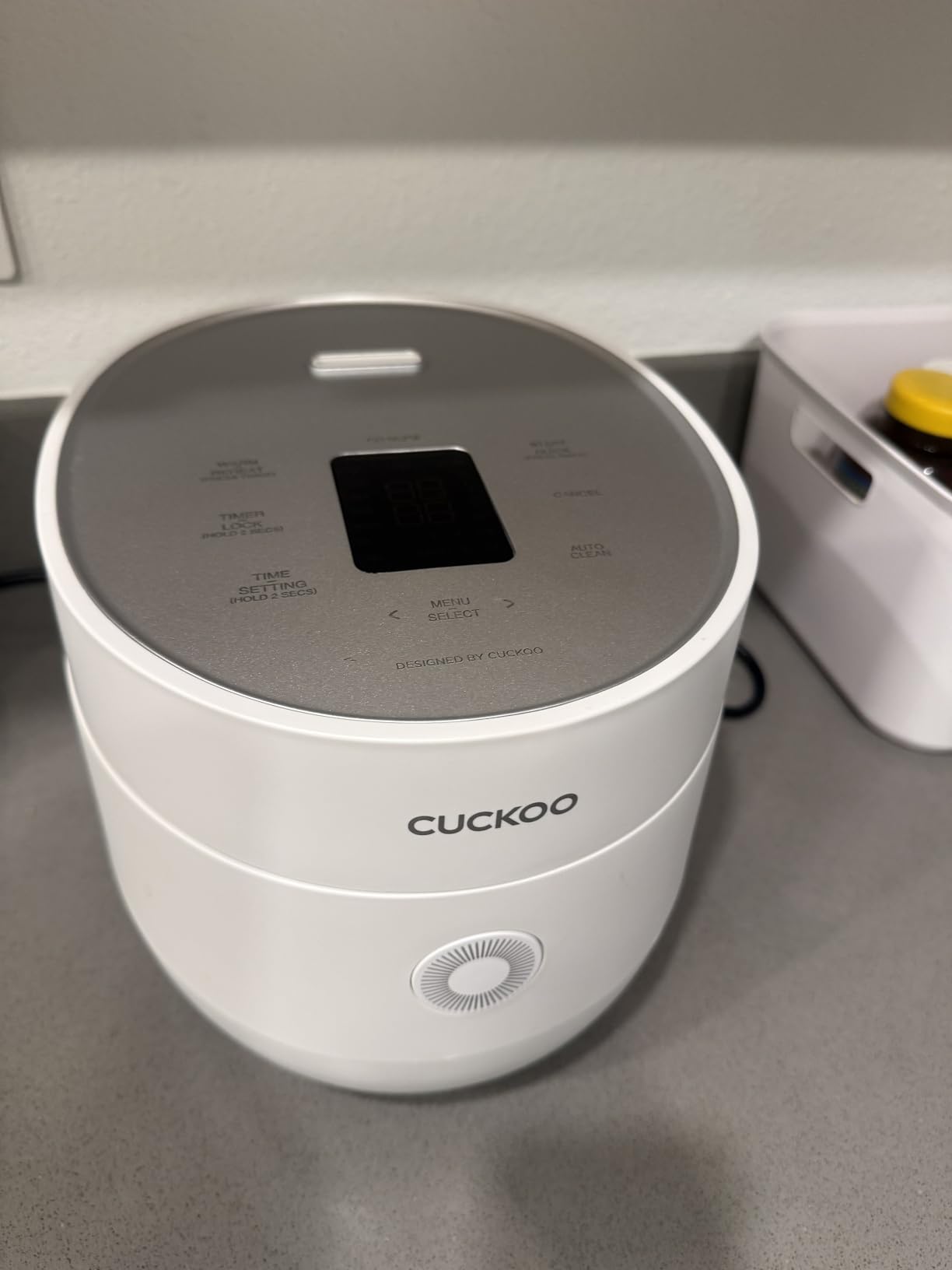
Cleaning is a genuine strength. The lid and inner parts disassemble, the pieces rinse clean, and a self-clean setting handles the rest. The keep-warm function held brown rice without burning the bottom for the length of a meal, which is more than we can say for the basic cookers.
Replacement inner pots are available, which is unusual at this tier and matters if the nonstick surface eventually wears.
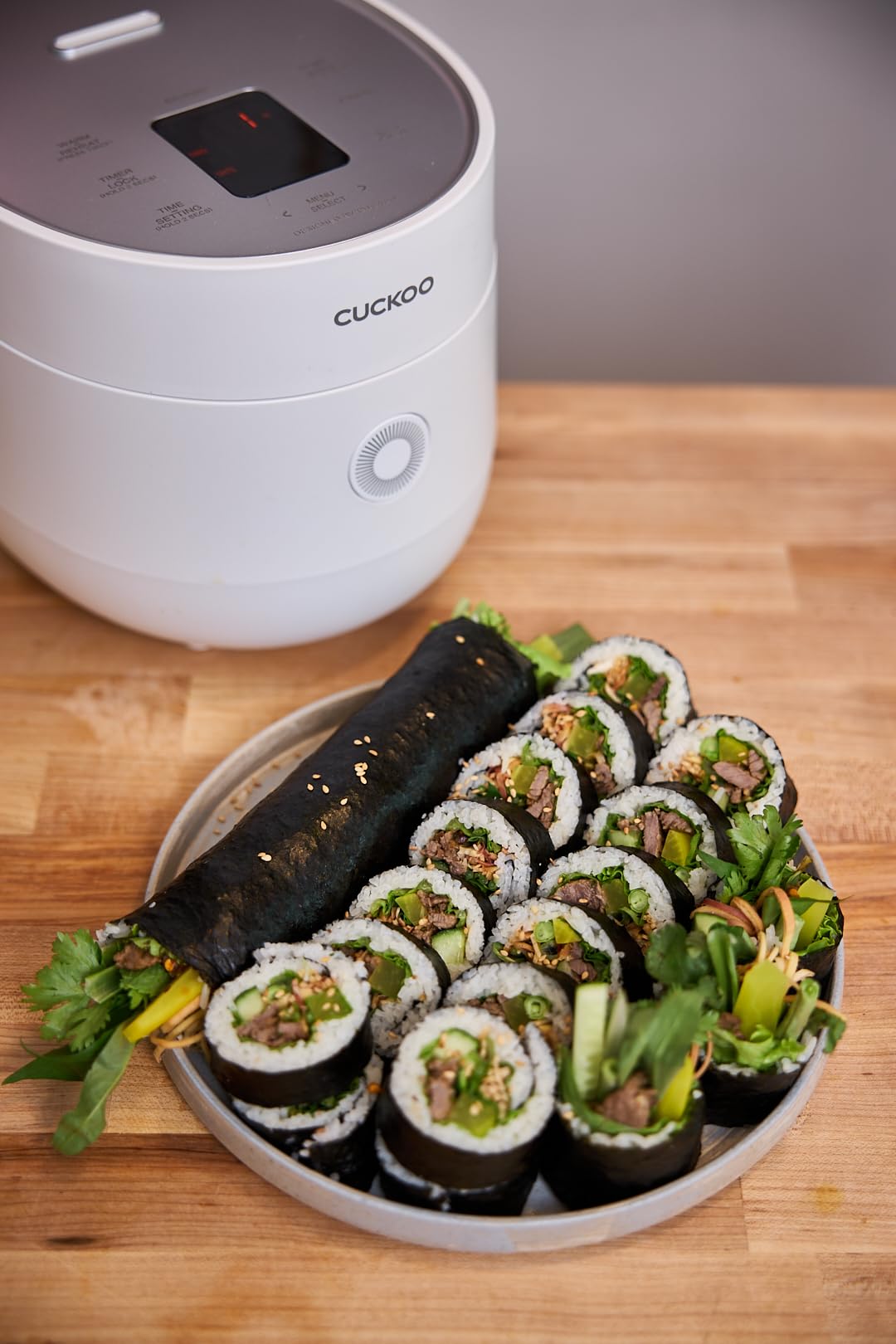
Is it worth choosing over a Toshiba fuzzy-logic unit?
If your cooking is mostly rice, the Toshiba TRCS01 is the stronger dedicated brown machine with a larger capacity and a longer keep-warm window. The CUCKOO earns its place when you rotate through grains as much as rice.
Cook times run longer than a basic cooker regardless of program, so factor that into a weeknight.
The practical problems
The 11.5 by 8.6 by 7.9 inch body is bulky for six cups cooked, and the lid is heavily spring-loaded enough to strike an overhead cabinet, which matters in a kitchen with a low shelf.
Condensation collects in the inner parts and needs drying out after each use, and the control panel carries enough settings to take a while to learn.
12. GreenLife 3-Cup Ceramic Rice Cooker Review
GreenLife Rice Cooker with Removable PFAS-Free Ceramic Nonstick Pot, 3-Cups Uncooked/6-Cups Cooked, Grains & Oatmeal Multicooker, Compact One-Switch Design, Auto Keep Warm, Easy Clean, Cream
3 cup uncooked / 6 cup cooked
PFAS-free ceramic pot
One-switch operation
300 watts
Pros
- PFAS-free ceramic nonstick pot derived from sand
- Dishwasher safe removable parts
- Compact body for small kitchens
- Bowl lip keeps the rim free of mess
Cons
- Bottom layer of rice browns or burns easily
- No fuzzy logic so cooking is uneven
- No audible done alarm
The ceramic pot is the reason to consider this at all. It is a PFAS-free ceramic nonstick interior, it releases rice cleanly, and it goes in the dishwasher, which covers the two questions most asked about a nonstick rice pot.
Operation is a single switch with white or brown selected, and the compact body is aimed squarely at small kitchens and dorms. It also handles oatmeal, other grains, and even pasta or ramen for one.
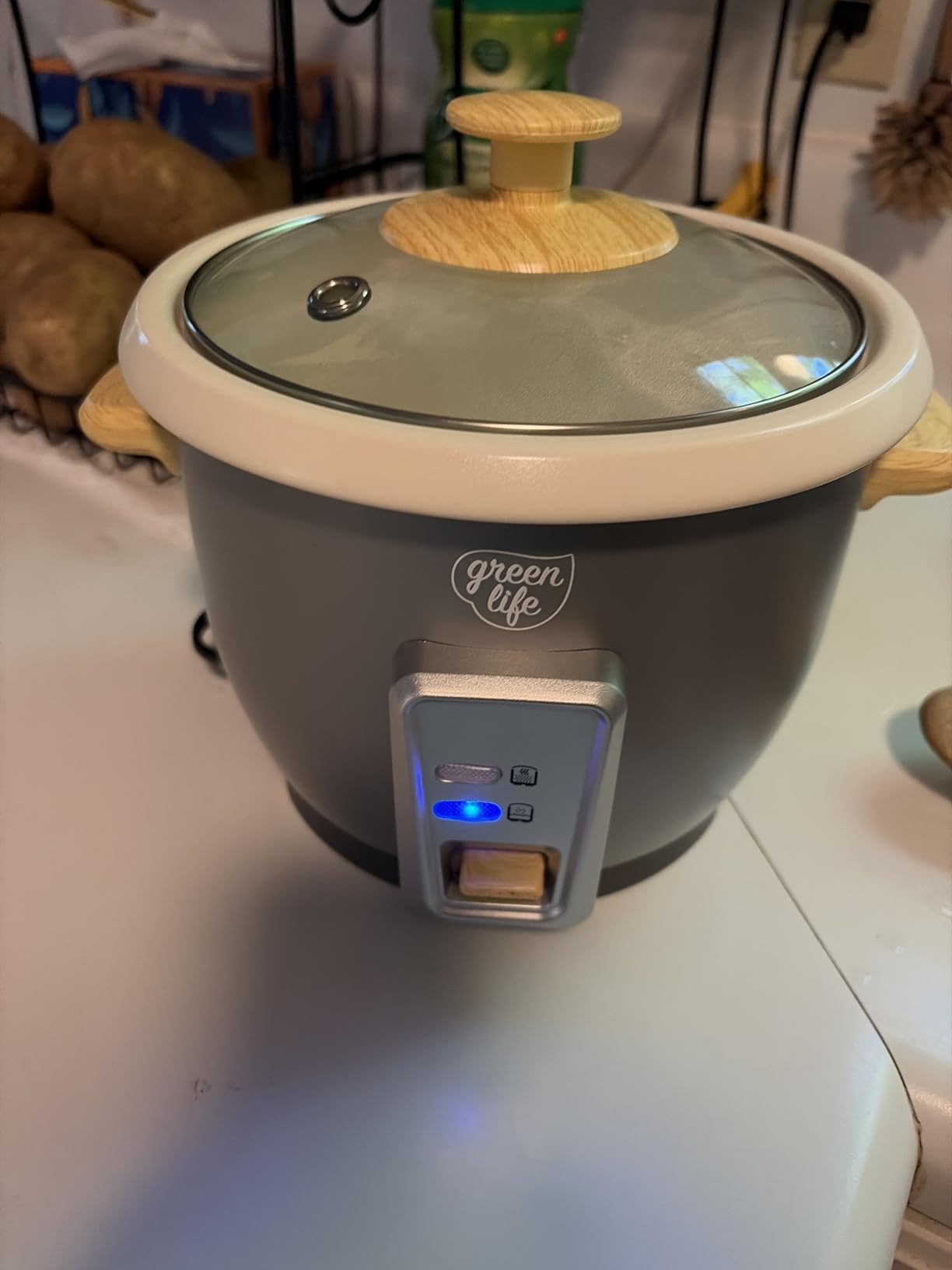
Where it falls short is heat control. With no fuzzy logic, the bottom layer browned and crisped on several batches even when we followed the directions, and the top stayed uneven. Removing the pot promptly after the switch helps, but the pattern is consistent enough that owners call it out.
There is also no audible alarm, so you have to watch for the light, and the switch and internal mechanism feel thin compared with everything else here.

Is a PFAS-free ceramic pot worth the browning risk?
If avoiding PFAS is the priority, yes, and this is one of the few cookers in the roundup that states it plainly on the product. For brown rice, plan to pull the pot on time and expect some texture variation.
The uncoated Aroma Select stainless pot at number 10 is the other answer to the same question, and it cooks brown rice more evenly because stainless holds heat better at the base.
Who should look elsewhere
Anyone who wants an unattended brown rice cycle. This is a machine you stand near, not one you set and walk away from, and at 3 cups uncooked the batch ceiling is low as well.
The directions are unclear, which compounds the issue since the water line is what determines the outcome.
How to Cook Brown Rice in a Rice Cooker Without a Brown Rice Setting
Brown rice needs about twice the water of white rice and a longer heat cycle. Start from 2 cups of water per cup of brown rice, then adjust from there based on your machine.
Measure by weight where you can. Brown and white rice have different densities, so volume measures mislead, and a scale removes the guesswork.
Rinse until the water runs mostly clear, usually five to seven rinses. This washes off surface starch and is the single biggest factor in non-sticky brown rice.
Soak for 20 to 30 minutes if you have time. Soaked rice cooks more evenly and needs slightly less water.
Add 2 cups of water per cup of rice as a starting point, then add a quarter cup more per cup if your cooker runs hot or the grain is long-grain.
Use the brown rice program where one exists. On cookers without one, run the white cycle and expect to extend it.
Do not open the lid for the first 20 minutes. Every peek drops the temperature and is the leading cause of tough, undercooked grains on top and burning underneath.
Let it rest 10 minutes on keep warm before the first stir, then fluff from the bottom.
Ratios vary by machine rather than by brand alone, because the pot, the wattage and the sensor logic all matter. Our working numbers: fuzzy logic and induction units close to 2 to 1, basic on/off cookers 2.25 to 2.5 to 1, and pressure cookers closer to 1.5 to 1 with a shorter cycle.
If brown rice comes out crunchy on top and scorched at the bottom, the fix is almost always the same: more water and a closed lid. If it is gummy, use less water or rinse harder. If it hardens after an hour on keep warm, move it to a covered container instead.
One caution from cooking forums that is worth repeating: do not let the pot sit 5 to 15 minutes after cooking while you finish other food, especially in a small cooker. The bottom continues cooking on the element and that is where the browning starts.
How We Tested Brown Rice in These Cookers
We cooked the same grain in every machine. Short-grain brown rice, rinsed to clear water, measured at 2 cups of rice to 4 cups of water unless the manual specified otherwise, cooked in batches sized to the unit.
We recorded total cook time from pressing start to the switch to warm, then rested the pot ten minutes before opening. Each batch was checked for four things: whether the top layer was fully cooked, whether the bottom layer browned, whether grains stayed separate, and whether the bran layer had softened enough to chew rather than resist.
Keep-warm quality was checked again at 60 and 90 minutes, which is where the budget and basic cookers separated from the fuzzy-logic units. Appearance, cleanup time and how much manual water adjustment each machine needed went into the ranking alongside texture.
Where our findings differ from other published roundups, it is usually because they rank general rice quality and we ranked brown rice only. A machine that is excellent for jasmine and short-grain white can be slow and mediocre with brown, and that is exactly the gap this guide fills.
How to Choose a Rice Cooker for Brown Rice
Buy for the brown rice program first, the capacity second and the features third. A dedicated brown or GABA brown setting is the feature that decides the result; everything else is secondary.
Sensor logic matters more than wattage. Fuzzy logic and induction models read moisture and adjust the cycle, which is what prevents the undercooked-top, burnt-bottom failure. Basic on and off cookers need a manual ratio every time, and on brown rice that is a skill, not a feature.
Size for uncooked cups, not cooked. A 3-cup uncooked machine yields about 6 cups cooked, and brown rice expands less than white. Two people are served by 3 uncooked cups, a family of four by 6.
Inner pot material is a values decision. PTFE nonstick is easiest to clean, ceramic avoids PFAS and releases well, and uncoated stainless is the most durable and heats evenly but sticks if you leave rice sitting. All three can cook brown rice properly.
Keep-warm hours matter only if you genuinely serve rice hours after cooking. Extended keep warm beyond an hour dries the edges and crisps the bottom on every model we tested, so a container is the better storage.
On arsenic, which shows up often in forum threads about brown rice: it is a real consideration, and choices include rotating grains, soaking and draining, and buying from brands that test their rice. A rice cooker makes the soaking step easy, which is a small health benefit of the appliance beyond convenience.
Finally, check the physical footprint and the lid height before you commit. Several units here are spring-loaded enough to hit a low cabinet, and the largest bodies are long rather than deep.
Frequently Asked Questions
Do rice cookers work well for brown rice?
Yes, provided the cooker has a dedicated brown rice program with sensor logic. Brown rice needs about twice the water of white rice and a longer heating cycle, so machines that read moisture and adjust heat and time produce even, separate grains while basic on/off cookers often undercook the top and scorch the bottom. Our top pick, the Cosori 10-Cup, handles the most consistent batches across the price range we tested.
How much water do I need for 1 cup of brown rice in a rice cooker?
Start with 2 cups of water per cup of brown rice, and add a quarter cup more per cup on hot or basic cookers that are not sensor-driven. Rinse the rice until the water runs mostly clear, soak for 20 to 30 minutes if you can, and keep the lid closed for the first 20 minutes of cooking. Measuring rice by weight rather than volume makes the result more repeatable.
What setting should I use on my rice cooker for brown rice?
Use the brown rice program if your cooker has one, and choose the semi-brown or brown setting on Japanese models for a lighter result. If there is no brown program, run the white rice cycle with about 2.25 cups of water per cup of rice and treat the rice as slightly underdone when the cooker switches to warm, since the element keeps cooking for a short time. The extra holding time is what softens the bran layer.
Why does my rice cooker take so long to cook brown rice?
A fuzzy logic cycle for brown rice commonly runs past an hour, because the dense bran-covered grain needs a long absorption phase at a steady simmer. Pressure cookers do the same job in roughly half the time by raising the boiling point, and basic cookers take even longer because they run a fixed cycle. If speed matters, plan around the long cycle with a delay timer or choose a smaller batch.
What is the Rolls Royce of rice cookers?
The premium tier in this category is the Zojirushi induction and Neuro Fuzzy range, and the NS-ZCC10 is the model we ranked here. It uses a spherical inner pan that heats the batch evenly and Neuro Fuzzy logic that adjusts the cook in short intervals. The trade-off is a long brown rice cycle and the need to measure rice with the supplied cup.
Our Final Ranking of the Best Rice Cookers for Brown Rice in 2026
The Cosori 10-Cup is the best rice cooker for brown rice overall, because a dedicated brown program with texture selection and a fuzzy-logic cycle solved every batch we cooked without a manual water adjustment. The Zojirushi NS-ZCC10 takes the premium slot for the most even grain, and the Aroma ARC-914SBD is the value pick that still produces good brown rice once the ratio is right.
From there, the Toshiba TRCS01 is the batch cooker, the Zojirushi NS-TSC10 is the steamer, the Toshiba Mini and Zojirushi Micom cover small kitchens, and the Aroma Select Stainless answers anyone who does not want a coated pot. The basic cookers at the end of the list work, but they make you the sensor.
Cook your first batch with more water than you think you need, leave the lid closed, and let it rest. That routine does more for brown rice than any setting on any panel.