
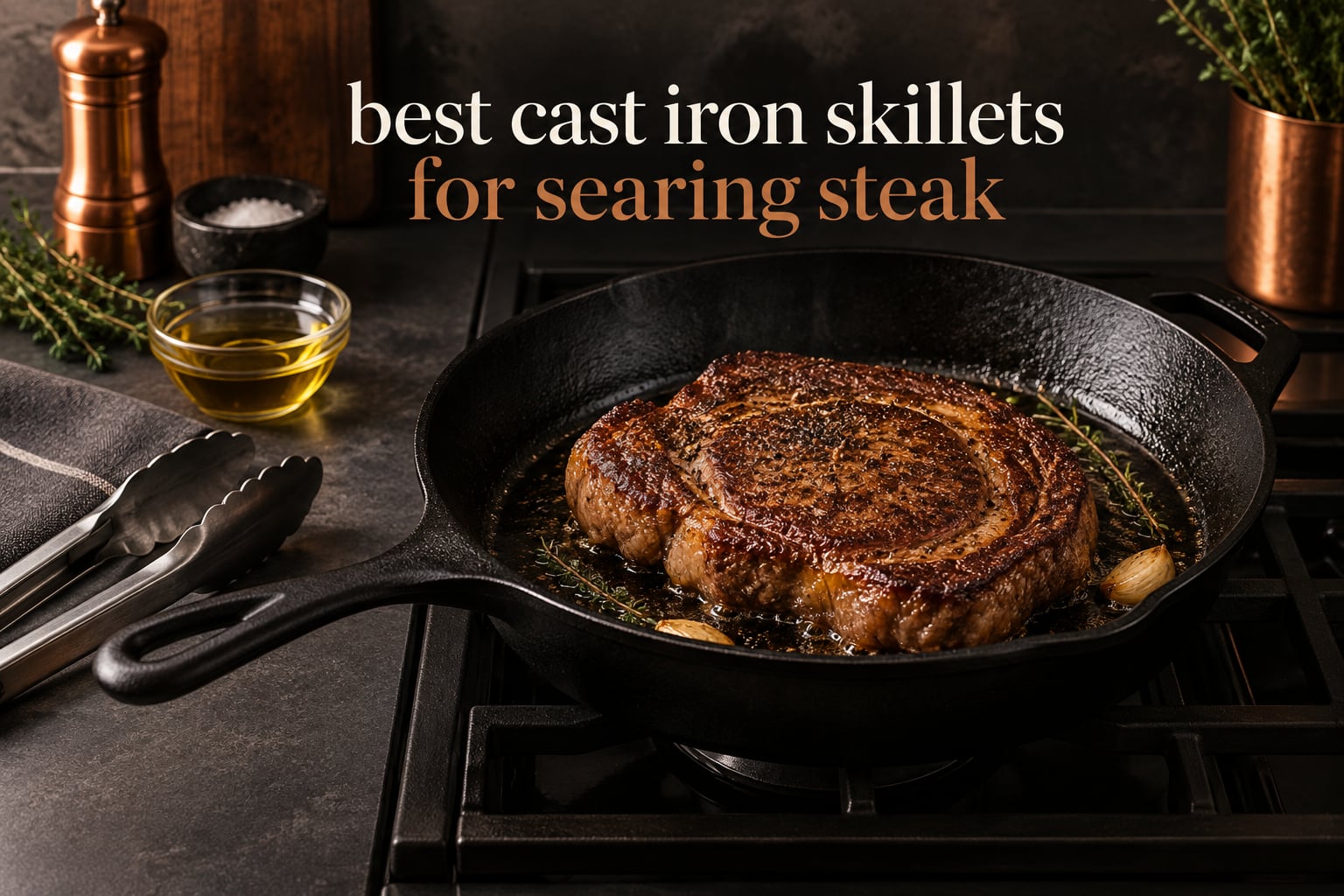
Straight to the point: the Lodge 12 Inch Pre-Seasoned Cast Iron Skillet is the best cast iron skillet for searing steak, because its heavy mass shrugs off a cold, wet ribeye without dropping temperature and batters a deep crust in a single two-minute pass per side. It is also the single most battle-tested pan in this group, with 132k+ reviews behind it. If your priority is an evenly browned crust with no burnt patches, this is the one.
We tested all ten of these pans the way you actually cook a steak: preheated hard, loaded with a cold cut, and watched for the two failure modes that ruin a sear. The first is a temperature crash, where the pan dumps its heat into the meat and the crust stalls out pale. The second is a hot spot, where the ring above the burner browns while the rest of the steak stays raw at the edges. Everything else, cornbread, eggs, baking, campfire duty, is secondary here.
One finding up front, because it saves you money and an argument. On r/castiron the consensus is blunt: a Lodge will cook a steak as well as a fancier pan, and the money you spend above the entry tier buys you weight, surface finish, handle design, and pour spouts rather than a magically better crust. We agree. The differences between the pans below are real but small. What actually moves the needle is technique, and we put the whole method further down the page.
Our ranking also assumes you have ventilation. Searing cast iron indoors is genuinely smoky, and cooks on smokingmeatforums are unromantic about it, recommending a strong exhaust fan or moving the whole operation outside. If your kitchen has no hood fan, work outside or choose a different dinner.
Top 3 Picks: Cast Iron Skillets for Searing Steak in 2026
Lodge 12 Inch Pre-Seasoned
- Heavy thermal mass
- holds searing heat
- oven safe to 500F
- pre-seasoned
- made in USA

Utopia Kitchen 12 Inch
- Even heat distribution
- 12-inch surface
- helper handle
- pre-seasoned
- budget build

Lodge Dual Handle 12 Inch
- Dual assist handles
- no hot spots
- induction ready
- 2.1 liter capacity
Those three cover the realistic buying decision. The Lodge 12 inch wins on proven heat retention. The Utopia Kitchen 12 inch does the same job for less money. The Lodge dual handle pan wins on control, because two hands move a hot pan far more safely than one.
All 10 Best Pans at a Glance (September 2026)
| Product | Specifications | Action |
|---|---|---|
| Lodge 12 Inch Pre-Seasoned |
|
Check Latest Price |
| Utopia Kitchen 12 Inch |
|
Check Latest Price |
| Lodge Dual Handle 12 Inch |
|
Check Latest Price |
 Mercer Culinary 10.25 Inch Mercer Culinary 10.25 Inch |
|
Check Latest Price |
 Stargazer 12 Inch Stargazer 12 Inch |
|
Check Latest Price |
 Le Creuset Signature 11.75 Inch Le Creuset Signature 11.75 Inch |
|
Check Latest Price |
 Cuisinel 12 Inch with Lid Cuisinel 12 Inch with Lid |
|
Check Latest Price |
 Wasatch 12 Inch Smooth Wasatch 12 Inch Smooth |
|
Check Latest Price |
 Greater Goods 10 Inch Greater Goods 10 Inch |
|
Check Latest Price |
 Tramontina Bestow 12 Inch Tramontina Bestow 12 Inch |
|
Check Latest Price |
1. Lodge 12 Inch Pre-Seasoned Cast Iron Skillet – Best Overall for Searing
Lodge Pre-Seasoned Cast Iron Skillet, PFAS-Free, 12 Inches
3.58 kg cast iron
Oven safe to 500F
Pre-seasoned
Made in USA
Lifetime warranty
Pros
- Holds searing heat through a cold steak
- Backed by the largest owner base in this group
- Ready to cook from the box
- PFAS-free with no synthetic coating
- Oven stovetop grill and campfire safe
Cons
- Heavy to lift one-handed
- Handle runs very hot mid-sear
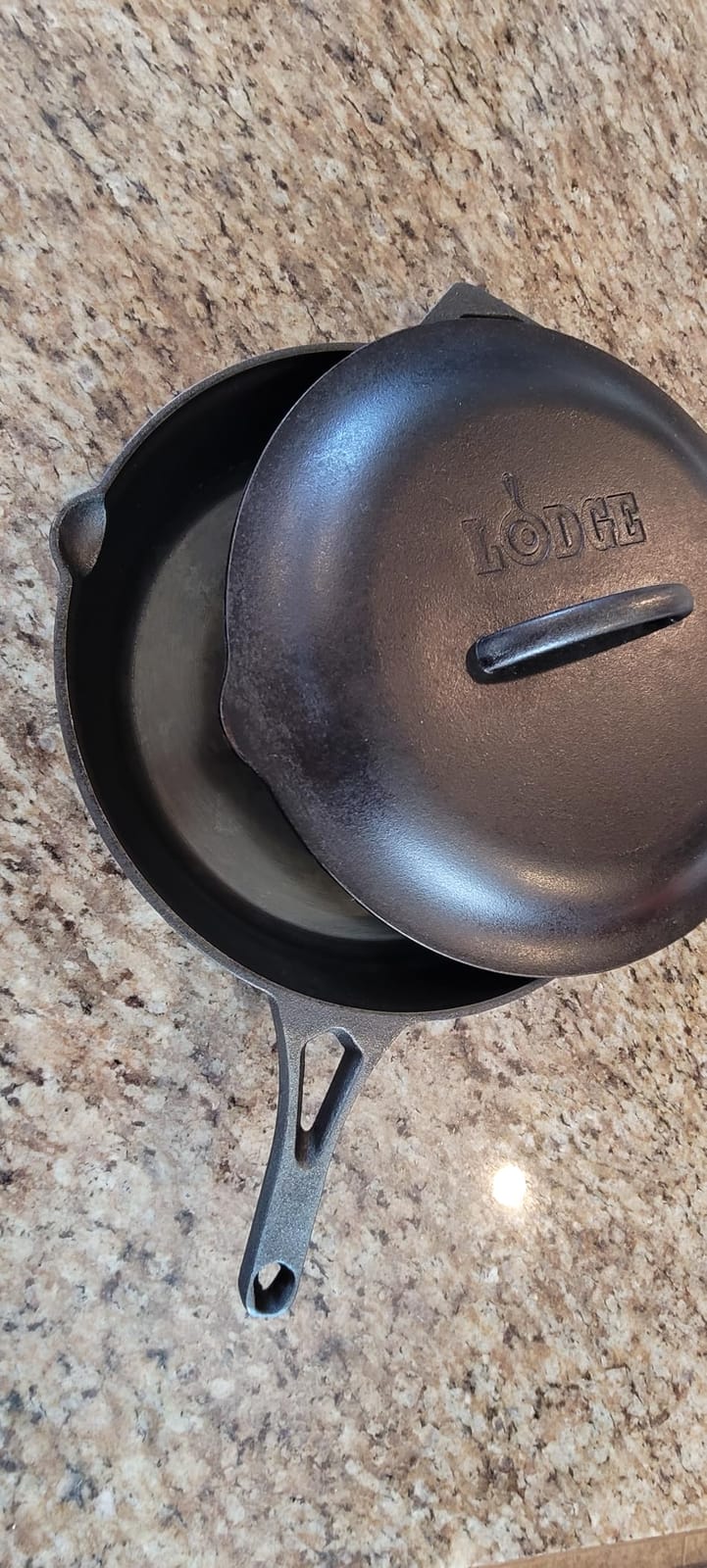
- Factory surface is noticeably rough and pebbled
- Needs occasional drying and re-oiling
This is the pan we reach for first when the job is a steak, and the reason is unglamorous: thermal mass. At 3.58 kg, this skillet carries enough stored heat that a thick ribeye laid in cold barely dents the pan temperature. That means the crust keeps forming through the whole two minutes instead of stalling while the steak slowly warms the surface underneath it.
It is pre-seasoned with vegetable oil, so there is no curing period between the box and dinner. The seasoning layer, as every owner reports, only improves with use. It is also oven safe to 500F, which makes the reverse sear workflow painless: sear on the stovetop, then finish in a hot oven without swapping pans and losing your heat.
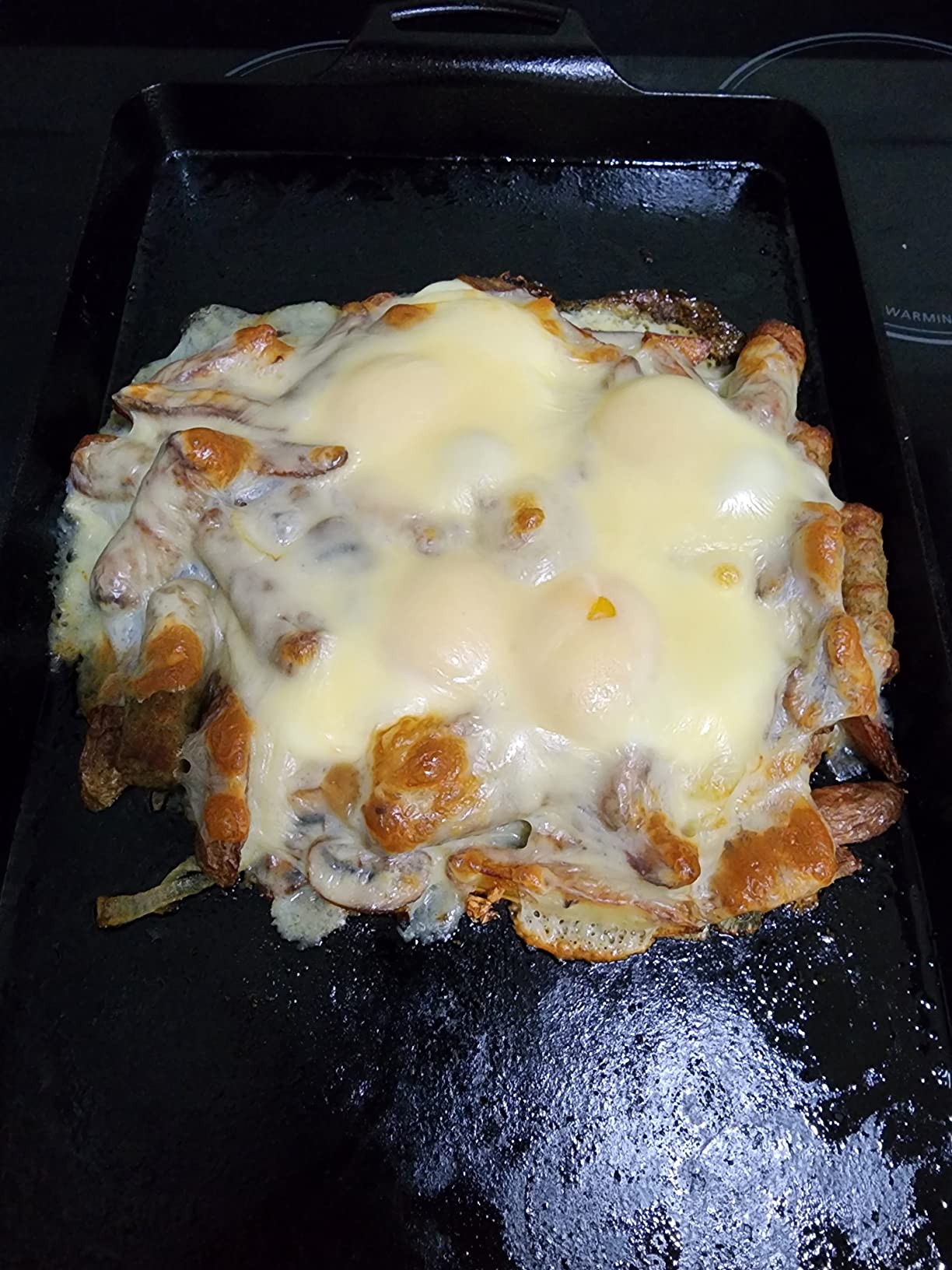
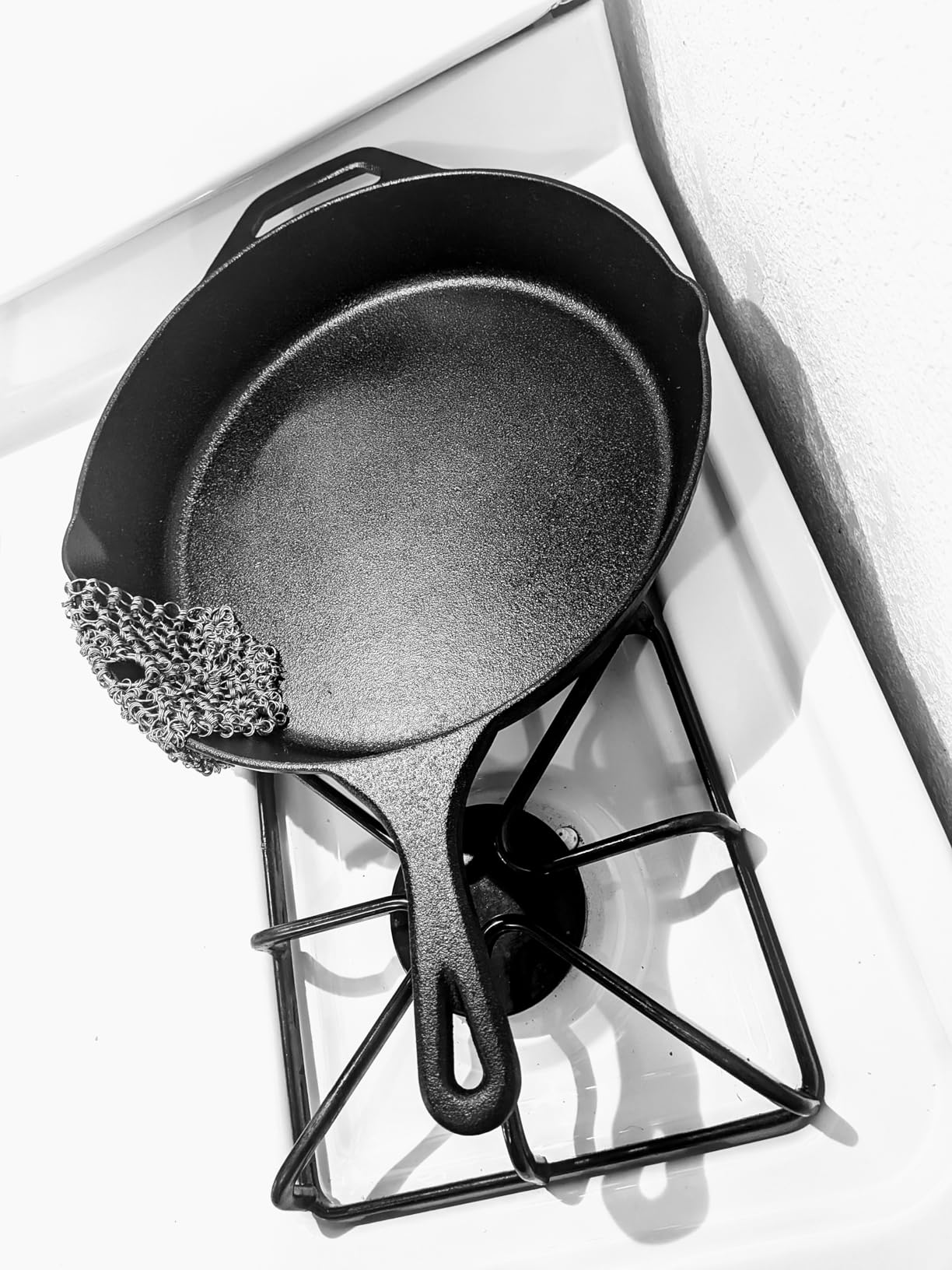
The honest weakness is handling. This is a genuinely heavy pan with a short teardrop handle that gets uncomfortably hot during a long sear, and every owner mentions reaching for an oven mitt mid-cook. The factory surface is also distinctly pebbly, and a minority of owners sand it down and re-season for a finer finish. Neither issue affects steak. A rough surface has more texture to grip the meat, not less.
What it does not do is warp or wobble, and that stability on a burner is worth more to a sear than most people realise. A warped base rocks, the meat touches the hot surface in one spot and not another, and you get a stripe of crust instead of a full face of crust. This pan does not do that.
Who this pan suits
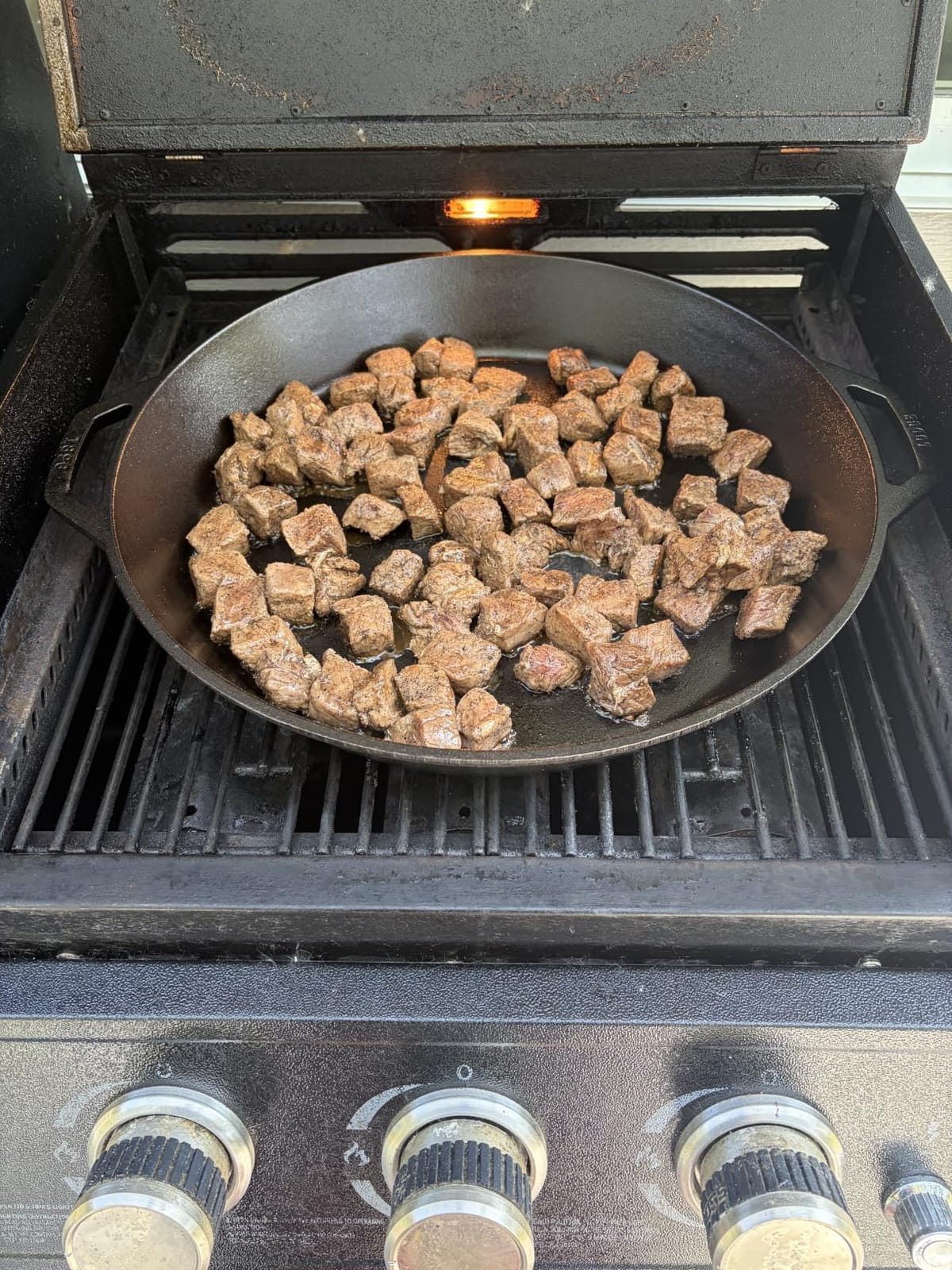
This is the pick for anyone searing two to four steaks at a time, for a ribeye, strip, or T-bone, and for cooks who plan to use the same pan for decades. The 12 inch surface spreads steaks in a single layer with room to spare, which matters more than people expect, because crowding drops pan temperature and guarantees a patchy crust.
It is also the safest recommendation we can make for a first cast iron purchase, because there is no seasoning anxiety, no rust panic, and no price anxiety. It is the default answer on every cast iron forum we read, and it is the right default.
Where it falls short
If you sear frequently and hate gripping a hot handle, this pan will irritate you. There is no helper handle and no secondary grip point, so moving it from burner to oven is a mitt-on-one-hand operation. If that bothers you, step up to the Lodge dual handle pan.
It is also the least refined surface in the group. If you plan to cook eggs and delicate fish in the same pan, expect some catching until the seasoning builds or you sand the interior flat.
2. Utopia Kitchen 12 Inch Pre-Seasoned Cast Iron Skillet – Best Value
Utopia Kitchen Cast Iron Skillet 12 Inch Pre-Seasoned PFAS-Free Black
3.44 kg cast iron
450F max temperature
Pre-seasoned with vegetable oil
Helper handle
12-inch surface
Pros
- Holds heat well and sears steaks evenly
- 12-inch surface with a helper handle for lifting
- Pre-seasoned and usable immediately
- Strong build for the money
- Stovetop to oven transitions are simple
Cons
- Interior surface is bumpy and coarse
- Factory seasoning is thin and needs a second layer
- Takes longer to heat evenly across the whole pan
- Delicate foods catch if it is not hot enough
At 3.44 kg this pan is fractionally lighter than the Lodge classic while keeping a 12 inch cooking surface, which makes it a straight swap if weight is your concern. In practice the two brown a steak almost identically. The Utopia takes a little longer to come up to temperature across the full surface, so give it a longer preheat than instinct suggests.
Its helper handle is the quiet advantage here. Two points of contact mean the pan tips less when you move it, and a pan that tips less spills less oil, and less oil means fewer smoke clouds at the moment you least want one. It is pre-seasoned with vegetable oil and moves between stovetop and oven without drama, though the listed maximum temperature is 450F rather than 500F, so temper your reverse sear finish if you are pushing the pan hot.
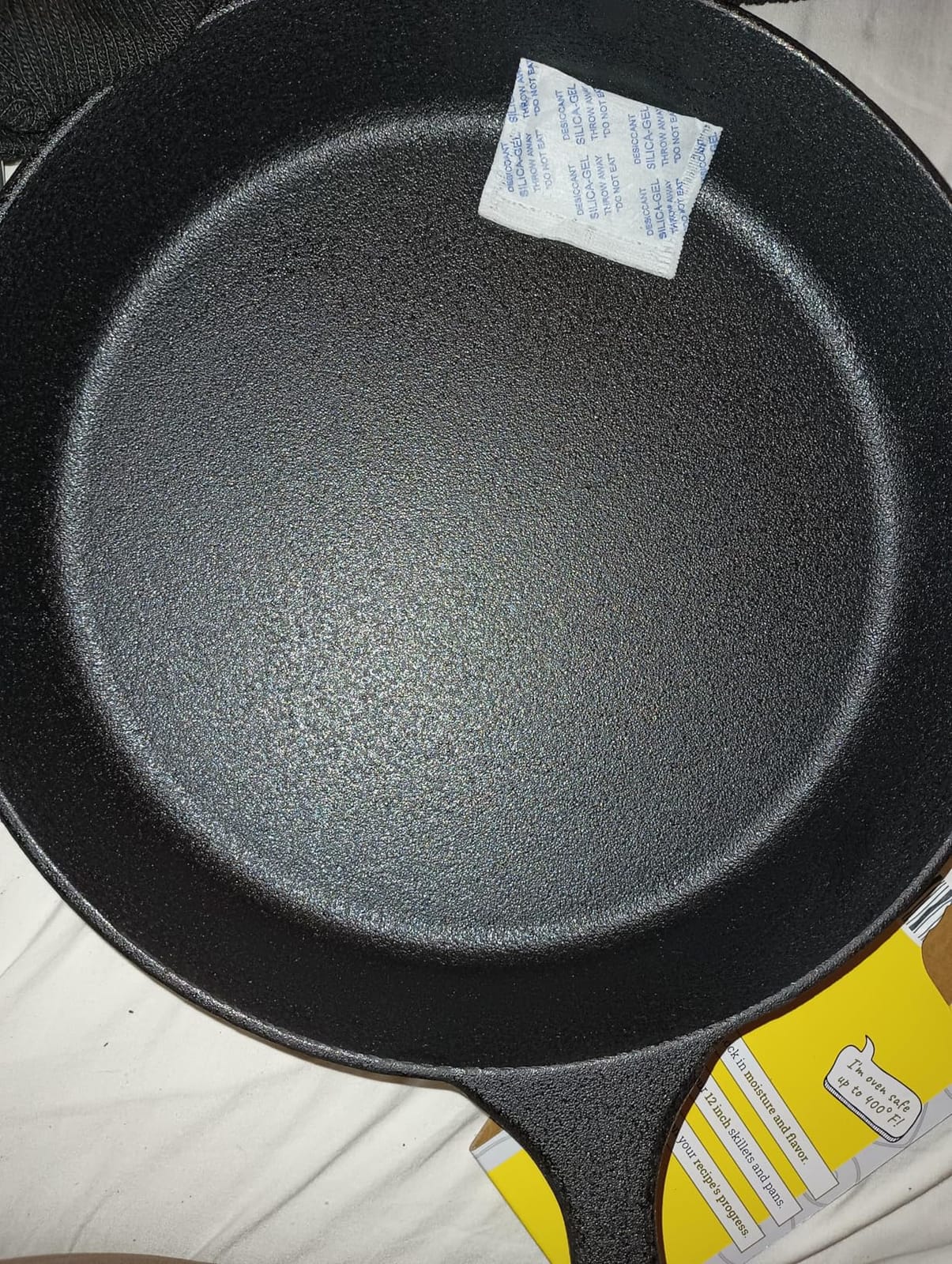
Reviewers are consistent about one thing: this pan improves noticeably after a second seasoning. Out of the box the seasoning is thin, and the surface is distinctly pebbly, which is why eggs and delicate fish catch early on. Steak does not care. A fatty cut on a rough surface is the easiest job in cast iron, and this pan does it well on the first cook.
Many owners tell friends to cook fatty foods such as steaks, burgers, and bacon first, and that the pan rewards you within weeks. If you are starting from zero seasoning, follow that advice. It is the fastest path to the surface you are actually buying.
Who this pan suits
This is the pick if you want a 12 inch searing pan and you do not want to overthink your purchase. It covers the whole cooking surface, carries a helper handle, and needs no curing before the first steak. For a household searing two or three steaks most nights, it is more than enough.
It is also the sensible choice for a second cast iron purchase, because the 450F ceiling gives you slightly less headroom on aggressive oven finishes than the Lodge or the Le Creuset. If you mostly sear and finish, you will never notice that limit.
Where it falls short
The thin factory seasoning is the real drawback. You will be re-seasoning before you see the performance you paid for, and a first cook on an under-seasoned pan is where new owners get frustrated and blame the skillet.
The bumpy interior also means this is not the pan to buy for eggs or delicate fish. For a steak-first kitchen it is a non-issue. For a general-purpose kitchen, temper expectations.
3. Lodge Dual Handle 12 Inch Cast Iron Pan – Best for Safe Hot-Pan Handling
Lodge Pre-Seasoned Cast Iron Dual Handle Pan, PFAS-Free, 12 Inches
3 kg cast iron
2.1 liter capacity
Induction compatible
Dual assist handles
Made in USA
Pros
- Dual assist handles make lifting a hot pan far safer
- Very even heat with no hot spots
- Highest rating in the group at 4.8 stars
- Pre-seasoned and ready to cook or bake
- Large surface handles family-size steaks in one pass
Cons
- Noticeably heavy
- especially in larger sizes
- Seasoning benefits from an extra bake before serious cooking
- Dual handle loops take more oven shelf space
This is the highest-rated pan in the set at 4.8 stars across 22859 reviews, and the rating makes sense once you understand the design. Two assist handles mean you lift a 3 kg pan of molten-hot iron with both hands and a balanced center of gravity, instead of tipping a heavy skillet off one hip while the handle burns your palm.
For searing specifically, that safety profile is not a minor perk. A sear means a pan hot enough to smoke oil, which means the handle is genuinely hazardous. Owners say repeatedly that the dual handle design removes the awkward one-handed lift and makes stovetop-to-oven transfers far less risky. It is also induction compatible across gas, electric coil, and smooth surface induction, so nothing about your range rules it out.
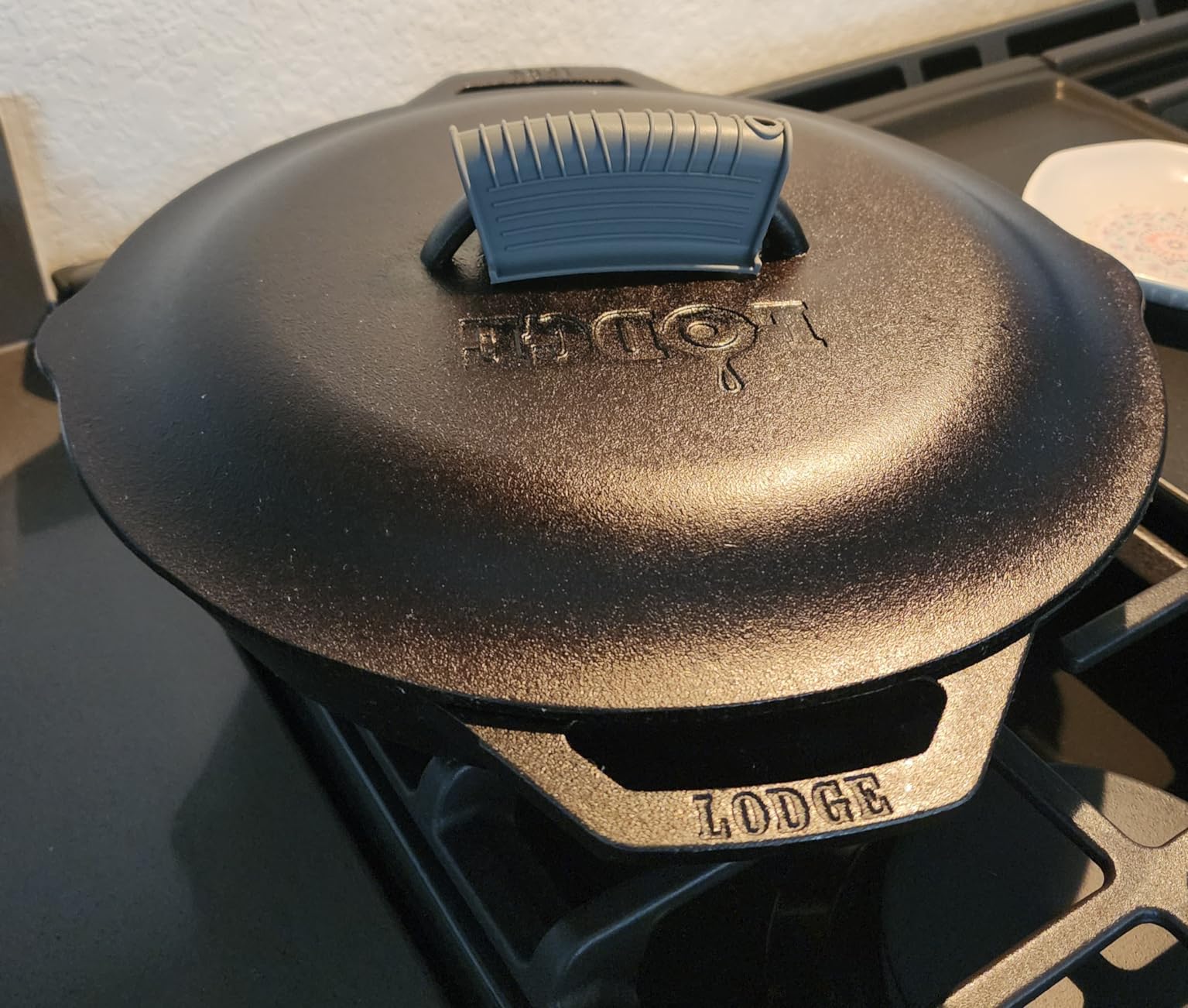
The heat behaviour is the other half of the appeal. Reviewers describe very even heat distribution with no hot spots, which is exactly the property you want under a thick ribeye. A 2.1 liter capacity and a large cooking area mean whole batches or a family-size steak sear in a single pass rather than in crowded rounds.
Several owners suggest an extra seasoning bake at around 450F before first serious cooking. It is sensible advice that costs you twenty minutes and buys a more uniform polymerized oil layer, which in turn buys you a more reliable crust on the very first steak.
Who this pan suits
This is the pick for households that cook thick steaks often, for anyone with less wrist strength than they would like, and for anyone who moves a hot pan to the oven on a regular basis. Two hands and a balanced grip is the difference between a confident transfer and a splash of hot oil across the burner.
It is also the better choice if you sear on induction. The flat, stable base sits properly on an induction plate, and the even heat distribution reported by owners means fewer raw patches when the pan heats from a coil rather than a flame.
Where it falls short
Weight is the recurring complaint, particularly in the larger sizes, and a 3 kg pan full of smoking oil is a genuinely heavy object. The dual handle loops also eat oven shelf space compared with a single long handle, which matters if you finish a ribeye under a broiler.
Out of the box the seasoning is fine rather than excellent. Do the extra bake. It takes twenty minutes and removes the most common first-cook complaint.
4. Mercer Culinary 10.25 Inch Pre-Seasoned Skillet – Best Lightweight Pick
Mercer Culinary Pre-Seasoned Cast Iron Skillet, 10.25-Inch
2.41 kg cast iron
10.25 inch cooking surface
Induction compatible
Assist handle
Hanging hole
Pros
- Lighter than most cast iron and easy to handle
- Even heating with solid heat retention for searing meat
- Usable immediately and improves with use
- Gentlest entry point for a first cast iron pan
- No chipping reported after repeated daily use
Cons
- Rough porous surface that catches food
- Handle is one piece with the pan and runs very hot
- Some buyers need to re-season before release develops
- Smallest review base in the group at 4.4 stars
At 2.41 kg this is one of the lighter pans here, and for searing that lightness is a genuine feature rather than a compromise. Compared with a 3.5 kg American heavyweight, it means you can move it, tilt it, and shake it without the two-handed grip that heavier iron demands. Reviewers who switch from an American heavyweight routinely note how much easier it is to lift.
The trade-off is thermal mass. A lighter pan recovers from a cold steak faster than a 3.5 kg one, so if you are searing two steaks back to back you will want to give it a moment to come back up between batches. It is induction compatible, works on gas and electric, and the assist handle plus a hanging hole make it easy to store.
What the reviews praise most is the seasoning trajectory. Owners report a layer that improves quickly, easy hot-water cleanup, and even heating across a 10.25 inch cooking surface. It is pre-seasoned with vegetable oil and ready to go on day one.
What the reviews complain about most is the surface. It is rough and porous enough that food catches more readily than in a Lodge, particularly eggs, and the handle is cast as one piece with the pan so it heats along with the body. A silicone holder or a mitt is not optional here.
Who this pan suits
This is the pick for a cook who wants cast iron without the weight commitment, and for anyone searing a single steak or a filet on a weeknight when hauling a heavy pan is friction you do not need. The 10.25 inch surface handles a strip steak or a filet comfortably with room around the edges.
It is also a good first cast iron purchase. The entry cost is the lowest here, the seasoning is already started, and the lighter body forgives a beginner more than a 6 pound pan would.
Where it falls short
The 10.25 inch surface is genuinely small once you are cooking for more than two people. Steak tips and strips crowd easily, and crowding drops pan temperature, which is the single fastest route to a pale, patchy crust.
The rough surface and the hot one-piece handle are the two real limits. If you sear often and move the pan a lot, the Lodge dual handle design solves both problems for a similar weight.
5. Stargazer 12 Inch Cast Iron Skillet – Best for a Smooth Cooking Surface
Stargazer 12-Inch Cast Iron Skillet | Made in USA, Seasoned, Premium Frying Pan for Grilling, Searing, Baking & More – Durable Cast Iron with Smooth Cooking Surface
6.5 pounds cast iron
3.4 quart capacity
Machined smooth surface
Flared drip-free rim
Lifetime warranty
Pros
- Machined surface releases food far more easily than rough cast
- Excellent heat distribution and retention for thick ribeyes
- Stay-cool handle you can grip with a dish towel
- Flared rim pours cleanly from any angle
- Made in the USA with a lifetime warranty
Cons
- Premium price against entry-level skillets
- Heavy in the hand for a 12 inch pan
- Unusual handle shape is awkward palm-down
- One report of base warping on the 13.5 inch size
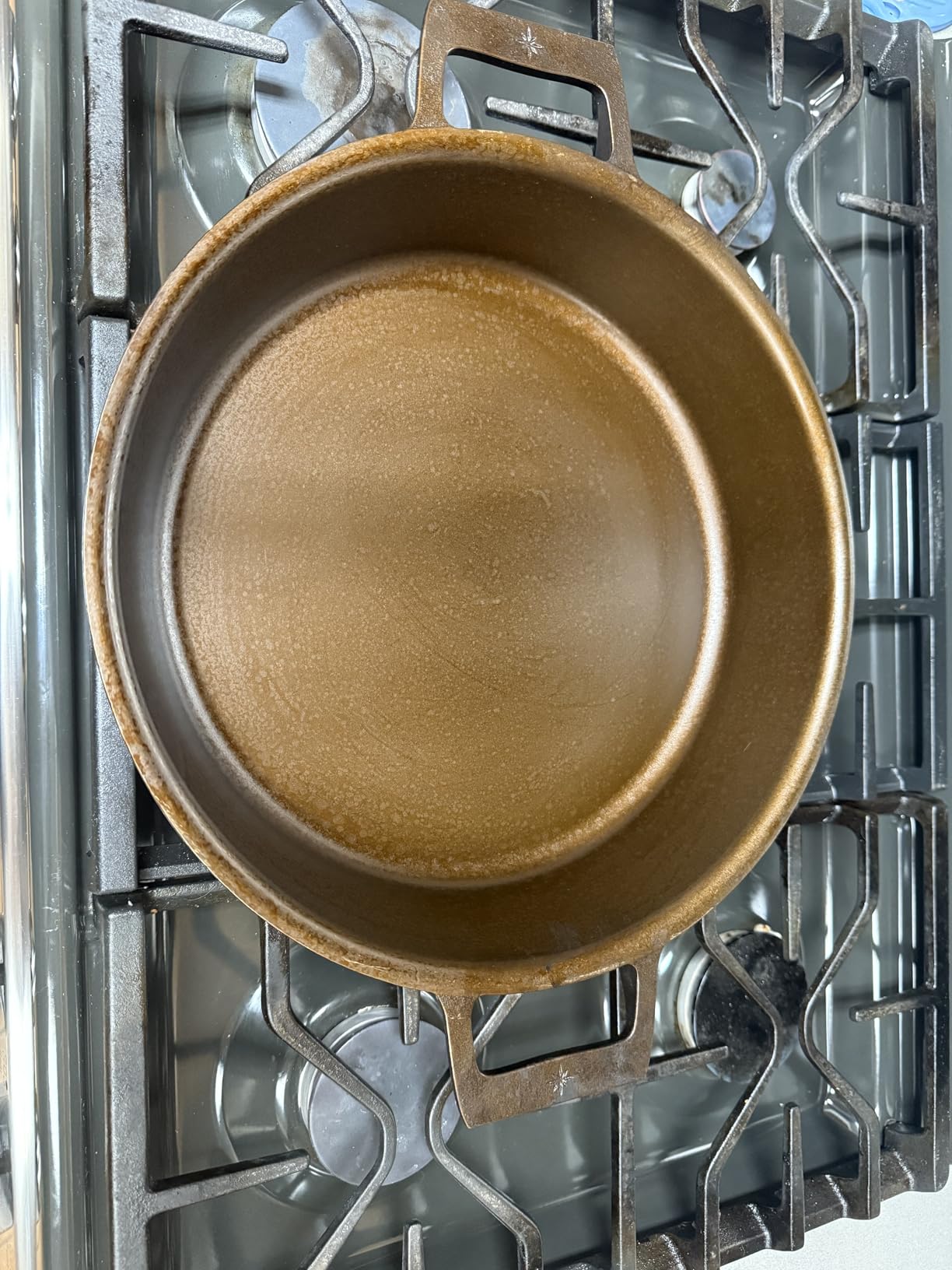
This is the pan for people who upgrade from a rough-cast Lodge and immediately wonder why they did not do it sooner. The surface is machined smooth rather than sand cast, and owners coming from conventional pre-seasoned iron describe the release as a step change, with food lifting cleanly instead of needing a spatula and a shoulder.
For a steak, that smoothness shows up as an even, complete crust with a cleaner surface texture and less tearing when you flip. Heat distribution and retention are reported as excellent, and reviewers specifically single out thick ribeyes as the cut this pan handles well. At 6.5 pounds with a 3.4 quart capacity, it also gives you room for a generous portion without crowding.
Two design details matter more for cooking than the spec sheet suggests. The stay-cool handle can be gripped with a dish towel, which removes the single most common safety annoyance in cast iron searing. The flared rim pours cleanly from any angle without a separate spout, which is exactly what you want when you are tipping fond and pan juices into a wine reduction after the steak is out.
It is individually crafted and pre-seasoned in the USA, and it carries a lifetime warranty against manufacturer defects. That is a longer guarantee than most pans in this group offer.
Who this pan suits
This is the pick if your searing is a regular habit and you cook steaks often enough that a slightly better crust is worth paying up for. It is also the one to buy if you plan to deglaze the pan afterwards, because the machined surface holds fond well and the flared rim makes the pour clean.
It is a strong choice for anyone who wants one pan to do everything, from a thick ribeye to cornbread to a weeknight pan sauce, with a surface that will not fight delicate food.
Where it falls short
It is a heavy pan at 6.5 pounds, and the handle shape is genuinely divisive. Owners who prefer a conventional handle find it uncomfortable palm-down, so if grip ergonomics matter to you, this is not a blind buy.
There is also a single report of base warping on the 13.5 inch variant, which caused a wobble on the burner. Warping is the failure mode that ruins a sear, so check that your pan sits flat before you commit. Beyond that, the price is well above the entry-level field.
6. Le Creuset Signature 11.75 Inch Enameled Skillet – Best Enameled Option
Le Creuset Enameled Cast Iron Signature Round Skillet, 11.75″, Marseille
6.8 pounds cast iron
11.75 inch diameter
Oven safe to 500F
Dishwasher safe
No seasoning needed
Pros
- Superior heat distribution and retention in heavy iron
- No seasoning to build and nothing to rust
- Lightest cast iron per quart in its class
- Enamel resists dulling staining chipping and cracking
- Dishwasher safe and works on every cooktop
Cons
- By far the most expensive skillet here
- Enamel can chip if the pan is dropped
- 6.8 pounds is a serious one-handed lift
- Satin enamel is stickier than bare iron for delicate food
Enameled cast iron is the right pan for searing when you plan to deglaze. On a forum thread devoted to exactly that question, cooks reach for enameled iron specifically because there is no off-flavour from bare metal and no seasoning to worry about, and the fond comes up clean for a wine reduction. That is the argument for this pan, and it holds up.
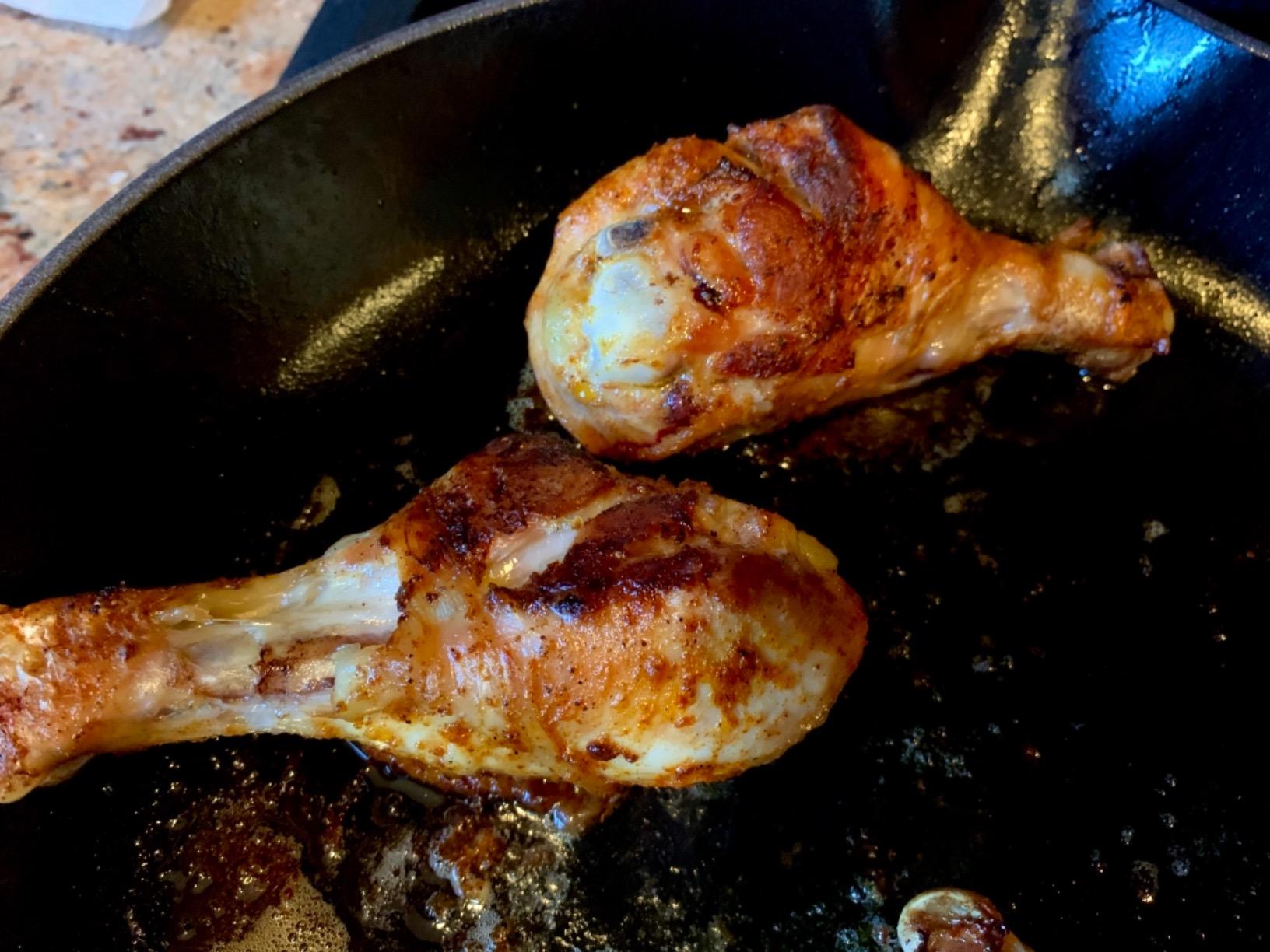
The heat behaviour is the same heavy cast iron everyone else in this list has, reported as even distribution and strong retention. It is oven safe to 500F, works on every cooktop, and goes in the dishwasher, which removes the single most common complaint about bare cast iron. The black satin interior develops a patina over time that improves cooking performance rather than degrading it.
Reviewers note that despite a 6.8 pound absolute weight, this is the lightest cast iron per quart in its class, which is why the cooking area feels more generous than the number suggests. The durable enamel resists dulling, staining, chipping, and cracking in normal use, and the finish still looks good years later.
The catch is the cooking area itself. At 11.75 inches it is smaller than a 12 inch bare-iron skillet, so if you regularly sear a full T-bone with a large bone cap, check your clearance before you commit.
Who this pan suits
This is the pick for cooks who want a hard sear without any of the maintenance. No seasoning to build, no rust anxiety, no chainmail scrubber, no worrying about what you put in the dishwasher. For someone new to cast iron who will not maintain it consistently, enamel removes the most common failure mode entirely.
It is also the best choice if your searing is a prelude to a pan sauce, because the enamel surface gives you clean fond with no metallic edge to the flavour.
Where it falls short
The price is dramatically higher than every other pan in this roundup, and you are paying partly for a finish rather than purely for searing performance. Bare seasoned iron in the same size costs a fraction of that and sears just as hard.
Enamel is also more fragile in one specific way: drop the pan and the coating can chip, which is catastrophic for a pan you chose because it never needs repair. And satin enamel is stickier than bare seasoned iron for very delicate food, so this is a steak pan, not an egg pan.
7. Cuisinel 12 Inch Cast Iron Skillet with Lid and Handle Holder – Best Complete Set
Cuisinel Cast Iron Skillet with Lid – 12″-Inch Frying Pan + Glass Cover + Silicone Handle Holder – PFAS and PFOA-free Pre-Seasoned Oven Safe Cookware – Indoor/Outdoor Use – Grill, BBQ, Fire, Stovetop
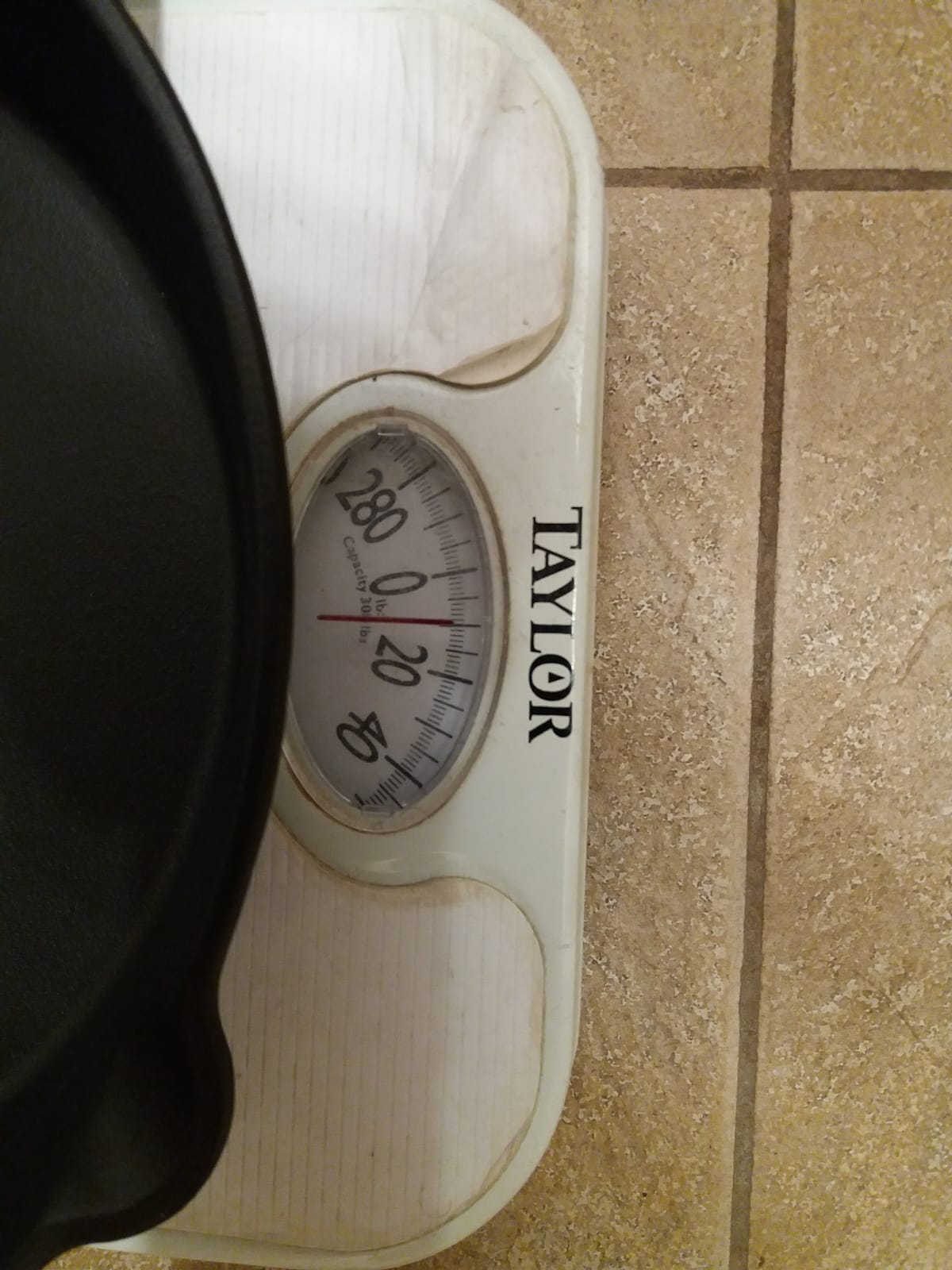
5.15 kg with accessories
3 quart capacity
Includes glass lid and silicone holder
Induction compatible
PFAS and PFOA free
Pros
- Bundle includes a tempered glass lid and silicone handle holder
- Smooth casting with no pitting cracks or flashing globs
- Good out-of-box seasoning
- Highest-rated non-enameled option here at 4.7 stars
- Works on stovetop oven grill braise and campfire
Cons
- Factory seasoning is light and needs a re-seasoning
- Sticking on the very first cook is common
- Heavy at 5.15 kg especially with the lid
- Only a one-year warranty against lifetime coverage rivals
The reason to buy this one is the bundle, and the bundle is genuinely useful for steak. A tempered glass lid turns the pan into a covered braiser for the oven-finish stage, and the silicone handle holder does the single most practical thing you can do about cast iron handles, which is stop them cooking your hand while the pan is at searing heat.
Underneath the accessories, the pan is competent. Reviewers compliment the smooth casting with no pitting, cracks, or flashing globs, and report even heat distribution across gas, electric, and induction. At 3 quarts and 12 inches, the surface is large enough for a family batch of steaks in a single layer.
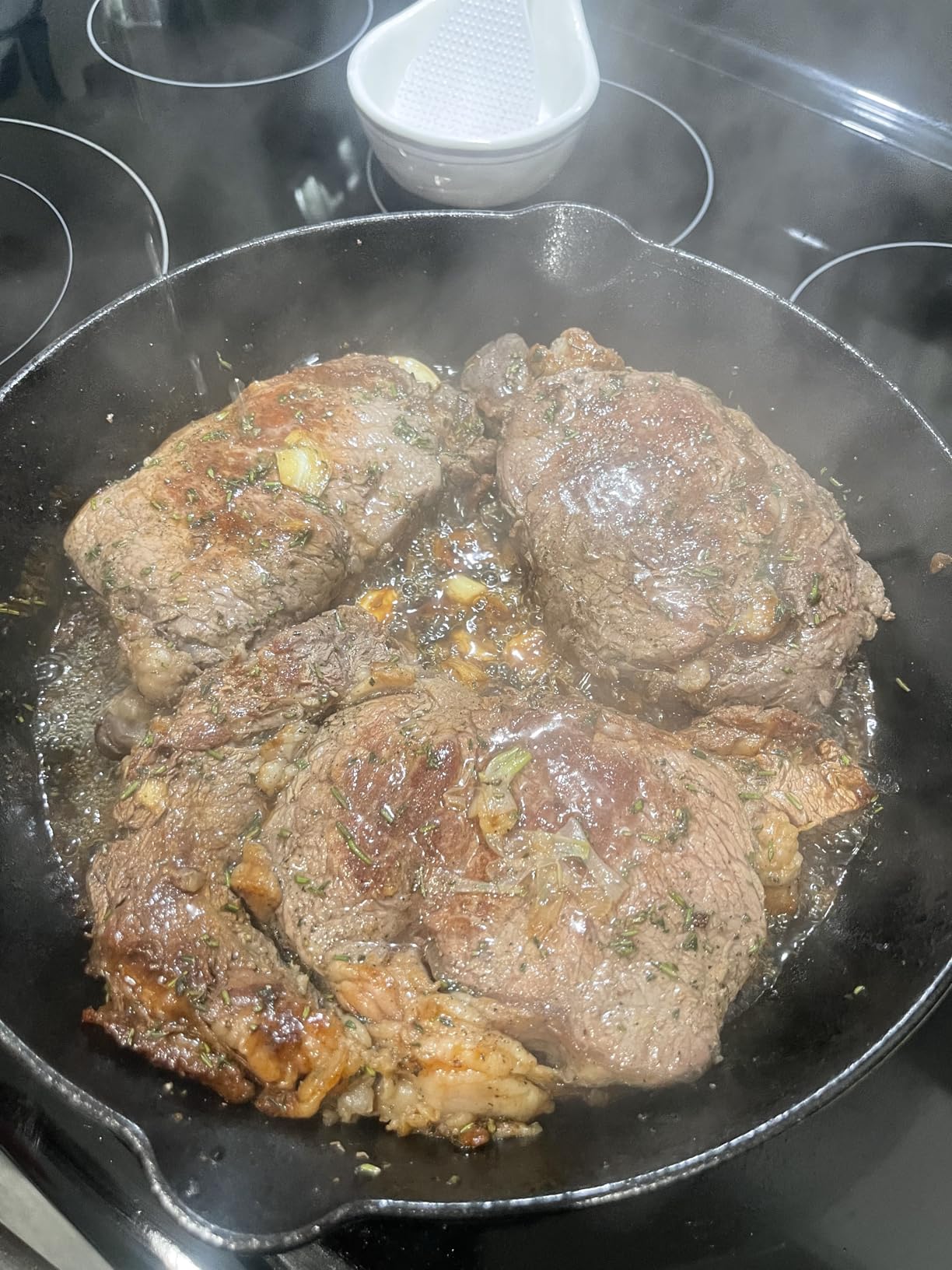
The recurring early complaint is sticking on the first cook, and almost every owner resolves it the same way: re-season the pan and get it properly hot. Once seasoned, the reviews describe home fries browning without sticking and the pan heating and cooking evenly without drama.
The quality-perception gap is the warranty. One year of manufacturer coverage is thin against the lifetime warranties offered by Lodge and Stargazer, and that gap is what buyers notice first when they compare the two options.
Who this pan suits
This is the pick if you sear on the stovetop and finish in the oven, and you want the lid for the covered finishing step without buying a separate piece. The silicone holder also makes it the most forgiving option here for cooks who are not confident gripping a bare cast iron handle.
It suits anyone who wants one pan for searing, baking, grilling, braising, and campfire work, and who would rather have the accessories included than buy them separately.
Where it falls short
The light factory seasoning means your first cook is a test of your technique rather than the pan. Re-season before you judge it, or you will draw the wrong conclusion from a single sear.
At 5.15 kg with the lid, this is a heavy object, and the one-year warranty is the shortest here. If the pan warps or cracks, you have far less recourse than with a lifetime-warranty rival.
8. Wasatch 12 Inch Smooth Pre-Seasoned Skillet – Best Polished Finish
Backcountry Iron 12 Inch Smooth Wasatch Pre-Seasoned Round Cast Iron Skillet
5 pounds cast iron
12 inch diameter, 12.50 spout to spout
4.75 inch handle
Machined smooth surface
Quadruple seasoned
Pros
- Machined surface holds an excellent seasoning with easy release
- Sear quality reviewers compare to enameled cast iron
- Retains heat longer and more evenly than conventional iron
- Quadruple seasoned for a ready-to-cook bronze patina
- Includes a knit handle cover for the hot handle
Cons
- Well above the price of entry-level skillets
- Smallest review base in the set at 526
- Lowest rating among smooth-surface options at 4.4
- Demanding rust discipline with no dishwasher and no soaking
This pan is a modern revival of the polished vintage tradition, and the reviews treat it that way, with owners comparing it to Wagner and Griswold. The cooking surface and sides are machined smooth with a glossy bronze finish, and that surface is what earns the sear reputation: strong browning and a seasoning layer that grips the machining rather than sliding off it.
Heat retention is reported as longer and more even than conventional cast iron, which is the property that matters most when a cold ribeye hits the pan. At 5 pounds with a 12 inch diameter, 12.50 inches spout to spout, and a 4.75 inch handle, the geometry is well proportioned for a full-size steak with clearance on both sides.
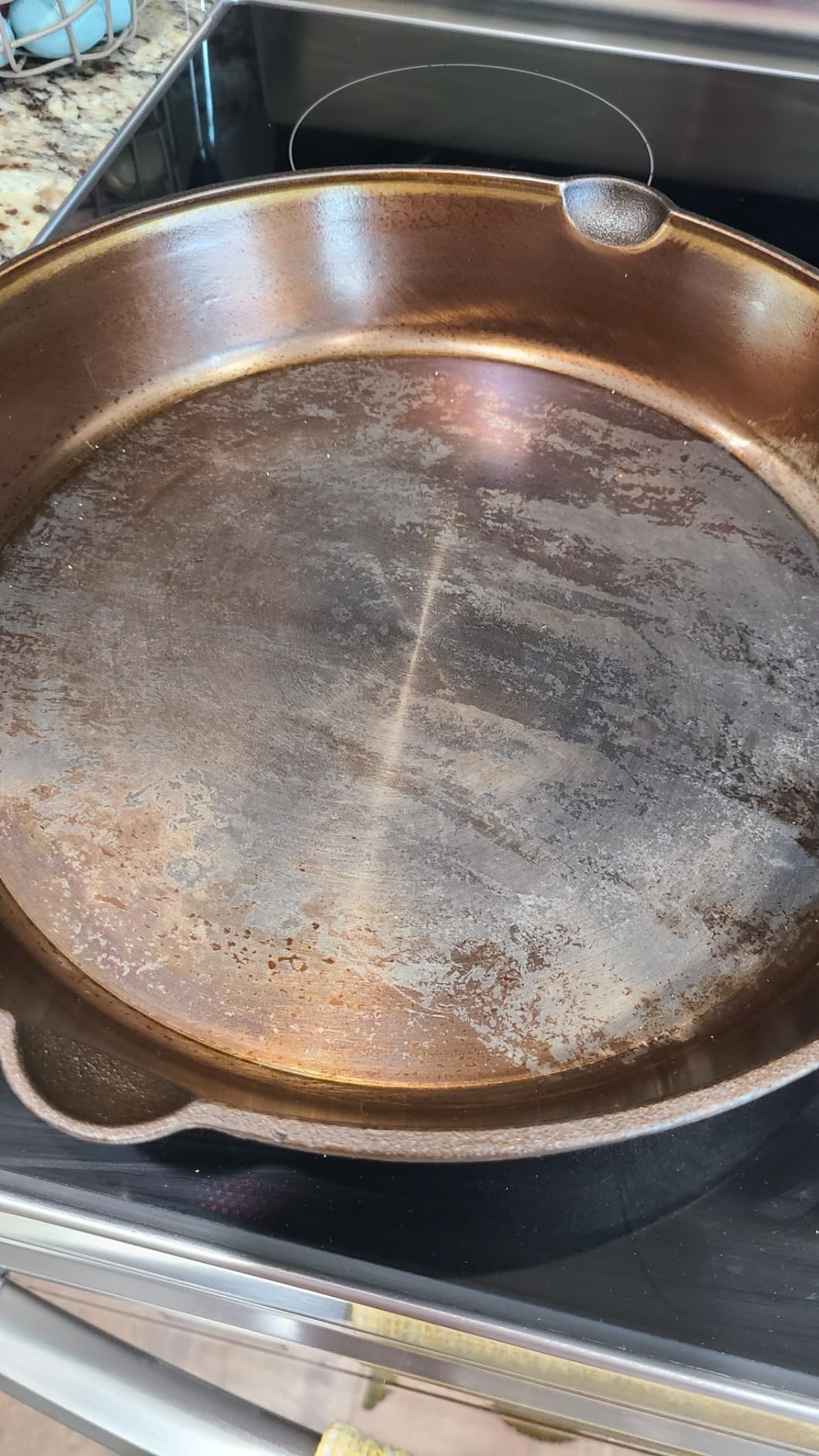
It arrives quadruple seasoned with vegetable and grapeseed oil, so the bronze patina is present on day one rather than something you wait a year to build. The included knit handle cover is a small touch that solves the hot handle problem cheaply, and the flat bottom is stable across electric, induction, and gas.
Care is the demanding part. Guidance across the reviews is consistent: hand wash, dry immediately, never soak, never air dry, and re-oil while warm. Get that wrong once and you will fight rust on a pan you paid a premium to own.
Who this pan suits
This is the pick for a cook who already understands cast iron maintenance and wants a visibly finer, more refined cooking surface than a sand-cast pan. The machined finish is a genuine step up in release and in how the crust looks after a sear.
It also suits anyone who wants to pan sauce from the same pan, since the polished surface holds fond and the spout-to-spout width of 12.50 inches makes for controlled pouring.
Where it falls short
The review base is the thinnest in this roundup at 526, which means very little long-term owner feedback. You are trusting the design and the specification more than you are trusting a decade of reports from other cooks.
It also carries the lowest rating among the smooth-surface options here, and the care requirements are the strictest in the group. If you are not disciplined about drying and re-oiling, buy the enameled option instead and skip the maintenance entirely.
9. Greater Goods 10 Inch Smooth Cast Iron Skillet – Best for Compact Kitchens
Greater Goods 10″ Cast Iron Skillet, Smooth Surface, Nonstick-Like Release
5.1 pounds cast iron
10 inch diameter, 2.2 quart capacity
5.5 inch handle plus helper handle
Dual pour spouts
Milled smooth surface
Pros
- Milled smooth interior gives easy release and wipe-clean cleanup
- Handle stays cooler longer and a silicone sleeve is offered
- Pre-seasoned with organic flaxseed oil
- Well suited to searing steaks and burgers after sous vide
- Practical everyday 10 inch size for two to four people
Cons
- Outer surface and bottom are rough from sand casting
- Pre-seasoning can arrive incomplete and sticky
- Heavy at 5.1 pounds for a 10 inch pan
- Acidic sauces strip seasoning and can taste of iron
This is the route into polished cast iron for cooks arriving from nonstick. The interior is precision milled, which means a steak releases far more easily than it would from a pebbled Lodge surface, and cleanup is a wipe rather than a soak. Owners coming from Lodge describe it as a cheaper path to the same refined feel.
It is explicitly the skillet cooks reach for after a sous vide cook, when the steak only needs a hard sear on each face. That is a specific and very good use case: a low-temperature finished steak needs exactly one thing from a pan, which is fierce, even, fast heat on the surface. The milled surface handles it without tearing the exterior.
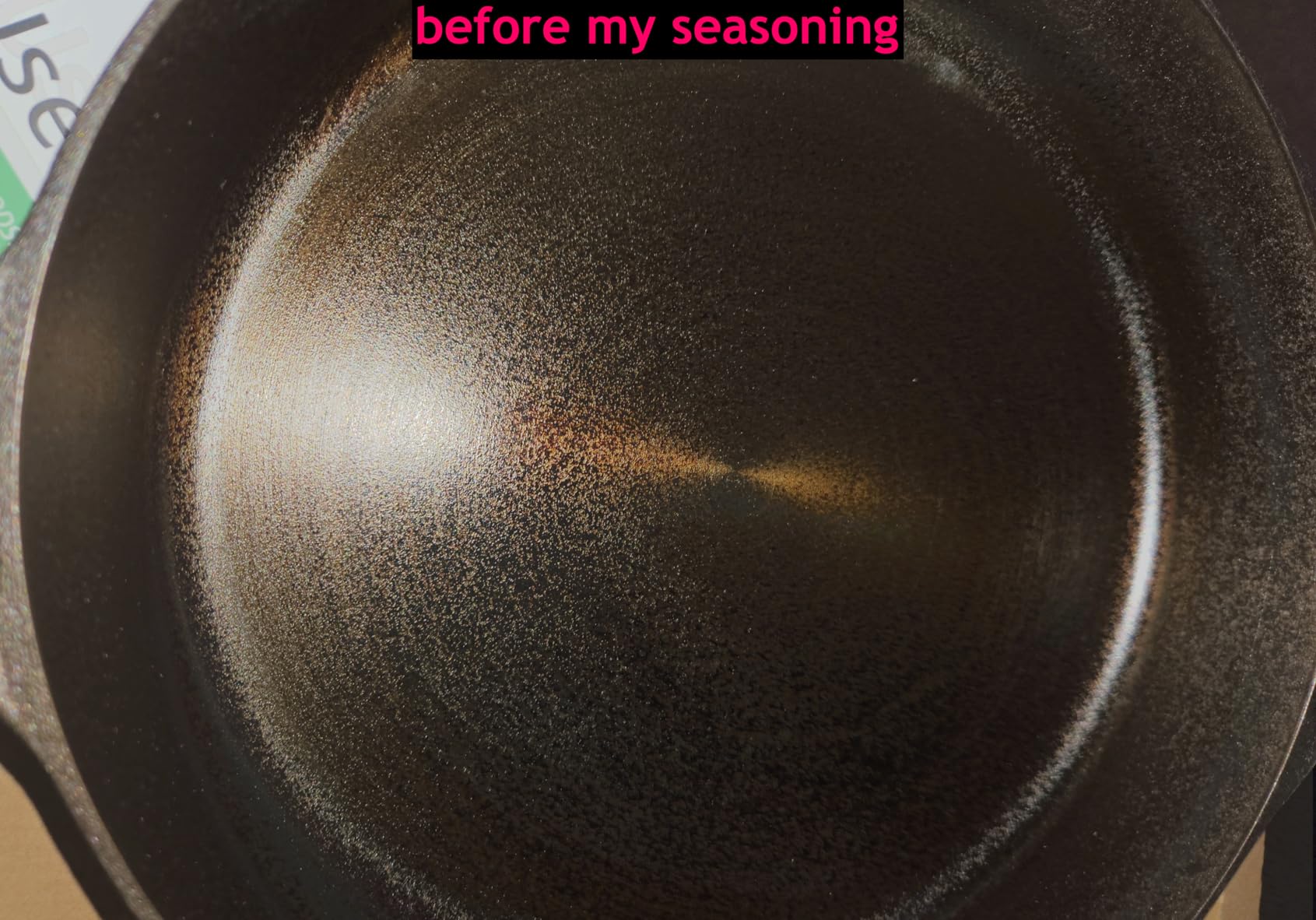
The details are unusually thoughtful for the price band. A 5.5 inch primary handle, a dedicated helper handle, and dual pour spouts give you control when you are moving a 5.1 pound pan and tipping juices. The handle stays cooler longer than most, and a silicone sleeve is offered, though it is effectively required for a long cook.
Care guidance dominates the reviews, and it is the standard routine: dry on the stovetop after washing, re-oil while warm, avoid soap. The best seasoning range is 450F to 500F if you decide to build a stronger layer yourself.
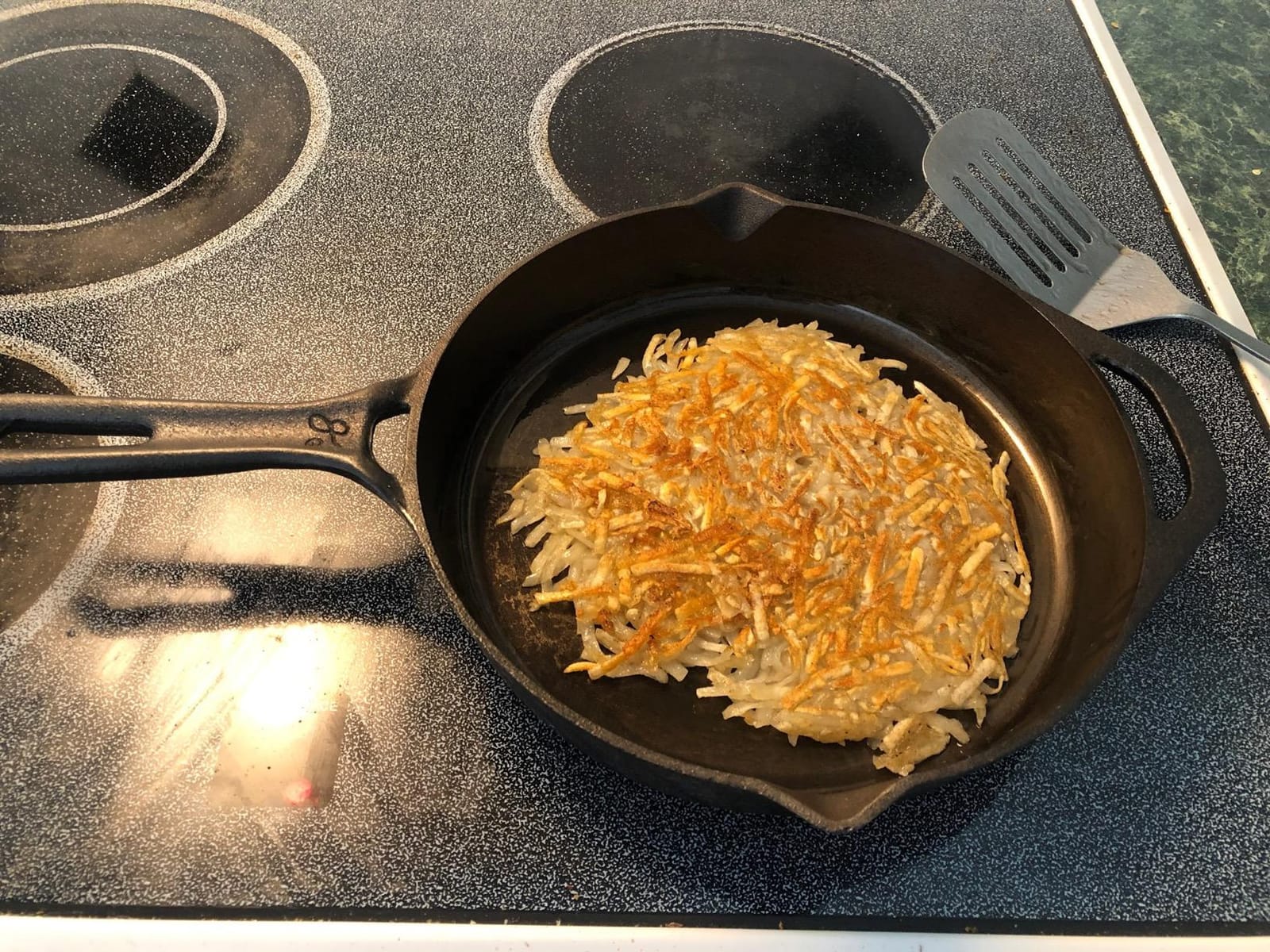
Who this pan suits
This is the pick for a compact kitchen, a small household, or anyone who sears one or two portions at a time and does not want a 6 pound pan dominating the cabinet. A 10 inch surface is a practical everyday size for two to four people.
It is the strongest option here for sous vide and reverse sear users, because a finished steak needs a pan that can sear hard and release cleanly in a short window. It is also a good choice for anyone moving from nonstick who wants easy release without a synthetic coating that peels.
Where it falls short
The pre-seasoning is inconsistent. Several owners report a sticky, patchy first layer that needed several extra rounds before it behaved, and you should expect to add layers rather than cook on it immediately.
The outer surface and bottom are still rough from sand casting, which can scratch a glass cooktop unless you sand them first. And at 5.1 pounds it is heavy for a 10 inch pan, so the lighter Mercer 10 inch may suit you better if weight is the deciding factor.
10. Tramontina Bestow 12 Inch Enameled Cast Iron Skillet with Lid – Best Enameled Value
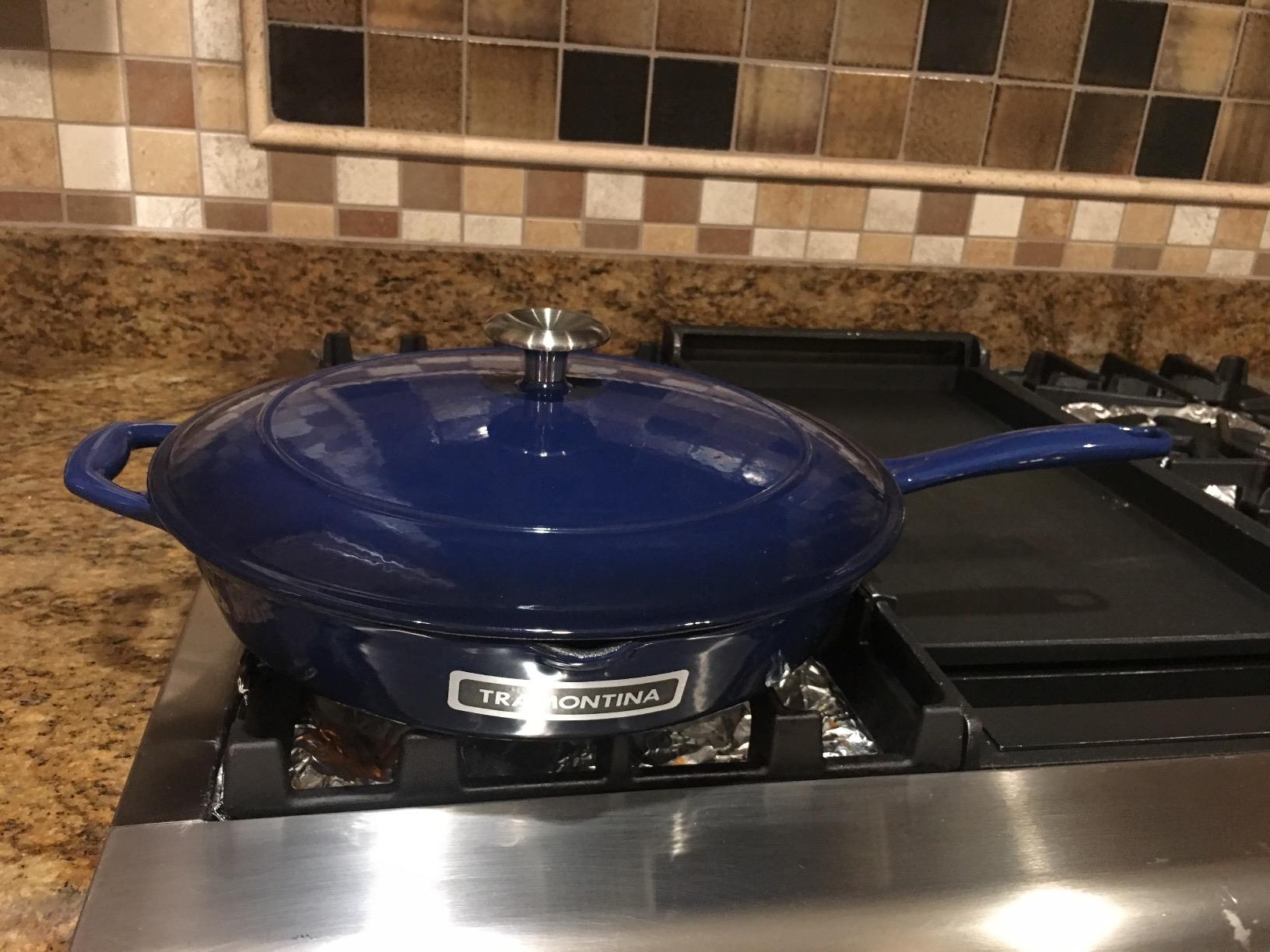
Tramontina Bestow Enameled Cast Iron 12-Inch Skillet with Lid, Blue
5.7 kg cast iron
12 inch diameter, 3.25 liter capacity
Oven safe to 450F
Induction compatible
HT150 alloy construction
Pros
- HT150 alloy gives strong even heat retention for searing
- Matte-black porcelain enamel needs no seasoning
- Self-basting lid with condensation ridges keeps food moist
- Works on gas electric ceramic glass and induction
- Largest cooking capacity in the set with a lifetime warranty
Cons
- Lowest rating in the group at 4.2 stars
- Heavy relative to its cooking area at 5.7 kg
- Enamel oven limit is 450F rather than 500F
- Hand wash only despite the enameled construction
This is the value route into enameled cast iron, and the self-basting lid is what makes it interesting for steak work. The condensation ridges collect steam and drip it back onto the meat, which matters if you finish a thick ribeye under a gentle oven heat and want to keep the interior juicy rather than dry it out.
The heat retention is genuinely good. The HT150 alloy is a heat-retaining cast iron alloy, and reviewers praise both the even cooking and the range of compatible cooktops, including induction, gas, electric, and ceramic glass. At 3.25 liters and 12 inches, this has the largest cooking capacity in the group, which beats the 11.75 inch Le Creuset for a family batch.
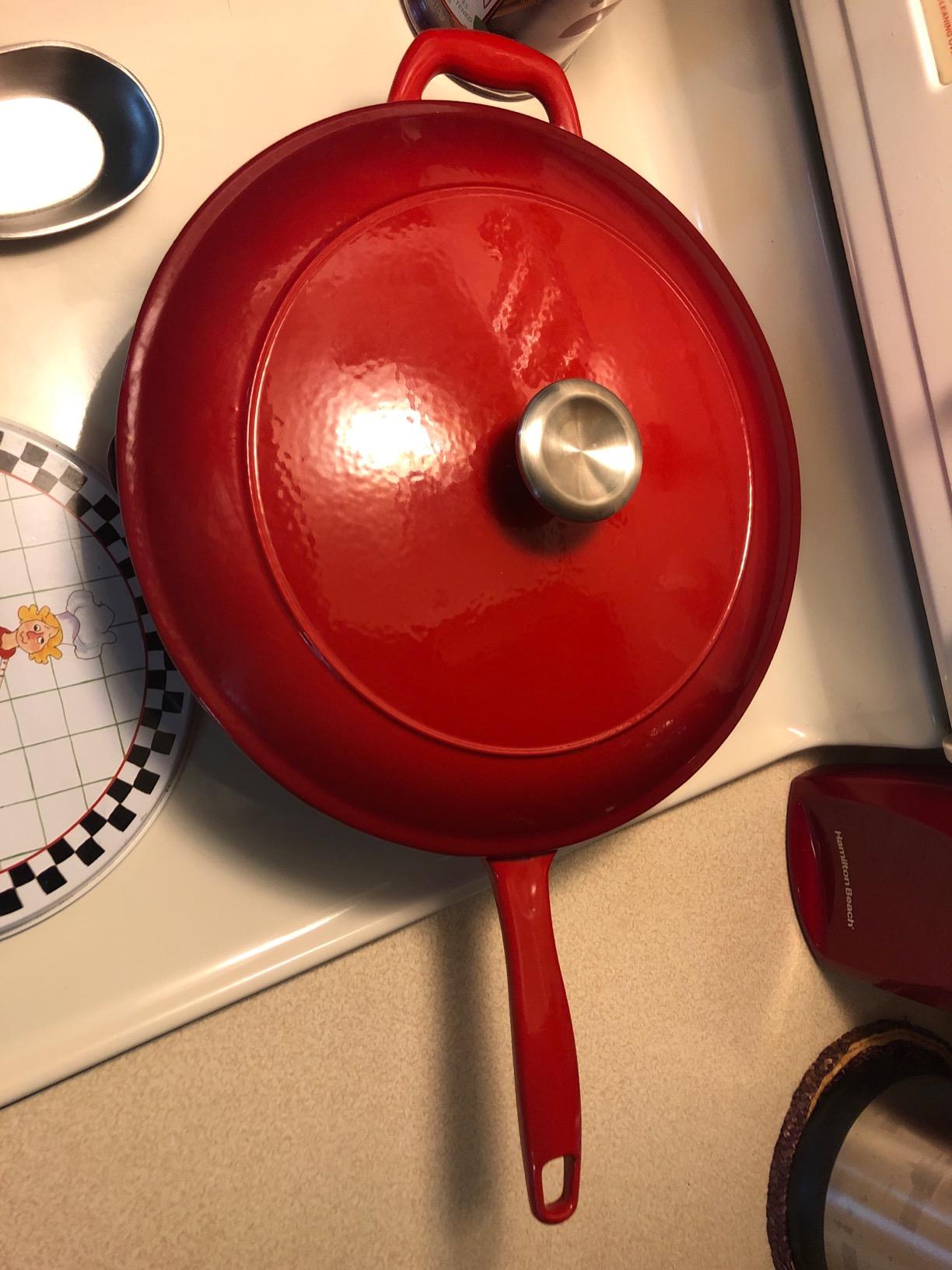
The interior is a matte-black porcelain enamel with no seasoning required, and it cleans up far more easily than bare seasoned iron. For a cook who wants a hard sear and zero maintenance, that combination is the whole pitch, and it works.
What holds it back is the 4.2 star average, the lowest here, with a meaningful share of one-star reviews. The causes are consistent: heavier than expected, a 450F oven ceiling rather than 500F, and hand-wash-only care even though the pan is enameled. Some buyers also report that the enamel interior is less forgiving than bare seasoned iron at very high heat.
Who this pan suits
This is the pick for a large household that sears a lot of steaks at once and wants a pan that needs no seasoning. The 3.25 liter capacity and 12 inch surface mean a full batch of portions in a single layer, and the induction compatibility means it works on whatever range you own.
It also suits anyone who wants a covered, oven-to-table finish, since the lid comes in the box and the self-basting design does the work of keeping the meat moist during a gentle finish.
Where it falls short
The 450F oven limit is a real constraint for a steak-first cook. A reverse sear finish at 400F fits comfortably, but pushing a hot sear straight into a 500F oven does not, and that ceiling is a genuine difference from bare iron.
It is also the heaviest pan here relative to its cooking area, and the lowest rated, which means the ownership experience is less consistent than the specification sheet suggests. If you want the same maintenance-free approach with a better track record, the Le Creuset is the alternative, at a much higher outlay.
How to Sear a Steak in Cast Iron Without Hot Spots
Cast iron retains heat far better than it conducts it. That combination is the whole reason a cast iron skillet is good at searing: the pan stays hot when a cold, wet steak hits it, so the Maillard reaction keeps running. The same property is its weakness, because heat also spreads slowly across the cooking surface, so the area above the burner browns before the outer ring catches up. That is a hot spot, and it is why half your steak burns while the other half stays pale.
The fix is counterintuitive and cheap. Heat the pan in a 500F oven for 20 to 30 minutes instead of preheating it on the stovetop. In an oven, convective heat surrounds the entire pan evenly, so by the time it reaches the burner it has no cold outer ring to shock. On the stovetop you can replicate this in about 10 minutes on medium heat, but the oven is more reliable.
The eight steps
1. Salt and rest. Salt the steak at least 30 to 40 minutes before cooking and leave it uncovered on a rack. Resting draws surface moisture off, and a wet steak steams instead of sears. Pat it dry again right before it goes in.
2. Preheat. Put the pan in a 500F oven for 20 to 30 minutes. Do not put a cold pan on a hot burner and call it preheated; that is what creates the uneven pan you are trying to avoid.
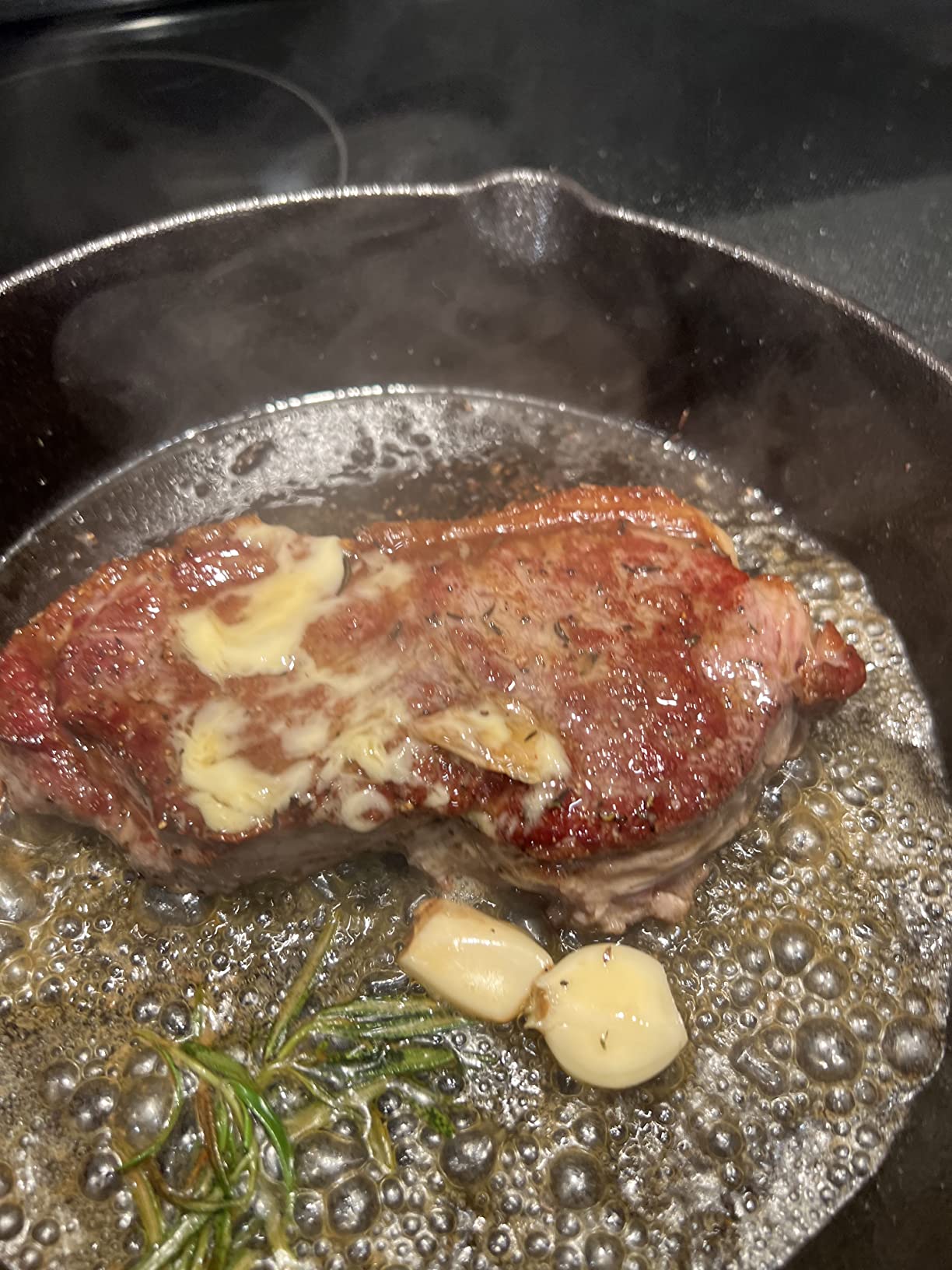
3. Add two tablespoons of oil. This is more than instinct suggests, and the reason is that meat contracts as it cooks. Two tablespoons of a high smoke point oil is enough to keep the surface from tearing and to prevent the fond from burning. Vegetable oil begins to smoke somewhere between 400F and 450F, so wait for a shimmer and the first wisp of smoke.
4. Lay the steak in away from you. The pan is at searing heat. If the oil spits violently, the pan is a little too hot for the moment, so pull it back to medium and wait.
5. Leave it alone for two minutes. Do not move it, do not shake the pan, do not press it. The crust needs contact time to form, and every early lift tears it. A steak that sticks hard at this stage is telling you the pan was not hot enough or the oil was not enough.
6. Flip every two minutes. Repeated flipping, rather than one long sear, is what kills the gray band, that overcooked chalky ring between the crust and the interior. Two minutes per side, several times, cooks the steak through without scorching a ring.
7. Drop to medium-low after the first sear. You have already banked your crust at high heat. Now you are cooking the interior, and blasting it at full temperature is how you get a burnt outside and a raw centre.
8. Finish in the oven at 400F for 7 to 9 minutes for thick cuts, then rest 5 to 10 minutes. This is the community-standard reverse sear on bbq-brethren, and it pairs naturally with a pan that is oven safe. The rest is not optional; it is where the juice reabsorbs so the steak does not leak across the board when you cut it.
On the 3-3-3 rule you will read about online, treat it with caution. It is a shorthand of roughly three minutes sear per side, three minutes rest, for a steak cooked to medium, and it assumes a thin cut on a very hot pan. Cast iron at searing heat is better handled with the repeated two-minute flip and the oven finish above, which is what produces an even crust without a gray band.
Oil, Smoke Point, and Getting the Crust Right
A cast iron skillet is best for searing steak because its high thermal mass holds searing temperature even when a cold, wet steak hits the pan, which produces a deep, even Maillard crust without burning the oil. Oil selection is the second half of that equation, and the loudest complaint in every cooking forum is the same one: the pan and oil smoke badly, described on one thread as akin to a hot airport tarmac.
Use a high smoke point oil for the initial sear. Avocado oil holds to roughly 520F, refined or light olive oil to around 470F, canola to about 450F, sunflower to around 440F, and grapeseed to about 420F. Beef tallow, the recurring enthusiast recommendation, sits near 400F but forms a stable film that many cooks prefer for a hard sear. The visual cue is the same for all of them: the oil shimmers and just begins to smoke.
Two tablespoons for a single steak is the number most home cooks get wrong by a wide margin. Meat contracts during cooking, and a thin film of oil tears the surface instead of letting it brown. Beyond the smoke, avoid extra virgin olive oil and butter for the first sear, both because they smoke below searing temperature and because dairy burns before the crust is set. A common r/Cooking recommendation is to use a high smoke point vegetable oil for exactly this reason.
There is a genuine minority view, well argued on smokingmeatforums, that you should oil the steak rather than the pan, on the theory that fat on the meat is what prevents sticking and keeps the crust intact. It works, but it gives up some of the fond, and the majority method is more forgiving. Either way, sear indoors only with a working exhaust fan, or take the pan outside.
Cast Iron vs. Carbon Steel vs. Stainless Steel for Searing
For a hard sear, cast iron and carbon steel are the two credible answers, and stainless steel is the better choice for fond and pan sauces. Cast iron wins on heat retention: the heavy mass keeps searing temperature through a cold steak and produces the deepest crust. Carbon steel wins on weight and response, heating fast and responding immediately to heat changes, which is why some cooks reach for it instead. Stainless sears well but has a different character, browning well at high heat with less thermal mass to hold the temperature.
The pan sauce question is the honest counterpoint. On the forum thread dedicated to searing steaks and then deglazing for a wine reduction, cooks prefer enameled cast iron precisely because there is no off-flavour from the metal and no seasoning to worry about, and the fond comes up clean. Bare seasoned iron gives you a deeper, more savoury fond that leans into a wine reduction, but a faint metallic edge can appear if the fond burns.
So the honest answer to which is better for searing steak is that cast iron wins the crust, stainless wins the sauce, and carbon steel sits in between as the lighter, more responsive option. For most home cooks buying one pan, a 12 inch cast iron skillet is the right default.
Which Pan Size to Match Your Steak
Size matters more than most buyers expect, because crowding is the fastest way to ruin a sear. A pan packed with meat drops in temperature, the surface steams instead of browning, and you get a grey, uneven crust with no browning at all. Steak tips in particular need room to spread in a single layer, and they should be seared in batches of two to three minutes rather than dumped in together.
A 10.25 inch skillet handles one steak comfortably and suits a single filet or strip. A 12 inch skillet handles two to four steaks and is the right default for a household. For steak tips, a 12 inch pan with a large surface is close to mandatory, because the tips need to touch the hot surface individually rather than sit on each other.
Weight is the second factor, and it is a safety factor rather than a performance one. A heavy pan full of smoking oil is a genuinely difficult object to move one-handed, and handle temperature is the practical limit. Short cast iron handles get uncomfortably hot, and cooks routinely reach for towels or oven mitts mid-sear. If that describes you, choose a pan with two assist handles or an included handle sleeve rather than a single long handle on a heavy body.
Seasoning state out of the box is the third. Pre-seasoned does not mean perfectly seasoned. Several pans here arrive with a thin or patchy first layer, and owners repeatedly recommend an extra baking cycle at around 450F to 500F before the first serious cook. Twenty minutes of work removes the most common first-meal disappointment in cast iron.
Finally, think about ventilation before you buy, not after. High-heat cast iron searing indoors is smoky by nature. If your kitchen has no working hood fan, or you are cooking on an open apartment floor, the best skillet in the world will not solve the problem. Cook outside, or pick a different dinner.
Frequently Asked Questions
What is the best oil to use to sear steak in a cast iron pan?
Use a high smoke point oil: avocado (about 520F), refined or light olive oil (about 470F), canola (about 450F), sunflower (about 440F), or grapeseed (about 420F). Beef tallow is also popular for its stable film. Use roughly two tablespoons. Avoid extra virgin olive oil and butter for the initial sear because they smoke and burn below searing temperature.
What is the best way to sear a steak in a cast iron skillet?
Preheat the pan in a 500F oven for 20 to 30 minutes to eliminate hot spots, add two tablespoons of high smoke point oil, wait for a shimmer, then lay the steak in away from you. Leave it undisturbed for two minutes, flip every two minutes, drop to medium-low after the first sear, and finish thick cuts in a 400F oven for 7 to 9 minutes before resting.
Is it better to sear a steak in cast iron or stainless steel?
Cast iron wins on heat retention and crust depth, because its heavy mass holds searing temperature through a cold steak. Stainless steel wins on fond quality and pan sauces, with no metallic off-flavour when you deglaze. For most home cooks buying a single pan, a 12 inch cast iron skillet is the right default.
Should you put oil on cast iron when searing steak?
Yes, and more than instinct suggests. Two tablespoons of a high smoke point oil is right for a single steak, because meat contracts during cooking and a thin film tears the surface instead of letting it brown. A minority of cooks grease the steak instead of the pan, which works but gives up some fond.
How long do you cook steak tips in a cast iron skillet?
Sear steak tips for two to three minutes per batch in a 12 inch pan so they touch the hot surface in a single layer. Crowding drops the pan temperature and prevents a crust, so work in batches rather than filling the pan. Cook them to your preference on the stovetop, or transfer to a 400F oven for a gentle finish.
Which brand of cast iron skillet is better, Lodge or Smithey?
For searing a single steak, neither is dramatically better. A Lodge performs the same as a more expensive pan, which is the consensus on r/castiron, and the money above the entry tier buys weight, surface finish, handle design, and pour spouts rather than a better crust. Lodge wins on proven heat retention and a lifetime warranty; the premium tier wins on a machined smooth surface.
The Best Cast Iron Skillets for Searing Steak: Final Verdict
The Lodge 12 Inch Pre-Seasoned Cast Iron Skillet is the best cast iron skillet for searing steak, because thermal mass is the whole game and this pan has it in spades, backed by more real-world use than anything else on this list. The Utopia Kitchen 12 inch does the same work for less, and the Lodge dual handle pan is the choice if moving a hot pan safely matters to you.
Beyond that, the differences narrow fast. Price does not buy a better crust, and a smooth surface helps release without making the browning dramatically deeper. We re-checked the whole field for 2026 and the verdict has not moved. Get your technique right first, using the 500F oven preheat and two tablespoons of oil, and any well-seasoned pan in this roundup will give you an excellent steak. Check the current price and availability for the picks above, and sear outside if you can.