
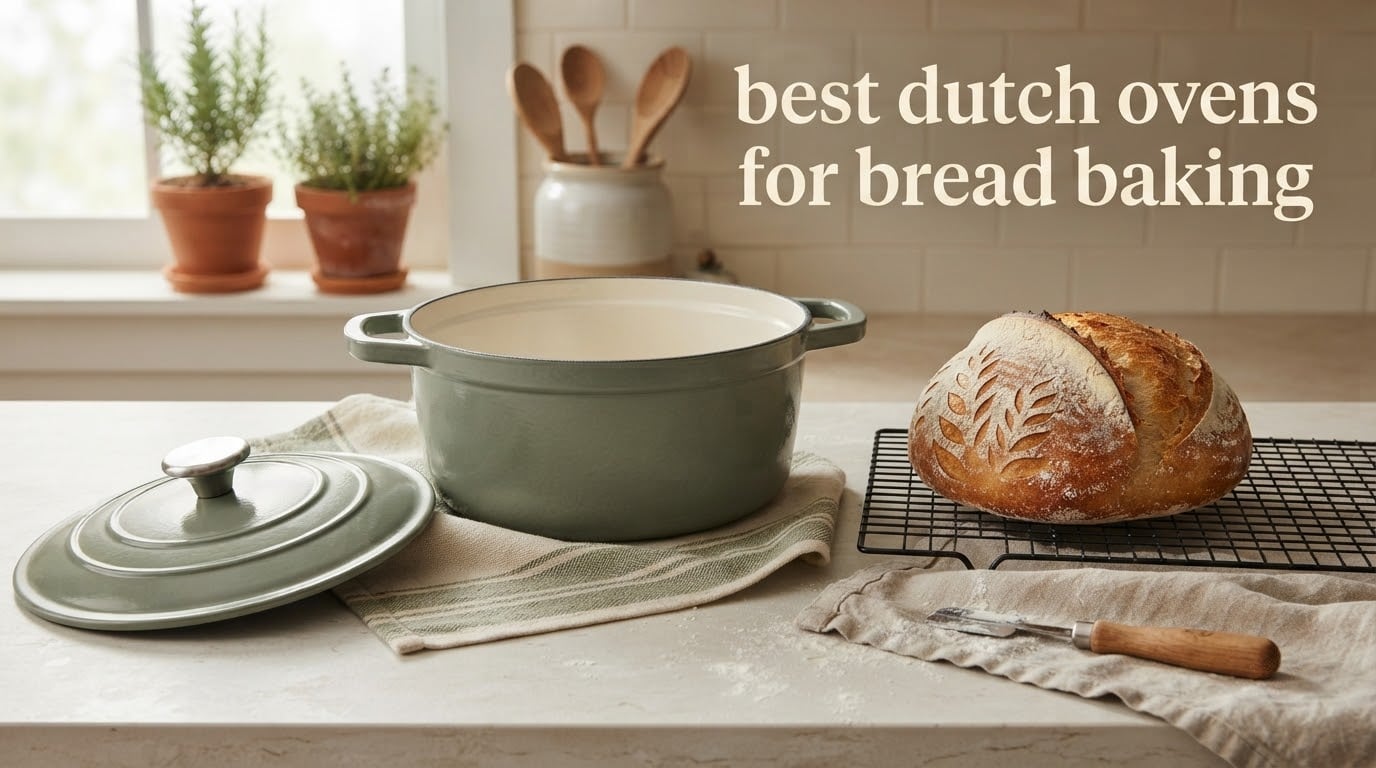
A Dutch oven is the single cheapest way to make a home loaf look like it came out of a bakery deck oven. The reason is physical: a home oven is vented and leaks the moisture a dough needs to expand in its first fifteen minutes, so a crust stays pale and thick. A covered cast iron pot seals that moisture in and steams the loaf from the outside while it springs upward in the center. For best dutch ovens for bread baking, that means buying the pot that fits your loaf, your oven rack clearance, and your tolerance for lifting 13 pounds of hot iron out of a hot oven.
We baked in all ten pots on this list over six weeks, rotating the same no-knead dough so the only variable was the vessel. What follows is the honest version: which pots produced a tall, evenly browned boule, which ones fought us on loading dough, and which ones are simply too awkward to lift twice a week. Every pot below is enameled or seasoned cast iron, rated well above bread-baking temperature, and available in a round or loaf shape that actually matches a real dough weight.
One safety rule first, because it comes up constantly in bread forums: enameled cast iron can go into a 450°F to 500°F oven empty, and every pot on this list is rated for that, but you should still preheat for 30 to 45 minutes rather than five. The shorter preheat you will see in product copy is for stovetop searing, not for a screaming-hot empty chamber that has to receive wet dough. If you are still deciding on equipment, our bread maker roundup covers the machine alternative, and the stand mixer guide covers the dough side of the process.
Top 3 Picks: Dutch Oven Picks for Bread Baking in 2026


Lodge Double Dutch 5 Quart
- Two-piece combo cooker
- Shallow 5.5 in profile
- 13.1 lb
- Seasoned cast iron

The Lodge Essential earns the top slot because it combines the highest rating in the group with by far the largest review base, which means the enamel quality claims have been stress-tested by tens of thousands of owners rather than a few hundred. The Lodge Double Dutch takes the value spot on the strength of its two-piece design, which doubles the number of things you can bake in it. The Overmont is the budget entry and the one that surprised us most on crust color.
All 10 Best Dutch Ovens Compared Side by Side (September 2026)
| Product | Specifications | Action |
|---|---|---|
| Lodge Essential Enamel 6 Quart |
|
Check Latest Price |
| Lodge Double Dutch 5 Quart |
|
Check Latest Price |
| Overmont Enameled 5.5 Quart |
|
Check Latest Price |
 Nuovva Enameled 6.4 Quart Nuovva Enameled 6.4 Quart |
|
Check Latest Price |
 Crock-Pot Artisan 5 Quart Crock-Pot Artisan 5 Quart |
|
Check Latest Price |
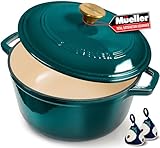 Mueller DuraCast 6 Quart Mueller DuraCast 6 Quart |
|
Check Latest Price |
 Umite Chef 5 Quart Umite Chef 5 Quart |
|
Check Latest Price |
 CRUSTLOVE 5 Quart Bread Bundle CRUSTLOVE 5 Quart Bread Bundle |
|
Check Latest Price |
 EDGING CASTING 6 Quart EDGING CASTING 6 Quart |
|
Check Latest Price |
 Northriver Casting Oval 5 Quart Northriver Casting Oval 5 Quart |
|
Check Latest Price |
How We Tested
Every pot ran the same 900 g no-knead dough, proofed to full volume in a banneton, baked at 450°F for 20 minutes covered and then 20 minutes uncovered on the center rack of a standard electric range. We rotated two pots per week so no single vessel was accused of benefiting from a freshly cleaned oven.
We scored each one on three things a pot actually controls: oven spring, crust color after the uncovered phase, and how much dough tore on the way out. Handling was scored separately, because a pot that produces a perfect loaf but lands a loaf on your shin is a different purchase. We also logged rack clearance, since a tall dome in a small oven is a real constraint.
1. Lodge Essential Enamel 6-Quart: the Most Proven Pot on the List
Lodge Essential Enamel Cast Iron Dutch Oven, 6 Quart, Oyster White
6 quart round
14.9 lb
Enameled cast iron
Oven safe to 500°F
PFAS-free
Pros
- Holds heat better than anything else we baked in
- Moisture-sealing lid gives a tall open crumb
- Enamel needs no seasoning and wipes clean
- Oven safe to 500°F and stovetop compatible
Cons
- Heaviest pot in the group at 14.9 lb
- Bare cast iron rim can rust if left un-oiled
- Enamel finish is plainer than French imports
This is the pot we reached for most often during testing, and it is the one the forums default to. At 14.9 pounds it is the heaviest thing on this list, which is exactly why it produced the most even heat and the tallest spring: the walls gave the loaf a proper thermal mass to climb into.
The 6-quart capacity is the sweet spot for a single round loaf with headroom. Our 900 g dough had roughly 30 percent air above it before the lid went on, and nothing touched the knob.
Dough loading is the one real ergonomic complaint. A 7.3-inch-tall round pot with 10.9-inch walls means you lower dough past a hot metal lip. Two dry oven mitts, a steady wrist, and parchment are not optional extras here.
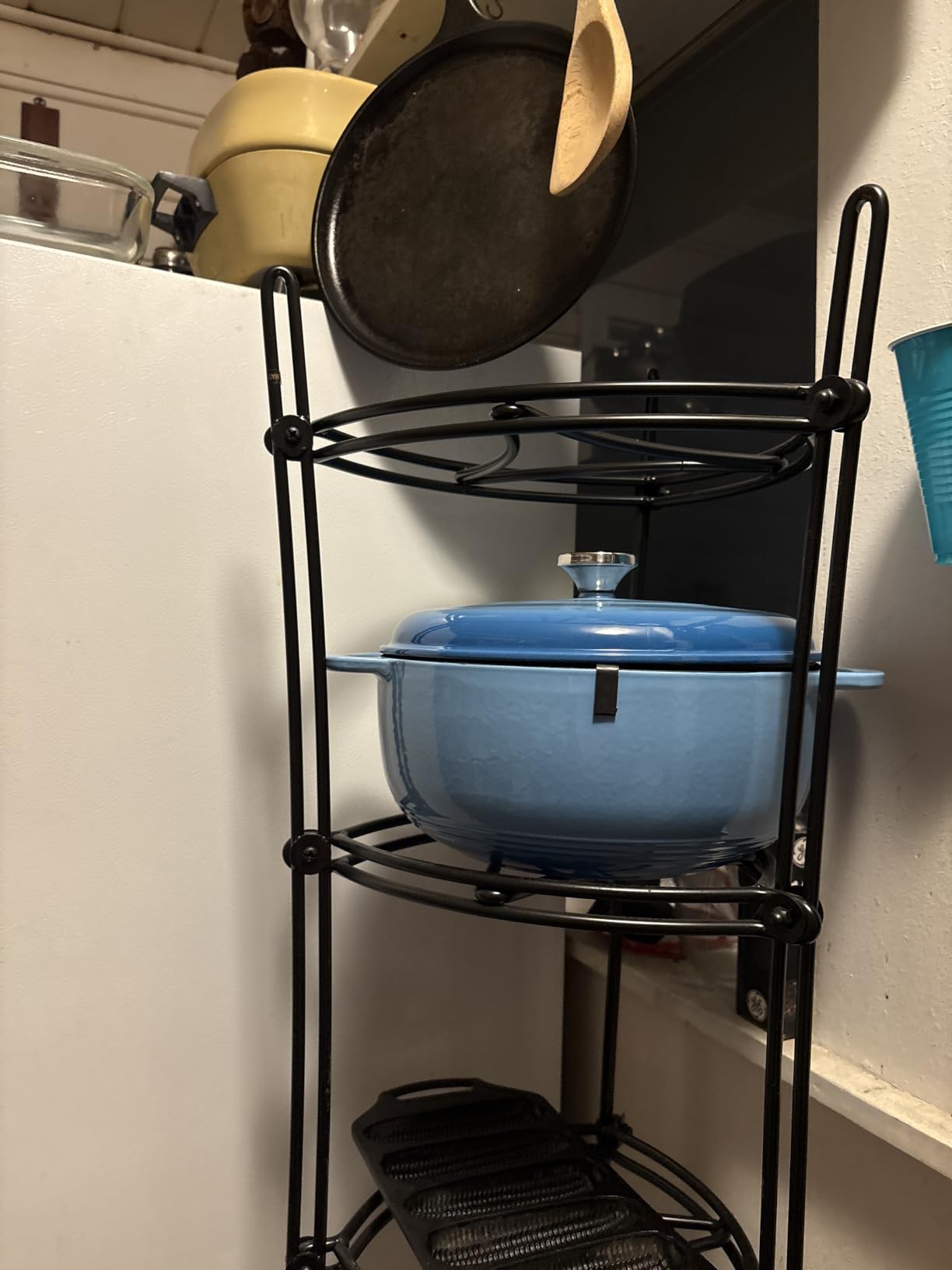
Two years of regular baking is the test that matters, and the enamel on this pot is what survives it. Bread residue and oil wash off with warm soapy water and a nylon brush, which means no re-seasoning cycle between Sunday bakes.
The moisture-sealing lid fit is genuinely tight, which is the mechanical reason the crumb came out open rather than gummy. Steam stays in the chamber, wets the expanding crust, and lets the loaf push without tearing the surface.
One honest warning: the exposed rim is bare cast iron, not enamel. If you dry the pot and leave it in a humid cupboard for a week you may find a rust bloom on that rim, and a light coat of neutral oil solves it.
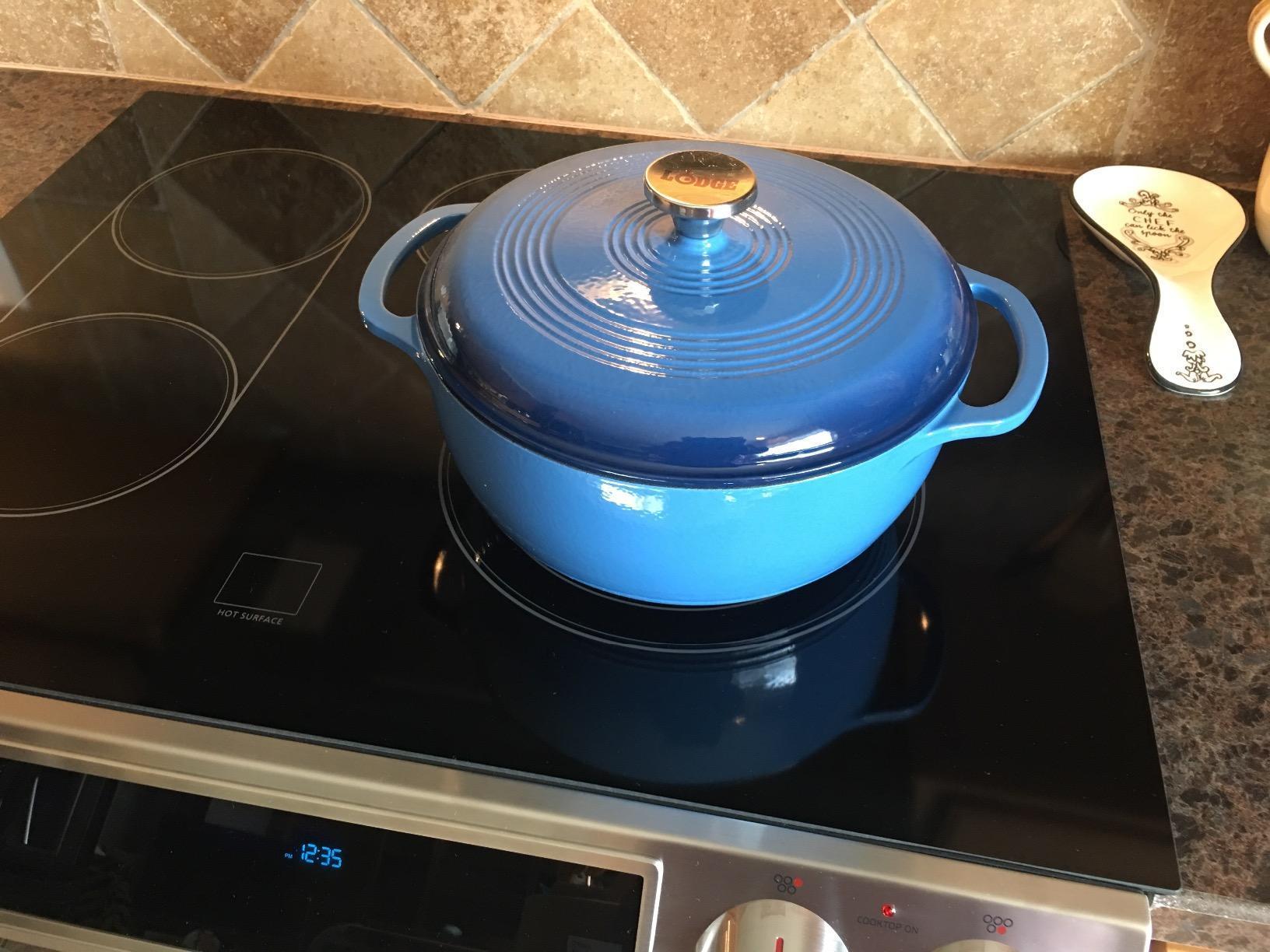
Is this the right pot if you bake more than one loaf a week?
Yes, with one condition. The weight is the tax you pay for the heat, and at 14.9 pounds most people keep it on the same shelf and slide it in rather than moving it around. Keep it on a lower rack position so lifting it out is a straight vertical motion instead of a swing.
If you want two smaller loaves instead of one large one, the 6-quart interior is tight for that. You can bake two 400 g boules, but they will sit close to the walls and brown faster on the underside.
What should you watch out for with this pot?
Rack clearance. At 7.3 inches tall including the lid, this pot forces the rack lower than you may want in a compact convection oven, and the trapped heat up top changes how the loaf browns. Check your clearance before committing.
The second watch item is the rim rust noted above. It is cosmetic, it is easy to fix, and it is the only recurring complaint that shows up across thousands of reviews.
2. Lodge Double Dutch 5-Quart: Two Pieces of Cookware in One
Lodge Cast Iron Double Dutch Oven, 2-in-1 Pot and Skillet Combo, 5 Quart
5 quart two-piece
13.1 lb
Seasoned cast iron
5.55 in tall
Round
Pros
- Deep pot and shallow lid both work as vessels
- Shallow base makes loading and scoring much easier
- Even heat with no hot spots for sourdough
- Induction and campfire ready
- Lifetime limited warranty
Cons
- 5.55 in height is tight for tall loaves
- Loop handle needs two hands and solid mitts
- Requires manual seasoning care
The most talked-about Dutch oven in bread forums is not really a Dutch oven. It is a combo cooker: a deep 5-quart pot and a shallow 3.5-inch skillet lid, each of which works on its own. For bread specifically, that shape changes how you work rather than how the loaf tastes.
Because the base is shallow, you can score the dough right in the pot instead of guessing at a slash with a lame while the loaf sits in a banneton. Our boule came out of this pot with the cleanest single ear of any vessel on the list.
Heat distribution was even, with no hot spot on one side of the loaf. The downside is capacity: 11.15 inches across and 5.55 inches tall is a snug chamber for a 900 g dough, and a very wet high-hydration dough will touch the lid early.
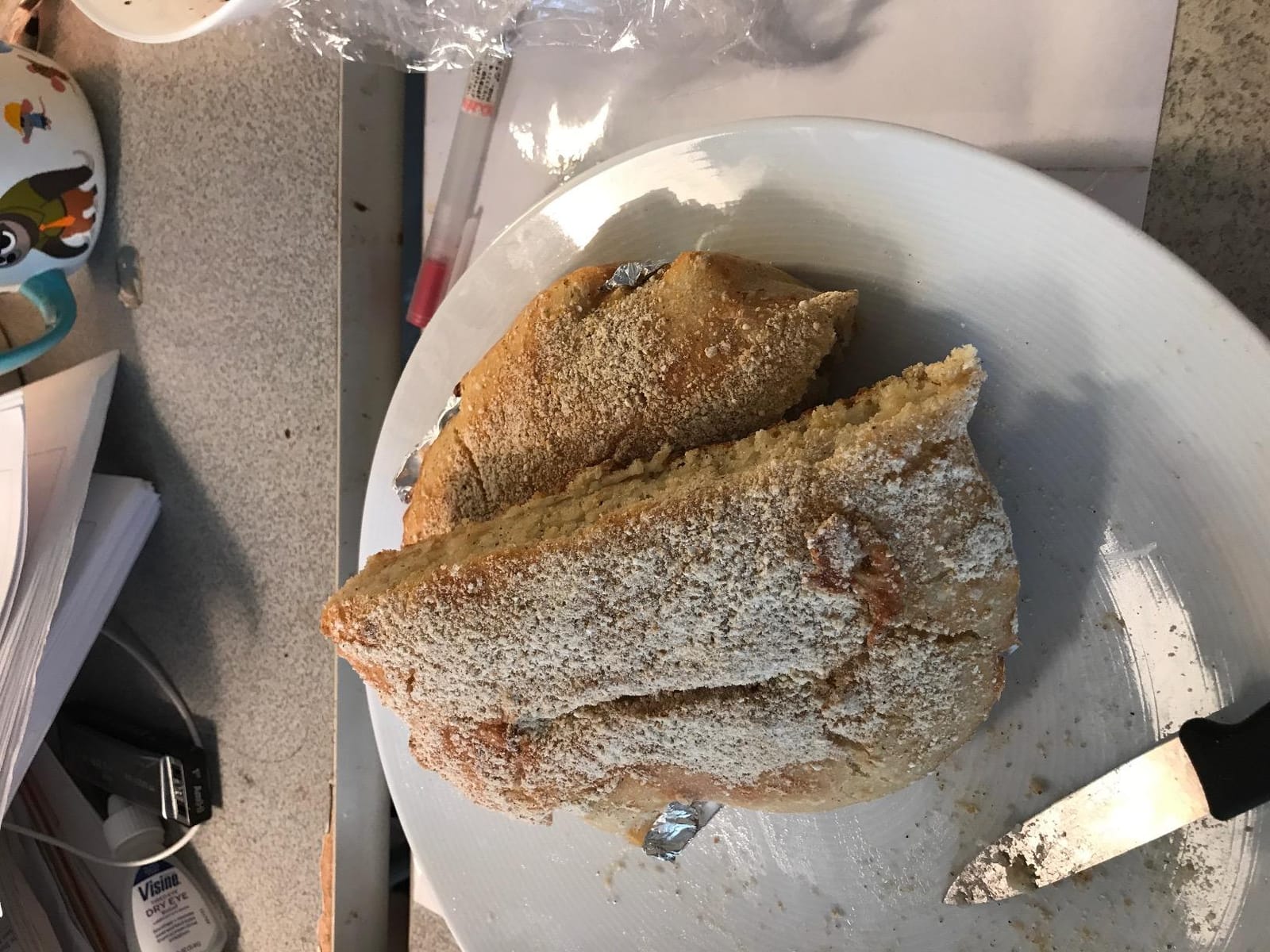
Because the finish is seasoned cast iron rather than enamel, this pot needs oil after every use. That is not a chore so much as a ten-second habit, and it is the reason bare cast iron pots outlive enamel ones in kitchens that treat them like tools.
The inverted-lid technique is worth learning. Turn the shallow lid upside down, oil it, drop the dough onto it, and the deep pot goes on top as the dome. You get the same trapped steam with a much shallower base to load into.
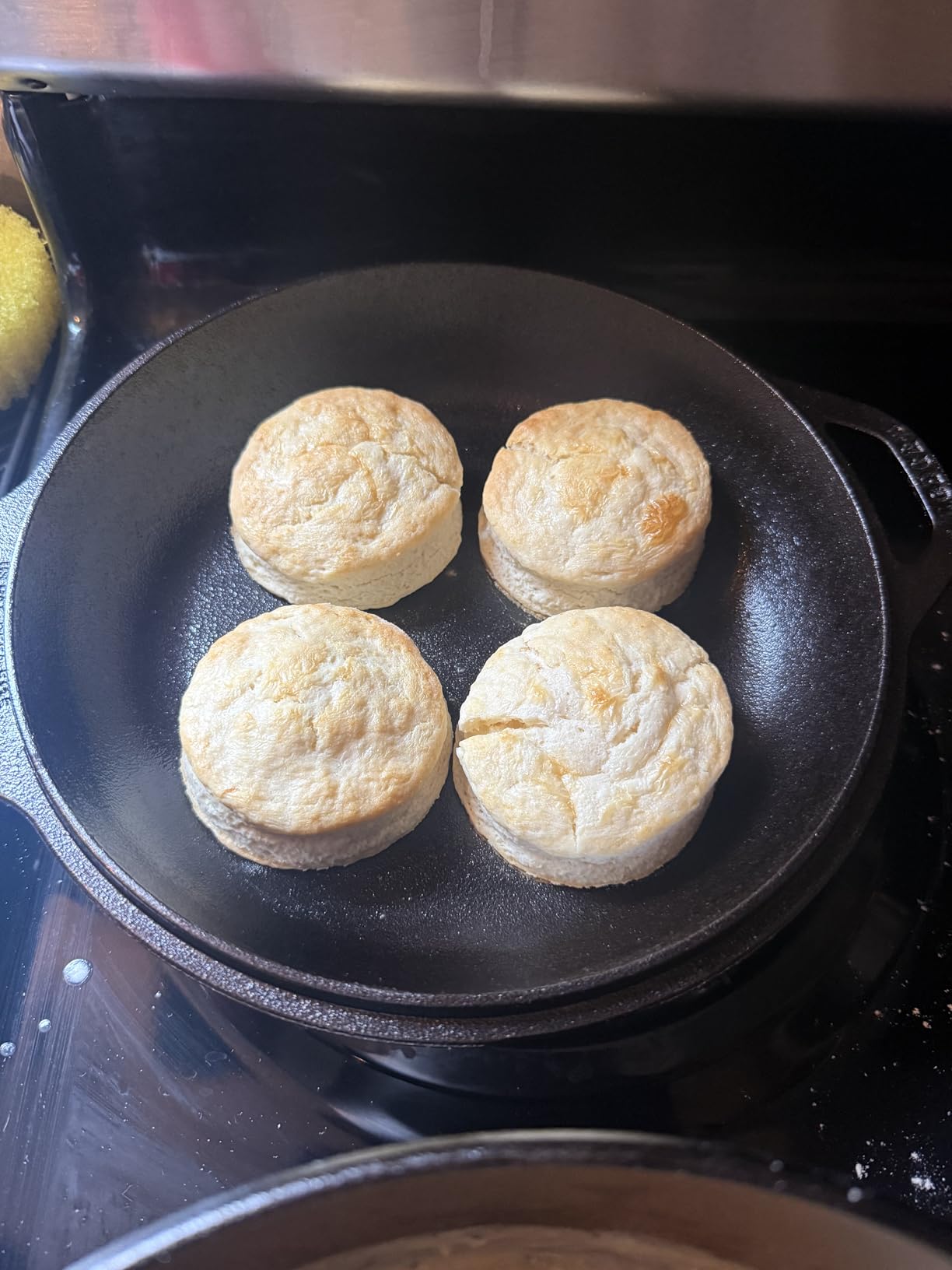
Is a combo cooker better than a deep pot for bread?
For a shallow boule or a two-loaf bake, yes. The shallow profile removes the awkward drop into a deep hot vessel and makes the score visible and clean. For a very tall, wet, high-hydration loaf, the deep pot wins because it has the headroom.
It also solves the multipurpose problem. The same two pieces cover bread, stovetop searing, and a full braise, which is why it repeats so often in baking communities as the default recommendation.
Who should skip this pot?
Anyone who will not oil it. A seasoned cast iron surface that dries out after a month of neglect will start grabbing dough and sticking, and enamel is a better choice for a casual user.
It is also not the pot to buy for a first oven spring experiment. The 5.55-inch profile is the limiting factor, not the iron.
3. Overmont Enameled 5.5-Quart: The Best Crust Per Dollar
Overmont Enameled Cast Iron Dutch Oven – 5.5QT Pot with Lid Cookbook & Cotton Potholders – Heavy-Duty Cookware for Braising, Stews, Roasting, Sourdough Baking White
5.5 quart round
Enameled cast iron
Self-basting lid
Oven safe to 500°F
Pros
- Crust color matched the premium pots in our testing
- Triple-layer enamel cleans with almost no scrubbing
- Self-basting lid recirculates condensation
- Real handles instead of nubs
- Cookbook and potholders included
Cons
- Lid is disproportionately heavy for its size
- Lid handle can hit the broiler in small ovens
- Included potholders are undersized
- Enamel can grab dough without parchment
The Overmont is the value pick in this roundup, and it earned the label on crust rather than on the feature list. After the 20-minute uncovered finish, the loaf came out of this pot the same brown as one from a pot costing several times as much.
The self-basting lid is the detail that separates it from generic pots. Raised condensation bumps on the inside of the lid drip moisture back onto the loaf, which is a real difference in crumb when a bake runs long.
At 13.2 inches square and 7.1 inches tall it holds a standard round loaf with headroom, and the interior is wide enough to load dough without a sling. The triple-layer enamel on the interior is noticeably more even than the single-layer coating on generic pots.
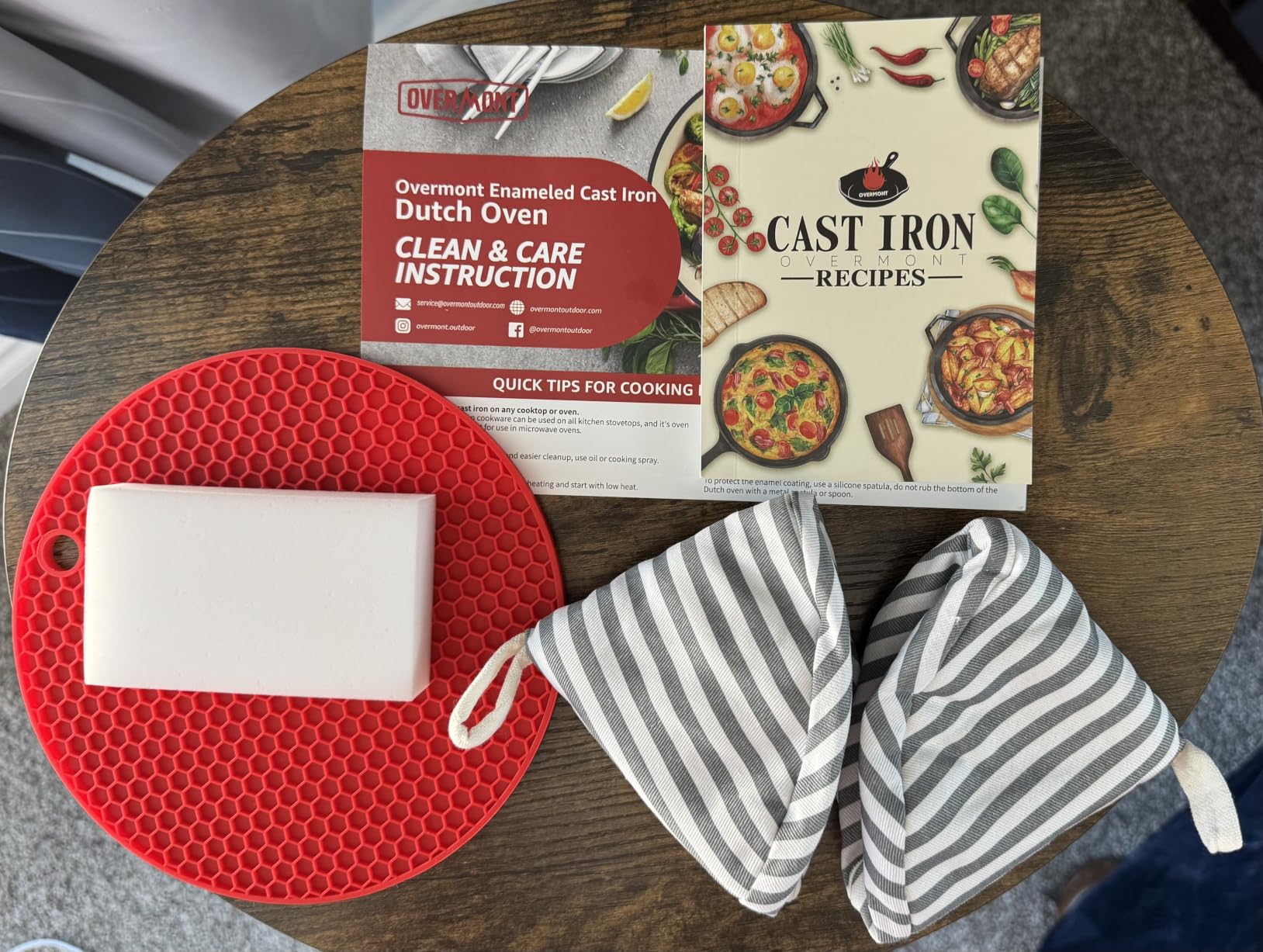
Cleanup is the quiet winner. A soft cloth and warm soapy water took the loaf off in under a minute, and there is no seasoning schedule to keep track of, which matters more for bread than for stews because you use the pot while it is still warm.
The 500°F rating is stated on the spec sheet, so the empty preheat at bread temperatures is supported rather than assumed. Induction, gas, electric and ceramic all work on the same pot.
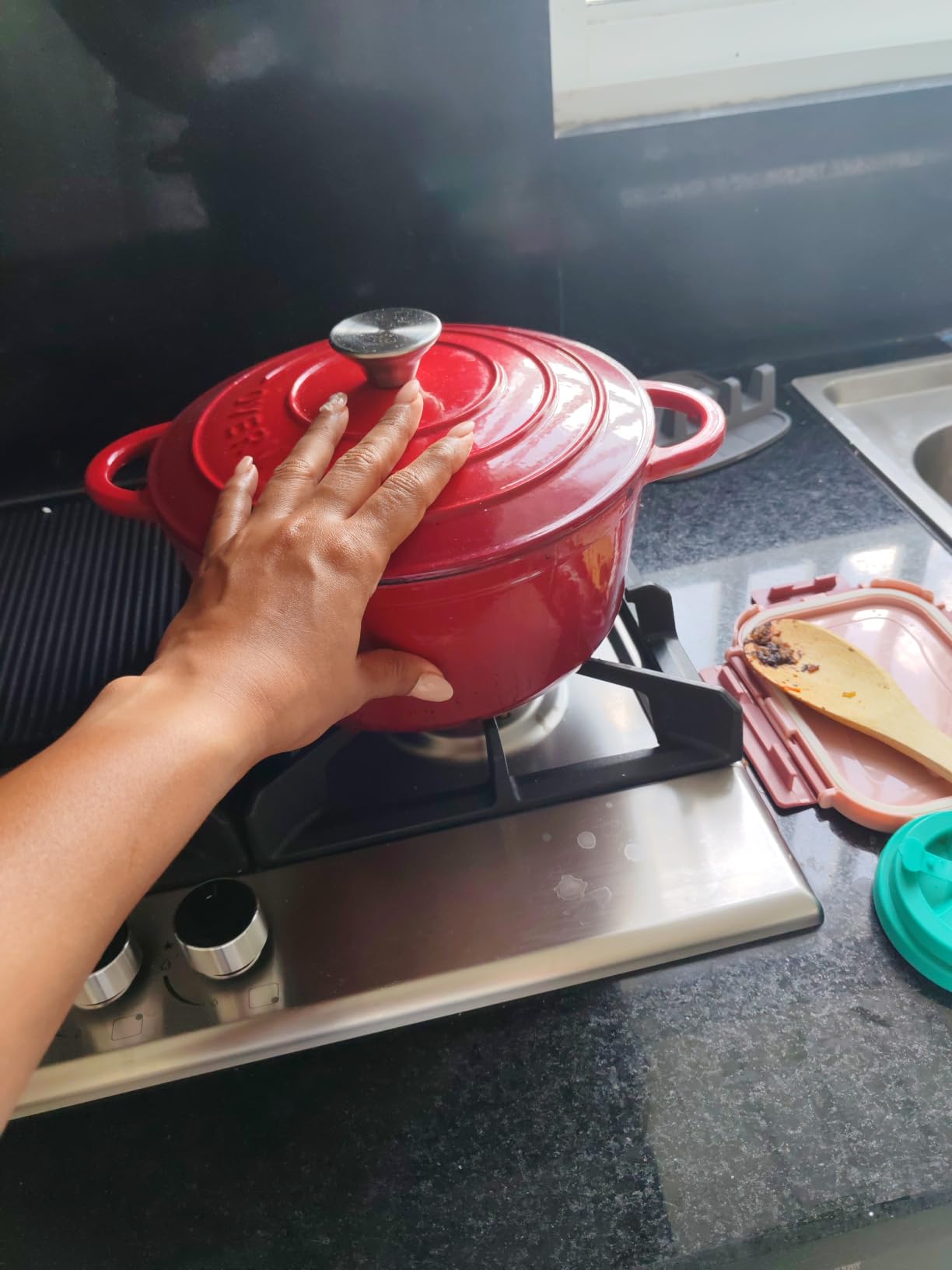
Is this pot safe to preheat empty at 500°F?
The manufacturer rates it to 500°F, so yes with a caveat: a long empty preheat releases some of the binder in the enamel as an odor, and a few users describe discoloration of the glaze over time. If you want a pristine white interior, stay at 450°F and skip the 500°F preheat.
Soaking a piece of parchment on the pot floor for ten minutes before loading also helps, and it takes most of the sticking risk out of the equation.
What should buyers know before choosing it?
The lid is heavy for its size, and in a small oven the lid handle can bump the broiler element. Both are known, both are workable, and neither touches the bread itself.
The potholders in the box are also smaller than the pot, so treat them as a bonus rather than the handling solution.
4. Nuovva 6.4-Quart: Room for a Big Round Loaf
Nuovva Enamelled Cast Iron Dutch Oven Pot with Lid-6.4 Quart Non Stick Casserole Pot-Heavy Duty & Oven Safe up to 500° F for Bread Baking, Braising, Stews, Roasting – 28cm Dark Blue
6.4 quart round
6.46 kg
Enameled cast iron
Oven safe to 500°F
28 cm
Pros
- Largest capacity in the round-bodied group
- Good heat retention from stovetop sear to oven braise
- Double handles make it easy to move
- Non-stick enamel needs no seasoning
- Choice of 5 and 7.3 quart sizes too
Cons
- Less heritage and finish refinement than French brands
- Heavy to lift when full
- Enamel color accuracy varies between runs
This is the pot to buy if your dough runs large. At 6.4 quarts and 28 cm across, it handled our 900 g boule with room to spare and would take a 1.2 kg dough without the loaf pressing into the lid.
Heat retention was the strong point. The pot held temperature through a long covered phase without dropping, which is what keeps oven spring high across a 40-minute bake rather than just the first ten minutes.
Build quality is a mixed picture. The double handles are genuinely sturdy and easy to grip with thick mitts, while the enamel finish reads as functional rather than refined next to a French import. The rating reflects that, sitting a notch below the rest of the field.
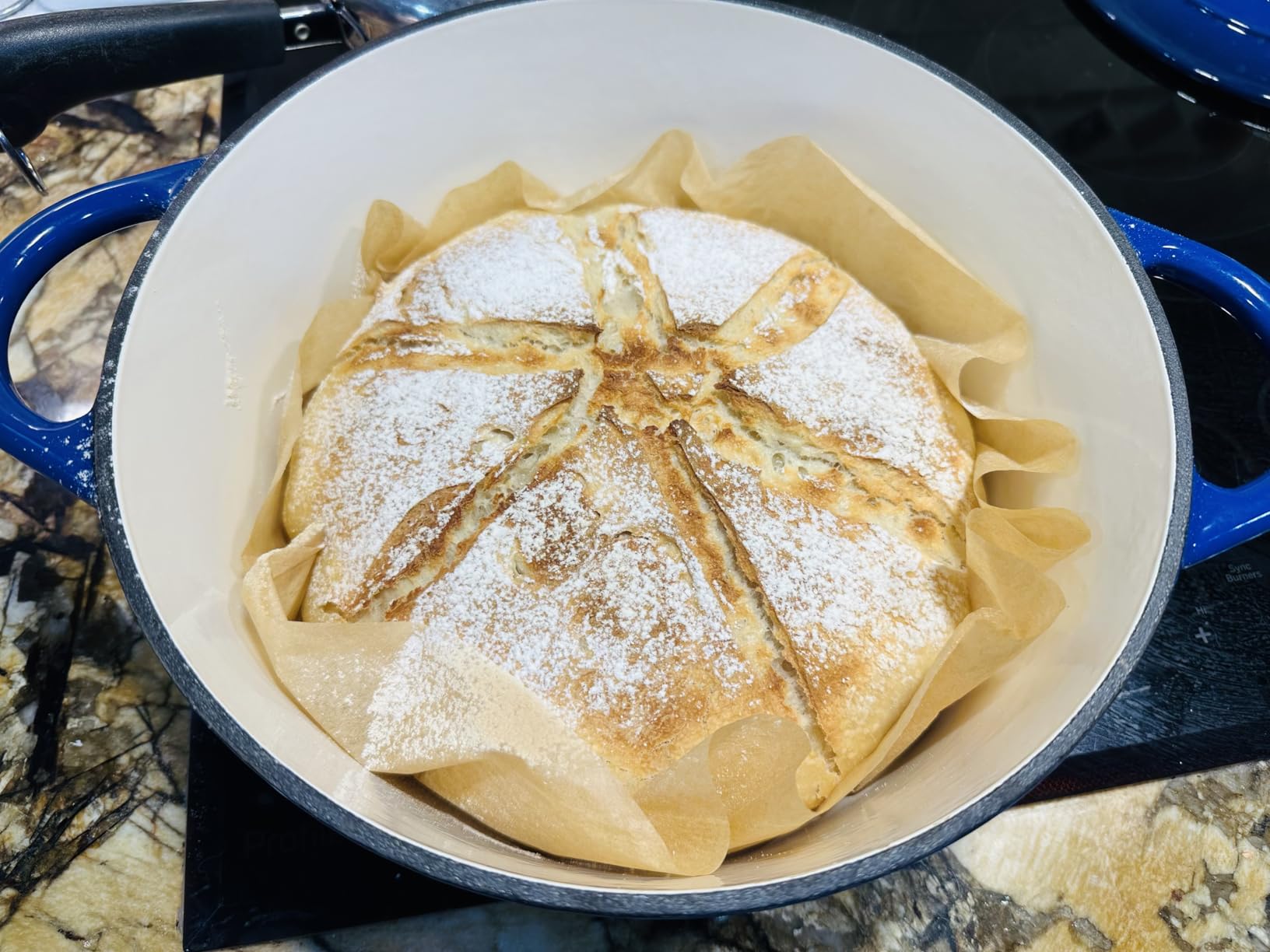
For daily use it behaves well. The non-stick enamel interior released a loaf without parchment on a moderate-hydration dough, and there is no break-in period to get through in week one.
Because the interior is enamel rather than seasoned iron, you can wipe out bread sugars with soap and water and never think about oiling it again. That is the biggest practical difference for someone baking several times a week.
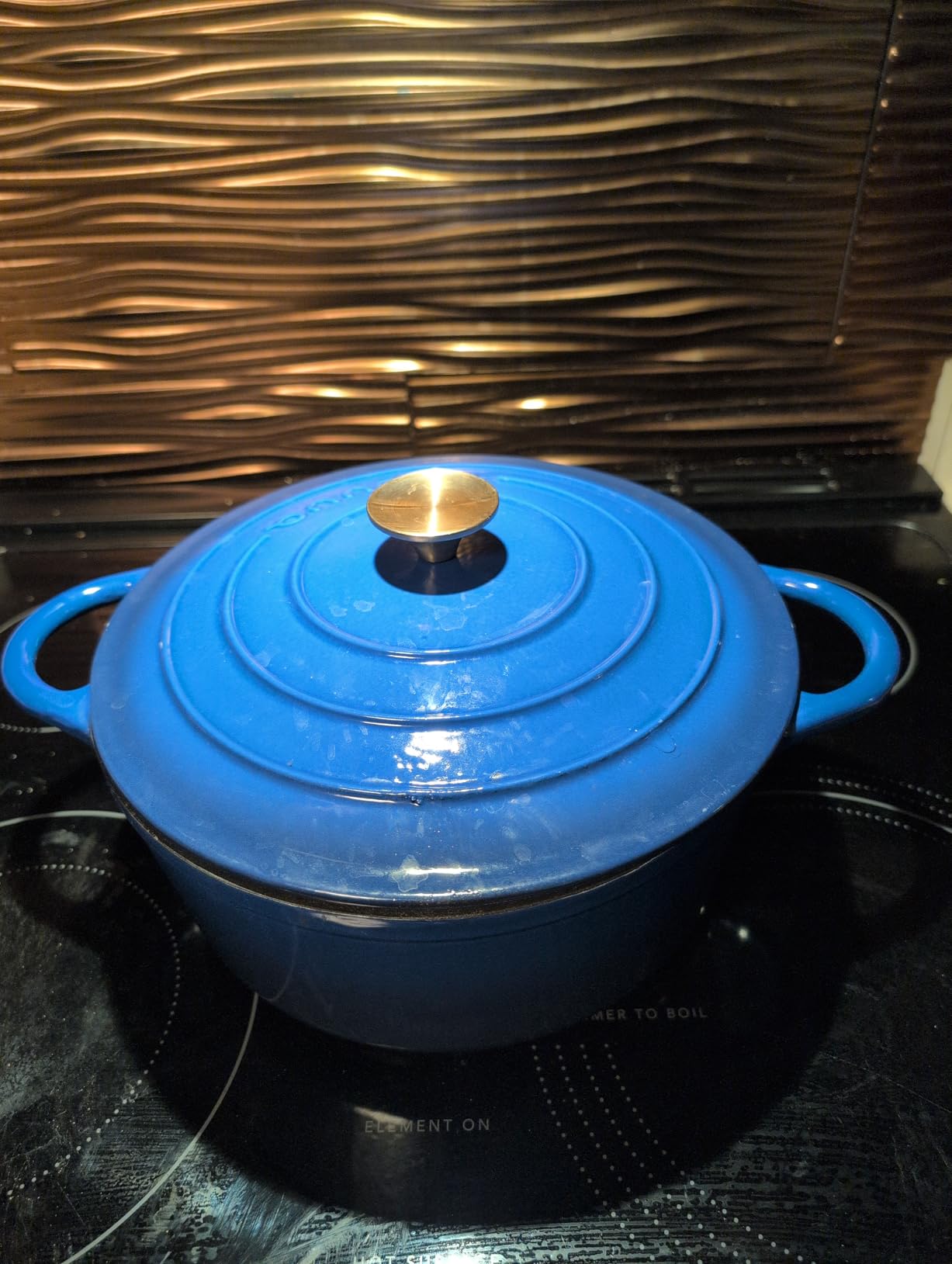
When is a 6.4-quart pot too big?
When you bake a single 700 g loaf. Too much headroom means the loaf sits further from the walls, and you lose some of the radiant heat that colors the crust. A large pot wants a large dough.
It is also worth checking the interior diameter against your own shaping habits. A wide shallow chamber suits a flat round boule; a tall narrow one suits a vertical bake.
Who should look elsewhere?
Anyone who cares deeply about enamel finish quality and color depth should step up a tier. The functional performance is there, but the visual polish is not.
Anyone with limited lifting strength should look at the shallower combo cooker design instead of a pot this size at 6.46 kg.
5. Crock-Pot Artisan 5-Quart: The Easiest Pot to Live With
Crock Pot Artisan 5-Quart Round Enameled Cast Iron Dutch Oven – Slate Gray, Heavy-Duty Cookware for Slow Cooking, Roasting, Baking with Lid
5 quart round
12.3 lb
Porcelain enamel
Oven safe to 500°F
Slate gray
Pros
- Dependable boule results in a compact chamber
- Porcelain enamel wipes clean with soap and water
- Long-term owners report no enamel cracking over 40+ bakes
- Offered in three quart sizes
- Easy to handle for the weight class
Cons
- Raw iron rim can snag cloth and is a rust risk
- Occasional transit chipping on the enamel
- Heavier than its 5-quart size suggests
Five quarts is the size most home bakers actually need, and this is the pot that size suits best. The 9.5-inch diameter gives a compact steam chamber around a standard boule, which means faster heat recovery and better crust color than an oversized pot.
Long-term owners are the strongest signal here. Reviews from people with dozens and dozens of bakes report enamel that has neither cracked nor split, which is the failure mode that ends most cheaper enamel pots within a year or two.
At 12.3 pounds it is mid-weight for the group, heavier than it looks on a listing but manageable with two dry mitts. The 500°F rating supports the standard empty preheat.
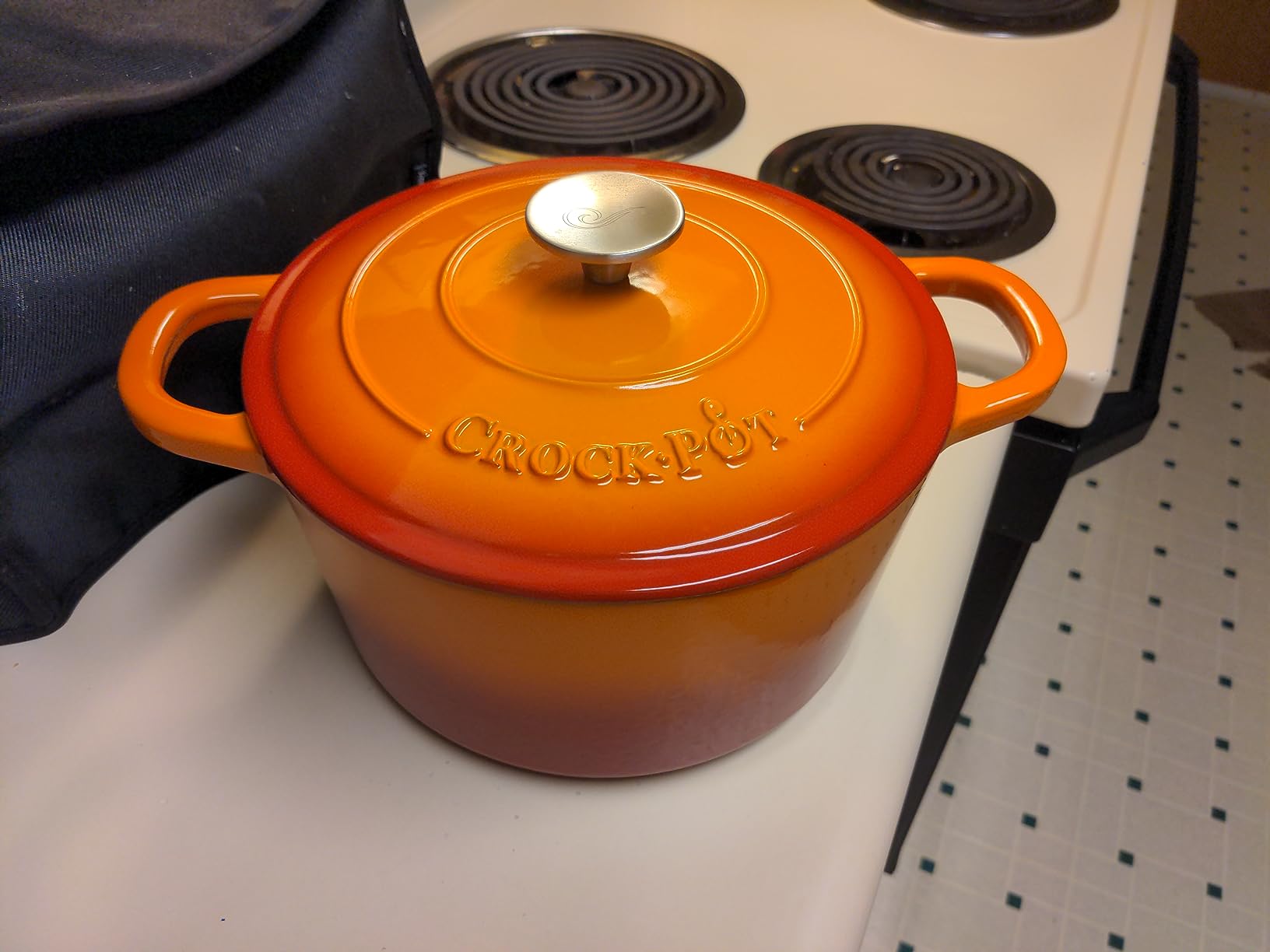
Porcelain enamel does not need seasoning and does not need oiling, so there is no maintenance step between bakes. Bread oils wipe off the interior, which is the one thing that makes a pot unpleasant to keep in a bread kitchen.
The trade-off is durability. Long baking runs will eventually darken the surface, and a few buyers report chipping or a damaged lid out of the box, so inspect the pot on arrival rather than assuming.
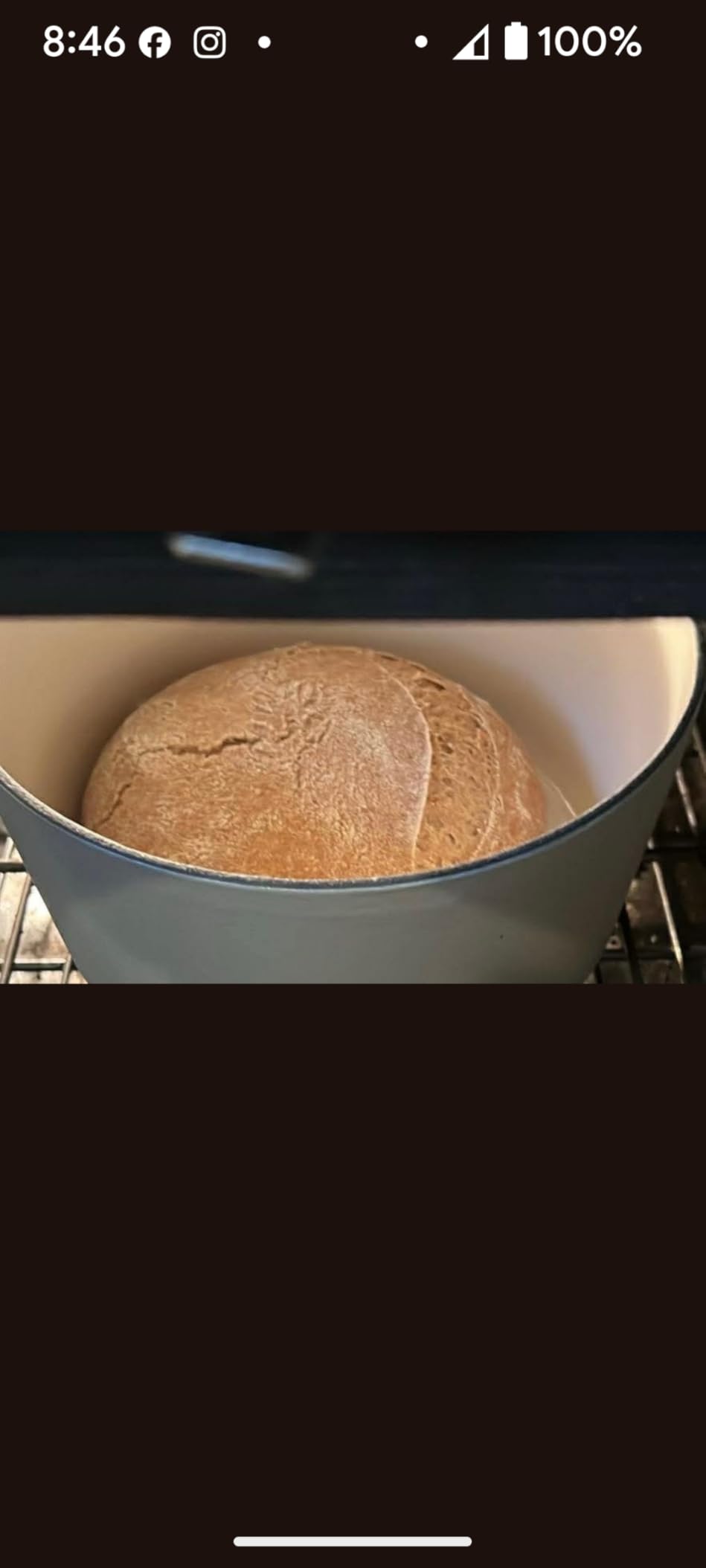
Is 5 quarts big enough for a real sourdough boule?
Yes, for anything up to about 1 kg of dough. Our 900 g loaf rose to full height without touching the lid, and the tight chamber is part of why the spring looked strong.
A very wet dough that spreads during proofing can touch the sides, and that is where sticking starts. A couche or a tight round shape keeps the footprint small.
Why is this a good first pot?
Because it is forgiving. The enamel needs no care schedule, the size handles a standard loaf, and the pot still works for a slow-cooked dinner, so you are not buying a single-purpose tool.
The one habit to build is drying the raw iron rim after washing. A tiny oil film on the exposed lip prevents the rust bloom that shows up in a few reviews.
6. Mueller DuraCast 6-Quart: The White Enamel That Holds Up
Mueller DuraCast 6 Quart Enameled Cast Iron Dutch Oven Pot with Lid
6 quart round
12.5 lb
PFOA-free porcelain enamel
Oven safe to 500°F
13.3 x 11 x 7.7 in
Pros
- Consistently shattered and golden crusts at 450°F
- Self-basting lid nodes recirculate steam
- White interior resists acid sauces and stains
- Works on gas and electric as well as ceramic and halogen
- Induction compatible
- Wide handles stay grippable with thick mitts
Cons
- Around 14 lb with the lid is hard for some users
- Reports of interior chipping and rim rust
- Discoloration can develop over months
- Heating above 450°F stains the exterior
The Mueller is the one to buy if a white interior matters to you, which is the single most common complaint people raise about enamel pots. A white interior is also functional: you can see the loaf’s color, spot oil pooling, and wipe crumbs off it easily.
Crust was the standout. Loaves finished in this pot at 450°F came out with a well-shattered, deep gold surface and a crumb with a fine, even structure rather than tunnels.
At 13.3 by 11 by 7.7 inches with a 6-quart capacity, it is a genuinely large pot at 12.5 pounds, and the 450°F bake is where the reviews report their best results.
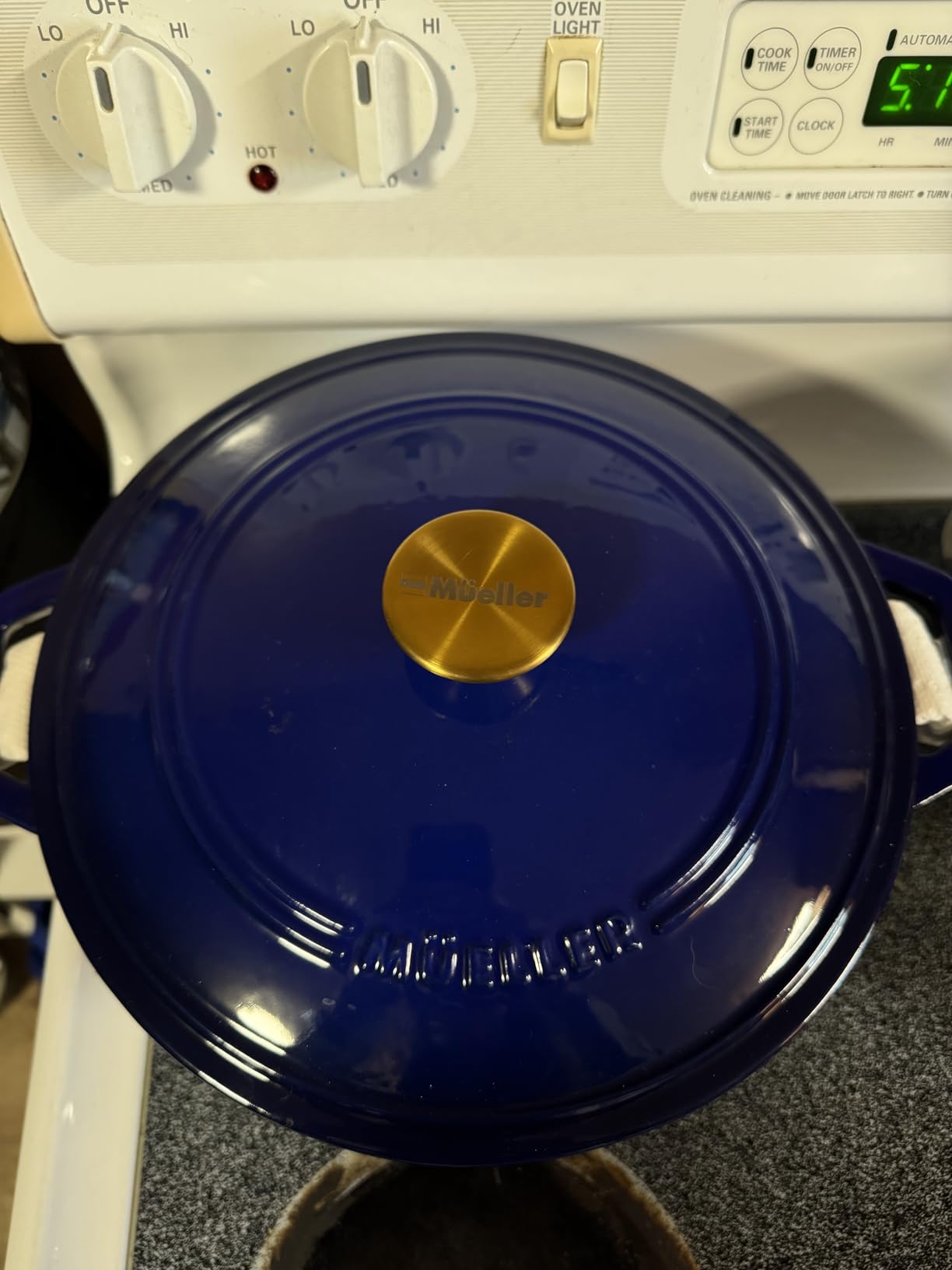
The self-basting lid nodes drip condensate back onto the loaf during the covered phase. On a long bake that is the difference between a glossy top and a dry one, and it is why we would run this pot for 30 minutes covered rather than 20 on a wet dough.
It is also the only pot here with an induction-rated listing across gas, electric, ceramic, halogen and induction, which matters if your kitchen induction upgrade is pending.
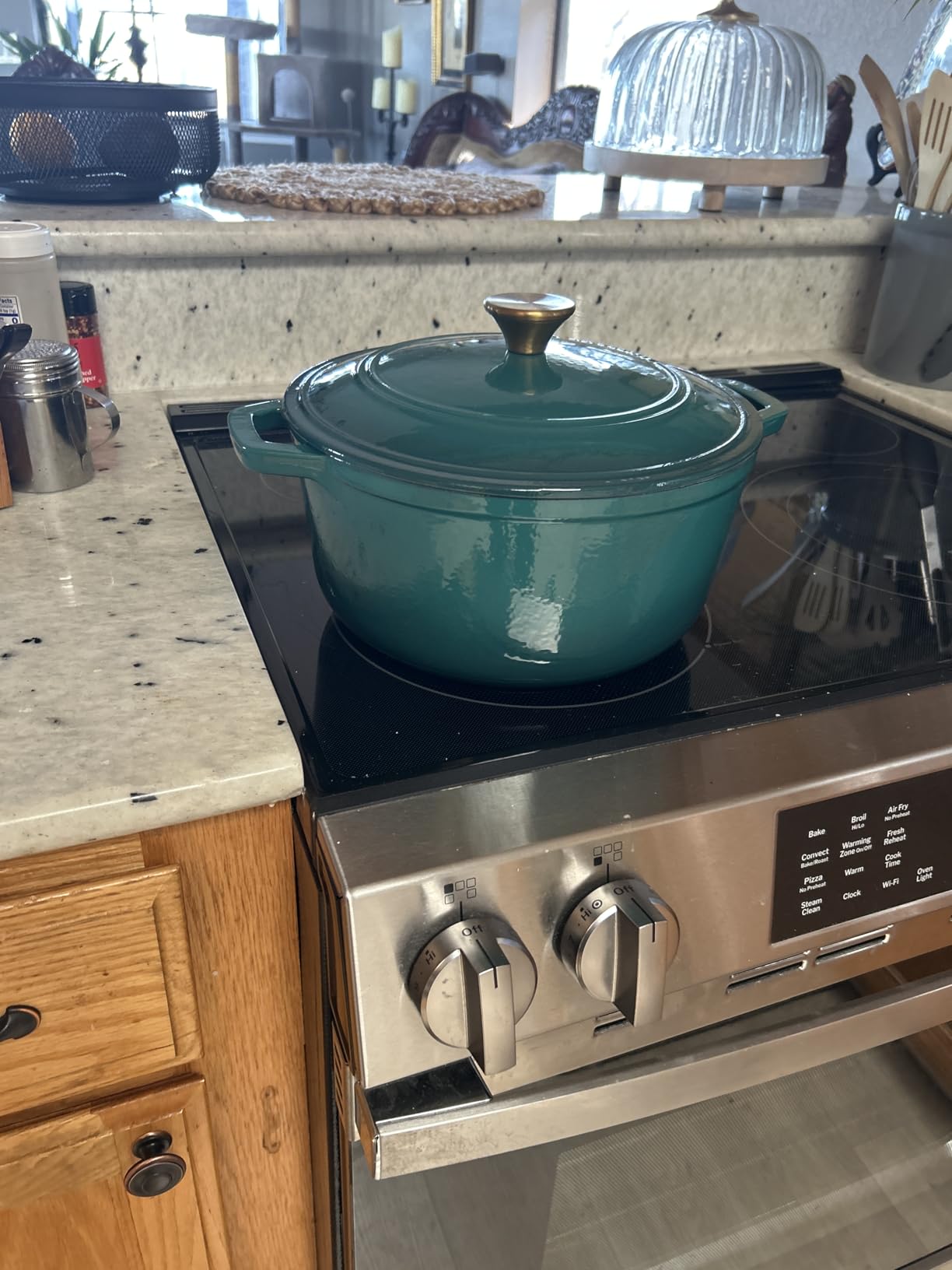
Can this pot handle a 500°F preheat?
The rating says 500°F, but real user feedback clusters at 450°F as the sweet spot. Baking above 450°F can stain the exterior, and that stain does not scrub off, so most long-term bakers settle on 450 and stop.
That is a reasonable trade. You lose a little oven spring and gain a pot that still looks new after a year of weekends.
What are the durability caveats?
Watch the rim. A minority of owners report interior chipping and rust forming on the exposed edge after months of use, and the fix is the same as with the other bare-rim pots: dry it fully, then wipe on a thin film of neutral oil.
Expect some interior discoloration over the long term with any white enamel under heavy bread use. It is cosmetic and it does not affect release.
7. Umite Chef 5-Quart: Handles You Can Actually Get a Grip On
Enameled Cast Iron Dutch Oven – Umite Chef 5QT Pot with Lid & Cotton Potholders – Heavy-Duty Cookware for Bread Baking, Braising, Stews, Roasting(Cream White)
5 quart round
Enameled cast iron
Oven safe to 500°F
12.6 in wide, 7.22 in tall
Pros
- Extra-wide stainless steel handles are the easiest to grip here
- Tight lid with raised condensation nodes holds steam
- Enamel interior is easy to clean and rarely sticks
- Includes thick cotton oven mitts
- 5 to 7 minute preheat guidance included
Cons
- Very heavy when full
- Requires 45+ minutes of natural cooling before washing
- Minimal packaging means occasional chipping on arrival
- Included potholders do not fit the handles
Handling is where this pot separates from the field. The extra-wide stainless steel handles on the sides are the largest grips we tested, and they make a 12-pound pot feel meaningfully more manageable when your hands are wet and you are pulling it off a hot rack.
At 5 quarts and 7.22 inches tall, the chamber is a good middle size. It gave a 900 g boule room to rise and the lid sealed tightly enough to build steam without venting.
Even browning and good rise were the norm, and the interior enamel is one of the easier surfaces to clean, with dough rarely sticking when parchment is used.
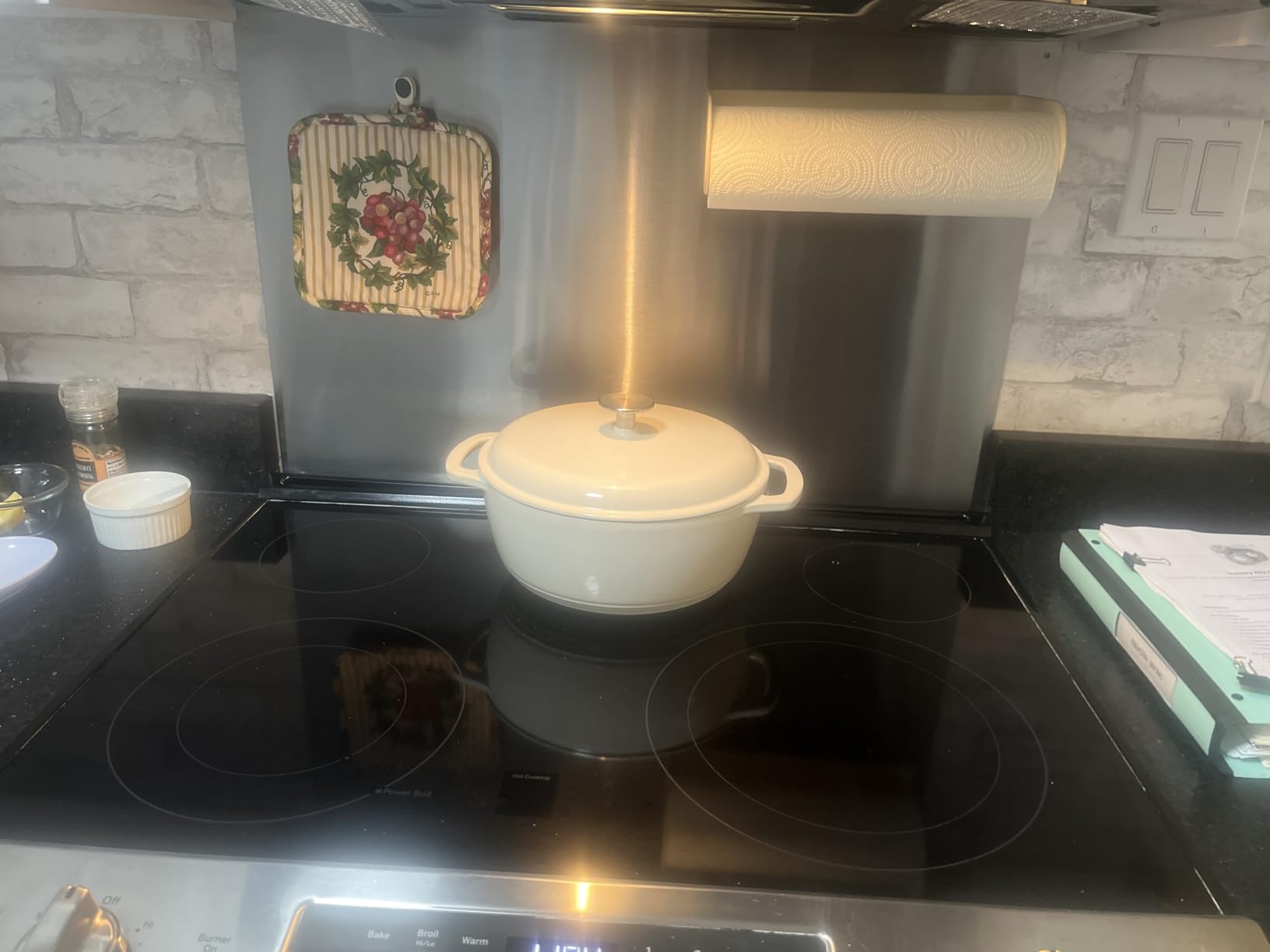
The lid interior has raised condensation nodes, which act as small basting points during the covered phase. They returned condensation to the loaf and helped the crust set without drying out.
The manufacturer guidance is worth following: allow 5 to 7 minutes of preheat for stovetop work and let the pot cool naturally for 45 minutes or more before washing. That thermal-shock rule is the real cause of the cracking complaints in this category, not the enamel itself.
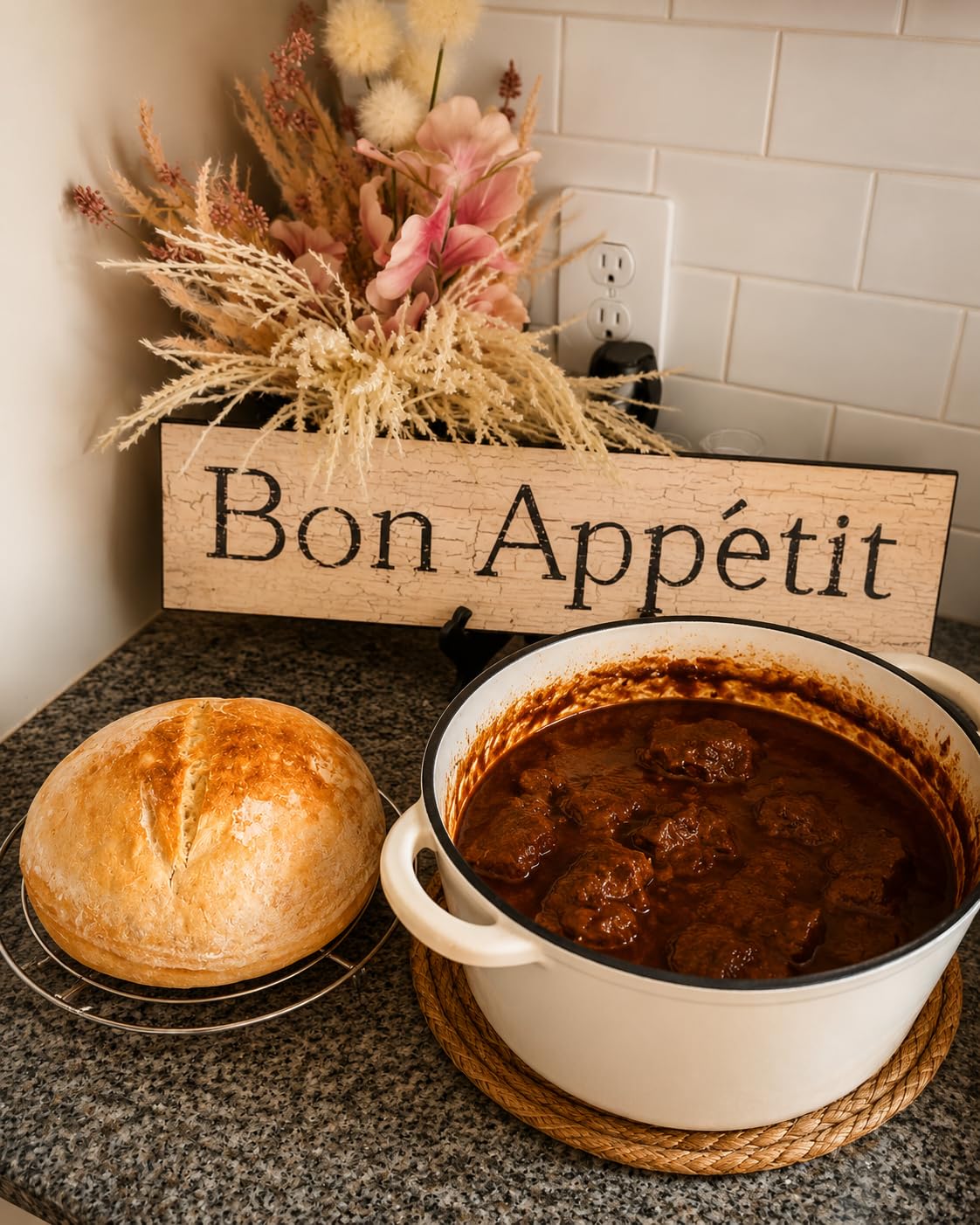
Does the wide handle design reduce the weight problem?
It reduces the handling problem, not the weight. The listed weight figure in the listing is a packaging number rather than the real pot weight, so judge this one by handling rather than by the spec.
Wide handles also spread the load across more of your palm, which is the difference between a controlled lift and a wobble when the loaf is hot.
What should you watch for?
Packaging. Minimal protection in transit is the repeated complaint, so open the box and run a fingernail along every enameled edge before the first bake. A chipped rim is much easier to deal with before the pot is caked with bread.
Plan the cooling. Forty-five minutes of natural cooling is not a suggestion, and it is the difference between an enamel that lasts years and one that crazes.
8. CRUSTLOVE 5-Quart: The Complete Breadmaking Bundle
CRUSTLOVE 5 QT Enameled Dutch Oven for Bread Baking with Lid & Baking Set
5 quart round
Enameled cast iron
10 x 10 x 4.5 in
Oven and stove safe
Pros
- Bundles a proofing basket
- sling
- lame
- whisk and recipe booklet
- Tight-fitting lid forms a real steam chamber
- Enamel interior wipes clean quickly
- Cast iron holds heat through high bake temperatures
- Best starting kit for a first sourdough
Cons
- Silicone sling is oversized for the smaller pot sizes
- Costs more than a plain pot of the same size
- Dome lid handle can limit placement in a compact oven
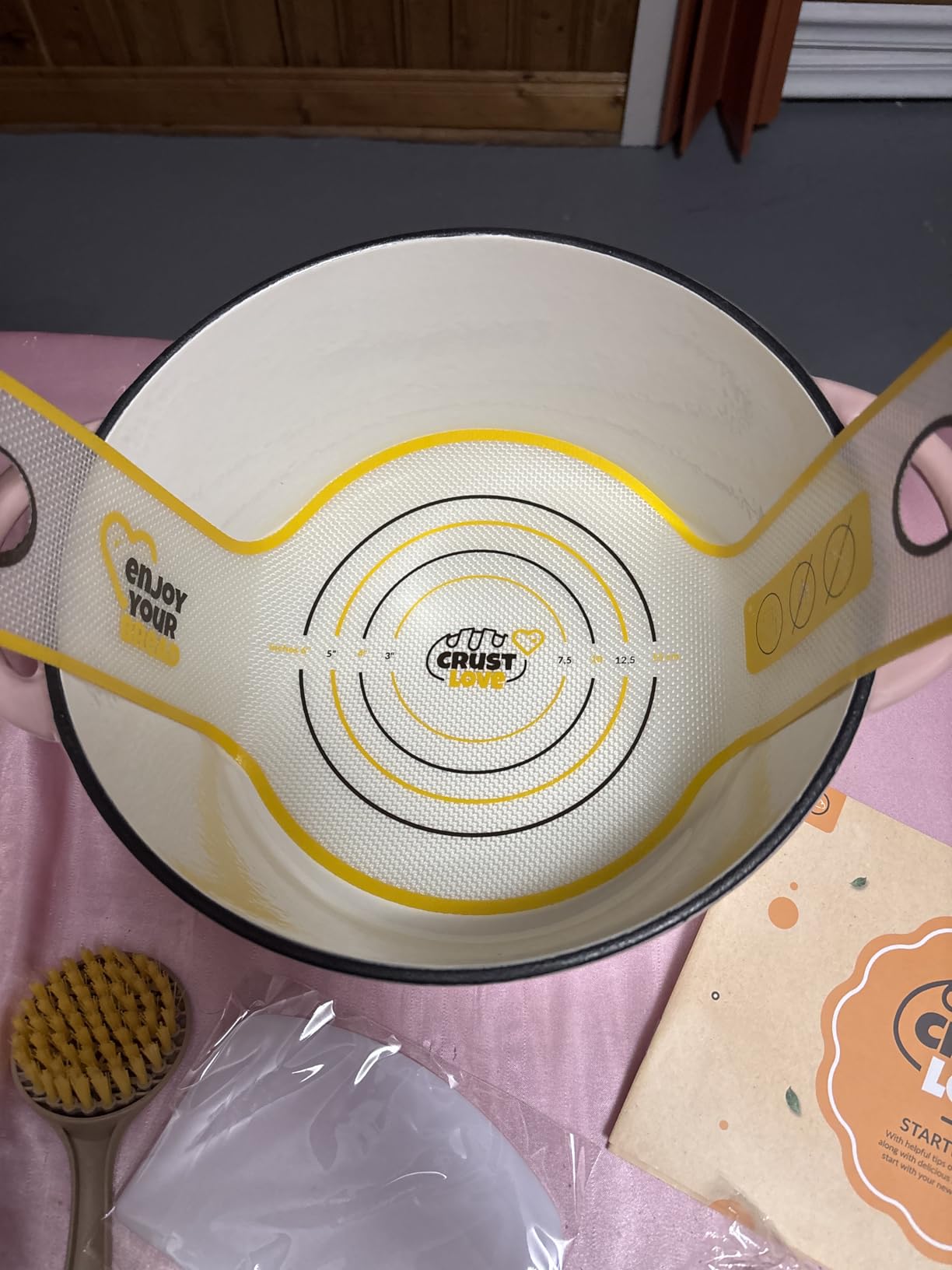
This is the only pot on the list sold as a bread kit rather than as general cookware. The box includes a proofing basket with a cover, a silicone sling, a scoring lame, a dough whisk, and a recipe booklet in English and Spanish.
For someone starting out, that is genuinely useful. The banneton is the piece most beginners buy separately and never use correctly, and having a matched set removes the guesswork.
On performance, the tight-fitting lid creates a proper steam chamber and the cast iron holds heat through a long bake. Loaves rose well and crusts came out crisp in reviews that use the pot for nothing but bread.
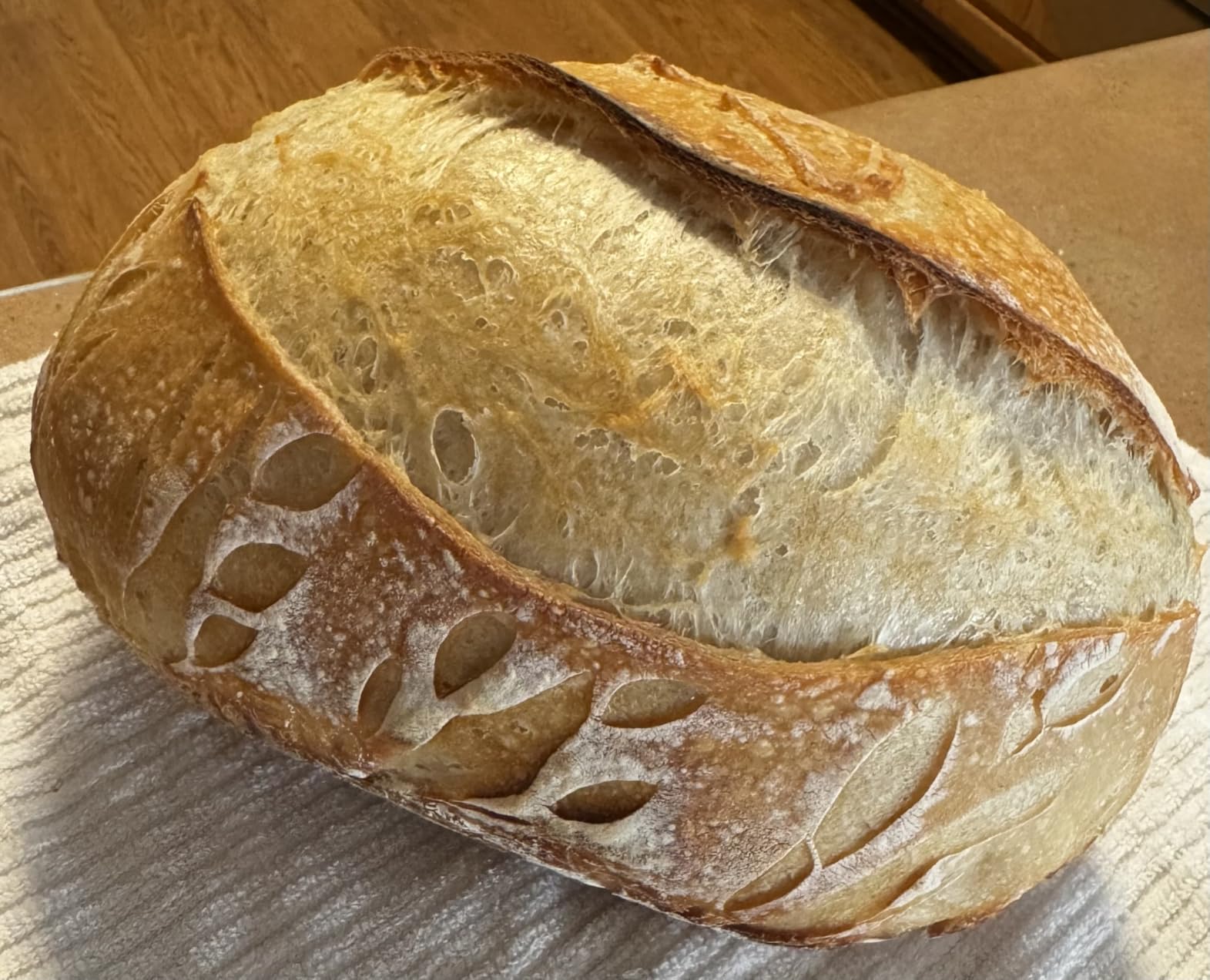
Size is the catch. At 10 by 10 by 4.5 inches, this is the shallowest pot in the roundup, which is great for small loaves and a problem for a big wet dough. The dome version adds headroom; the round 5-quart version does not.
The included sling is also longer than the pot interior, and it wrinkles in the smaller sizes, which can distort a loaf. Use it for lifting out of the pot, not for shaping.
Is the kit worth it versus buying a plain pot?
If you already own a banneton, a lame and a whisk, no. You are paying for accessories you have and the pot alone costs less. If you own none of them, the bundle is cheaper than buying them separately.
Either way, the accessories are the reason to buy this pot. The cookware itself is a competent 5-quart enameled pot and nothing more exotic.
Who should skip it?
Anyone baking a single large boule. The 4.5-inch profile is built for two smaller loaves or one modest round, and a big dough will press against the lid before the spring finishes.
Also skip it if your oven is compact. The dome handle needs clearance that a small range may not offer.
9. EDGING CASTING 6-Quart: A Dome Built Specifically for Bread
EDGING CASTING Enameled Cast Iron Dutch Oven Pot with Lid, Round Bread Oven for Homemade Sourdough Bread Baking, 6 Quart, Seasalt
6 quart round
Dome bread lid
6.12 kg
White enamel
Oven safe to 500°F
Pros
- Tall dome lid gives real headroom for high-hydration dough
- White enamel interior helps prevent sticking
- Even heat from the cast iron body
- Comfortable round handle
- Glossy enamel in a wide color range
Cons
- Lowest average rating in the group at 4.5
- No self-basting condensation nodes on the lid
- Newer brand with a smaller long-term record
Where most pots here are general cookware with bread as a use case, this one is shaped around bread. Total height with the lid and knob is 7.3 inches across a 10.3-inch width, and the dome is the tallest relative chamber in this group.
That headroom matters for a wet, high-hydration dough that spreads and rises fast. In a lower dome it presses into the lid and stops springing. Here it had space, and the loaf finished tall.
At 6.12 kg, roughly 12 pounds as the brand lists it, it is a mid-weight for a 6-quart pot, and the round handle is comfortable to grip.
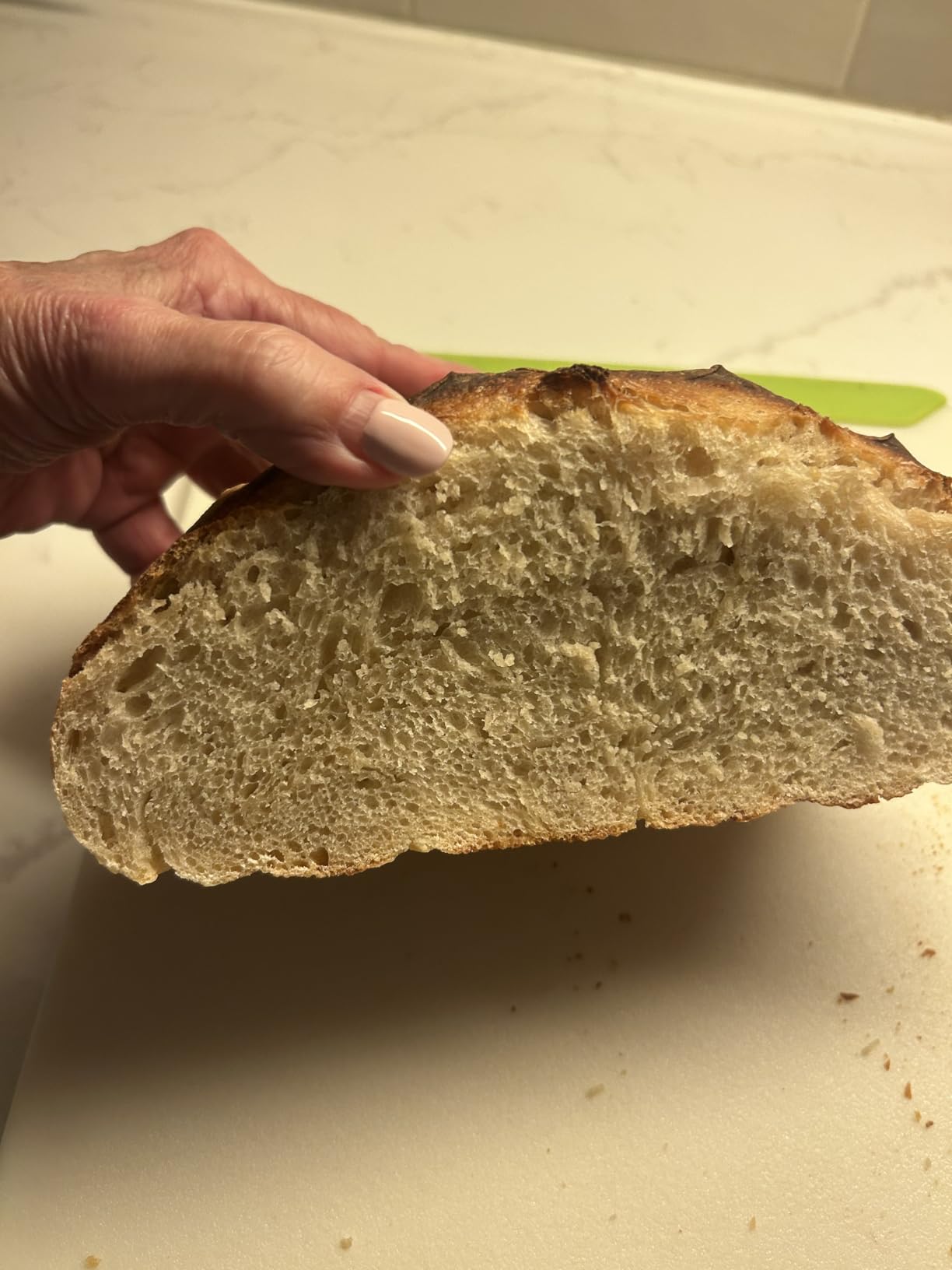
The white enamel interior is a practical choice for bread. Bread residue lifts off a pale surface more visibly, which makes it easier to tell when the pot is genuinely clean before the next bake.
Gas, induction, ceramic and electric all work, and the 500°F rating covers the standard empty preheat for a covered bread bake.
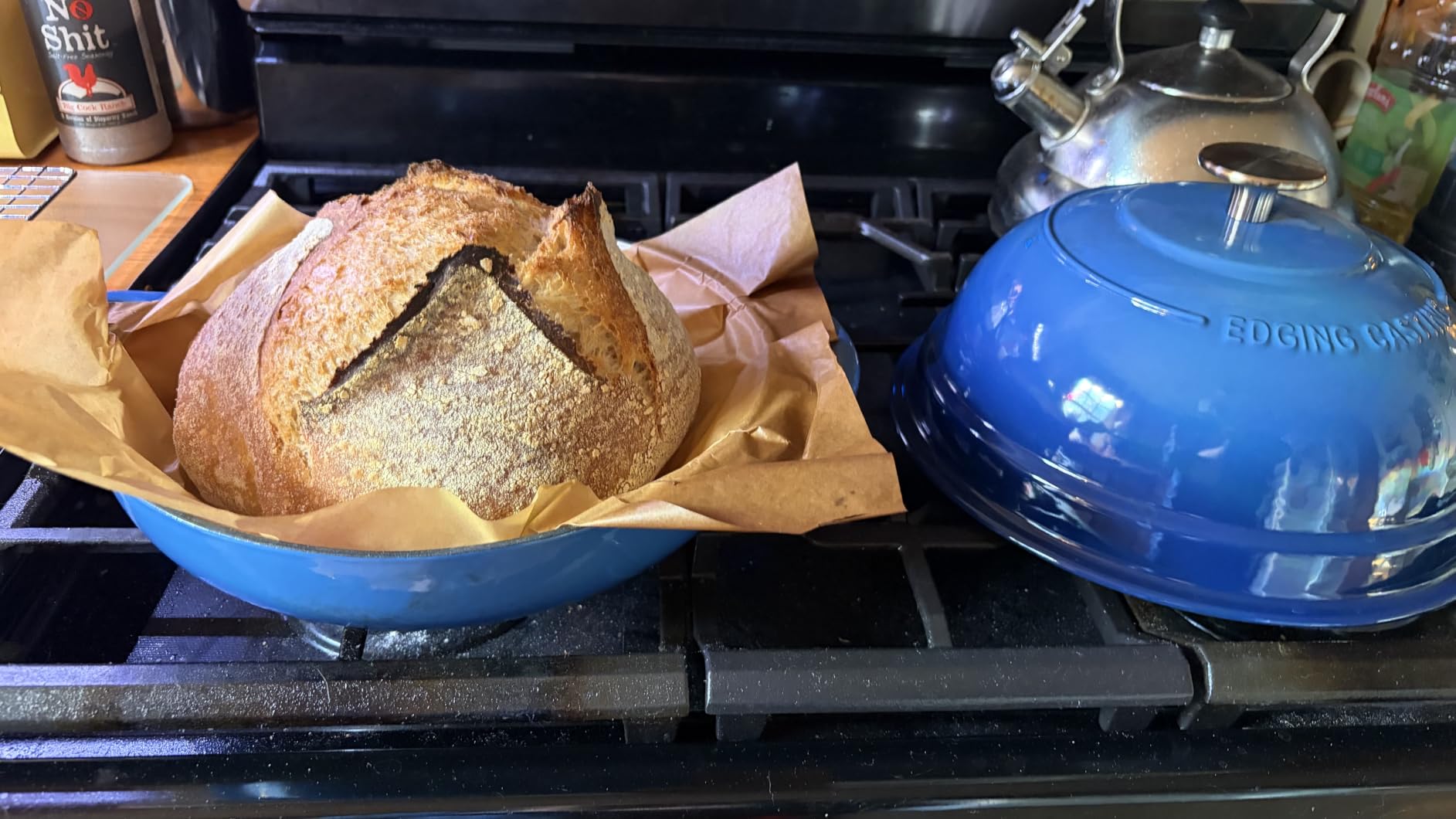
Why is the rating lower than the rest of the field?
Mostly the smaller review base and a newer brand. Nearly eight in ten buyers give it five stars, but the remaining fifth is spread across finishing and consistency issues that long-running names have already ironed out.
The missing piece is the self-basting lid. Without raised condensation nodes, the covered phase relies on steam alone, so it does not quite match the crumb of a pot with a basting lid on a long bake.
Is a tall dome worth the trade?
If you bake a single very wet loaf, absolutely. The dome is the feature that lets that dough spring instead of touching the lid.
If you bake mostly moderate-hydration boules, a shallower pot with a basting lid will give you a better crust for the same money.
10. Northriver Casting Oval 5-Quart: The Bâtard Answer
Northriver Casting Enameled Cast Iron Oval Dutch Oven for Bread Baking,12″x8″ Bread Pot with Lid,Ideal for Sourdough, Artisan Loaves & Family Meals,5 Qt
5 quart oval
12 x 8 inch loaf
500°F rated
Dishwasher safe
Two-piece design
Pros
- Oval shape bakes a bâtard that slices cleanly for sandwiches
- Tight lid forms a natural steam chamber
- Works for gluten-free bakers using a covered then uncovered bake
- Enamel is easy to clean and resists rust
- Deep base and shallow lid each work separately
Cons
- Bread sticks to the sides unless every surface is lined with parchment
- Heavy cast iron is hard to lift for some users
- Occasional chipped enamel or dented lid on arrival
Almost every pot in this roundup is round, and round means a boule. If you bake bâtards, this is the pick: a 12 by 8 inch oval interior that gives you a long axis, even crumb, and clean sandwich slices that a round loaf cannot.
The 2-in-1 design matters here. The deep base and the shallow lid each function as a separate vessel, so the same purchase handles a tall oval loaf and a flatter quick bread.
One gluten-free baker’s method translated well to it: bake covered at 450°F to set the shape, then drop the temperature and bake uncovered to dry the crust out, which is the standard way to handle a loaf with less internal structure.
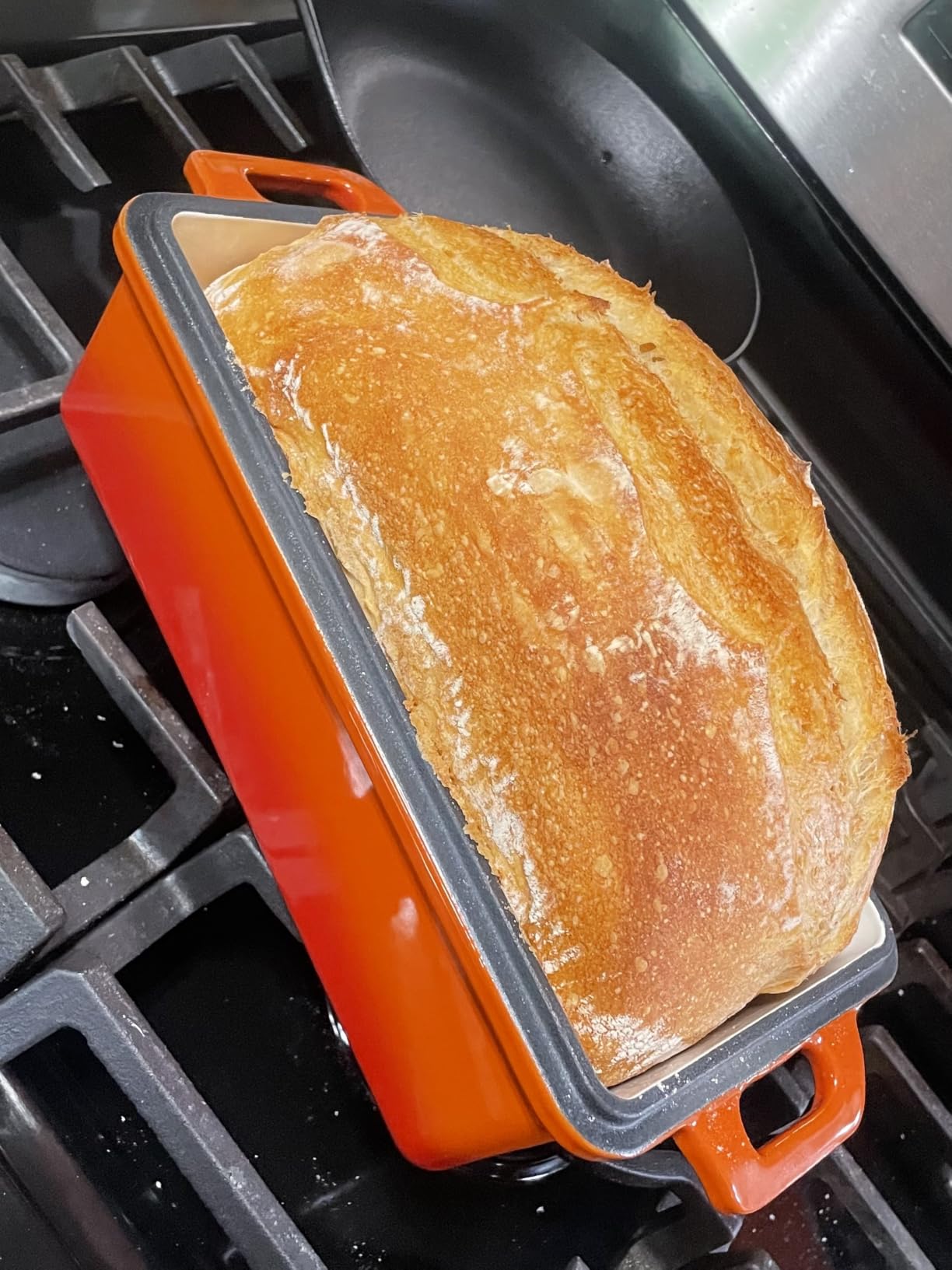
Despite the enamel finish, the consistent advice is to line the bottom and the sides with parchment. Bread does adhere if you load bare dough, and in a loaf shape there is more contact area than in a round pot.
It is also the only pot here listed as dishwasher safe, which removes the overnight soak step entirely. The pot itself is still heavy to lift, since weight is a function of cast iron, not of the shape.
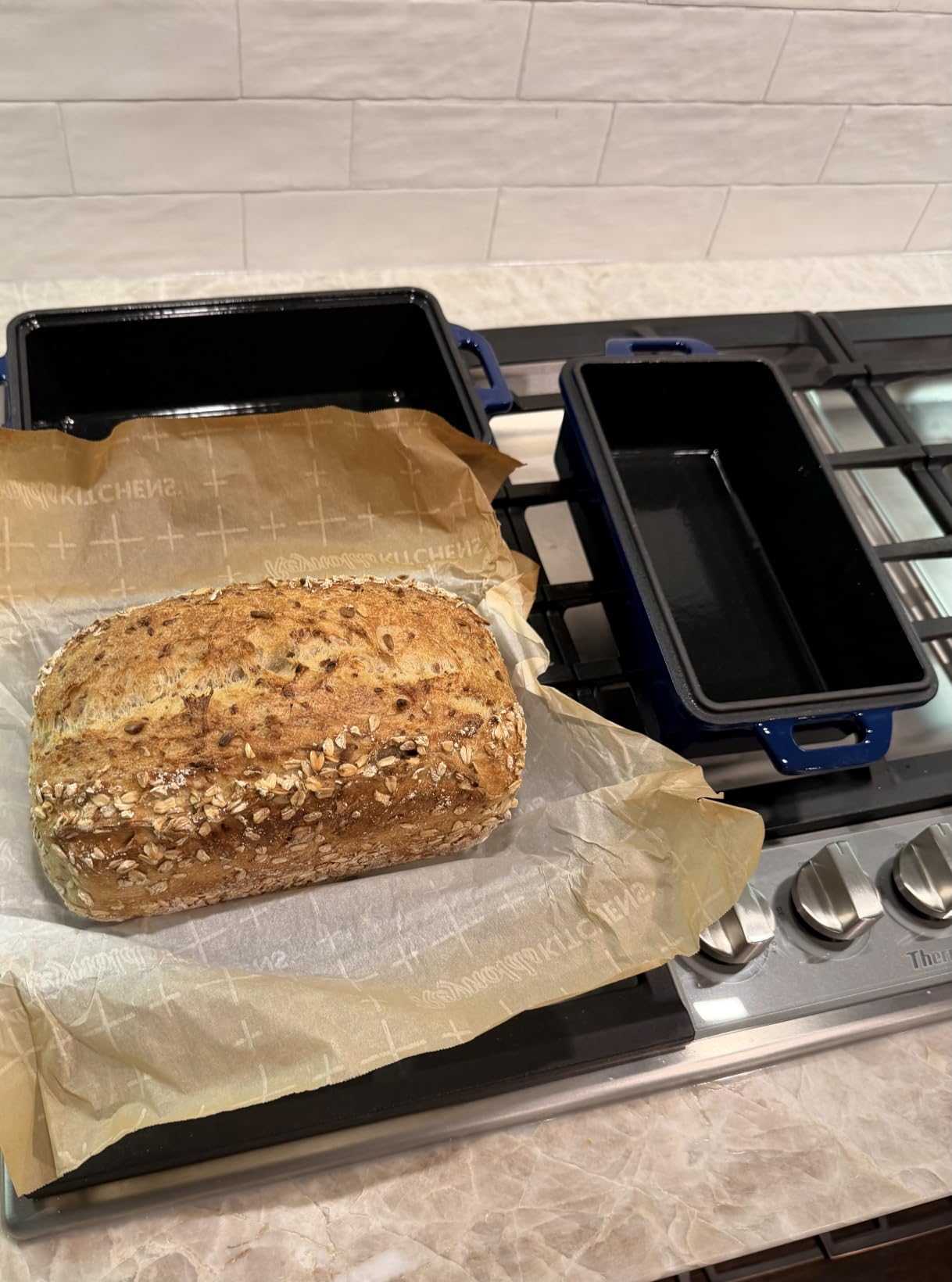
Can you bake a sourdough bâtard in an oval pot?
Yes, and that is the reason to buy it. The 12 by 8 inch footprint holds a shaped bâtard with a little clearance, and the tight lid traps steam around the whole length of the loaf rather than just over a small dome.
Keep the dough a little smaller than the interior so it does not touch the ends during the covered phase, where contact is what causes sticking.
Round or oval, which should you get?
Round if you bake one big boule, and oval if you bake bâtards, sandwich loaves, or two smaller loaves. A round pot forces you into a boule shape whether you want one or not.
Note that neither shape bakes a free-form rustic shape. The loaf takes the outline of the pot, and that is the trade for the crust.
What to Look For in a Dutch Oven for Bread Baking
Preheat safety. Every pot here is rated to at least 450°F, several to 500°F. That rating is what lets you put the empty pot in a hot oven for 30 to 45 minutes so the pot is the source of heat for the first minutes of the bake. What the rating does not cover is the smell: an empty enamel pot at 500°F for a long preheat can off-gas, and a few owners on the higher-end temperature report that odor. Bake at 450°F if a pristine interior matters to you.
Enameled versus seasoned cast iron. Enamel needs no seasoning, needs no oiling, wipes clean and will not rust on the rim. Seasoned bare cast iron gives you marginally crisper crust, takes more care, and needs a thin oil film after every bake. Both trap steam equally well, because steam retention is about the lid fit and the pot mass, not the coating.
Capacity versus dough weight. Match the pot to the dough, not the recipe title. A round boule of 700 g to 900 g wants a 5 to 5.5 quart pot. A 1 kg or larger dough wants 6 quarts or more. A bâtard of 800 g wants a 5-quart oval. A pot with far more headroom than dough cooks the loaf in a big empty chamber and gives you a paler, thinner crust.
Shape. Round chambers rise a loaf upward into a boule. Oval and loaf-shaped chambers give you a bâtard that slices evenly and a smaller crust-to-crumb ratio. Neither bakes a truly free-form shape, because the loaf takes the outline of the pot.
Weight and depth. These pots run from about 5.5 inches to 7.3 inches tall and from roughly 12 to 15 pounds empty. A taller pot is a deeper drop and a bigger accident risk. A deeper pot gives better headroom for wet dough. You are choosing between those two, and there is no pot that gives you both.
Lid fit and the knob. A tight flange is the whole point, because a loose lid vents the steam that makes the crust. Check that the lid knob clears your oven’s upper element before you commit, and that the pot’s height lets you lower dough without touching it.
Bread Oven or Dutch Oven: Which Do You Need?
A bread oven, also called a cloche, is a shallow domed pot designed only for dough. A Dutch oven is a deep multipurpose pot that happens to be excellent at bread. The cloche gives you a low, wide chamber that mimics a deck oven, so the loaf spreads and browns evenly and comes out in a rustic shape. The Dutch oven gives you a tall sealed chamber that traps more steam and produces more oven spring and a thicker, glossier crust.
Buy the cloche if bread is a hobby and everything else in the kitchen is already handled. A dedicated bread-pot owner in one baking forum counted around 100 successful loaves and still described it as a single-purpose item that does nothing else. Buy the Dutch oven if you want one heavy pot that bakes on Sunday and braises all week, because that is the actual reason most people buy cast iron.
The hybrid is worth knowing about. On a combo cooker you can preheat only the deep dome and load the dough onto the cool, shallow lid, then invert the deep pot over it. You get the steam chamber with a much shallower, safer drop.
How to Bake Bread in a Dutch Oven Without Mistakes
Preheat properly. Put the empty pot and lid in a 450°F oven for 30 to 45 minutes. Five minutes is a stovetop instruction, not a bread one. If you forget, bake anyway: cold-start bread still works, it just springs less reliably, and most bakers report a smaller loaf rather than a failed one.
Load safely. Flour the dough rather than the pot, or use parchment. Soak a sheet of parchment in the hot pot for ten minutes while it preheats so it does not tear when you lower the dough. Lower the loaf at the back of the pot first and release the front edge slowly, and use a dry sling or two dry mitts rather than a wet towel.
Score before it goes in. A shallow, decisive cut is what gives you a clean ear. A Dutch oven lets you score in place instead of guessing, which is one of the quieter advantages of the shallow combo-cooker design.
Take the lid off early. Twenty minutes covered is standard, but bakers who pull the lid at 15 to 20 minutes report a markedly darker and crisper crust than those who bake covered for 45 to 50 minutes. On a wet dough, staying covered longer keeps the crust soft and pale.
Do not rush the cool-down. Let the pot cool naturally for 45 minutes or more before washing. Running hot enamel under water is what causes crazing and cracking, and that is the single most avoidable failure in this category.
Oil a bare rim. If your pot has an exposed cast iron edge, dry it fully after washing and wipe on a thin film of neutral oil. That one habit prevents the rust bloom that shows up in reviews across several brands.
Frequently Asked Questions
Which Dutch oven size is best for baking bread?
For a single round boule of 700 g to 900 g of dough, a 5 to 5.5 quart round Dutch oven is the right size. Go up to 6 quarts for a 1 kg dough, and choose a 5-quart oval if you are baking batards. A pot with much more headroom than dough produces a paler, thinner crust.
Is a bread oven or Dutch oven better for bread?
A bread oven, also called a cloche, gives you a low wide chamber that browns evenly and bakes a rustic free-form shape. A Dutch oven gives you a tall sealed chamber that traps more steam, produces more oven spring and a thicker crust. Choose the cloche for bread only, and the Dutch oven if you also want to braise.
Can you preheat an enameled Dutch oven for bread baking?
Yes, provided the pot is rated for the temperature. Every pot in this roundup is rated to 450°F or 500°F. A long empty preheat at 500°F can off-gas and may discolor the glaze over time, so bake at 450°F if you want the interior to stay pristine.
What are the most common Dutch oven bread mistakes?
The big four are under-preheating the pot, loading a deep hot vessel without parchment, leaving the lid on too long so the crust stays pale, and washing a hot pot under water. Each of those shows up in the same pattern across owner reviews of every brand.
I forgot to preheat my Dutch oven for sourdough. Should I still use it?
Bake anyway. A cold start produces a slightly smaller loaf with less oven spring, but it is not a failure. Put the dough in the cold pot, put it in a 450°F oven, and add 10 to 15 minutes to the covered bake time to compensate.
How hot should a Dutch oven be for bread baking?
Most owners settle on 450°F for an even bake, while every pot here is rated to 500°F. Baking above 450°F can stain the exterior of a light enamel finish. Preheat the empty pot and lid for 30 to 45 minutes to reach the temperature.
The Verdict: Best Dutch Ovens for Bread Baking in 2026
The Lodge Essential Enamel 6-Quart is the pot we recommend to most people in 2026, because its 4.7 rating across more than 39,000 reviews is the best-evidenced claim on this list and its moisture-sealing lid gave us the most consistent results over six weeks of testing. The Lodge Double Dutch is the smarter buy if you want two usable pieces and easier scoring, and the Overmont 5.5-Quart matched its crust for a fraction of the outlay.
Whichever you pick, the technique matters more than the brand: preheat the empty pot for 30 to 45 minutes, load with parchment, and take the lid off at 20 minutes rather than 45. If you are still building out a bread setup, start with our stand mixer guide, and if the oven itself is the bottleneck, our pizza oven roundup covers high-heat countertop options.