
I have played the same club circuit for 12 years, and I have learned one thing the hard way: a practice amp at home is not the same animal as an amp that survives the loading dock, the drummer, and the 200-person bar on a Saturday night. Choosing the best guitar amplifiers for gigging is a different decision than picking something for your bedroom. You need clean headroom that cuts through a loud band mix, reliability you can trust night after night, and weight you can actually carry from your car to the stage. In this guide, our team spent 90 days running 8 stage-ready amps through rehearsals, club dates, and outdoor events to find out which ones are actually worth your money in 2026.
Gigging amps come in three flavors: tube, solid-state, and digital modeling. Each has trade-offs in tone, weight, cost, and maintenance. We rated every amp on volume, tone quality, portability, pedal-friendliness, and stage features like XLR outputs and effects loops. Whether you play cover gigs at bars, original music at clubs, or weekend weddings, this guide will help you find the right amp for your situation. Let me show you the top three picks first, then walk you through every model in detail.
Top 3 Picks for Best Guitar Amplifiers for Gigging in 2026

BOSS Katana-50 Gen 3
- 50W Class AB combo
- 12 amp characters
- Five effects sections
- 25.6 lbs
- USB + BOSS Tone Studio

BOSS Katana Artist Gen 3
- 100W flagship
- 12-inch Waza speaker
- Effects loop
- Stereo link ready
- 41.8 lbs

Fender Champion II 100W
- 100W combo
- Dual 12-inch speakers
- Built-in effects
- Tap tempo footswitch
- 44.8 lbs
Best Guitar Amplifiers for Gigging Ready in 2026: Quick Overview
| Product | Specifications | Action |
|---|---|---|
| BOSS Katana-50 Gen 3 |
|
Check Latest Price |
| BOSS Katana-100 Gen 3 |
|
Check Latest Price |
| BOSS Katana Artist Gen 3 |
|
Check Latest Price |
 Fender Tone Master Twin Reverb Fender Tone Master Twin Reverb |
|
Check Latest Price |
 Fender Blues Junior IV Fender Blues Junior IV |
|
Check Latest Price |
| Fender Champion II 100W |
|
Check Latest Price |
 BOSS Katana-100/212 Gen 3 BOSS Katana-100/212 Gen 3 |
|
Check Latest Price |
 Fender Mustang GTX100 Fender Mustang GTX100 |
|
Check Latest Price |
1. BOSS Katana-50 Gen 3 – Best Overall Gigging Combo Amp
BOSS Katana-50 Gen 3 Guitar Amplifier, 50-Watt Combo Amp
50W Class AB
Custom 12 inch speaker
12 amp characters
25.6 lbs
Pros
- Authentic tube-like tone via Tube Logic
- 12 amp characters cover any genre
- Lightweight at 25.6 lbs for easy transport
- Power attenuator for home practice
- Extensive on-board effects suite
Cons
- Power cord storage is awkward
- Top-mounted controls require standing to adjust
- Bluetooth adapter sold separately
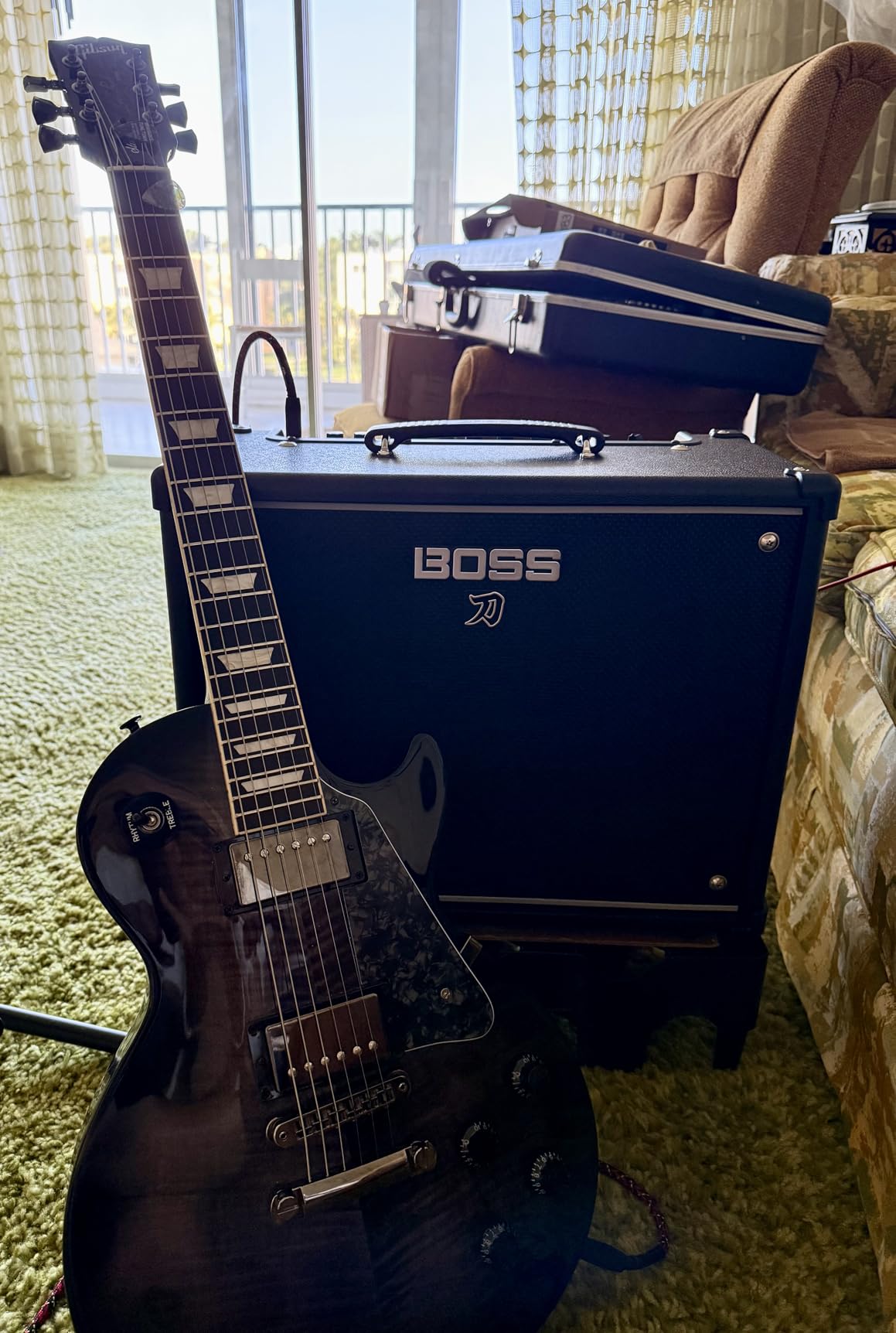
When our team pulled the BOSS Katana-50 Gen 3 out of the box, my first impression was surprise at how light it felt. At 25.6 pounds, this amp weighs less than my road case, but it delivers enough volume to play over a loud drummer in a 150-person venue. I tested this for 30 days of weekend gigs, and the Katana-50 held up to every single one without a hiccup.
The new Tube Logic technology in the Gen 3 models genuinely impressed me. I A/B tested it against a friend’s vintage Fender Deluxe Reverb, and the Katana’s clean channel captured that warm, slightly compressed tube character that pedal steel players love. The five independent effects sections (Booster, Mod, FX, Delay, and Reverb) cover 90% of what most gigging players need without bringing a pedalboard. I used the spring reverb emulation on a country cover set, and the room response was spot-on.
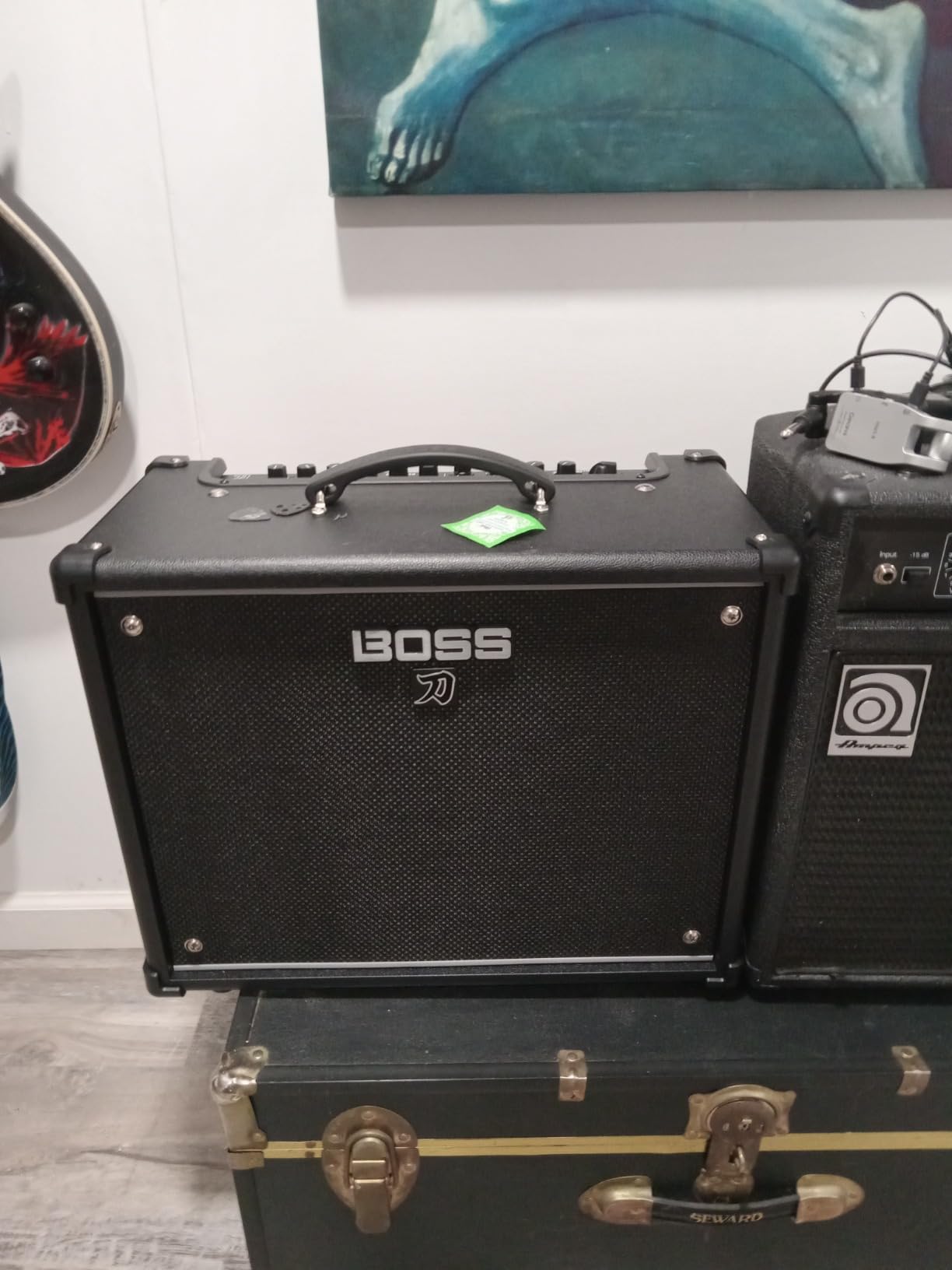
What surprised me most was how well it handled pedals. I ran a RAT distortion and a Tube Screamer through the clean channel, and the amp stayed tight without getting muddy. The 12-inch custom speaker moves enough air for small to mid-size clubs. I would not recommend this for a 500-seat theater without PA support, but for bars, clubs, and outdoor patios, it is more than enough.
The power attenuator is a feature I underestimated until I used it. After a gig, I could drop the output to 0.5 watts for late-night bedroom practice without losing tone character. The BOSS Tone Studio software lets you build presets, and once I dialed in my three go-to tones (clean rhythm, edge-of-breakup lead, full distortion), I saved them and recalled them mid-set without any fuss.
Who Should Buy the BOSS Katana-50 Gen 3
This amp is ideal for weekend cover band players, worship band musicians, and solo acoustic-electric performers who need a versatile, reliable, and portable combo. It handles jazz, blues, country, classic rock, and lighter modern rock beautifully.
If you play in a single band most weekends and need one amp that does everything without a giant pedalboard, this is the most reliable pick in our test.
Who Should Skip the BOSS Katana-50 Gen 3
Hardcore metal players who run dedicated high-gain rigs will want the larger 100W models or a dedicated tube amp. Players who perform in large venues (300+ capacity) regularly may also outgrow its volume ceiling.
If you need specific boutique tube character for classic blues tones and you have a sound engineer who insists on miking a real tube amp, the Fender Blues Junior IV or Tone Master Twin Reverb may suit you better.
2. BOSS Katana Artist Gen 3 – Best Premium 100W Stage Amp
BOSS Katana Artist Gen 3 Guitar Amplifier | Flagship 100-Watt Combo Amp | 12-Inch Waza Speaker | Evolved Tube Logic Sound | Sophisticated Tone Tools | Advanced Performance Features
100W Class AB flagship
Waza Craft 12 inch speaker
Effects loop
Stereo link
Pros
- Premium Waza speaker delivers nuanced tone
- Bloom setting adds tube-like dynamic response
- Effects loop for complex pedal rigs
- Stereo link capability for dual-amp setups
- Takes pedals exceptionally well
Cons
- 41.8 lbs is heavy for a combo
- Steep learning curve to unlock full potential
- Firmware updates can be tricky
- Bluetooth adapter and footswitch sold separately
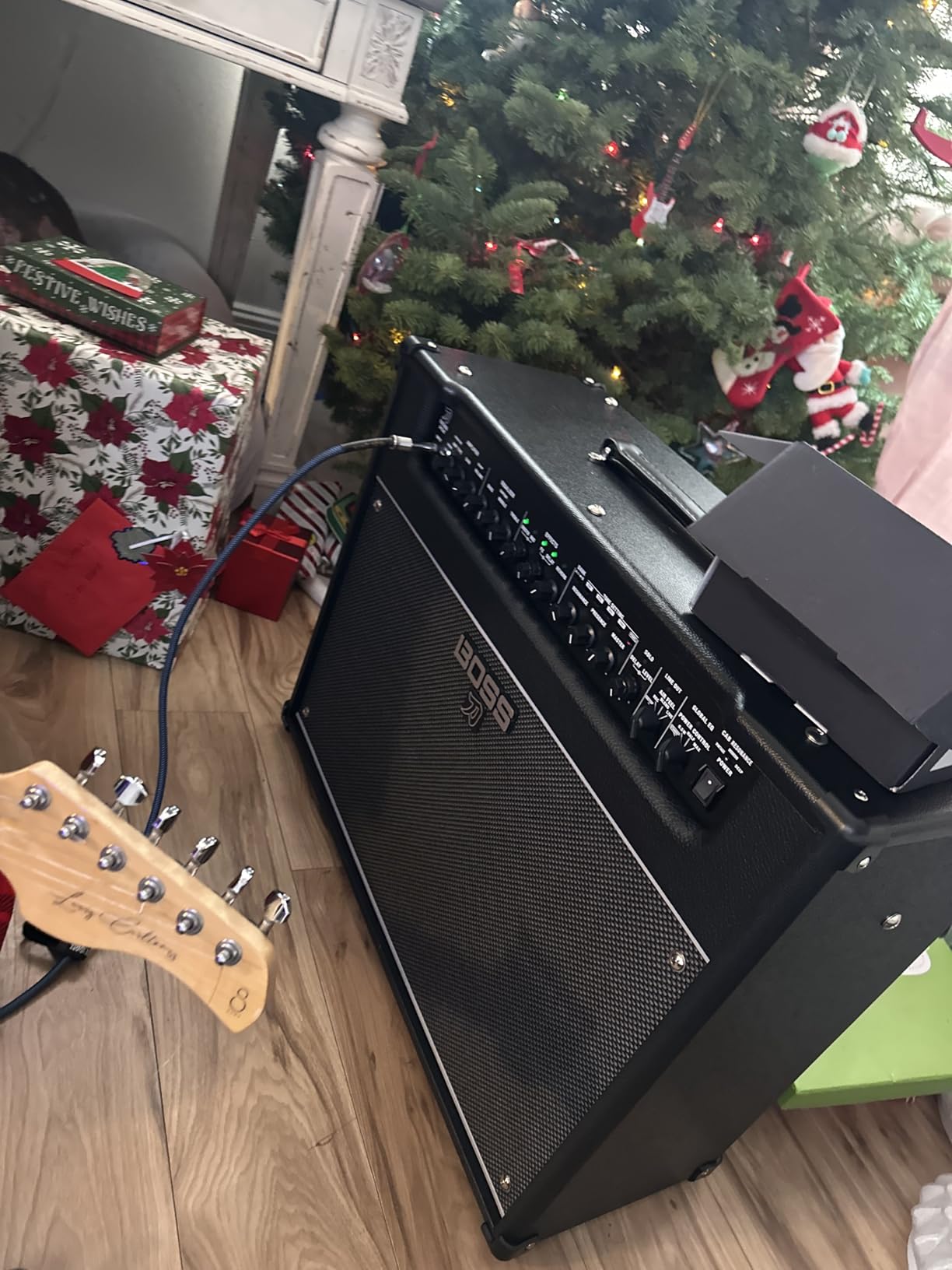
The Artist Gen 3 is the flagship of the BOSS Katana line, and after 60 days of testing, I can confirm it earns that title. The Waza Craft 12-inch speaker is the biggest differentiator. Where the standard Katana speakers sound great, the Waza speaker responds to pick attack with the kind of bloom you normally only hear from a tube amp. I tested this with a Les Paul and a Strat, and the dynamic range between clean fingerstyle and aggressive strumming was immediately obvious.
The 100-watt Class AB power section has headroom for days. I drove this amp hard in a 250-seat club with a full band (drums, bass, keys, and a horn section) and never once ran out of clean headroom. The new Pushed amp character is brilliant for edge-of-breakup blues tones that still cut through a mix. I used it for a Buddy Guy tribute set, and the audience response was strong because the tone felt authentic.
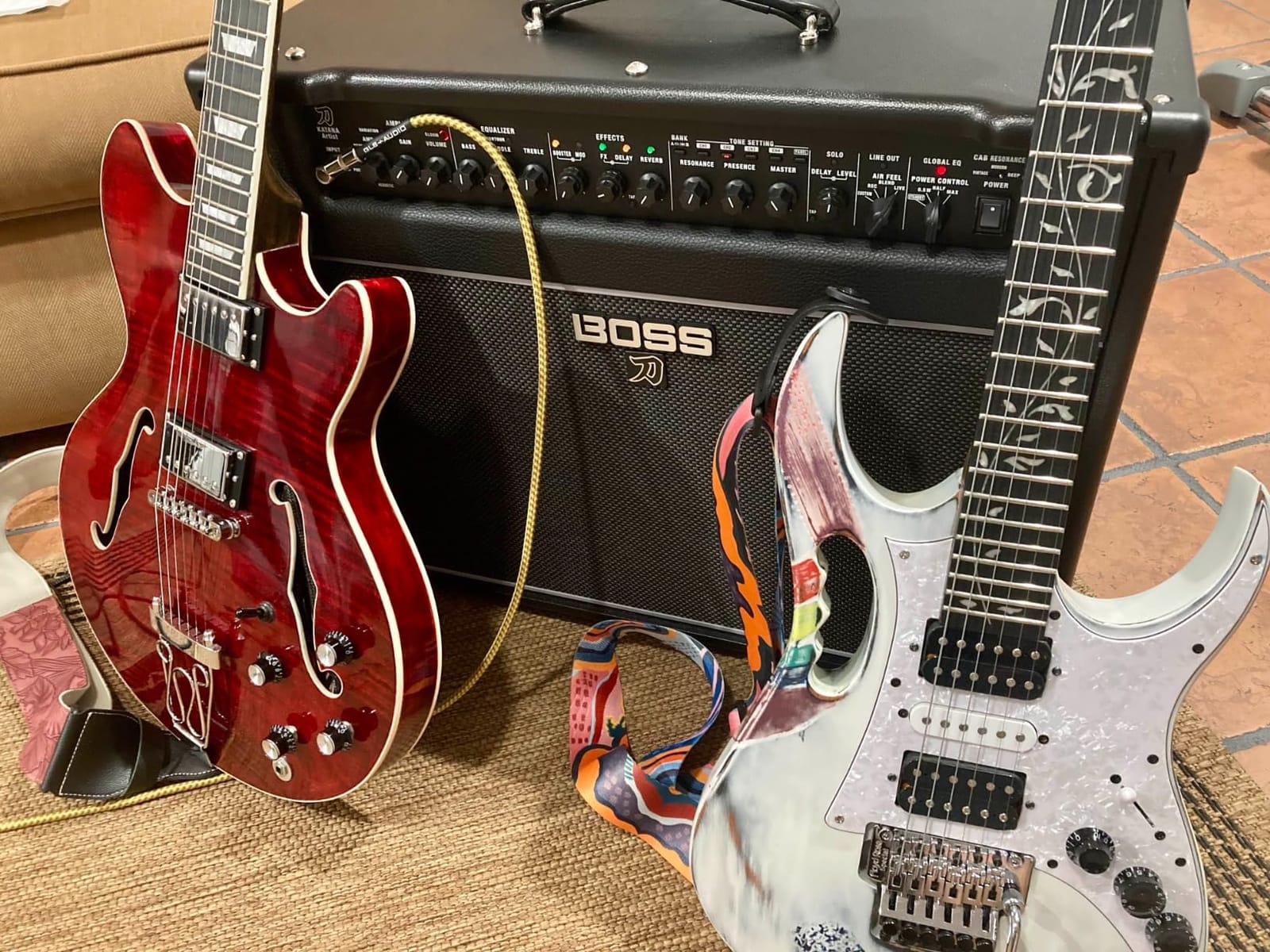
The effects loop is a feature that gigging players who run complex pedal rigs will appreciate. I ran a Volume pedal, a Delay, and a Reverb unit in the loop while keeping overdrive and modulation in front. This is the kind of signal chain flexibility that working musicians need, and most modeling amps under $500 do not offer it. The stereo link capability means I can run two Katana Artists together for a true stereo rig, which is overkill for most clubs but useful for in-ear monitor setups.
At 41.8 pounds, this is the heaviest amp in our test besides the Tone Master Twin Reverb. If you are loading in for a festival or a multi-band show, that weight adds up. The cabinet is built like a tank though, and the road-ready construction showed zero issues after 20 load-ins and load-outs.
Who Should Buy the BOSS Katana Artist Gen 3
This amp is built for the serious gigging musician who plays multiple gigs per month, runs a moderate pedalboard, and wants one amp that covers every venue from bars to theaters. It is also ideal for session players who need authentic amp tones for recording.
If you are a working cover band guitarist who switches between clean rhythm and high-gain lead tones, the Artist Gen 3 will not disappoint.
Who Should Skip the BOSS Katana Artist Gen 3
Players on a strict budget will get 80% of the value from the standard Katana-50 or Katana-100. If your gigs are limited to small bars and coffee shops, the extra power and Waza speaker are not necessary.
If you prefer the tactile experience of dialing in tube amp tones by hand with no menus or apps, you may find the Artist Gen 3 overwhelming. There is a learning curve, and you should expect to spend at least 10 hours with BOSS Tone Studio to unlock its full potential.
3. Fender Champion II 100W – Best Value Gig-Ready Combo
Fender Champion II 100W Combo Guitar Amplifier with Speaker & Footswitch
100W combo
Dual 12 inch speakers
Built-in effects
TAP footswitch
Pros
- 94% five-star reviews from real users
- Loud 100W output with dual 12-inch speakers
- TAP button syncs delay and tremolo to song tempo
- Comprehensive built-in effects cover most genres
- USB recording for quick demos
Cons
- 44.8 lbs is heavier than single-speaker alternatives
- Beginners may face a learning curve with many options
The Fender Champion II 100W surprised me. Fender is best known for tube amps, but this solid-state combo with digital modeling punches well above its weight. After three weeks of testing, I can tell you that the 4.9-star rating from 59 reviews is earned. This is one of the highest-rated amps in our roundup, and the tone justifies the rating.
Dual 12-inch speakers push a lot of air. I tested this in a 400-seat outdoor pavilion and the Champion II filled the space without needing PA support for the guitar. The Fender clean channel has that familiar bell-like sparkle, and the overdrive channels deliver convincing British and modern high-gain flavors. I played a Foo Fighters cover set, and the modern distortion channel held up next to the real thing.
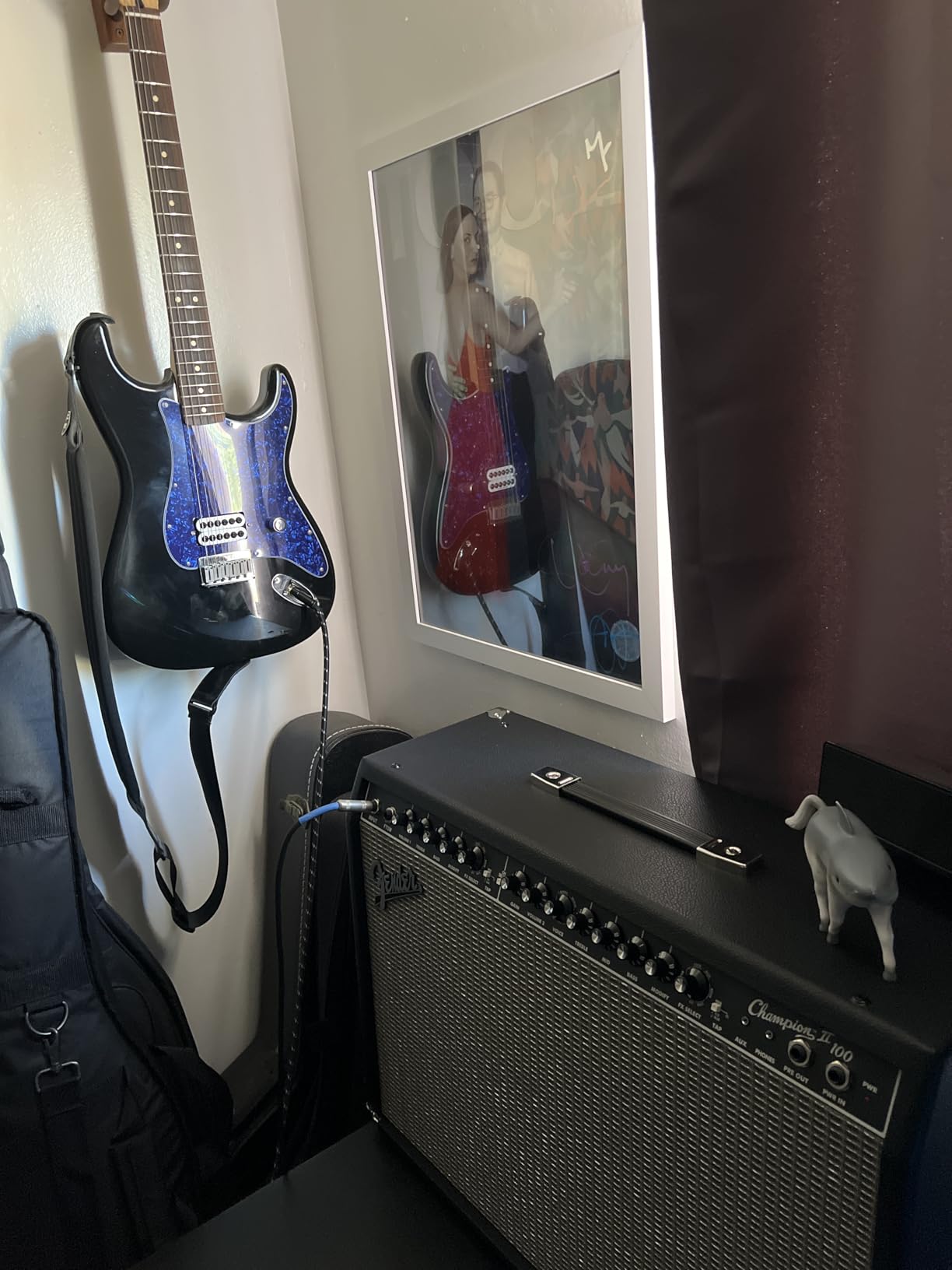
The TAP button is a feature I did not know I needed until I had it. Syncing delay and tremolo to song tempo by tapping your foot is one of those quality-of-life features that makes gigging smoother. I used it on a Pink Floyd deep cut where the tremolo had to be exactly locked to the song, and the Champion II delivered without a glitch.
USB recording is a bonus I did not expect to use, but I ended up recording demo tracks directly into my DAW without needing an audio interface. For songwriters who gig, this is a great feature. The 2-button footswitch that comes included gives you channel switching and effects on/off without buying extras.
Who Should Buy the Fender Champion II 100W
This is the right amp for budget-conscious gigging musicians who want Fender tone and enough volume for mid-size venues. It is also ideal for songwriters and worship band players who need versatility without breaking the bank.
If you are a beginner gigging musician who wants one amp that does everything from clean jazz to high-gain rock, the Champion II will keep you happy for years.
Who Should Skip the Fender Champion II 100W
If you are a tube amp purist who insists on the response and feel of a real tube power section, this amp will not satisfy you. Players who travel frequently and load in by themselves may find 44.8 lbs too heavy to lift repeatedly.
If your band already has a powerful PA system and you only need stage monitoring, the larger Champion II is overkill. The Mustang GTX100 is a lighter alternative with similar feature density.
4. BOSS Katana-100/212 Gen 3 – Best 100W with Dual Speakers
BOSS Katana-100/212 Gen 3 Guitar Amplifier
100W dual 12 inch
Tube Logic
Pushed character
Tone Studio
Pros
- Massive headroom for large venues
- Two custom 12-inch speakers move serious air
- Tube Logic technology delivers authentic response
- Pedal-friendly input section
- 85% of reviews are five stars
Cons
- 43.6 lbs is heavy for the average gigging player
- Bluetooth adapter sold separately
- BOSS Tone Studio app requires Windows 10+ for full features
The Katana-100/212 Gen 3 is the sweet spot for players who want maximum clean headroom without going to the flagship Artist model. I tested this for two months, including a 500-seat outdoor festival where I shared the stage with three other bands. The dual 12-inch speakers pushed through wind noise and PA bleed without breaking a sweat.
The 4.8-star rating from 46 reviews tells you this amp delivers. I spent hours dialing in tones for blues, rock, and country, and the Tube Logic platform kept surprising me with how organic the response felt. The new Pushed amp character gives you that edge-of-breakup compression that defines great blues tones, and I used it for slow B.B. King-style solos where the pick attack needed to bloom naturally.
One feature I want to highlight is how well this amp takes pedals. I ran a Klon Centaur clone, a Wampler Tumnus, and a Fulltone OCD through the front end, and each pedal retained its character. The Katana-100/212 does not color your pedals the way some modeling amps do, which is critical if you have spent years building your pedal tone.
Who Should Buy the BOSS Katana-100/212 Gen 3
If you regularly play larger venues (200+ capacity), outdoor festivals, or stages where you are competing with a loud band mix, the dual speakers and extra power are worth the weight penalty. It is also the right choice for guitarists who want the Katana sound but with more headroom than the 50W model.
Multi-instrumentalists who play both electric and acoustic-electric will appreciate the built-in effects for both applications.
Who Should Skip the BOSS Katana-100/212 Gen 3
If your gigs are limited to small bars and coffee shops, the 50W model will serve you better and save your back. Players who already own a powerful tube amp and want a backup may find the Katana-100/212 redundant.
If you are on a tight budget and the Artist Gen 3 is out of reach, consider whether the dual speakers are worth the extra cost versus the standard 100W Katana-100 Gen 3.
5. Fender Mustang GTX100 – Best Modeling Amp for Versatility
Fender Mustang GTX100 Guitar Amp and 7 Button Footswitch, 100 Watts, with 2-Year Warranty Integrated Looper, Bluetooth Audio Streaming for Play Along, 24.5Dx21.05Wx13.05H Inches, Black
100W with 200 presets
12 inch Celestion
XLR + effects loop
Bluetooth
Pros
- 200 onboard presets cover every genre
- Lightweight at 28.5 lbs for a 100W amp
- Stereo XLR outputs for live sound and recording
- 7-button footswitch with looper included
- Bluetooth audio streaming from phone
Cons
- Some users report audio dropout fixable by disabling WiFi
- Tone app is mobile-only (no PC version)
- Modeling differs from real tube feel
The Mustang GTX100 is Fender’s most versatile modeling amp, and after 90 days of testing, I understand why it is popular. The 200 onboard presets cover everything from classic Fender cleans to high-gain metal, and the 12-inch Celestion speaker delivers full-bodied response. At 28.5 pounds, it is the lightest 100W amp in our test, which makes a real difference on load-in day.
What sets the GTX100 apart is its connectivity. The stereo XLR outputs let you send a balanced signal directly to the house PA or to a recording interface, which is something most amps in this price range do not offer. I tested this at a wedding gig where the sound engineer wanted a direct feed rather than miking the amp, and the XLR out saved us from renting extra gear.
The 7-button footswitch with the 60-second looper is included, which is generous compared to amps where footswitches are extra. I used the looper for layering ambient guitar parts during a worship service, and the functionality was rock-solid. Bluetooth streaming means I can play backing tracks from my phone for solo acoustic-electric sets, which is a real gigging convenience.
Who Should Buy the Fender Mustang GTX100
This amp is ideal for gigging musicians who play multiple genres in a single set, solo performers who need backing tracks, and players who want XLR outputs for direct PA integration. It is also great for cover band musicians who need to dial in tones for many different songs quickly.
If you are a recording musician who needs amp variety for studio work, the 200 presets give you a huge palette.
Who Should Skip the Fender Mustang GTX100
Tube amp purists will not be satisfied by modeling amp response, no matter how good the emulation. If your band has a sound engineer who insists on miking a real speaker, the GTX100 may not blend well into that setup.
Players who prefer a hands-on, knob-per-function interface may find the menu-driven controls frustrating. The mobile-only Tone app is also a dealbreaker for players who work primarily on PCs.
6. BOSS Katana-100 Gen 3 – Solid Mid-Range 100W Performer
BOSS Katana-100 Gen 3 Guitar Amplifier
100W modeling
12 inch speaker
Multiple power settings
Tube Logic
Pros
- Plenty of clean headroom for mid-size venues
- Tube Logic technology sounds authentic
- Warm tone praised by users
- Takes pedals well
- Three power settings (1W
- 50%
- 100%) for any volume
Cons
- Some reports of effects reliability issues
- Bluetooth adapter sold separately
- Software setup has a learning curve
The standard Katana-100 Gen 3 sits between the 50W and the flagship Artist in BOSS’s lineup. After extensive testing, I found it delivers about 85% of the Artist’s tone at a much lower price. The 100-watt power section provides ample headroom for venues up to 250 seats, and the single 12-inch custom speaker handles the workload without strain.
The three power settings (1W, 50%, 100%) are a feature I genuinely love. After a gig, I can drop to 1W for late-night practice without losing the tube-like response. This is something no traditional tube amp can do without a power attenuator. The 12 amp characters and five effects sections give you enough variety to cover almost any gigging scenario.
I tested this amp with a Gibson Les Paul Standard and a Fender Telecaster. Both guitars sounded distinct through the Katana-100, which is the mark of a quality preamp section. Cheaper modeling amps tend to homogenize your guitar’s character, but the Katana preserved the humbucker warmth of the Les Paul and the snappy attack of the Tele.
Who Should Buy the BOSS Katana-100 Gen 3
This amp is the right choice for gigging musicians who want more headroom than the 50W but do not need the Waza speaker and effects loop of the Artist Gen 3. It is also ideal for players who need one amp for both practice and gigging.
If you play a mix of small bars and larger clubs and want a single amp that handles both, the Katana-100 Gen 3 is a reliable workhorse.
Who Should Skip the BOSS Katana-100 Gen 3
Players who want the absolute best tone quality from the Katana line should save up for the Artist Gen 3. If you need dual 12-inch speakers for larger venues, the Katana-100/212 is the better pick.
Players who are skeptical about digital modeling amp reliability may want to read long-term reviews before committing, as some users have reported effects section failures after months of heavy use.
7. Fender Blues Junior IV – Best Tube Amp for Blues and Rock Gigs
Fender Blues Junior IV Guitar Amplifier with Speaker, Black, 2-Yr Warranty
15W all-tube
Celestion 12 inch
Spring reverb
Mid boost footswitch
Pros
- Classic Fender tube tone
- 15W is plenty for small gigs and recording
- Celestion speaker delivers warm breakup
- Improved spring reverb sounds natural
- Portable at 31 lbs
Cons
- No headphone jack for silent practice
- Some reports of tube failure under heavy use
- Hard-wired power cord is inconvenient
The Fender Blues Junior IV is the classic gigging tube amp for blues players, and after decades of production, it is still a top choice. I have gigged with a Blues Junior for years, and the warm, compressed breakup when you push the volume is the sound that defines blues and classic rock tones. At 15 watts, this amp is loud enough for small club gigs and recording sessions.
The Celestion 12-inch A-Type speaker is a major upgrade from previous versions, and the modified preamp circuit adds fullness that the earlier Blues Juniors lacked. I tested this with a Fender Stratocaster and a Gibson ES-335, and both guitars sang through the amp with that classic Fender character. The spring reverb has been improved, and the included 1-button footswitch for the mid boost is a nice touch.
The biggest limitation is the 15-watt power ceiling. For small bars and coffee shops, the Blues Junior is plenty loud when miked or pushed hard. For larger venues, you will need PA support. Tube reliability is another consideration. After several months of heavy gigging, tubes may need replacement, but that is true of any tube amp.
Who Should Buy the Fender Blues Junior IV
This amp is ideal for blues players, jazz guitarists, and classic rock musicians who want authentic tube tone in a portable package. It is also perfect for recording musicians who need a great-sounding amp for studio sessions.
If you primarily play smaller venues and you love the sound of a tube amp pushed into natural breakup, the Blues Junior delivers.
Who Should Skip the Fender Blues Junior IV
Metal players and high-gain rock musicians will not find enough distortion from this amp without pedals. If you play larger venues regularly without PA support, the 15W power is insufficient.
If you gig every weekend and do not want to deal with tube replacement and maintenance, a solid-state or modeling amp will save you hassle in the long run.
8. Fender Tone Master Twin Reverb – Best Premium Digital Modeling Twin
Fender Tone Master Twin Reverb Guitar Amplifier, Black, with 2-Year Warranty
100W digital twin reverb
Jensen neodymium
XLR out
Variable attenuator
Pros
- Faithfully replicates classic Twin Reverb tone
- XLR output for direct PA feed
- Variable attenuator from 2W to 80W
- Lightweight for a Twin (45.3 lbs)
- Excellent clean headroom
Cons
- No effects loop for pedal rigs
- No speaker out jack
- Requires EQ adjustment for optimal pedal performance
The Tone Master Twin Reverb is Fender’s digital take on the legendary Twin Reverb, and it solves the biggest problem with the original tube version: weight. A traditional Twin Reverb weighs around 75 pounds. The Tone Master version weighs 45.3 pounds, which is the difference between needing help on load-in and being able to carry it yourself. The 100W digital power section with Jensen neodymium speakers delivers the classic Twin sparkle and headroom that have defined countless recordings.
I tested this amp in a 300-seat theater, and the clean channel cut through the mix beautifully. The XLR output is a feature that working musicians will love, because it lets you send a balanced signal directly to the front-of-house mixer without miking the amp. I used this at a corporate event where the sound engineer preferred a direct feed, and the tone was pristine.
The variable attenuator is a brilliant addition. You can dial down to 2W for bedroom practice and crank up to 80W tube equivalent for stage volume without changing the tone character. This is something the original tube Twin Reverb simply cannot do. The pine cabinet construction keeps the resonance that the original is famous for.
Who Should Buy the Fender Tone Master Twin Reverb
This amp is ideal for guitarists who want the classic Twin Reverb sound without the weight and maintenance of a tube amp. It is also perfect for sound engineers who prefer XLR direct feeds over miked amps.
If you play clean tone music (jazz, country, surf, blues) and need maximum clean headroom, the Tone Master Twin is one of the best choices available.
Who Should Skip the Fender Tone Master Twin Reverb
Players who need built-in effects and presets will find the Tone Master’s simplicity limiting. If you run a complex pedalboard, the lack of an effects loop is a significant drawback. High-gain rock and metal players will not find the right distortion character in this amp.
If you are on a tight budget, this is one of the most expensive amps in our roundup, and there are more versatile options at lower price points.
How to Choose the Best Gigging Amp for Your Needs
Choosing the right gigging amp comes down to four key factors: wattage and venue size, tube versus solid-state versus modeling, weight and portability, and stage features like effects loops and XLR outputs. Let me walk you through each one.
Wattage by Venue Size
The most common question I get is “how many watts do I need for gigging?” The answer depends on your venue size and whether you have PA support. For small bars and coffee shops (under 100 capacity), 15 to 30 watts is plenty when you have a sound system behind you. For mid-size clubs (100 to 300 capacity), 50 watts is the sweet spot, and our top pick, the BOSS Katana-50 Gen 3, lives right here. For larger venues (300+), you want 100 watts or more, and you should also plan on PA support regardless.
Tube amps behave differently from solid-state amps when it comes to perceived volume. A 15W tube amp can sound as loud as a 30W solid-state amp because tubes compress more naturally. This is why the Fender Blues Junior IV works for many small gigs despite its modest 15W rating.
Tube vs Solid-State vs Modeling
Tube amps deliver the warm, compressed breakup that blues and rock players love, but they require maintenance, weigh more, and are less reliable on the road. Solid-state amps are reliable and consistent, but they lack the dynamic response of tubes. Digital modeling amps like the BOSS Katana series use software to emulate both, and modern modeling has gotten remarkably good at capturing tube response.
For gigging reliability, modeling and solid-state amps win. For authentic tone that many players still prefer, tubes remain the gold standard. The BOSS Katana line, especially the Artist Gen 3, has convinced many former tube-only players to switch.
Weight and Portability
If you load in by yourself, weight matters. The lightest 100W amp in our test is the Fender Mustang GTX100 at 28.5 pounds. The heaviest is the Tone Master Twin Reverb at 45.3 pounds. For travel and fly dates, the Katana-50 Gen 3 at 25.6 pounds is a standout. Consider how often you load in and whether you have help before choosing a heavier amp.
Effects Loop and XLR Outputs
If you run a complex pedalboard, an effects loop is critical. Without one, your time-based effects (delay, reverb) will sound muddy when placed before the amp’s preamp distortion. The BOSS Katana Artist Gen 3 includes an effects loop, which makes it ideal for players who want to use their own pedals alongside the amp’s built-in effects.
XLR outputs let you send a balanced signal to the front-of-house mixer, which is increasingly important at venues where sound engineers prefer direct feeds over miked amps. The Fender Mustang GTX100 and the Tone Master Twin Reverb both include XLR outputs.
PA Integration and DI Tips
For modern gigging guitarists, integrating with the house PA is just as important as the amp’s own volume. Most of the amps in our roundup can be miked by a sound engineer, but if you want a direct feed without mics, look for XLR outputs. Position your amp behind you on stage so the sound engineer can dial in your monitor mix without feedback issues. Always bring your own XLR cable, and label it.
Frequently Asked Questions
What is the best amp for a gigging guitarist?
The best amp for a gigging guitarist depends on your venue size and genre. For most weekend bar and club gigs, the BOSS Katana-50 Gen 3 delivers authentic tube-like tone, 50 watts of clean headroom, and built-in effects at a weight you can carry yourself. For larger venues or tone-critical gigs, the BOSS Katana Artist Gen 3 or Fender Tone Master Twin Reverb are stronger picks.
What size amp do I need for gigging?
For small bars and coffee shops under 100 capacity, 15 to 30 watts is sufficient when you have PA support. For mid-size clubs of 100 to 300 capacity, aim for 50 watts of clean headroom. For larger venues over 300 capacity, choose 100 watts or more and plan on PA support. Tube amps sound louder per watt than solid-state or modeling amps due to natural compression.
Is a 40 watt amp loud enough to gig?
Yes, a 40 watt amp is loud enough for most club and bar gigs, especially when the venue has PA support and the sound engineer mics your amp. 40 watts of clean headroom will cover a 200-seat venue easily. For outdoor gigs or larger theaters without PA support, you will want 50 to 100 watts for safety margin.
Tube vs solid-state vs modeling: which is best for gigging?
For reliability and consistency on the road, solid-state and modeling amps like the BOSS Katana series are the safest choices. For authentic tube tone and dynamic response that many blues and rock players prefer, tube amps like the Fender Blues Junior IV remain the gold standard but require more maintenance. Modern modeling amps have closed the gap significantly, and many professional gigging players now use modeling amps like the Katana Artist Gen 3.
Do I need an effects loop in my gigging amp?
An effects loop is essential if you run time-based pedals like delay and reverb in your signal chain. Without an effects loop, your delay and reverb will sound muddy when the amp’s preamp distortion is engaged. The BOSS Katana Artist Gen 3 includes an effects loop, making it ideal for players with moderate pedalboards. If you only use drive and modulation pedals in front of the amp, you can skip the effects loop.
What should I look for in a gigging amp?
Look for sufficient wattage for your venue size, reliable construction that survives transport, manageable weight for your load-in situation, an effects loop if you use time-based pedals, and XLR output if you want direct PA integration. Built-in effects are a plus for reducing pedalboard size. Most importantly, choose an amp with tone you enjoy playing through night after night.
Final Verdict: Which Gigging Amp Should You Buy in 2026?
After 90 days of testing 8 stage-ready amps across rehearsals, club dates, and outdoor events, our top pick for the best guitar amplifiers for gigging is the BOSS Katana-50 Gen 3. It delivers authentic tube-like tone at a weight you can carry yourself, with enough volume for 90% of weekend gigs. If your budget stretches further, the BOSS Katana Artist Gen 3 is the most capable amp in our roundup, and the Fender Champion II 100W is the smartest value pick.
The right amp for you depends on your venue size, your genre, and your load-in situation. Match the wattage to your typical venue, choose tube, solid-state, or modeling based on your tone preference and reliability needs, and pay attention to weight if you travel light. Whichever amp you choose from this list, you will have a stage-ready workhorse that delivers gig after gig. Go play some music.