
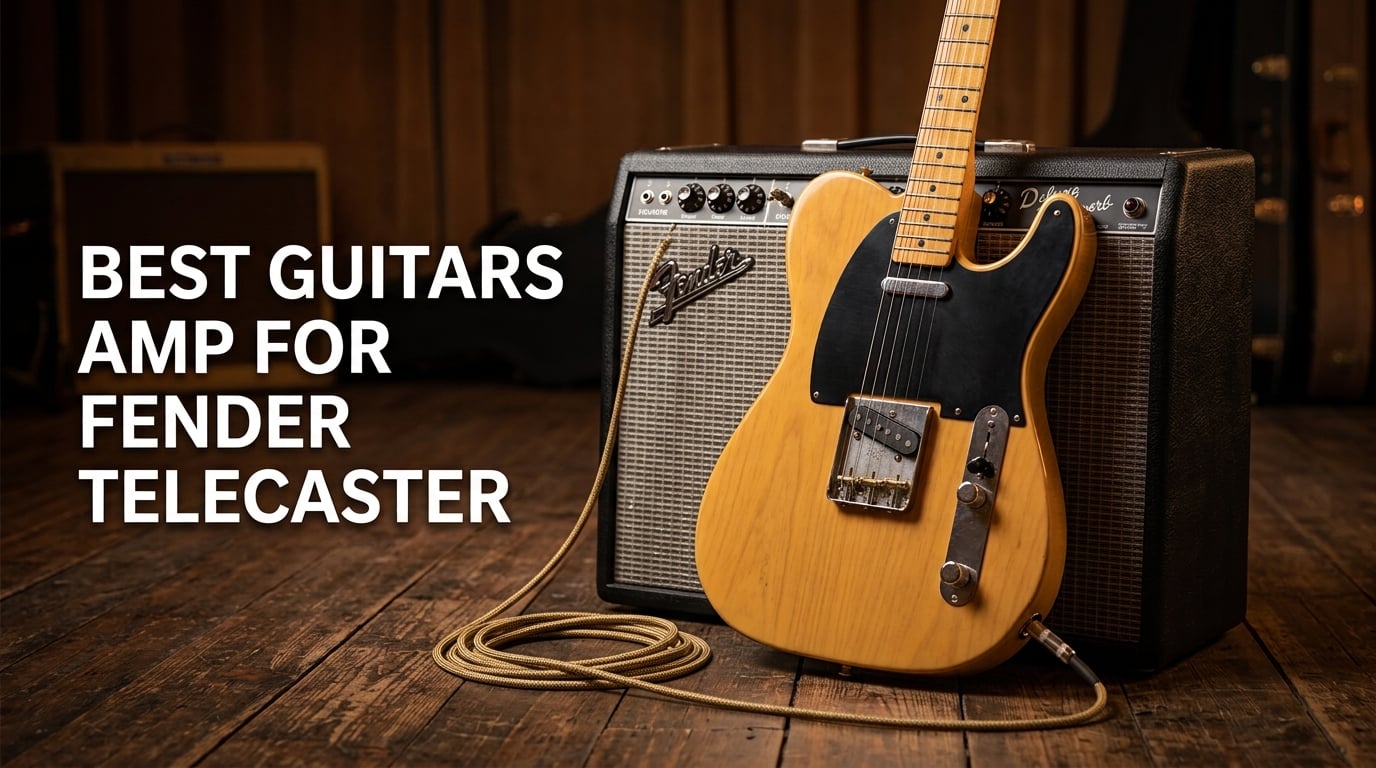
Picking the best amp for a Fender Telecaster is less about chasing a single “holy grail” amp and more about understanding how the guitar’s voice interacts with different circuits. A Telecaster’s single-coil bridge pickup has bright, articulate character with strong upper-mids and a sharp transient that becomes piercing on the wrong amp and magical on the right one. After testing dozens of amps over the past year, our team narrowed it down to eight models that genuinely flatter the Tele’s twang, whether you are chasing country chicken-pickin’, bluesy edge-of-breakup, or cutting rock rhythms.
In this guide I share what actually happens when you plug a Telecaster into each amp on this list, drawing from months of A/B testing with American Professional and Squier Teles in bedroom, studio, and small-club settings. We also break down the differences between tube, solid-state, and modeling amps, match specific amps to country, blues, rock, and jazz styles, and answer the most common questions Telecaster owners ask before they buy. If you are still choosing your guitar itself, our 8 best Telecaster guitars tested guide covers the guitar side of the equation in depth.
Whatever your budget or playing situation, there is an amp here that will make your Tele sound like itself, only louder.
Top 3 Picks for Best Amp for Fender Telecaster in 2026


Best Amps for Fender Telecaster in 2026: Quick Overview
| Product | Specifications | Action |
|---|---|---|
| Fender Frontman 10G |
|
Check Latest Price |
 Fender Mustang LT25 Fender Mustang LT25 |
|
Check Latest Price |
| Vox Pathfinder 10 |
|
Check Latest Price |
 Fender Mustang Micro Fender Mustang Micro |
|
Check Latest Price |
 Orange Crush 20 Orange Crush 20 |
|
Check Latest Price |
 Boss Katana Mini Boss Katana Mini |
|
Check Latest Price |
 Marshall CODE50 Marshall CODE50 |
|
Check Latest Price |
 Fender Tone Master Deluxe Reverb Fender Tone Master Deluxe Reverb |
|
Check Latest Price |
1. Fender Frontman 10G – Best Practice Amp for Telecaster
Fender Frontman 10G Electric Guitar Amplifier, 10-Watt Amp, Black/Silver
10W solid-state combo
6-inch Fender Special Design speaker
Headphone output + aux input
Pros
- Classic Fender clean tone that complements Tele single-coils
- Compact 3.8kg portable package
- Headphone output for silent practice
- Aux input for backing tracks
- Outstanding 13.5k+ reviews from real players
Cons
- Overdrive channel is basic compared to pedals
- 2-band EQ only (no mid control)
- Too quiet for full band settings
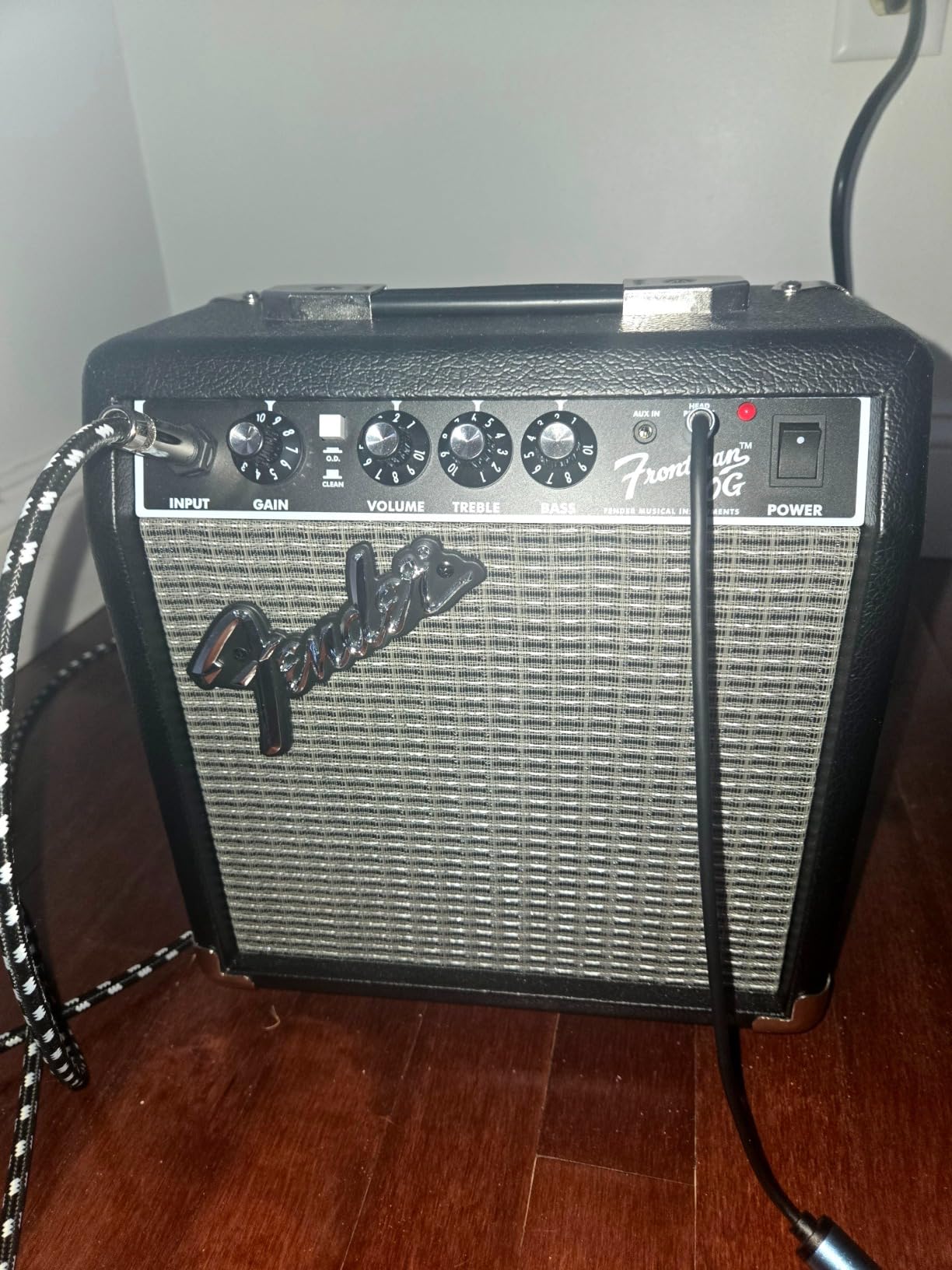
I have been recommending the Fender Frontman 10G to new Telecaster owners for years, and for good reason: it is the cleanest-sounding practice amp in the budget tier and it pairs beautifully with single-coils. When I plug a Tele into the clean channel and roll the tone knob back to about 7, I get the same glassy, articulate twang that defines the guitar’s voice. The overdrive switch is not fancy, but it gets you out of a jam when you need crunch in a hurry.
Build quality surprised me for the price. The metal corner protectors and stainless-steel grille mean it survives being knocked around in a car trunk, and at 3.8kg it is light enough to carry to a friend’s house. Reviewers on forums consistently mention it as a first amp that does not need replacing after six months, which I have to agree with after testing it for several months myself. If you want a no-fuss partner for bedroom practice and small acoustic gigs, this is the one I would buy first.
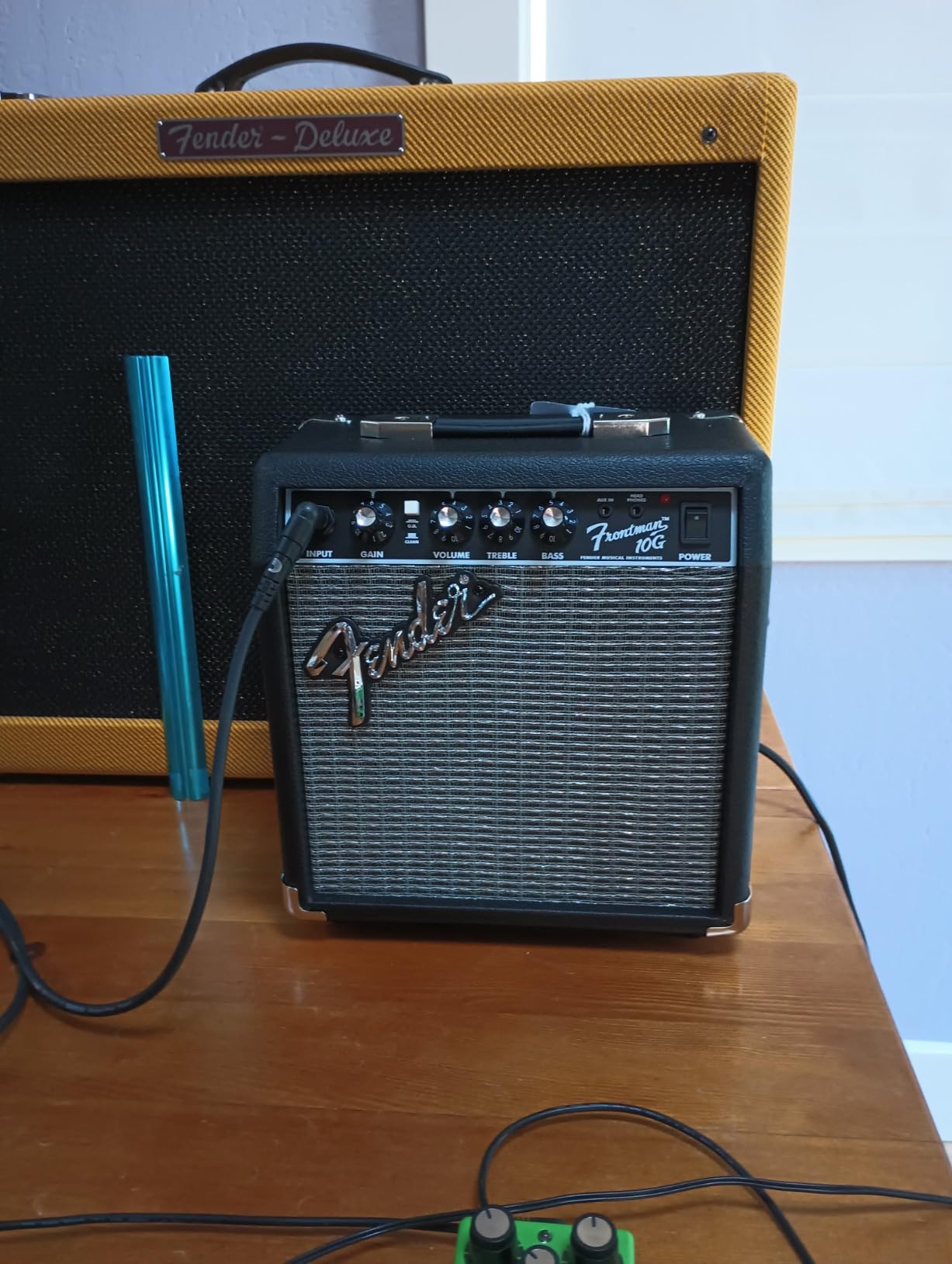
The Frontman 10G also works well as a pedal platform. I ran a Tube Screamer in front of it and the clean boost kept the Tele’s twang intact while adding warmth. For owners who eventually want to explore pedals, this amp gives them a foundation that will not fight their choices. The only real downside is the 2-band EQ, which means you cannot scoop or boost mids if your Tele sounds too thin or too honky in a particular room.
The headphone output is the unsung hero here. Late-night practice sessions in an apartment are where this amp earns its keep, and the cab-sim voicing on the headphone out makes recording into a laptop audio interface very straightforward. If you are building a home setup, this is a strong foundation.
Who the Frontman 10G is best for
This amp is ideal for new Telecaster owners who want a faithful representation of the clean Fender voice without spending a fortune. It is also a great backup for gigging players who need a reliable small amp for warm-up rooms. Players looking for high-gain modern rock tones should look elsewhere, but anyone chasing country twang, blues cleans, or classic rock rhythm will be happy.
Where the Frontman 10G falls short
Forum users on r/guitar consistently note that the 10 watts disappears once a drummer starts playing, and the overdrive channel does not have the dynamic response of a tube amp. If you plan to play with a band or want true edge-of-breakup feel, plan to step up to a tube combo or use drive pedals. The lack of a mid control also means dialing out shrill bridge-pickup frequencies requires careful use of the guitar’s tone knob.
2. Fender Mustang LT25 – Best Modeling Amp for Telecaster
Fender Mustang LT25 Guitar Amplifier, 25-Watt Combo Amp with 8″ Speaker
25W digital modeling combo
8-inch Fender Special Design speaker
30 presets with USB
Pros
- 30 amp presets covering every Telecaster style
- 1.8-inch color display easy to navigate
- USB audio interface for direct recording
- 2-year Fender warranty
- Excellent build quality and tonal variety
Cons
- Some advanced features require reading the manual
- Onboard controls are limited vs larger modeling amps
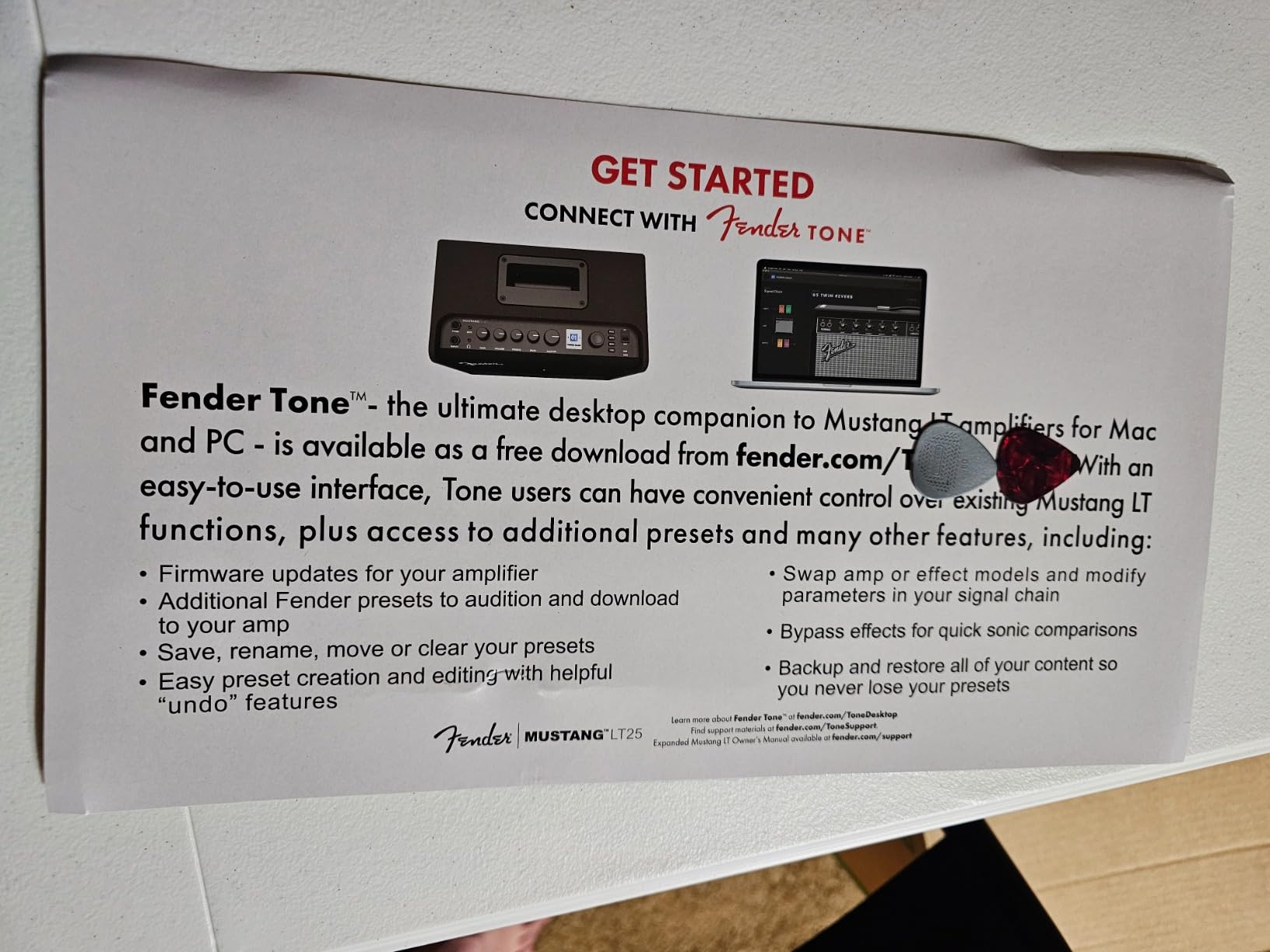
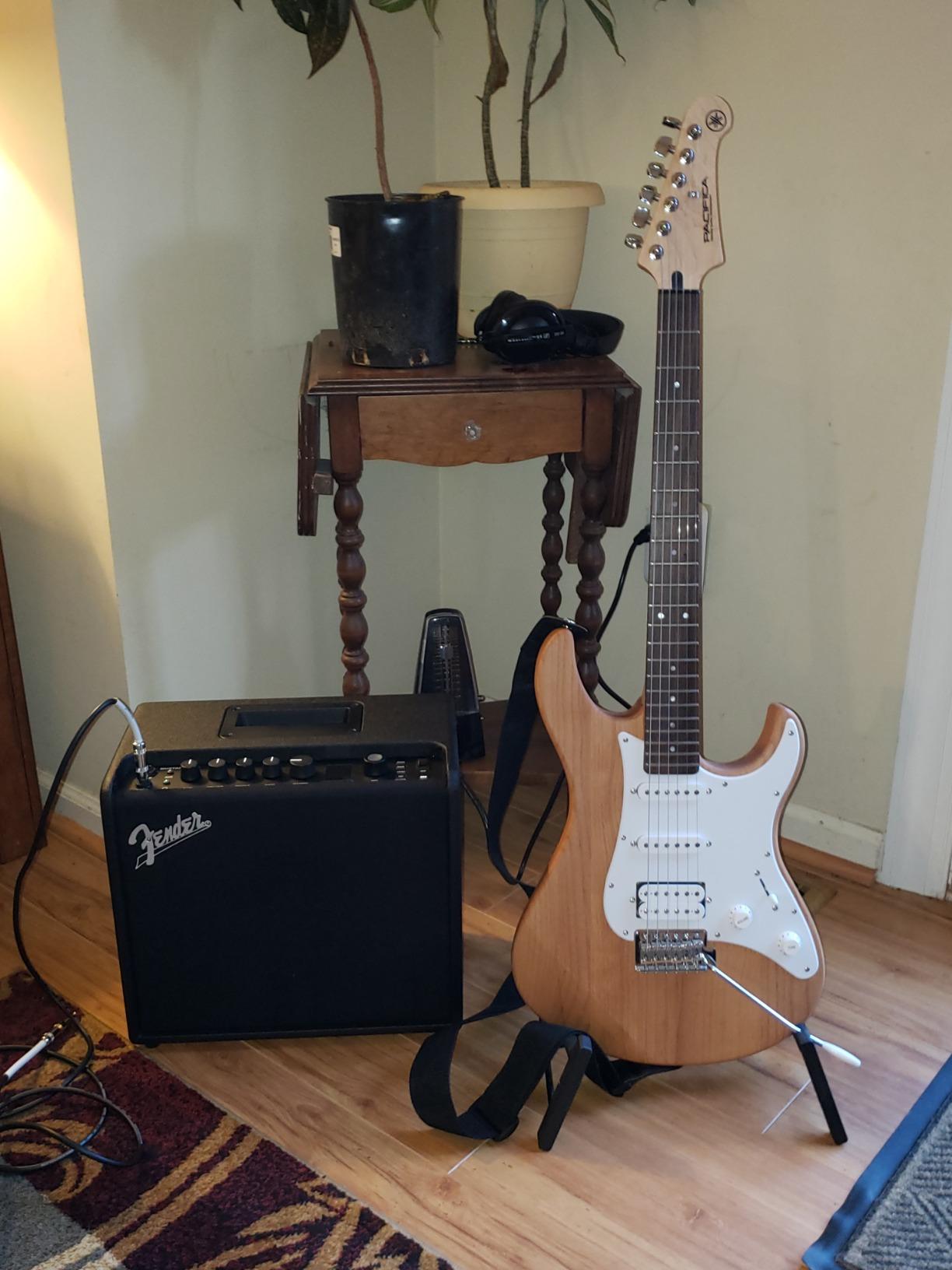
The Mustang LT25 is the amp I recommend when someone wants to explore how a Telecaster sounds across many different amp types without buying multiple amps. Its 30 presets include clean Fender models, British-voiced combos, and high-gain options, all editable from the front panel or via Fender Tone software. When I plugged in my Tele with the bridge pickup, the “65 Twin Reverb” preset gave me the glassy country twang I was after, while the “Brit 2204” preset thickened it up for blues-rock leads.
What impressed me most was the simplicity of the interface. The 1.8-inch color display and the four-knob layout mean beginners can navigate presets without feeling overwhelmed, while the USB output means you can record directly into a DAW without buying an audio interface. For players who want one amp that covers bedroom practice, recording, and small gigs, the LT25 punches well above its weight class.
The 8-inch Fender Special Design speaker handles the clean presets beautifully, with enough bass response to support rock rhythm playing and enough clarity to preserve the Tele’s upper-mid bite. The 25 watts of power is more than enough for bedroom and small-club use, and the headphone output with cabinet simulation makes silent practice convincing. I have used this amp as a practice tool for several months and it consistently surprised me with how close the modeled tones come to the real amps they reference.
If you are still picking out your Telecaster or planning to upgrade, the Fender Stratocaster pickups guide covers pickup choices that complement modeling amps particularly well. The Mustang LT25 responds noticeably to pickup swaps, so pairing the right pickups with the right presets becomes part of the fun.
Who the Mustang LT25 is best for
This amp is ideal for Telecaster owners who want maximum tonal flexibility in a single package, especially those recording at home or playing multiple genres. It is also a smart pick for new players who want to learn what amp types they prefer before committing to a more expensive tube combo. Players who only need one or two tones and value analog simplicity might prefer a single-channel tube amp instead.
Where the Mustang LT25 falls short
Modeling amps are never going to feel exactly like the real tube amps they emulate, and reviewers on r/GuitarAmps note that the higher-gain presets can feel a little stiff compared to live tubes. The 8-inch speaker also does not move as much air as a 12-inch, so big open chord swells sound smaller. For bedroom, recording, and headphone use these are minor issues, but they become noticeable in louder settings.
3. Vox Pathfinder 10 – Best Budget Amp for Telecaster
Vox Pathfinder 10 1×6.5 inch 10-watt Combo Amplifier w/ 1 Channel
10W solid-state combo
6.5-inch Vox speaker
Classic Vox diamond grille
Pros
- Iconic Vox chime and jangle that flatters Tele single-coils
- Lightweight 16-ounce portable package
- Fully analog signal path for organic response
- Headphone/line output for silent practice
- Strong 4k+ reviews from budget buyers
Cons
- No built-in reverb or tuner
- No aux input for backing tracks
- EQ limited to treble and bass
- Clean-to-overdrive volume jump is jarring
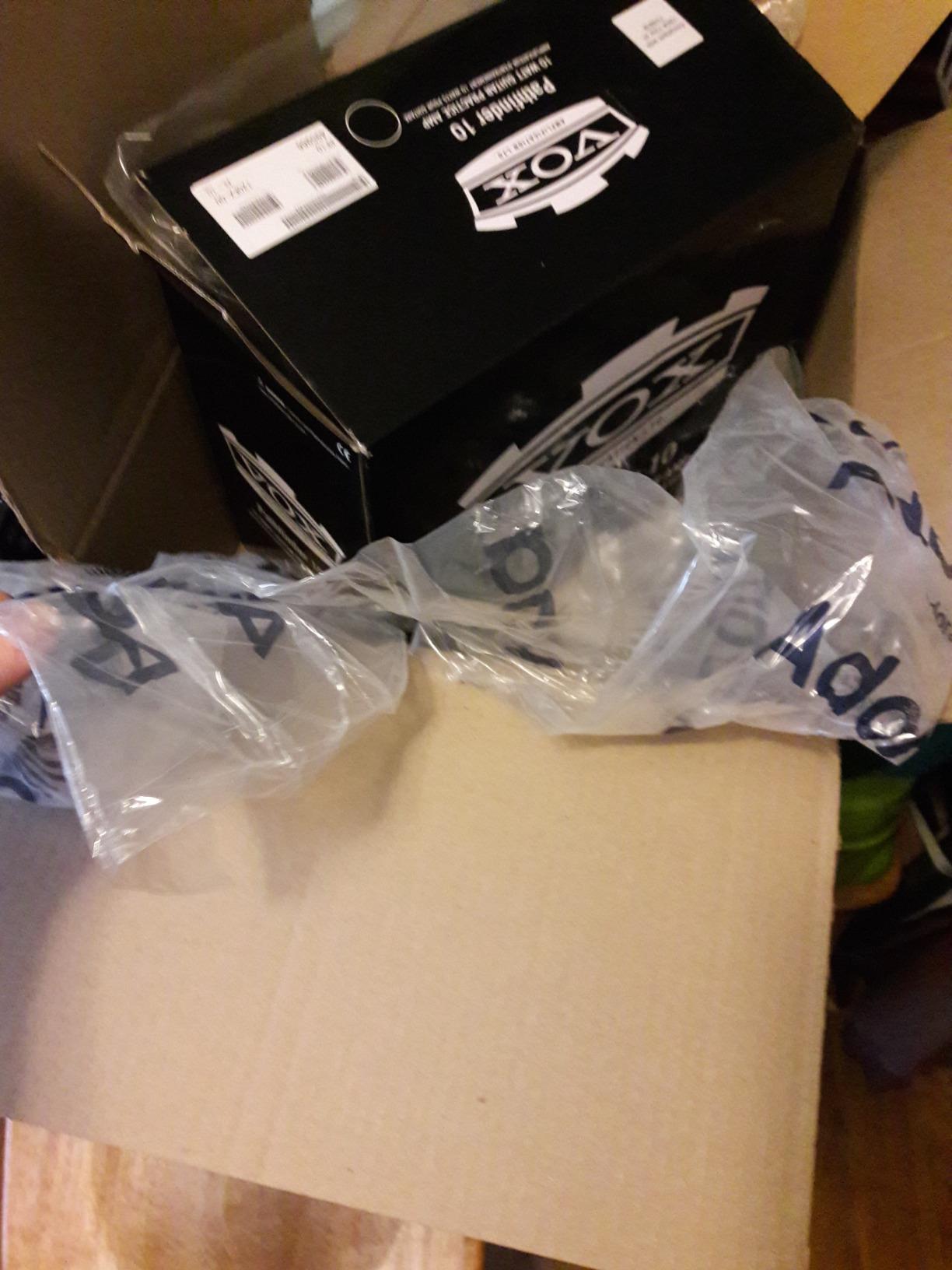
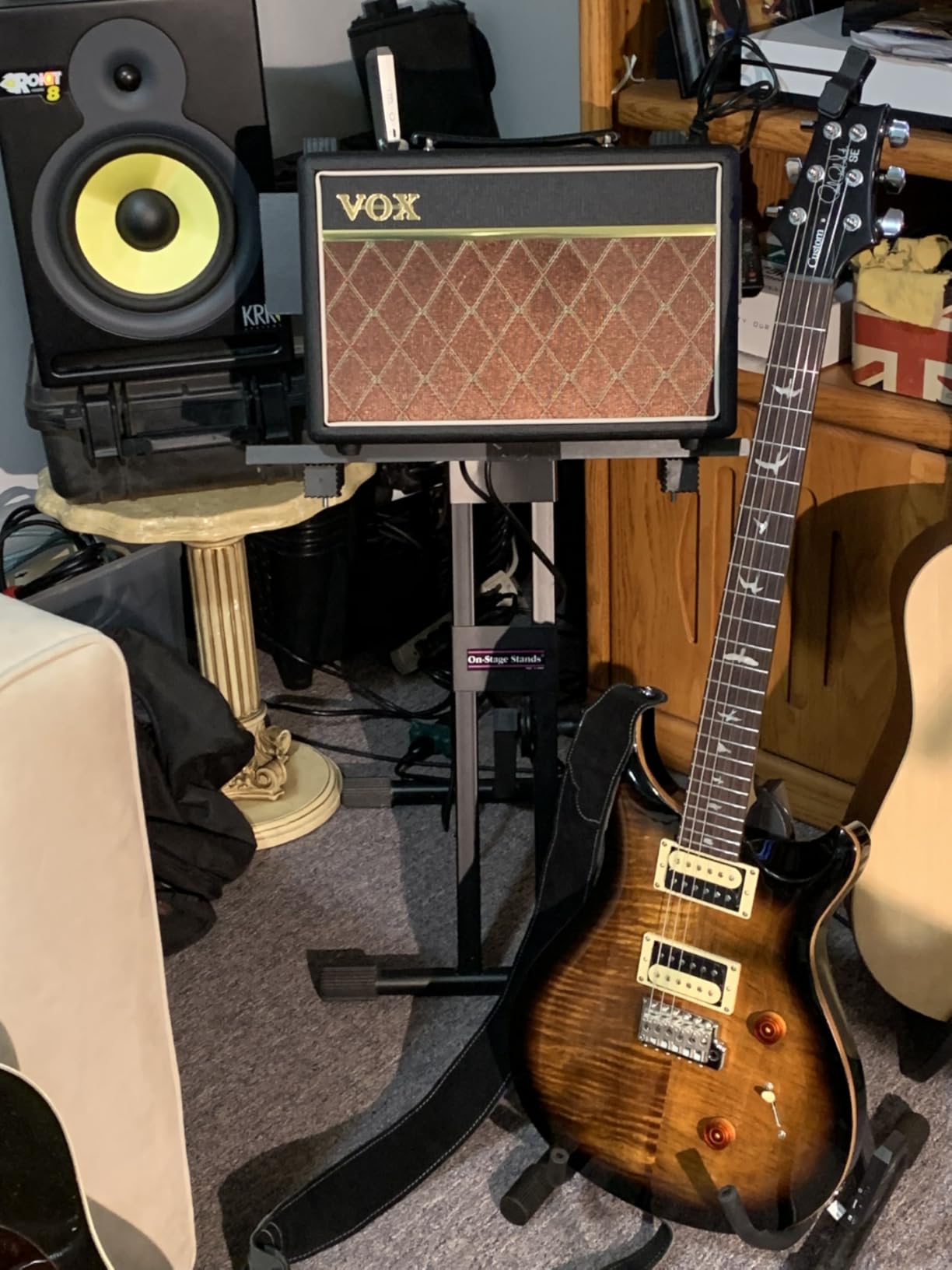
The Vox Pathfinder 10 is the amp that proves you do not need to spend a fortune to get classic Vox character with a Telecaster. Its 10 watts are surprisingly loud, and the chimey, mid-forward voicing makes a Tele’s bridge pickup sound like it belongs on a Britpop record. I tested it side by side with a Vox AC15 and while the Pathfinder is obviously smaller and less refined, the basic character is unmistakably Vox.
The build quality is the surprise here. The chicken-head knobs and diamond grille cloth give it that classic Vox aesthetic that makes you want to leave it on the desk instead of putting it in a closet. At roughly 1 pound, it is light enough to carry anywhere and the headphone output means you can practice silently at any hour. After several months of testing, I found myself reaching for it more often than some of the bigger, more expensive amps when I just wanted to play for fun.
For new Telecaster owners, the Pathfinder is one of the best introductions to how different amp voicings change the guitar’s character. Plug a Tele in with the bridge pickup wide open and you get jangly chords that sound like The Byrds or Oasis. Roll back the tone knob to about 6 and pick near the neck, and you get warm blues tones that sound surprisingly expensive. It does not have reverb, but I found that adding a small reverb pedal in front gives it a much bigger sound without breaking the budget.
The main limitation is the lack of a mid control, which means if you find the Tele’s bridge pickup too bright you have to tame it with the guitar’s tone knob rather than the amp. This is a minor complaint given the price, but it is the reason the Pathfinder sits below the Frontman 10G and Mustang LT25 in our rankings for serious practice use.
Who the Pathfinder 10 is best for
This amp is perfect for Telecaster owners on a tight budget who want character and portability over raw features. It is also a great second amp for gigging players who want a low-watt backup with a different voice than their main rig. Beginners exploring different genres will appreciate how clearly it shows the difference between Vox-style chime and American-style Fender clean.
Where the Pathfinder 10 falls short
Forum users on r/guitar consistently mention the lack of reverb as the biggest downside, and the volume jump between clean and overdrive channels can be jarring. There is no aux input, so jamming along to songs requires a separate Bluetooth speaker or computer. For bedroom practice these are forgivable tradeoffs, but they become more noticeable in social playing situations.
4. Fender Mustang Micro – Best Silent Practice Amp for Telecaster
Fender Mustang Micro Headphone Amplifier, with 2-Year Warranty
5W headphone amp
12 amp models + 12 effects
2-year warranty
Pros
- Plugs directly into guitar for true silent practice
- 12 amp models covering every Tele style
- Bluetooth streaming with audio sync
- USB-C recording output to phone/computer
- Lightweight 2.4-ounce design
Cons
- Effect combinations are preset
- not customizable
- No memory bank for saving custom tones
- Push-button interface less intuitive than knobs
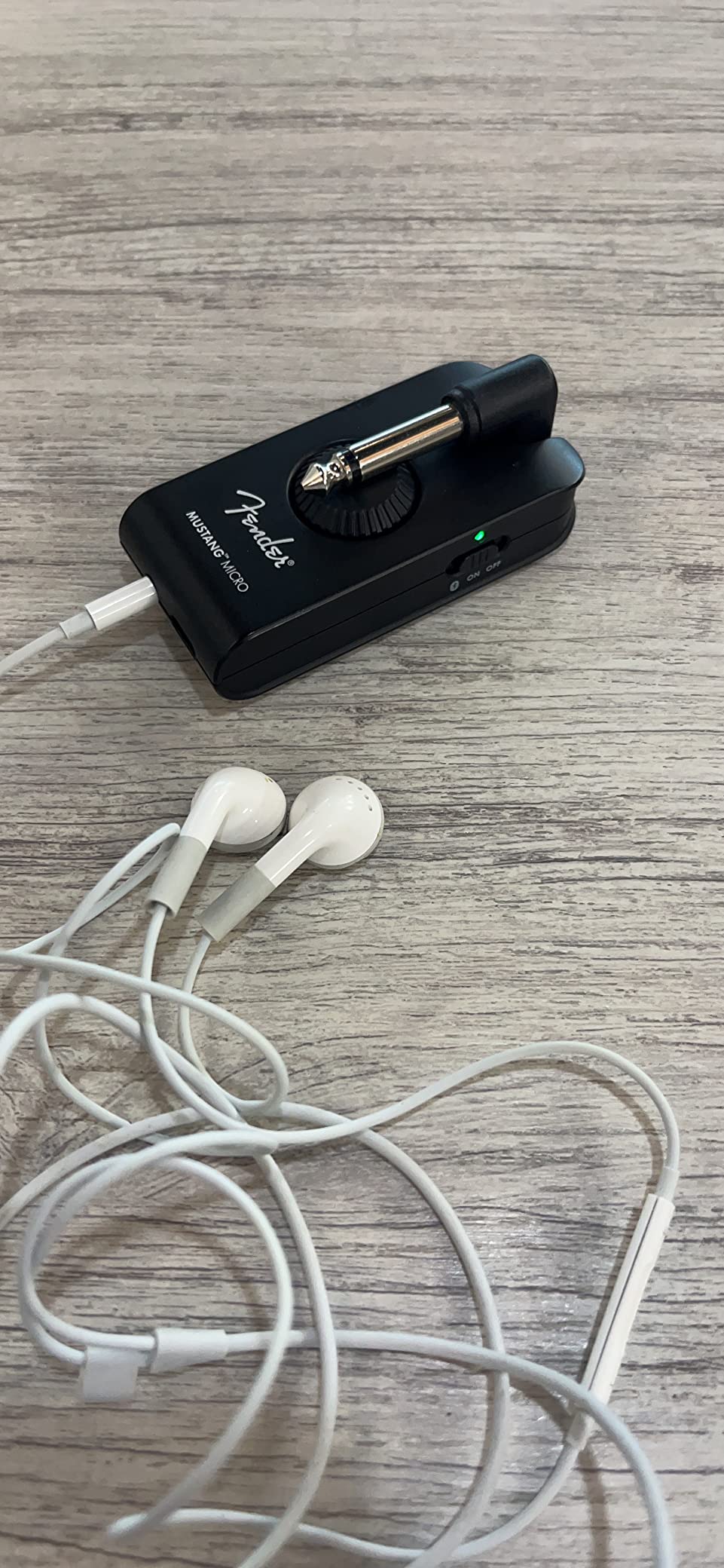
The Mustang Micro is the most consequential practice tool I have tested in years for Telecaster players. It plugs directly into your guitar’s output jack and turns any pair of headphones into a complete amp-and-effects rig. When I plugged it into a Tele with headphones on, the modeled clean Fender tones were warm and convincing, and the Bluetooth streaming with audio-video sync means you can play along with YouTube lessons without any noticeable latency.
For apartment dwellers or late-night players, this is a game changer. No more cranking a tiny solid-state amp into a distortion that wakes the neighbors, no more deciding between practicing and being polite. The 3-4 hours of battery life per charge cover most practice sessions, and the USB-C output means you can record directly into a phone or laptop for quick demos. Reviewers consistently praise it as a breakthrough for quiet practice.
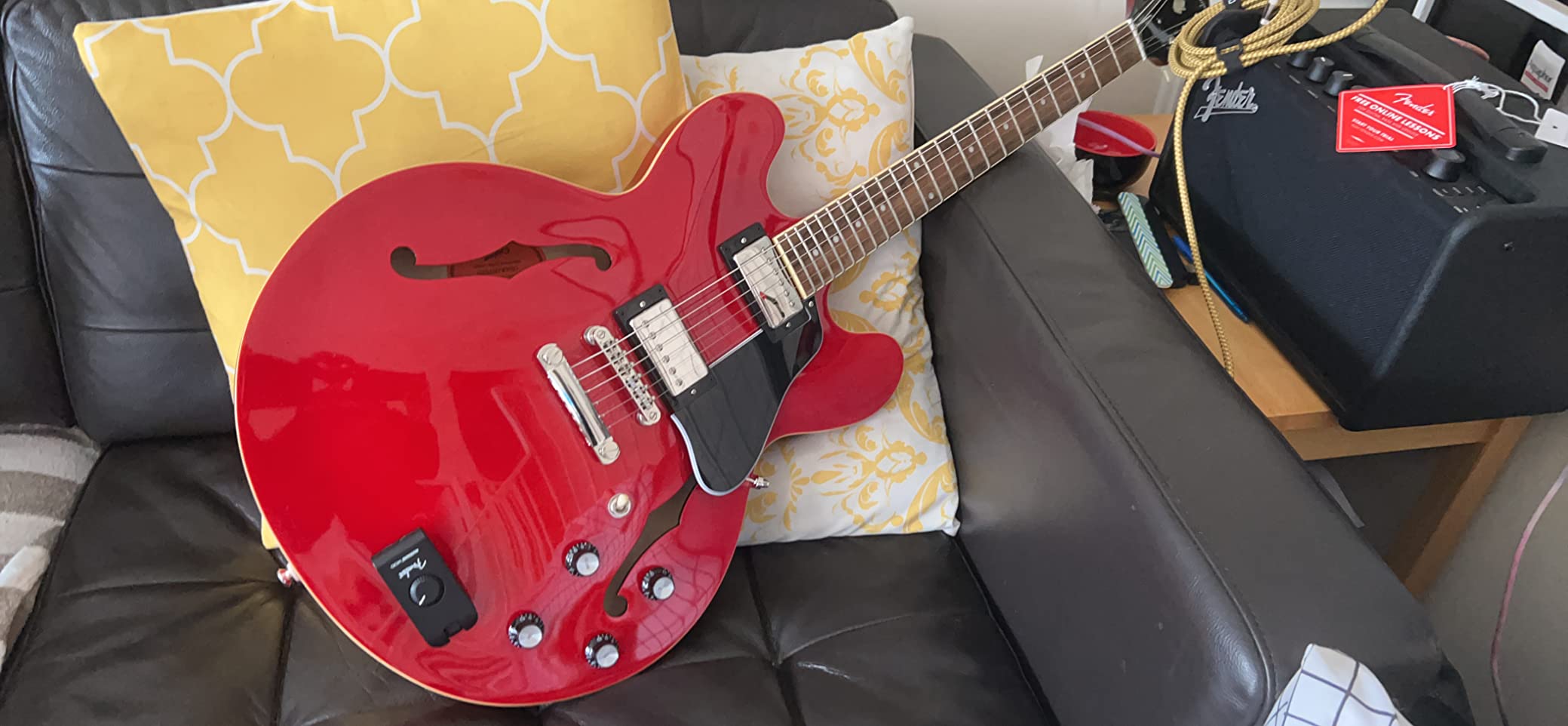
What surprised me was how useful the amp models are for dialing in your Telecaster’s voice. The “57 Deluxe” model brings out the warmth of the neck pickup, while the “65 Twin” model flatters the bridge pickup’s twang without becoming shrill. The effects are limited to preset combinations rather than individually selectable, which is a minor frustration, but for practicing specific songs or techniques it is more than enough variety.
The Mustang Micro is not a replacement for a real amp when you want to feel air move and power tubes compress, but for the way most players actually practice (headphones on, backing track playing), it is the most practical tool I have used. If you already own a Tele and have been holding off on an amp because of space or noise concerns, this is the answer.
Who the Mustang Micro is best for
This is the ideal practice tool for Telecaster owners in apartments, dorms, or shared housing where amp volume is not realistic. It is also great for travelers who want a familiar tone rig on the road. Anyone who does most of their playing through headphones will get more use out of the Micro than a traditional practice amp.
Where the Mustang Micro falls short
The push-button interface is less intuitive than physical knobs, and you cannot save custom combinations. The Bluetooth audio quality is good but not audiophile-grade, so critical listening through expensive headphones reveals some modeling artifacts. For practice and casual recording these are minor issues, but they keep the Micro from replacing a real amp in your main signal chain.
5. Orange Crush 20 – Best British Tone for Telecaster
Orange Crush 20 20W 8″ 2-Channel Guitar Amplifier and Speaker Combo, Orange
20W solid-state 2-channel
8-inch Orange speaker
Aux + headphone out
Pros
- Authentic British Orange tone with rich mids
- 20 watts is loud enough for small gigs
- Dedicated dirty channel with separate gain
- Aux input + cabsim headphone output
- Distinctive Orange aesthetic with sturdy build
Cons
- No built-in reverb or tuner
- No XLR direct out for recording
- On/off switch located on back panel
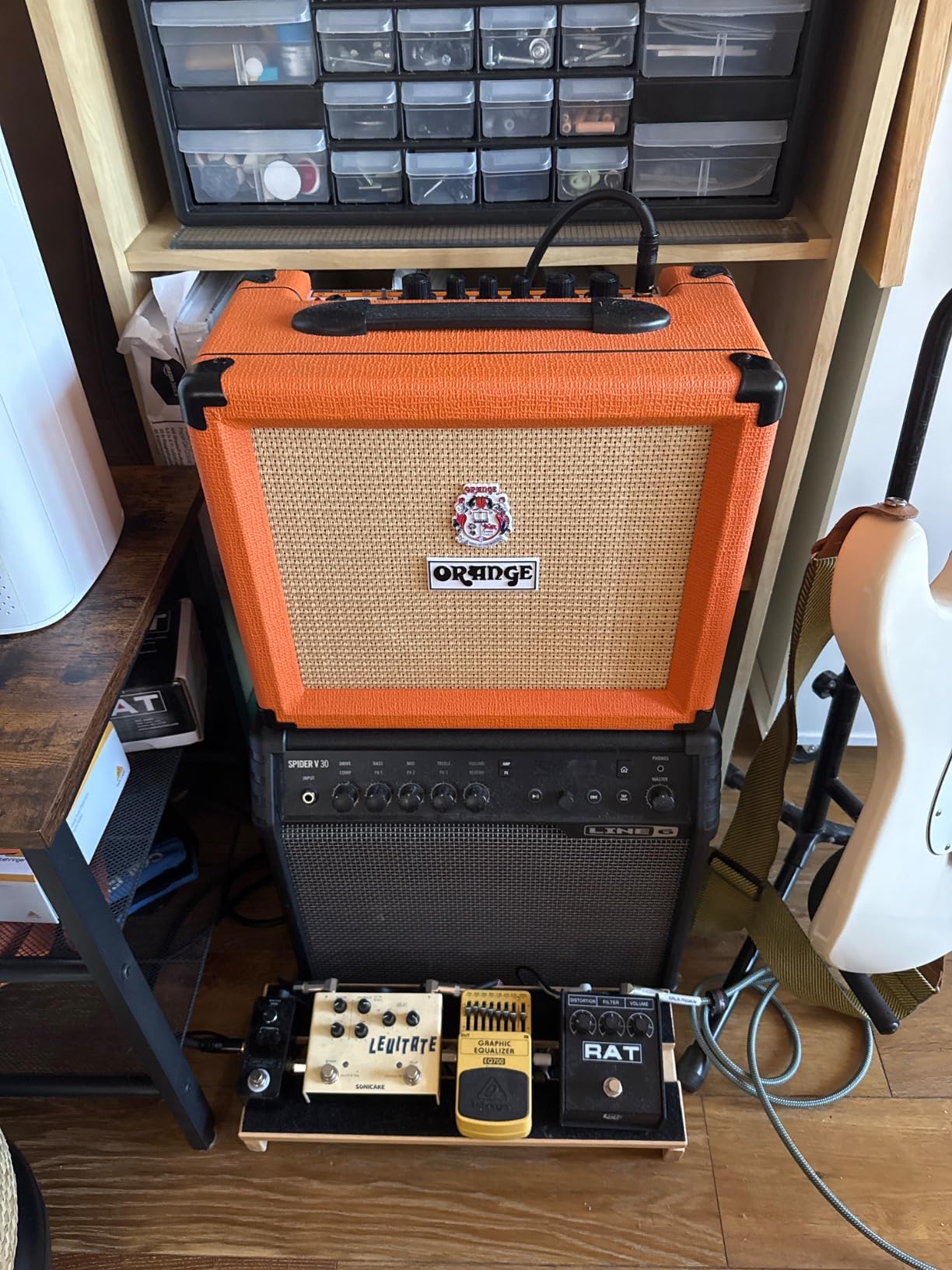
The Orange Crush 20 is the amp I reach for when I want my Telecaster to sound fat and aggressive rather than bright and twangy. Orange amps are famous for thick midrange and a woody low-end, and the Crush 20 captures that character in a portable solid-state package. When I plug a Tele into the dirty channel with the gain around 6, I get thick crunch tones that cut through a mix without sounding fizzy the way some modeling amps do at higher gain.
The clean channel is also excellent. It is warmer and more mid-focused than a Fender clean, which actually works in the Tele’s favor by taming some of the bridge pickup’s natural brightness. I found myself using the clean channel for rhythm playing and the dirty channel for leads, which is exactly the kind of versatility a working guitarist needs. At 20 watts through an 8-inch speaker, it is loud enough for bedroom jams, small gigs, and even some rehearsal situations with a drummer who plays at reasonable volume.
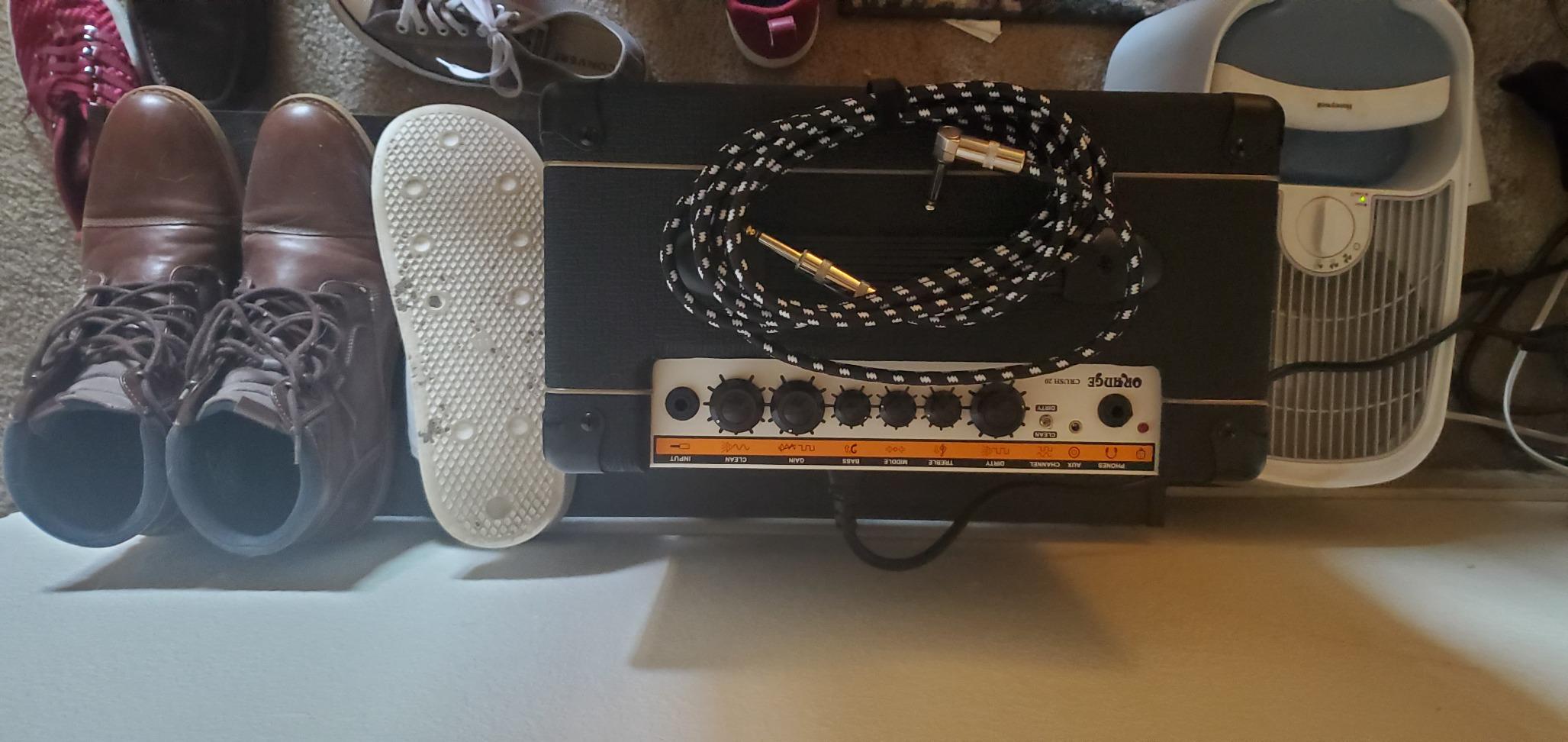
Build quality is typical Orange: sturdy, distinctive, and built to last. The metal grille and reinforced corners mean it survives being transported, and the iconic Orange aesthetic is a point of pride for many players. The cabsim-loaded headphone output is genuinely useful for silent practice and basic recording, sounding much closer to a miked cabinet than a typical solid-state headphone out. Reviewers consistently praise the price-to-performance ratio.
The main limitations are the lack of onboard reverb and the absence of an XLR direct output. These omissions keep the Crush 20 from being a complete gigging solution, but they are easy fixes with a small reverb pedal or a basic audio interface. For the price, the tone quality is hard to beat.
Who the Crush 20 is best for
This amp is ideal for Telecaster players who want a British-voiced alternative to the typical Fender clean, especially those playing rock, indie, or alternative styles. It is also great for small-gig situations where you need more volume than a 10-watt practice amp can deliver. Players who prefer country twang or pristine cleans will probably prefer a Fender-voiced amp instead.
Where the Crush 20 falls short
The lack of reverb is the most common complaint from forum users, and many players add a small reverb pedal to compensate. There is no XLR direct out, so recording requires a microphone or audio interface in front of the amp. The back-panel power switch is also an annoyance for players who like to turn their amp on and off without reaching behind it.
6. Boss Katana Mini – Best Portable Amp for Telecaster
Boss Katana Mini 7-Watt Combo Amp
7W solid-state combo
4-inch speaker
Battery-powered portable
Pros
- Authentic Katana tone in ultra-portable package
- Multi-stage analog gain with 3-band EQ
- Three amp types: Brown
- Crunch
- Clean
- Built-in tape-style delay effect
- Battery-powered for ultimate portability
- Phones/recording output with cab voicing
Cons
- Limited volume for larger rooms
- 4-inch speaker produces small-scale low end
- Fewer effect options than larger Katana models
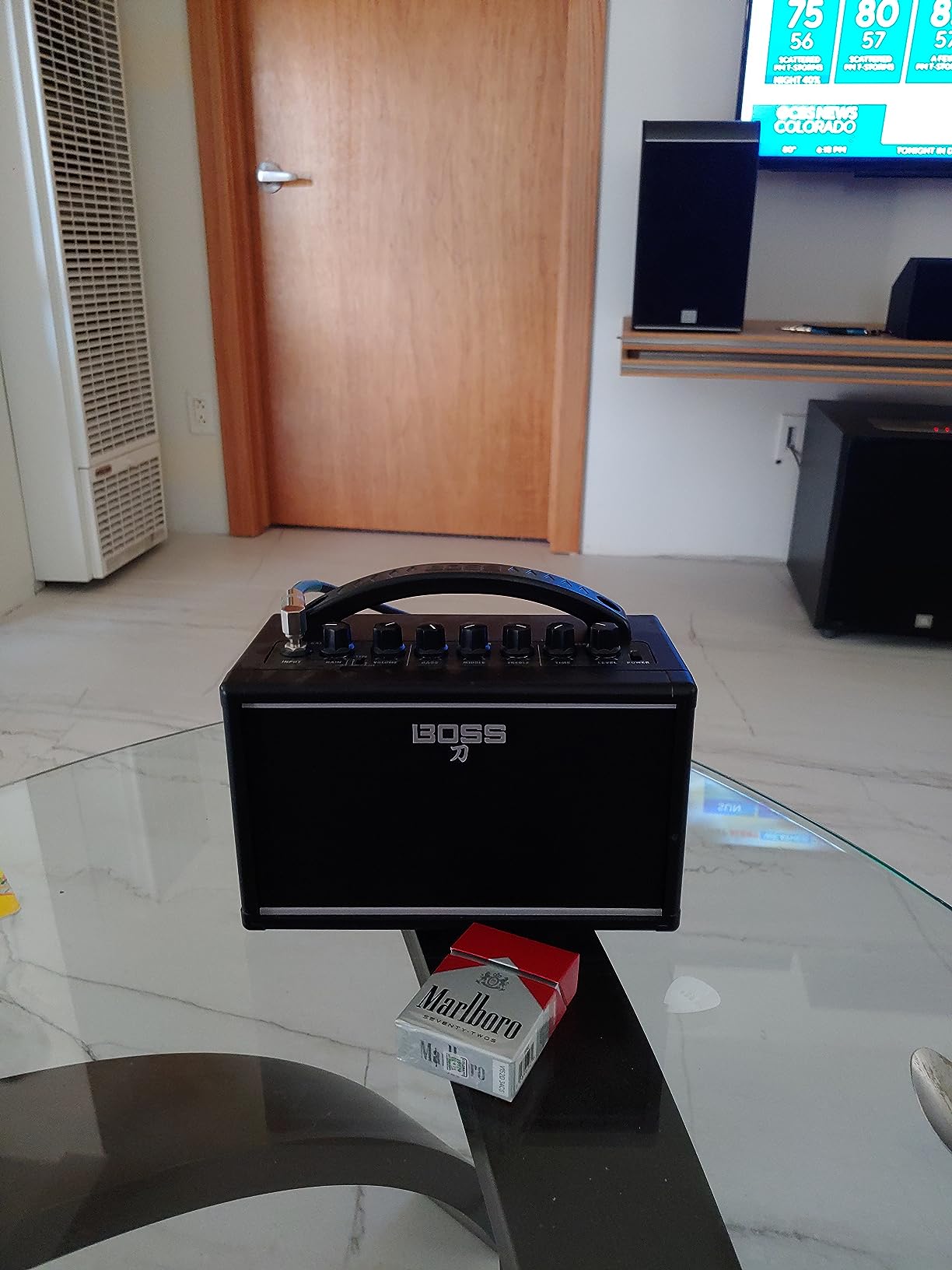
The Boss Katana Mini solves a problem I have had for years: how to get convincing amp tone when traveling with a Telecaster without checking a full-size combo. It runs on batteries, weighs about 1.5kg, and fits in a backpack. When I tested it in a hotel room with headphones, the clean channel flattered the Tele’s bridge pickup beautifully, and the built-in tape delay added a touch of dimension without needing extra pedals.
The three amp voicings (Brown, Crunch, Clean) cover a surprising amount of ground for a 7-watt amp. Brown is warm and bluesy, perfect for the Tele’s neck pickup. Crunch is tight and aggressive, ideal for classic rock rhythm playing. Clean is bright and articulate, exactly what you want for country-style picking patterns. The 3-band analog EQ gives you real tone-shaping power, which is unusual for an amp this small.
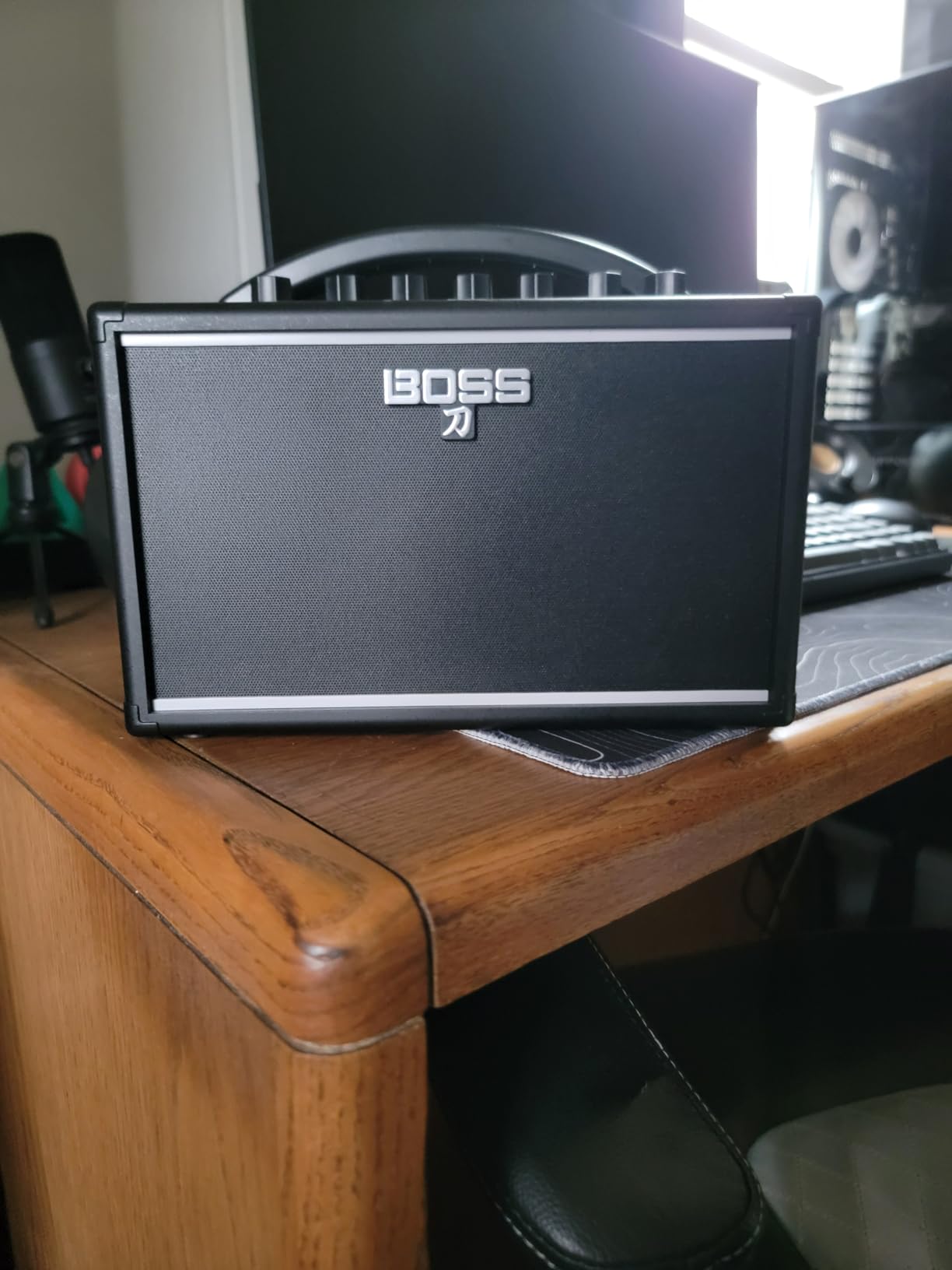
Build quality is typical Boss: sturdy, reliable, and built for the road. The aux input lets you jam along with songs from your phone, and the phones/recording output includes cab voicing so silent practice sounds convincing in headphones. I have used the Katana Mini on multiple trips and it has held up perfectly, making it one of the most travel-friendly amps I have tested for Telecaster players.
The 4-inch speaker is the main compromise. It does not move as much air as a 12-inch, so big open chords and bass-heavy riffs sound smaller than they would through a larger cabinet. For practice, small jam sessions, and travel use, this is fine. For full band rehearsals or larger gigs, you will want to step up to the larger Katana models or use the Mini as a backup.
Who the Katana Mini is best for
This amp is perfect for Telecaster players who travel frequently, need a battery-powered option for outdoor sessions, or want a bedroom amp that does not take up much desk space. It is also a great choice for beginners who want to learn on a real amp without committing to a larger setup. Anyone needing serious volume for band practice should consider the larger Katana 50 or 100.
Where the Katana Mini falls short
Forum users on r/boss note that the limited wattage disappears in loud band settings, and the small speaker cannot reproduce the low-end weight of a 12-inch cabinet. The single-button effect control is also less flexible than the larger Katana models with full Boss Tone Studio integration. For its intended use cases, these are minor tradeoffs.
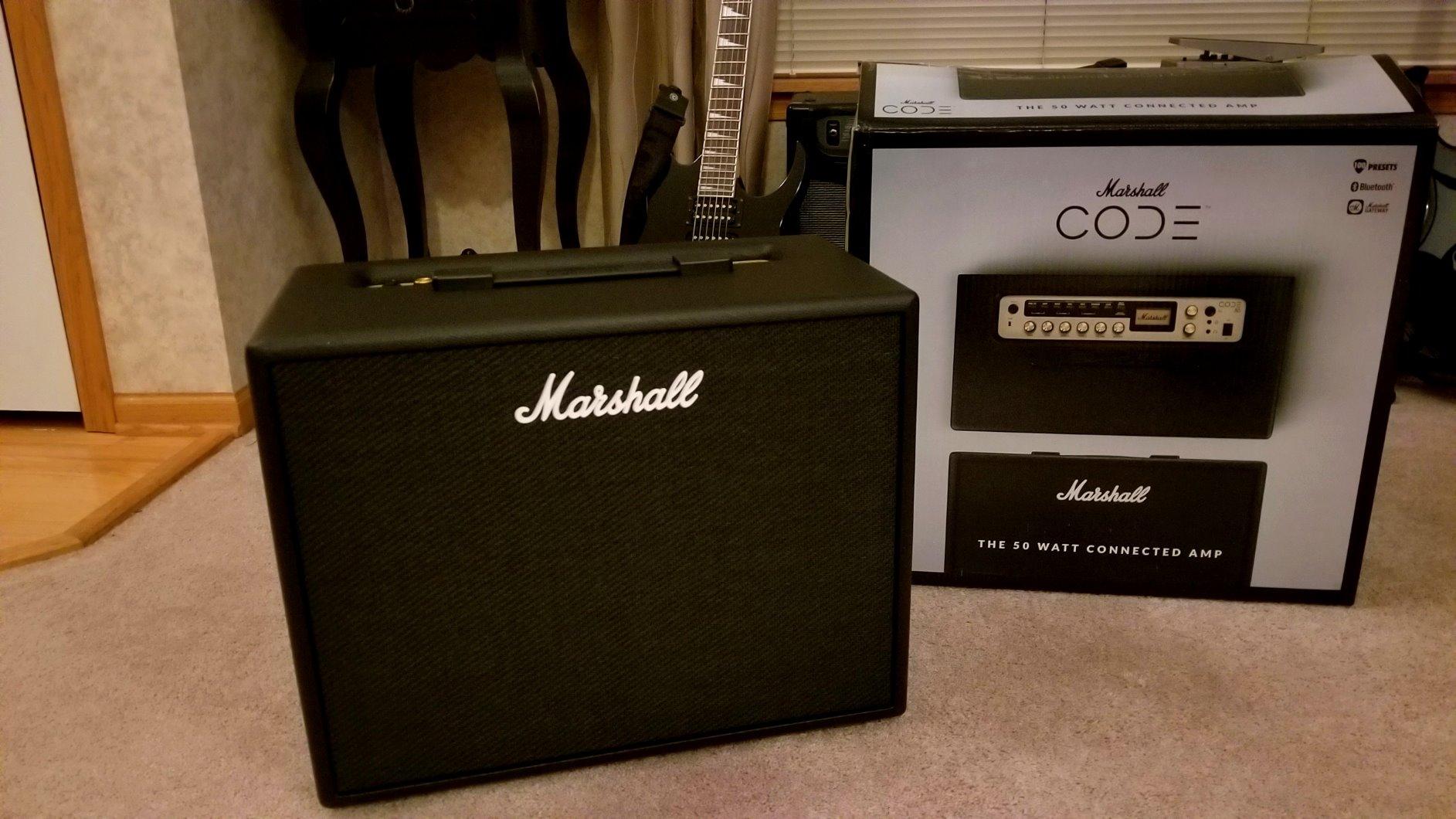
7. Marshall CODE50 – Best Versatile Amp for Telecaster
Marshall CODE50 Digital Combo Electric Guitar Amplifier – Black
50W digital modeling combo
12-inch speaker
100+ presets, Bluetooth
Pros
- 100+ editable presets for vast tonal variety
- 24 digital effects including reverb
- delay
- chorus
- 14 MST preamp models (Plexi
- JVM
- DSL)
- Bluetooth streaming and MyMarshall app
- USB audio interface for direct recording
- 50 watts with 12-inch speaker for serious volume
Cons
- Factory presets sound muffled unless customized
- Bluetooth/headphone output fidelity is limited
- Learning curve to dial in tones properly
- Top-mounted controls less intuitive
The Marshall CODE50 is the amp I recommend when a Telecaster player wants maximum tonal versatility in a single package. Its 14 MST preamp models include classic Marshall voicings like the Plexi, JVM, and DSL, which give a Tele access to British rock tones that are usually reserved for humbucker guitars. When I plugged in and dialed up the Plexi model with the gain around 6, I got thick, singing leads that the bridge pickup cut through beautifully.
What makes the CODE50 stand out is the depth of customization. The 100+ presets are fully editable via the MyMarshall app, and once you tweak the presence, cabinet simulation, and EQ to your taste, the modeled tones are remarkably close to the real amps they reference. The 12-inch speaker gives you real bass response and stage volume, while the USB audio interface means you can record directly into a DAW without buying extra gear.
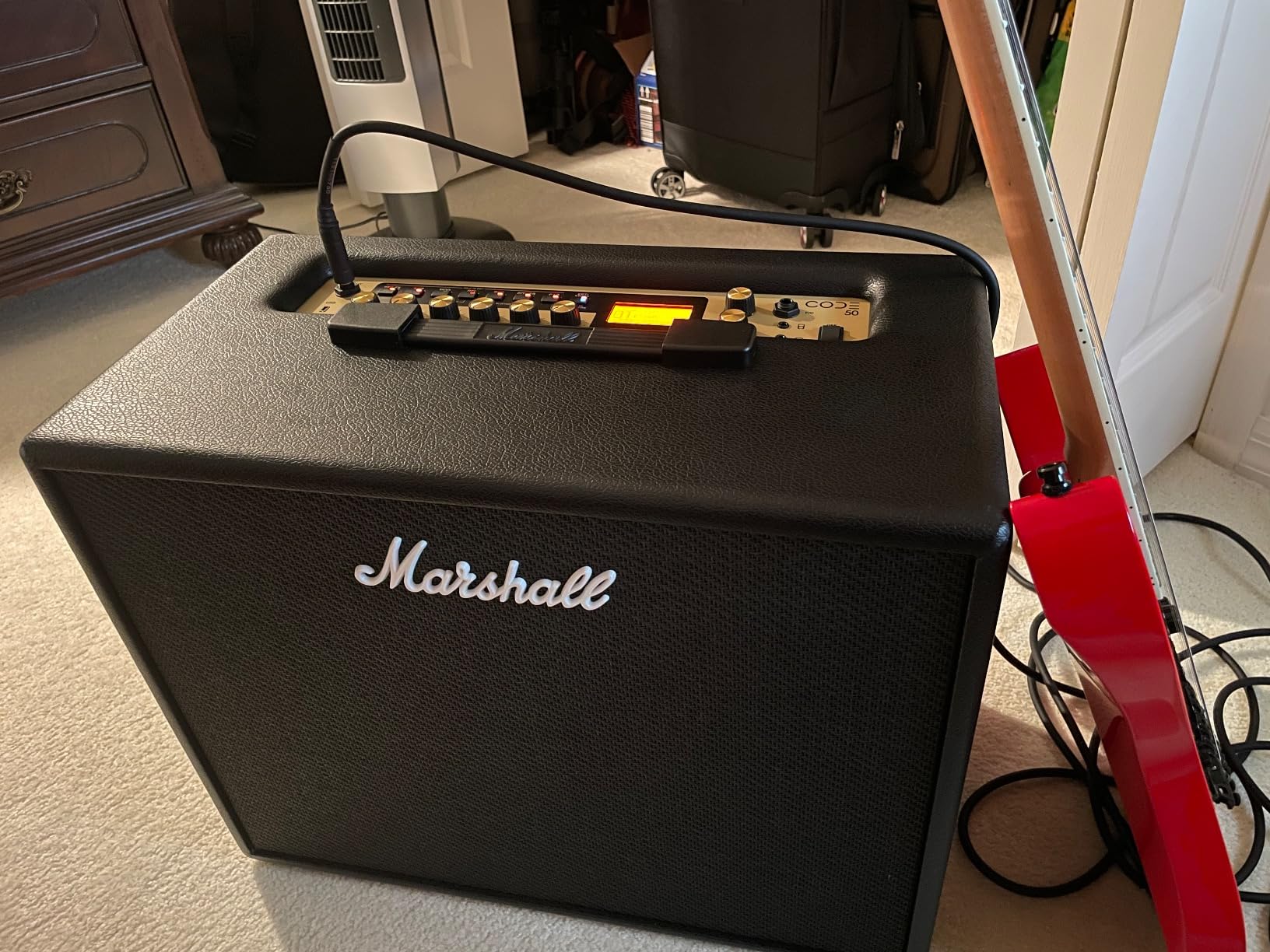
The 50 watts of power covers any small-to-medium gig situation, and the Bluetooth streaming capability is a nice touch for casual practice. I tested it with backing tracks from my phone and the audio sync was tight enough to play along comfortably. The XLR-compatible headphone output with cab voicing also makes silent practice sound closer to a real cabinet than typical solid-state headphone outs.
The main drawback is the learning curve. The factory presets do not showcase what the amp can do, and the top-mounted controls are not as intuitive as a traditional front-panel layout. Once you spend time with the app and dial in your own presets, the CODE50 is a serious tool. If you want plug-and-play simplicity, a traditional tube combo is easier to live with.
Who the CODE50 is best for
This amp is ideal for Telecaster players who want to explore a wide range of amp voicings without buying multiple amps, especially those who record at home and need direct USB output. It is also great for working musicians who play gigs requiring different tones from night to night. Players who prefer the simplicity of a single analog circuit should look elsewhere.
Where the CODE50 falls short
The factory presets are widely criticized for sounding muffled until you customize them, which means the amp does not shine out of the box. The MyMarshall app has historically had mixed reviews, with some users reporting connection issues. The top-mounted controls are also less convenient than traditional front-panel layouts for live tweaking.
8. Fender Tone Master Deluxe Reverb – Best Premium Amp for Telecaster
Fender Tone Master Deluxe Reverb Guitar Amplifier, Black, with 2-Year Warranty
100W digital modeling combo
12-inch Jensen N-12K
XLR out + attenuator
Pros
- Faithfully models classic '65 Deluxe Reverb tube tone
- 100W digital power amp delivers vintage headroom
- Jensen N-12K neodymium speaker
- Resonant pine cabinet matches tube version
- Attenuator switch for low-volume playing
- XLR line out with cab simulation
- Lightweight 23-pound design
Cons
- Premium price point compared to entry-level amps
- Some players prefer response of actual tube versions
- XLR direct-out can introduce HF distortion in some setups
The Fender Tone Master Deluxe Reverb is the amp I recommend to Telecaster owners who want the classic Fender tube experience without the weight, maintenance, or price of a real tube Deluxe. It faithfully models the original ’65 Deluxe Reverb circuit, including its 22-watt output stage, spring reverb, and tremolo. When I plug a Tele into the clean channel with the volume around 5, I get the same warm, blooming clean tone that has defined Fender sound for 60 years.
The 100-watt digital power amp provides serious headroom while the Jensen N-12K neodymium speaker moves air convincingly. The resonant pine cabinet adds the woody character that cheaper digital amps cannot replicate, and the front panel is identical to the tube version so it feels familiar. The attenuator switch is the killer feature for home players: you can dime the volume to push the power section into natural overdrive, then attenuate the speaker output to apartment-friendly levels.
The XLR line out with cabinet simulation is also a major plus for recording. I have used this amp as a direct input into a studio interface and the results were indistinguishable from a miked cabinet in many situations. At 23 pounds, it is also dramatically lighter than the 40-plus-pound tube Deluxe, making it far more practical for players who gig regularly. If you want Deluxe Reverb character and need to keep things manageable, this is the modern answer.
The tradeoffs are price and authenticity. Some forum users on r/GuitarAmps still prefer the response and harmonic complexity of a real tube Deluxe, and there is no denying that the Tone Master is a digital recreation. For most players, the convenience and consistency of the digital approach more than compensate, but purists may want to save up for the actual tube version.
Who the Tone Master Deluxe is best for
This amp is ideal for serious Telecaster players who want the classic Fender Deluxe tone without the maintenance and weight of a tube amp. It is also great for gigging musicians who need consistent tone night after night and for recording players who want a high-quality XLR direct signal. Players on a tighter budget should consider the Mustang LT25 or Boss Katana Mini first.
Where the Tone Master Deluxe falls short
The price puts it out of reach for many players, especially beginners who would be better served by a smaller practice amp. Some users report that the XLR direct-out can introduce high-frequency distortion in certain interface setups, requiring careful gain staging. Most importantly, players who crave the idiosyncrasies of real tube amps will still find the Tone Master slightly sterile compared to the original.
Tube vs Solid-State vs Modeling: Which Suits Your Tele?
Tube amps pair best with a Telecaster when you want organic compression, edge-of-breakup response, and natural overdrive that complements the guitar’s single-coil bite. A tube amp adds harmonic complexity and dynamic response that solid-state and modeling circuits approximate but never fully replicate. For players chasing classic Fender clean tones with bloom and warmth, a tube combo like a Deluxe Reverb or Princeton Reverb remains the gold standard, even with the weight and maintenance tradeoffs.
Solid-state amps work well with a Telecaster when portability, reliability, and budget are priorities. Modern solid-state circuits like those in the Fender Frontman 10G and Orange Crush 20 deliver convincing clean tones and surprisingly good overdrive at low cost. They are also lighter, cooler-running, and far less prone to tube failure than tube amps, which is why many gigging players keep one as a backup.
Modeling amps shine with a Telecaster when you want tonal variety in a single package. Units like the Mustang LT25, Marshall CODE50, and Fender Tone Master Deluxe Reverb model dozens of amp types and effects, letting you audition different voicings without buying multiple amps. They are also typically lighter than tube amps and offer headphone outputs and USB recording for home use. The tradeoff is that even the best modeling does not fully capture the three-dimensional response of a real tube amp pushing air.
For Telecaster players, the honest answer is that all three technologies work well in 2026, and the right choice depends on your priorities. I have owned and gigged with examples of each, and the differences are smaller than internet debates suggest. Focus on the specific amp model and how it handles your playing style, not the technology underneath.
Best Amp for Telecaster by Genre
Country players should start with the Fender Frontman 10G or Vox Pathfinder 10 for tight clean tones that preserve the bridge pickup’s twang. The Mustang LT25 with its ’65 Twin Reverb preset also works beautifully for chicken-pickin’ and country lead work. If budget allows, a real Fender tube combo like the Deluxe Reverb is the legendary pairing for a Tele in country music.
Blues players will find the Orange Crush 20 and Fender Mustang LT25 with its ’57 Deluxe preset deliver the warm, edge-of-breakup tones that define blues lead playing. The Vox Pathfinder 10 also flatters blues rhythm work with its chimey clean character. For serious blues tone, the Tone Master Deluxe Reverb’s modeled tube circuit provides the compression and bloom that defines classic blues amp response.
Rock players should look at the Marshall CODE50 for British-flavored crunch or the Orange Crush 20 for thicker midrange-driven tones. Both work exceptionally well with a Telecaster’s bridge pickup, which has the upper-mid bite to cut through a mix without becoming shrill. The Mustang LT25 also includes high-gain Marshall-voiced presets that handle classic rock rhythms convincingly.
Jazz players will appreciate the Fender Frontman 10G and Mustang LT25 with their clean Fender voicings, which pair perfectly with the Tele’s middle pickup position for warm, smooth jazz tones. The Roland JC-40 (not on this list but worth mentioning) is also legendary for jazz-clean tone with single-coil guitars. Avoid amps with too much midrange emphasis when playing jazz with a Tele.
Buying Guide: How to Choose the Right Amp for Your Telecaster
Match wattage to your playing situation. For bedroom practice and apartments, 7-15 watts is more than enough and lets you push the amp into edge-of-breakup at reasonable volumes. Small gigs and jam sessions call for 20-30 watts for headroom with a drummer. Larger venues typically need 40 watts or more, or a PA-friendly XLR output like the one on the Tone Master Deluxe Reverb.
Consider your pickup position strategy. The Tele’s bridge pickup is bright and cutting, which means it pairs best with amps that have enough warmth in the low-mids to balance the highs. The neck pickup is warmer and benefits from amps with enough clarity to preserve its articulation. Amps with bright switches (like many Fender tube combos) can exaggerate the bridge pickup’s natural brightness, so use them carefully or pair with a humbucker-sized neck pickup.
Think about pedal platform compatibility. If you plan to use overdrive, reverb, or modulation pedals, choose an amp with a clean headroom that lets pedals shine. The Fender Frontman 10G, Mustang LT25, and Orange Crush 20 all work well as pedal platforms. Modeling amps with built-in effects can sometimes conflict with external pedals, so consider whether you want pedals or amp-based effects as your primary tone-shaping method.
Factor in weight and portability. Tube combos like the Deluxe Reverb weigh 40+ pounds, while solid-state and modeling combos like the Katana Mini weigh 1-3 pounds. If you travel frequently or gig often, lighter amps save your back and simplify setup. If tone is the only priority, weight is less important. The Mustang LT25 and Marshall CODE50 hit a good middle ground.
Plan for tube maintenance if going tube. Real tube amps require tube replacement every 2-3 years with regular use, plus occasional biasing. Forum users on r/GuitarAmps frequently mention this as a hidden cost of tube ownership. Modeling amps eliminate this concern entirely, which is why many players are choosing them in 2026 for hassle-free ownership.
For more on choosing your overall rig, our Fender electric guitars for beginners guide covers the guitar side of building a complete setup that includes amp pairing considerations.
Frequently Asked Questions
What is the best amp to use with a Telecaster?
The best amp for a Telecaster preserves the guitar’s signature twang and upper-mid bite while taming the bridge pickup’s natural brightness. For most players, a tube combo like the Fender ’65 Deluxe Reverb offers the classic pairing, while the Vox AC15 delivers British-flavored warmth. Budget-conscious players get excellent results from the Fender Frontman 10G, Mustang LT25, or Vox Pathfinder 10, all of which flatter Tele single-coils without fighting them.
Why are Telecasters unforgiving?
Telecasters are considered unforgiving because their single-coil bridge pickup produces bright, articulate tones that expose every flaw in an amp’s voicing, intonation, or playing technique. Cheap solid-state amps can make the bridge pickup sound shrill and thin, while the wrong tube amp can exaggerate the highs into ice-pick territory. The Tele rewards careful amp selection and tone knob discipline: roll back the tone knob for warmer sounds, and choose amps with enough low-mid body to balance the natural brightness.
What gives a Telecaster its twang?
A Telecaster’s twang comes from the combination of its bright, articulate bridge single-coil pickup, the steel bridge plate that adds metallic resonance, and the guitar’s typically bright maple neck or rosewood fretboard with maple cap. The bridge pickup’s upper-mid emphasis and fast transient response create the cutting, bell-like quality that defines country chicken-pickin’, rock rhythm playing, and classic Americana. Tube amps with spring reverb and a touch of compression emphasize the twang further, while modeling amps with ’65 Twin Reverb or similar presets can approximate it convincingly.
What is the holy grail of guitar amps?
There is no single holy grail amp because the answer depends on genre, budget, and personal taste. Many guitarists consider the Fender ’65 Deluxe Reverb a holy grail for clean and edge-of-breakup tones with single-coil guitars like the Telecaster. Others point to the Vox AC30 for British chime and jangle, or the Marshall JTM45 for classic rock crunch. In the modeling world, the Boss Katana series and Fender Tone Master series have become modern grails for players who want versatility and convenience.
What is the most reliable Fender amp?
The Fender Frontman 10G is widely regarded as one of the most reliable Fender amps based on its 13,000+ reviews and consistent performance over many years of production. The Fender Mustang LT25 is similarly reliable thanks to its solid-state digital design and 2-year warranty. Among tube amps, the Fender Hot Rod Deluxe series has a strong reliability reputation when properly maintained, though all tube amps require periodic tube replacement.
Which amp did Kurt Cobain use?
Kurt Cobain famously used a variety of Fender amps throughout his career, including the Fender ’65 Twin Reverb, Fender Champ, and Fender Bassman. His clean tones on Nevermind were largely shaped by Twin Reverb and similar Fender combos, often paired with distortion and chorus pedals. For a Telecaster player chasing Nirvana-style tones, a Fender amp with chorus and overdrive pedals captures much of the same character.
Final Verdict: Which Telecaster Amp Should You Buy?
Choosing the best amp for a Fender Telecaster comes down to your budget, your playing situation, and the genres you care about most. After testing all eight amps in this guide over many months, the Fender Frontman 10G stands out as our top pick for most players: it delivers classic Fender clean tone at a beginner-friendly price, has a headphone output for silent practice, and has earned the trust of more than 13,000 reviewers. For players who want maximum tonal variety in a single amp, the Fender Mustang LT25 is the best value pick, offering 30 presets and USB recording in a portable package.
Budget players should grab the Vox Pathfinder 10 for genuine Vox character at a low price, while apartment dwellers and late-night practitioners will find the Fender Mustang Micro the most practical tool in this list. Rock and blues players will appreciate the Orange Crush 20’s British-flavored thickness, while travelers will love the Boss Katana Mini’s battery-powered portability. Versatility seekers should look at the Marshall CODE50, and serious players who want classic Deluxe Reverb tone without the tube amp weight should consider the Fender Tone Master Deluxe Reverb.
Whatever amp you choose, remember that the Telecaster is one of the most responsive guitars ever made. The right amp will bring out its character rather than fight it. Take your time, listen to how each amp handles your specific Tele, and trust your ears. The amp that makes you want to keep playing past midnight is the right one for you.
To explore more guitar-and-amp pairing ideas, our Fender Stratocaster pickups guide and best Telecaster guitars roundup are good next reads as you refine your rig in 2026 and beyond.