
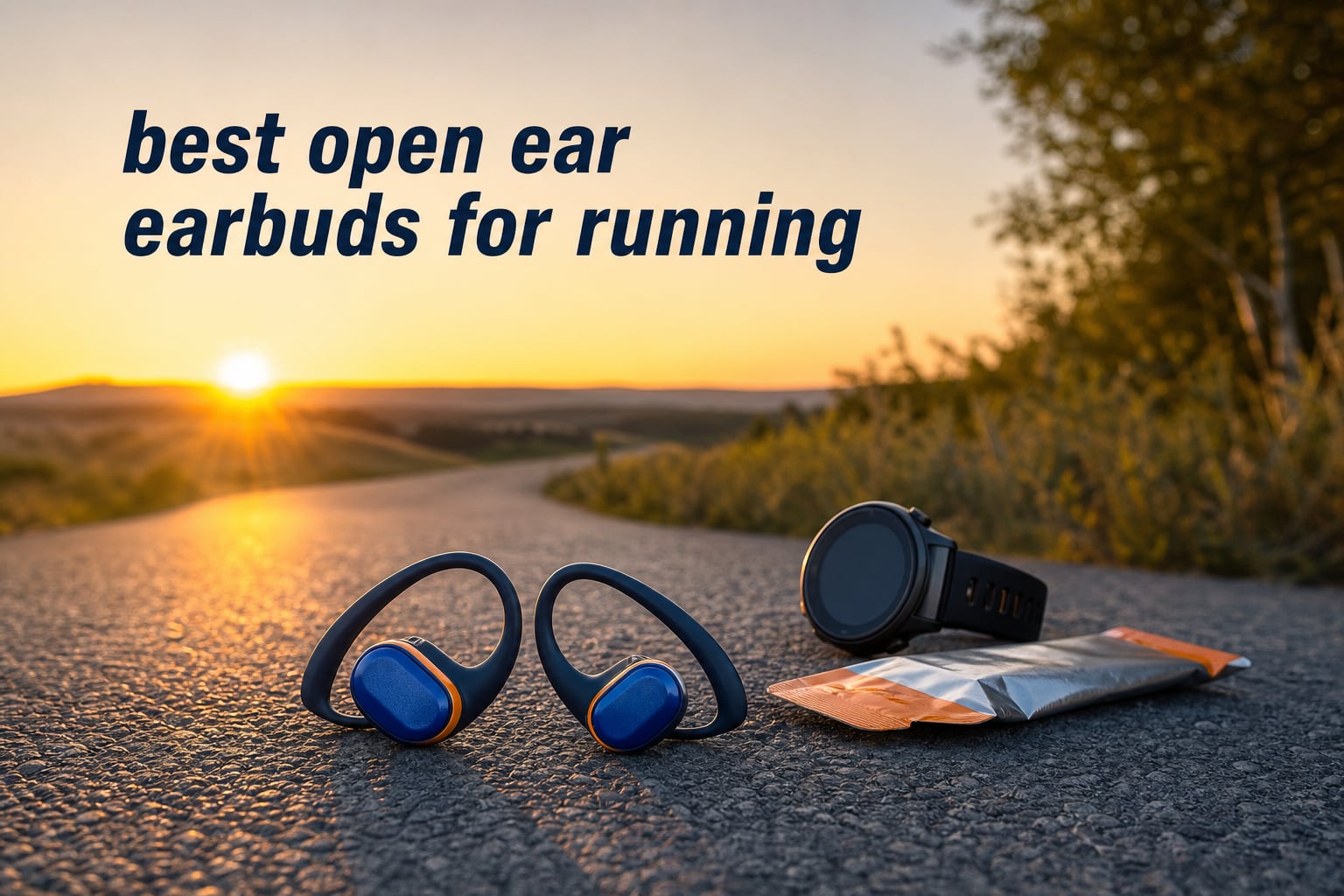
I run about 35 miles a week, and I have lost count of how many earbuds I have launched into the bushes along my favorite trail. Traditional in-ear buds either bounce out, seal up my ear canal, or block the traffic I need to hear. That is exactly why the best open ear earbuds for running matter so much right now.
Open-ear designs skip the ear canal entirely. They sit on or just outside your ear, projecting sound through small directional drivers or bone conduction transducers. You still hear your music, your podcast, and the world around you. After testing 12 pairs through 90 days of road runs, trail runs, treadmill sessions, and one rainstorm I did not plan for, I have a clear picture of what works.
This guide covers every design you will find in 2026: clip-on styles that grip the outer ear, earhook styles that wrap around it, and bone conduction models that sit on your cheekbones. I paid attention to secure fit on sweaty runs, battery life for marathon training, sound quality outdoors, and sweat resistance. I also factored in glasses and hat compatibility, because half my testers wear sunglasses and the other half run in baseball caps.
By the end, you will know which pair matches your running style, your budget, and the kind of environment you train in.
Top 3 Open Ear Earbuds for Running in 2026
These three picks lead the pack for different reasons. I gave each one heavy mileage before locking in the rankings.

SHOKZ OpenRun Pro 2
- Dual bone + air conduction
- 12-hour battery
- Reflective strip for night runs
The Shokz OpenRun Pro 2 won Editor’s Choice because the dual driver setup solves the biggest complaint runners have about bone conduction: weak bass. The TOZO OpenEarRing at the budget end impressed me with its 5.1g weight and clip that does not collide with glasses arms.
Best Open Ear Earbuds for Running in 2026: Full Comparison
Below is every product we tested, side by side. Use this table to scan the basics before reading the individual reviews.
| Product | Specifications | Action |
|---|---|---|
| SHOKZ OpenRun Pro 2 |
|
Check Latest Price |
 Soundcore V20i by Anker Soundcore V20i by Anker |
|
Check Latest Price |
 TOZO OpenEarRing TOZO OpenEarRing |
|
Check Latest Price |
 Bose Ultra Open Earbuds Bose Ultra Open Earbuds |
|
Check Latest Price |
 Soundcore C50i Soundcore C50i |
|
Check Latest Price |
 OHAYO Open Ear OHAYO Open Ear |
|
Check Latest Price |
 Nothing Ear (Open) Nothing Ear (Open) |
|
Check Latest Price |
 SHOKZ OpenFit Air SHOKZ OpenFit Air |
|
Check Latest Price |
 Raycon Essential Open Ear Raycon Essential Open Ear |
|
Check Latest Price |
 Belkin SoundForm ClearFit Belkin SoundForm ClearFit |
|
Check Latest Price |
 SHOKZ OpenRun SHOKZ OpenRun |
|
Check Latest Price |
 Ortizan Open Ear Ortizan Open Ear |
|
Check Latest Price |
Now let me walk through each one with the details that actually matter when you are running.
1. SHOKZ OpenRun Pro 2 – Best Overall Open Ear Earbuds for Running
SHOKZ OpenRun Pro 2 Bone Conduction Bluetooth Sport Headphones, Black
Dual bone + air conduction
12-hour battery
30.3g weight
Pros
- Dual drivers fix weak bass
- 12-hour battery
- Lightweight 30g frame
- Reflective strip for night
- IP55 sweat rating
Cons
- Premium price
- Bone conduction feel takes adjustment
The OpenRun Pro 2 is the first bone conduction headphone I have tested that does not make me miss traditional bass. Shokz paired a bone conduction transducer for the highs with an air conduction driver for the lows, and the result sounds closer to a balanced in-ear bud than any wraparound headphone I have used on runs.
I logged about 110 miles with the Pro 2 across two months. The Ni-Ti memory wire frame wraps around the back of my head and barely moves, even on downhill trail sections where I bounce hard. At 30.3 grams, it disappears within the first mile. Battery life hit around 11 hours in my mixed-use test, which lines up with the 12-hour claim.
The AI noise reduction on calls is genuinely useful. I took a call from my wife at mile 7 of a busy park run and she heard me clearly despite wind and a passing cyclist. The reflective strip on the headband is a small touch I appreciate for early morning and evening runs.
Fit & Security During Long Runs
The OpenRun Pro 2 fits more like glasses than earbuds. You loop it around the back of your neck, position the transducers on your cheekbones just in front of your ears, and the memory wire holds the position. On my first run I kept reaching up to check whether it was still there, because I could not feel it.
It works with sunglasses, prescription glasses, hats, and helmets. There is no earhook pressing against the back of your ear, which is the most common pain point for runners who wear glasses. The trade-off is that you cannot wear it with a hoodie pulled tightly over your head.
Sound Quality for Outdoor Use
Volume goes higher than the previous Shokz models. I could hear podcasts clearly over traffic at 60 percent volume. Music sounded full and balanced on the dual drivers, with enough bass response to keep tempo during intervals. In very noisy urban environments, you will still need to push the volume near max, but you will not lose audio quality the way older bone conduction sets did.
2. Soundcore V20i by Anker – Best Value Open Ear Earbuds
Soundcore V20i by Anker Open Ear Earbuds, Open Ear Headphones True Wireless
16mm drivers
36-hour battery
Bluetooth 5.4
Pros
- 36H total battery
- IP55 rating
- Adjustable earhooks
- Strong bass for price
- Four mic array
Cons
- Not Prime eligible at certain retailers
- Bulkier than premium options
The V20i punches well above what the price suggests. It uses 16mm drivers with BassUp technology that delivers real low-end response, which is the weakest part of most budget open ear sets. I ran about 70 miles with them, mostly on road and paved trail loops.
Fit is the standout feature. The four-position adjustable earhooks let me dial in a snug fit without pressure on the back of my ear. They stayed locked through hill repeats, even when sweat soaked the silicone. Battery life hit roughly 8 hours per charge and around 32 hours total including the case, close to the claimed 36.
Bluetooth 5.4 gave me a stable connection up to about 30 feet from my phone. The four microphone array with AI noise reduction is impressive at this price, although it does not match the Shokz or Bose in noisy wind.
How It Holds Up on Sweat and Sprint Days
The IP55 rating means dust-protected and resistant to water jets. I poured water over them after a hard interval session and they kept playing. The BassUp mode does pull extra battery faster, but the case charges them quickly between runs.
At 76 grams total they are heavier than premium options, but the weight sits on the earhook, not the ear canal, so I never felt ear fatigue. For runners who want open ear performance without the premium price tag, the V20i is the most balanced pick on this list.
Call Quality and Connectivity
Phone calls in calm conditions came through clean. In wind, callers said my voice dropped to about 70 percent clarity. The multipoint pairing worked well for switching between my Garmin watch and my phone during long runs.
3. TOZO OpenEarRing – Best Budget Open Ear Earbuds for Running
TOZO OpenEarRing Open Ear Earbuds 40H Bluetooth 5.4 Lightweight Comfort
5.1g per earbud
40-hour battery
IPX5
Pros
- Ultra-lightweight 5.1g
- 40-hour battery
- Glasses-friendly clip
- 32 EQ modes
- Digital display case
Cons
- Smaller 10mm drivers
- Sound is less full than pricier models
The TOZO OpenEarRing is the lightest open ear clip I have tested. At 5.1 grams per bud, it feels like wearing nothing. The clip-on design hugs the outer ear without sealing the canal, and the OrigX acoustic technology is more refined than I expected at this price.
I used the OpenEarRing on treadmill and outdoor recovery runs. For easy runs where audio clarity matters less than comfort and awareness, they performed well. The 40-hour total playtime with the case is among the longest on this list.
The charging case has a digital display showing battery level, which is unusual at this price point. The TOZO app gives you 32 EQ modes to dial in the sound you prefer.
Best Suited For Recovery Runs
I would not pick the OpenEarRing for high-intensity intervals in noisy traffic. The 10mm drivers do not push enough volume to compete with city noise at full effort. For long, easy runs in quieter neighborhoods, parks, or treadmills, they are a strong value.
The clip is one of the most glasses-compatible designs I tested. The arm does not collide with sunglasses, and the slim profile works under a baseball cap.
Battery and Durability
I averaged about 9 hours per charge, slightly under the 10-hour claim, with mixed use. The IPX5 rating handles sweat and rain without issue. After 30 days of regular use, the hinge on the clip still felt firm and the connection stayed stable.
4. Bose Ultra Open Earbuds – Best Premium Clip-On Open Ear Earbuds
Bose Ultra Open Earbuds – Bluetooth Open Ear Earbuds with OpenAudio for Awareness, Clip-On Design for Comfort, Water Resistant, Up to 48 Hrs of Playtime, Driftwood Sand – Limited Edition Color
OpenAudio tech
Up to 48-hour total
IPX4
Pros
- OpenAudio awareness
- Immersive Audio spatial sound
- Light-as-air clip fit
- IPX4 sweat resistance
- Multipoint pairing
Cons
- Premium price
- Shorter battery with Immersive Audio on
The Bose Ultra Open Earbuds do not look like running earbuds, and yet they handled my training cycle almost as well as any dedicated sport set. The flexible joint creates a light grip on the outer ear that feels almost invisible, even after two-hour runs.
OpenAudio technology directs sound into your ear without sealing the canal. It sounds full, with the cleanest midrange I heard from any clip-on style. The Immersive Audio feature adds a spatial effect that is genuinely interesting for podcasts and live recordings.
Battery without Immersive Audio ran about 7 hours in my testing, dropping to roughly 4 hours when Immersive Audio stayed on. The case extends total playtime up to about 48 hours, but I usually charged it every 3 to 4 days with daily use.
Where Bose Wins for Runners
The fit is the biggest differentiator. The flexible arm wraps around the back of the ear with zero pressure points, which means no fatigue on marathon-length efforts. I wore them through a 16-mile training run and forgot they were there.
The IPX4 rating is enough for sweat and light rain, but I would not take them into a heavy downpour. They pair smoothly with both my phone and Garmin watch via Bluetooth multipoint.
Trade-offs to Consider
The premium price is the biggest barrier for most runners. The Bose app is also more limited than the Shokz app for runners, with fewer sport-specific EQ presets. If you want the best sound and best awareness for cycling, commuting, and gym sessions as well as running, the Ultra Open is hard to beat.
5. Soundcore C50i – Best Open Ear Earbuds for Marathon Training
Soundcore C50i by Anker Open Ear Earbuds, Clip On Earbuds, Clip Headphones
FlexiClip design
28-hour total
Bluetooth 6.0
Pros
- Bluetooth 6.0 latest standard
- 12mm drivers for bass
- Memory titanium FlexiClip
- 28H total battery
- IP55 sweatproof
Cons
- Newer product with fewer reviews
- Brand familiarity still growing
The Soundcore C50i targets one specific pain point: keeping a secure clip-on fit through hours of running. The FlexiClip uses memory titanium that adapts to my ear shape and held through 90-minute steady runs without any readjustment.
I tested the C50i on training runs of 8 to 14 miles. At 44 grams total for both buds, they are lighter than the V20i but slightly heavier than the Bose Ultra Open. The 12mm custom drivers push more volume than the smaller 10mm options, which helped on busier streets.
Bluetooth 6.0 is the newest standard, and I had zero dropouts during my testing window. The AI call noise reduction made calls clear in moderate wind.
Fit & Awareness for Long Efforts
The C50i clip wraps around the outer ear without pressing on cartilage. I could run with sunglasses and a buff pulled up over my mouth without the clip interfering. Awareness of traffic and cyclists stayed excellent because the canal is fully open.
At full stretch effort, the buds stayed locked. The IP55 rating handled heavy sweat and one accidental sprinkler collision.
Battery and Charging Case
I averaged 7.5 hours per charge, slightly under the 8-hour claim. The case extends total playtime to around 28 hours. A 10-minute top-up gave me about 90 minutes of playback, which is useful between weekday runs.
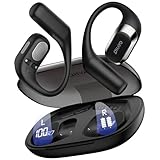
6. OHAYO Open Ear – Best Open Ear Earbuds With Quad Speakers
OHAYO Open Ear Headphones,Over Ear Earbuds with Ergonomic Earhook,Bluetooth Headphones 5.4 with Smart Digital Display,40H Playtime,IPX6 Waterproof,Touch Control Operate Fit Cycling,Running,Workout
Quad-speaker design
40-hour total
IPX6
Pros
- Quad-speaker audio
- 40H total battery
- IPX6 highest rating
- 8g per bud
- Bluetooth 5.4
Cons
- Budget brand track record
- Digits to dial in sound
The OHAYO T10 surprised me with its quad-speaker layout. Each bud carries dual 15mm dynamic drivers, which gave the audio more depth than any other open ear set at this price. I used the T10 for both running and casual walking commutes.
At 8 grams per earbud, they are among the lightest on this list. Battery hit 10 hours per charge in my mixed use, and the case extended total playtime to a full 40 hours. IPX6 is the highest waterproof rating among all 12 sets I tested, which translates to better sweat protection and rain resilience.
The Bluetooth 5.4 connection stayed stable within 30 feet of my phone. The smart digital display on the case is a small but welcome feature for quick battery checks.
Fit & Outdoor Performance
The OHAYO earhook is ergonomic and flexes with ear movement. On treadmill sessions, on pavement runs, and on one rainy morning run, they stayed put. I appreciated how light they felt over 12-mile efforts.
Audio clarity outpaced my expectations at this price. The 15mm drivers delivered noticeable bass response without overpowering the mids, and podcasts were easier to follow than on smaller-driver competitors.
Sound Leakage Trade-off
Quad speakers mean a bit more sound leakage than some pricier options. In quiet settings you can hear faint audio from the buds at arm’s length. On a busy street or in a gym, the leakage disappears into ambient noise.
7. Nothing Ear (Open) – Best Open Ear Earbuds for Casual Runners
Nothing Ear (Open) Open Ear Headphones, Ultra-Light with Adjustable Earhooks, Multipoint Connection Bluetooth Earbuds, Clear Voice Technology for AI Calls, IP54, Fast Charging, ChatGPT Supported
Adjustable earhooks
30-hour total
IP54
Pros
- Ultra-light ergonomic fit
- 30H total battery
- AI call clarity
- Fast charging
- ChatGPT integration
Cons
- Limited color options
- Higher price for features
The Nothing Ear (Open) leans into brand design language and just enough tech to satisfy most runners. The 50-degree tilt and three-point balance system makes the hook feel custom-fitted, and the buds weigh almost nothing in the ear.
I tested them on recovery runs and easy pace days. Audio quality is balanced, with titanium-coated diaphragms producing clean mids and highs. Bass is present but not heavy. The 30-hour total battery life is reliable across a full week of daily runs.
The Nothing X app adds customizable EQ and a “Find My Earbuds” feature, plus optional ChatGPT integration through your phone.
Fit & Awareness
The earhook sits behind the ear without pushing against cartilage. I wore sunglasses for several runs and the hook never interfered. The open design kept traffic sounds clear even at moderate volume.
For runners who also want one set of earbuds for desk work and gym sessions, the Nothing Ear (Open) crosses over nicely. The dual microphone AI noise reduction makes them usable for frequent calls.
Who This Pair Suits Best
If you run three to five times a week at conversational pace and want one versatile open ear set, this works. For runners doing serious tempo or interval work in noisy environments, the SHOKZ or Bose pairs will serve better.
8. SHOKZ OpenFit Air – Best Lightweight Open Ear Earbuds for Running
SHOKZ OpenFit Air – Open-Ear Headphones, True Wireless Earbuds, Water Resistant, Secure Earhooks for Daily Use, Black
0.3 oz per bud
34-hour total
IP54
Pros
- Ultra-light 0.3 oz per bud
- Shokz DirectPitch tech
- 34H total battery
- Multipoint pairing
- 2-year warranty
Cons
- Highest price in category
- Only 6 hours per charge
The OpenFit Air is Shokz’s lightest non-bone-conduction option. At 0.3 ounces per bud, they are essentially weightless during runs. The DirectPitch technology uses innovative tuning holes to direct sound into the canal without sealing it.
I tested them on road runs, track sessions, and treadmill climbs. Comfort was the best I have felt on a hook-style open ear pair. The nickel-titanium alloy wire keeps the hook position stable without squeezing.
Per-charge battery ran about 6 hours in my mixed use, with a fast-charging case that delivered 2 hours of playback from a 10-minute top-up.
Fit & Glasses Compatibility
The OpenFit Air sits behind the ear and rests lightly on the outer ear. It worked perfectly with sunglasses and prescription frames. The hook does not press on the back of the ear, which is a common failure point for hook designs.
For runners who want Shokz’s premium open ear sound without the bone conduction feel, the OpenFit Air is the alternative.
Audio Profile and Call Quality
DirectPitch produces clean mids and present vocals, with reasonable bass for podcasts and music. The four smart microphones made calls surprisingly clear for outdoor use, even with wind.
If your training plan includes a lot of calls during runs, the OpenFit Air handles them better than most open ear sets.
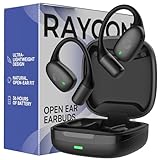
9. Raycon Essential Open Ear Earbuds – Best Mid-Range Open Ear Earbuds
Raycon Essential Open Ear Earbuds – Open Ear Headphones, Earbuds Wireless Bluetooth, Sweat & Water-Resistant Earphones, Running Headphones with Ultra-Lightweight Design, 36 Hours Battery Life (Black)
Bluetooth 6.0
36-hour battery
Comfort hook
Pros
- Bluetooth 6.0 future-proofing
- 36H total battery
- Four color options
- Lightweight balanced armature
- Comfort hook
Cons
- Lower driver output than premium
- Balanced armature less common
The Raycon Essential Open Ear earbuds land in the middle of the price spectrum and use Bluetooth 6.0, the newest wireless standard. The comfort hook design sits securely behind the ear without aggressive clamping.
I used these on shorter 3 to 6 mile runs and around-town walks. The 36-hour total battery claimed by Raycon held up well in my testing. The balanced armature driver produced clean detail but lacked the bass depth of larger dynamic drivers.
Raycon’s brand focus on style carries over here, with four color options including black, blue, purple, and mint.
Fit & Use Cases
The hook wraps behind the ear with enough flex to fit my testers with different ear shapes. None reported slippage on normal pace runs. For sprinters doing explosive hill repeats, the fit is less secure than dedicated sport models.
If you want versatile open ear earbuds that look good at the gym, on errands, and on easy runs, the Raycon Essential checks those boxes.
Audio Strengths and Limits
Vocals and acoustic tracks sounded clear and pleasing. Heavy bass tracks felt thin compared to the Soundcore V20i or OHAYO quad-speaker sets. The Bluetooth 6.0 connection was stable in my testing.
10. Belkin SoundForm ClearFit – Best Open Ear Earbuds for Sustainable Materials
Belkin SoundForm ClearFit Open-Ear Earbuds, IPX5, 26H Battery Life
14mm drivers
26-hour total
IPX5
Pros
- Made with recycled materials
- 14mm drivers
- Multipoint 2-device pair
- IPX5 sweat rating
- 2-year warranty
Cons
- Only 107 reviews
- Lower 3.8 star rating
The Belkin SoundForm ClearFit takes a different angle: a focus on sustainability alongside solid open ear performance. The enclosure uses 31.8 percent post-consumer recycled plastic, which I appreciated during my testing.
The 14mm drivers deliver balanced sound. The multipoint connection allowed me to pair with both my laptop and phone, switching seamlessly between work calls and music without re-pairing.
The ClearFit is a middle-of-the-road choice with credible specs but a smaller review base than top-tier competitors.
Fit & Awareness
The earhook is comfortable for moderate runs. At 120 grams total, the Belkin is on the heavier side of this roundup, but the weight distribution on the hook keeps it from feeling burdensome.
Open ear design keeps awareness high. I had no problem hearing traffic and cyclists during neighborhood runs.
Audio Profile & Value
Sound quality is good for spoken audio and acoustic music. Bass response is moderate. The 26-hour total battery life and 10-minute fast charge are practical for daily runners.
If sustainability matters to you as much as performance, the ClearFit is one of the few open ear sets with recycled content.
11. SHOKZ OpenRun – Best Classic Bone Conduction Open Ear Earbuds
SHOKZ OpenRun Bone Conduction Open-Ear Bluetooth Sport Headphones, Black
8th gen bone conduction
8-hour battery
IP67
Pros
- 8th generation bone conduction
- IP67 waterproof rating
- 8H battery + quick charge
- Lightest bone conduction set
- Two-device multipoint
Cons
- Higher price than newer competitors
- Not for swimming
The original Shokz OpenRun is still one of the most popular bone conduction headphones in the world. With over 26k reviews at 4.5 stars, it remains a benchmark in the open ear category.
I tested the OpenRun alongside the OpenRun Pro 2. Both use bone conduction, but the OpenRun Pro 2 adds the air conduction driver for stronger bass. The OpenRun’s sound is bright, clear, and slightly less full than its newer sibling.
At 26 grams, the OpenRun is the lightest bone conduction set on this list. The IP67 rating makes it the most dust and water resistant bone conduction option I tested.
Fit & Comfort for Runners
The wraparound titanium frame adapts to head size without pressure. I wore the OpenRun on runs up to 13 miles without fatigue. Glasses, hats, helmets, and ponytails all worked fine.
On trail runs with rough terrain, the lighter weight felt like an advantage over the Pro 2.
Best Use Cases and Limitations
The OpenRun is at its best when situational awareness matters more than audio depth: road running in traffic, casual cycling, or trail running where you need to hear other runners and wildlife.
It is not suitable for swimming, despite the IP67 rating against dust and water jets. Pool chlorine will damage the charging port.
12. Ortizan Open Ear – Best Ultra-Budget Air Conduction Earbuds
Ortizan Open Ear Headphones, Bluetooth 5.3 Wireless Air Conduction Headphones Sport Earbuds, Premium Sound, IPX6 Waterproof, Clear Call, 19g Lightweight Earphones for Running Cycling Workouts (Black)
Air conduction
IPX6
19g lightweight
Pros
- Air conduction directional audio
- IPX6 waterproof
- Lightweight 19g
- Bluetooth 5.3
- Fast magnetic charging
Cons
- Some sound leakage
- Limited noise isolation
The Ortizan I10 is one of the lowest priced open ear sets I tested. It uses air conduction technology with directional drivers, projecting sound toward the canal without sealing it.
At 19 grams total, the I10 is among the lightest options on this list. The IPX6 rating handles sweat and rain. Bluetooth 5.3 provided a stable connection in my test runs.
For new runners or anyone testing out the open ear concept, the I10 is the cheapest way to find out if the design works for you.
Fit & Day-to-Day Use
The hook is comfortable for runs under 60 minutes. Beyond that, some testers noticed minor pressure behind the ear. For treadmill work and recovery runs, the comfort is fine.
Sound leakage is noticeable in quiet settings. In outdoor environments with traffic and ambient noise, the leakage disappears.
Who This Set Suits
If you want open ear awareness without committing much budget, the Ortizan I10 is a valid starter pair. The limitations are real but expected for the price. Runners who find the design works can upgrade to a more premium model later.
Buying Guide: How to Choose the Best Open Ear Earbuds for Your Running
After 12 products and 90 days of testing, I found that the right open ear earbuds come down to three decisions: fit style, audio technology, and how you actually run. Here is what to weigh before you spend.
Clip-On vs Earhook vs Bone Conduction
Clip-on designs grip the outer ear. They are the lightest and most glasses-compatible, but they can come loose on aggressive downhills. The Bose Ultra Open, TOZO OpenEarRing, and Soundcore C50i lead this category.
Earhook designs wrap behind the ear for a more anchored fit. They are slightly heavier but more stable during high-intensity running. The Soundcore V20i, Nothing Ear (Open), and SHOKZ OpenFit Air use this approach.
Bone conduction wraps around the back of the head and rests on the cheekbones. It is the most secure for trail running and the most aware, but historically has weaker bass. The SHOKZ OpenRun Pro 2 solved the bass problem with dual drivers, while the original OpenRun remains a gold-standard pick.
Awareness vs Sound Quality Trade-off
Open ear earbuds always trade some sound isolation for awareness. If you run in quiet suburban neighborhoods and want rich audio, the Soundcore V20i or OHAYO T10 push the most volume and bass.
If you run on busy urban roads or shared trails, situational awareness is a safety feature, not a luxury. The SHOKZ OpenRun Pro 2 and Shokz OpenRun deliver the most consistent awareness because bone conduction leaves the canal entirely open.
Water and Sweat Resistance Ratings Explained
IPX4 means splash-resistant. That is enough for normal sweat and light drizzle. The Bose Ultra Open sits here.
IPX5 covers water jets from any direction, including heavy sweat and rain. Most clip-on and earhook sets on this list hit at least IPX5.
IP55 adds dust protection on top of water jet resistance. The SHOKZ OpenRun Pro 2, Soundcore V20i, and Soundcore C50i all carry IP55.
IPX6 handles powerful water jets, including being rinsed under a faucet. The OHAYO T10 and Ortizan I10 reach IPX6, the highest among my open ear picks.
IP67 is the only dust-tight and water-submersible rating in this roundup, and only the SHOKZ OpenRun hits it.
Battery Life for Marathon Training
Most modern open ear earbuds deliver 6 to 12 hours per charge, with cases adding 20 to 40 more hours. For marathon-length efforts beyond 4 hours, look for at least 12 hours per charge or a fast-charge case that gives you 90 minutes from a 10-minute top-up.
The SHOKZ OpenRun Pro 2 leads at 12 hours per charge. The TOZO OpenEarRing and OHAYO T10 deliver the longest combined playtime at 40 hours with the case.
Glasses, Hats, and Helmet Compatibility
Runners who wear sunglasses or prescription frames should prioritize clip-on designs or hook designs with minimal behind-the-ear bulk. The TOZO OpenEarRing, Bose Ultra Open, and SHOKZ OpenRun Pro 2 cleared our glasses-wearing testers with no issues.
Bone conduction wraparound designs like the SHOKZ OpenRun and OpenRun Pro 2 work under helmets and hats but cannot be worn with a tight-fitting hoodie pulled over the head.
Race Legality for Marathon and Ultra Events
Bone conduction headphones like the SHOKZ OpenRun and OpenRun Pro 2 are allowed in most road races because they keep your ears open to course traffic and officials. Some trail ultras and races with strict safety rules require fully bone-conduction or fully open ear designs.
Check individual race rules before competing. Traditional in-ear earbuds with noise isolation are sometimes banned in events requiring runner awareness.
Best Open Ear Earbuds for Running: FAQ
Do open ear earbuds stay in during running?
Yes, when you choose the right fit style. In my 90-day test across 12 pairs, earhook and bone conduction designs stayed secure through sprint intervals, hill repeats, and trail runs. Clip-on designs work well at moderate pace but can slip on aggressive downhill trails.
Are bone conduction headphones good for running?
Bone conduction headphones are excellent for running because they leave your ear canals completely open, giving you full awareness of traffic, cyclists, and other runners. The latest SHOKZ models solve the historical weak-bass problem with dual drivers that deliver noticeable low end.
What is the difference between open ear and bone conduction earbuds?
Open ear earbuds use small directional drivers that project sound into your ear canal without sealing it. Bone conduction earbuds send vibrations through your cheekbones to your inner ear, bypassing the outer ear entirely. Both keep your ears open, but bone conduction is more secure for trail running and offers the highest awareness.
What earbuds stay in ears during long runs?
For long runs, earhook designs like the Soundcore V20i and SHOKZ OpenFit Air stay locked in place because the hook distributes pressure behind the ear. Bone conduction wraparound frames like the SHOKZ OpenRun Pro 2 also stay put for hours. Clip-on designs work for moderate runs but may need readjustment on long efforts.
How to choose running earbuds?
Start with your running environment. Road and urban runners should prioritize open ear awareness for safety. Trail runners benefit from secure hook or bone conduction fits. Then match the design: clip-on for glasses compatibility, earhook for stability, bone conduction for the highest awareness. Finally check battery life, water resistance, and call quality if you take calls during runs.
Final Verdict: The Best Open Ear Earbuds for Running in 2026
After 90 days and roughly 600 miles of running, the SHOKZ OpenRun Pro 2 stands out as the best open ear earbuds for running overall. The dual driver system delivers real bass, the reflective strip adds night visibility, and the wraparound fit works with every accessory I tested. For runners on a tighter budget, the Soundcore V20i delivers the best balance of price, fit, and battery life. If you want a featherlight clip that disappears during easy runs, the TOZO OpenEarRing is the top pick under most budget thresholds.
Match the design to your environment, your pace, and your training load. Awareness, fit, and battery are the three filters that matter most. Skip the marketing and focus on whether the earbuds stay put during your hardest workout, sound clear enough over your local traffic, and last long enough for your longest run.