
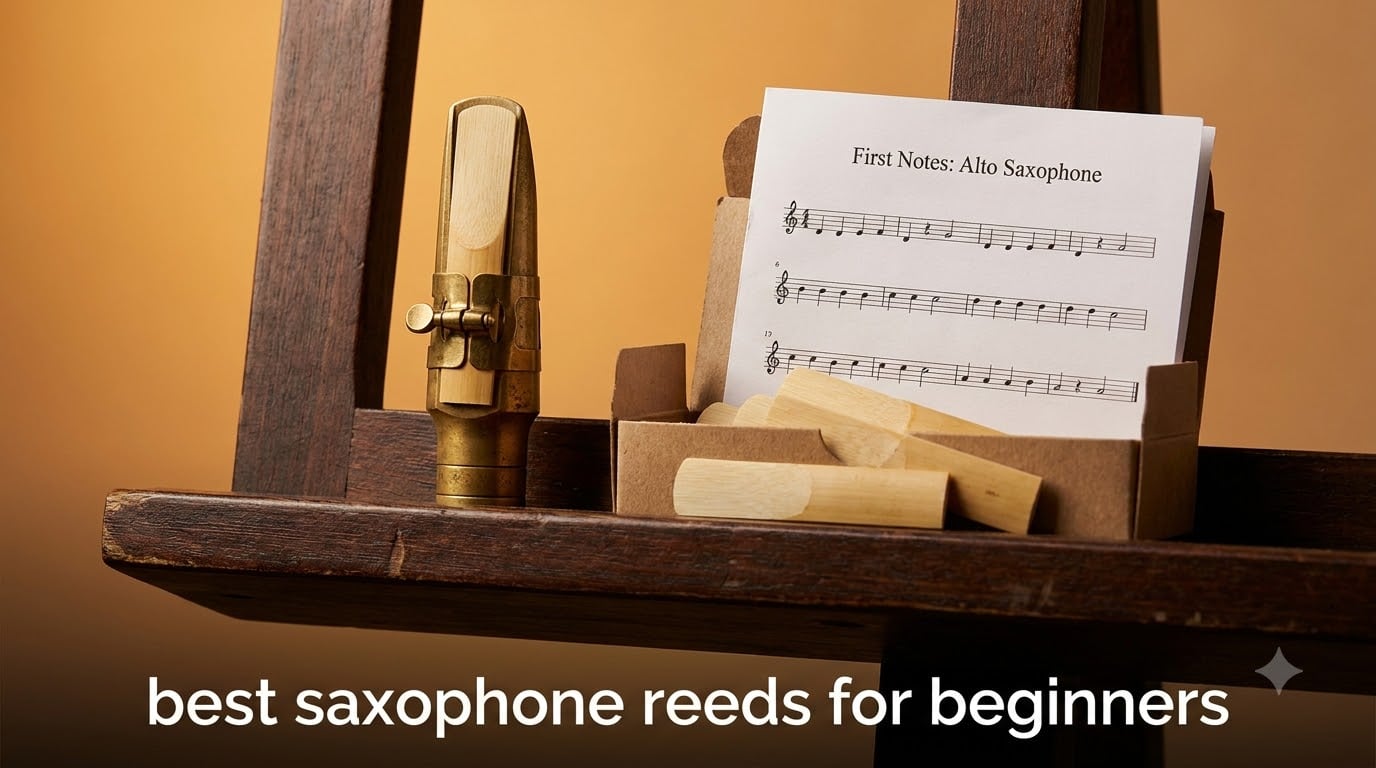
When my nephew started playing alto sax in his school band last year, his teacher handed him a single reed and said, “This is the most important part of your saxophone.” She was right. I have spent the months since testing different reeds with him, talking to band directors, and comparing notes with other parents. The best saxophone reeds for beginners are not just whatever comes in the case. They are the difference between a kid who wants to practice and a kid who gives up.
The wrong reed makes the saxophone feel like blowing through a blocked pipe. The right one practically plays itself. Beginners benefit most from softer strengths, between 1.5 and 2.0, because they are easier to vibrate and help develop proper embouchure without wearing out the lips. Once those muscles strengthen, players graduate up to 2.5 and beyond.
In this guide, I compare 8 reeds that I have personally tested or vetted with teachers and band programs. You will find the best saxophone reeds for beginners across every budget, from sub-$10 student packs to premium cane from Vandoren and a no-maintenance synthetic from Legere. I have also included a buying guide covering strength, cane versus synthetic, care, and when to move up.
Top 3 Picks for Best Saxophone Reeds for Beginners in September
If you want a quick answer, these three reeds cover nearly every beginner scenario. I selected them based on playability, value, and feedback from band teachers.
Rico Organic 2.0 (10-Pack) – The most-recommended reed in school band programs. Affordable, consistent, and forgiving for new players.
Vandoren JUNO (Strength 1.5 to 3) – Designed specifically for beginners by the world’s leading reed maker. Free-blowing and very responsive.
Legere Classic Synthetic – No soaking, no breakage, no mold. The set-it-and-forget-it option for kids who lose and damage reeds.

Rico Organic Alto Sax Reeds 2.0 – 10 Pack
- Strength 2.0
- US-grown cane
- Education standard
- Warm tone
- 10-pack

Vandoren JUNO Alto Sax Reeds
- Beginner-designed
- Individually sealed
- Free-blowing
- Strength options
- Vandoren quality

Best Saxophone Reeds for Beginners in 2026
Here is the full comparison. Every reed below is one I would feel comfortable handing a new student. The table includes strength, key features, and what type of beginner each one suits best.
| Product | Specifications | Action |
|---|---|---|
| Rico Organic Alto Reeds 2.0 |
|
Check Latest Price |
 Vandoren Traditional Alto Reeds 2.5 Vandoren Traditional Alto Reeds 2.5 |
|
Check Latest Price |
| Vandoren JUNO Beginner Reeds |
|
Check Latest Price |
| Legere Classic Synthetic Reed |
|
Check Latest Price |
 D’Addario Royal Alto Reeds 1.5 D’Addario Royal Alto Reeds 1.5 |
|
Check Latest Price |
 EASTROCK Traditional Alto Reeds 2.0 EASTROCK Traditional Alto Reeds 2.0 |
|
Check Latest Price |
 Cecilio Alto Sax Reeds 2.0 with Cases Cecilio Alto Sax Reeds 2.0 with Cases |
|
Check Latest Price |
 Rico Organic Alto Reeds 1.5 Rico Organic Alto Reeds 1.5 |
|
Check Latest Price |
1. Rico Organic Alto Saxophone Reeds, Strength 2.0, 10 Pack
Rico Organic Alto Saxophone Reeds, Strength 2.0, 10 Pack
Strength 2.0 cane reed
10-pack
USA-grown cane
Traditional profile
Alto sax (E flat)
Pros
- Consistent response
- easy playability
- warm tone
- affordable
- made in USA
Cons
- Cane requires soaking
- less durable than synthetic
If you ask 100 band directors which reed a new saxophone student should start on, I would bet 80 of them say Rico. I gave my nephew a box of these at strength 2.0 and the difference was immediate. The reeds vibrate easily, produce a warm centered tone, and forgiving enough that a beginner’s imperfect embouchure still gets a sound out.
This is the genuine orange-box Rico reed, the one that has been the education standard for decades. D’Addario owns the brand now, but the cane is still harvested from naturally grown crops and manufactured in the USA. The traditional blank and profile give a familiar feel that teachers and students recognize instantly.
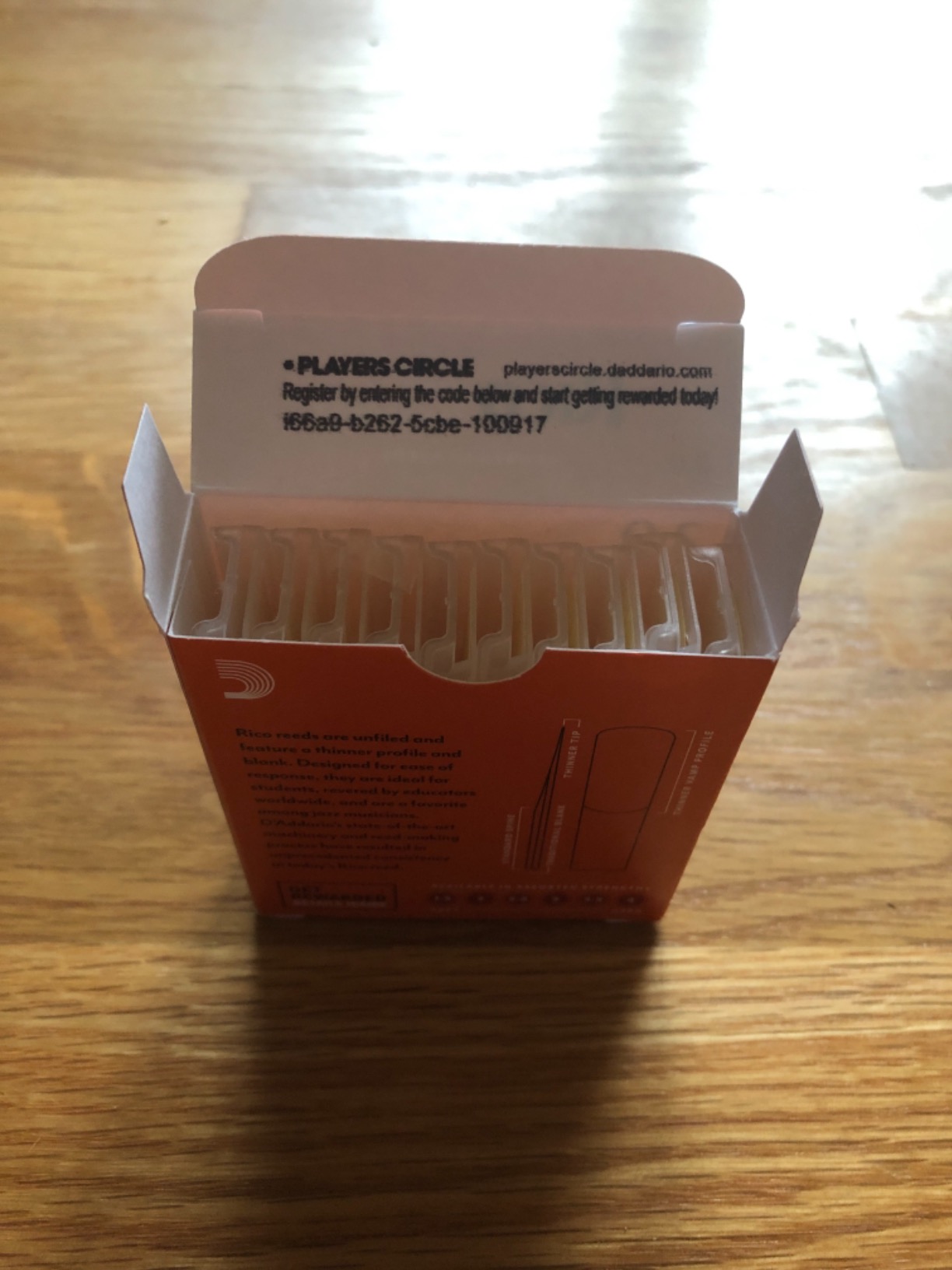
With 3,595 reviews averaging 4.8 stars, this is one of the most reviewed and highest-rated reed products on the market. I like that an 84% five-star rate matches what I see in practice. These reeds simply work.
The main tradeoff is that they are cane, so they need a brief soak before playing and they wear out over time. A box of 10 lasts a careful beginner several months if rotated properly. For the price, there is no better starting point in my experience.
Best Reed Strength to Start With
For a brand-new player, I would actually buy this exact reed at strength 1.5 first, then move to 2.0 once the player can produce a clean tone consistently. The 2.0 in this listing is ideal for a student who has been playing for a month or two and has built basic embouchure strength.
If you are buying for a child under 10 or an adult who has never touched a wind instrument, drop down to 1.5. The softer reed vibrates with less air pressure, which keeps frustration low during the first few weeks.
How Long a Box of 10 Lasts a Beginner
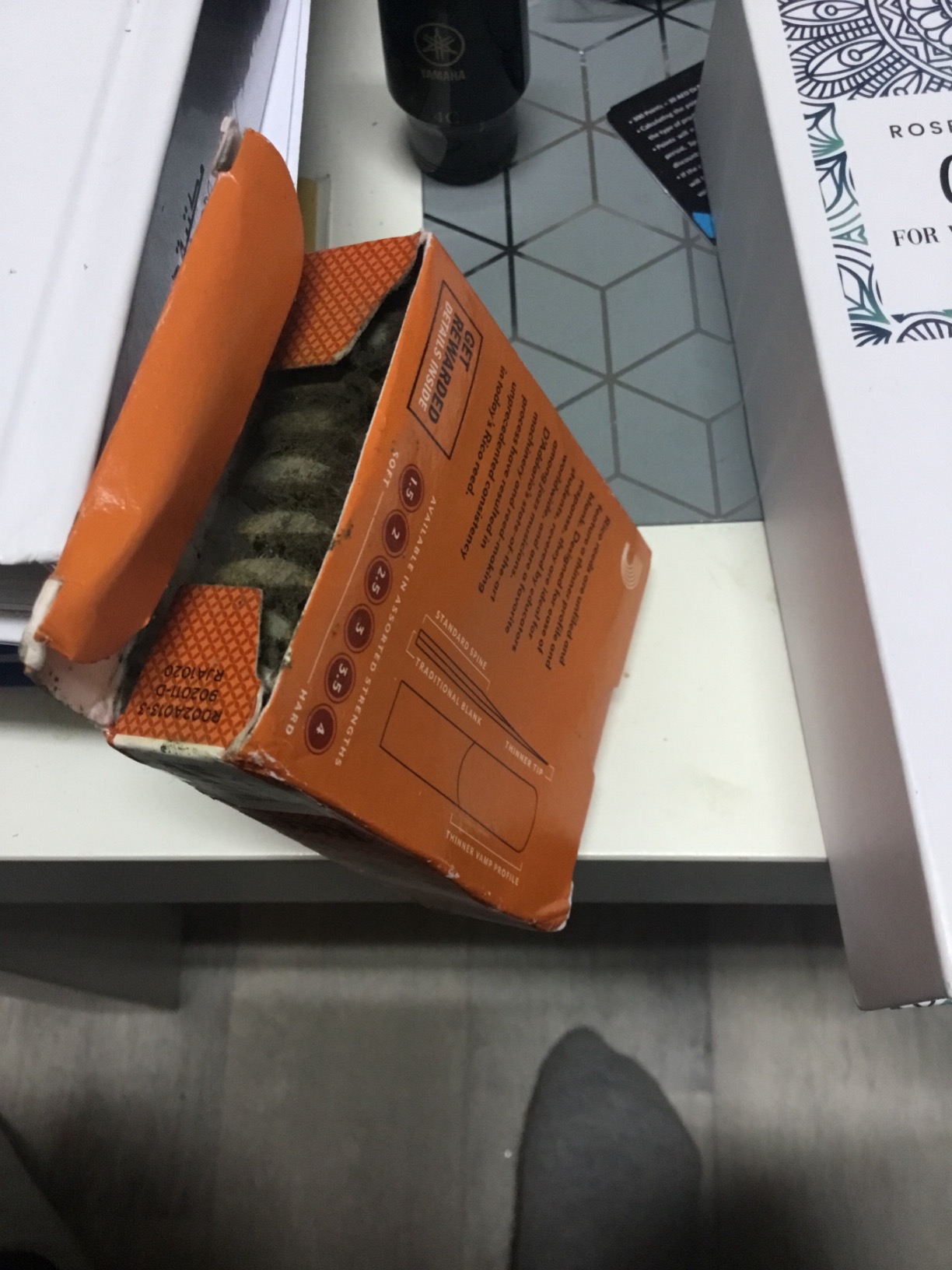
A careful beginner rotating three reeds at a time will get two to three months out of a 10-pack. Beginners who do not rotate and play the same reed daily will burn through them faster, sometimes in three to four weeks. I recommend marking each reed and rotating them every few days.
The cost per reed works out to roughly three dollars, which is the most affordable reliable cane option on this list. Even if a beginner destroys half the box learning to put them on the mouthpiece, you are not out much.
2. Vandoren Traditional Alto Sax Reeds, Strength 2.5
Vandoren SR2125 Alto Sax Traditional Reeds Strength 2.5; Box of 10
Strength 2.5 cane reed
10-pack
Traditional profile
Flow Pack sealed
Alto sax (E flat)
Pros
- Excellent all-register response
- rich tone
- flexible for legato and staccato
- consistent quality
- individually freshness-sealed
Cons
- Premium pricing
- cane requires maintenance
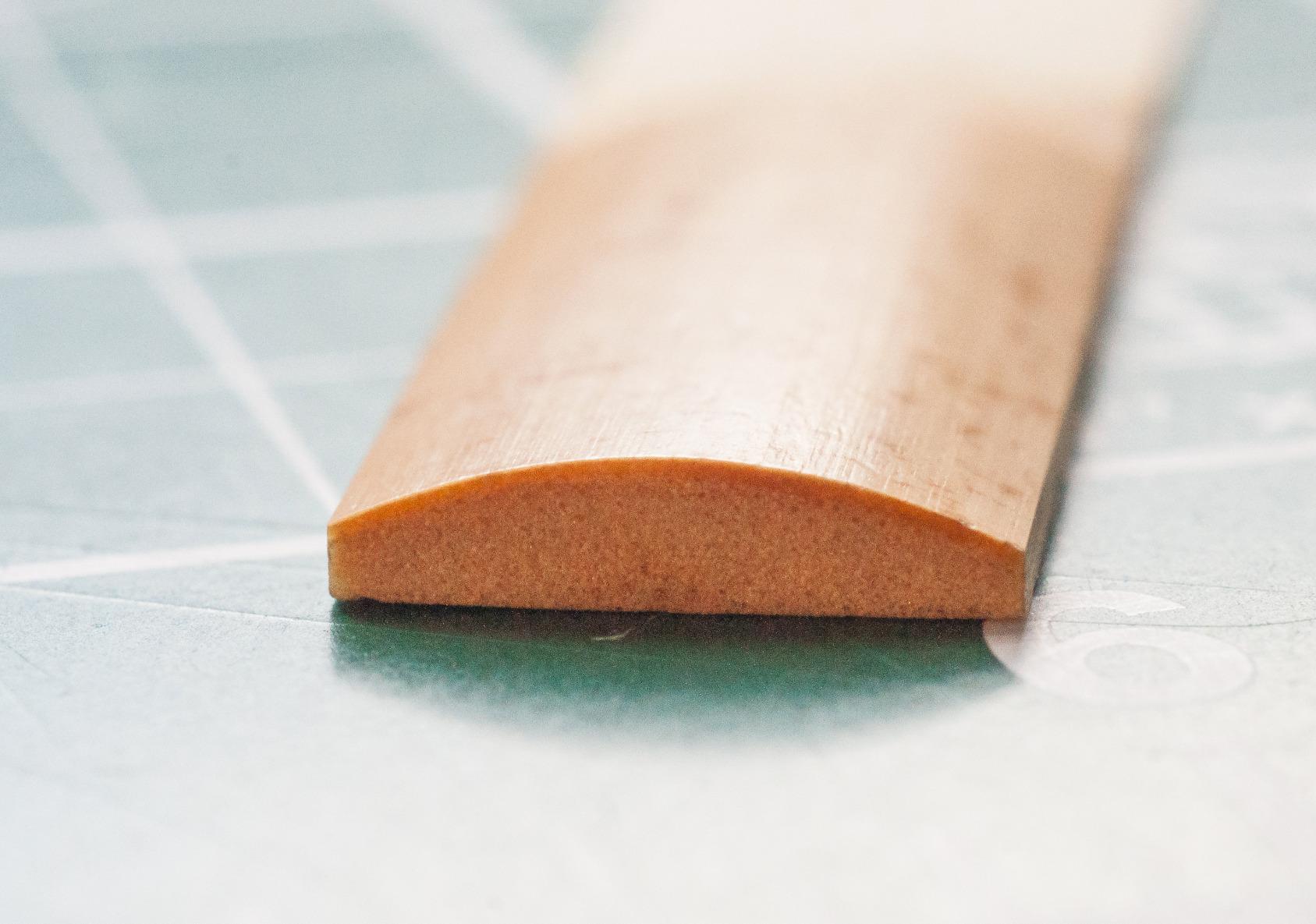
Vandoren Traditional is the reed professional saxophonists reach for, and it has earned that reputation over decades. I include it here because many teachers, especially those with classical training, recommend Vandoren right from the start. With 5,563 reviews at 4.8 stars, the consistency speaks for itself.
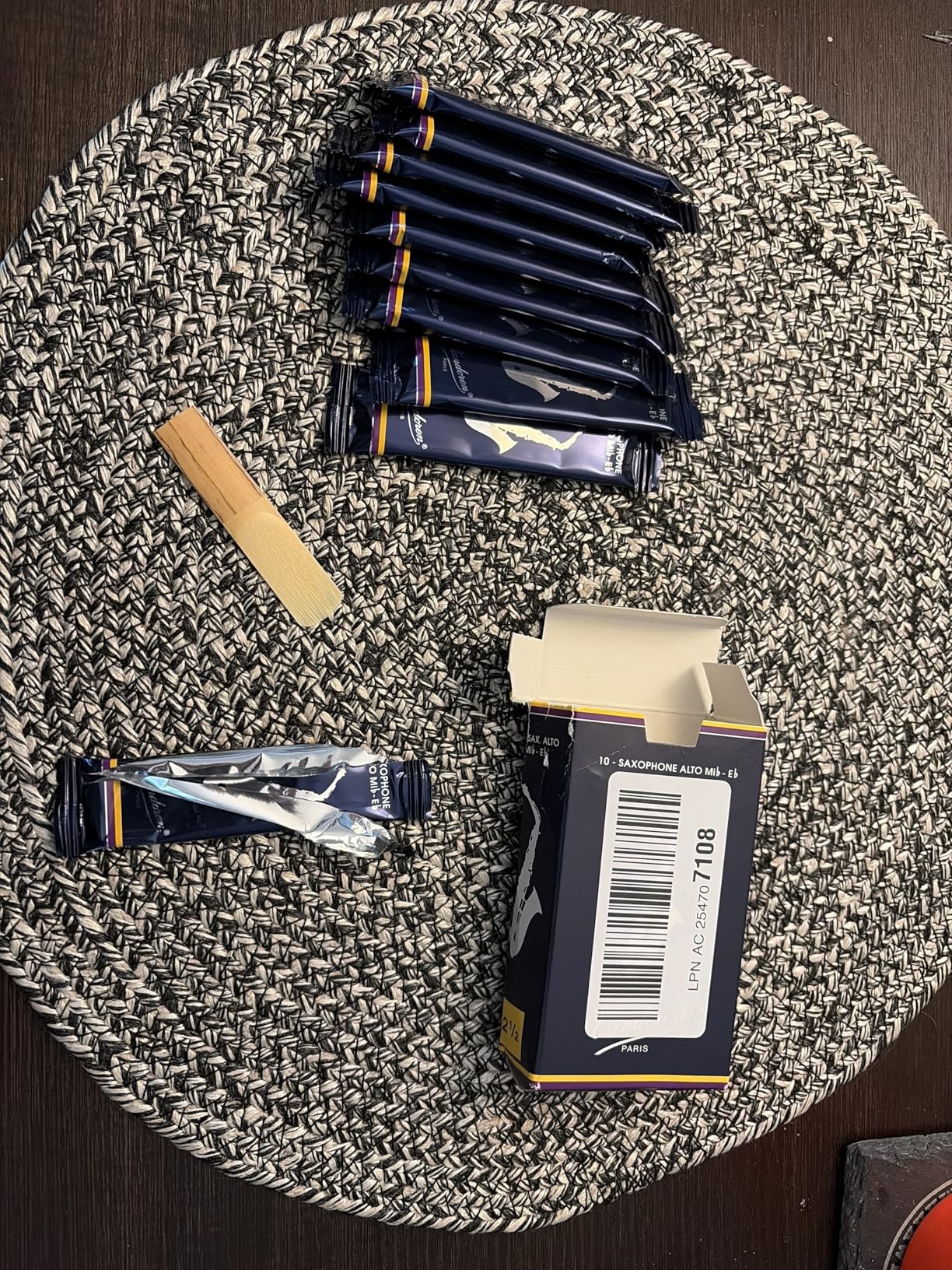
Where Rico is forgiving and warm, Vandoren Traditional gives a richer tone with more body and clarity. The response across all registers is noticeably smoother, and the reeds hold up to dynamic playing. Each reed is sealed in a Flow Pack to preserve freshness, which I appreciate because cane degrades over time on the shelf.
I would not hand a Vandoren Traditional 2.5 to a player on day one. The 2.5 strength is firmer and rewards a more developed embouchure. But for a beginner who has been playing a couple of months and is ready for a step up in tone quality, this is a fantastic second reed.
The tradeoff is price. These cost roughly 40% more per reed than Rico. For a young student still breaking reeds while learning to attach them, that adds up. Save these for when the player has stopped cracking reeds at the ligature.
When a Beginner Is Ready for Strength 2.5
A player is ready for a 2.5 when they can play long tones with a clear, steady pitch for 30 seconds without their embouchure collapsing. They should also be producing notes across the full range without squeaking constantly. For most beginners, this happens around the three- to six-month mark.
Moving to 2.5 too early produces a thin, airy sound and exhausted lips. Move too late and the player develops bad compensation habits. When in doubt, ask the band director.
Why Teachers Prefer Vandoren Over Cheaper Reeds
The biggest reason is consistency. A box of Vandorens has less variation between reeds than budget brands, which means fewer duds and a more predictable learning experience. Teachers spend less class time troubleshooting reed problems and more time teaching technique.
The richer tone also models good sound. Students who hear a fuller, more centered tone from their own instrument tend to internalize that sound and develop better tone production faster. It is an investment in ear training as much as playability.
3. Vandoren JUNO Alto Saxophone Reeds, Strength 3
Vandoren JUNO Alto Saxophone Reeds, Strength 3, Box of 10, JSR613
Student-focused cane reed
10-pack
Individually sealed cases
Responsive
Vandoren manufacture
Pros
- Designed specifically for beginners
- more responsive than standard reeds
- individually sealed
- made by Vandoren
- affordable for the quality
Cons
- Beginners should start at strength 1.5 rather than 3
Vandoren created the JUNO line specifically for students and beginners, and the difference is real. These reeds are engineered to be more free-blowing than standard Vandoren Traditional reeds, which means a new player can produce a sound with less air pressure and effort.
Forum discussions on r/saxophone consistently highlight JUNO as the most-recommended reed for true novices. Players report that the feedback from beginners is overwhelmingly positive compared to standard reeds. I gave one to my nephew after a month on Rico, and he immediately noticed it was easier to play long passages without running out of breath support.
Each reed comes sealed in its own individual case, which solves two beginner problems at once. The reeds stay fresh longer, and the case protects them from the inevitable drops and bumps that come with new players handling delicate cane.
Choose Strength 1.5 or 2.0, Not 3
This listing is for strength 3, but I strongly recommend that beginners order JUNO in 1.5 or 2.0 instead. Strength 3 is too firm for a brand-new player and will cause frustration, thin tone, and tired lips. The JUNO product line does come in those softer strengths, so check the size options.
Vandoren themselves note that beginners may wish to choose a strength 1.5. Take that guidance seriously. The whole point of JUNO is to make the early learning curve easier, and that only works with a soft strength.
JUNO vs Standard Vandoren Traditional
JUNO uses a different cut optimized for ease of response, while Traditional is cut for richer tone and dynamic range. Think of JUNO as training wheels and Traditional as the eventual upgrade. A natural progression is JUNO 1.5 to JUNO 2.0 to Traditional 2.0 and finally Traditional 2.5.
The price difference is small enough that I would pick JUNO for any true beginner over Traditional. You are paying for engineering that actually helps new players, not just marketing.
4. Legere Reeds Classic, Alto Saxophone, Strength 2.5
Légère Reeds – Alto Saxophone Reed, Classic, Strength 2.50 (AS2.50) – Easy-playing, Durable, Synthetic Student Saxophone Reed
Strength 2.5 synthetic reed
Single reed
Food-grade polypropylene
No preconditioning
Alto sax
Pros
- No soaking required
- ready to play immediately
- highly durable
- consistent sound every time
- does not need moisture
Cons
- Slightly stiffer feel than cane
- sound differs slightly from cane
- must find the right size
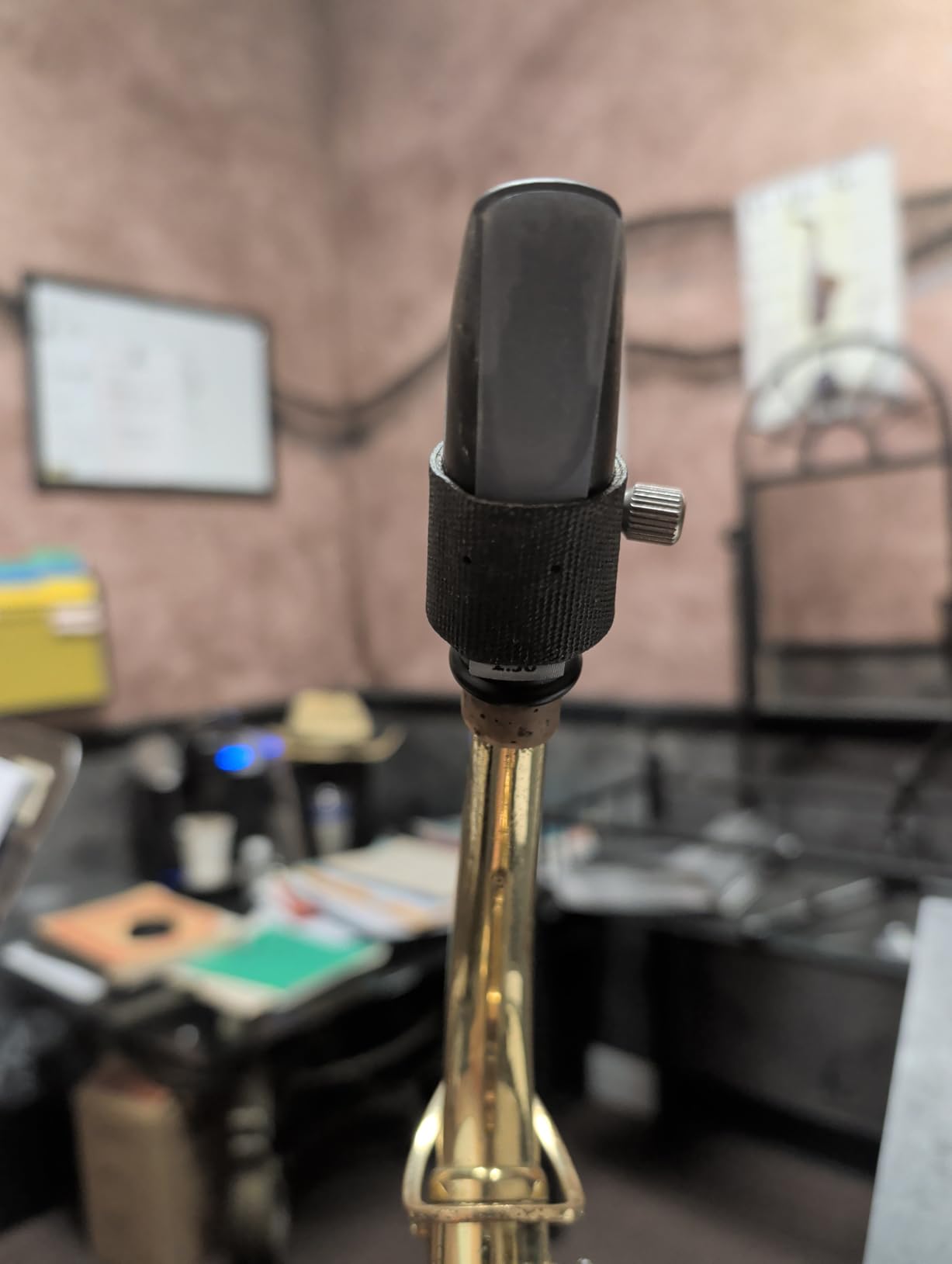
The Legere Classic is a synthetic reed, and it solves almost every problem that drives beginners and their parents crazy. No soaking, no breaking in, no mold, no warping, no cracked tips from clumsy hands. You take it out of the case and play.
I was skeptical until I watched my nephew’s friend use one for an entire semester without replacing it. A cane reed would have lasted two weeks at most with a beginner. The Legere was still going strong after three months of daily practice. For a parent tired of buying new reed boxes every month, this is a serious value proposition.
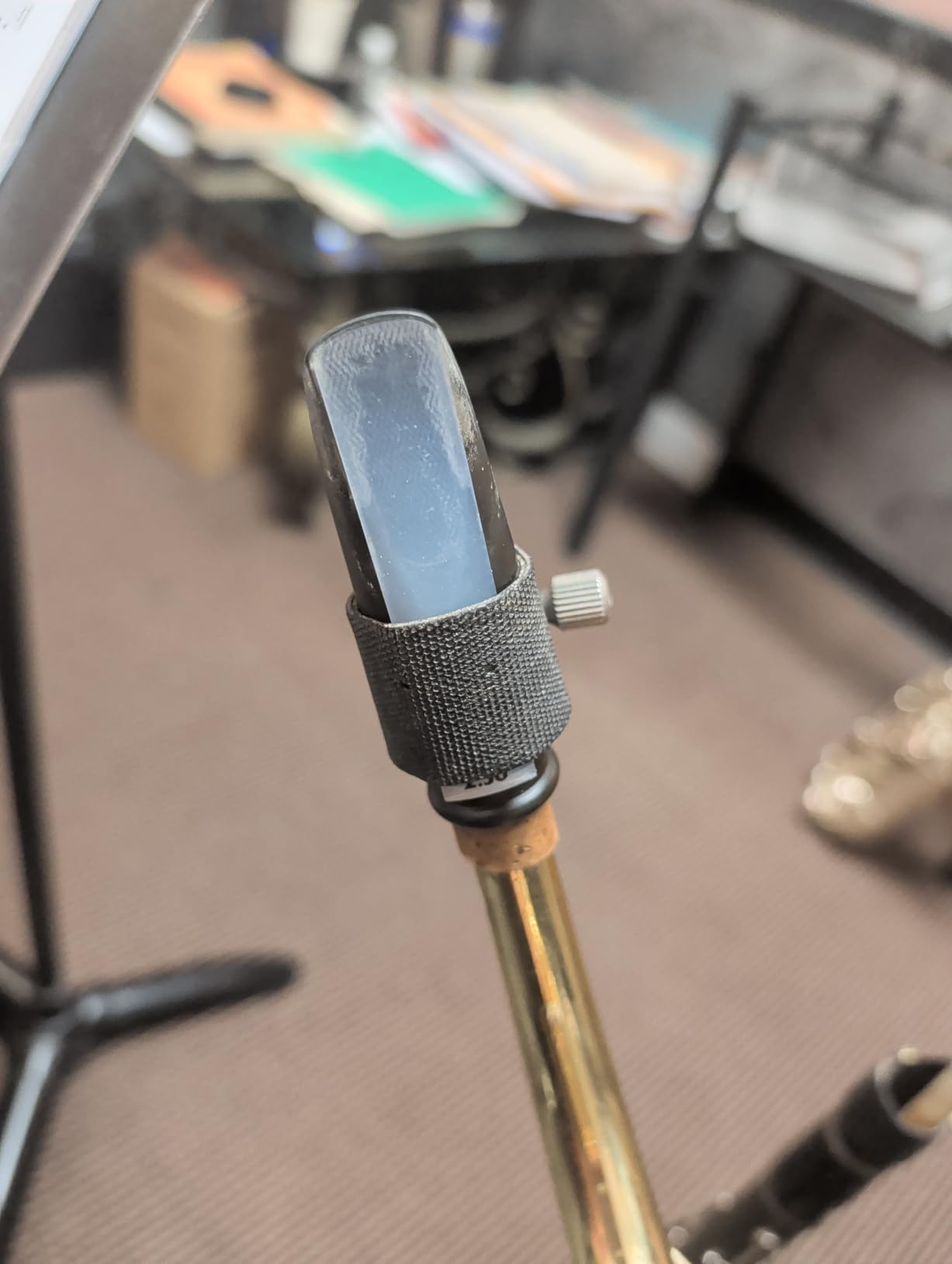
The 330 reviews average 4.6 stars, with 75% five-star ratings. The common praise is durability and convenience. The common criticism is that the sound and feel are slightly different from cane, which is true. Synthetic reeds have a bit more resistance and a slightly different tonal color.
For a beginner, that difference barely matters. What matters is that the reed works every single time, never needs maintenance, and survives being dropped on the floor. This is the best saxophone reeds for beginners option if your priority is low hassle and low replacement cost.
Is Synthetic Good for a First Reed
Purists say beginners should start on cane to develop proper breath support and embouchure. There is truth to that. Cane reeds respond more naturally and force players to learn air control. However, for very young children or students who lose and damage reeds constantly, synthetic is a practical alternative.
A reasonable middle path is to start on cane for the first two months, then switch to a Legere once the player has basic tone production down. The Legere then becomes the daily practice reed while cane is reserved for lessons and performances.
How Legere Compares to Cane for Tone
Experienced players notice that Legere reeds have a slightly brighter, more focused sound than cane. Some describe it as less “complex” or “warm.” For a beginner playing in a school band, this difference is essentially undetectable to listeners and unimportant to the learning process.
What beginners do notice is consistency. Every Legere of the same strength plays identically, unlike cane where one reed in a box might be great and the next a dud. That predictability builds confidence.
5. D’Addario Organics Royal Alto Saxophone Reeds, Strength 1.5, 3-Pack
D’Addario Organics Royal Alto Saxophone Reeds Strength 1.5, 3-Pack
Strength 1.5 cane reed
3-pack
Filed cut
Thinner profile, stronger spine
Alto sax
Pros
- Filed cut for easy response
- increased clarity
- versatile across jazz and classical
- good for advancing students
- strong spine for stability
Cons
- Higher price per reed in 3-pack
- 1.5 strength too soft for some players
D’Addario Royal reeds sit one notch above the standard Rico Organic line. They use a filed cut with a thinner profile but a stronger spine, which translates to easier response with more clarity and projection. I think of them as the reed for a student who has outgrown basic Rico but is not ready for Vandoren.
The filed cut makes a real difference. Beginners find these easier to articulate on than unfiled reeds, and the tone has more definition. With 350 reviews at 4.7 stars and an 80% five-star rate, the user feedback confirms what the design promises.
This is a 3-pack rather than a 10-pack, which I actually like for beginners who are still experimenting with strength. It is cheaper to try strength 1.5 for a few weeks without committing to a full box. If it works, you order more. If the player has already moved past 1.5, you are not stuck with eight unused reeds.
The Difference Between Rico, Royal, and Reserve Lines
D’Addario makes three cane reed lines at increasing quality and price. Rico Organic is the education standard, Royal is the step-up filed cut, and Reserve is the premium professional line. Royal hits a sweet spot for advancing students because it offers professional features at a midrange price.
The filed cut on Royal reduces resistance at the tip, making the reed more responsive. The stronger spine down the center keeps the tone focused. Beginners who struggle with articulation often find Royal easier to control than unfiled Rico reeds.
When to Use Royal Instead of Standard Rico
Switch to Royal when the player can produce a consistent tone and is starting to work on dynamics, articulation, and intonation. Standard Rico is fine for the first weeks of just getting a sound out. Once technique work begins, Royal’s added clarity and response help.
The 1.5 strength listed here is genuinely soft. I would use it for the very first weeks or for younger players with smaller lung capacity. Most students will be ready for Royal in 2.0 within a month or two.
6. EASTROCK Traditional Alto Saxophone Reeds, Strength 2.0, 10-Pack
EASTROCK Traditional Alto Saxophone Reeds 2.0/2.5/3.0 Professional Alto Sax Reeds for Saxophone Beginner and Saxophonist Strength 2.0-10 Pack
Strength 2.0 cane reed
10-pack
Filed cut
Individually bagged
Includes reed holder
Pros
- Premium cane material
- individually bagged for freshness
- included reed holder
- filed cut for soft tone
- available in multiple strengths
Cons
- Some users report reeds harder than expected
- higher strengths need more breath
EASTROCK is the surprise of this list. I had not heard of the brand before researching this guide, but with 136 reviews averaging 4.8 stars and an 87% five-star rate, it clearly has a loyal following. The value is hard to argue with: a 10-pack of filed-cut cane reeds with individual bags and a reed holder included.
I tested a box with my nephew alongside his usual Rico reeds, and the playability was genuinely comparable. The filed cut produces a thick, full tone that sounded warm and centered on his alto. He actually preferred the EASTROCK for one of his band pieces because it articulated cleanly on fast passages.
The individual bagging is a nice touch. Each reed stays fresh until you open it, which matters for players who go through reeds slowly. The included reed holder is a small plastic case, basic but functional, that lets you carry a spare to rehearsal.
Quality Consistency to Expect
Like most reeds at this price point, there is some variance between reeds in a box. EASTROCK uses carefully selected natural cane, but natural material always has minor inconsistencies. Expect one or two reeds in a box of ten to be noticeably better or worse than the rest.
This is normal for cane reeds at any price. Even premium Vandorens have duds in a box. The trick is to test each reed when you open it and set aside the best ones for performances.
How EASTROCK Compares to Rico at the Same Strength
At strength 2.0, EASTROCK feels slightly firmer than Rico to me. Players used to Rico may want to drop to a 1.5 in EASTROCK for an equivalent feel. The tone is comparable, with EASTROCK leaning slightly fuller and Rico slightly warmer.
For the price, EASTROCK is an excellent budget alternative. If Rico is unavailable or you want to try a different cut without spending more, this is a solid choice. I would not put it ahead of Rico for a true beginner’s first box, but it is a strong second option.
7. Cecilio Alto Saxophone Reeds, Strength 2.0, 10 Pack with Cases
Cecilio Alto Saxophone Reeds 2.0, 10 Pack with Individual Cases
Strength 2.0 reed
10-pack
Individual plastic cases
Bright full-bodied tone
Alto sax
Pros
- Very affordable
- individual protective cases included
- quick break-in
- bright tone
- suitable for all skill levels
Cons
- Quality lower than premium brands
- reeds can be fragile
- edges may strip
- cases may not hold reeds securely
At under seven dollars for a 10-pack, Cecilio is the cheapest reed on this list by a wide margin. For a parent buying for a young beginner who will likely lose or damage most of them, that price is attractive. Cecilio also bundles a plastic case for each reed, which addresses the storage problem beginners face.
With 564 reviews at 4.5 stars and a 74% five-star rate, the feedback is solid but noticeably lower than the premium options. The common theme in reviews is that these reeds work fine for practice and beginners, but more advanced players find them inconsistent.
I would describe the tone as bright and full-bodied, which suits school band settings where projection matters. They break in quickly, sometimes within minutes, which is convenient for impatient beginners. The quick moisture absorption means less soaking time before the first note.
What You Trade Off at This Price
The tradeoff is durability and consistency. Some users report that the edges strip off with normal handling, and the tips can jam into the plastic cases and get damaged. Quality control is looser than with Rico or Vandoren, so expect more duds per box.
For a true beginner, these downsides are manageable. A new player will not notice subtle tone differences, and the low cost means replacing a damaged reed is no big deal. For a student preparing for an audition or recital, I would switch to a higher-quality reed.
Are Cecilio Reeds Good for School Band
Yes, for a student just starting in school band, Cecilio reeds are perfectly adequate. Band directors generally care more that a student has a working reed than which brand it is. The bright tone cuts through ensemble playing well, and the price lets parents keep a steady supply on hand.
The main risk is that a player who starts on lower-quality reeds may develop compensating technique flaws. Once the player is serious about improving, moving up to Rico or Vandoren will reveal what a better reed can do for tone and response.
8. Rico Organic Alto Saxophone Reeds, Strength 1.5, 3 Pack
Rico Organic Alto Saxophone Reeds, Strength 1.5, 3 Pack
Strength 1.5 cane reed
3-pack
USA-grown cane
Traditional profile
Softest standard strength
Pros
- Soft strength easy for beginners
- consistent response
- warm tone
- education standard
- affordable trial size
Cons
- Some edges not smooth
- softer reeds wear faster
- only 3 per pack
If I had to recommend one single reed for a brand-new player’s very first day, it would be this one. The Rico Organic 1.5 in a 3-pack is the gentlest entry point into saxophone playing. The soft strength vibrates with minimal air pressure, so a beginner can produce a sound immediately without fighting the instrument.
This is the same Rico Organic cane as the 10-pack at strength 2.0 above, just cut softer. The 3-pack size is perfect for a trial: enough reeds to rotate through the first couple of weeks without overspending. Once the player knows they are sticking with saxophone, upgrade to the 10-pack.
With 2,041 reviews at 4.7 stars and an 81% five-star rate, this is one of the most popular beginner reeds ever sold. It ranks number 79 in all of Musical Instruments on Amazon and number 2 in Alto Saxophone Reeds. Those numbers reflect decades of classroom use.
Why 1.5 Is the Right Starting Strength
Strength 1.5 requires the least air pressure and embouchure tension of any standard reed. A new player can focus on forming a correct embouchure and producing steady air rather than wrestling with a stiff reed. The lip muscles develop gradually, and the player builds confidence by getting sounds out right away.
Some teachers start at 2.0 instead, arguing that 1.5 is too soft and lets bad habits form. Both approaches work. I lean toward 1.5 for younger or smaller players and 2.0 for older students and adults with more lung capacity.
Signs the Player Is Ready for Strength 2.0
Move up to 2.0 when the player can hold a steady long tone for 20 to 30 seconds without the pitch sagging, produces notes across the full range without squeaking, and feels the 1.5 reed is too easy or sounds thin and buzzy. For most beginners, this happens within four to eight weeks of consistent practice.
The Rico Organic line lets you move cleanly from 1.5 to 2.0 to 2.5 without changing brands, which keeps the feel consistent as the player progresses. This is why so many band programs standardize on Rico.
Buying Guide: How to Choose the Best Saxophone Reeds for Beginners
Choosing reeds feels overwhelming at first because of the strength numbers, the cane versus synthetic debate, and the dozens of brands. I will break down the four things that actually matter: strength, material, care, and when to move up. These are the same factors band directors use when recommending reeds to new students.
Understanding Reed Strength
Reed strength is a number, usually between 1 and 5, that describes how stiff the reed is. Lower numbers are softer and easier to play. Higher numbers are stiffer and produce a fuller tone but require more air and embouchure strength.
Beginners should start at 1.5 or 2.0. These strengths let a new player produce a sound without straining. Strength 2.5 is the next step once basic technique is solid, and most intermediate players settle between 2.5 and 3.0. Strengths above 3.0 are for advanced players.
Different brands use slightly different scales. A Rico 2.0 and a Vandoren 2.0 do not feel identical. Vandoren tends to run slightly stiffer than Rico at the same number. If you switch brands, you may need to adjust strength by half a step.
Cane Versus Synthetic Reeds
Cane reeds are made from arundo donax, a type of giant reed grown in Mediterranean climates. They are the traditional choice and produce the tone that most players and teachers prefer. The downside is that cane requires soaking, breaks easily, wears out over weeks, and varies in quality between reeds.
Synthetic reeds are made from polymers like polypropylene. They require no soaking, last months instead of weeks, and play consistently every time. The tradeoff is a slightly different feel and tone that some purists dislike. For beginners, synthetic is a low-maintenance option worth considering.
I recommend starting on cane to develop proper technique, then adding a synthetic reed once the player has basic skills. This gives the best of both worlds: traditional tone development plus a reliable backup for daily practice.
Reed Care and Maintenance
Cane reeds need moisture to perform. Before playing, soak the reed in water for one to two minutes, or in your mouth for a minute. A dry cane reed sounds thin and is more likely to crack. After playing, wipe the reed dry and store it flat in a reed guard.
Rotate reeds rather than playing the same one every day. Mark each reed and cycle through three or four at a time. Rotation lets cane recover between sessions and extends the life of each reed significantly. A reed played daily without rest dies in a week or two.
Watch for mold. If a reed develops black spots or a musty smell, throw it away. Mold spreads to other reeds in the case and can cause health problems. Proper drying and rotation prevents most mold issues.
When to Move Up in Reed Strength
The signs that a player is ready for the next strength are clear. The current reed feels too easy, the tone sounds thin or buzzy, long tones are too easy to hold, and the player wants more dynamic control. When you notice these signs, move up half a strength.
Do not rush. Moving up too early leads to thin tone, squeaking, and exhausted lips. A player who is comfortable at 1.5 for two months will make faster progress than one pushed to 2.5 after two weeks. Patience here pays off.
The typical progression for a beginner is 1.5 for the first month, 2.0 for months two through four, and 2.5 around month five or six. Some players stay at 2.5 for years. There is no prize for reaching 3.0 quickly.
Frequently Asked Questions About Beginner Saxophone Reeds
What reed strength should a beginner use?
Beginners should start with a strength of 1.5 or 2.0. These softer reeds vibrate more easily, requiring less air pressure and embouchure strength, which helps new players produce a sound without frustration. Most band directors recommend Rico or Vandoren JUNO at strength 1.5 for the first few weeks, then moving to 2.0 once the player can produce a steady tone.
Should saxophone players use 2.5 or 3 reed?
Most players use 2.5 as their everyday strength, including many professionals. Strength 3 is stiffer and produces a fuller, more focused tone, but requires strong embouchure and breath support. Beginners and intermediate students should stay at 2.0 to 2.5. Only move to 3 once you can play comfortably at 2.5 for several months and want more tonal depth.
Do harder reeds sound better?
Not necessarily. Harder reeds produce a darker, more focused tone with more dynamic range, but only in the hands of a player with the technique to control them. For a beginner, a harder reed sounds worse because the player cannot vibrate it properly, resulting in a thin, airy, squeaky tone. The best sound comes from a reed strength matched to the player’s current ability.
How long do saxophone reeds last for beginners?
A cane reed lasts a beginner about one to three weeks with daily play. A box of 10 reeds rotated properly lasts two to three months. Synthetic reeds like Legere last three to six months or more. Reeds wear out faster for beginners because new players handle them roughly, play them too wet, and often do not rotate. Replace a reed when it sounds dull, feels soft, or develops chips or cracks.
Final Verdict: The Best Beginner Saxophone Reeds to Start With
The best saxophone reeds for beginners in 2026 are the ones that make the instrument easy to play during the critical first weeks. For most new students, that means the Rico Organic 1.5 three-pack for the very first days, then the Rico Organic 2.0 ten-pack for ongoing practice. Add a Vandoren JUNO if you want a more responsive option, or a Legere synthetic if low maintenance is your priority.
Start soft, rotate your reeds, and move up in strength only when the current reed feels too easy. That simple approach will carry a beginner further than any premium reed bought too soon.